7 Lead Nurturing Best Practices for Law Firms
Categories: Listicle: Round-up
 Abram Ninoyan
Founder & Senior Performance Marketer
Credentials: Google Partner, Google Ads Search Certified, Google Ads Display Certified, Google Ads Measurement Certified, Google Analytics (IQ) Certified, HubSpot Inbound Certified, HubSpot Social Media Marketing Certified, Conversion Optimization Certified
Expertise: Google Ads, Meta Ads, Conversion Rate Optimization, GA4 & Google Tag Manager, Lead Generation, Marketing Funnel Optimization, PPC Management
LinkedIn Profile
Transform inquiries into signed retainers. These 7 lead nurturing best practices for law firms show how to segment by practice area, automate...
Key Takeaways
- 1. Practice Area Segmentation: Nurturing Leads Based on Legal Need
- 2. Multi-Channel Lead Nurturing: Engaging Prospects Across Platforms
- 3. Progressive Profiling and Data Enrichment
- 4. Content Mapping to Buyer's Journey
In the competitive legal landscape, generating leads is only half the battle. A potential client might download a guide on your estate planning website or fill out a form after a personal injury, but that initial click rarely translates directly into a case. They aren't ready to hire your firm—yet. The critical phase between this first touchpoint and a signed retainer is where most law firms lose valuable, high-intent opportunities. This gap is closed by a systematic process that transforms potential leads into profitable clients.
Effective lead nurturing builds the trust and authority necessary to convert interest into commitment. It keeps your practice top-of-mind, ensuring that when a prospect is finally ready to seek legal counsel, your number is the one they call. This article moves beyond generic advice to detail seven essential lead nurturing best practices, specifically adapted for the unique client journey and professional standards of modern law firms. You will learn actionable strategies for segmenting audiences, automating follow-up, and delivering personalized content that guides managing partners, marketing directors, and solo attorneys from initial awareness to a scheduled consultation. These methods are designed to integrate directly into your firm's client intake process, creating a reliable pipeline of qualified cases.
1. Practice Area Segmentation: Nurturing Leads Based on Legal Need
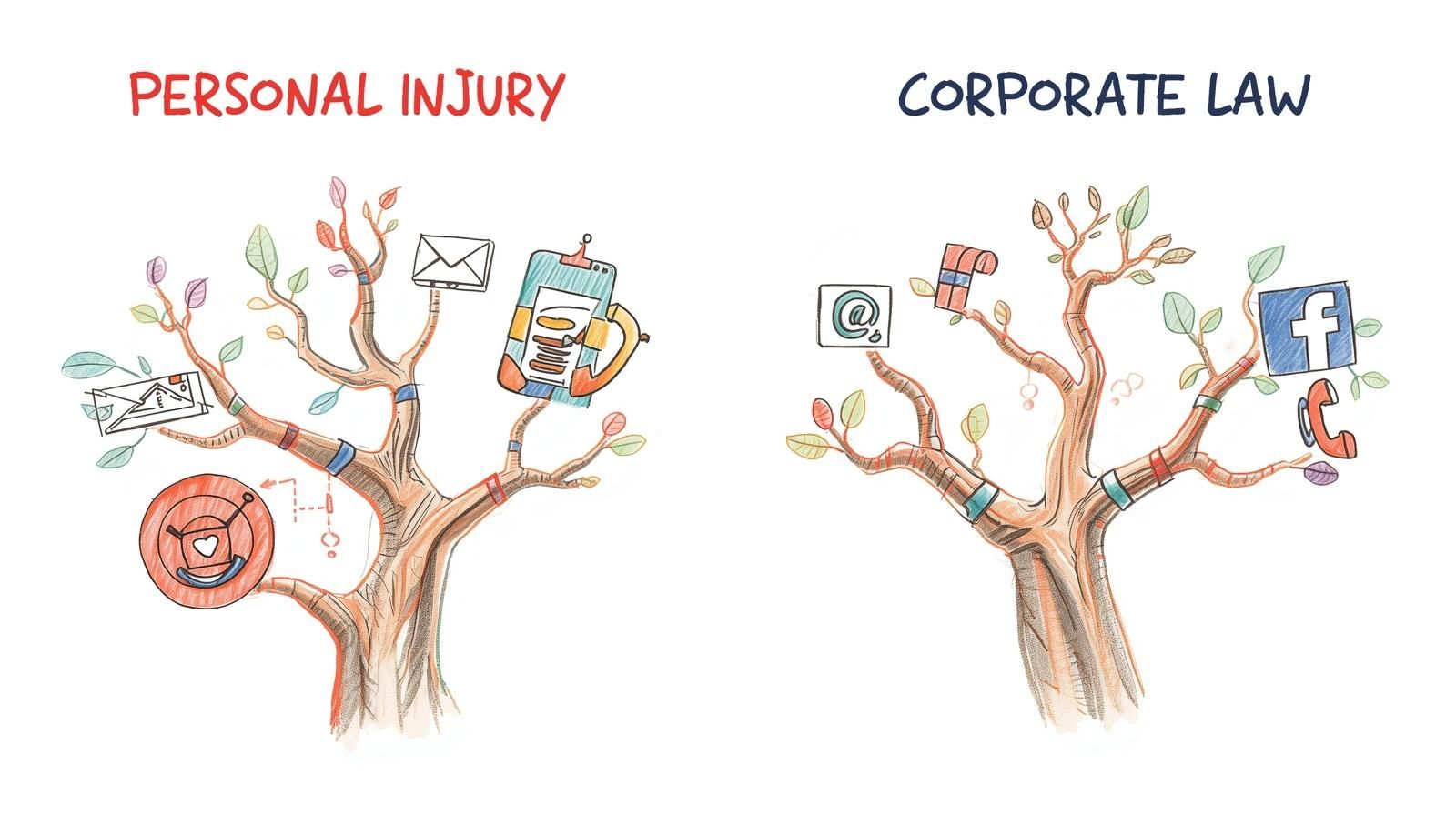
The most fundamental mistake in law firm marketing is treating every lead the same. A potential client seeking counsel for a complex corporate merger has vastly different concerns than someone needing help with a family law matter. Sending both a generic firm newsletter is inefficient and fails to build rapport. Practice area segmentation is the solution, making it one of the most crucial lead nurturing best practices for any multi-practice law firm.
This strategy involves categorizing contacts based on their specific legal issue. Instead of a one-size-fits-all approach, you deliver highly relevant, targeted content that speaks directly to their immediate needs. This positions your firm not just as a legal authority, but as the specific expert they require at that moment.
How It Works in Practice
A segmented nurturing strategy transforms your communication from a broad announcement into a focused conversation. This builds trust and demonstrates a clear understanding of the prospect's unique situation, whether it's for an IP lawyer or a criminal defense firm.
- For a Personal Injury Firm: A lead from a "car accident" contact form receives a 3-part email series on dealing with insurance adjusters. Meanwhile, a "slip and fall" lead gets a guide on documenting the incident scene and preserving evidence.
- For a Corporate Law Firm: A prospect who downloaded a white paper on M&A trends is added to a sequence featuring case studies on recent successful deals. A lead who visited your intellectual property pages is retargeted with ads about trademark protection services, a key part of lead generation for IP lawyers.
Key Insight: Segmentation isn't just about sending different emails; it's about aligning every touchpoint—from content and ad creative to intake questions—with the specific legal journey of your prospect.
Actionable Implementation Tips
Getting started with segmentation is more straightforward than it sounds. The key is to leverage the data you are already collecting through your client intake funnel.
- Automate with Intake Forms: Add a required dropdown field like "What is your primary legal concern?" to your website contact forms. Use this data to automatically tag and segment leads in your CRM.
- Analyze Website Behavior: Use tools like Google Analytics or your marketing automation platform to track which practice area pages a lead visits. This behavioral data provides a strong signal of their interests.
- Start Small and Scale: Don't try to create a unique nurturing track for all 15 of your practice areas at once. Begin with your 2-3 most profitable or highest-volume areas to refine your process before expanding.
2. Multi-Channel Lead Nurturing: Engaging Prospects Across Platforms
Relying solely on email to nurture leads is like trying to win a case with only one piece of evidence. Today's potential clients—from solo attorneys to managing partners—are active across numerous platforms, and a single-channel approach leaves valuable opportunities on the table. Multi-channel lead nurturing is the practice of creating a unified, persistent presence across email, social media, paid ads, and even phone calls to stay top-of-mind.
This strategy ensures your firm's message reaches prospects wherever they are, reinforcing your authority and making it easy for them to engage on their preferred channel. Instead of just sending an email, you’re creating an ecosystem where a lead sees your firm’s helpful content on LinkedIn, is retargeted with a relevant ad on Google, and then receives a follow-up email that ties it all together. This comprehensive approach is a cornerstone of modern lead nurturing best practices for law firms.
How It Works in Practice
A coordinated multi-channel strategy makes your firm seem omnipresent and highly credible. It systematically guides a prospect toward a consultation by providing value at every turn, which is critical for effective marketing for criminal defense law firms and other competitive niches.
- For an Employment Law Firm: A lead who downloads a guide on "Employee Handbook Essentials" receives a follow-up email sequence. Simultaneously, they are added to a LinkedIn custom audience and see sponsored posts from your firm featuring short video tips on avoiding common HR compliance mistakes.
- For a Family Law Practice: A prospect who fills out a "child custody consultation" form gets an initial welcome email and a text message confirming their inquiry. They are then retargeted on Facebook with testimonials from previous clients who navigated similar situations successfully. This is a powerful local SEO for family law practices tactic.
Key Insight: The power of multi-channel nurturing isn't just being on multiple platforms; it's about orchestrating a consistent, sequential conversation that unfolds across them, making each touchpoint feel connected and intentional.
Actionable Implementation Tips
Integrating multiple channels requires coordination, but the right tools and a clear plan make it manageable. The goal is to create a seamless experience for the prospective client.
- Map the Client Journey: Before launching campaigns, outline the ideal sequence of touchpoints. For example: Website visit -> Email 1 -> LinkedIn Ad -> Email 2 -> Phone call from intake.
- Leverage Marketing Automation: Use your CRM or platforms like Marketo or Pardot to create "if/then" workflows. For instance, if a lead clicks a link in an email, automatically add them to a specific social media ad audience.
- Unify Your Messaging: Ensure your branding, value proposition, and call to action are consistent across all channels. A disjointed message erodes trust and confuses potential clients. Discover more about building a robust client acquisition system by exploring advanced multi-channel lead nurturing strategies on GavelGrow.com.
3. Progressive Profiling and Data Enrichment
Requesting a dozen pieces of information on an initial contact form is a guaranteed way to kill conversion rates. Prospects are hesitant to share extensive personal details upfront. Progressive profiling solves this by gathering information gradually over multiple interactions, making it one of the most effective lead nurturing best practices for building detailed client profiles without creating friction.
This method involves incrementally asking for more information as a lead engages with your content. Instead of a single, intimidating form, you use "smart forms" that recognize returning visitors and present new questions, enriching their profile over time. This patient, strategic approach respects the user's journey and yields deeper insights for qualification.
How It Works in Practice
Progressive profiling turns a one-time data transaction into an ongoing conversation, building a more complete picture of a potential client with each touchpoint. This allows for increasingly personalized and relevant nurturing.
- For a Business Litigation Firm: A lead first downloads a checklist on "Preparing for a Deposition" by providing only their name and email. The next time they visit to read a related blog post, the form to download a case study asks for their company name and role.
- For an Estate Planning Firm: An initial form captures an email address for a newsletter. On a subsequent visit, a pop-up offering a "Guide to Trusts" asks if they have children. This simple data point allows you to segment them into a nurturing sequence focused on family-centric estate planning. This is a core component of great SEO for estate planning attorneys.
Key Insight: The goal is to make data collection feel like a natural part of the value exchange. You provide valuable content, and in return, the prospect offers a small piece of information that helps you better serve them.
Actionable Implementation Tips
Implementing this requires a marketing automation platform or a capable CRM, but the strategy itself is straightforward. You can begin by refining your existing forms and content offers.
- Start with the Essentials: Your first form should only ask for the bare minimum, typically a name and email address. The lower the barrier to entry, the higher the initial conversion rate.
- Use Smart Forms: Leverage technology that recognizes returning visitors (via cookies) and dynamically displays new form fields while hiding ones they've already completed.
- Leverage Conversational Tools: To streamline initial data collection and provide instant, context-aware support without overwhelming prospects, consider leveraging specialized chatbots for law firms.
- Enrich Data Automatically: A powerful law firm CRM can often enrich lead data automatically by pulling public information from sources like LinkedIn based on an email address. You can learn more about choosing the best CRM for your law firm's growth on GavelGrow.
4. Content Mapping to Buyer's Journey
A lead who just realized they have a potential legal issue requires different information than one actively comparing two different law firms. Sending a consultation request to someone in the early "awareness" stage is premature and ineffective. This is why mapping your content to the buyer's journey is one of the most powerful lead nurturing best practices, ensuring you deliver the right message at precisely the right time.
This strategy involves creating and distributing specific content that aligns with where your potential client is in their decision-making process: Awareness, Consideration, and Decision. By guiding them with relevant information at each step, your firm builds authority and trust, making you the logical choice when they are finally ready to hire an attorney.
How It Works in Practice
A journey-aligned content strategy meets prospects where they are, answering their immediate questions and then guiding them to the next logical step. This prevents you from pushing for a consultation too early or providing basic information to someone who is already deep in their research.
- For an Employment Law Firm: A lead downloading an "Employee Rights Checklist" (Awareness) is then nurtured with an ebook comparing litigation vs. settlement (Consideration). Finally, they receive a case study and an invitation for a free case evaluation (Decision).
- For a Corporate Law Firm: A startup founder who reads a blog post on "Choosing a Business Entity" (Awareness) is retargeted with an ad for a webinar on "Venture Capital Funding Essentials" (Consideration). After attending, they are added to an email sequence highlighting the firm's successful M&A deals and offering a strategy session (Decision).
Key Insight: The goal of content mapping is to make the prospect's decision-making process easier. By anticipating their questions at each stage, you remove friction and position your firm as the most helpful and knowledgeable guide on their journey.
Actionable Implementation Tips
Mapping content doesn't require a complete overhaul of your marketing. You can begin by strategically organizing what you already have and identifying key gaps.
- Audit Your Existing Content: Categorize your current blog posts, guides, and case studies into the Awareness, Consideration, or Decision stage. This will immediately reveal where your content funnel is weakest. To learn more about this process, explore these strategies for content marketing for legal firms on gavelgrow.com.
- Create Content "Upgrade" Paths: Ensure each piece of content has a clear call-to-action that moves the lead to the next stage. A blog post (Awareness) should offer a downloadable guide (Consideration), which in turn should lead to a "contact us" page (Decision).
- Track Consumption Patterns: Use your marketing automation software to see how leads interact with your content. If many prospects drop off after the Consideration stage, you may need stronger Decision-stage content, like client testimonials or detailed case studies.
5. Marketing Automation and Drip Campaigns
Manually following up with every lead is unsustainable for a growing law firm. It leads to missed opportunities, inconsistent communication, and valuable prospects falling through the cracks. Marketing automation solves this by using software to deliver timely, relevant messages automatically. This makes it one of the most powerful lead nurturing best practices for scaling client acquisition efficiently.
This strategy uses triggers and pre-built sequences, known as drip campaigns, to nurture leads without constant manual effort. When a prospect takes a specific action, like downloading a guide or filling out a form, the system automatically sends them a series of emails. This ensures every lead receives consistent, professional follow-up, moving them closer to a consultation.
How It Works in Practice
Automation transforms your lead follow-up from a reactive chore into a proactive system that works 24/7. It ensures that no matter when a lead engages, they immediately enter a structured nurturing path designed to educate and build trust.
- For an Estate Planning Firm: A lead who downloads a "Guide to Setting Up a Trust" is automatically enrolled in a 4-part email drip campaign. The series could cover common trust mistakes, the role of a trustee, and the benefits of a professional consultation, with each email sent a few days apart.
- For a Business Litigation Firm: A contact who attends a webinar on contract disputes receives an automated follow-up sequence. This includes the webinar recording, a case study on a successful contract litigation outcome, and an invitation to book a 15-minute case evaluation.
Key Insight: The goal of automation isn't to be impersonal; it's to deliver the right information to the right person at the right time, at a scale that's impossible to achieve manually. This frees up your legal operations managers and intake team to focus on high-value conversations with the most engaged prospects.
Actionable Implementation Tips
Implementing automation is about starting small and building from there. A few simple workflows can have a significant impact on your firm's efficiency and conversion rates.
- Start with a "Welcome" Sequence: Create a simple 3-email drip campaign for all new website contacts. The first email can deliver the requested resource, the second can introduce your firm's unique value, and the third can present a clear call to action, like scheduling a call.
- A/B Test Your Subject Lines: Even small changes can dramatically impact open rates. Test different subject lines for your automated emails (e.g., "Your Guide to X" vs. "Next Steps for X") to see what resonates best with your audience.
- Set an Appropriate Frequency: Bombarding leads with daily emails is a fast track to unsubscribes. Space your automated messages out every 2-4 days to stay top-of-mind without causing fatigue. For more on structuring these campaigns, you can learn more about effective email marketing for law firms on gavelgrow.com.
6. Lead Scoring and Behavioral Tracking
Not all leads are created equal. A potential client who has downloaded three of your firm's white papers and visited your pricing page is far more engaged than someone who just subscribed to your newsletter. Lead scoring and behavioral tracking are the mechanisms that allow you to distinguish between these prospects, making them essential lead nurturing best practices for any growth-focused firm.
This system assigns numerical values to leads based on their profile data (demographics, firmographics) and their actions (website visits, email opens, content downloads). By tracking this behavior, you can quantitatively measure a prospect's level of interest and engagement, allowing your intake team to focus their time on the most qualified, sales-ready opportunities.
How It Works in Practice
Implementing a lead scoring system transforms your follow-up from a guessing game into a data-driven strategy. It provides a clear, objective signal indicating when a lead has moved from a passive researcher to an active buyer.
- For an Employment Law Firm: A lead gets +10 points for downloading a "Wrongful Termination Checklist," +5 for visiting the "Meet Our Attorneys" page, and +2 for opening a newsletter. Once they hit a threshold of 50 points, an alert is sent to your intake specialist for an immediate, personalized follow-up call.
- For a Corporate Tax Law Firm: A lead accrues points for attending a webinar on international tax law. A prospect who visits your "IRS Audit Defense" service page multiple times in one week is automatically flagged as a high-priority contact, triggering a targeted email from a partner.
Key Insight: Lead scoring isn't about collecting data for its own sake; it's about creating an automated system that prioritizes attorney time, ensuring that your most valuable resources are spent on the leads most likely to become high-value clients.
Actionable Implementation Tips
Getting started with lead scoring is about defining what a "good lead" looks like for your firm and then assigning value to the signals that indicate that profile.
- Define Your Thresholds: Establish clear score benchmarks. For example, a score of 0-25 might be a "cold lead" kept in an automated email nurture, 26-60 is a "warm lead" for the intake team, and 61+ is a "hot lead" requiring immediate partner outreach.
- Combine Explicit and Implicit Data: Score leads based on both explicit information they provide (e.g., company size, role - "+15 for C-Level title") and implicit behavioral data (e.g., viewing a case study page - "+10").
- Use Negative Scoring: Don't forget to subtract points for disengagement. If a lead hasn't opened an email in 90 days or unsubscribes from a list, their score should decrease to keep your pipeline clean and accurate.
7. Personalization and Dynamic Content
While segmentation groups leads into broad categories, personalization takes lead nurturing a crucial step further. It moves from speaking to a group with a shared legal need to speaking directly to an individual. Using dynamic content, you can tailor your communications based on the specific data you have on a prospect, such as their name, company, or previous interactions with your firm's website. This creates a hyper-relevant experience that builds trust and accelerates their journey to becoming a client.
This strategy involves using marketing automation to swap out specific elements of an email, ad, or landing page to match a lead's profile. Instead of every lead seeing the same generic message, each one receives content that acknowledges their unique context. This level of detail demonstrates that your firm is attentive and understands their specific situation, making it one of the most effective lead nurturing best practices available.
How It Works in Practice
A personalized nurturing strategy makes your communications feel less like mass marketing and more like a one-on-one conversation. This subtle shift significantly increases engagement and response rates.
- For an Employment Law Firm: A lead from a large tech company who downloaded a guide on non-compete agreements receives an email that dynamically inserts their company name and references a case study involving a similar tech firm.
- For a Business Litigation Firm: A prospect who visited your "Breach of Contract" services page is later shown a retargeting ad with the headline, "Contract Dispute at [Prospect's Company Name]? We Can Help." The landing page then uses dynamic text to welcome them back by name.
Key Insight: True personalization goes beyond just using
[First Name]. It’s about leveraging behavioral and firmographic data to deliver content so relevant that it feels like it was written specifically for that single prospect.
Actionable Implementation Tips
Integrating dynamic content and personalization is a powerful way to stand out. Start with simple data points and expand as you gather more information.
- Leverage CRM Data: Sync your CRM with your email marketing platform to pull in data like company name, industry, or job title. Use this to create dynamic content blocks that show industry-specific testimonials or case studies.
- Customize Website Experiences: Taking personalization beyond email, exploring effective personalized landing page examples can provide a highly relevant experience that dramatically improves engagement and conversion rates.
- Start with Email Signatures: A simple but effective tactic is to ensure nurturing emails come from the most relevant attorney at your firm. For example, all M&A leads should receive communications from the head of your corporate law practice, not a generic firm address.
7 Lead Nurturing Best Practices Comparison
Approach
Implementation Complexity 🔄
Resource Requirements ⚡
Expected Outcomes 📊
Ideal Use Cases 💡
Key Advantages ⭐
Buyer Persona-Based Segmentation
High - requires research and regular updates
Moderate to high - data collection and maintenance
Improved engagement and conversion rates
Targeted marketing campaigns with diverse audiences
Higher relevance and marketing ROI
Multi-Channel Lead Nurturing
High - coordinating multiple channels
High - multiple platforms and content
Increased brand visibility and lead engagement
Broad outreach leveraging preferred lead channels
Enhanced brand recall and sales/marketing alignment
Progressive Profiling & Data Enrichment
Moderate to high - integration and compliance
Moderate - automation and data sources
Better lead qualification and form completion
Gradual data collection over time
Comprehensive profiles with less prospect friction
Content Mapping to Buyer's Journey
Moderate - content creation and alignment
High - extensive content development
Higher content engagement and shorter sales cycles
Guiding leads through sales funnel stages
Improved educational experience and lead quality
Marketing Automation & Drip Campaigns
High - setup and ongoing optimization
Moderate to high - software and management
Scalable nurturing with consistent messaging
Automated lead nurturing at scale
Efficient, behavior-triggered communications
Lead Scoring and Behavioral Tracking
Moderate to high - model building and tuning
Moderate - continuous data monitoring
Better lead prioritization and faster sales cycles
Sales-ready lead identification
Improved resource allocation and higher conversions
Personalization and Dynamic Content
High - content and technology complexity
High - content creation and data usage
Increased engagement and conversion rates
Customized user experiences across channels
More resonant and relevant messaging
Turn Your Firm's Leads into a Predictable Growth Engine
The journey from a curious prospect to a committed client is rarely a straight line. The strategies detailed in this guide, from buyer persona segmentation to dynamic content personalization, are not just isolated tactics; they are interconnected components of a powerful client acquisition system. Implementing these lead nurturing best practices is what separates law firms that passively wait for inquiries from those that actively cultivate a predictable pipeline of high-value cases.
Mastering this process means moving beyond one-size-fits-all marketing. It requires a deliberate, strategic approach to building relationships at scale. By understanding who your potential clients are, where they spend their time, and what information they need at each stage of their decision-making process, you can transform your marketing efforts from a cost center into a reliable growth engine. Each email, retargeting ad, and piece of content becomes a purposeful touchpoint that builds trust, demonstrates your firm's authority, and gently guides leads toward a consultation.
Key Takeaways for Immediate Implementation
To start turning these concepts into a tangible return on investment, focus on these core principles:
- Systemize Your Follow-Up: Stop relying on manual reminders. Implement a marketing automation platform to create structured email drip campaigns that deliver value over time. This ensures no lead ever goes cold due to simple oversight.
- Segment for Relevance: Your firm likely serves different types of clients with unique needs, whether they are a startup seeking IP protection or a family navigating a complex estate plan. Begin by segmenting your email list based on the initial point of contact or the legal service they showed interest in. This simple step dramatically increases engagement.
- Map Content to Intent: Review your existing blog posts, guides, and case studies. Align each asset with a specific stage in the buyer's journey, from initial awareness of a legal problem to the final consideration of which firm to hire. Use this content strategically in your automated sequences.
- Track Engagement: Use lead scoring to identify your most engaged prospects. This allows your intake team or attorneys to focus their valuable time on leads who have demonstrated a clear and immediate need for legal counsel, increasing your conversion rates significantly.
Embracing a robust lead nurturing strategy is an investment in your firm’s future stability and scalability. It smooths out the unpredictable "feast or famine" cycle that plagues so many practices by creating a consistent flow of qualified, educated, and engaged potential clients. You build a defensible asset that continuously works to convert prospects, ensuring your firm's growth is not a matter of chance, but of deliberate design.
Ready to build a sophisticated client acquisition system that runs on autopilot? At GavelGrow, we specialize in implementing these advanced lead nurturing best practices specifically for law firms. Schedule your complimentary strategy session today to discover how we can create a predictable growth engine for your practice.
Frequently Asked Questions
What is lead nurturing for a law firm?
Lead nurturing is the systematic process of building trust and staying top-of-mind between a prospect's first touchpoint and a signed retainer, so your firm is the one they call when they're ready to hire. Most prospects aren't ready to retain a firm at first contact, and the gap between that first click and a signed case is where firms lose high-intent opportunities without a nurturing system.
Why should law firms segment leads by practice area?
Treating every lead the same is the most fundamental mistake in law firm marketing, because a corporate-merger prospect has completely different concerns than a family-law prospect. Practice-area segmentation lets you deliver targeted content that speaks to each lead's specific legal need, positioning your firm as the exact expert they require. You can start by adding a "primary legal concern" field to intake forms to tag and route leads automatically.
How does marketing automation help law firms nurture leads?
Manually following up with every lead is unsustainable and leads to prospects falling through the cracks. Marketing automation uses triggers and pre-built drip campaigns to send timely, relevant messages the moment a lead engages, so every prospect receives consistent follow-up 24/7. This frees your intake team to focus on high-value conversations with the most engaged prospects instead of chasing every new contact by hand.
What is lead scoring and how do law firms use it?
Lead scoring assigns numerical values to a prospect's profile data and actions, such as downloading a guide or visiting a service page, so you can measure engagement objectively. Once a lead crosses a set threshold, an alert can prompt your intake team to follow up. This prioritizes attorney time on the most sales-ready prospects, and negative scoring for disengagement keeps your pipeline clean.
How is personalization different from segmentation in lead nurturing?
Segmentation groups leads into broad categories by shared legal need, while personalization speaks directly to an individual using dynamic content tailored to their name, company, or past interactions. True personalization goes beyond inserting a first name; it leverages behavioral and firmographic data to make content feel written specifically for that prospect, which meaningfully increases engagement and response rates.
Frequently Asked Questions
What is lead nurturing for a law firm?
Lead nurturing is the systematic process of building trust and staying top-of-mind between a prospect's first touchpoint and a signed retainer, so your firm is the one they call when they're ready to hire. Most prospects aren't ready to retain a firm at first contact, and the gap between that first click and a signed case is where firms lose high-intent opportunities without a nurturing system.
Why should law firms segment leads by practice area?
Treating every lead the same is the most fundamental mistake in law firm marketing, because a corporate-merger prospect has completely different concerns than a family-law prospect. Practice-area segmentation lets you deliver targeted content that speaks to each lead's specific legal need, positioning your firm as the exact expert they require. You can start by adding a "primary legal concern" field to intake forms to tag and route leads automatically.
How does marketing automation help law firms nurture leads?
Manually following up with every lead is unsustainable and leads to prospects falling through the cracks. Marketing automation uses triggers and pre-built drip campaigns to send timely, relevant messages the moment a lead engages, so every prospect receives consistent follow-up 24/7. This frees your intake team to focus on high-value conversations with the most engaged prospects instead of chasing every new contact by hand.
What is lead scoring and how do law firms use it?
Lead scoring assigns numerical values to a prospect's profile data and actions, such as downloading a guide or visiting a service page, so you can measure engagement objectively. Once a lead crosses a set threshold, an alert can prompt your intake team to follow up. This prioritizes attorney time on the most sales-ready prospects, and negative scoring for disengagement keeps your pipeline clean.
How is personalization different from segmentation in lead nurturing?
Segmentation groups leads into broad categories by shared legal need, while personalization speaks directly to an individual using dynamic content tailored to their name, company, or past interactions. True personalization goes beyond inserting a first name; it leverages behavioral and firmographic data to make content feel written specifically for that prospect, which meaningfully increases engagement and response rates.