Hiring a Legal Marketing Firm? Avoid These 7 Expensive Mistakes
Categories: Guide: How-to
 Abram Ninoyan
Founder & Senior Performance Marketer
Credentials: Google Partner, Google Ads Search Certified, Google Ads Display Certified, Google Ads Measurement Certified, Google Analytics (IQ) Certified, HubSpot Inbound Certified, HubSpot Social Media Marketing Certified, Conversion Optimization Certified
Expertise: Google Ads, Meta Ads, Conversion Rate Optimization, GA4 & Google Tag Manager, Lead Generation, Marketing Funnel Optimization, PPC Management
LinkedIn Profile
Hiring a legal marketing firm? Avoid costly mistakes. This guide reveals 7 red flags (like vanity metrics & guaranteed rankings), provides 15 essential...
Key Takeaways
- Red Flags: How to Spot an Underperforming Legal Marketing Firm
- The Agency Scorecard: 15 Questions to Ask Before Hiring
- Understanding KPIs: How to Demand Metrics That Matter
- Aligning Marketing Services with Practice Area Goals
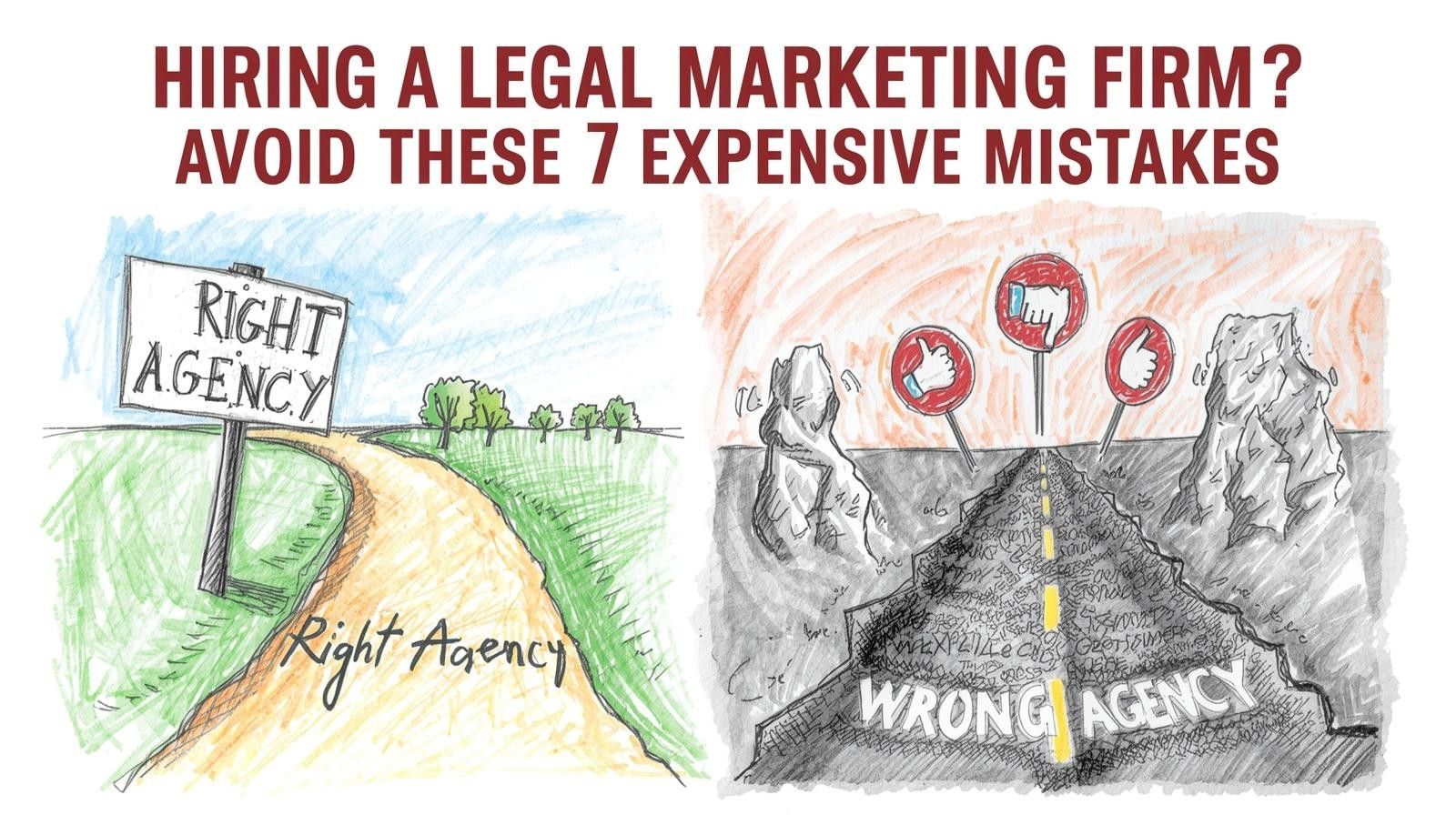
Before you sign a contract, your most important job is learning how to spot a bad legal marketing firm from a good one. It’s a critical skill. The right agency is a growth partner, using data-driven strategy to deliver a predictable stream of high-value cases. The wrong one will burn your budget on vanity metrics, use risky tactics that could get your site penalized, and ultimately waste your time.
This guide is your playbook for vetting agencies. It will arm you with the right questions to ask and the red flags to watch for, ensuring you make an informed decision that drives real growth for your practice.
Red Flags: How to Spot an Underperforming Legal Marketing Firm
The legal marketing landscape is crowded with agencies making bold claims. If a promise sounds too good to be true, it almost certainly is. Your first line of defense is recognizing the warning signs of a firm that talks a big game but can't deliver results that matter.
The most common red flag is a guarantee of "#1 rankings on Google." No one can ethically or practically promise this. Google's algorithm is complex and constantly changing. An agency that guarantees a specific rank is either dangerously naive or willing to use risky shortcuts that will hurt you in the long run.
Another major warning sign is an obsession with vanity metrics. If a potential partner's pitch is full of talk about clicks, impressions, or website traffic without connecting those numbers to your actual business goals, you should be skeptical. For a law firm, only a few metrics truly matter:
- Cost Per Qualified Lead (CPQL)
- Cost Per Signed Case (CPSC)
- Marketing Return on Investment (ROI)
If they can't have a detailed conversation about how they track and improve these specific KPIs, they aren't equipped to grow your firm. You'll get impressive-looking reports filled with numbers that do nothing for your bottom line, which is a key reason why law firm marketing agencies waste money.
Deceptive Tactics and "One-Size-Fits-All" Strategies
Beyond empty promises, you need to watch out for actively harmful practices. Some agencies still use "Black Hat" SEO—deceptive tactics like buying low-quality links or stuffing pages with invisible keywords to try and game the system.
While this might produce a temporary spike in rankings, it always ends badly. Google's penalties for such practices are severe and can lead to your website being completely removed from search results. A professional agency focuses on sustainable, ethical strategies that build your firm's authority and online presence for the long term.
Perhaps the most damaging red flag is the "one-size-fits-all" approach. An agency that applies the same marketing playbook to a personal injury practice and a corporate M&A firm fundamentally misunderstands legal marketing.
The client journey for SEO for estate planning attorneys is completely different from the strategy required for marketing for criminal defense law firms. A true growth partner begins by deeply understanding your specific practice area, ideal client profile, and business objectives. They then build a custom strategy designed to attract the high-value cases you want. Anything less is a blueprint for a failed partnership.
The Agency Scorecard: 15 Questions to Ask Before Hiring
A strong partnership begins with asking the right questions. Your goal is to cut through the sales pitch and uncover an agency's true capabilities. Think of this not as an interview, but as a due diligence process to find a genuine growth partner for your firm.
These questions will reveal how they approach strategy for different practice areas—from lead generation for IP lawyers to a hyper-focused local SEO for family law practices campaign. This is about covering all your bases before you commit.
Before we dive into the questions, let's look at the common pitfalls.
This image highlights three critical red flags: an obsession with vanity metrics that don't translate to revenue, the use of risky "Black Hat" SEO that can damage your firm's reputation, and the generic one-size-fits-all strategy that ignores the unique needs of your practice.
To systematically evaluate potential partners, use this scorecard during your calls.
Agency Vetting Scorecard: Key Questions
Category
Key Question to Ask
What a Good Answer Looks Like
Strategy & Niche Expertise
"Walk me through the differences in your approach for a high-volume personal injury firm versus a low-volume, high-value corporate law firm. What channels and KPIs would you prioritize for each?"
They should immediately discuss different client journeys, lead qualification processes, and KPIs. For PI, they might talk about cost-per-lead and intake volume. For corporate, they should focus on relationship-building, content authority, and tracking longer sales cycles. A vague "we'd use SEO and PPC for both" is a bad sign.
Legal Ethics & Compliance
"How do you stay current with state bar advertising rules? Can you give me an example of a time you advised a client against a tactic for compliance reasons?"
A strong answer will mention specific bar association guidelines or rules (e.g., rules against promising specific outcomes). They should easily recall a time they pumped the brakes on a client's idea, showing they prioritize your firm's integrity over a quick marketing win.
Reporting & KPIs
"What does your monthly performance report look like? Will we see metrics that matter to my bottom line, like Cost Per Signed Case, or just top-of-funnel data like clicks and impressions?"
The best agencies will show you a sample report that ties directly to business outcomes. They'll talk about tracking leads through your intake process and measuring actual revenue generated. If their report is just a wall of vanity metrics (clicks, impressions, bounce rate), they aren't focused on your growth.
Communication & Workflow
"Who will be our primary point of contact, and what is their background? What's your standard response time for emails and calls?"
Look for a clear answer. "You'll have a dedicated account manager with X years of legal marketing experience." They should have a stated service level agreement (SLA) for communication, like "we respond to all inquiries within 4 business hours." Vague answers suggest you might get passed around a support desk.
Technology & Tools
"What marketing technology do you use? Specifically, what CRM and reporting dashboards will we have access to?"
They should name their core tools (e.g., CallRail, LawLytics, a specific CRM) and explain why they use them. Mentioning which of the best CRM for marketing agencies they use can reveal a lot about their process. Bonus points if they offer a client-facing dashboard for real-time visibility.
This scorecard is more than a checklist; it’s a framework for deep evaluation. The quality of their answers will reveal their strategic depth, operational transparency, and commitment to your firm’s success.
For more context on what sets top agencies apart, our guide to the best law firm marketing agencies is an excellent resource.
A top-tier legal marketing firm won't just answer these questions—they'll welcome them. They are eager to demonstrate how they measure success in terms of your firm's revenue, have a clear process for communication, and are proud to explain how their systems directly benefit your bottom line.
Understanding KPIs: How to Demand Metrics That Matter
It’s easy to be impressed by a report showing a surge in clicks or website traffic. But impressions don’t pay salaries, and clicks don’t sign retainer agreements. When a prospective legal marketing firm leads with these "vanity metrics," they are showing you activity, not results.
A true growth partner, however, focuses on the key performance indicators (KPIs) that directly impact your firm's revenue. The difference between vanity metrics and business metrics is the difference between an expense and an investment.
From Vanity Metrics to Business Metrics
Underperforming agencies love vanity metrics because they are easy to manipulate and look impressive on a surface level. But a spike in website visitors is meaningless if none of them are qualified potential clients with a case you can take.
A results-driven firm will pivot the conversation to business metrics—the numbers that draw a straight line from your marketing spend to your bottom line.
Key Business Metrics to Demand:
- Cost Per Qualified Lead (CPQL): This is your first real filter. It measures the cost to acquire a lead who fits your ideal client profile, cutting through the noise of spam calls and irrelevant inquiries to reveal true lead generation efficiency.
- Cost Per Signed Case (CPSC): This is the ultimate bottom-line metric. It tells you exactly how much marketing investment was required to acquire a new, paying client. For most law firms, this is the gold standard for measuring campaign success.
- Marketing Return on Investment (ROI): This KPI answers the most important question: "For every dollar we spend on marketing, how many dollars are we generating in revenue?" This is what transforms marketing from a cost center into a predictable profit driver.
A top-tier agency doesn't just send you a report—they help you build the systems to track these metrics. They will want to integrate with your intake process to see which leads convert into clients, because their success is tied to yours.
Putting It All Together for Real Growth
Imagine you run a personal injury firm. An agency reports a 50% increase in website traffic. Fantastic, right? But if your CPQL has skyrocketed because that traffic is from people searching for unrelated legal issues, the campaign is an expensive failure.
Now, consider a campaign that brings a modest 10% traffic increase, but your Cost Per Signed Case drops by 30%. That's a massive win. It demonstrates the agency is attracting higher-quality prospects who convert efficiently, directly boosting your profitability. You can learn more about this in our complete guide to understanding your cost per acquisition.
Ultimately, a strong marketing partnership is built on financial clarity. A well-run, accountable marketing program can deliver a strong return on investment over time, highlighting the value that strategic, accountable marketing delivers. Explore more powerful legal marketing statistics to see what’s possible.
When you demand focus on the right KPIs, you are no longer just spending on marketing—you are making a calculated investment in your firm's growth.
Aligning Marketing Services with Practice Area Goals
Every law practice is unique. A marketing strategy that floods one firm with clients can be a complete waste of money for another. The biggest mistake a legal marketing firm can make is applying a one-size-fits-all template to every client. An experienced agency knows the strategy must be custom-built around your practice area, your ideal client, and your business model.
Consider a personal injury firm. Their model is often built on volume and speed. They need to connect with local people facing an immediate, urgent problem. This demands an aggressive focus on local SEO, a perfectly optimized Google Business Profile, and often a significant budget for paid search ads. The goal is to be the first name a potential client sees the moment they start searching for help.
Now, contrast that with a corporate M&A practice or an intellectual property firm. It's a different world entirely. The client journey is longer, more considered, and built on trust and authority. Decision-makers are methodical, and you win their business over time by proving you are the definitive expert in your field.
Tailoring Strategies for High-Value Niches
For these specialized, B2B-focused practices, the marketing playbook shifts dramatically from high-volume lead generation to building unshakeable authority. A smart marketing plan for them will prioritize:
- Content Marketing: Developing in-depth whitepapers, detailed case studies, and insightful articles that demonstrate mastery of complex fields like securities law or international arbitration.
- LinkedIn & B2B Funnels: Creating precise campaigns that target specific general counsels or C-suite executives, then nurturing those relationships over months, not days.
- Thought Leadership: Securing speaking engagements, publishing in respected industry journals, and building a powerful professional brand online.
The metrics for success also look different. Instead of just counting leads, a good agency will track engagement from target companies, growth in key professional network connections, and the quality of inquiries from your ideal corporate clients. Understanding the full range of proven law firm marketing strategies is the first step to determining which will attract the clients you want.
Your marketing partner must be able to explain, in detail, how their strategy for marketing a criminal defense firm would differ from generating leads for an IP lawyer. If they give you a generic answer, they lack the specialized expertise you need to succeed.
Data backs this up. High-growth firms consistently demonstrate success through a sophisticated, data-driven approach to marketing. They don't just "do digital marketing"; they build comprehensive online systems for client engagement.
The right agency won’t pitch you a package on the first call. They'll start by asking incisive questions to deeply understand your practice, your clients, and your goals. That is the only way to build a custom strategy, whether it’s designed to dominate local search or establish your firm as a national authority.
For a closer look at how this applies to a specific practice area, check out our guide on SEO for personal injury lawyer marketing.
Navigating Agency Pricing and Contract Terms
Getting the pricing and contract right is the foundation of a healthy, transparent partnership. Before you look at the numbers, you need to understand how agencies structure their fees. Each model creates different incentives and risks for your firm.
You’ll typically encounter three main structures: monthly retainers, project-based fees, and performance-based agreements. The best fit depends on your firm’s budget, risk tolerance, and growth goals.
Decoding Pricing Models
The most common model is the monthly retainer. You pay a fixed fee each month for a defined scope of services, like ongoing SEO, content marketing, and paid media management. This model offers predictability, allowing you to budget effectively and ensuring the agency dedicates consistent resources to your account.
Next are project-based fees, ideal for one-off initiatives like a complete website redesign, a new brand identity, or a targeted campaign for a new practice area. You agree on a flat fee for a project with a clear start and end date.
Finally, there are performance-based agreements, which tie the agency’s compensation directly to specific results, such as the number of qualified leads or signed cases. While this sounds appealing, these agreements must be structured carefully to ensure the agency is incentivized to pursue quality over sheer quantity.
Scrutinizing Critical Contract Terms
The price is just one part of the equation. The real protection lies in the fine print. This is not a document to skim.
The single most important, non-negotiable term is ownership of your digital assets. Your law firm must, without exception, retain 100% ownership of your website, domain name, ad accounts, and analytics data. An agency should only ever have administrative access. If they push to create these assets under their own name, it is a massive red flag.
Beyond asset ownership, here are other key clauses to focus on:
- Contract Length: Is it a 6-month or 12-month commitment? The term should be long enough for strategies like SEO to yield results, but not so long that you feel trapped.
- Termination Clause: How do you exit the agreement if it's not working out? Look for a reasonable notice period, such as 30 days, without exorbitant penalties.
- Exclusivity: Does the contract prevent the agency from working with your direct competitors in your geographic market? This clause is crucial for protecting your competitive advantage.
It's a high-stakes environment. With billions of social media users globally, many law firms generate leads on these platforms, and a large share outsource their marketing to get it done right. This makes choosing the right partner—and signing a fair contract—more critical than ever.
Taking the time to understand these details protects your firm and your investment from day one. To get a better sense of what's coming, explore more 2025 advertising trends for law firms.
Making the Right Choice for Your Firm
Choosing a growth partner is one of the most significant decisions you will make for your practice. By now, you should have a solid framework for identifying a true strategic partner and avoiding the wrong ones. The process boils down to a methodical evaluation of their expertise, transparency, and focus on your firm's bottom line.
Dismiss any legal marketing firm that guarantees #1 rankings or focuses on vanity metrics. Use the vetting questions we've covered to probe their understanding of your specific practice area. A top-tier agency will welcome detailed questions about how they would approach lead generation for IP lawyers versus local SEO for family law practices.
A Framework for Your Final Decision
As you compare your top candidates, run them through this final three-point check:
- Specialization: Do they demonstrate a deep, nuanced understanding of legal ethics, the client journey in your practice area, and the competitive landscape? Generalist agencies often learn on your dime.
- Transparency: Are their reporting, pricing, and contract terms crystal clear? A good partner is eager to show you how they measure ROI and prove their value, not hide behind confusing data.
- Strategic Alignment: Does their proposed strategy feel custom-built for your firm, or does it sound like a generic package they sell to everyone? The right partner invests time upfront to understand your business inside and out.
This entire process is designed to ensure you're not just hiring a vendor to check off tasks. You are selecting a partner who is genuinely invested in your firm's growth. For a deeper dive into evaluating potential agencies, our guide on choosing from the top marketing firms for attorneys offers more context.
The right agency doesn't just promise more website traffic—they deliver a predictable system for acquiring high-value cases. They connect every marketing action back to a tangible business result, turning your marketing budget into a powerful engine for growth.
If you’re ready to partner with a firm that understands the business of law and is committed to delivering measurable results, we should talk.
Ready to see what a true growth partnership looks like? Book a complimentary strategy session with GavelGrow today and let's build a clear roadmap for your firm's success.
Common Questions We Hear From Law Firms
When looking to hire a marketing firm, many questions arise. It's smart to have concerns, and getting straight answers is key to building a strong partnership. Here are some of the most common questions we hear from managing partners and marketing directors.
How Long Until We Actually See Results from SEO?
This is the most frequent question, and the honest answer is: it takes time. You will likely see early positive momentum—such as an increase in organic traffic—within 3-4 months. However, to achieve a steady, predictable stream of high-quality leads from search engines, you should plan for 6-12 months.
SEO is a long-term investment in building your firm's online authority, not an instant-on solution. A reputable agency will be transparent about this. They will show you leading indicators of success along the way, such as month-over-month gains in keyword rankings, organic traffic growth, and an increase in inquiries for your target practice areas.
What’s a Realistic Marketing Budget for a Law Firm?
There is no single magic number. A realistic budget depends on your practice area, the competitiveness of your market, and your growth goals. As a general guideline, many firms successfully invest 5-10% of their gross revenue into marketing.
However, context is critical. A personal injury firm in a major metropolitan area requires a significantly larger budget to compete than an estate planning firm in a smaller town.
A trustworthy agency will not give you a generic number. They will first conduct a thorough analysis of your market and objectives to build a budget recommendation tied to a realistic ROI forecast.
Should I Hire a Generalist Agency or a Legal-Specific One?
Almost every time, hiring a dedicated legal marketing firm is the smarter choice. The legal industry has unique advertising ethics, a sensitive client journey, and specific terminology that generalist agencies often misunderstand.
A firm that specializes in legal marketing already understands the nuances. They know what strategies work for PI versus family law and how to create campaigns that connect with your target clients while adhering to all professional guidelines. A generalist agency often has to learn these critical lessons on your dime, leading to wasted budget and potential compliance issues.
Who Owns My Website and Ad Accounts?
This is a non-negotiable deal-breaker. Your law firm must always retain 100% ownership of your core digital assets. This includes your website domain, your hosting account, and all of your advertising accounts (Google Ads, social media, etc.).
Your agency should only ever have administrative access to work within your accounts. If a firm insists on creating these assets under their own name, it is a massive red flag. This practice effectively holds your online presence hostage, making it difficult to leave if the relationship sours. Do not let your firm's digital footprint be controlled by a vendor.
Ready to work with a specialized team at GavelGrow that gets the business of law and is obsessed with transparent, measurable growth? Book a complimentary strategy session with us today, and let’s map out a clear path to success for your firm.
Frequently Asked Questions
What are the biggest red flags when hiring a legal marketing firm?
The most common red flag is a guarantee of "#1 rankings on Google," which no one can ethically promise given Google's constantly changing algorithm. Watch also for an obsession with vanity metrics like clicks and impressions that never connect to revenue, the use of risky "Black Hat" SEO tactics, and a one-size-fits-all strategy applied to every practice area regardless of how clients actually search.
What marketing metrics should a law firm demand from an agency?
Demand business metrics that tie spend to revenue rather than vanity metrics. The three that matter most are Cost Per Qualified Lead (CPQL), which filters out spam and irrelevant inquiries; Cost Per Signed Case (CPSC), the bottom-line measure of what it costs to acquire a paying client; and Marketing Return on Investment (ROI). A results-driven agency helps you build systems to track these, not just report clicks.
Should I hire a generalist agency or a legal-specific marketing firm?
A dedicated legal marketing firm is almost always the smarter choice. The legal industry has unique advertising ethics, a sensitive client journey, and specialized terminology that generalist agencies often misunderstand. A legal-specific firm already knows what works for personal injury versus family law and how to stay compliant with professional guidelines, whereas a generalist tends to learn those lessons on your dime.
Who should own a law firm's website and ad accounts?
Your firm must retain 100% ownership of its core digital assets, including the website, domain name, hosting, and all advertising accounts. An agency should only ever have administrative access to work within them. If a firm insists on creating these assets under its own name, it's a major red flag that effectively holds your online presence hostage and makes leaving difficult.
What contract terms should a law firm scrutinize before hiring an agency?
Beyond asset ownership, focus on contract length, the termination clause, and exclusivity. The term should be long enough for strategies like SEO to yield results but not so long you feel trapped, and the exit clause should have a reasonable notice period, such as 30 days, without exorbitant penalties. An exclusivity clause preventing the agency from working with direct competitors in your market protects your competitive advantage.
Frequently Asked Questions
What are the biggest red flags when hiring a legal marketing firm?
The most common red flag is a guarantee of "#1 rankings on Google," which no one can ethically promise given Google's constantly changing algorithm. Watch also for an obsession with vanity metrics like clicks and impressions that never connect to revenue, the use of risky "Black Hat" SEO tactics, and a one-size-fits-all strategy applied to every practice area regardless of how clients actually search.
What marketing metrics should a law firm demand from an agency?
Demand business metrics that tie spend to revenue rather than vanity metrics. The three that matter most are Cost Per Qualified Lead (CPQL), which filters out spam and irrelevant inquiries; Cost Per Signed Case (CPSC), the bottom-line measure of what it costs to acquire a paying client; and Marketing Return on Investment (ROI). A results-driven agency helps you build systems to track these, not just report clicks.
Should I hire a generalist agency or a legal-specific marketing firm?
A dedicated legal marketing firm is almost always the smarter choice. The legal industry has unique advertising ethics, a sensitive client journey, and specialized terminology that generalist agencies often misunderstand. A legal-specific firm already knows what works for personal injury versus family law and how to stay compliant with professional guidelines, whereas a generalist tends to learn those lessons on your dime.
Who should own a law firm's website and ad accounts?
Your firm must retain 100% ownership of its core digital assets, including the website, domain name, hosting, and all advertising accounts. An agency should only ever have administrative access to work within them. If a firm insists on creating these assets under its own name, it's a major red flag that effectively holds your online presence hostage and makes leaving difficult.
What contract terms should a law firm scrutinize before hiring an agency?
Beyond asset ownership, focus on contract length, the termination clause, and exclusivity. The term should be long enough for strategies like SEO to yield results but not so long you feel trapped, and the exit clause should have a reasonable notice period, such as 30 days, without exorbitant penalties. An exclusivity clause preventing the agency from working with direct competitors in your market protects your competitive advantage.