Social Media Marketing For Small Businesses: Step-by-Step
Categories: Legal Marketing Strategies
 Abram Ninoyan
Founder & Senior Performance Marketer
Credentials: Google Partner, Google Ads Search Certified, Google Ads Display Certified, Google Ads Measurement Certified, Google Analytics (IQ) Certified, HubSpot Inbound Certified, HubSpot Social Media Marketing Certified, Conversion Optimization Certified
Expertise: Google Ads, Meta Ads, Conversion Rate Optimization, GA4 & Google Tag Manager, Lead Generation, Marketing Funnel Optimization, PPC Management
LinkedIn Profile
Most law firms qualify as small businesses, and like any small business, they need a steady stream of new clients to grow. Social media marketing for small businesses has become one of the most effect...
Key Takeaways
- Social Media Marketing For Small Businesses: Step-by-Step
- What social media can do for a small business
- Step 1. Set goals, audience, and your offer
- Step 2. Choose platforms and set up profiles
Social Media Marketing For Small Businesses: Step-by-Step
Most law firms qualify as small businesses, and like any small business, they need a steady stream of new clients to grow. Social media marketing for small businesses has become one of the most effective ways to build that pipeline, yet many attorneys either ignore it entirely or post without a plan. The result? Wasted time and zero return.
At GavelGrow, we've helped over 500 law firms build marketing systems that actually generate signed cases. Social media is a key piece of that puzzle. When done right, it builds trust with potential clients long before they ever pick up the phone. When done wrong, it's just noise. The difference comes down to strategy over randomness, knowing which platforms matter for your audience, what content earns attention, and how to turn followers into consultations.
This guide breaks down exactly how small businesses (including law firms) can build a social media presence from scratch, step by step. You'll learn how to choose the right platforms, create content that resonates, set measurable goals, and track what's actually working. Whether you're a solo practitioner handling your own marketing or a firm administrator managing growth, this is a practical roadmap you can start executing today.
What social media can do for a small business
Social media is not just a place to share updates. For small businesses, it's a client acquisition channel that works around the clock, building familiarity with your brand before a potential client ever searches for your services. When someone faces a legal issue, a family dispute, or a business problem, they're far more likely to call a firm they already recognize than one they find for the first time in a moment of stress.
Build brand awareness before clients need you
Most people don't need an attorney the moment they first encounter your firm. They might see your post about tenant rights today and need an eviction defense attorney six months from now. Consistent visibility across social platforms keeps your firm top of mind during that gap. A personal injury firm in Austin, for example, might regularly post content about what to do after a car accident. When someone in their network gets rear-ended, that firm is the first name they think of, not the one that ran a generic ad last week.
The businesses that win on social media are the ones that show up consistently before the need arises, not just when they're running a promotion.
This works because social media compresses the trust-building timeline significantly. A potential client who has watched your videos, read your posts, and seen real client outcomes already feels like they know you. That familiarity shortens the decision-making process and increases the likelihood they call you rather than a competitor.
Generate leads and drive consultations
Social media marketing for small businesses goes well beyond awareness. Platforms like Facebook and LinkedIn let you run targeted paid campaigns that put your services directly in front of people in your geographic area who match the profile of your ideal client. A family law attorney can target recently separated individuals. A criminal defense firm can reach people who have searched for related legal information in the past 30 days.
Beyond paid ads, organic content also drives direct inquiries from people who find your posts through shares or searches. A single educational post answering a common legal question, such as "What happens if I miss a court date?", can generate comments and direct messages from people who need exactly that kind of help. Each interaction is a potential consultation, and those consultations cost you nothing but a well-written post.
Compete with larger firms on a smaller budget
One of the biggest advantages of social media for small businesses is cost efficiency. A well-executed organic content strategy costs primarily your time, not media spend. You don't need a television budget to reach thousands of people in your city. A consistent posting schedule, clear messaging, and a complete profile can put a solo practitioner in front of the same local audience that a large regional firm pays heavily to reach through traditional advertising.
Paid social also lets you control your spending with precision. You set daily or monthly budget caps, and most platforms let you pause or adjust campaigns instantly. This makes social media one of the most flexible marketing channels available to firms with limited budgets. Start small, test what resonates, and scale up once you see which content and targeting combinations generate actual consultations.
Step 1. Set goals, audience, and your offer
Before you post a single piece of content, you need to know what you're trying to accomplish. Skipping this step is the most common reason social media marketing for small businesses fails to produce results. Without clear goals, you have no way to judge whether your effort is paying off, and you'll end up producing content that feels busy but drives nothing.
Define what success looks like
Your goals should be specific and tied to business outcomes, not just engagement metrics like likes or shares. A family law firm might set a goal of generating 10 new consultation requests per month from social media. A personal injury firm might aim to build a local audience of 500 followers within 90 days. Tie each goal to a number and a deadline so you can actually measure progress.
Vague goals produce vague results. If you can't measure it, you can't improve it.
Here are three goal types worth setting from day one:
- Awareness goal: Reach 5,000 people in your metro area within 60 days through organic posts and boosted content.
- Lead generation goal: Drive 15 direct messages or form submissions per month directly from your social profiles.
- Referral goal: Re-engage past clients with monthly educational content to generate two to three referrals per month.
Know exactly who you're targeting
Your audience definition drives every content decision you make, from tone to platform to topic. Start by describing your ideal client in specific terms: their age range, location, the problem they face, and where they spend time online. A criminal defense attorney in Chicago, for example, targets working adults aged 25 to 45 who are anxious about an arrest and searching for credibility and reassurance.
Build a simple one-paragraph audience profile you can reference every time you plan content. Writing to a specific person always produces sharper, more effective content than writing to a broad, undefined group.
Clarify your core offer
Your social media content needs to connect directly to the service you want people to hire you for. If you're a personal injury attorney, every post should reinforce your ability to win compensation for injured people. Pick one or two core practice areas to lead with on social media, and resist the urge to promote everything at once. Clarity about your offer makes it far easier for the right client to self-identify and reach out.
Step 2. Choose platforms and set up profiles
Picking the wrong platform wastes months of effort on an audience that will never hire you. Social media marketing for small businesses works best when you match your platform to where your ideal client actually spends time, not where you feel most comfortable posting. Start with one or two platforms and build a strong presence there before expanding to others.
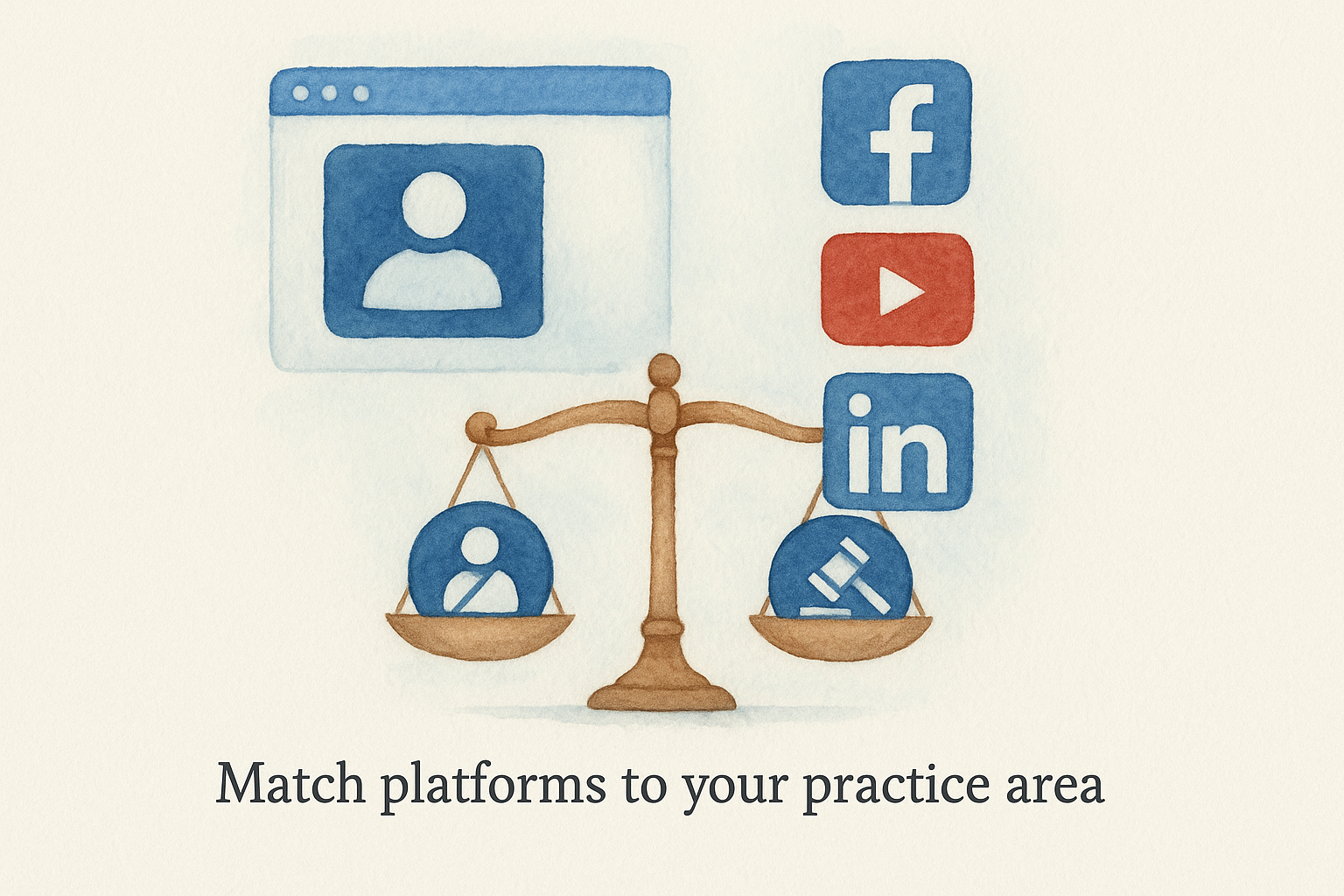
Match platforms to your practice area
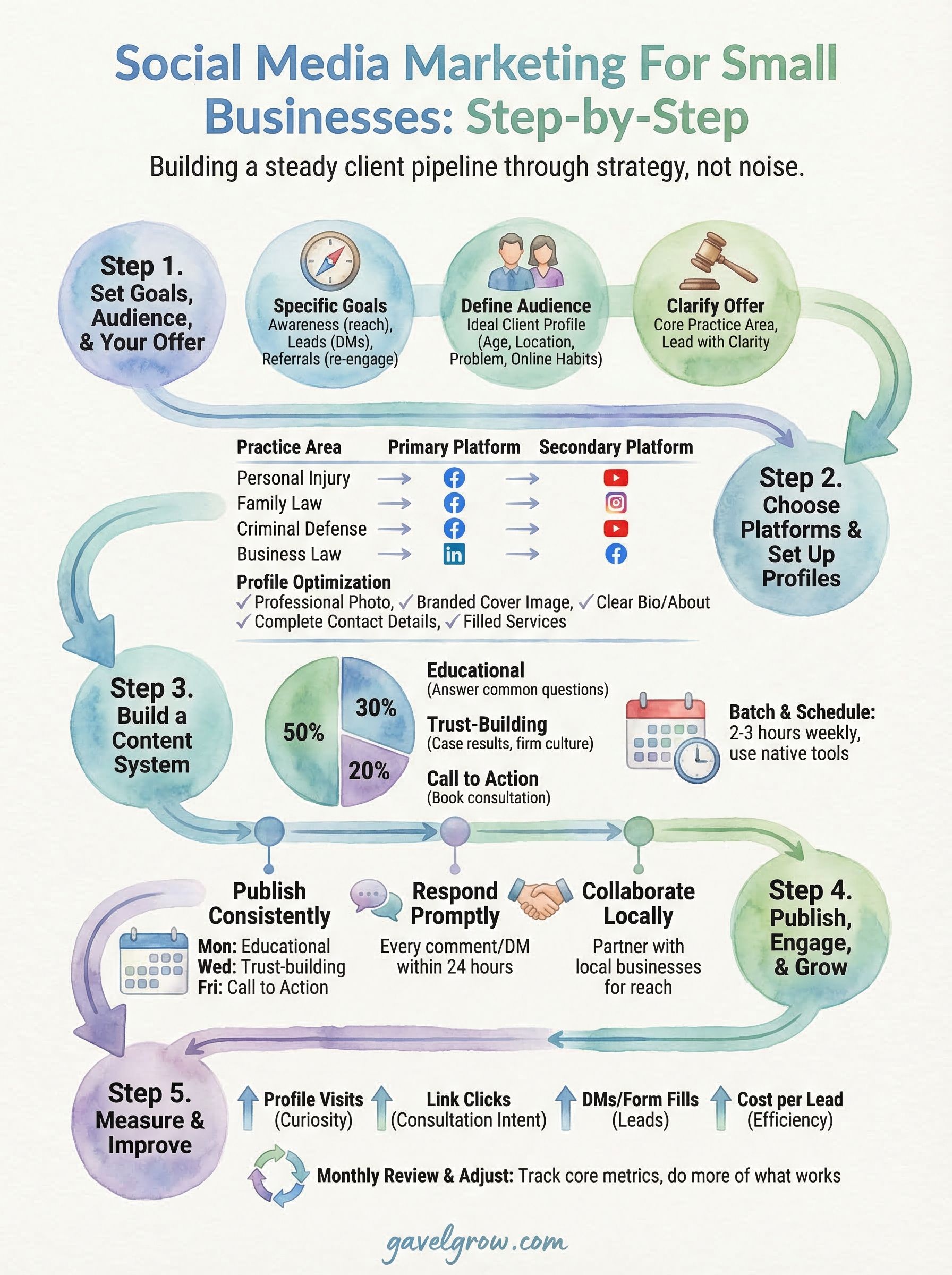
Every platform attracts a different demographic, and your choice should be driven by your client profile, not trends. A personal injury attorney targeting adults aged 30 to 55 in a specific metro area will see stronger results on Facebook than on TikTok. A business law firm reaching entrepreneurs and executives should prioritize LinkedIn. The table below maps common practice areas to the platforms most likely to generate consultations.
Spreading yourself across five platforms at once guarantees mediocrity on all of them. Pick two and own them completely before adding a third.
Set up profiles that convert visitors into leads
A complete, professional profile is the first thing a potential client judges before they ever read your content. Your profile photo, cover image, and bio need to communicate exactly who you serve and what you do within the first three seconds of someone landing on your page. Use your firm name as your handle, add your phone number and website URL, and write a clear one-sentence description of your practice area and location.
Fill in every available field the platform offers. On Facebook, that means completing your services section, adding your hours, and enabling the booking or contact button. On LinkedIn, that means writing your firm's about section with specific client outcomes, not generic statements about dedicated legal representation. A complete profile also signals credibility to Google, which indexes public social profiles and can surface them in local search results.
Run through this checklist on every platform before you publish your first post:
- Profile photo: professional headshot or firm logo, minimum 400x400 pixels
- Cover image: branded graphic that includes your practice area and city
- Bio or about section: includes practice area, city, and a direct call to action
- Contact details: phone number, email address, and website URL
- Services or specialty fields: filled out completely with relevant practice areas
Step 3. Build a content system you can maintain
The biggest reason small businesses fall off social media is not a lack of ideas but a lack of a system. Posting consistently is what builds an audience over time, and consistency only happens when you have a repeatable process you can follow every week without burning out. Before you write a single caption, build the system that makes the content predictable and manageable.
Create a content mix that covers three purposes
Every post you publish should serve one of three jobs: educate your audience, build trust, or prompt action. If you only post promotional content, followers tune you out. If you only post educational content, you never convert readers into clients. A balanced content mix keeps your feed valuable while still driving consultations consistently.
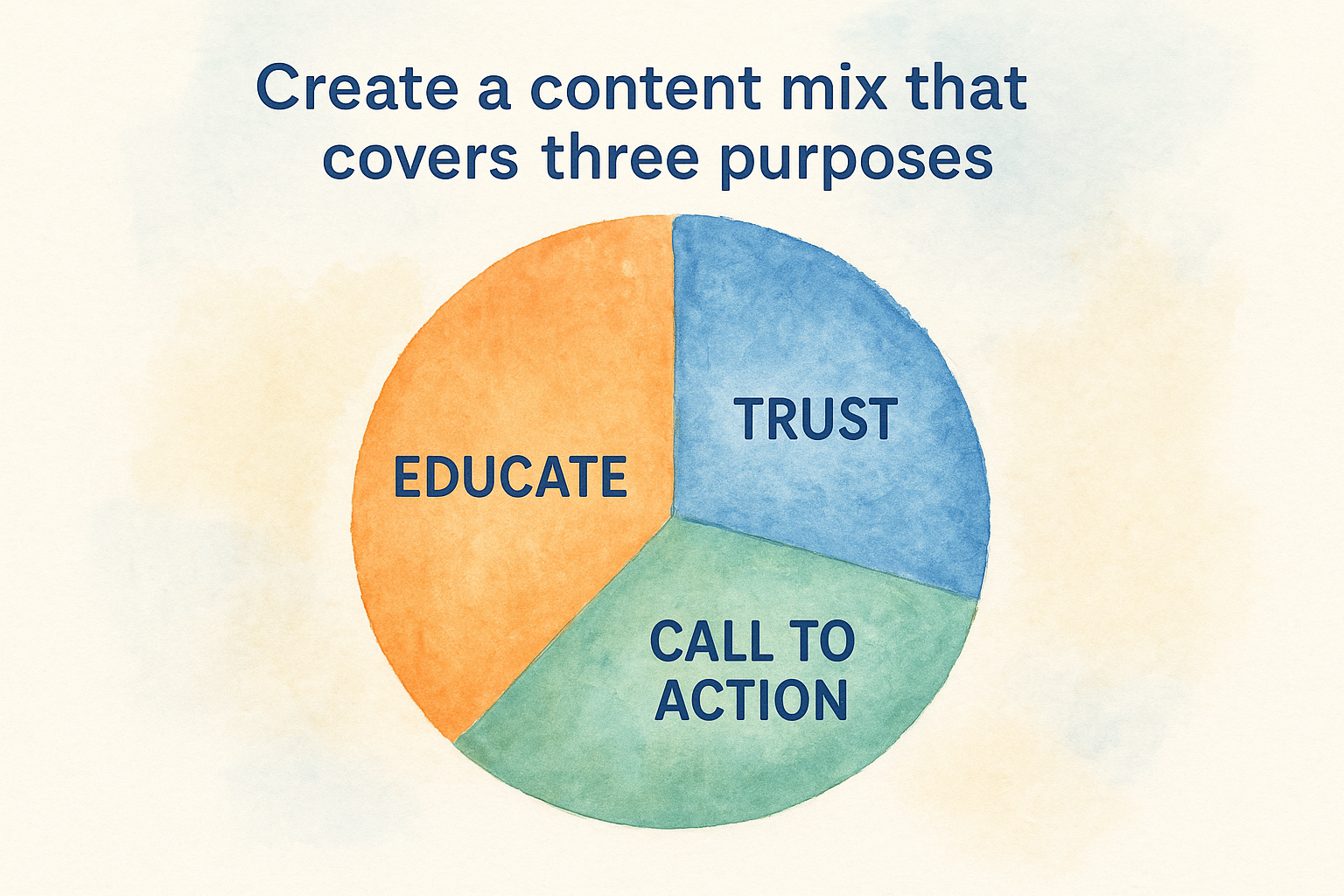
Use this three-part framework for your weekly posting schedule:
- Educational (50%): Answer the questions your clients ask most during consultations. A family law attorney might post "What factors affect child custody decisions?" These posts attract people actively searching for answers and position you as the expert worth calling.
- Trust-building (30%): Share case results within ethical rules, behind-the-scenes firm culture, attorney bios, and community involvement. This content humanizes your firm and makes potential clients comfortable enough to reach out.
- Call to action (20%): Clear, direct posts that invite followers to book a free consultation, call your office, or visit a specific page. These posts convert interest into actual appointments.
A content calendar built around this three-part mix removes the guesswork from every single posting day.
Batch your content and schedule it in advance
Trying to create content on the day you plan to post it leads to inconsistency and rushed output. Instead, set aside two to three hours once per week to write, design, and schedule your next five to seven posts in a single session. This approach keeps your social media marketing for small businesses effort sustainable even during your busiest weeks.
Use a free native scheduling tool like Meta Business Suite for Facebook and Instagram, or LinkedIn's built-in scheduling feature, so you are not paying for third-party software before you have proven traction. Block the same time slot every week in your calendar and treat it like a client appointment you cannot cancel. Protecting that dedicated block is what separates firms that grow on social media from ones that post for three weeks and disappear.
Step 4. Publish, engage, and grow your reach
Publishing your first post is not the finish line. Consistent execution and genuine interaction with your audience are what turn a dormant profile into a client acquisition channel. Social media marketing for small businesses only compounds in value when you show up repeatedly and respond to the people who engage with your content.
Stick to your publishing schedule without exception
Your audience builds expectations based on how often you show up. If you post three times per week, do it every week without skipping. A predictable cadence signals reliability, which matters enormously to potential clients who are evaluating whether to trust you with a serious legal matter. Set your publishing days in advance, stick to the schedule you built in Step 3, and treat every missed post as a direct cost to your visibility.
Algorithms on every major platform reward accounts that publish consistently by distributing their content to a wider audience over time.
Use this simple weekly publishing template to keep your schedule on track:
Respond to every comment and message within 24 hours
Engagement is a two-way conversation, not a broadcast. When someone comments on your post or sends a direct message, respond promptly and by name if possible. A personal injury attorney who replies "Hi Sarah, great question, here's what you should know about uninsured motorist claims..." demonstrates real attention in a way that no automated response can replicate. That personal reply is often the moment a follower decides to book a consultation.
Platforms like Facebook also factor response time into how prominently they display your profile in local searches. Firms that respond quickly receive a "very responsive" badge, which increases trust with visitors who land on your page for the first time.
Grow your reach by collaborating with local accounts
Your own posting only reaches your existing followers. To expand beyond your current audience, partner with local businesses, community organizations, or complementary professionals who share your target client. A family law attorney might collaborate with a local financial planner by sharing each other's educational content. Tag the partner account in the post so their followers see your name and can follow your profile directly. Each collaboration extends your reach to a warm, locally relevant audience without any additional ad spend.
Step 5. Measure ROI and improve every month
Publishing and engaging are only half the job. Measuring what your effort actually produces is what separates a social media strategy that compounds over time from one that stays flat for months. Social media marketing for small businesses only improves when you review your numbers regularly and make decisions based on data, not gut feel.
Track the metrics that connect to consultations
Not every number the platform shows you is worth your attention. Vanity metrics like total likes or follower counts tell you almost nothing about whether your content is generating real business. Focus instead on the metrics that sit one step closer to a signed case.

Here are the four numbers to track every month, along with what each one tells you:
If your link clicks are high but your consultations are low, the problem is your intake process, not your social media strategy.
Pull these numbers from your platform's built-in analytics on the same day each month. Facebook and Instagram analytics are available directly inside Meta Business Suite at no cost, and LinkedIn provides page analytics under the "Analytics" tab on your firm's profile page.
Run a monthly review and adjust your approach
Set aside 30 minutes at the end of each month to review your four core metrics side by side. Compare them to the previous month and ask two questions: which post type drove the most link clicks, and which post type drove the most direct messages? Doing more of what worked and cutting what produced nothing is the entire improvement loop.
Build a simple monthly log using a spreadsheet with five columns: month, profile visits, link clicks, leads, and cost per lead if running ads. After three months of consistent data, patterns become clear. A criminal defense firm might discover that video posts consistently produce twice the link clicks of text posts, which tells them exactly where to invest their content time going forward.
Wrap-up and next steps
Social media marketing for small businesses works when you follow a clear sequence: set specific goals, choose the right platforms, build a content system, publish consistently, and measure what actually moves the needle toward signed cases. Each step in this guide builds directly on the last, so skipping any one of them leaves gaps that undercut the rest of your effort.
Start this week by completing just two things: write your audience profile from Step 1 and fill out your social media profiles completely using the checklist from Step 2. Those two actions cost you less than an hour and set the foundation every other step depends on. Once those are in place, build your first content calendar and commit to your publishing schedule.
If you want a custom marketing roadmap built specifically for your firm's practice area and local market, schedule a free strategy consultation with GavelGrow today.
Frequently Asked Questions
How do small businesses start social media marketing?
Follow a clear sequence rather than posting randomly. First, set specific goals tied to business outcomes and define your ideal client and offer. Next, choose one or two platforms where that client spends time and complete your profiles. Then build a maintainable content system, publish consistently while engaging with your audience, and measure results monthly to improve what actually drives consultations.
How can a small business compete with larger firms on social media?
Social media's cost efficiency levels the field. A well-executed organic strategy costs primarily your time, not media spend, so a solo practitioner can reach the same local audience a large firm pays heavily to reach through traditional advertising. Paid social also lets you control spending precisely with daily or monthly caps, so you can start small, test what resonates, and scale up once you see results.
What content mix works best for social media marketing?
Balance three purposes: educate, build trust, and prompt action. A useful framework is roughly 50% educational posts answering common client questions, 30% trust-building content like case results within ethical rules and firm culture, and 20% clear calls to action inviting a consultation or call. This mix keeps your feed valuable while still converting interest into appointments consistently.
How often should a small business post on social media?
Consistency matters more than frequency. Pick a cadence you can sustain, such as three times per week, and hit it every week without skipping, since algorithms reward accounts that publish consistently by widening their reach. Batch your content in a single two-to-three hour weekly session, schedule it in advance with free native tools, and protect that time block like a client appointment.
Which social media metrics should a small business track?
Skip vanity metrics like total likes and follower counts, and focus on numbers one step closer to a signed case, such as profile visits, link clicks, leads, and cost per lead if you run ads. Pull these from built-in platform analytics on the same day each month, compare to the prior month, and do more of what drove clicks and messages. Note that high clicks but low consultations points to your intake process, not your content.
Frequently Asked Questions
How do small businesses start social media marketing?
Follow a clear sequence rather than posting randomly. First, set specific goals tied to business outcomes and define your ideal client and offer. Next, choose one or two platforms where that client spends time and complete your profiles. Then build a maintainable content system, publish consistently while engaging with your audience, and measure results monthly to improve what actually drives consultations.
How can a small business compete with larger firms on social media?
Social media's cost efficiency levels the field. A well-executed organic strategy costs primarily your time, not media spend, so a solo practitioner can reach the same local audience a large firm pays heavily to reach through traditional advertising. Paid social also lets you control spending precisely with daily or monthly caps, so you can start small, test what resonates, and scale up once you see results.
What content mix works best for social media marketing?
Balance three purposes: educate, build trust, and prompt action. A useful framework is roughly 50% educational posts answering common client questions, 30% trust-building content like case results within ethical rules and firm culture, and 20% clear calls to action inviting a consultation or call. This mix keeps your feed valuable while still converting interest into appointments consistently.
How often should a small business post on social media?
Consistency matters more than frequency. Pick a cadence you can sustain, such as three times per week, and hit it every week without skipping, since algorithms reward accounts that publish consistently by widening their reach. Batch your content in a single two-to-three hour weekly session, schedule it in advance with free native tools, and protect that time block like a client appointment.
Which social media metrics should a small business track?
Skip vanity metrics like total likes and follower counts, and focus on numbers one step closer to a signed case, such as profile visits, link clicks, leads, and cost per lead if you run ads. Pull these from built-in platform analytics on the same day each month, compare to the prior month, and do more of what drove clicks and messages. Note that high clicks but low consultations points to your intake process, not your content.