What Is Conversion Rate Optimization? CRO Basics + Tips
Categories: Legal Marketing Strategies
 Abram Ninoyan
Founder & Senior Performance Marketer
Credentials: Google Partner, Google Ads Search Certified, Google Ads Display Certified, Google Ads Measurement Certified, Google Analytics (IQ) Certified, HubSpot Inbound Certified, HubSpot Social Media Marketing Certified, Conversion Optimization Certified
Expertise: Google Ads, Meta Ads, Conversion Rate Optimization, GA4 & Google Tag Manager, Lead Generation, Marketing Funnel Optimization, PPC Management
LinkedIn Profile
Conversion rate optimization (CRO) is the practice of increasing the percentage of website visitors who complete a desired action, filling out a contact form, calling your office, or signing a retaine...
Key Takeaways
- What Is Conversion Rate Optimization? CRO Basics + Tips
- What is conversion rate optimization in marketing?
- Why does conversion rate optimization matter?
- How do you calculate conversion rate and CRO lift?
What Is Conversion Rate Optimization? CRO Basics + Tips
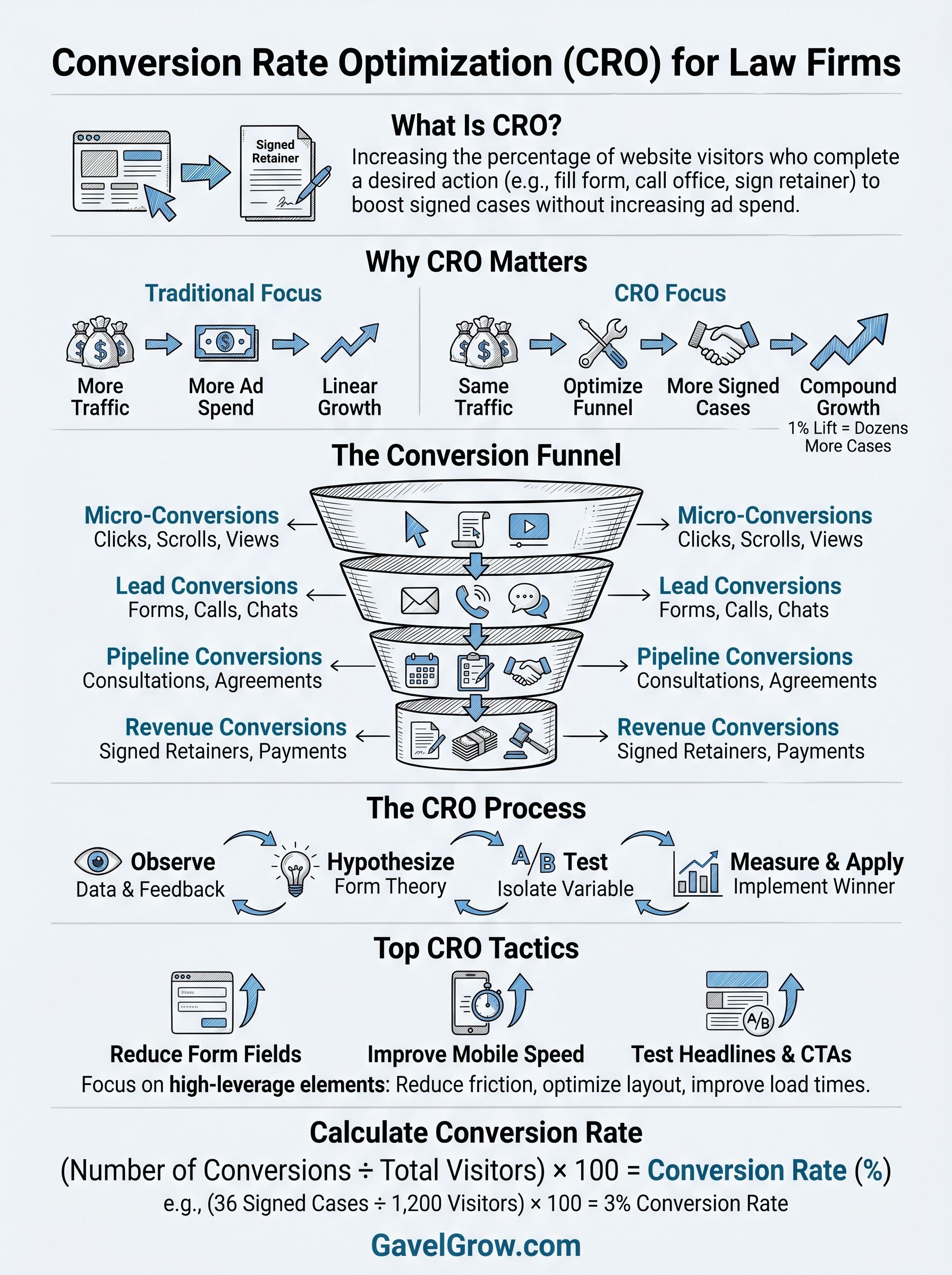
Conversion rate optimization (CRO) is the practice of increasing the percentage of website visitors who complete a desired action, filling out a contact form, calling your office, or signing a retainer. For law firms spending thousands per month on Google Ads or SEO, even a one-percentage-point lift in conversion rate can translate to dozens of additional signed cases per year without touching your ad budget.
Yet most firms obsess over traffic volume while ignoring what happens after the click. A landing page loads slowly on mobile. An intake form asks twelve fields when five would do. A lead submits a request at 9 PM and doesn't hear back until the next afternoon. Each friction point quietly bleeds revenue you already paid to generate. At GavelGrow, we see this pattern across the law firms we work with, and it's exactly why conversion rate optimization deserves as much attention as your ad spend.
This guide breaks down what CRO actually means, how to calculate your conversion rate, why it matters specifically for legal marketing, and practical steps you can apply to your firm's website and intake process starting this week.
What is conversion rate optimization in marketing?
At its core, what is conversion rate optimization describes the structured process of increasing the share of website visitors who take a specific, measurable action. In a marketing context, that action could be submitting a contact form, calling your office, downloading a checklist, or booking a consultation. CRO is not about driving more traffic to your pages; it's about extracting more value from the visitors already arriving.
The goal of CRO is to close the gap between what your marketing spends to bring someone to your site and what your site actually delivers in return.
What counts as a conversion?
A conversion is any measurable action that moves a visitor closer to becoming a paying client. For law firms, the most valuable conversion is a signed retainer, but the path to that outcome passes through several smaller steps. Understanding each step helps you identify exactly where visitors drop off and where targeted fixes can recover revenue you already paid to generate.
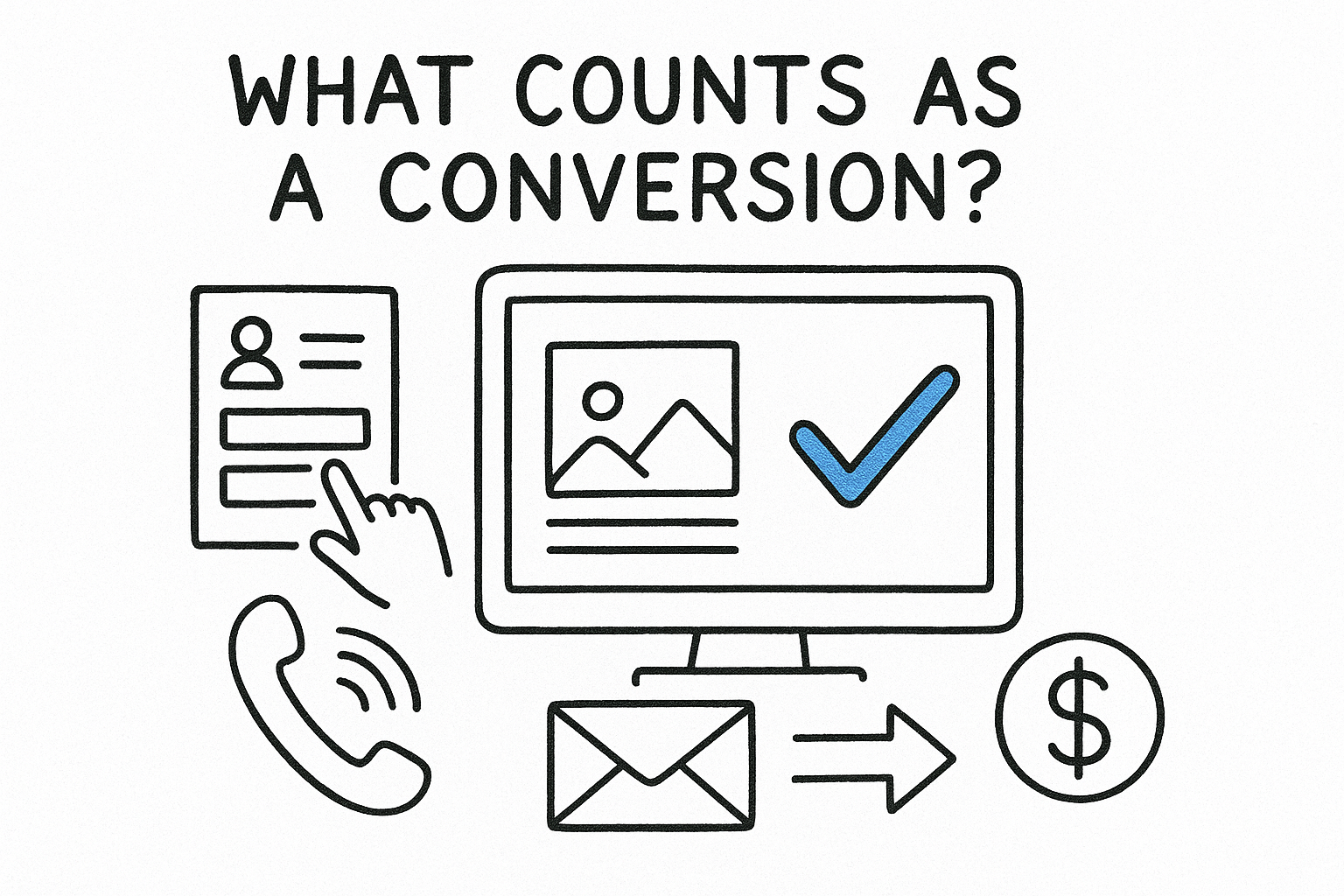
Conversions generally fall into four distinct layers:
- Micro-conversions: page scrolls past 50%, video plays, FAQ section clicks, live chat opens
- Lead conversions: contact form submissions, inbound calls, callback requests, chat transcripts
- Pipeline conversions: scheduled consultations, completed intake questionnaires, signed fee agreements
- Revenue conversions: signed retainers, collected payments, or referred matters
Tracking all four layers gives you a complete picture of your funnel rather than a single number that hides where the real problem lives.
What does "optimization" actually mean in practice?
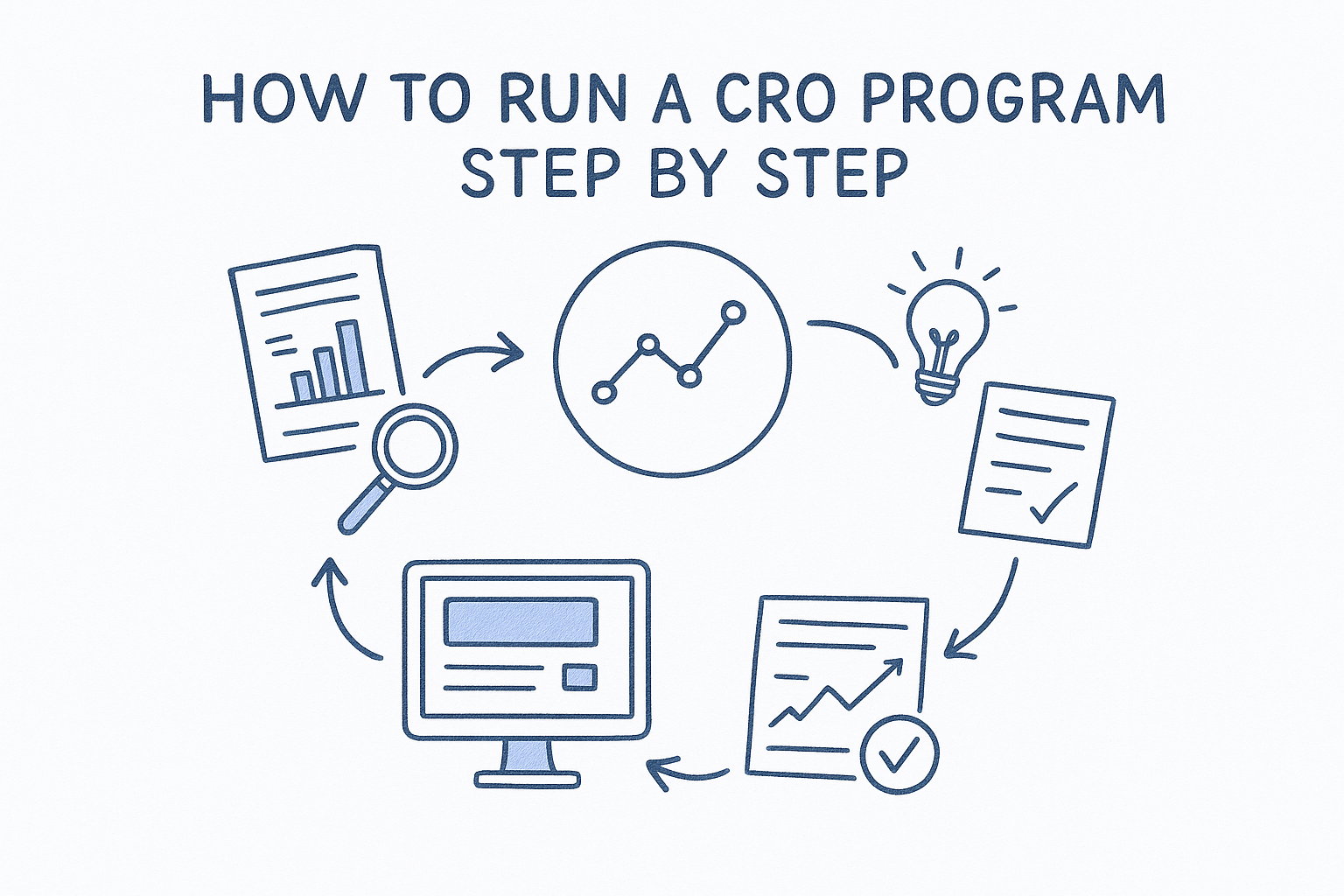
Optimization means running a deliberate, repeatable cycle: observe what real visitors do on your pages, form a hypothesis about why some convert and others don't, test a specific change, measure the result, and apply what works. This is not guessing, and it is not rebuilding your homepage because a competitor's site looks different. Optimization is an evidence-based discipline that treats every element of your website as a variable worth testing against actual visitor behavior.
For law firms, that cycle might start with reviewing call recordings to hear the objections prospects raise before hanging up. It might continue with a scroll-depth report showing that mobile visitors never reach your contact form because it sits below three paragraphs of biography copy. Every observation feeds a hypothesis, and every hypothesis gets tested with real traffic before you commit resources to a permanent change. The result is a conversion rate that improves steadily rather than shifting randomly with traffic fluctuations.
Firms that apply this discipline consistently grow their signed-case volume without increasing ad spend, while those that ignore it keep pouring budget into a leaky funnel. CRO applied over time is a compounding asset because each percentage-point gain multiplies the return on every future dollar you spend to drive traffic.
Why does conversion rate optimization matter?
Understanding what is conversion rate optimization answers one question, but knowing why it matters answers a more practical one: where should you spend your time? Every visitor who reaches your website represents real budget already spent on SEO, paid search, or referral programs. CRO determines how much of that budget actually produces signed cases versus evaporating on a page that fails to persuade.
A 2% conversion rate on a landing page receiving 1,000 monthly visitors produces 20 leads. Lift that rate to 4%, and you get 40 leads from the same traffic, with zero increase in ad spend.
How CRO multiplies your existing marketing budget
Paid traffic costs scale linearly: double your ad spend, roughly double your clicks. CRO scales differently. A structural improvement to your intake form or a faster mobile load time benefits every visitor who arrives from any source, paid or organic, this month and every month afterward. That makes CRO improvements compounding assets rather than one-time expenditures.
For law firms managing monthly ad budgets ranging from $2,000 to $100,000, the math becomes significant quickly. Improving your signed-case conversion rate by even one percentage point across your paid campaigns can recover thousands of dollars in effective cost per acquisition without renegotiating a single contract with your media partners.
Why ignoring CRO costs you more than you realize
Most firms measure marketing performance by lead volume alone, which creates a real blind spot. A campaign can generate 200 leads per month and still produce fewer signed cases than a competitor running half that volume, if that competitor converts leads to consultations at twice the rate. The conversion funnel, not the traffic number, determines your actual return on investment.
Speed to response is one measurable example of this gap. Research published by Harvard Business Review found that firms contacting leads within one hour were seven times more likely to qualify those leads compared to firms that waited even sixty additional minutes. That single variable sits entirely within the scope of CRO and costs nothing in extra ad spend to fix.
How do you calculate conversion rate and CRO lift?
Knowing what is conversion rate optimization is useful; knowing how to measure it turns theory into a number you can track and improve every month. Your conversion rate is a simple ratio that tells you what percentage of visitors completed your target action during a specific reporting window.
The conversion rate formula
The calculation itself is straightforward: divide the number of conversions by the total number of visitors, then multiply by 100. If 1,200 people visited your personal injury landing page last month and 36 submitted a contact form, your conversion rate is 3%.
Apply this formula separately to each stage in your funnel: landing page to form submission, form submission to consultation booked, and consultation to signed retainer. Separating each stage reveals precisely where your funnel loses the most prospects, so you fix the right problem instead of guessing.
How to measure CRO lift
CRO lift measures the percentage improvement between your original conversion rate and the rate you achieve after a specific change. The formula is: lift = ((new rate - original rate) / original rate) × 100.
A 3% baseline rate lifted to 4.5% represents a 50% increase in leads from identical traffic, which directly reduces your cost per signed case without touching your ad budget.
If your landing page previously converted at 2% and a revised version converts at 3%, your CRO lift is 50%. That number matters because it translates immediately into a lower cost per signed case across every paid search campaign you run. Tracking lift alongside your raw conversion rate gives you both an absolute performance benchmark and a clear scorecard for the individual changes your testing program produces over time.
How to run a CRO program step by step
Running a CRO program is not a one-time project you complete and shelve. It is a continuous loop that feeds observation into testing, testing into results, and results into your next round of improvements. Understanding what is conversion rate optimization at a conceptual level is the starting point, but the firms that actually move the needle treat CRO as an ongoing operational discipline with a defined sequence of steps.
Start with data, not opinions
Your first move is to gather [quantitative and qualitative data](https://gavelgrow.com/portfolio/website-redesign-conversion-optimization) before touching a single page element. Quantitative data comes from your analytics platform: which pages have the highest exit rates, where mobile visitors drop off, and which form fields get abandoned most often. Qualitative data comes from call recordings, intake form feedback, and session recordings that show exactly how real visitors interact with your pages.
Fixing the wrong element wastes weeks of testing cycles. Let visitor behavior tell you where the actual friction lives before you write a single hypothesis.
Once you identify a specific drop-off point, you have enough information to move forward with a focused experiment rather than a scattered redesign.
Form a hypothesis and test one variable at a time
A testable hypothesis follows a simple structure: "If we change [specific element], then [measured outcome] will improve because [reason grounded in data]." For example: "If we reduce our contact form from nine fields to four, then form submissions will increase because visitors on mobile abandon multi-step forms at a higher rate." Each test should isolate a single variable so you know exactly which change drove the result.
Run your test long enough to reach statistical significance, typically at least 100 conversions per variation before drawing a conclusion. Once you confirm a winner, implement it permanently, document the result, and move to the next hypothesis in your queue. This cycle, repeated consistently, is what converts CRO from a concept into a measurable growth system for your firm.
CRO tactics that usually increase conversions
When you understand what is conversion rate optimization at a process level, the next question is which specific changes produce the most reliable results. Some tactics move the needle consistently across industries; others vary by audience. The ones below appear repeatedly in high-performing law firm funnels and are worth prioritizing in your first few testing cycles.
Reduce friction in your intake process
Your intake form is the single highest-leverage element on most legal websites. Every unnecessary field you add increases the chance a prospect abandons before submitting. Research published by HubSpot found that reducing form fields from four to three lifts conversions by roughly 50%, and the pattern holds across most service industries.
The fastest wins in CRO almost always come from removing something rather than adding it.
Audit your current form and ask whether each field is genuinely required to qualify the lead or whether it could be collected after the first contact. Specific friction-reduction tactics include:
- Cutting your form to five fields or fewer for the initial submission
- Moving optional questions to a second step triggered after the first submit
- Adding inline validation so users fix errors without reloading the page
- Displaying a clear privacy statement directly beneath the submit button
Test your page layout and copy
Page layout decisions like where your call-to-action sits, how long your headline runs, and whether your mobile form appears above or below the fold all affect whether a visitor converts or leaves. These are controllable variables you can isolate and test systematically.
Start with your headline and primary call-to-action. Test benefit-led headlines against feature-led ones to see which resonates with your specific practice area audience. On mobile, verify that your contact form loads within the first visible screen without scrolling. Google's Core Web Vitals data shows that pages loading in under 2.5 seconds retain significantly more visitors than slower alternatives, and page speed directly influences your conversion rate before a visitor ever reads a single word of your copy.
Putting CRO into practice
What is conversion rate optimization at its most practical level? It's the discipline of turning the traffic you already pay for into more signed cases, without increasing your ad budget. Every tactic covered in this guide, from trimming intake form fields to testing headlines and fixing mobile load times, works through the same mechanism: reduce friction, build trust, and make the next step obvious for your prospect.
Start with one page, one hypothesis, and one metric. Pick your highest-traffic landing page, identify the first place visitors drop off, and run a single focused test. Document the result and repeat the cycle. That process, applied consistently over months rather than weeks, compounds into a measurable reduction in your cost per signed case across every campaign you run.
Ready to see where your firm's funnel currently leaks the most revenue? Run your free law firm marketing scorecard and get a prioritized list of fixes in under five minutes.
Frequently Asked Questions
What is conversion rate optimization (CRO)?
Conversion rate optimization is the structured process of increasing the percentage of website visitors who complete a desired action, such as submitting a contact form, calling your office, or signing a retainer. Rather than driving more traffic, CRO extracts more value from visitors already arriving. For law firms, it closes the gap between what marketing spends to bring someone to the site and what the site delivers in return.
How do you calculate conversion rate?
Divide the number of conversions by the total number of visitors, then multiply by 100. For example, if 1,200 people visited your personal injury landing page last month and 36 submitted a contact form, your conversion rate is 3%. Apply the formula separately to each funnel stage, landing page to form, form to consultation, consultation to signed retainer, to reveal exactly where prospects drop off.
Why does CRO matter for law firms specifically?
Every visitor represents budget already spent on SEO, paid search, or referrals, and CRO determines how much of that spend produces signed cases versus evaporating on a page that fails to persuade. Because a structural improvement benefits every future visitor from any source, CRO gains compound over time. That makes optimizing your intake and pages a way to lower cost per signed case without increasing ad budget.
What are the fastest ways to improve conversions on a law firm website?
The fastest wins usually come from removing friction rather than adding elements. Trim your intake form to five fields or fewer for the first submission, move optional questions to a second step, add inline validation, and place a clear privacy statement beneath the submit button. Faster mobile load times and a contact form visible without scrolling also lift conversions before a visitor reads any copy.
How do you run a CRO test properly?
Start with data, not opinions: use analytics and call or session recordings to find where visitors actually drop off. Then form a hypothesis in the form 'if we change X, then Y will improve because Z,' and test one variable at a time. Run the test long enough to reach statistical significance, typically at least 100 conversions per variation, before implementing the winner and moving to the next hypothesis.
Frequently Asked Questions
What is conversion rate optimization (CRO)?
Conversion rate optimization is the structured process of increasing the percentage of website visitors who complete a desired action, such as submitting a contact form, calling your office, or signing a retainer. Rather than driving more traffic, CRO extracts more value from visitors already arriving. For law firms, it closes the gap between what marketing spends to bring someone to the site and what the site delivers in return.
How do you calculate conversion rate?
Divide the number of conversions by the total number of visitors, then multiply by 100. For example, if 1,200 people visited your personal injury landing page last month and 36 submitted a contact form, your conversion rate is 3%. Apply the formula separately to each funnel stage, landing page to form, form to consultation, consultation to signed retainer, to reveal exactly where prospects drop off.
Why does CRO matter for law firms specifically?
Every visitor represents budget already spent on SEO, paid search, or referrals, and CRO determines how much of that spend produces signed cases versus evaporating on a page that fails to persuade. Because a structural improvement benefits every future visitor from any source, CRO gains compound over time. That makes optimizing your intake and pages a way to lower cost per signed case without increasing ad budget.
What are the fastest ways to improve conversions on a law firm website?
The fastest wins usually come from removing friction rather than adding elements. Trim your intake form to five fields or fewer for the first submission, move optional questions to a second step, add inline validation, and place a clear privacy statement beneath the submit button. Faster mobile load times and a contact form visible without scrolling also lift conversions before a visitor reads any copy.
How do you run a CRO test properly?
Start with data, not opinions: use analytics and call or session recordings to find where visitors actually drop off. Then form a hypothesis in the form 'if we change X, then Y will improve because Z,' and test one variable at a time. Run the test long enough to reach statistical significance, typically at least 100 conversions per variation, before implementing the winner and moving to the next hypothesis.