What Is A Landing Page? Definition, Purpose, And Examples
Categories: Legal Marketing Strategies
 Abram Ninoyan
Founder & Senior Performance Marketer
Credentials: Google Partner, Google Ads Search Certified, Google Ads Display Certified, Google Ads Measurement Certified, Google Analytics (IQ) Certified, HubSpot Inbound Certified, HubSpot Social Media Marketing Certified, Conversion Optimization Certified
Expertise: Google Ads, Meta Ads, Conversion Rate Optimization, GA4 & Google Tag Manager, Lead Generation, Marketing Funnel Optimization, PPC Management
LinkedIn Profile
You're running ads, publishing content, maybe even investing in SEO, but when a potential client clicks through, where do they actually end up? If the answer is your homepage, you're likely losing cas...
Key Takeaways
- What Is A Landing Page? Definition, Purpose, And Examples
- Why landing pages matter for conversions
- Landing page vs homepage vs service page
- The main types of landing pages
What Is A Landing Page? Definition, Purpose, And Examples
You're running ads, publishing content, maybe even investing in SEO, but when a potential client clicks through, where do they actually end up? If the answer is your homepage, you're likely losing cases before the phone ever rings. Understanding what is a landing page, and how it differs from every other page on your site, is one of the most important steps toward turning clicks into signed clients.
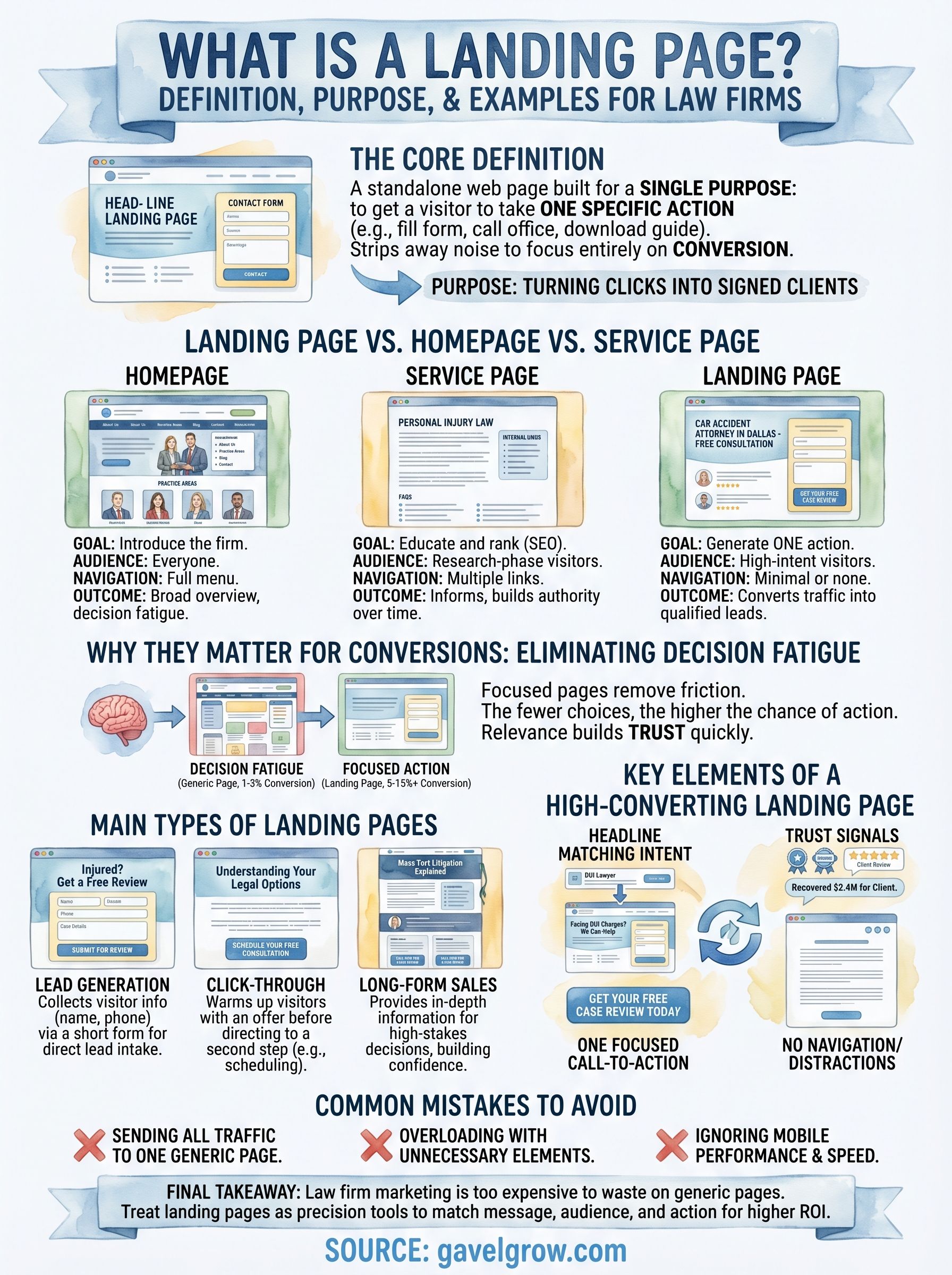
A landing page is a standalone web page built for a single purpose: to get a visitor to take one specific action. That might be filling out a consultation form, calling your office, or downloading a guide. Unlike your homepage, which tries to speak to everyone about everything, a landing page strips away the noise and focuses entirely on conversion. For law firms spending real money on Google Ads or Local Services Ads, this distinction isn't academic, it's the difference between a profitable campaign and a wasted budget.
At GavelGrow, we build and optimize landing pages for law firms every day. It's a core part of how we help attorneys turn ad spend into qualified consultations and, ultimately, signed cases. This article breaks down exactly what a landing page is, why it exists, how it works differently from a standard webpage, and what makes one effective. We'll also walk through real examples so you can see these principles in action. Whether you're building your first campaign or auditing an existing one, this guide gives you the foundation to get it right.
Why landing pages matter for conversions
A general website page carries too many jobs at once. It introduces your firm, lists your practice areas, links to your blog, and points visitors toward a dozen different directions. When someone lands there after clicking an ad or a search result with a specific need, the noise works against you. A landing page solves this problem by doing exactly one thing: moving a single visitor toward a single action. That singular focus is why landing pages consistently outperform standard website pages when it comes to converting visitors into leads.
Focused pages eliminate decision fatigue
Every additional link, menu item, or piece of unrelated content on a page gives a visitor another reason to leave without acting. Psychologists refer to this as decision fatigue, and it's a real conversion killer. When you understand what is a landing page at its core, you see why the design philosophy matters as much as the copy. A page built around one offer, one headline, and one call-to-action removes the friction that causes potential clients to click away before they contact you.
The fewer choices you give a visitor on a landing page, the higher your chances of getting them to take the one action you actually want.
This principle applies directly to law firm marketing. If someone clicks your Google Ad for "car accident attorney in Dallas," they don't want to land on a page that also talks about your estate planning services, your firm history, and your recent blog posts. They want immediate confirmation that they've reached the right attorney for their specific problem, followed by a clear and easy path to contact you.
The data behind conversion rates
Generic website pages typically convert at 1 to 3 percent, meaning for every 100 visitors, you get one to three leads at best. Dedicated landing pages, built with a single purpose and optimized for a specific audience, regularly convert at 5 to 15 percent or higher depending on the offer and traffic source. That gap becomes significant fast when you're spending real money on paid ads.
For law firms running pay-per-click campaigns, cost per acquisition drops sharply when traffic goes to a purpose-built landing page instead of a homepage. If your firm pays $50 per click and your homepage converts at 2 percent, you're spending $2,500 to get one consultation request. Improve that conversion rate to 10 percent with a targeted landing page, and that same budget generates ten consultation requests. The math makes the case on its own.
Why law firm campaigns specifically need landing pages
Legal advertising is expensive. Keywords like "personal injury attorney" or "DUI lawyer" rank among the most costly in Google Ads, sometimes exceeding $100 per click in competitive markets. Sending that expensive traffic to a homepage that was never designed to convert is one of the fastest ways to drain a marketing budget without results.
Landing pages also allow you to match your message precisely to the intent of the searcher. Someone searching for a family law attorney in Phoenix has a different mindset and different needs than someone looking for a business litigation attorney in Chicago. A targeted landing page speaks directly to that visitor's situation, uses language that reflects their specific concern, and presents a clear next step. That relevance builds trust quickly, and in legal marketing, trust is what turns a stranger into a scheduled consultation.
Landing page vs homepage vs service page
Many law firm owners treat these three page types as interchangeable, but each one serves a distinct role in your digital marketing strategy. Confusing them costs you leads. Once you understand what is a landing page and how it differs from the other pages on your site, you can route traffic more deliberately and stop letting paid clicks go to waste.
What a homepage actually does
Your homepage functions as the front door to your entire firm. It introduces who you are, what you do, the locations you serve, and the types of cases you handle. Because it speaks to multiple audiences at once, it carries a lot of navigation: menus, links to practice area pages, attorney bios, client reviews, and blog content. That breadth is intentional on a homepage because visitors arrive with different needs and different levels of familiarity with your firm.
Sending paid ad traffic to your homepage means a visitor who clicked your "truck accident attorney" ad lands in a general environment with no clear next step tailored to their specific need. That mismatch kills your conversion rate before the page even has a chance to work.
What a service page actually does
A service page goes deeper on a single practice area. Your personal injury page, for example, might explain how your firm handles these cases, what the process looks like, what damages clients can recover, and why your attorneys are qualified to help. Service pages are built for organic search and long-term SEO value. They educate visitors and build authority over time.
A service page informs; a landing page converts. Both matter, but they serve different jobs at different stages of the funnel.
Service pages often include multiple internal links, extended content, FAQs, and related practice areas. This structure works well for someone researching their options but creates too many exit points for someone who clicked a paid ad and is ready to reach out.
How all three compare
Here is a quick breakdown of how each page type differs in purpose, audience, and design:
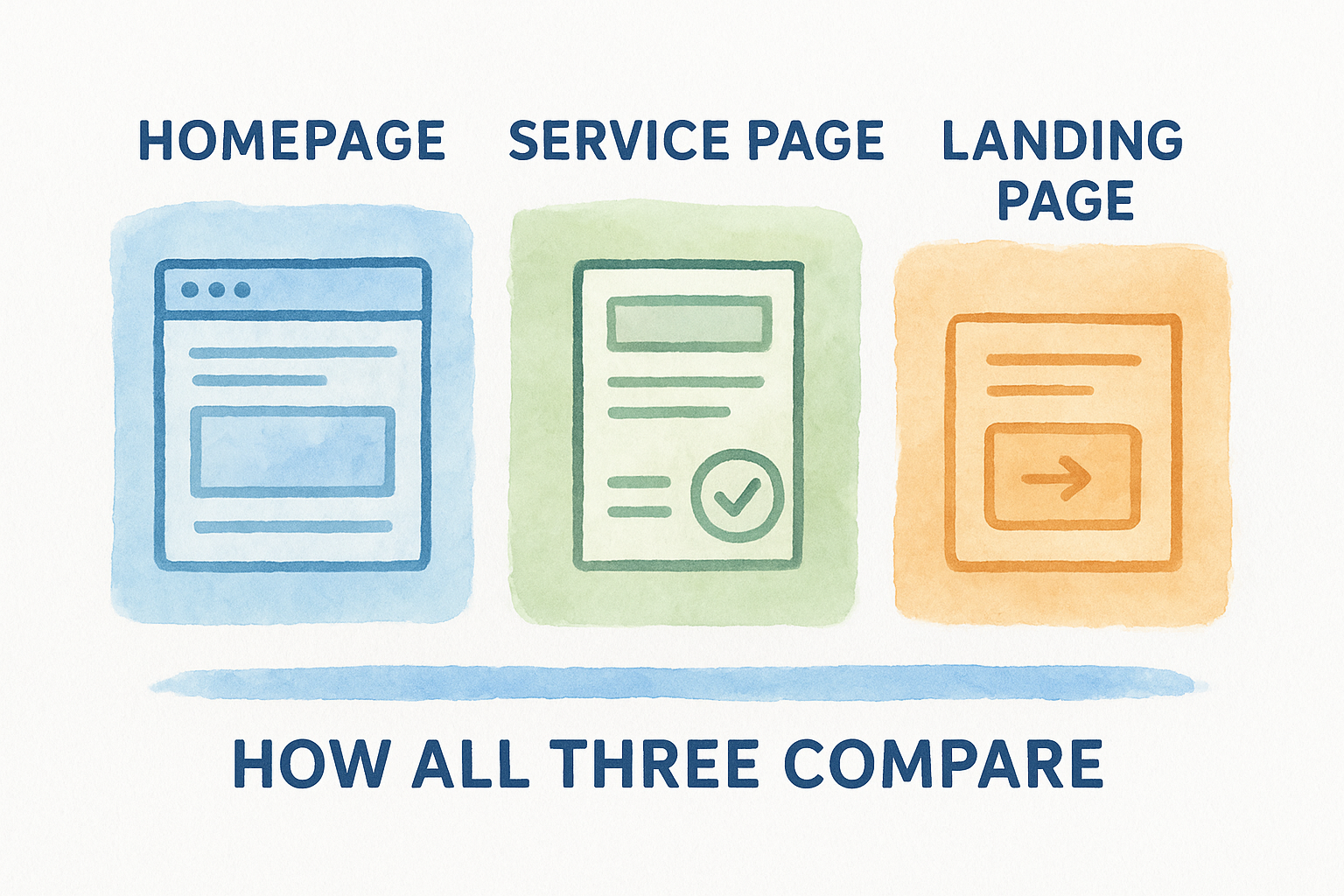
Routing the right traffic to the right page type is what separates firms that consistently generate signed cases from those that spend real money on ads without seeing a return.
The main types of landing pages
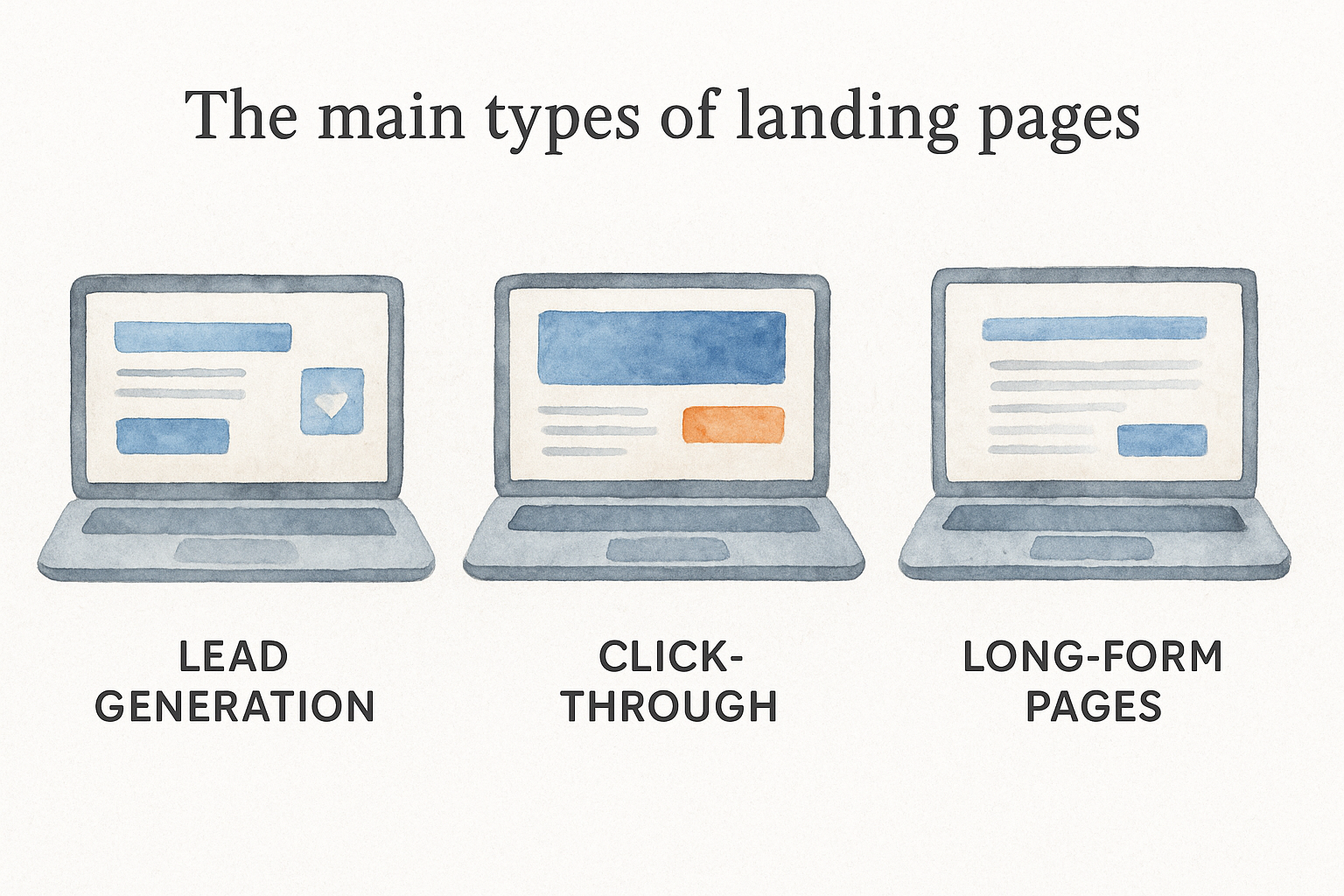
Not all landing pages work the same way. The type you build should match the specific action you want a visitor to take, whether that's submitting a form, calling your office, or clicking through to a scheduling tool. Once you understand what is a landing page at a functional level, you can choose the right format for your campaign goal and traffic source instead of defaulting to a generic page that underperforms.
Lead generation landing pages
Lead generation pages, often called "lead gen" pages, are the most common type used in legal marketing. Their primary function is to collect visitor information, typically a name, phone number, and a brief description of the situation, through a short on-page form. The page pairs a compelling headline with trust signals like client reviews or case results, and then guides the visitor directly to that form.
A lead generation page works best when the form only asks for what you genuinely need at intake because every extra field you add reduces the number of people who complete it.
For law firms running Google Ads or Local Services Ads, lead gen pages are the direct mechanism for generating consultation requests. Your intake team receives structured, qualified information and can follow up immediately with a real prospect rather than sorting through vague inquiries.
Click-through landing pages
Click-through pages take a different approach. Instead of capturing information directly, these pages warm up the visitor with a clear offer or explanation and then direct them to a second step, usually a scheduling tool, a phone prompt, or a more detailed intake form. This format reduces commitment anxiety by breaking the conversion into smaller, less intimidating steps.
Law firms sometimes use click-through pages when the offer needs more context before a visitor feels ready to act. A page promoting a free case review, for example, might first explain what the review covers and what the prospective client can expect before presenting a button to schedule it.
Long-form sales pages
Long-form pages work well when the decision carries higher stakes and visitors need more information before they commit. These pages combine detailed explanations, testimonials, FAQs, and multiple calls-to-action placed throughout the scroll. Personal injury firms targeting mass tort cases or high-value claims often use this format because it gives hesitant visitors the depth they need to move forward with confidence.
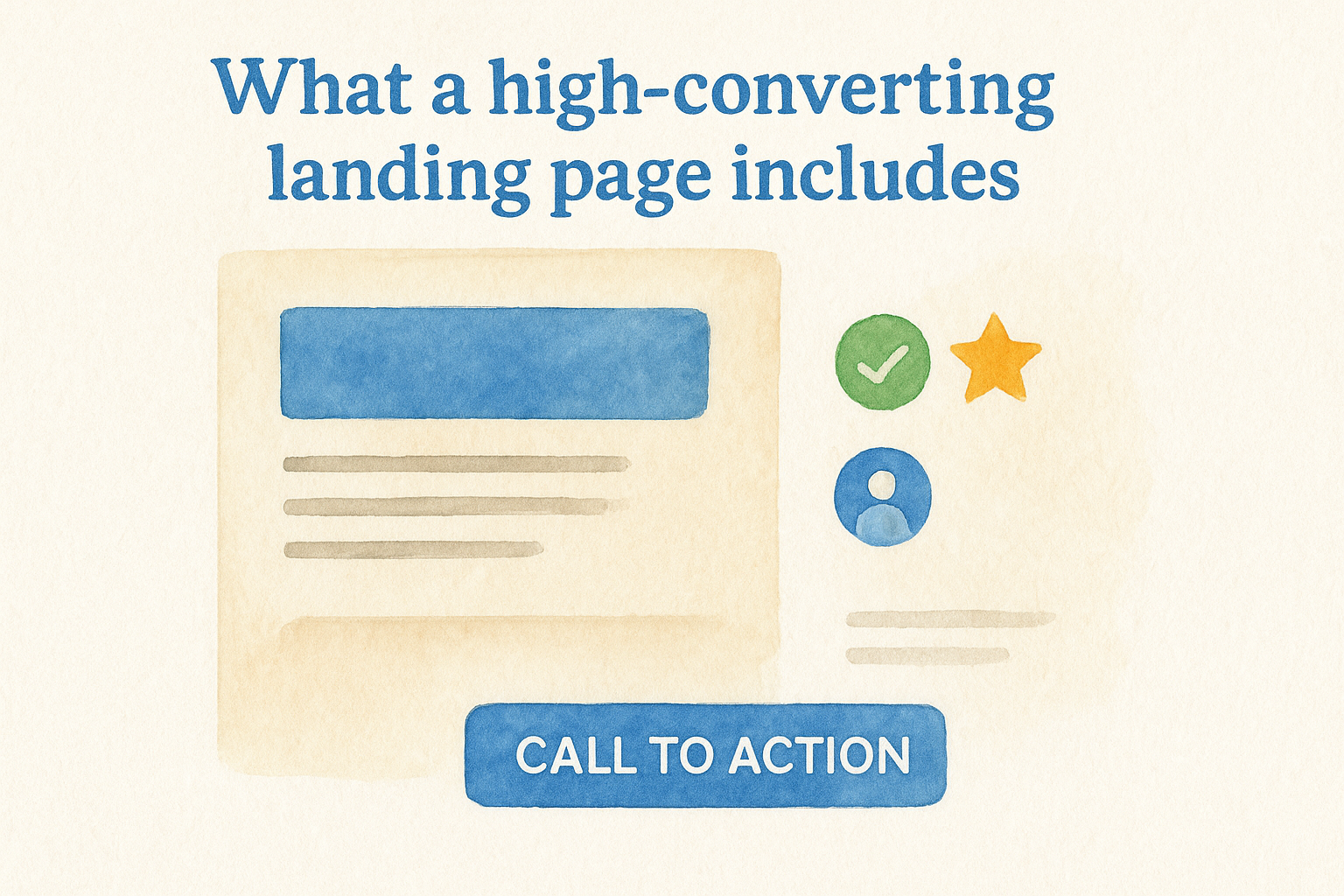
What a high-converting landing page includes
Knowing what is a landing page gives you the concept, but knowing what goes inside one gives you the results. Every element on a high-converting page earns its place by moving a visitor closer to taking action. Remove friction, add relevance, and present a clear next step, and your conversion rate climbs. Add clutter, bury your offer, or make the next step ambiguous, and even strong traffic produces nothing.
A headline that matches the visitor's intent
Your headline is the first thing a visitor reads, and it does the heaviest lifting on the entire page. It needs to confirm immediately that the visitor has reached the right place for their specific problem. If someone clicked an ad for "wrongful death attorney in Houston," your headline should speak directly to that situation, not offer a generic welcome to your firm. Message match between your ad and your headline is one of the single biggest factors in whether a visitor stays or leaves within seconds.
A headline that mirrors the language your visitors actually use when they search builds instant relevance and keeps them reading.
Trust signals that reduce hesitation
Visitors who arrive on your page don't know you yet. Client testimonials, case results, and recognizable credentials give them a reason to trust you before they decide to reach out. For law firms, this might mean bar association badges, peer ratings, years of practice, or a concrete stat like "over 500 cases handled." Place these trust signals close to your call-to-action, not buried at the bottom of the page, so they're visible at the exact moment a visitor is deciding whether to act.
Specific always beats vague. "We recovered $2.4 million for a client injured in a commercial trucking accident" carries far more weight than "we get results." Your credibility elements should be concrete, verifiable, and directly relevant to the audience you're targeting with that particular page.
One focused call-to-action
Your call-to-action tells the visitor exactly what to do next. A single, prominent button or form with clear instruction, "Schedule your free consultation" or "Call now for a case review," outperforms a page that offers multiple options. Every additional choice you present reduces the likelihood that a visitor takes any action at all. Keep the path to conversion short, obvious, and frictionless, and your page does the job it was built to do.
How to build a landing page step by step
Understanding what is a landing page is only half the work. Building one that actually converts requires a clear sequence of decisions, and skipping steps early in the process almost always creates problems you'll spend money fixing later. Follow this order and you avoid the most common build mistakes from the start.
Start with your goal and audience
Before you open any design tool or write a single line of copy, define the one action you want your visitor to take. Is it filling out a consultation form? Calling your office directly? Booking a time through a scheduling link? Every decision you make after this point should serve that one outcome. Once you know the action, identify the exact audience this page is targeting: practice area, location, and the specific concern that brought them to your ad or link.
Your page should feel like it was written for one person with one problem, not for a general audience with a range of needs.
With your goal and audience defined, you can write a clear offer statement that will drive your headline, your form fields, and your call-to-action before you touch the design at all.
Choose your platform and structure
Your next step is selecting where and how you'll build the page. Most law firms use their existing website platform or a dedicated landing page builder. The platform matters less than the structure. Your page needs a strong headline at the top, trust signals positioned near the call-to-action, and a form or click path that requires as few steps as possible. Keep the navigation stripped down or removed entirely so visitors stay focused on the offer.
Mobile layout matters here. More than 60 percent of legal search traffic comes from mobile devices, so build your page in mobile view first and then confirm it translates cleanly to desktop.
Build and test before you launch
Once the page is live, your real work begins. Run A/B tests on your headline, your form placement, and your call-to-action button text. Test one variable at a time so you know what's actually driving the change. Use Google's testing tools or your platform's native testing feature to gather statistically meaningful data before you declare a winner and move on. A page that never gets tested is a page that never reaches its full conversion potential.
How to write landing page copy that converts
Once you understand what is a landing page and why its structure matters, the words you put on it determine whether that structure pays off. Copy that converts speaks directly to what a visitor is feeling at the moment they arrive, not to what you want to say about your firm. The gap between a page that generates ten consultation requests a day and one that generates one often comes down entirely to how the copy is written.
Lead with the problem, not your firm
Most law firm landing pages open with the firm's name, years in practice, or a broad statement about dedication to clients. Visitors don't care about you yet because they care about their situation first. Your opening copy should name the problem your visitor is dealing with and signal immediately that you understand it. "You were injured in an accident that wasn't your fault. Now you're facing medical bills, missed work, and an insurance company that won't return your calls." That kind of opening holds attention because it reflects the visitor's actual experience, not your resume.
The fastest way to lose a visitor is to open with your credentials instead of their problem.
Write your CTA as a specific benefit
Your call-to-action button and the surrounding text carry more weight than most attorneys realize. "Submit" and "Contact us" are weak because they describe an action with no reward attached to it. Replace them with copy that tells the visitor what they actually get by clicking: "Get your free case review today" or "Speak with an attorney within 24 hours." Specific language reduces hesitation and gives a visitor a clear reason to act now rather than close the tab and think about it later.
Pair your CTA copy with a one-sentence reassurance placed directly below the button to remove a common objection. Something like "No fees unless we win" or "We respond within one business day" addresses the hesitation a visitor feels at the exact moment they are deciding whether to reach out.
Keep every sentence doing work
Long copy is fine, but each sentence needs a function. Every line should either reinforce the offer, address an objection, build trust, or move the visitor toward the call-to-action. Cut anything that exists only to fill space. Short paragraphs and plain language outperform dense legal writing every time because visitors scan before they read, and your page needs to convert scanners too.
How to drive the right traffic to a landing page
Building a page that converts is only half the equation. The quality of traffic you send to that page determines how many of those conversions actually happen. Once you understand what is a landing page and what it is designed to do, you need a strategy for getting the right people in front of it. Sending unqualified traffic to a well-built page still produces weak results because matching your traffic source to the intent of your offer is what separates campaigns that generate signed cases from ones that burn through budget with nothing to show.
Use paid search to target high-intent visitors
Paid search through Google Ads remains the most direct way to put your landing page in front of someone actively looking for your specific service right now. When you build a campaign around tightly defined keywords like "car accident attorney Chicago" or "DUI lawyer near me," you reach visitors who already have a clear need and are ready to act. Your ad copy and your landing page headline must align closely so the experience feels seamless from the first click to the consultation form.
Mismatched messaging between your ad and your landing page is one of the fastest ways to destroy a campaign's return, even when the ad itself performs well.
Local Services Ads work differently from standard PPC but serve the same purpose. They push your firm to the top of results with a Google-verified badge, which builds trust before a visitor even reaches your page. Use both formats when your budget allows, and send each traffic stream to a landing page built specifically for that source rather than a single generic page covering both.
Align organic content with your landing page offer
Organic traffic from search engines takes longer to build but costs far less per visitor once it arrives. You can direct that traffic toward your landing pages by creating blog posts, FAQs, or practice area content that targets keywords your ideal clients search during their research phase. End each piece of content with a clear internal link to your landing page, framed around the next logical step for someone who just finished reading.
Retargeting ads and email campaigns give you two additional channels to re-engage visitors who showed interest but did not convert. Retargeting campaigns on Google Display keep your firm visible to those visitors and give you a second opportunity to bring them back to the page and complete the action you originally designed it to drive.
How to measure landing page performance
Once you understand what is a landing page and build one with the right structure and copy, you need a reliable way to know whether it's actually working. Measuring performance isn't optional because without data, you're guessing at what to improve and likely fixing the wrong things. The numbers your page produces tell you exactly where visitors are engaging, where they're leaving, and which elements of your page deserve your attention first.
Conversion rate as your baseline metric
Conversion rate is the single most important number on any landing page, calculated by dividing the number of completed actions by the total number of visitors and multiplying by 100. If 200 people visit your page and 14 fill out your consultation form, your conversion rate is 7 percent. Track this number from day one so every change you make has a clear baseline to compare against.
A conversion rate improvement of even two or three percentage points on a high-traffic page can generate dozens of additional consultation requests per month without spending an extra dollar on ads.
For law firms, segment your conversion rate by traffic source so you can see whether visitors from paid search convert differently than those coming from organic results or retargeting campaigns. That breakdown tells you which channel deserves more budget and which one needs a different page or offer to perform.
Metrics that reveal where visitors drop off
Bounce rate and time on page show you how visitors behave before they reach your call-to-action. A high bounce rate on a landing page built for paid traffic usually signals a mismatch between your ad copy and your page headline, or a slow load time that pushes visitors away before the page even renders. Use Google Search Console to monitor load speed and identify crawl issues that affect both performance and visitor experience.

Scroll depth tells you how far down the page your visitors actually read. If most visitors stop scrolling before they reach your form or call-to-action button, your most persuasive content and trust signals may be too far down the page. Moving those elements higher often produces an immediate lift in conversions without changing a single word of your copy.
Form abandonment rate rounds out the picture by showing you how many visitors started filling out your form but did not complete it. A high abandonment rate usually means your form asks for too much information too early, and trimming the fields down to the essentials is often the fastest fix available.
Common landing page mistakes to avoid
Even firms that understand what is a landing page and its purpose still make avoidable errors that quietly drain their marketing budget. Most of these mistakes share a common root: treating the landing page as an afterthought rather than the central engine of your conversion strategy. Spotting and fixing these problems often produces faster results than any other optimization you can make.
Sending all traffic to one generic page
One of the most costly mistakes is routing every campaign, every ad group, and every keyword to a single landing page that was built to cover multiple audiences at once. A visitor who clicked an ad for "estate planning attorney" and one who clicked for "criminal defense attorney" have completely different concerns, and a generic page addresses neither of them well. Build dedicated pages for each campaign or practice area, and your relevance score, your quality score in Google Ads, and your conversion rate all improve at the same time.
A page built for everyone converts no one because it lacks the specificity that makes a hesitant visitor feel understood.
Overloading the page with unnecessary elements
Many landing pages fail because they carry too much weight. Navigation menus, social media links, unrelated service descriptions, and multiple competing calls-to-action give visitors too many directions to move in, and most of them end up moving toward the exit. Your landing page should strip away anything that does not directly support the one action you want visitors to take. If an element does not build trust, reinforce your offer, or reduce friction on the path to your call-to-action, remove it before it removes your conversion.
Ignoring mobile performance and load speed
More than 60 percent of legal search traffic arrives on a mobile device, and a page that loads slowly or displays poorly on a phone loses those visitors in seconds. Google's own research shows that as load time increases from one second to three seconds, the probability of a visitor bouncing increases by 32 percent. Check your page regularly using Google PageSpeed Insights to identify specific issues and fix them before they cost you signed cases.
Form design on mobile deserves the same attention as layout and speed. A form with small tap targets, too many required fields, or unclear labels frustrates visitors on mobile and sends them to a competitor who made the experience easier.
Final takeaways
Understanding what is a landing page and how it functions separately from your homepage and service pages gives you a direct advantage in every paid campaign you run. A landing page exists for one purpose only: to move a specific visitor toward a specific action, and every element on it should serve that goal. When you match your message to your audience, remove friction, and test your results consistently, your cost per signed case drops and your return on ad spend climbs.
Law firm marketing is too expensive to route paid traffic to pages that were never built to convert. The firms that generate the most qualified consultations are the ones that treat their landing pages as precision tools, not afterthoughts. If you want a partner who builds and optimizes these pages with your practice area and market in mind, talk to a legal marketing specialist at GavelGrow and get a strategy built around your specific goals.
Frequently Asked Questions
What is a landing page?
A landing page is a standalone web page built for a single purpose: to get a visitor to take one specific action, such as filling out a consultation form, calling your office, or downloading a guide. Unlike a homepage that tries to speak to everyone about everything, a landing page strips away the noise and focuses entirely on conversion. That singular focus is why landing pages consistently outperform standard website pages at turning visitors into leads.
What is the difference between a landing page, a homepage, and a service page?
A homepage is the front door to your whole firm, speaking to many audiences with lots of navigation. A service page goes deeper on one practice area and is built for organic search and long-term SEO value; it informs. A landing page is built for a single audience and a single action; it converts. Routing the right traffic to the right page type is what separates firms that consistently sign cases from those that waste ad spend.
Why do law firms specifically need landing pages for their ads?
Legal advertising is expensive, with high-intent keywords among the most costly in Google Ads. Sending that expensive traffic to a homepage that was never designed to convert drains a marketing budget without results. Landing pages let you match your message precisely to the searcher's intent, speaking directly to their situation and presenting one clear next step. That relevance builds trust quickly, which is what turns a stranger into a scheduled consultation.
What does a high-converting landing page include?
Three elements do the heavy lifting. A headline that matches the visitor's intent, confirming immediately they reached the right place for their specific problem. Trust signals like testimonials, case results, and credentials placed near the call-to-action to reduce hesitation. And one focused, prominent call-to-action that tells the visitor exactly what to do next. Every element should reduce friction, add relevance, or point toward that single action.
How do I measure whether a landing page is working?
Conversion rate is the single most important metric: divide completed actions by total visitors and multiply by 100, then track it from day one. Segment it by traffic source to see which channels perform. Supporting metrics reveal where visitors drop off: bounce rate and time on page flag message mismatches or slow loads, scroll depth shows whether people reach your form, and form abandonment rate signals that a form asks for too much too early.
The message that converts depends heavily on the practice area, and few illustrate that better than family law marketing, where the emotional stakes shape every headline and offer.
The page that converts a prospective client depends heavily on the emotional context, which is especially true in divorce lawyer marketing where sensitivity and timing shape the entire approach.
Frequently Asked Questions
What is a landing page?
A landing page is a standalone web page built for a single purpose: to get a visitor to take one specific action, such as filling out a consultation form, calling your office, or downloading a guide. Unlike a homepage that tries to speak to everyone about everything, a landing page strips away the noise and focuses entirely on conversion. That singular focus is why landing pages consistently outperform standard website pages at turning visitors into leads.
What is the difference between a landing page, a homepage, and a service page?
A homepage is the front door to your whole firm, speaking to many audiences with lots of navigation. A service page goes deeper on one practice area and is built for organic search and long-term SEO value; it informs. A landing page is built for a single audience and a single action; it converts. Routing the right traffic to the right page type is what separates firms that consistently sign cases from those that waste ad spend.
Why do law firms specifically need landing pages for their ads?
Legal advertising is expensive, with high-intent keywords among the most costly in Google Ads. Sending that expensive traffic to a homepage that was never designed to convert drains a marketing budget without results. Landing pages let you match your message precisely to the searcher's intent, speaking directly to their situation and presenting one clear next step. That relevance builds trust quickly, which is what turns a stranger into a scheduled consultation.
What does a high-converting landing page include?
Three elements do the heavy lifting. A headline that matches the visitor's intent, confirming immediately they reached the right place for their specific problem. Trust signals like testimonials, case results, and credentials placed near the call-to-action to reduce hesitation. And one focused, prominent call-to-action that tells the visitor exactly what to do next. Every element should reduce friction, add relevance, or point toward that single action.
How do I measure whether a landing page is working?
Conversion rate is the single most important metric: divide completed actions by total visitors and multiply by 100, then track it from day one. Segment it by traffic source to see which channels perform. Supporting metrics reveal where visitors drop off: bounce rate and time on page flag message mismatches or slow loads, scroll depth shows whether people reach your form, and form abandonment rate signals that a form asks for too much too early. The message that converts depends heavily on the practice area, and few illustrate that better than family law marketing , where the emotional stakes shape every headline and offer. The page that converts a prospective client depends heavily on the emotional context, which is especially true in divorce lawyer marketing where sensitivity and timing shape the entire approach.