CallRail Pricing: Plans, Add-Ons, And Real Monthly Cost
Categories: Legal Marketing Strategies
 Abram Ninoyan
Founder & Senior Performance Marketer
Credentials: Google Partner, Google Ads Search Certified, Google Ads Display Certified, Google Ads Measurement Certified, Google Analytics (IQ) Certified, HubSpot Inbound Certified, HubSpot Social Media Marketing Certified, Conversion Optimization Certified
Expertise: Google Ads, Meta Ads, Conversion Rate Optimization, GA4 & Google Tag Manager, Lead Generation, Marketing Funnel Optimization, PPC Management
LinkedIn Profile
CallRail's website lists plans starting at $50 per month, but CallRail pricing gets more complicated once you factor in per-minute overages, extra tracking numbers, and the add-ons most law firms actu...
Key Takeaways
- CallRail Pricing: Plans, Add-Ons, And Real Monthly Cost
- CallRail plans and what each includes
- Usage fees that change your monthly bill
- Add-ons, integrations, and hidden line items
CallRail Pricing: Plans, Add-Ons, And Real Monthly Cost
CallRail's website lists plans starting at $50 per month, but CallRail pricing gets more complicated once you factor in per-minute overages, extra tracking numbers, and the add-ons most law firms actually need. A firm running call tracking across three or four campaigns can easily double or triple that starting price before the first invoice lands.
Pricing figures in this article reflect each vendor’s publicly listed rates as of July 2026 and are subject to change — always confirm current pricing on the vendor’s own site.
We built GavelGrow specifically for U.S. law firms, and call tracking is baked into every plan, no separate vendor, no per-minute surprises. So we've spent years helping firms audit what they're actually paying for tools like CallRail versus what they're getting back in signed cases. That perspective shapes everything below: we know exactly where the hidden costs stack up because our clients used to pay them.
This article breaks down each CallRail plan tier by tier, walks through the add-on fees that inflate your monthly bill, and shows you what the real monthly cost looks like for a typical law firm. By the end, you'll have the numbers you need to decide whether CallRail fits your budget, or whether bundling call tracking into a legal-specific platform makes more financial sense.
CallRail plans and what each includes
CallRail structures its subscription tiers around the features you need rather than a simple small/medium/large sizing. Understanding exactly what sits inside each plan is the first step to estimating your real callrail pricing before you commit to a contract. The base monthly fee you see advertised only covers a limited number of tracking numbers and call minutes, and the tier you land on determines which features are even available to you.
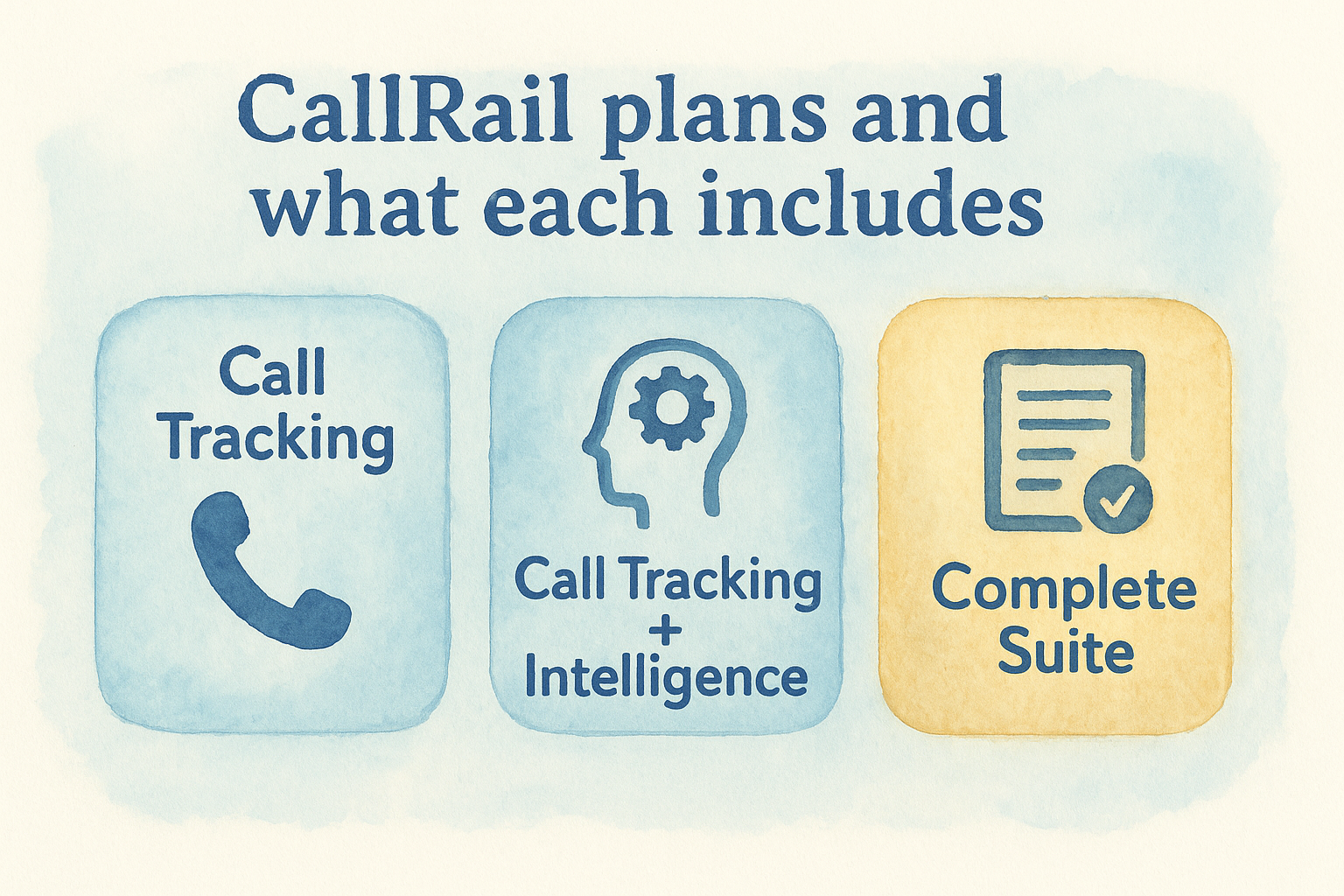
The plan tier you choose locks in your feature access, but your actual bill is set by how many numbers and minutes you burn through each month on top of that flat fee.
Call Tracking (entry tier)
The entry-level Call Tracking plan starts at $50 per month and gives you five local phone numbers and 250 local minutes. You get basic attribution: source-level tracking that tells you whether a caller came from Google, a display ad, or a landing page. For a solo practice running one or two campaigns, this plan covers the minimum. The catch is that five numbers disappear fast once you start tracking individual campaigns, ad groups, or specific landing pages, and overages kick in the moment you exceed your included minutes.
This plan does not include call recording, conversation intelligence, or any form of automated lead scoring. You get call logs and source attribution, nothing more.
Call Tracking + Intelligence
The Call Tracking + Intelligence plan runs closer to $150 per month and layers in automated call transcription, keyword spotting, and AI-powered call scoring. For law firms, these features matter because they let you identify whether an inbound call was a qualified lead or a wrong number without listening to every recording manually. The plan still ships with the same five included local numbers, so your usage overage risk does not decrease just because you're paying more per month.
Keyword spotting can flag calls that mention specific practice areas, which helps intake teams triage volume. However, the accuracy depends on audio quality and is not purpose-built for legal intake workflows.
Complete Suite (top tier)
The Complete Suite bundles all CallRail products into one plan, typically priced around $200 per month or higher depending on your account configuration. This includes conversation intelligence, the Lead Center communication hub, form tracking, and multi-touch attribution. For a firm running active Google Ads campaigns across multiple practice areas, this is usually the minimum viable configuration.
Even at this tier, five local numbers remain the baseline, and the plan does not automatically scale your included minutes. A busy personal injury firm fielding 400 or 500 calls per month will hit overages on the Complete Suite just as fast as on the entry plan. The next section breaks down exactly how those usage-based fees accumulate and what they typically add to a law firm's monthly bill.
Usage fees that change your monthly bill
The flat subscription fee is only part of what shapes your total callrail pricing. Every plan ships with a fixed pool of included numbers and minutes, and once you exhaust either one, CallRail charges you incrementally for each additional unit. For a law firm running multiple campaigns, those incremental charges can easily outpace the base plan cost within the first month of active use.
Local and toll-free number charges
Every CallRail plan includes five local tracking numbers by default, regardless of which tier you choose. If you run paid search campaigns across four practice areas plus a few landing-page variants, you can exhaust your included numbers before you finish setting up. Additional local numbers cost approximately $3 per number per month, and toll-free numbers run around $5 per month each. A firm managing ten tracking numbers would pay an extra $15 to $25 on top of the base plan every single month.
Tracking numbers are not a one-time cost. Each new campaign, ad group, or landing page you want to measure adds another line item to your bill indefinitely.
Per-minute overage rates
Your included minute pool resets each billing cycle, but the reset does not protect you from overages if your call volume spikes. Local minutes overage rates run around $0.05 per minute, and toll-free minutes run higher, closer to $0.08 per minute. For a personal injury firm receiving 300 calls in a busy month, where the average call lasts four to five minutes, you could consume 1,200 to 1,500 minutes in one billing cycle. If your plan only includes 250, you are paying for the balance at overage rates every month without exception.
SMS messages carry their own separate per-message fees on top of all of this. If your team sends confirmation texts or follow-ups through CallRail, those messages add another variable cost that most firms underestimate when they initially budget for the platform.
Add-ons, integrations, and hidden line items
The subscription fee and usage charges cover the core product, but several optional features cost extra on top of both. These add-ons rarely show up in initial sales conversations, yet they become nearly unavoidable once your firm starts using CallRail the way it's actually designed to be used. Understanding them upfront is essential to getting an accurate picture of callrail pricing before you sign anything.
Most firms discover add-on costs only after their first invoice, not during the buying process.
Form tracking
CallRail's form tracking feature is sold separately from call tracking, even on the Complete Suite plan. If you want to capture lead source attribution for web form submissions alongside your call data, you need to add the form tracking module, which runs approximately $20 to $30 per month depending on your account. For law firms running both paid search and organic traffic, skipping form tracking creates a blind spot in your attribution data since phone calls and form fills rarely come from the same audience.
API access and CRM integrations
Native integrations with tools like Salesforce and HubSpot require higher-tier plans or separate activation. If your firm uses a legal CRM such as Clio or Lawmatics, you may need to route data through a third-party connector like Zapier, which adds its own monthly fee on top of your CallRail bill. The more your stack relies on connected tools, the more integration costs compound quietly in the background each billing cycle.
Multi-location and multi-account structures
Firms that manage multiple office locations or practice groups under separate CallRail accounts pay base plan fees for each account. There is no built-in multi-location discount for standard accounts, which means a firm with three locations running independent campaigns pays three separate base fees plus usage overages for each account independently. That structure multiplies your fixed costs before you add a single overage or add-on.
How to estimate your real monthly cost
Before you commit to a plan, you need to run the numbers yourself rather than rely on the base plan price listed on CallRail's website. The actual callrail pricing for your firm depends on three inputs: how many tracking numbers you need, how many minutes your calls consume each month, and which add-ons your workflow requires. Get those three inputs right and your estimate will be accurate.
Start with your tracking number count
Count every active campaign, ad group, and landing page variant you currently track or plan to track in the next 90 days. Each one needs its own dedicated number. A useful starting checklist for a typical law firm looks like this:
- One number per paid search campaign
- One number per landing page variant
- One number per organic or referral source you want to isolate
- One number per office location if you run local campaigns separately
If you have eight campaigns and your plan includes five numbers, you are already paying for three extras at $3 each before you log a single call.
Your number count is the single most underestimated line item when firms first price out call tracking tools.
Factor in your monthly call volume
Pull your average monthly call count from your current analytics tool, then multiply by your average call duration in minutes. If you receive 300 calls per month at an average of four minutes each, your usage lands at 1,200 minutes per month. Subtract your plan's included minutes and multiply the remainder by $0.05 to get your local overage cost for that month.
Build a simple monthly estimate
Add your base plan fee, extra number charges, minute overages, and any add-ons. The table below shows what a typical personal injury firm with ten tracking numbers and 1,200 monthly minutes would pay on the entry-level plan:
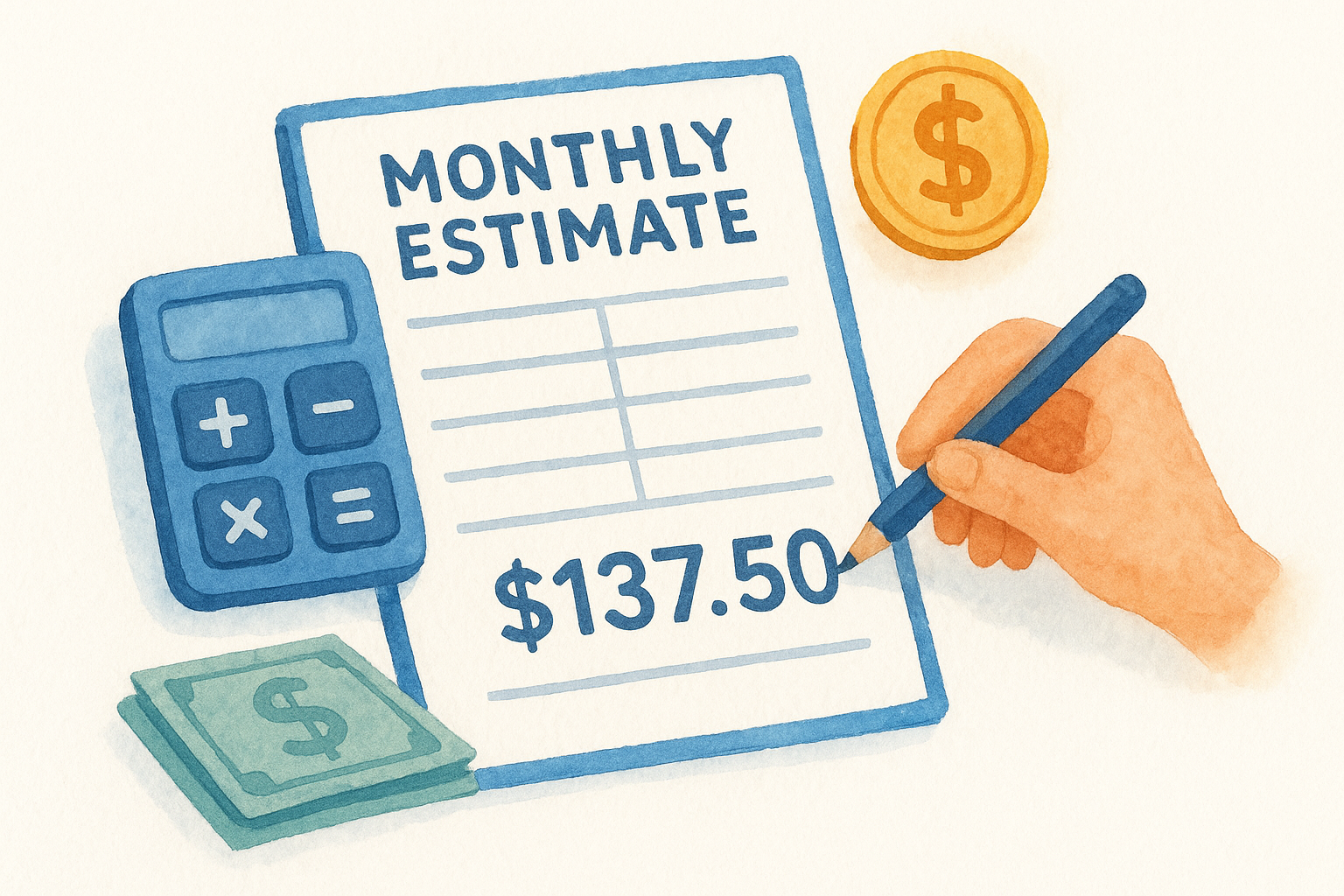
That is nearly three times the advertised starting price, and the estimate does not include SMS fees or CRM connector costs.
When CallRail makes sense and alternatives
CallRail is a capable tool, and callrail pricing makes sense in specific situations. Understanding where it fits and where it falls short helps you spend your software budget where it actually moves the needle on signed cases.
When CallRail fits your situation
CallRail works well for businesses running multi-channel marketing across industries where legal-specific compliance and intake workflows are not a priority. If your firm needs basic source-level attribution and you only track a handful of campaigns, the entry plan covers your core use case without overcomplicating the setup. Agencies managing multiple client accounts across different industries also find CallRail's account structure flexible enough for their needs.
CallRail is a horizontal tool built for every industry, which is exactly why it lacks the legal-specific depth most law firms need to manage their intake pipeline.
When a legal-specific platform makes more sense
Your firm's marketing stack has different demands than a dentist's or a roofing company's. You need TCPA-compliant SMS sequences, state-bar-compliant intake forms, and attribution that runs from first ad click to signed retainer, not just to an inbound call. CallRail does not track what happens after the call ends, which means you are left stitching together your CRM, intake software, and analytics manually.
For personal injury, family law, and mass-tort firms, that gap is significant. Missed attribution between call and signed case makes it impossible to know which campaigns actually generate revenue versus which ones generate call volume that never converts. Paying separately for call tracking, intake forms, and a CRM also adds up fast once you include overages and add-on fees.
GavelGrow bundles call tracking, intake automation, lead pipeline management, and campaign-level cost-per-signed-case reporting into one platform built exclusively for U.S. law firms. There are no per-minute surprises and no separate vendor for compliance. If your firm is spending more time reconciling tools than closing cases, that consolidation is worth a direct comparison.
Final takeaways
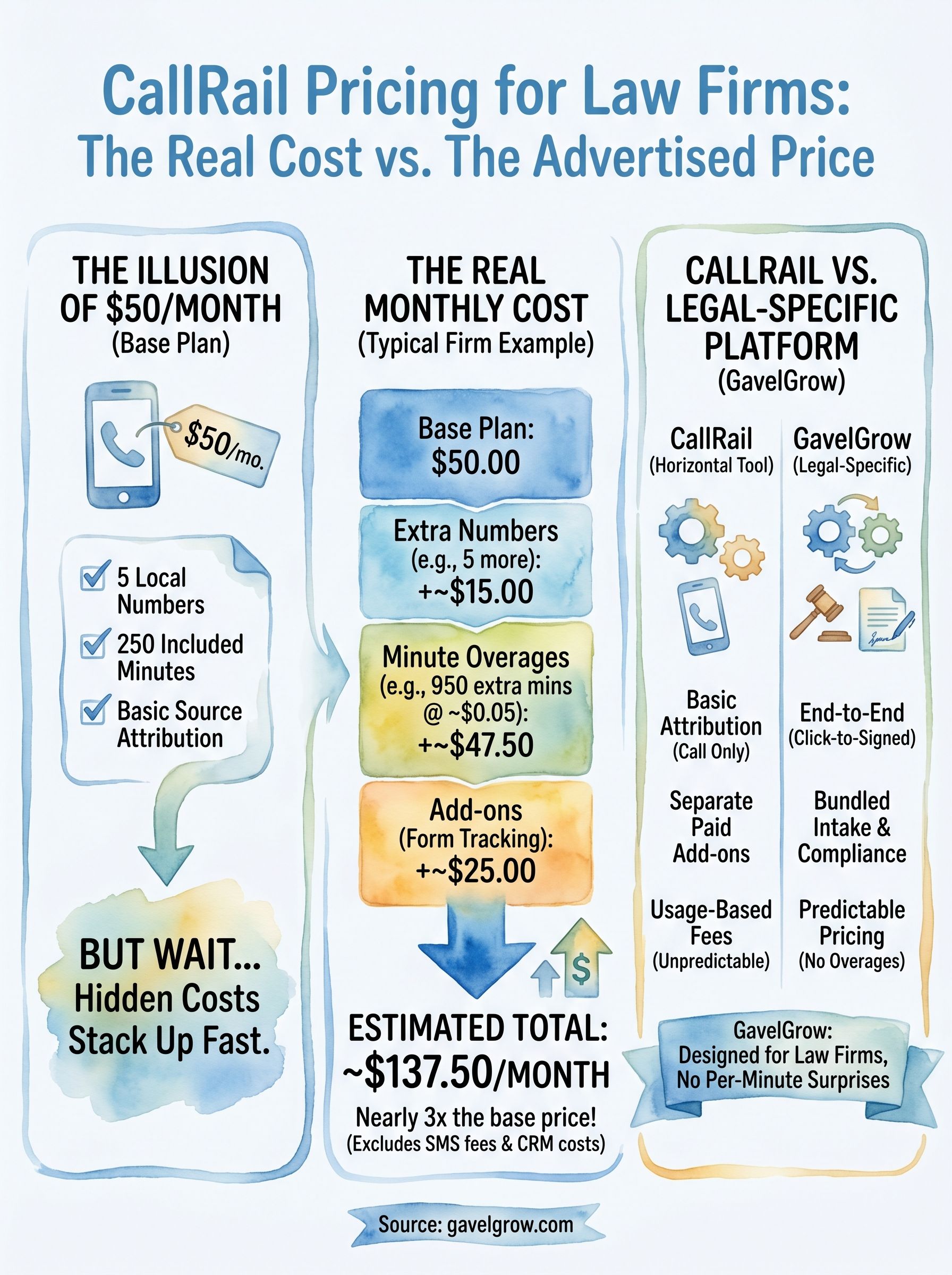
CallRail pricing starts at $50 per month on paper, but most law firms pay $130 to $200 or more once tracking number overages, per-minute charges, and add-ons stack up. The advertised base rate reflects a configuration that rarely matches real campaign workloads, especially for firms tracking multiple practice areas or running concurrent paid search campaigns.
Your decision comes down to what you need the tool to do. If you want attribution that ends at the phone call, CallRail covers that use case. If you need visibility from first click through signed retainer, with TCPA-compliant intake and modelled practice-area benchmarks built in, a legal-specific platform closes that gap without the extra vendor bills. See how GavelGrow's built-in call tracking works for law firms and get a full-funnel view of your marketing without the per-minute surprises.
Frequently Asked Questions
Why is my CallRail bill higher than the advertised starting price?
Your CallRail bill runs higher than the advertised base price because usage-based charges stack on top of the flat plan fee. Every tier ships with a fixed pool of tracking numbers and call minutes, and once you exceed either, CallRail bills incrementally per extra number and per overage minute. Add-ons like form tracking and SMS carry separate fees, so a firm running several campaigns commonly pays well above the entry rate.
Does every CallRail plan include call recording and conversation intelligence?
No. The entry-level Call Tracking plan includes call logs and source-level attribution only, not call recording, conversation intelligence, or automated lead scoring. Those features require the Call Tracking + Intelligence tier or the Complete Suite. Even on higher tiers, the included number pool stays the same, so upgrading for features does not reduce your overage risk.
How many tracking numbers does a typical law firm actually need?
Most firms need one dedicated tracking number per paid search campaign, per landing page variant, per organic or referral source they want to isolate, and per office location running separate campaigns. That count climbs fast and is the single most underestimated line item when pricing call tracking. Since plans include only a small base allotment, firms tracking multiple practice areas usually pay for several additional numbers every month.
Does CallRail track what happens after the phone call?
No. CallRail attribution ends at the inbound call and does not follow a lead through to a signed retainer. That leaves firms stitching together their CRM, intake software, and analytics manually to see which campaigns actually produce cases. A legal-specific platform that connects the full funnel from first ad click to signed case closes that visibility gap without a separate vendor.
When does a legal-specific platform make more sense than CallRail?
A legal-specific platform makes more sense when you need consent-based SMS sequences, state-bar-appropriate intake forms, and attribution that runs from ad click to signed retainer rather than just to a phone call. CallRail is a horizontal tool built for every industry, so it lacks legal intake depth. GavelGrow bundles call tracking, intake automation, and cost-per-signed-case reporting into one platform built for U.S. law firms.
Frequently Asked Questions
Why is my CallRail bill higher than the advertised starting price?
Your CallRail bill runs higher than the advertised base price because usage-based charges stack on top of the flat plan fee. Every tier ships with a fixed pool of tracking numbers and call minutes, and once you exceed either, CallRail bills incrementally per extra number and per overage minute. Add-ons like form tracking and SMS carry separate fees, so a firm running several campaigns commonly pays well above the entry rate.
Does every CallRail plan include call recording and conversation intelligence?
No. The entry-level Call Tracking plan includes call logs and source-level attribution only, not call recording, conversation intelligence, or automated lead scoring. Those features require the Call Tracking + Intelligence tier or the Complete Suite. Even on higher tiers, the included number pool stays the same, so upgrading for features does not reduce your overage risk.
How many tracking numbers does a typical law firm actually need?
Most firms need one dedicated tracking number per paid search campaign, per landing page variant, per organic or referral source they want to isolate, and per office location running separate campaigns. That count climbs fast and is the single most underestimated line item when pricing call tracking. Since plans include only a small base allotment, firms tracking multiple practice areas usually pay for several additional numbers every month.
Does CallRail track what happens after the phone call?
No. CallRail attribution ends at the inbound call and does not follow a lead through to a signed retainer. That leaves firms stitching together their CRM, intake software, and analytics manually to see which campaigns actually produce cases. A legal-specific platform that connects the full funnel from first ad click to signed case closes that visibility gap without a separate vendor.
When does a legal-specific platform make more sense than CallRail?
A legal-specific platform makes more sense when you need consent-based SMS sequences, state-bar-appropriate intake forms, and attribution that runs from ad click to signed retainer rather than just to a phone call. CallRail is a horizontal tool built for every industry, so it lacks legal intake depth. GavelGrow bundles call tracking, intake automation, and cost-per-signed-case reporting into one platform built for U.S. law firms.