Lead Generation for Attorneys: A Managing Partner's Guide to Growing Your Firm
Categories: Guide: Explainer
 Abram Ninoyan
Founder & Senior Performance Marketer
Credentials: Google Partner, Google Ads Search Certified, Google Ads Display Certified, Google Ads Measurement Certified, Google Analytics (IQ) Certified, HubSpot Inbound Certified, HubSpot Social Media Marketing Certified, Conversion Optimization Certified
Expertise: Google Ads, Meta Ads, Conversion Rate Optimization, GA4 & Google Tag Manager, Lead Generation, Marketing Funnel Optimization, PPC Management
LinkedIn Profile
Learn how to implement effective lead generation for attorneys with a robust client acquisition system.
Key Takeaways
- Why Your Firm Needs a Client Acquisition System, Not Just Tactics
- Laying the Foundation: Why SEO for Law Firms is Non-Negotiable
- Building Authority and Trust with Content Marketing
- Immediate Impact: Generating Cases Now with Paid Ads
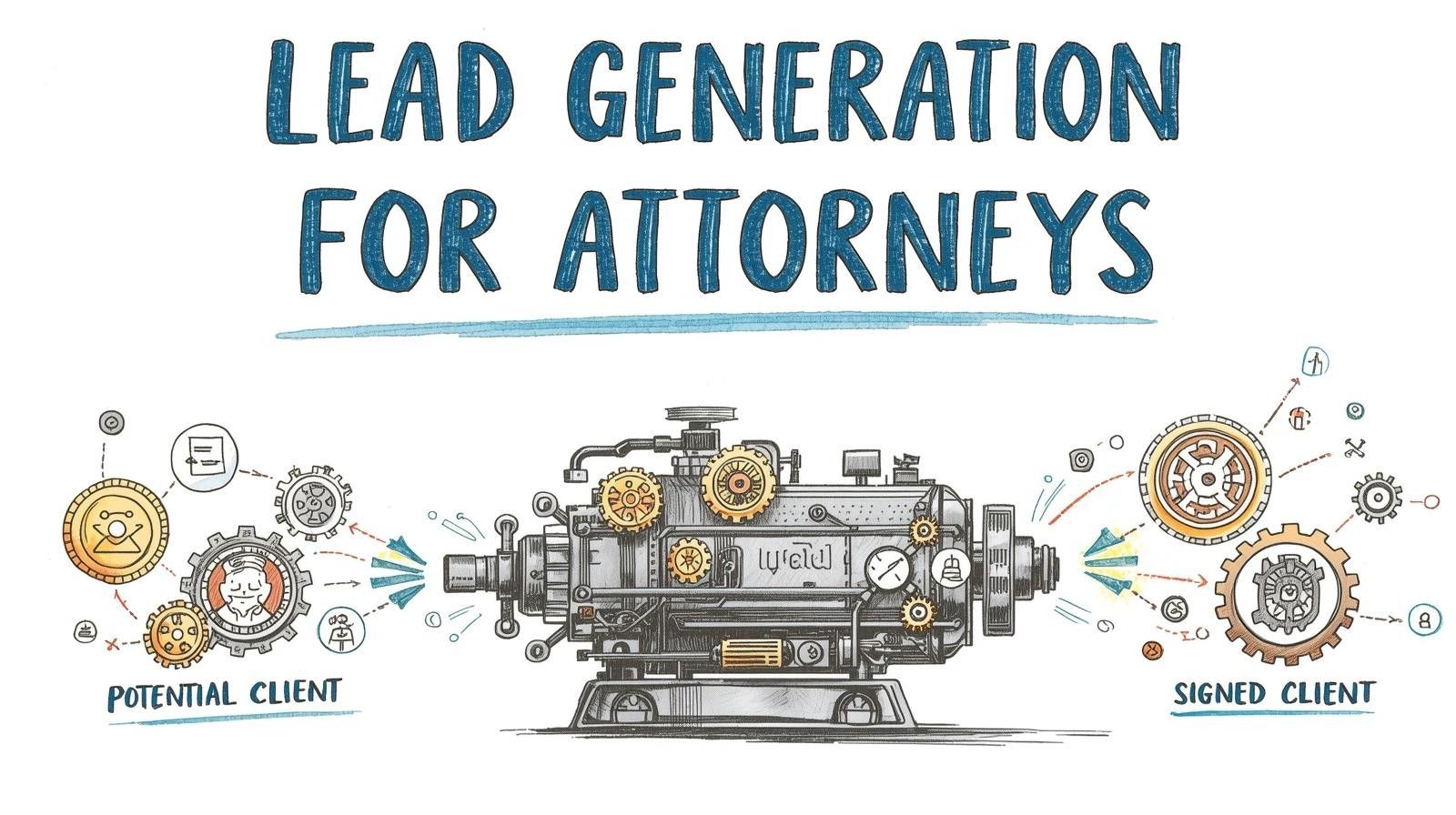
For any modern law firm, the phrase lead generation can feel a bit... corporate. But really, it’s about one thing: creating a reliable, predictable system to bring in new clients. It’s about moving beyond the feast-or-famine cycle of word-of-mouth referrals and building an engine that consistently attracts the high-value cases you want.
Why Your Firm Needs a Client Acquisition System, Not Just Tactics
Relying on referrals alone is like leaving your firm's growth up to chance. You're waiting for the phone to ring. A proper client acquisition system, on the other hand, puts you firmly in the driver's seat. It gives managing partners and marketing directors the data they need to forecast revenue, hire with confidence, and scale the practice deliberately.
Think of it like building a case for trial. You’d never show up in court with just one piece of evidence and hope for the best. You'd build a comprehensive argument with a solid foundation, layers of proof, and a clear, persuasive story. That's exactly how effective lead generation for attorneys works. It’s a complete system, not just a handful of disconnected tactics.
This system is built on three core pillars that work in tandem to find, engage, and ultimately convert your ideal clients into signed cases, whether you're a solo attorney scaling up or a marketing director at a multi-partner firm.
As you can see, this isn't about choosing one strategy over another. It's about how they fit together to create a predictable flow of new business for your firm.
The Core Pillars of Legal Lead Generation
Each pillar has a specific job to do, but they’re all interconnected. Getting a handle on how they work is the first step to building a powerful online presence for your law practice.
- Foundational SEO: This is the bedrock. It’s what makes your firm show up when a potential client searches for "personal injury lawyer near me" or "how estate planning firms get clients online." Good SEO makes you the most relevant, authoritative answer to their query. It’s a long-term play, but it builds a priceless asset for your practice.
- Authority-Building Content: People hire experts they trust. Content—like in-depth blog posts, legal guides, or informational videos—is your chance to prove that expertise before you even speak with them. This is how you position your attorneys as thought leaders and educate potential clients, warming them up for that first call.
- Targeted Advertising: SEO and content are marathon strategies. Paid advertising, like Google Ads, is the sprint. It gets your firm in front of people with an immediate, often urgent, legal need. It's how you generate highly qualified leads right now.
By weaving these three pillars together, you create a system that captures attention at every stage. You're visible to people searching for help today (SEO & Ads) and become the go-to choice for those who will need you tomorrow (Content).
To help you visualize where to start, here is a quick overview of the most effective digital marketing channels for law firms.
Core Lead Generation Channels for Attorneys
Channel
Primary Objective
Best For Practice Areas
Search Engine Optimization (SEO)
Build long-term organic visibility and attract "in-market" searchers.
Personal Injury, Family Law, Criminal Defense, Estate Planning
Paid Search Advertising (PPC)
Generate immediate, high-intent leads for urgent legal needs.
Mass Tort, Personal Injury, Bankruptcy, Immigration
Content Marketing
Establish expertise, build trust, and capture leads early in their journey.
Business Law, IP, Real Estate, Tax Law
Local SEO (Google Business Profile)
Dominate local search results and attract clients in a specific city or region.
Any firm with a physical office and local clientele.
Social Media Marketing
Build brand awareness and engage with the community; can be used for targeted ads.
Family Law, Elder Law, Small Business Law
Each channel offers a unique pathway to your next client, but the real power comes from integrating them into a single, cohesive strategy.
This guide will walk you through each of these components, giving you practical strategies to build out your own client acquisition engine. Ready to lay the groundwork for sustainable growth? Explore our law firm SEO services to see how we build the foundation for our clients' success.
Laying the Foundation: Why SEO for Law Firms is Non-Negotiable
Forget short-term tactics. If you want sustainable, long-term growth for your practice, you need a rock-solid foundation. For modern law firms, that foundation is Search Engine Optimization (SEO). It’s the deliberate process of making your firm the most visible, authoritative, and relevant answer when a potential client turns to Google for legal help.
Think of your website as your firm's digital headquarters. SEO is the strategic blueprint that ensures this headquarters is built in a prime location, is easy for your ideal clients to find, and guides them straight to your door. This isn't about stuffing keywords or trying to trick the system; it's about building a digital presence that consistently delivers a stream of qualified leads.
SEO has become essential for any law firm that's serious about growth. Showing up on the first page of Google isn't a luxury anymore—it's a necessity. By making sure your website is optimized with the right keywords and follows technical best practices, you dramatically increase your odds of attracting organic leads. These are often the most cost-effective clients you'll ever get.
The Three Pillars of Law Firm SEO
Great SEO isn't just one thing. It's a coordinated effort across three critical areas, each playing a unique role in building your firm’s online authority.
- Technical SEO (The Foundation): This is the bedrock. It's all the behind-the-scenes work that makes your site fast, secure, mobile-friendly, and easy for search engines to understand. A technically sound website creates a smooth experience for visitors, and Google rewards that.
- On-Page SEO (The Signage): If technical SEO is the foundation, on-page is the clear, professional signage on every office door. This means optimizing your service pages for specific terms like "marketing for criminal defense law firms" or "lead generation for IP lawyers" so both clients and search engines know exactly what you offer.
- Local SEO (The Prime Location): This is what puts your digital office on the most valuable corner in town. It’s about dominating local search, especially the Google "Map Pack" for searches like "local SEO for family law practices." For firms serving a specific geographic area, a strong local presence is non-negotiable.
Optimizing Your Most Valuable Digital Asset
Your website is your 24/7 client intake specialist. Every single page—from personal injury to corporate M&A—is a chance to connect with someone who needs your help. It’s your best opportunity to attract and convert search traffic into actual cases.
For most law firms, local visibility is everything. You need to show up when potential clients in your city are searching. Following an ultimate local SEO checklist can give you a structured path to make sure you’re covering all the essential steps to get noticed by clients right in your backyard.
The goal of SEO is simple: to be the first and best answer when your ideal client has a legal problem. It’s about building an asset that generates qualified, cost-effective leads month after month, reducing your reliance on more expensive, short-term advertising.
A smart investment in SEO delivers compounding returns. The authority you build today doesn't just disappear; it continues to attract high-value cases for years, creating a predictable engine for client acquisition.
To see how this foundational strategy can transform your practice, explore our comprehensive guide to attorney SEO services. This is where real, sustainable growth begins.
Building Authority and Trust with Content Marketing
Let's be honest: prospective clients don't hire a resume. They hire an expert they can trust. While SEO gets your firm noticed, it's content marketing that proves you're the real deal, building that crucial credibility long before they ever pick up the phone. This is the engine that truly drives effective lead generation for attorneys.
This strategy transforms your website from a passive digital business card into a machine that actively generates leads. You stop just listing services and start demonstrating your value by directly answering the urgent questions your ideal clients are asking Google.
The content must fit the client. A criminal defense firm needs to publish guides that walk a panicked individual through what to do after an arrest. A corporate law firm, on the other hand, might attract business clients by publishing sharp analyses of new SEC regulations. The goal is the same, but the approach is entirely different—it's all about proving you understand their specific world.
Uncovering What Your Ideal Clients Are Asking
A powerful content strategy isn't built on assumptions; it's built on data. The first step is to figure out the exact questions, fears, and problems that send someone searching for a lawyer in the first place. You have to get inside their head and map out their journey.
Solid research usually involves a mix of these three things:
- Keyword Analysis: Finding high-intent phrases people use when they're ready to act. Think "how to protect intellectual property" for an IP lawyer or "steps in the probate process" for an estate planning attorney.
- Competitor Research: See what the top-ranking firms in your space are writing about. Look for the gaps—the questions they haven't answered well—and fill them with better, more thorough information.
- Client Interviews: This is pure gold. Ask current and former clients what their biggest questions were before they hired you. Their answers will give you a direct pipeline of killer content ideas.
Following this process means every article and guide you create has a clear purpose. For a more detailed look, check out our guide on effective content marketing and publishing strategies for law firms.
From Information to Authority
Once you know what to write, the game shifts to creating resources that cement your attorneys as the go-to experts. The depth and quality of your content become a direct reflection of your firm's quality.
Content marketing isn't about the hard sell. It’s about being so genuinely helpful and insightful that when someone finally needs an attorney, your firm is the only one that makes sense. You’ve already proven your worth.
This means leaving the generic, 500-word blog posts behind. The legal content that actually performs is comprehensive. We're talking in-depth guides, detailed case studies, and practical checklists that give a reader immediate value. The goal is to create assets that not only show up in search results but are so useful that a potential client bookmarks them for later.
Turning Readers Into Qualified Leads
Creating fantastic content is only half the job. Every single piece needs to gently guide the reader toward the next step. This is where strategic Calls to Action (CTAs) come into play.
A blog post breaking down the complexities of a commercial real estate deal should naturally lead to a CTA like, "Schedule a Consultation with Our Real Estate Team." An article explaining the basics of estate planning could offer a free, downloadable "Estate Planning Checklist" in exchange for their email. It's this smooth handoff from education to action that turns your blog into a consistent source of new clients.
Ready to start building your firm's authority? Explore our case studies to see how we've helped firms just like yours dominate their markets.
Immediate Impact: Generating Cases Now with Paid Ads
Let's be honest, SEO and content marketing are long-term plays. They're essential for building a sustainable, powerful brand over time, but they don't pay the bills tomorrow. Think of them as the marathon.
Paid advertising, on the other hand, is the sprint. It’s the fastest, most direct way to get your phone ringing with potential new cases. You can literally turn on the lead flow today.
When done right, paid advertising isn't just another line item on your expense report; it's a predictable, scalable client acquisition machine. You're placing your firm directly in front of people who need legal help right now, cutting through the noise and connecting with them at their precise moment of need.
Getting the Math Right on Your Ad Spend
The secret to winning with paid ads is mastering the economics behind them. Too many firms get scared off by the costs without realizing that a data-first approach turns that spending into a smart investment. The whole point is to build a system where you know that for every dollar you put in, you get several dollars back in signed case fees.
This all comes down to tracking a few critical numbers:
- Cost Per Click (CPC): This is simply what you pay every time someone clicks on your ad. It can swing wildly depending on your practice area and city.
- Cost Per Lead (CPL): This is your total ad spend divided by the number of actual inquiries you get. It tells you exactly what it costs to make a potential client pick up the phone or fill out a form.
- Return on Ad Spend (ROAS): This is the one that really matters. A positive ROAS means your campaigns are profitable, plain and simple.
When you have a handle on these metrics, you stop guessing and start making strategic decisions with your marketing budget. You can confidently pour more money into the campaigns you know are bringing in new clients.
Picking the Right Channel for Your Firm
Not all ad platforms are built the same, and the best one for you depends entirely on who you're trying to reach. The strategy that works for a personal injury attorney will fall flat for an estate planning firm.
For instance, a PI firm is going to live on Google Ads, targeting high-intent, urgent search terms like "car accident lawyer near me." These people aren't casually browsing; they have a serious problem and need an answer immediately. A great ad and a focused landing page can turn that search into a client in minutes. We break this down step-by-step in our guide to Google Ads for lawyers.
On the flip side, an estate planning attorney might find more success on Facebook, using lead ads to target users by age, income, and major life events. They could run a campaign for a free guide on "5 Ways to Protect Your Family's Assets," capturing interest from people who are thinking ahead, not reacting to an emergency. It's all about matching the platform to the client's state of mind. And make no mistake, social media works—recent data shows about 71% of lawyers now successfully find new clients through these platforms. You can explore more of these legal marketing statistics to see how the landscape is shifting.
Paid advertising gives you instant feedback. You can A/B test your messaging, landing pages, and offers in real-time. This firehose of data is pure gold, giving you insights that can sharpen your entire marketing strategy, including your SEO and content.
By matching the right platform with a compelling message and a no-nonsense landing page, paid advertising becomes a powerful engine for immediate, reliable growth.
Ready to see how paid ads can deliver high-value cases to your firm this month? Book a strategy session with our team today.
Converting Visitors to Clients: Website Optimization for Law Firms
Getting a flood of visitors to your law firm's website feels like a win, but it's only half the story. If those potential clients click away without reaching out, that traffic is just a number on a spreadsheet. This is where conversion rate optimization (CRO) comes in, and it's arguably one of the most important parts of any lead generation for attorneys.
Think of your website as your firm's most reliable intake person—it never sleeps. CRO is simply the process of making that "person" better at their job. It's about systematically removing roadblocks so that every visitor has a clear, easy path to becoming a real, qualified lead. We're talking about turning passive browsers into proactive potential clients.
This isn’t just a nice-to-have; it's fundamental to your marketing ROI. Consider that it takes an average of 13.4 leads to produce one new client, and for 39% of firms, the website is their top source for those leads. If your site isn't optimized to convert, you're leaving a lot of business on the table.
Anatomy of a High-Converting Law Firm Website
A website that reliably turns visitors into leads isn't a happy accident. It’s intentionally designed to guide people toward taking that next crucial step. Every single element, from the first words they read to the final "submit" button, has a purpose.
Here’s what these sites almost always have in common:
- Problem-Focused Headlines: Your headline needs to speak directly to a visitor's problem. Instead of a generic "Premier Law Firm," try something that resonates, like "Injured in a Car Accident? Get the Compensation You Deserve." It shows you understand their situation immediately.
- Unmissable Calls-to-Action (CTAs): Don't make people search for how to contact you. Use bold, clear buttons like "Schedule a Free Consultation" or "Download Our Estate Planning Guide" and place them where people naturally look.
- Powerful Social Proof: Nothing builds trust faster than proof. Showcasing impressive case results, glowing client testimonials, and industry awards tells a potential client, "We've done this before, and we do it well."
Making the Next Step Effortless
When someone is facing a legal crisis, they're already stressed. The last thing they need is a website that’s confusing or difficult to navigate. Your site's main goal should be to make getting in touch with you as painless as possible.
This means offering a variety of contact methods to suit different people. A clearly visible phone number, a simple contact form, and even a live chat function are all great options. In fact, a great way to engage visitors is to build a chatbot for lead generation, which can answer basic questions and even book consultations around the clock.
A high-converting website anticipates a potential client's needs. It answers their immediate questions, validates their decision to seek help, and provides a clear, frictionless path to speaking with an attorney.
Ultimately, turning website traffic into signed retainers is all about creating a seamless user experience built on a foundation of trust and clarity. When you get these conversion principles right, your website stops being a simple online brochure and becomes your firm's most powerful client acquisition tool.
Scaling Growth: Automating Your Client Intake Process
Getting a steady flow of leads is a huge win. But it can quickly become a double-edged sword, creating a new problem: total operational chaos. A sudden flood of inquiries can easily swamp a firm that isn't ready for it, which means missed calls, lost opportunities, and a terrible first impression. Lead generation for attorneys doesn’t just stop once someone fills out a form; it's about building a smooth and efficient path from that first click to a signed client.
This is where your marketing efforts connect with the real, day-to-day work of your firm. The whole point is to make sure every single lead gets captured, tracked, and followed up with so that no one—and I mean no one—falls through the cracks. Automating this intake process isn't just about being efficient; it’s about getting the absolute best return on every dollar you've spent on marketing.
The Power of a Legal-Specific CRM
Think of a Client Relationship Management (CRM) system as the central command center for your entire client acquisition strategy. For any law firm that's serious about growth, it's a complete game-changer. It’s time to ditch the scattered spreadsheets and sticky notes for a single, organized system.
A CRM built specifically for law firms lets you track every single interaction you have with a potential client, from the moment they click on your ad all the way to their final payment. This gives you a crystal-clear view of your client pipeline, showing you exactly where every lead stands. That kind of clarity is gold for managing partners and marketing directors who need to forecast revenue and make smart decisions for the business. If you're looking for a deeper dive, you can check out our guide on the best CRM for law firms.
Nurturing Leads with Automated Follow-Up
Let's be realistic: not every person who contacts your firm is going to be ready to sign a retainer agreement on the spot. Most are in the early stages, still doing their research and weighing their options. This is precisely where automated follow-up becomes your secret weapon.
Instead of your team trying to remember who to call and when, you can set up automated email sequences that do the heavy lifting for you, nurturing prospects over time.
- Welcome Sequence: The moment someone submits a form, an email goes out. It’s professional, confirms you got their message, and tells them what to expect next.
- Educational Drips: Over the next few weeks, you can automatically send a series of helpful articles or guides related to their legal issue, keeping your firm at the front of their mind.
- Re-engagement Campaigns: Automatically follow up with leads that have gone quiet after a while, gently asking if they still need help.
Automation handles the communication for you, making sure it’s consistent and timely. This builds trust and positions your firm as the obvious expert, allowing you to nurture hundreds of leads at once with zero extra effort from your staff.
This kind of systematic approach does more than just bump up your conversion rates. It crafts a superior client experience from the very first touchpoint, showing potential clients that your firm is organized, professional, and ready to handle their case with the care it deserves.
Answering Your Toughest Lead Generation Questions
Even the most seasoned firms hit a wall now and then when it comes to getting new clients through the door. We get it. Here are straight answers to some of the questions we hear most often from managing partners and marketing directors trying to nail down their lead generation strategy.
How Long Does SEO Really Take to Get Leads?
Let's be blunt: SEO is a marathon, not a sprint. While you might see some small victories early on, you should expect to see the first real, tangible results trickle in around the 3-6 month mark. Building a consistent, significant stream of high-quality leads? That's more of a 6-12 month journey.
Of course, this timeline can shift based on how competitive your practice area is, your city, and the current state of your website. The most important thing is consistency. Every bit of SEO you do builds on itself, creating a powerful digital asset that pays dividends for years. Unlike paid ads that vanish the second you stop paying, a solid SEO foundation is the gift that keeps on giving.
What's a Realistic Marketing Budget for a Small Firm?
There's no one-size-fits-all answer here, but a reliable rule of thumb is to earmark 5-10% of your target revenue for marketing. If you're a solo attorney or run a smaller practice, this could mean focusing your initial investment on a professionally designed website built to convert visitors into clients, coupled with a smart local SEO campaign.
As your firm grows, you can start layering in things like content marketing or paid advertising. What matters most isn't the dollar amount, but the return. If you're spending $2,000 a month on a campaign that consistently brings in $10,000 a month in new business, that's a home run and a clear signal to keep investing.
Should We Use SEO or Google Ads?
The classic question. The answer is almost always: both. Think of them as two different tools in your marketing toolbox, each with a specific job.
- Google Ads: This is your sprinter. It’s perfect for getting the phone to ring right now. You can launch a campaign and start seeing leads in a matter of days, which makes it fantastic for quickly testing which keywords and case types are most profitable.
- SEO: This is your long-distance runner. It’s about building your firm's credibility and authority online, which eventually generates a steady flow of high-quality organic leads at a much lower cost per lead. It’s an asset that appreciates over time.
A smart, effective strategy is to use Google Ads to get immediate traction while your long-term SEO efforts are ramping up. As your organic rankings improve, you can often scale back your ad spend, creating a more profitable and sustainable system for bringing in new clients.
Ready to build a predictable client acquisition engine for your practice? The team at GavelGrow creates data-driven growth systems tailored specifically for law firms. Schedule your free growth strategy session today.
Frequently Asked Questions
What are the core pillars of lead generation for attorneys?
Effective legal lead generation rests on three interconnected pillars: foundational SEO, authority-building content, and targeted advertising. SEO makes your firm visible when clients search, content proves your expertise and builds trust, and paid ads capture people with an immediate legal need right now. The real power comes from integrating all three into a single system rather than treating them as isolated tactics.
How long does SEO take to generate leads for a law firm?
SEO is a long-term play, and most firms see the first tangible results around the three-to-six-month mark, with a consistent stream of quality leads typically building over six to twelve months. The exact timeline depends on how competitive your practice area is, your city, and the current state of your website. Unlike paid ads, the authority you build tends to compound and keep working over time.
Should a law firm use SEO or Google Ads to get clients?
In most cases, the answer is both, because they serve different jobs. Google Ads is the sprint that can get your phone ringing within days and is ideal for testing which case types are most profitable, while SEO is the long-distance play that builds durable authority and lower-cost organic leads over time. A common approach is running ads for immediate traction while SEO ramps up, then scaling ad spend as rankings improve.
Why does a law firm need a client acquisition system instead of just relying on referrals?
A client acquisition system replaces the feast-or-famine unpredictability of referrals with a repeatable, data-driven engine you control. Relying on referrals alone leaves growth to chance, whereas a deliberate system gives managing partners the forecasting data needed to plan revenue, hire with confidence, and scale on purpose. Think of it like building a case for trial: you want a complete argument, not a single piece of evidence.
How does automating client intake help convert more leads?
Automating intake ensures every lead is captured, tracked, and followed up with so none fall through the cracks, which protects the return on your marketing spend. A legal-specific CRM gives you a clear view of your pipeline from first click to signed client, while automated email sequences (welcome messages, educational drips, and re-engagement campaigns) nurture prospects who aren't ready to sign yet. This consistency also signals professionalism from the first touchpoint.
Frequently Asked Questions
What are the core pillars of lead generation for attorneys?
Effective legal lead generation rests on three interconnected pillars: foundational SEO, authority-building content, and targeted advertising. SEO makes your firm visible when clients search, content proves your expertise and builds trust, and paid ads capture people with an immediate legal need right now. The real power comes from integrating all three into a single system rather than treating them as isolated tactics.
How long does SEO take to generate leads for a law firm?
SEO is a long-term play, and most firms see the first tangible results around the three-to-six-month mark, with a consistent stream of quality leads typically building over six to twelve months. The exact timeline depends on how competitive your practice area is, your city, and the current state of your website. Unlike paid ads, the authority you build tends to compound and keep working over time.
Should a law firm use SEO or Google Ads to get clients?
In most cases, the answer is both, because they serve different jobs. Google Ads is the sprint that can get your phone ringing within days and is ideal for testing which case types are most profitable, while SEO is the long-distance play that builds durable authority and lower-cost organic leads over time. A common approach is running ads for immediate traction while SEO ramps up, then scaling ad spend as rankings improve.
Why does a law firm need a client acquisition system instead of just relying on referrals?
A client acquisition system replaces the feast-or-famine unpredictability of referrals with a repeatable, data-driven engine you control. Relying on referrals alone leaves growth to chance, whereas a deliberate system gives managing partners the forecasting data needed to plan revenue, hire with confidence, and scale on purpose. Think of it like building a case for trial: you want a complete argument, not a single piece of evidence.
How does automating client intake help convert more leads?
Automating intake ensures every lead is captured, tracked, and followed up with so none fall through the cracks, which protects the return on your marketing spend. A legal-specific CRM gives you a clear view of your pipeline from first click to signed client, while automated email sequences (welcome messages, educational drips, and re-engagement campaigns) nurture prospects who aren't ready to sign yet. This consistency also signals professionalism from the first touchpoint.