What Is Email Marketing? Beginner’s Guide + Best Practices
Categories: Legal Marketing Strategies
 Abram Ninoyan
Founder & Senior Performance Marketer
Credentials: Google Partner, Google Ads Search Certified, Google Ads Display Certified, Google Ads Measurement Certified, Google Analytics (IQ) Certified, HubSpot Inbound Certified, HubSpot Social Media Marketing Certified, Conversion Optimization Certified
Expertise: Google Ads, Meta Ads, Conversion Rate Optimization, GA4 & Google Tag Manager, Lead Generation, Marketing Funnel Optimization, PPC Management
LinkedIn Profile
Most law firms spend thousands on ads and SEO but completely overlook one of the most cost-effective channels available to them. So what is email marketing, exactly? It's the practice of sending targe...
Key Takeaways
- What Is Email Marketing? Beginner’s Guide + Best Practices
- Why email marketing still works in 2026
- How email marketing works step by step
- How to start email marketing from scratch
What Is Email Marketing? Beginner’s Guide + Best Practices
Most law firms spend thousands on ads and SEO but completely overlook one of the most cost-effective channels available to them. So what is email marketing, exactly? It's the practice of sending targeted messages to a list of subscribers, prospects, past clients, referral sources, to build relationships and drive action. For attorneys, that action often means booking a consultation or re-engaging a former client with a new legal need.
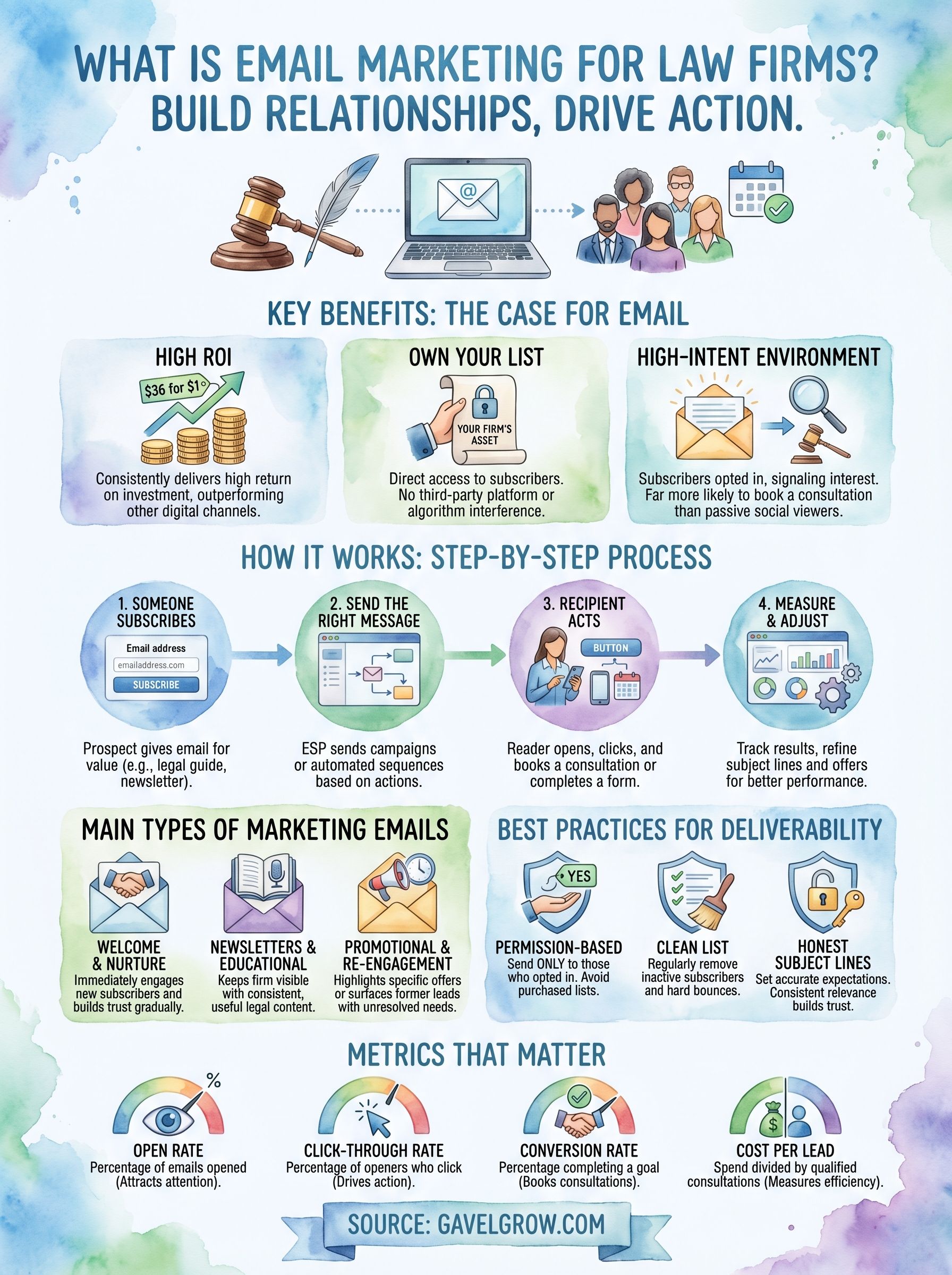
Email marketing consistently delivers one of the highest returns on investment across all digital channels. Studies regularly place that figure around $36 for every $1 spent. Yet many law firms either ignore it entirely or treat it as an afterthought, blasting generic newsletters that no one reads.
At GavelGrow, we help law firms build full-funnel marketing systems that turn attention into signed cases, and email is a critical piece of that funnel. This guide breaks down the fundamentals: what email marketing is, why it matters for firms like yours, the types of emails worth sending, and the best practices that separate effective campaigns from spam-folder noise. Whether you're starting from zero or trying to fix what isn't working, you're in the right place.
Why email marketing still works in 2026
The short answer is that behavior hasn't changed as much as the platforms have. People still check their inboxes every day, make decisions based on what they read there, and expect to hear from businesses they've already trusted with their contact information. If you've wondered what is email marketing compared to newer channels, the honest comparison usually ends the same way: email wins on consistency, cost, and control.
Email is the only digital channel where you reach your audience directly, without competing for algorithmic favor or paying per impression every single time.
You own your list
No social platform can say the same thing email can: your list belongs to your firm, not to a third-party platform. Algorithms can tank your organic reach overnight. Ad costs can spike the moment a competitor enters your market. Your email list is an asset that sits entirely outside those variables, controlled by you and accessible whenever you need it.
For law firms, this is particularly valuable because client relationships extend well beyond the initial case. A list of past clients, referral partners, and warm prospects gives you a direct line to people who already know your work, with no intermediary platform taking a cut or deciding how many of them actually see your message.
Email opens in a high-intent environment
Someone who opens your email has already made a small decision to engage. That's fundamentally different from social media, where your post competes with entertainment, news, and personal updates from their friends and family. Email subscribers opted in, which means they've signaled at least some level of interest in what your firm does.
That context produces better results for attorneys specifically. A past client who receives a targeted follow-up about a relevant legal topic is far more likely to book a consultation than someone who passively scrolls past a social post covering the same content.
The ROI numbers are consistent
Email marketing regularly outperforms other digital channels on return per dollar spent. Published benchmarks from major email platforms consistently show returns ranging from $36 to $42 for every $1 invested. For law firms managing tight marketing budgets, that efficiency matters because it directly affects your cost per signed case.
The underlying reason is straightforward: once you build a functioning list and a set of automated workflows, the marginal cost of sending another campaign is minimal. You're not bidding against competitors for ad placement every time you want to reach your audience.
Email connects your other marketing channels
Your blog posts, paid ads, and intake forms all perform better when email ties them together. A prospect who finds your site through a Google search doesn't have to make a hiring decision the same day. They can join your list, receive a nurture sequence over several weeks, and book a consultation when they're actually ready.
That follow-up capability is what separates firms with consistent case volume from those entirely dependent on ad spend. Email gives your other marketing investments a longer runway to convert, and it does it without requiring a bigger budget every time you want to reach back out.
How email marketing works step by step
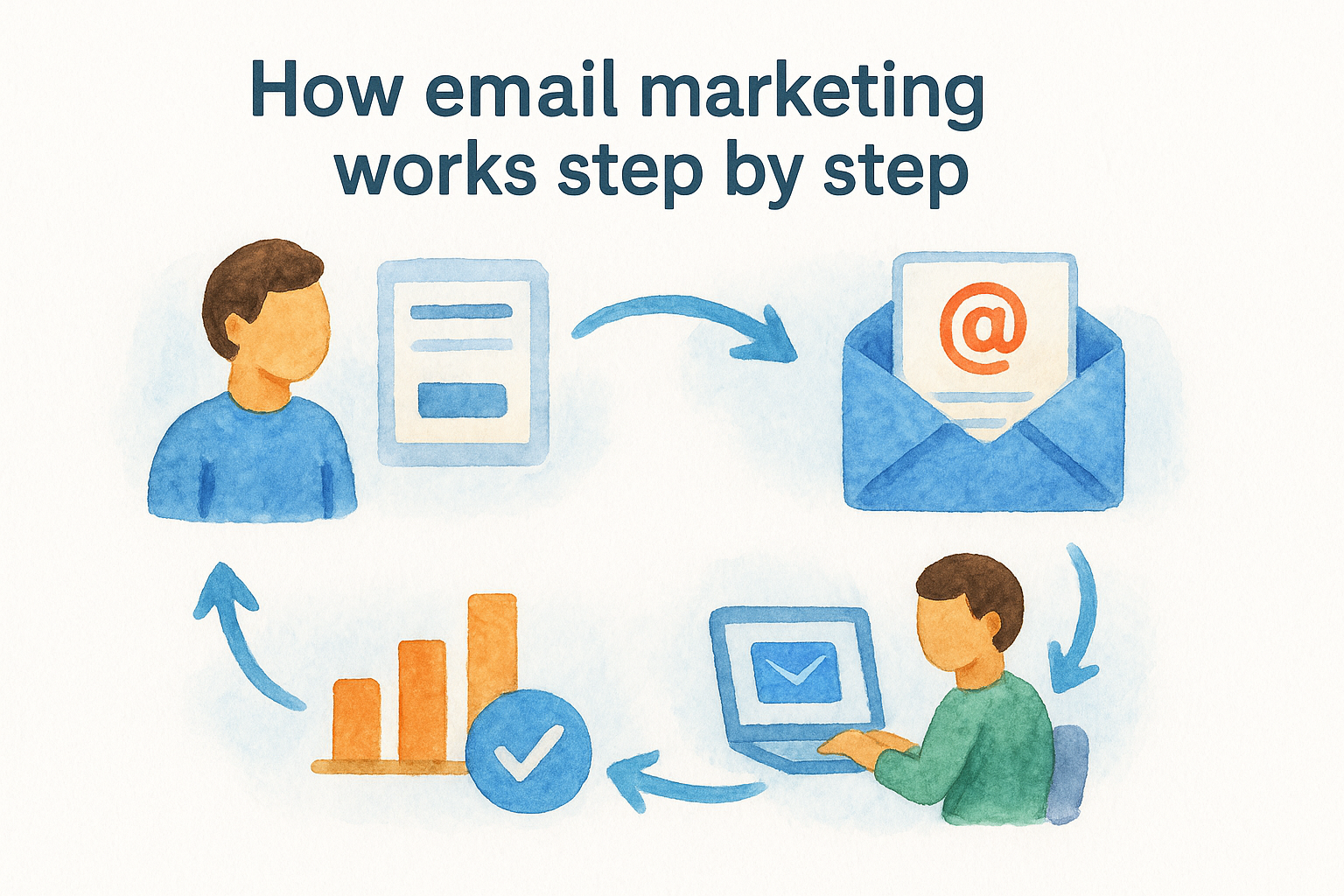
Understanding what is email marketing at a mechanical level helps you build systems that actually produce results. The process moves through a few distinct stages, and each one directly influences the next. Skipping or mishandling any stage creates gaps that cost you leads before they ever reach your intake team.
Someone subscribes to your list
The process starts when a person gives you their email address in exchange for something they value. That could be a free legal guide, a newsletter, or access to firm updates. You collect these addresses through opt-in forms placed on your website, landing pages, or intake flows.
This step sets the entire foundation. A permission-based list consistently outperforms any purchased list because people who opt in have already signaled interest. That signal makes every downstream step more effective.
Your email platform sends the right message
Once someone joins your list, your email service provider (ESP) takes over the delivery. You can send campaigns manually or build automated sequences that trigger based on specific actions a contact takes. A prospect who downloads your personal injury guide, for example, automatically receives a follow-up series over the next two weeks without any manual work from your team.
Automation is what separates email marketing from just sending messages. It lets your firm nurture dozens of contacts at once while your team stays focused on active cases.
The recipient opens, reads, and acts
Delivery is only half the job. Your subject line determines whether the email gets opened, and your body copy determines whether the reader takes action. For law firms, that action is usually a specific conversion: booking a consultation, calling intake, or submitting a contact form.
Every element in your email exists to drive that one outcome. Clear writing, a relevant offer, and a direct call to action all push the reader forward. Keep the focus tight and remove anything that competes with your primary goal.
You measure results and adjust
After each campaign, your ESP shows you open rates, click rates, and conversion data. Those numbers tell you what is connecting with readers and what needs to change. You use that feedback to refine subject lines, test new offers, and improve your sequences until the system reliably produces qualified leads.
How to start email marketing from scratch
Most attorneys who understand what is email marketing still delay getting started because the setup feels complicated. It is not. You need three things in place before you send a single message: a platform to send from, a list of contacts who gave you permission, and a clear goal for each message you send. Getting those three elements right early saves you from deliverability problems and wasted effort later.
Choose an email service provider
Your email service provider (ESP) is the platform that stores your subscriber list, sends your campaigns, and tracks your results. Options like Mailchimp, ActiveCampaign, and Klaviyo each offer different feature sets depending on your firm's complexity and budget. Look for a platform that supports list segmentation, automation workflows, and clean analytics before committing to one.
Start with whatever plan covers your current list size, then upgrade as you grow. Most ESPs offer free tiers that work fine for firms just getting started. The platform you pick matters far less than the habits you build around how you use it consistently.
Build your list before you send anything
A small list of people who actually want to hear from you outperforms a large list of cold contacts every time.
Your first task is to add opt-in forms to the key pages on your firm's website, including your homepage, blog posts, and any free resource pages. Offer something worth trading an email address for: a guide explaining a common legal situation, a checklist for choosing the right attorney, or access to firm updates relevant to your practice area. Every subscriber you add through an opt-in has already expressed interest, which makes your campaigns more effective from the first send.
Write and schedule your first campaign
Keep your first email simple. Introduce your firm, tell subscribers what to expect from you, and give them one clear action to take, whether that is visiting a resource on your site or scheduling a free consultation. Avoid the temptation to pack in multiple offers or legal topics at once. One goal per email is a rule worth following from the start, and it keeps your click rates and consultation bookings measurably higher than cluttered messages with competing calls to action.
The main types of marketing emails
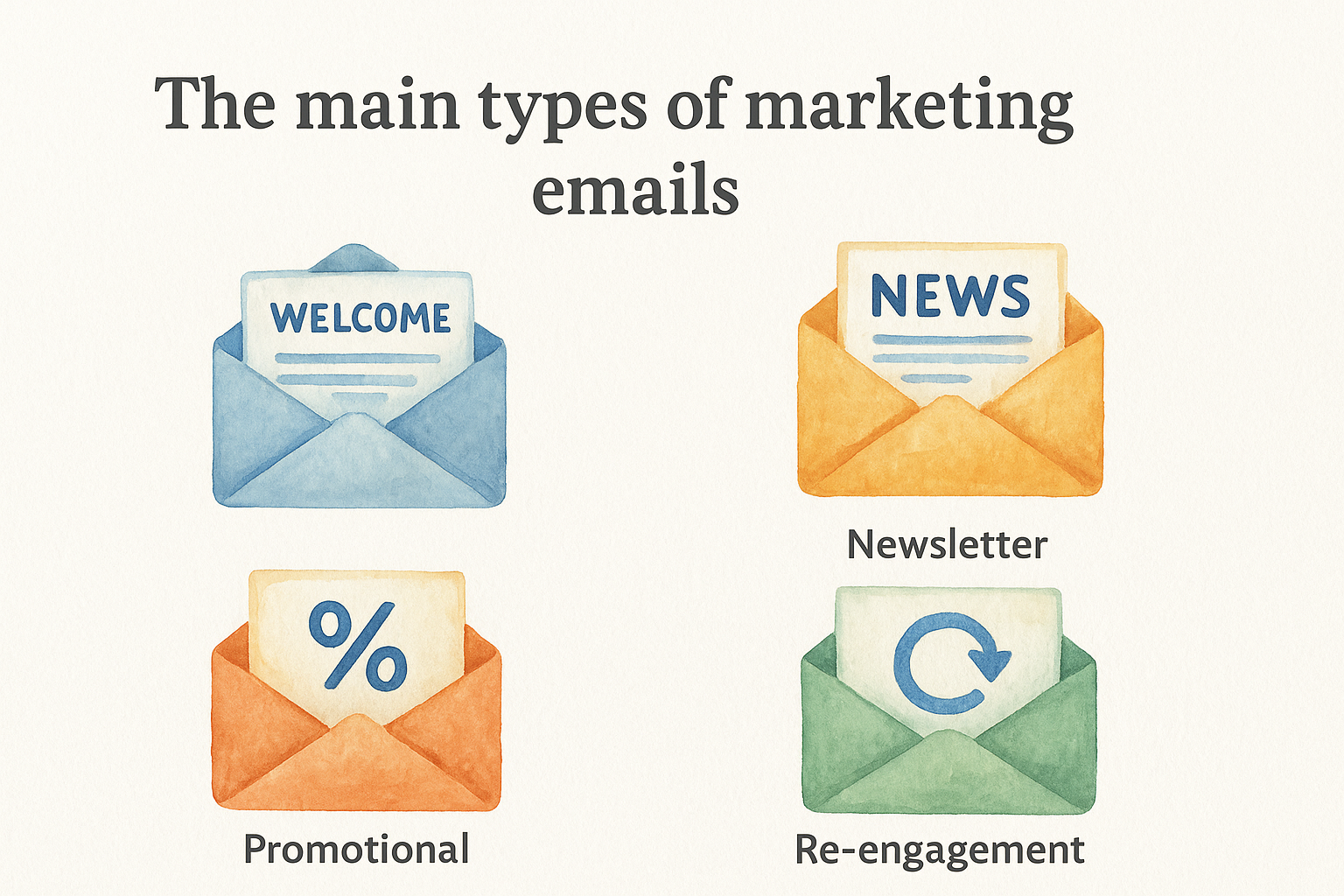
When people ask what is email marketing, they often picture one type of message sent to everyone on a list. In reality, the most effective email programs use several distinct formats, each designed for a specific stage of the client relationship. Matching the right email type to the right audience and moment is what separates campaigns that produce consultations from ones that produce unsubscribes.
Welcome and nurture emails
Your welcome email goes to every new subscriber the moment they join your list. This is consistently your most-opened email because subscribers are most engaged right after they opt in. Use it to confirm what they signed up for, set expectations for future messages, and give them one immediate next step such as reading your most useful legal guide or booking a free consultation.
Nurture sequences pick up where welcome emails leave off. These automated series of emails send over days or weeks to move a prospect closer to booking a consultation. For a law firm, a nurture sequence might walk a personal injury prospect through what to document, how liability works, and what to expect during a case, building trust gradually until they are ready to hire.
Newsletters and educational content
Newsletters keep your firm visible between the moments someone actually needs legal help. Consistent, useful content builds the kind of trust that makes someone think of your firm first when a legal situation comes up for them or someone they know. Write about topics your audience actually worries about, not generic firm announcements nobody reads.
Subscribers who regularly read your newsletter convert at higher rates because they already trust your expertise before they ever need to act on it.
The most effective newsletter topics stay tightly focused on your practice area and geography. A family law attorney in Phoenix gets better results writing about Arizona custody updates than broad national legal trends. Keep content specific and directly tied to situations your ideal clients actually face.
Promotional and re-engagement emails
Promotional emails highlight a specific offer, such as a free consultation or a service relevant to a current event in your practice area. Keep these focused on reader benefit and pair each one with a single direct call to action rather than multiple competing links.
Re-engagement emails target subscribers who have gone quiet over time. Beyond cleaning your list, they occasionally surface a former lead who still has an unresolved legal need and is now ready to move forward. A simple "do you still want to hear from us?" message with a clear opt-out option keeps your deliverability scores intact and your active list genuinely engaged.
Email marketing best practices that protect deliverability
Understanding what is email marketing at a technical level means recognizing that reaching the inbox is not guaranteed. Internet service providers score your sending behavior constantly, and campaigns that ignore basic hygiene land in spam folders before your subscribers ever see them. Every practice below protects your sender reputation, which is the underlying score that determines whether your messages reach inboxes or get filtered out entirely.
Your sender reputation is harder to rebuild than it is to maintain, so build good habits from the first campaign rather than after a deliverability problem surfaces.
Send only to people who opted in
Purchased lists and scraped contacts destroy deliverability faster than almost any other mistake. These contacts never asked to hear from you, so they mark your emails as spam at high rates, and those spam reports directly damage your sender score. Build your list exclusively through opt-in forms where subscribers voluntarily provide their address, and your complaint rates will stay well below the thresholds that trigger filtering.
Using a double opt-in process adds a confirmation step where new subscribers verify their address before joining your list. This extra step lowers your raw subscriber count but produces a list of genuinely engaged contacts who are far more likely to open and act on your campaigns.
Keep your list clean on a regular schedule
Inactive subscribers who never open your emails hurt your engagement metrics, which providers use to judge sender quality. Segment out contacts who have not opened a single email in the past six months and run a re-engagement campaign before removing them entirely. Removing contacts who do not respond keeps your active list accurate and your engagement rates high enough to stay out of spam folders.
Bounce management is equally important. Hard bounces, which occur when an address no longer exists, should be removed from your list immediately after they occur. Sending repeatedly to invalid addresses signals poor list hygiene to email providers and lowers your overall deliverability score.
Write subject lines that set accurate expectations
Misleading subject lines generate immediate spam complaints from subscribers who feel tricked into opening. Keep your subject line honest about what is inside the email, and write it in a way that connects clearly to your audience's actual concerns. Consistent relevance between subject line and content builds subscriber trust over time, which directly improves open rates on every future send.
Metrics to track and improve results
Once you understand what is email marketing at a functional level, the next step is knowing whether it is actually working. Your email service provider tracks performance data automatically, but the numbers only help you if you know which ones to act on. Focus on a small set of metrics that connect directly to signed consultations and qualified leads, not just surface-level activity.
Open rate and click-through rate
Open rate measures the percentage of subscribers who open a given email, and it tells you whether your subject lines are compelling enough to earn attention. A weak open rate points to subject line problems, poor send timing, or a disengaged list. Most legal industry campaigns land between 20% and 35%, so anything consistently below that range signals a fix is needed.
Click-through rate (CTR) reveals whether your email body is persuasive enough to push readers toward your call to action, making it a more direct predictor of consultation bookings than open rate alone.
Your CTR shows the percentage of openers who clicked a link inside your email. If your open rate is healthy but your CTR is low, the problem lives in your copy, your offer, or your call to action. Test one variable at a time to isolate what is holding conversions back.
Conversion rate and cost per lead
Conversion rate tracks how many email clicks resulted in a completed goal, such as a consultation booking or a completed intake form. This is the number that connects your email program directly to revenue. A high CTR with a low conversion rate usually points to a disconnect between the email content and the landing page it sends readers to.
Tracking cost per lead through email requires dividing your total email marketing spend by the number of qualified consultations generated. For law firms, this number gives you a direct comparison point against paid ads, letting you allocate budget toward whichever channel produces the lowest acquisition cost.
List growth rate
Your list growth rate measures how quickly new subscribers are joining minus those who leave. Steady growth signals your opt-in offers are working. A shrinking list means your acquisition efforts are not keeping pace with unsubscribes and removals, which compounds over time and reduces your overall campaign reach.
A simple plan to move forward
You now have a complete picture of what is email marketing and how it fits into a law firm's growth strategy. The next step is straightforward: pick one action from this guide and execute it this week, whether that means signing up for an ESP, adding an opt-in form to your homepage, or writing your first welcome email. Progress compounds faster when you start small and build from a working foundation rather than waiting until everything feels perfect.
The firms that see consistent results from email are the ones that treat it as a system, not a one-time campaign. Build your list, automate your follow-up, track your metrics, and refine based on what the data shows you. Every improvement you make directly reduces your cost per signed case over time. If you want a full marketing strategy built around your specific practice area and market, talk to the team at GavelGrow and get a free strategy consultation.
Frequently Asked Questions
What is email marketing for law firms?
Email marketing is the practice of sending targeted messages to a list of subscribers, prospects, past clients, and referral sources to build relationships and drive action. For attorneys, that action often means booking a consultation or re-engaging a former client with a new legal need. It is the one digital channel where you reach your audience directly, without competing for algorithmic favor or paying per impression.
Why is email marketing worth it for a law firm?
Email consistently delivers one of the highest returns on investment across digital channels, with published benchmarks often cited around $36 for every $1 spent. It works because you own your list rather than renting reach from a social platform, subscribers open email in a high-intent environment after opting in, and once your list and automated workflows exist, the marginal cost of another campaign is minimal.
What are the main types of marketing emails law firms should send?
The most effective programs use several formats matched to the client relationship stage: welcome and nurture emails for new subscribers, newsletters and educational content to stay visible between legal needs, and promotional and re-engagement emails to highlight offers or revive quiet contacts. Welcome emails are typically the most-opened because subscribers are most engaged right after they opt in.
How do you protect email deliverability?
Send only to people who opted in, since purchased or scraped lists generate spam complaints that damage your sender score fast. Keep your list clean by segmenting out contacts who haven't opened in six months and removing hard bounces immediately, and write honest subject lines that set accurate expectations. Your sender reputation is harder to rebuild than to maintain, so build good habits from the first campaign.
Which email marketing metrics should law firms track?
Focus on metrics that connect to signed consultations: open rate signals whether subject lines earn attention (legal campaigns often land between 20% and 35%), click-through rate shows whether your copy pushes readers to act, and conversion rate ties clicks to completed goals like a booked consultation. Also track cost per lead and list growth rate to compare email against other channels and gauge whether acquisition keeps pace with unsubscribes.
Frequently Asked Questions
What is email marketing for law firms?
Email marketing is the practice of sending targeted messages to a list of subscribers, prospects, past clients, and referral sources to build relationships and drive action. For attorneys, that action often means booking a consultation or re-engaging a former client with a new legal need. It is the one digital channel where you reach your audience directly, without competing for algorithmic favor or paying per impression.
Why is email marketing worth it for a law firm?
Email consistently delivers one of the highest returns on investment across digital channels, with published benchmarks often cited around $36 for every $1 spent. It works because you own your list rather than renting reach from a social platform, subscribers open email in a high-intent environment after opting in, and once your list and automated workflows exist, the marginal cost of another campaign is minimal.
What are the main types of marketing emails law firms should send?
The most effective programs use several formats matched to the client relationship stage: welcome and nurture emails for new subscribers, newsletters and educational content to stay visible between legal needs, and promotional and re-engagement emails to highlight offers or revive quiet contacts. Welcome emails are typically the most-opened because subscribers are most engaged right after they opt in.
How do you protect email deliverability?
Send only to people who opted in, since purchased or scraped lists generate spam complaints that damage your sender score fast. Keep your list clean by segmenting out contacts who haven't opened in six months and removing hard bounces immediately, and write honest subject lines that set accurate expectations. Your sender reputation is harder to rebuild than to maintain, so build good habits from the first campaign.
Which email marketing metrics should law firms track?
Focus on metrics that connect to signed consultations: open rate signals whether subject lines earn attention (legal campaigns often land between 20% and 35%), click-through rate shows whether your copy pushes readers to act, and conversion rate ties clicks to completed goals like a booked consultation. Also track cost per lead and list growth rate to compare email against other channels and gauge whether acquisition keeps pace with unsubscribes.