What Is Link Building in SEO? A Beginner’s Guide
Categories: Legal Marketing Strategies
 Abram Ninoyan
Founder & Senior Performance Marketer
Credentials: Google Partner, Google Ads Search Certified, Google Ads Display Certified, Google Ads Measurement Certified, Google Analytics (IQ) Certified, HubSpot Inbound Certified, HubSpot Social Media Marketing Certified, Conversion Optimization Certified
Expertise: Google Ads, Meta Ads, Conversion Rate Optimization, GA4 & Google Tag Manager, Lead Generation, Marketing Funnel Optimization, PPC Management
LinkedIn Profile
Link building in SEO is the process of getting other websites to link back to yours, and it remains one of the strongest ranking signals Google uses to determine which pages deserve top positions in s...
Key Takeaways
- What Is Link Building in SEO? A Beginner’s Guide (2026)
- What is link building in SEO, exactly?
- Why does link building still matter in 2026?
- What makes a backlink high quality?
What Is Link Building in SEO? A Beginner’s Guide (2026)
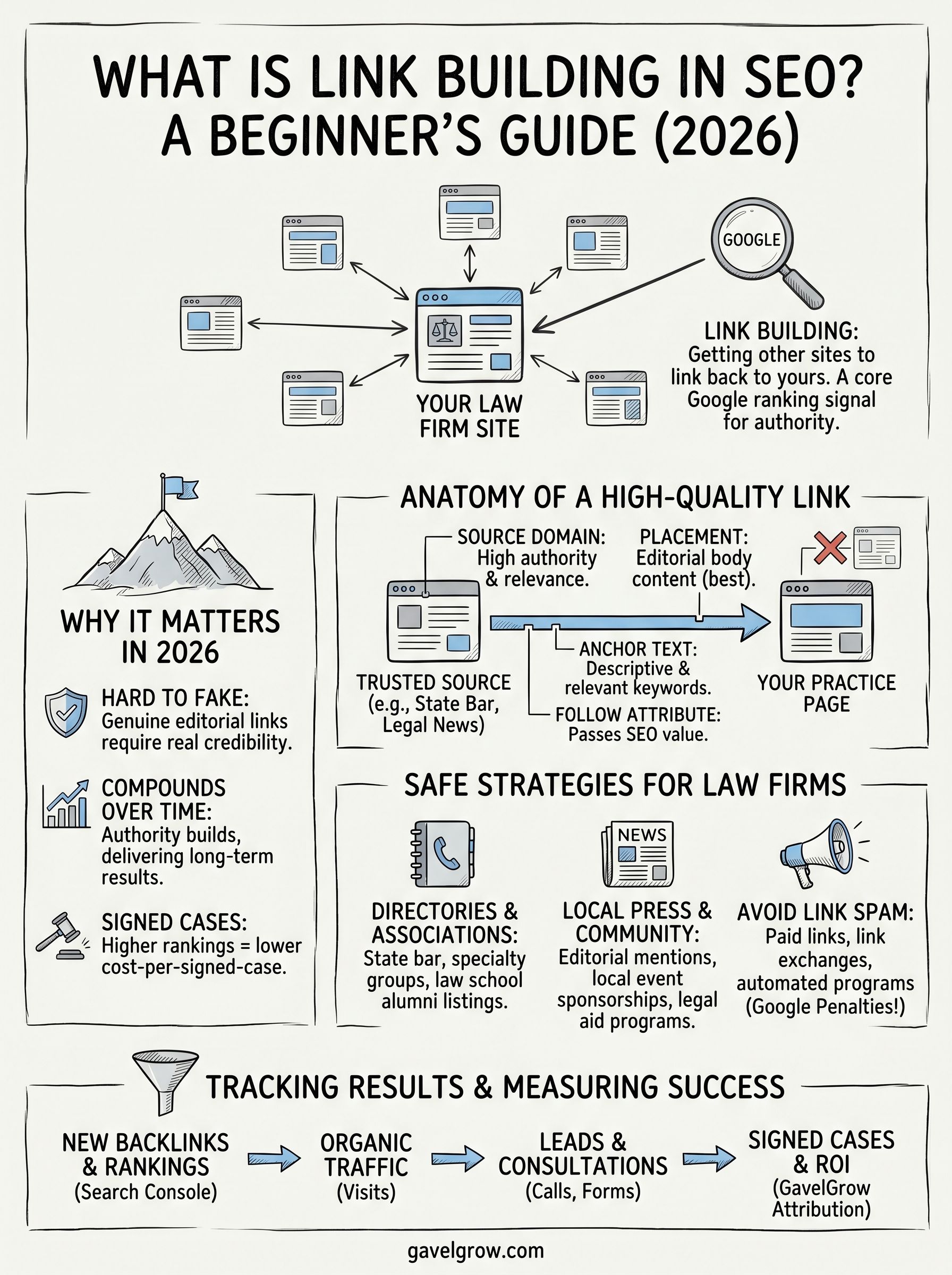
Link building in SEO is the process of getting other websites to link back to yours, and it remains one of the strongest ranking signals Google uses to determine which pages deserve top positions in search results.
Every law firm investing in SEO eventually hits a ceiling where on-page optimization alone stops moving the needle. You've nailed your title tags, published practice-area pages, and optimized your Google Business Profile, yet competitors with thinner content still outrank you. The difference, more often than not, comes down to backlinks. According to Backlinko's analysis of 11.8 million Google search results (2024), pages ranking #1 have an average of 3.8× more backlinks than pages in positions two through ten. For law firms competing in high-value practice areas like personal injury or mass torts, that gap translates directly into signed cases won or lost.
At GavelGrow, we help over 500 U.S. law firms turn marketing spend into signed retainers, and link building is a core part of the organic search and local SEO strategies our managed-services team executes daily. We've seen firsthand how a disciplined approach to earning quality links compounds over time, lowering cost-per-signed-case while building the kind of domain authority that paid ads can't replicate.
This guide breaks down exactly how link building works, why search engines treat links as votes of confidence, which strategies actually produce results for law firms, and how to avoid the tactics that can get your site penalized. Whether you're a solo practitioner handling marketing yourself or a managing partner evaluating your agency's SEO playbook, you'll walk away with a clear, actionable understanding of how to make link building work for your firm.
What is link building in SEO, exactly?
At its core, link building is the practice of acquiring hyperlinks from other websites to pages on your own site. Search engines like Google read those links as signals of credibility, similar to how a court treats citations from established case law as evidence of sound reasoning. When a respected legal publication links to your personal injury practice-area page, Google registers that as a vote of confidence in your content. The more high-quality votes you accumulate, the more authority your site carries, and the higher it tends to rank.
Understanding what is link building in SEO requires you to separate the concept from the tactics. The concept is simple: you earn links by publishing content or providing value that other site owners want to reference. The tactics, which this guide covers in later sections, range from getting listed in legal directories to earning editorial mentions in local news outlets. What matters first is grasping how links fit into Google's broader model for ranking pages, because that understanding shapes every decision you make about how to pursue them.
How search engines use links as signals
Google's original PageRank algorithm, introduced in the late 1990s, treated each link as a vote cast by one page for another. A page with many votes from trusted sources ranked higher than a page with few votes or votes from low-quality sites. While Google's systems have grown far more sophisticated, links remain one of its most reliable indicators for determining which pages deserve visibility in search results.
Google's own Search documentation confirms that links are among the key signals its systems use to understand a page's relevance and authority across the web.
For your law firm, the practical implication is direct. Two firms can publish equally thorough content on, say, "how to file a workers' compensation claim in Texas," but the firm with stronger backlinks pointing to that page will almost always rank higher. On-page factors like keyword placement and page speed get you into the competition, but links largely determine who wins it.
The anatomy of a backlink
Not every link you receive looks the same or carries equal weight. Each backlink has several components that affect how much value it passes to your site, and recognizing those components helps you spend your time pursuing links that actually move rankings rather than ones that just pad a spreadsheet.
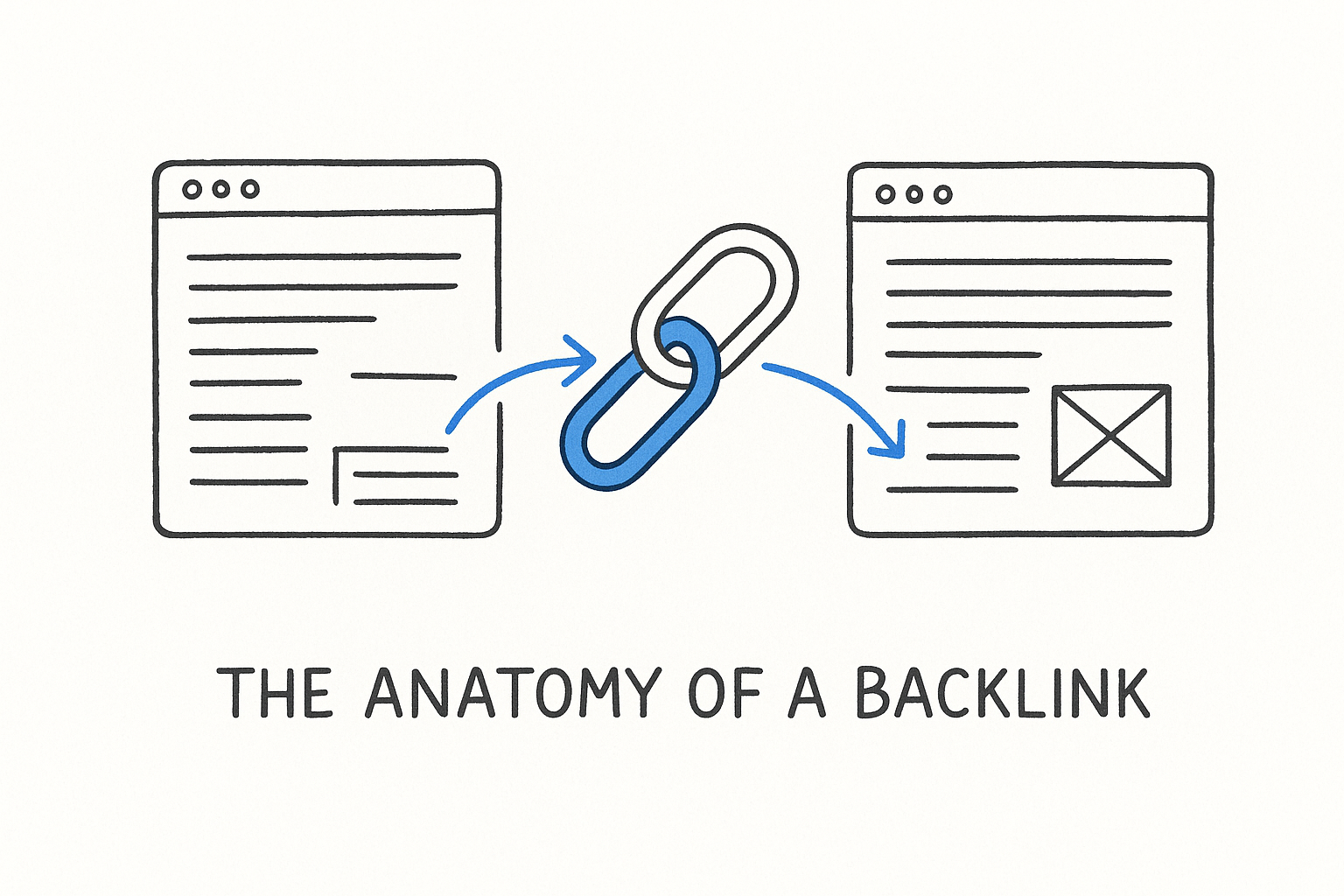
- Source domain: the website linking to you; a link from a state bar association carries far more authority than a link from an unrelated business directory
- Anchor text: the clickable words in the link; descriptive text like "Chicago personal injury attorney" tells Google what your target page covers
- Link placement: links embedded in the body of an editorial article pass more authority than links buried in footers or sidebars
- Follow vs. nofollow attribute: a followed link passes SEO value directly; a nofollow attribute signals to Google not to treat the link as an endorsement, though Google's documentation notes it treats nofollow as a hint rather than a strict directive
A single followed link from a recognized legal publication in your state will do more for your rankings than 50 followed links from irrelevant or low-authority sites. Quality consistently outperforms quantity in any serious link-building effort, and law firms that internalize this early avoid wasting budget on tactics that deliver bulk links with little real impact.
Why does link building still matter in 2026?
Despite years of predictions that Google would eventually devalue links, backlinks remain a core ranking signal in 2026. Google's own publicly documented guidelines confirm that links help its systems assess a page's authority and relevance across the web. For law firms competing in crowded markets like personal injury or criminal defense, understanding what is link building in SEO and why it still carries weight gives you a meaningful strategic advantage over firms that treat it as optional.
Google's Search documentation states that links are among the key signals its systems use to understand a page's standing on the web, and that guidance has not changed.
Links resist manipulation better than most signals
One reason Google continues to weight backlinks so heavily is that they are harder to fake at scale than on-page factors. You can rewrite your own meta descriptions overnight, but earning a genuine editorial link from a recognized legal publication takes real effort and real credibility. That friction is exactly what makes links a trustworthy signal for Google's ranking systems. When a law school, state bar association, or regional news outlet links to your practice-area page, that link reflects genuine third-party recognition that Google can verify independently.
Google periodically releases core updates that specifically target low-quality and manipulative link practices, which reinforces how seriously the company treats the integrity of its link graph. Firms that earn links legitimately benefit from each update rather than getting caught in the crossfire.
Why link authority compounds over time
Link authority accumulates the same way a professional reputation does: slowly at first, then with increasing momentum. Each high-quality link your firm earns boosts the authority passed to every page on your domain, not just the specific page being linked to. This compounding effect means that a disciplined, long-term link-building program delivers returns that grow month over month, unlike paid ads where your visibility stops the moment you cut the budget.
For law firms measuring marketing performance in signed cases rather than vanity metrics, this matters considerably. Organic rankings driven by strong backlink profiles lower your cost-per-signed-case over time because the traffic arriving through those rankings carries no per-click cost. Firms that start building links today are setting up a compounding advantage that competitors who skip this step will struggle to close within a year or two.
What makes a backlink high quality?
Not all links carry equal weight, and once you understand what is link building in SEO at a foundational level, the next step is learning to distinguish a high-value link from one that wastes your time or, worse, hurts your site. Google's systems evaluate multiple attributes of each link before deciding how much authority to pass along. Chasing the wrong links is one of the most common mistakes law firms make when they first invest in an SEO program.
Domain authority and topical relevance
Domain authority refers to the overall credibility of the website linking to you, and it's the single biggest factor that separates a powerful link from a forgettable one. A link from a state bar association, a law school, or a regional newspaper carries far more weight than a link from an unrelated business directory that accepted your submission without any editorial review.
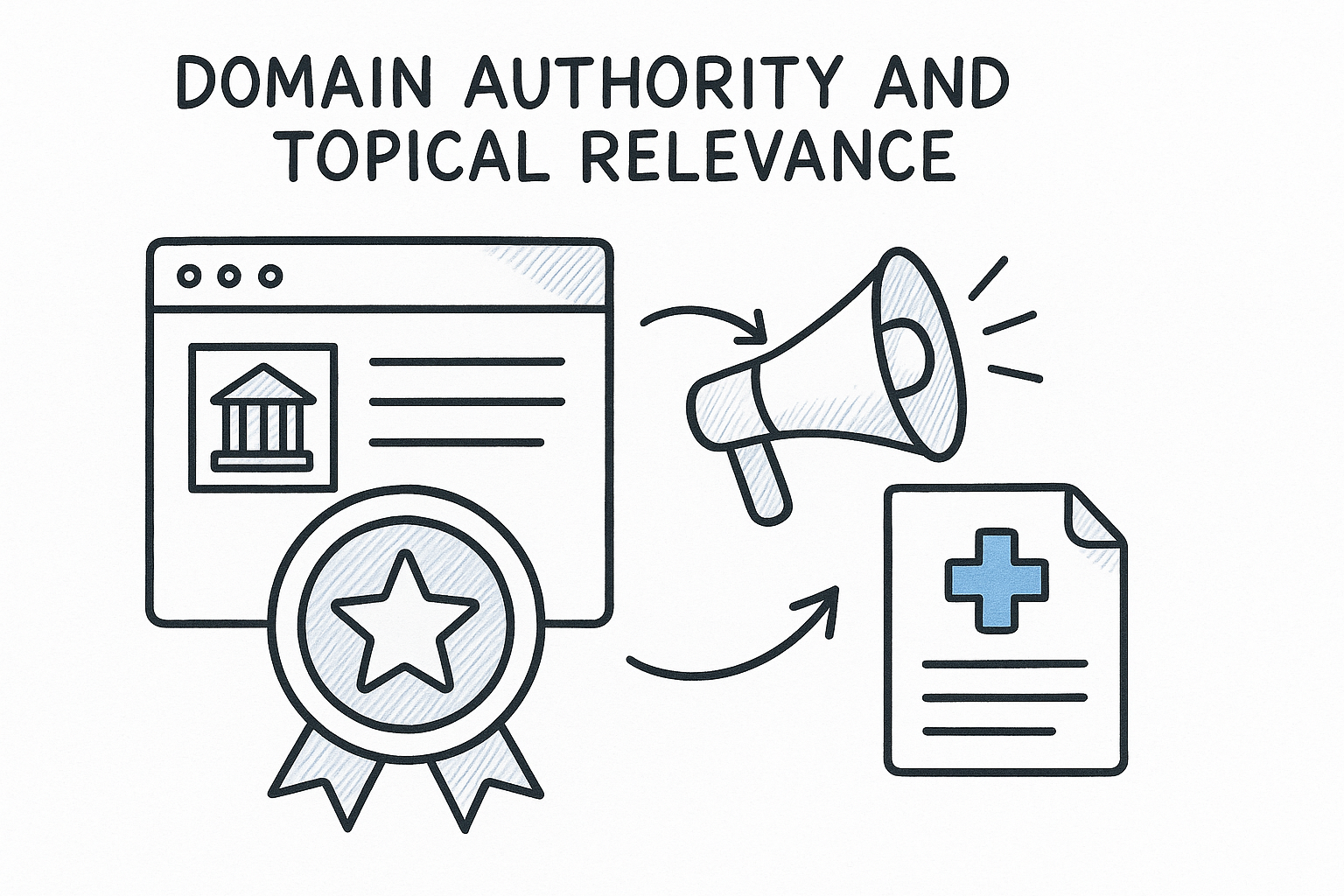
A link from one relevant, trusted source in the legal space will do more for your rankings than a dozen links from generic, low-authority sites.
Topical relevance matters just as much as raw authority. Google's systems understand what each page is about and whether the linking site covers related subject matter. A personal injury firm earning a link from a local medical center's resource page about patient rights sits in a far stronger position than the same firm earning a link from a home improvement blog. When evaluating any link opportunity, ask whether the linking site's audience would genuinely benefit from visiting your practice-area page.
Placement and anchor text
Link placement within the page significantly affects how much value the link passes. Editorial links embedded in the body of a well-written article carry more authority than links stuck in sidebars, footers, or boilerplate "sponsored" sections that every page on the site repeats. Google treats a link that appears naturally within relevant content as a stronger endorsement than a link that looks like it was added purely for SEO purposes.
Anchor text is the clickable text the linking page uses to describe your content. Descriptive anchors like "Texas workers' compensation attorney guide" tell Google exactly what your target page covers and reinforce your relevance for those terms. Overly generic anchors like "click here" or keyword-stuffed anchors repeated across hundreds of links both signal lower quality. Natural variation in anchor text, with a mix of branded, descriptive, and URL-style anchors, is the pattern that typically signals a legitimate, earned link profile to Google's systems.
How can law firms build links safely?
Understanding what is link building in SEO gives you the foundation, but knowing which specific tactics work for law firms and which ones expose you to Google penalties is where strategy meets execution. The safest link-building approaches for law firms are also the most durable ones, and that alignment makes them worth prioritizing from day one.
Legal directories and professional associations
Legal directories like your state bar's member directory represent some of the most straightforward links your firm can earn. These sites carry genuine topical relevance because Google's systems recognize them as authoritative sources within the legal vertical. Submit your firm's profile to your state bar association's directory first, since those links carry strong credibility signals specific to your jurisdiction.
Beyond directories, consider every professional association your attorneys belong to: local bar associations, specialty bar groups like the American Association for Justice for personal injury attorneys, and alumni associations from law schools. Most of these organizations maintain member listings with followed links pointing to member websites.
Local press and community involvement
Earning editorial mentions from local news outlets is one of the highest-value link-building strategies available to law firms. Journalists covering legal news in your market regularly need expert commentary on new legislation, notable verdicts, or public-interest legal questions. Position your attorneys as accessible, quotable sources on practice-area topics, and those media relationships convert into links on authoritative local and regional news sites.
A single editorial link from a local newspaper's legal coverage section typically carries more ranking authority than dozens of links from generic directories.
Community sponsorships present another safe, relevant path. Sponsoring a local charity event, a law school clinic, or a community legal aid program often results in a link from the organization's website. These links reflect genuine involvement in your local market, exactly the kind of third-party endorsement that builds both local SEO authority and brand credibility at the same time.
What Google considers link spam
Google's spam policies explicitly flag certain link practices that law firms sometimes encounter in agency pitches: paid links that pass PageRank, large-scale link exchanges, and links created through automated programs. Reviewing Google's link spam guidance protects your firm from manual penalties that can strip your rankings entirely. Any tactic that promises hundreds of links quickly at low cost almost always violates these policies, regardless of how a vendor frames it.
Avoid any vendor that cannot explain exactly where your links will come from. Legitimate link building takes months to show meaningful movement, but the results it produces are sustainable and penalty-proof in a way that shortcut tactics never are.
How do you track link building results?
Knowing what is link building in SEO is only half the equation. The other half is measuring whether the links you earn actually translate into higher rankings, more traffic, and ultimately more signed cases. Without a clear tracking system, you risk spending months on outreach without any way to confirm whether your effort is producing results or needs a different direction.
What metrics actually tell you if it's working
Three core signals reveal whether your link-building program is moving in the right direction: new backlinks earned, organic ranking positions for your target practice-area keywords, and organic traffic to the pages those links point to. Monitoring all three together gives you a much clearer picture than watching any single metric in isolation.
Tracking ranking positions alone misses the fuller story. A page can hold a stable ranking while earning new links that build a compounding advantage you'll see in traffic six to twelve weeks later.
Google Search Console is the most reliable free tool for tracking which pages earn organic clicks and which queries drive that traffic. Check the "Links" report inside Search Console to see which external sites link to your domain and which of your pages attract the most backlinks. Since this data comes directly from Google's index, it reflects what actually matters to your rankings rather than estimates from third-party databases.
Connecting link gains to signed cases
Rankings and traffic metrics confirm that your links are working from an SEO perspective, but law firms need to measure outcomes in signed retainers, not just search positions. This is where most standard SEO reporting breaks down. A firm can climb from position seven to position three for "Chicago personal injury attorney" and have no clear way to tie that movement to the intake submissions, calls, and consultations that actually drive revenue.
GavelGrow's full-funnel attribution platform closes that gap by tracking every lead from the first ad click or organic landing through to a signed case. When your link-building program lifts an organic page and drives new intake submissions, GavelGrow's call tracking and intake automation capture those leads and tag them by source. You see exactly how many qualified consultations your organic channel produced each month, which gives you the cost-per-signed-case data you need to justify continued investment in link building. Explore how the GavelGrow platform connects organic traffic to signed-case outcomes across every practice area you target.
A simple way to start this week
Understanding what is link building in SEO is the first step. Acting on it this week is the second. Start by claiming your state bar directory listing and confirming the link points to your highest-priority practice-area page. That single action takes under 30 minutes and produces a topically relevant, followed link that carries genuine authority with Google.
Next, identify two local organizations your firm already supports and ask whether they maintain a member or sponsor page with links to partner websites. Most do, and a polite email to the right contact is all it takes. These small steps compound quickly when you repeat them monthly with a clear target in mind.
For firms that want a faster path, GavelGrow's managed SEO team handles link outreach, placement, and full-funnel attribution tracking for you. Book a free 45-minute strategy call to see exactly where your firm stands and what a realistic link-building roadmap looks like for your practice area.
Frequently Asked Questions
What is link building in SEO?
Link building is the practice of getting other websites to link back to yours, which search engines like Google read as signals of credibility and authority. Each quality link acts like a vote of confidence in your content. For law firms, earning links from sources such as state bar associations or regional news outlets helps practice-area pages rank higher in search results.
Does link building still matter for SEO in 2026?
Yes. Backlinks remain a core ranking signal, and Google's own Search documentation confirms links are among the key signals its systems use to assess a page's authority and relevance. Links are harder to fake at scale than on-page factors, which is exactly why Google continues to weight them heavily and why they resist manipulation better than most signals.
What makes a backlink high quality for a law firm?
A high-quality backlink comes from a trusted, topically relevant source and appears naturally within editorial content. A link from a state bar association, law school, or regional newspaper carries far more weight than one from an unrelated directory. Descriptive anchor text and placement inside a real article, rather than a footer or sidebar, also increase how much authority a link passes.
What link-building tactics are safe for law firms?
The safest tactics are also the most durable: claiming listings in your state bar and professional-association directories, earning editorial mentions from local news outlets by offering expert commentary, and sponsoring community organizations that link back to partners. Avoid any vendor promising hundreds of links quickly, since paid links that pass PageRank and automated link schemes violate Google's spam policies.
How do I measure whether link building is working?
Track three signals together: new backlinks earned, organic ranking positions for your target practice-area keywords, and organic traffic to the linked pages. Google Search Console is the most reliable free tool, and its "Links" report shows which external sites link to you and which pages attract the most backlinks. Rankings often move six to twelve weeks after links are earned.
Frequently Asked Questions
What is link building in SEO?
Link building is the practice of getting other websites to link back to yours, which search engines like Google read as signals of credibility and authority. Each quality link acts like a vote of confidence in your content. For law firms, earning links from sources such as state bar associations or regional news outlets helps practice-area pages rank higher in search results.
Does link building still matter for SEO in 2026?
Yes. Backlinks remain a core ranking signal, and Google's own Search documentation confirms links are among the key signals its systems use to assess a page's authority and relevance. Links are harder to fake at scale than on-page factors, which is exactly why Google continues to weight them heavily and why they resist manipulation better than most signals.
What makes a backlink high quality for a law firm?
A high-quality backlink comes from a trusted, topically relevant source and appears naturally within editorial content. A link from a state bar association, law school, or regional newspaper carries far more weight than one from an unrelated directory. Descriptive anchor text and placement inside a real article, rather than a footer or sidebar, also increase how much authority a link passes.
What link-building tactics are safe for law firms?
The safest tactics are also the most durable: claiming listings in your state bar and professional-association directories, earning editorial mentions from local news outlets by offering expert commentary, and sponsoring community organizations that link back to partners. Avoid any vendor promising hundreds of links quickly, since paid links that pass PageRank and automated link schemes violate Google's spam policies.
How do I measure whether link building is working?
Track three signals together: new backlinks earned, organic ranking positions for your target practice-area keywords, and organic traffic to the linked pages. Google Search Console is the most reliable free tool, and its "Links" report shows which external sites link to you and which pages attract the most backlinks. Rankings often move six to twelve weeks after links are earned.