Ahrefs Competitor Analysis: SEO Playbook For Law Firms
Categories: Legal Marketing Strategies
 Abram Ninoyan
Founder & Senior Performance Marketer
Credentials: Google Partner, Google Ads Search Certified, Google Ads Display Certified, Google Ads Measurement Certified, Google Analytics (IQ) Certified, HubSpot Inbound Certified, HubSpot Social Media Marketing Certified, Conversion Optimization Certified
Expertise: Google Ads, Meta Ads, Conversion Rate Optimization, GA4 & Google Tag Manager, Lead Generation, Marketing Funnel Optimization, PPC Management
LinkedIn Profile
Most law firms guess at what their competitors are doing online. They eyeball rankings, maybe Google a few keywords, and call it research. An ahrefs competitor analysis replaces that guesswork with ac...
Key Takeaways
- Ahrefs Competitor Analysis: SEO Playbook For Law Firms 2026
- What an Ahrefs competitor analysis shows law firms
- Step 1. Pick your real SEO competitors
- Step 2. Find the pages and keywords that sign cases
Ahrefs Competitor Analysis: SEO Playbook For Law Firms 2026
Most law firms guess at what their competitors are doing online. They eyeball rankings, maybe Google a few keywords, and call it research. An ahrefs competitor analysis replaces that guesswork with actual data, backlink profiles, keyword gaps, content opportunities, and traffic estimates you can act on within the same afternoon.
The problem? Ahrefs wasn't built for lawyers. It's a general-purpose SEO toolkit, and without a legal-specific lens, you'll drown in metrics that don't map to signed cases. A personal injury firm in Phoenix has completely different competitive dynamics than a SaaS company in San Francisco, yet the default Ahrefs workflow treats them identically. Knowing which reports matter, and which ones waste your time, is the difference between an SEO strategy that generates retainers and one that generates busywork. At GavelGrow, we've run competitive audits across 500+ U.S. law firms since 2015, and the patterns are clear: firms that systematically study their competitors' SEO spend less per signed case and rank faster.
This guide walks you through exactly how to run a competitor analysis in Ahrefs, step by step, filtered for what actually moves the needle for law firms. You'll learn how to identify your real organic competitors (they're often not who you think), steal their best-performing keywords, reverse-engineer their backlink strategies, and spot content gaps you can fill before they do. Whether you run SEO in-house or hand it off to a team, this playbook gives you the framework to audit any market in under two hours.
What an Ahrefs competitor analysis shows law firms
Running an ahrefs competitor analysis on a rival firm surfaces data across four core dimensions: the organic keywords they rank for, the pages that drive their traffic, the websites linking to them, and the content gaps where they're absent but you could appear. Each dimension answers a specific strategic question. Which keywords send potential clients to your competitor instead of you? Which practice-area pages pull the most organic visits? Which local publications, legal directories, and bar associations link to them but not to you? Ahrefs' Site Explorer report is where every answer begins, and understanding what each data set means before you touch the tool saves you hours of aimless clicking.
The four data sets every law firm should pull
Before you open a single Ahrefs report, know what you're looking for. Law firms routinely waste time exploring metrics that have no connection to signed cases. The four data sets below connect directly to revenue, and they map to specific reports you can access immediately inside Site Explorer or the Competitive Analysis tab.
Pull these four reports in this exact order every time you audit a competitor. The consistent sequence makes it straightforward to compare multiple firms across different markets.
How to interpret these numbers in a legal context
Traffic estimates in Ahrefs are directional, not precise. A personal injury firm ranked for "car accident lawyer Phoenix" might show 400 monthly organic visits on one page, but the more important figure is the cost-per-click data Ahrefs attaches to those keywords through its Traffic Value metric. Traffic Value tells you what a competitor would spend in Google Ads to replicate the traffic they currently earn for free through SEO.
For law firms, prioritize any keyword showing a CPC above $20 and monthly search volume above 100. That combination signals real commercial intent: enough people search it, and advertisers consider it worth paying for. Targeting these keywords first, before any informational content, puts your SEO budget where it has the clearest path to generating retainers rather than blog traffic that never converts.
Step 1. Pick your real SEO competitors
Your direct business competitors and your SEO competitors are rarely the same firms. The personal injury firm two blocks away might handle identical case types, but if they rank for none of your target keywords, they're irrelevant to your SEO strategy. Organic competitors are the sites that actually appear on page one for the searches your potential clients run, and finding them requires data, not assumptions.
How to identify your organic competitors in Ahrefs
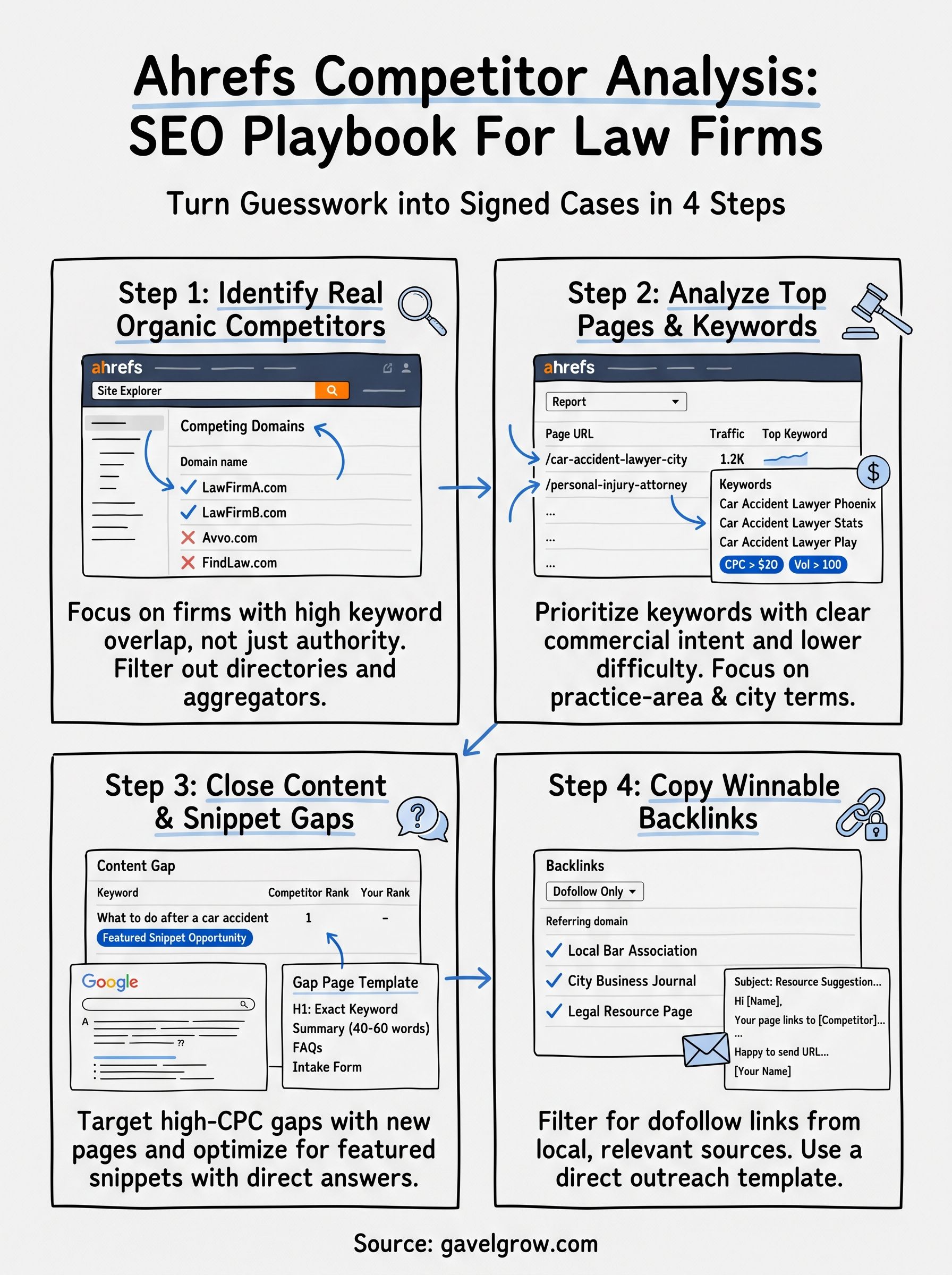
Open Ahrefs Site Explorer, enter your own domain, and navigate to Competing Domains under the Organic Search section. Ahrefs returns a ranked list of sites that share keyword rankings with you, along with a Common Keywords count showing the exact overlap. Sort by common keywords, not by domain rating, to surface the sites competing for your specific searches rather than simply the most authoritative sites overall.
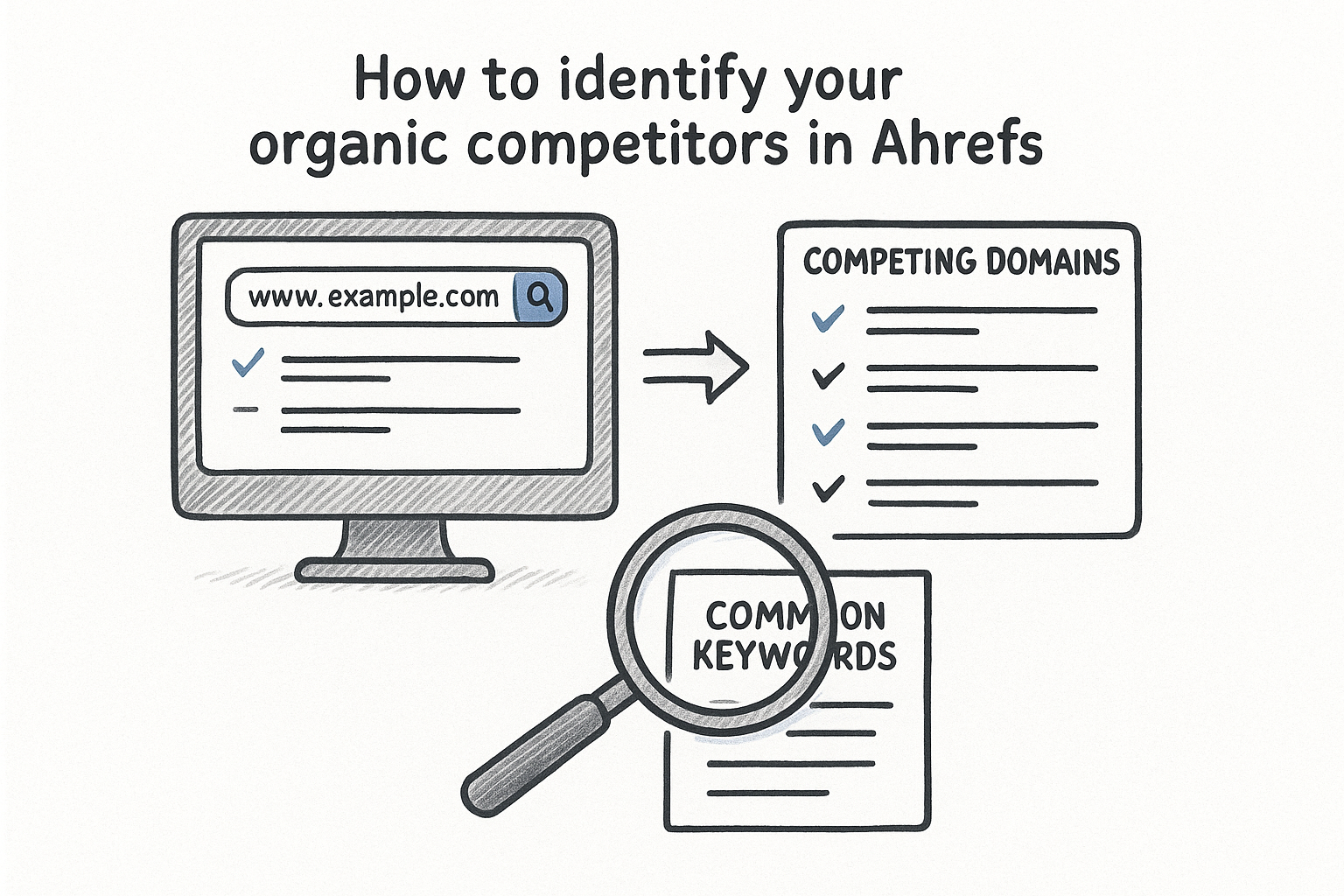
Run a seed keyword cross-check as a second verification step. Type your highest-value keyword, for example "personal injury lawyer [city]," into Ahrefs Keywords Explorer and click SERP overview. Every organic result on page one is a competitor worth evaluating, regardless of whether it's a law firm, a legal directory, or a local news site.
Your competitor list for any single ahrefs competitor analysis should stay at five domains or fewer. Analyzing more than five creates decision paralysis without adding strategic value.
Filtering out directories and aggregators
Legal directories like Avvo, FindLaw, and Justia consistently appear in SERP results, but you cannot replicate their domain authority or link profile through standard firm-level SEO. Note them separately for later backlink research, then remove them from your active competitor list and focus exclusively on law firm domains you can realistically outrank within your market.
Step 2. Find the pages and keywords that sign cases
Once you have your competitor list, open Site Explorer for the first domain and click Top Pages under Organic Search. This report shows every URL ranked by estimated organic traffic, and for law firms, the highest-traffic pages almost always fall into two buckets: practice-area landing pages (car accident lawyer, slip and fall attorney) and city-specific pages targeting geographic searches. Click through to any page pulling significant traffic and note its title tag, heading structure, and word count. You're building a content benchmark, not just a keyword list.
How to pull the right keywords from competitor pages
Drill into each top page by clicking the traffic number, which opens the keyword breakdown for that specific URL. You now see every term that page ranks for, sorted by position. Filter results to show only keywords in positions 1 through 10, then sort by keyword difficulty below 30. Lower-difficulty keywords with clear commercial intent are the fastest wins available in any ahrefs competitor analysis. Copy them into a working spreadsheet with their CPC and monthly search volume alongside each term.
Any keyword with CPC above $20 and a current position between 4 and 10 is a genuine opportunity: advertisers are paying to own that search, and you are already close enough to push onto page one with targeted optimization.
Which keyword types to prioritize first
Not every keyword your competitor ranks for connects to client intake. Focus your effort on three categories in this order:
- Practice-area + city keywords: "workers comp lawyer Dallas" converts at the highest rate
- Comparison and qualifier keywords: "best DUI attorney near me" signals active decision-making
- Symptom-based keywords: "what to do after a car accident" attracts pre-qualified research traffic
Step 3. Close content and featured snippet gaps
Content gaps represent keywords your competitors rank for that your site doesn't appear for at all. In Ahrefs, open the Competitive Analysis tab, enter your domain in the "This target" field, then add up to four competitor domains below. Click "Show keyword opportunities" and set the filter to show keywords where competitors rank in positions 1 through 10 but your site has no ranking position. Export the list and sort by CPC descending to surface the highest-value gaps first.
How to prioritize gap keywords for law firm content
Not every gap keyword deserves a new page. Before you build anything, filter your exported list to two conditions: monthly search volume above 50 and keyword difficulty below 35. That combination identifies terms with real search demand that a focused page can realistically rank for without a massive link-building campaign. Group the surviving keywords by practice area and location, then assign one primary keyword per page. Avoid stuffing multiple gap terms onto a single URL, since each distinct search intent earns better results with its own dedicated page.
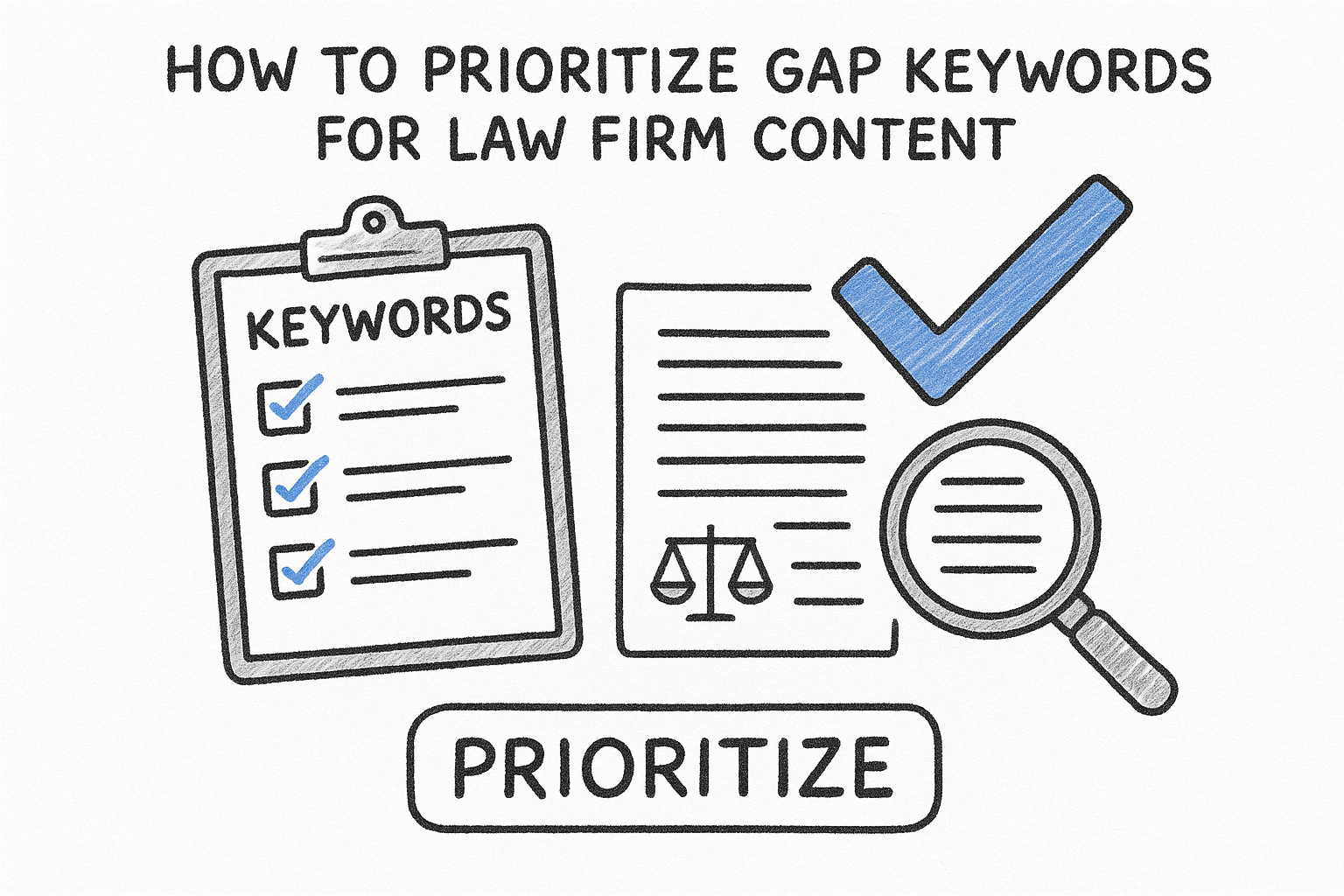
Use this quick template for every gap page you create: H1 matching the exact keyword phrase, a 40-60 word summary paragraph, three to five FAQ headers answering related questions, and a single intake form embedded above the fold.
How to capture featured snippets on legal queries
Featured snippets on queries like "how long do I have to file a personal injury claim in Texas" appear on Google for question-format searches that your competitors may already own. Inside your ahrefs competitor analysis, filter the Content Gap results to keywords beginning with "how," "what," "when," or "can." Format your answer as a direct 40-60 word paragraph immediately under the matching H2 heading, which matches the structure Google pulls most often into snippet boxes.
Step 4. Copy the Link Sources You Can Win
Backlinks remain one of the strongest ranking signals Google evaluates, and your competitors have already done the prospecting work for you. Open Site Explorer for each competitor domain, click Backlinks under the Link profile section, and filter to Dofollow links only. Export the full list into a spreadsheet, then repeat this process for every firm on your competitor list. What you're building is a consolidated link source database specific to your legal market, which is far more actionable than any generic link-building guide.
How to Identify Winnable Link Sources
Not every link pointing at your competitor is available to you. Domain Rating below 70 and sites that accept guest contributions, local business mentions, or resource page listings are your primary targets. Inside your ahrefs competitor analysis export, add a column flagging each referring domain by link type: editorial mention, directory listing, sponsorship, or guest post. Delete any links from sites that clearly require an existing relationship, massive authority, or paid placement you can't justify.
Links from local bar association pages, city business journals, and practice-area-specific legal resource pages convert into rankings faster than generic high-DR links because they carry local and topical relevance simultaneously.
A Repeatable Outreach Template You Can Send Today
Once you identify 10 to 15 winnable referring domains, contact each site with a direct pitch. Use this template:
- Subject: Resource suggestion for [their page title]
- Hi [Name],
- I noticed your [page URL] links to [competitor firm].
- [Your firm name] covers the same topic with updated
- information for [year]. Happy to send the URL if useful.
- [Your name]
- [Firm name + phone]
Keep the email under 80 words and lead with the specific page you want to earn a link on, never your homepage.
Next Steps
Running a complete ahrefs competitor analysis takes under two hours once you follow the four-step sequence in this guide. You now know how to identify your true organic competitors, isolate the keywords connected to signed cases, close content gaps with focused pages, and replicate the backlinks your competitors already earned. The bottleneck for most firms isn't the analysis itself, it's what happens after a lead arrives. Rankings bring traffic, but your intake process determines whether that traffic becomes a retainer.
GavelGrow's platform tracks every lead from the keyword that generated it through to the signed case, so you can see exactly which SEO investments are paying off in revenue, not just clicks. You get call tracking, intake automation, and a benchmark database from 500+ peer law firms built in from day one. If you want a second set of eyes on your current setup, book a free 45-minute strategy call and we'll review your numbers together.
Frequently Asked Questions
What does an Ahrefs competitor analysis show a law firm?
An Ahrefs competitor analysis surfaces four data sets: the organic keywords a rival firm ranks for, the pages driving their traffic, the websites linking to them, and the content gaps where they appear but you don't. Each dimension answers a strategic question, such as which keywords send potential clients to a competitor instead of you, and every answer starts in Ahrefs' Site Explorer.
How do you find your real SEO competitors in Ahrefs?
Open Site Explorer, enter your own domain, and go to Competing Domains under Organic Search, then sort by common keywords rather than domain rating to surface sites competing for your specific searches. Cross-check by typing your highest-value keyword into Keywords Explorer and reviewing the SERP overview. Keep your active competitor list to five domains or fewer to avoid decision paralysis.
Which competitor keywords should a law firm target first?
Prioritize keywords with a CPC above $20, monthly search volume above 100, and a current competitor position between 4 and 10, since that combination signals real commercial intent and a page you can realistically push onto page one. Among keyword types, target practice-area plus city terms first, then comparison and qualifier keywords, then symptom-based research terms.
How should law firms handle legal directories in an Ahrefs analysis?
Legal directories like Avvo, FindLaw, and Justia consistently appear in results, but you cannot replicate their domain authority through firm-level SEO. Note them separately for later backlink research, then remove them from your active competitor list so you focus exclusively on law firm domains you can realistically outrank in your market.
How do you find winnable backlinks from competitors in Ahrefs?
Open Site Explorer for each competitor, click Backlinks under Link profile, filter to Dofollow links, and export. Flag each referring domain by type (editorial, directory, sponsorship, or guest post) and delete links that require an existing relationship or paid placement you can't justify. Links from local bar association pages, city business journals, and practice-area resource pages tend to convert into rankings faster because they carry local and topical relevance.
Frequently Asked Questions
What does an Ahrefs competitor analysis show a law firm?
An Ahrefs competitor analysis surfaces four data sets: the organic keywords a rival firm ranks for, the pages driving their traffic, the websites linking to them, and the content gaps where they appear but you don't. Each dimension answers a strategic question, such as which keywords send potential clients to a competitor instead of you, and every answer starts in Ahrefs' Site Explorer.
How do you find your real SEO competitors in Ahrefs?
Open Site Explorer, enter your own domain, and go to Competing Domains under Organic Search, then sort by common keywords rather than domain rating to surface sites competing for your specific searches. Cross-check by typing your highest-value keyword into Keywords Explorer and reviewing the SERP overview. Keep your active competitor list to five domains or fewer to avoid decision paralysis.
Which competitor keywords should a law firm target first?
Prioritize keywords with a CPC above $20, monthly search volume above 100, and a current competitor position between 4 and 10, since that combination signals real commercial intent and a page you can realistically push onto page one. Among keyword types, target practice-area plus city terms first, then comparison and qualifier keywords, then symptom-based research terms.
How should law firms handle legal directories in an Ahrefs analysis?
Legal directories like Avvo, FindLaw, and Justia consistently appear in results, but you cannot replicate their domain authority through firm-level SEO. Note them separately for later backlink research, then remove them from your active competitor list so you focus exclusively on law firm domains you can realistically outrank in your market.
How do you find winnable backlinks from competitors in Ahrefs?
Open Site Explorer for each competitor, click Backlinks under Link profile, filter to Dofollow links, and export. Flag each referring domain by type (editorial, directory, sponsorship, or guest post) and delete links that require an existing relationship or paid placement you can't justify. Links from local bar association pages, city business journals, and practice-area resource pages tend to convert into rankings faster because they carry local and topical relevance.