A Complete Guide to Attorneys Lead Generation
Categories: Guide: How-to
 Abram Ninoyan
Founder & Senior Performance Marketer
Credentials: Google Partner, Google Ads Search Certified, Google Ads Display Certified, Google Ads Measurement Certified, Google Analytics (IQ) Certified, HubSpot Inbound Certified, HubSpot Social Media Marketing Certified, Conversion Optimization Certified
Expertise: Google Ads, Meta Ads, Conversion Rate Optimization, GA4 & Google Tag Manager, Lead Generation, Marketing Funnel Optimization, PPC Management
LinkedIn Profile
Master attorneys lead generation with this comprehensive guide. Learn how to build a solid foundation, drive consistent leads with SEO and targeted...
Key Takeaways
- Building Your Lead Generation Foundation
- Driving Consistent Leads with Organic Search (SEO)
- Scaling Growth with Paid Advertising Funnels
- Turning Inquiries Into Clients: It All Comes Down to Intake
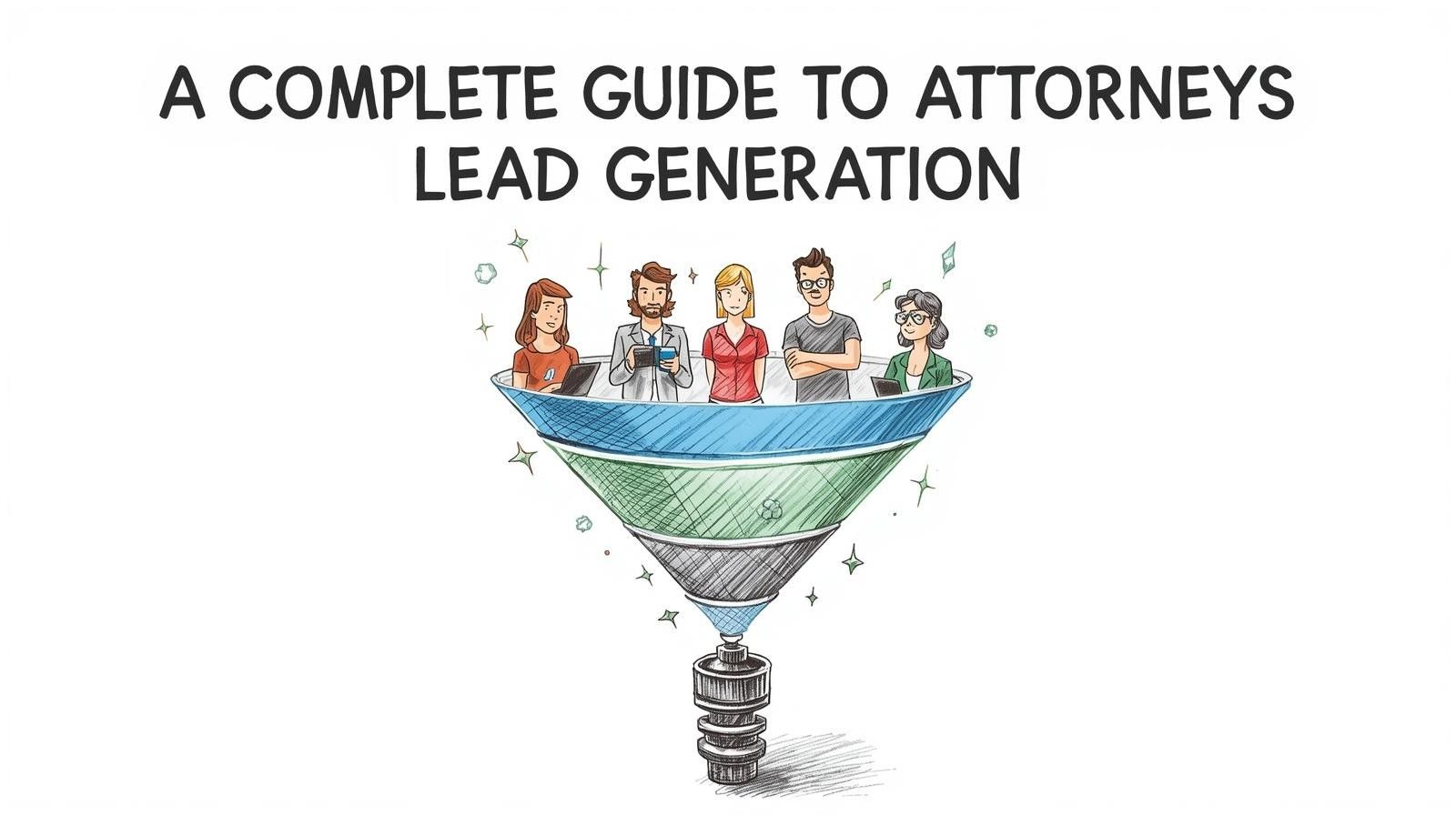
When we talk about attorneys lead generation, we're really talking about creating a predictable, systematic way to turn strangers into qualified prospects for your firm. It's not about just getting more clicks or traffic. The real goal is to build a steady pipeline of people who are actively looking for the exact legal help you offer, whether that's for a personal injury case or a complex corporate merger.
Building Your Lead Generation Foundation
Before you even think about spending a single dollar on ads or writing a blog post, you have to get the foundation right. Too many managing partners and marketing directors skip this part. A successful lead generation system isn't just a website; it's a complete ecosystem where all your digital assets work together to capture and nurture potential clients.
Trying to generate leads without this groundwork is like building a skyscraper on sand. It’s a recipe for wasted marketing spend.
The absolute first move is to get crystal clear on who your ideal client is. And we mean granularly clear, far beyond just your practice areas.
- If you’re a personal injury firm: Are you looking for victims of commercial truck accidents with catastrophic injuries, or are you focused on people who slipped and fell at a big-box store? The strategy for each is vastly different.
- If you handle corporate M&A: Do you serve tech startups in their Series B funding round, or are you targeting established manufacturing companies looking to make a strategic acquisition?
Getting this right informs every single marketing decision you'll make, from the keywords you target in your SEO strategy to the ad copy you write for your paid campaigns.
Assembling Your Core Digital Assets
Once you know exactly who you're talking to, it's time to build out the digital properties where they'll find you. Think of these as your non-negotiable assets. For a field like law, this often boils down to a smart approach to content marketing for professional services, which is all about building trust before they even pick up the phone.
Your website is the heart of this entire system. It can't just be a pretty online brochure; it needs to be a conversion machine. That means it must be mobile-friendly, load fast, and be laser-focused on one thing: capturing leads.
A law firm website that looks great but doesn't make the phone ring or get forms filled out is a failed investment. Success isn't about design awards; it's about conversion rates and qualified inquiries that turn into retained clients.
This is where your calls-to-action (CTAs) are critical. Don't be vague. Use simple, direct CTAs like "Book a Confidential Consultation" or "Download Our Free Estate Planning Guide." Place them front and center. You need to tell potential clients exactly what to do next.
Establishing Trust and Authority Instantly
Let's be honest—when someone is looking for a lawyer, they're often in a high-stakes, vulnerable situation. Trust is everything. Your digital presence needs to be packed with trust signals that build confidence from the moment a potential client lands on your site.
Client testimonials, case studies showing real results, and detailed attorney bios are non-negotiable. You also need an optimized Google Business Profile overflowing with positive reviews, which is especially crucial for local practices like family law and criminal defense.
These elements create an environment that doesn't just attract visitors—it convinces them that your firm is the right choice. This is how you turn a passive browser into an active, qualified lead. To see how all these pieces come together, you can find some great ideas in our law firm marketing strategy template.
Driving Consistent Leads with Organic Search (SEO)
While paid ads get you traffic today, organic search (SEO) is how you build a lead generation engine for tomorrow. It's the difference between renting an audience and owning your digital real estate. A smart SEO strategy builds your firm’s authority over time, creating a reliable stream of high-intent clients who find you the moment they need help.
This isn’t about just ranking for your firm's name. The real magic happens when you capture potential clients much earlier in their journey by answering the exact questions they're typing into Google.
Creating Content That Attracts Your Ideal Client
At the heart of any good SEO campaign is content that speaks directly to your ideal client's pain points. A corporate law firm targeting tech startups needs a completely different content strategy than an estate planning practice that serves retirees. The goal is to create practice-area pages and blog posts that rank for valuable, long-tail keywords.
For example, instead of broadly targeting "family lawyer," you'll get much better results by focusing on phrases like "how to file for uncontested divorce in [Your City]" or "child custody rights for unmarried fathers." These longer, more specific search queries are typically used by people much further down the funnel and closer to hiring an attorney. Effective marketing for criminal defense law firms, for instance, would target terms like "DUI first offense penalties in [State]."
This infographic shows exactly how consistent content creation leads directly to better search rankings and, in turn, more organic leads each month.
As you can see, a steady investment in targeted content is what fuels lead growth. It directly improves your visibility for the keywords that actually matter to your bottom line.
These focused articles and service pages achieve two critical things:
- They attract qualified traffic. You get fewer tire-kickers and more visitors who are actively looking for the specific legal services you provide.
- They build authority. When you comprehensively answer complex legal questions, you position your firm as the go-to expert in your niche.
If you want to go deeper on this, check out our comprehensive guide on the best lawyer SEO practices that we've seen deliver real, tangible results for our clients.
Structuring Your Content for Maximum Impact
How you structure your content is just as important as what you write. Both search engines and potential clients prefer information that's well-organized and easy to scan. Every single service page and blog post should be built with a clear, logical hierarchy.
Use descriptive H2 and H3 subheadings to break up your text. We also recommend using bullet points and numbered lists to highlight key information, which makes your content much easier to digest—especially on mobile devices, where most legal searches now begin.
A good service page for "IP Lawyers" shouldn't be a giant wall of text. It needs clear sections for things like patent prosecution, trademark registration, and copyright litigation. Each section should anticipate and answer the common questions a potential client would have about that specific service.
This clean, organized approach does more than just look good. It helps Google understand your page's relevance and improves the user experience, which sends strong signals to the search engine that your site is a high-quality resource. A better user experience almost always translates to higher rankings and, ultimately, more leads.
Beyond Your Website: Leveraging Social Platforms
Your website is the hub of your strategy, but your organic reach shouldn't stop there. You need to be active on the platforms where your potential clients and referral sources are already spending their time.
Over the past decade, social media has become a powerhouse for attorneys. It's telling that a remarkable 81% of attorneys now use LinkedIn for professional networking, and 84% of law firms report getting leads through their organic social media efforts.
For B2B practice areas like corporate M&A or intellectual property law, LinkedIn is absolutely essential. It's not just a networking site; it’s a powerful content distribution platform for lead generation for IP lawyers. Sharing insightful articles, case studies, and commentary on industry news establishes your attorneys as thought leaders. This consistent activity keeps your firm top-of-mind with business owners, in-house counsel, and other professionals who can become clients or valuable referral partners.
By investing in a smart, multi-faceted organic search strategy, you're not just getting traffic—you're building a powerful, self-sustaining machine for attorney lead generation.
Scaling Growth with Paid Advertising Funnels
While SEO is your long game for building authority, paid advertising is the throttle you can hit for immediate, high-intent leads. When you need to fill the pipeline now, a smart paid funnel is the most direct way to get in front of potential clients who are actively looking for help.
This isn't just about "boosting" a post on social media. It's about engineering a predictable system for attorneys lead generation. By paying platforms like Google or Meta, you can bypass the long wait for organic rankings and start generating inquiries almost overnight. For hyper-competitive practice areas, it's not just an option; it's essential.
Designing Funnels for Specific Legal Niches
Throwing money at a generic ad campaign is the fastest way to burn your budget. The funnel that works for a personal injury firm will be a total flop for an estate planning practice. Success comes from aligning the platform, the message, and the offer with the specific mindset of your ideal client at that moment.
- For urgent, immediate needs (Personal Injury, Criminal Defense): Google Ads is your best bet. You’re catching people right when they’re typing “car accident lawyer near me” into the search bar. The funnel needs to be short and direct: a powerful ad that leads to a dedicated landing page with one clear call to action, like “Request a Free Case Evaluation.”
- For longer consideration cycles (Estate Planning, Family Law): Facebook and LinkedIn are fantastic tools. Here, the goal is often education. You might run an ad for a helpful guide on setting up a trust or a webinar about navigating divorce. The funnel is about building trust first.
That landing page is where the magic happens. It has to feel like a natural next step from the ad, with a single purpose and zero distractions. Its only job is to turn that visitor into a qualified lead for your firm.
To help you choose the right starting point, here’s a quick breakdown of the major platforms.
Paid Lead Generation Channel Comparison for Law Firms
This table compares the most common paid channels for law firms, outlining their ideal use cases and target audiences by practice area.
Channel
Best For Practice Areas
Typical Lead Intent
Key Strengths
Google Search Ads
PI, Criminal Defense, Family Law, Bankruptcy
High. Users are actively searching for a solution.
Captures immediate demand; excellent for urgent legal needs.
Local Services Ads (LSA)
PI, Estate Planning, Immigration
Very High. Leads are pre-qualified by Google.
"Google Screened" badge builds trust; pay-per-lead model.
Facebook/Instagram Ads
Family Law, Estate Planning, Mass Torts
Low to Medium. Users are not actively looking.
Excellent for audience targeting (life events, demographics).
LinkedIn Ads
Corporate Law, IP, Employment Law
Medium. Professionals seeking B2B services.
Targets by job title, industry, and company size.
YouTube Ads
Personal Injury, Mass Torts, Brand Building
Low to Medium. Best for awareness.
Visual storytelling builds connection and authority.
Each channel has its place, and the best strategies often involve a mix. But starting with the one that best matches your clients' intent is key to getting a fast return on your investment.
Crafting Ad Copy That Converts
Your ad copy is your digital elevator pitch. It has seconds to grab the right person's attention and convince them to click. Generic statements like "Experienced Attorney" just get scrolled past.
Think about the user's specific pain point. Instead of "Divorce Lawyer," try something like: "Navigating Divorce in [City]? Get a Clear Path Forward. Confidential Consultation." This copy connects with their situation, promises a specific benefit (clarity), and offers a low-risk next step.
Your ad is the first handshake with a potential client. It must immediately communicate empathy, authority, and a clear solution to their urgent problem. If it fails to do that, you’ve lost them before they even reach your website.
The Power of Retargeting
So what happens to the 98% of visitors who land on your site but leave without calling or filling out a form? You can’t just let them go. Retargeting is how you bring them back.
By using a simple tracking pixel, you can show follow-up ads to these past visitors as they browse other sites and social media feeds. It’s incredibly effective. Someone who looked at your car accident page might see a video testimonial from a former client a day later. It keeps your firm top of mind and nudges them back when they're ready to take action.
We've seen this single tactic dramatically improve lead volume, as we break down in this case study on a paid social funnel for a PI law firm.
Ultimately, winning with paid ads isn’t about who has the biggest budget. It's about who has the smartest, most targeted funnel that delivers a solid return on every dollar spent.
Turning Inquiries Into Clients: It All Comes Down to Intake
Let’s be honest. All the effort you pour into SEO, paid ads, and content marketing is wasted if the final step—your intake process—fumbles the handoff. Getting a potential client to contact you is just the beginning. The real challenge, and where most firms leak revenue, is converting that inquiry into a signed retainer.
A slow or disorganized intake system is a massive liability. It's the leaky bucket that quietly drains away the most promising leads. To get the highest return on your marketing spend, you need to transform your intake from a reactive chore into a proactive, ironclad system. This is how you ensure that no matter how a lead finds you, they never slip through the cracks.
Why Speed Is Your Secret Weapon
In the legal field, speed is everything. When someone fills out a form on your website, you’ve caught them at their highest point of intent. They have a problem right now, and they're actively searching for the right person to solve it. Every second you delay is an open invitation for them to call another firm.
Recent data paints a stark picture. The median response time for law firms has gotten better, now sitting at a respectable 13 minutes. But the best firms are playing a different game entirely—25% of them respond in under five minutes. Meanwhile, a shocking 39% of firms still take over two hours to get back to a lead, or worse, never follow up at all. That’s a catastrophic loss of opportunity. You can see the full breakdown in this research on law firm response times.
Every minute you wait to respond, the odds of that person hiring a competitor skyrocket. More often than not, the first firm to make a professional, empathetic connection wins the case.
This reality makes a solid intake system non-negotiable. You absolutely must have a process that guarantees every single lead gets an immediate, professional response, day or night.
Building a System That’s Both Automated and Personal
So, how do you win the race without burning out your team? Automation is the answer. A modern Customer Relationship Management (CRM) platform built for law firms can handle the initial, time-critical steps for you.
A well-configured CRM can instantly:
- Send an automated email and text confirming you received their message and telling them what to expect next.
- Create a new contact record that pulls in all their information from the form.
- Assign the new lead to the right intake specialist or attorney based on practice area.
- Push a notification to your team via email, SMS, or Slack, so they know a new opportunity just landed.
This initial automation buys you precious time. The potential client feels heard, and your team gets the information they need to have a meaningful follow-up call. We helped a client put exactly this kind of system in place, and you can see the results in our case study on CRM and intake optimization for a family law firm.
Picking the Right Follow-Up Channel
After that first automated touchpoint, it's time for a human connection. But what’s the best way to reach out? The answer is almost always a mix of channels.
Phone Calls The most direct and personal way to connect. Nothing builds rapport faster than a real conversation where you can show empathy and ask smart qualifying questions. The downside? A lot of people, especially younger clients, won't answer a call from a number they don't recognize.
Email Less intrusive and gives you a paper trail. It’s perfect for sending over intake forms, fee agreements, or helpful resources after you’ve spoken. But emails are also easy to ignore and can get buried in a crowded inbox, lacking the urgency of a call.
SMS (Text Messaging) This one’s a game-changer. With open rates often topping 95%, texting is incredibly effective for quick confirmations, appointment reminders, or a follow-up if your call goes to voicemail. Just be careful to keep it professional and stick to short, direct messages.
The best intake scripts map out this multi-channel approach. If a call goes unanswered, your protocol should be to immediately send a text and an email letting them know you tried to call. This kind of thoughtful persistence shows you’re serious about helping them and dramatically increases the odds that you'll be the one they hire.
Measuring Success and Refining Your Strategy
Launching a lead generation campaign is just the opening argument. You win the case by constantly measuring what's happening and refining your approach. If you aren't tracking your efforts, you're just guessing—and you can't afford to guess in a market this competitive. This is the part where you stop just doing marketing and start building a real, data-driven growth engine for your law firm.
The whole point is to look past vanity metrics like website visits or social media likes and zero in on the numbers that actually grow your revenue. By keeping a close eye on the right key performance indicators (KPIs), you can turn a spreadsheet of raw data into powerful insights. This process gives you the confidence to double down on what’s working, cut what isn't, and make smart decisions that guarantee a return on your marketing dollars.
Key Performance Indicators That Actually Matter for Law Firms
It’s easy to get overwhelmed by all the data available. To cut through the noise, you really only need to focus on a handful of core metrics that tell you the real story of your lead generation performance. These are the KPIs that connect your marketing spend directly to your firm's bottom line.
- Cost Per Lead (CPL): Simple but crucial. This is your total campaign cost divided by the number of leads it brought in. It tells you exactly what you're paying for each phone call or form submission, whether it came from Google Ads, SEO, or a social media campaign.
- Cost Per Acquisition (CPA): This is the big one. CPA goes a step further and tells you how much it costs to actually sign a new client. You calculate it by dividing your total marketing spend by the number of new clients you retained. For any law firm, this is arguably the single most important number to track.
- Lead-to-Client Conversion Rate: This percentage is a direct reflection of how effective your intake process is. If you get 100 leads in a month and sign 10 new clients, your conversion rate is 10%. A low number here often points to a problem with your follow-up speed or intake scripts, not necessarily the quality of the leads themselves.
Keeping tabs on these metrics in a CRM or even a well-organized spreadsheet is non-negotiable. It’s the only way you’ll know if that new paid search campaign for a niche practice area, like marketing for criminal defense law firms, is actually making you money.
Turning Data Into Smarter Decisions
Data is just a bunch of numbers until you know how to read it. Your Google Analytics account and CRM dashboard are goldmines, but you have to ask the right questions to find the gold. The goal is to spot patterns and make strategic tweaks based on what the numbers are telling you.
A successful lead generation strategy isn't something you set and forget. It's a living, breathing system that evolves based on real-world performance. The law firms that grow the fastest are the ones that are best at listening to their data.
For example, let's say you notice that your efforts in local SEO for family law practices are bringing in leads with an incredibly low CPA. That's a huge green light. It's a clear signal to pour more resources into creating local content and optimizing your Google Business Profile.
On the flip side, if a specific Google Ads campaign has a sky-high CPL and a dismal conversion rate, it’s time to hit pause. Before you burn through any more of your budget, you need to dig in and troubleshoot everything—the ad copy, the landing page experience, and the keywords you're targeting.
This constant feedback loop of measuring, analyzing, and adjusting is what separates the thriving law firms from the ones that just tread water. It’s how you transform your marketing from a monthly expense into a predictable, powerful investment in your firm's future.
Ready to stop guessing and start building a data-driven strategy for your firm? Book a strategy session with GavelGrow to analyze your firm's growth potential and discover what's truly possible.
Answering Your Law Firm's Top Lead Generation Questions
Even with the best strategy on paper, we get it—you have practical questions about what it really takes to get the phone ringing. Getting straight answers is the only way for managing partners and marketing directors to invest their marketing dollars smartly and know what to expect.
Let's dive into some of the most common questions we hear from law firm decision-makers. These aren't textbook answers; they come from years in the trenches helping firms in everything from personal injury and family law to complex B2B niches like IP and corporate M&A.
What’s a Realistic Marketing Budget for a Small Law Firm?
There's no one-size-fits-all number, but a great starting point for law firms is to set aside 5-10% of your target revenue for marketing. Where you land in that range really depends on how competitive your practice area and city are. A PI firm in a huge metro area will need a much bigger war chest for ads than an estate planning attorney in a smaller town.
Our advice? Start with a budget you can comfortably commit to every single month. Put that initial investment into channels with a high potential return, such as implementing SEO for estate planning attorneys in your local market or tightly targeted Google Ads campaigns for a specific case type.
The most important part is to track your Cost Per Acquisition (CPA) from day one. That number tells you if your marketing is actually profitable and which channels are ready to scale. A good growth partner like GavelGrow can help you build a budget based on real data from your specific market, not just guesswork.
How Long Does SEO Actually Take to Generate Leads?
Think of SEO as a long-term investment in your firm's future, not a quick fix. It’s hands-down the most sustainable way to generate leads for attorneys, but it demands patience. You'll typically start to see some positive movement—like better keyword rankings and more organic traffic—within 4-6 months of consistent, quality work.
But seeing a steady, predictable stream of qualified leads from SEO? That often takes closer to 6-12 months. The timeline really hinges on a few things:
- Your Website's Authority: How much trust has your domain built with Google over time?
- The Competition: Are you up against dozens of other firms all fighting for the same keywords?
- Content Quality: How genuinely helpful are your practice area pages and blog articles?
While your SEO foundation is being built, running paid ad campaigns in parallel is a smart move. It keeps the leads coming in right away so your pipeline never runs dry.
Should My Firm Focus on SEO or Paid Ads?
This is a classic question, but the answer isn't "either/or." The most successful law firms do both.
Here’s how we explain it: Paid ads are like renting a beautiful storefront in a busy mall. As long as you pay the rent, you get immediate foot traffic. SEO, on the other hand, is like buying the building. It's a bigger upfront investment, but it builds equity and eventually generates traffic for a fraction of the cost.
We almost always recommend a blended strategy. Use paid ads for quick wins and to test which messages and keywords resonate with potential clients. Then, take what you learn and pour that intelligence into your SEO strategy. That's how you build a powerful, long-term asset that brings in low-cost, high-intent leads for years to come.
This two-pronged approach gives you immediate stability while building for sustainable, long-term growth.
What’s the Single Most Important Factor in Converting a Lead?
Speed. That’s it. Speed of response is, without a doubt, the most critical factor.
Every single minute you wait to respond to an online inquiry dramatically lowers your chance of ever speaking to that person, let alone signing them as a client. People looking for a lawyer are often in a stressful situation and reach out to multiple firms at once.
The data is crystal clear: the firm that responds within the first five minutes is overwhelmingly more likely to sign the case. The first person to make a professional, empathetic connection almost always wins. The best way to solve this is to have an automated intake system that provides instant notifications and triggers follow-up sequences. It ensures no lead ever falls through the cracks and you get the absolute most out of every marketing dollar you spend.
Ready to stop wondering and start growing? The team at GavelGrow builds data-driven lead generation systems that deliver predictable results for law firms. Book a no-obligation strategy session with us today and discover your firm's true growth potential.
Frequently Asked Questions
What is lead generation for attorneys?
Attorney lead generation is a predictable, systematic way to turn strangers into qualified prospects for your firm. It is not about chasing clicks or raw traffic; the goal is a steady pipeline of people actively searching for the exact legal help you offer. It combines a conversion-focused website, organic search, paid advertising, and a fast intake process working together as one ecosystem.
How long does SEO take to generate leads for a law firm?
SEO is a long-term investment, not a quick fix. You will typically start seeing positive movement like better keyword rankings and more organic traffic within about 4-6 months of consistent, quality work. A steady, predictable stream of qualified leads usually takes closer to 6-12 months. Timing depends on your domain authority, how competitive your keywords are, and your content quality.
Should a law firm focus on SEO or paid ads for lead generation?
The most successful firms do both. Paid ads are like renting a storefront: pay and get immediate traffic. SEO is like buying the building: a bigger upfront investment that builds long-term equity and lower-cost leads. A blended approach uses paid ads for quick wins and to test messaging, then feeds those insights into SEO for sustainable, high-intent lead flow.
What is a realistic marketing budget for a small law firm?
A common starting point is 5-10% of your target revenue, though where you land depends on how competitive your practice area and city are. A personal injury firm in a major metro needs more than an estate planning attorney in a smaller town. Start with an amount you can commit to monthly, and track cost per acquisition from day one to see what is actually profitable.
What is the most important factor in converting a law firm lead?
Speed of response is the single most critical factor. People seeking a lawyer are often in stressful situations and contact multiple firms at once, so every minute of delay lowers your odds of signing them. The firm that makes the first professional, empathetic connection usually wins. An automated intake system with instant notifications and follow-up sequences ensures no lead slips through the cracks.
Frequently Asked Questions
What is lead generation for attorneys?
Attorney lead generation is a predictable, systematic way to turn strangers into qualified prospects for your firm. It is not about chasing clicks or raw traffic; the goal is a steady pipeline of people actively searching for the exact legal help you offer. It combines a conversion-focused website, organic search, paid advertising, and a fast intake process working together as one ecosystem.
How long does SEO take to generate leads for a law firm?
SEO is a long-term investment, not a quick fix. You will typically start seeing positive movement like better keyword rankings and more organic traffic within about 4-6 months of consistent, quality work. A steady, predictable stream of qualified leads usually takes closer to 6-12 months. Timing depends on your domain authority, how competitive your keywords are, and your content quality.
Should a law firm focus on SEO or paid ads for lead generation?
The most successful firms do both. Paid ads are like renting a storefront: pay and get immediate traffic. SEO is like buying the building: a bigger upfront investment that builds long-term equity and lower-cost leads. A blended approach uses paid ads for quick wins and to test messaging, then feeds those insights into SEO for sustainable, high-intent lead flow.
What is a realistic marketing budget for a small law firm?
A common starting point is 5-10% of your target revenue, though where you land depends on how competitive your practice area and city are. A personal injury firm in a major metro needs more than an estate planning attorney in a smaller town. Start with an amount you can commit to monthly, and track cost per acquisition from day one to see what is actually profitable.
What is the most important factor in converting a law firm lead?
Speed of response is the single most critical factor. People seeking a lawyer are often in stressful situations and contact multiple firms at once, so every minute of delay lowers your odds of signing them. The firm that makes the first professional, empathetic connection usually wins. An automated intake system with instant notifications and follow-up sequences ensures no lead slips through the cracks.