Lead Generation for Attorneys: Your Guide to Predictable Firm Growth
Categories: Guide: How-to
 Abram Ninoyan
Founder & Senior Performance Marketer
Credentials: Google Partner, Google Ads Search Certified, Google Ads Display Certified, Google Ads Measurement Certified, Google Analytics (IQ) Certified, HubSpot Inbound Certified, HubSpot Social Media Marketing Certified, Conversion Optimization Certified
Expertise: Google Ads, Meta Ads, Conversion Rate Optimization, GA4 & Google Tag Manager, Lead Generation, Marketing Funnel Optimization, PPC Management
LinkedIn Profile
Master lead generation for attorneys with this comprehensive guide. Learn how to build a predictable client acquisition system, moving beyond referrals...
Key Takeaways
- Moving Beyond Referrals in a Digital Age
- Turning Your Website Into a Client-Generating Machine with SEO
- Choosing Your Channels for Maximum ROI
- From Inquiry to Retained Client: Optimizing Your Intake Funnel
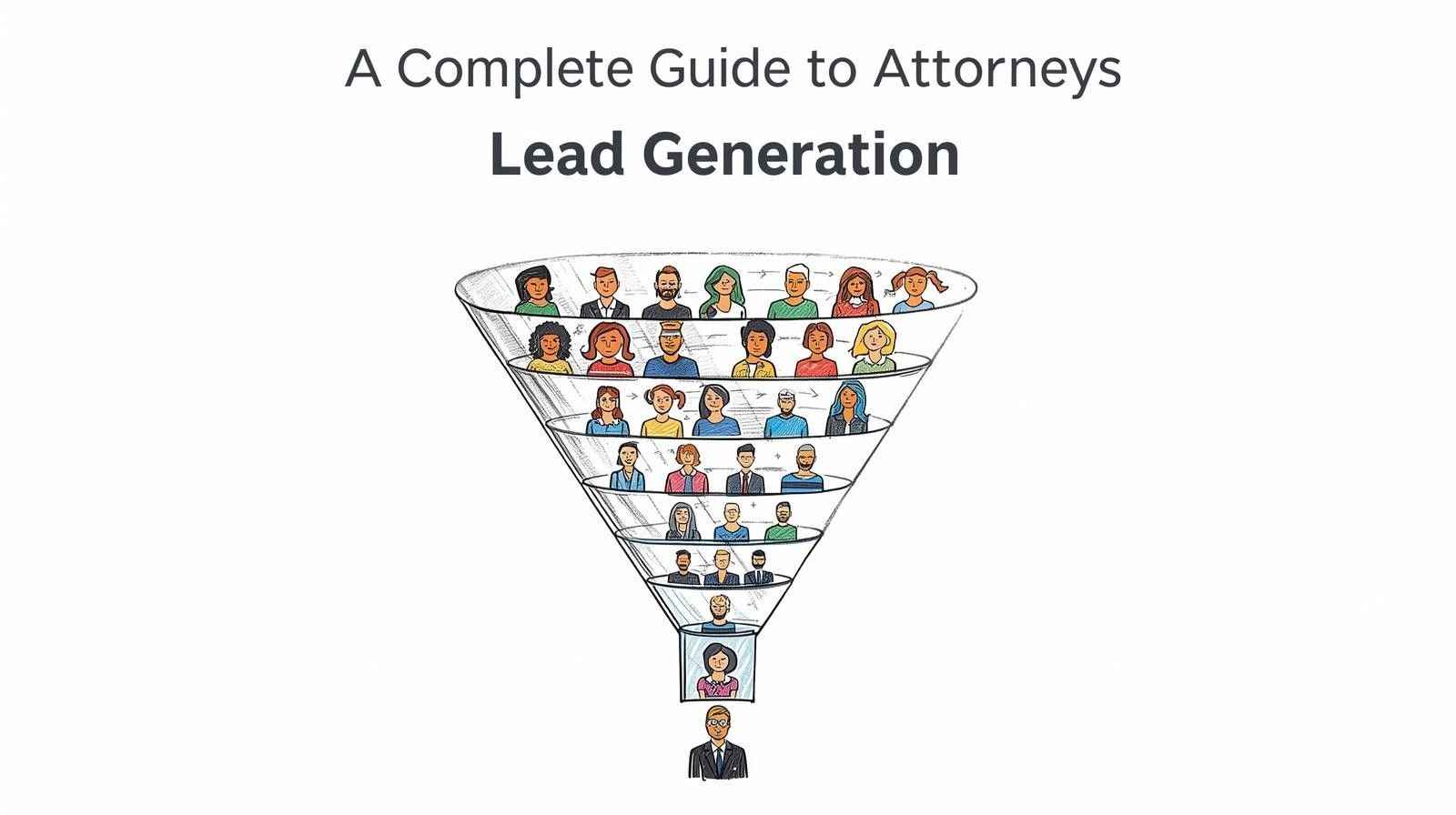
When we talk about lead generation for attorneys, we're talking about building a client acquisition machine. It's the process of systematically attracting potential clients who need your legal services and converting them into qualified leads for your firm. This is about creating a predictable flow of high-value cases, moving beyond the outdated model of simply waiting for the phone to ring. To do this right, you need a sophisticated mix of digital strategies, specifically SEO, paid advertising, and a conversion-optimized website.
Moving Beyond Referrals in a Digital Age
Let’s face it: relying solely on word-of-mouth referrals is a risky, outdated strategy for any law firm serious about growth. Referrals are fantastic when they come in, but they are uncontrollable and impossible to scale. For consistent, predictable growth, you need a system.
Every law firm decision-maker, from a solo attorney scaling their practice to a marketing director at a multi-partner firm, grapples with the same challenge: how to turn the unpredictable nature of client acquisition into a measurable engine for growth. This isn't just about chasing any lead. It's about building a funnel that specifically attracts the right kind of clients for your practice, whether you're focused on marketing for criminal defense law firms or need a steady stream of leads for your intellectual property practice.
The old model of waiting for referrals is being replaced by a proactive, digital-first approach. Think of it as the difference between hoping a client mentions your name versus actively attracting them with a magnet.
This shift illustrates how a modern, system-based strategy uses digital tools to actively capture client demand, creating a far more reliable case pipeline for your firm.
Why a System Is Non-Negotiable
Having a client acquisition system isn’t a luxury; it's a necessity for survival and growth. The legal market is incredibly competitive. How competitive? Data shows it can take many leads to generate just one new client. That statistic alone highlights the intensity of the battle for client attention.
Let's break down the old way of thinking versus the new. The table below compares the traditional, reliance-based methods with the modern, system-based approach that drives predictable growth for law firms.
Modern vs. Traditional Lead Generation for Law Firms
Method
Traditional Approach (Reliance-Based)
Modern Approach (System-Based)
Source of Clients
Primarily word-of-mouth, networking events, and chance.
A diverse mix of SEO, PPC, content marketing, and targeted social ads.
Predictability
Unpredictable and inconsistent. Growth happens in fits and starts.
Measurable and predictable. You can forecast leads and case volume.
Scalability
Very difficult to scale. You can't force more referrals to happen.
Highly scalable. You can increase budget and efforts to drive more leads.
Targeting
Broad and untargeted. You get who you get.
Hyper-targeted. You can reach specific clients based on legal issue and location.
ROI Measurement
Almost impossible to track the true ROI of a handshake.
Fully trackable. Every dollar spent can be tied back to leads and signed cases.
The modern approach gives you, the law firm decision-maker, control. By building a comprehensive digital presence, you dictate the pace of your firm's growth.
A well-oiled modern strategy integrates key components that work in tandem:
- Targeted Outreach: Showing up precisely when and where potential clients are searching for the legal services you provide, whether it's for corporate M&A or international arbitration.
- Authority Building: Using high-quality content and smart SEO to position your firm as the go-to expert in your practice area, from personal injury to estate planning.
- Conversion Optimization: Ensuring your website and intake process are seamless, turning interested visitors into actual consultations.
If you're ready to dig deeper into these foundational concepts, our guide on how to market your law firm online is the perfect place to start.
Turning Your Website Into a Client-Generating Machine with SEO
Your law firm's website must be more than a digital business card. It should be your most valuable employee, working 24/7 to bring in new clients. The engine that powers this is Search Engine Optimization (SEO). It's the art and science of ensuring your firm appears prominently when potential clients search for legal help on Google.
Think of it this way: buying leads is like renting an audience—the moment you stop paying, they're gone. Building a strong SEO presence is like owning the venue. It’s a long-term asset that generates exclusive, high-intent inquiries directly for your firm. The numbers don't lie: SEO is responsible for a large share of all website traffic, far outpacing paid ads and social media.
The Two Pillars of Attorney SEO: Local and Practice-Area Focus
For law firms, a winning SEO strategy boils down to two critical components: where you are and what you do.
First is Local SEO, which is absolutely essential for community-based practices. This is all about dominating the local search map for terms like "family law attorney near me." We're talking about a fully optimized Google Business Profile, a steady stream of positive client reviews, and consistent firm information across all major online directories. The goal of local SEO for family law practices is simple: when someone in your town searches for a lawyer, your firm must be one of the first they see.
A well-managed Google Business Profile can single-handedly become a primary source of high-quality leads. It turns local searches directly into booked consultations, often without a dollar spent on advertising.
The second pillar is Practice-Area SEO. This is where you demonstrate your expertise by creating content that answers the specific questions your ideal clients are asking. Knowing how to build a keyword list for SEO success is the foundation. This allows you to target high-value, long-tail keywords that signal strong intent.
For example, an estate planning firm could create a guide targeting "SEO for estate planning attorneys" to attract clients searching for "how to set up a living trust." An IP lawyer might focus on "lead generation for IP lawyers" by creating content around "how to protect intellectual property." By optimizing pages for these specific terms, you connect with potential clients who are much closer to making a hiring decision.
This is how your website transitions from a passive digital brochure into an active client magnet. For a more detailed breakdown, explore our complete guide on the best lawyer SEO strategies.
Choosing Your Channels for Maximum ROI
With your SEO foundation in place, it’s time to proactively hunt for clients. Here's a hard truth: not all leads are created equal. The channels that work wonders for a high-volume personal injury firm will likely fall flat for a boutique M&A practice.
The biggest mistake law firms make is spreading their budget too thinly across every platform. Don't do that. Instead, become an expert in one or two channels where your ideal clients spend their time. A family law attorney, for instance, could see fantastic results from a hyper-targeted Facebook campaign. For a corporate lawyer targeting C-suite executives, that same strategy would likely be a waste of money.
Aligning Channels with Your Practice
The cost and quality of leads vary dramatically by channel. Let's look at a couple of common examples.
Pay-Per-Click (PPC) ads are fantastic for capturing the attention of people who need a lawyer right now. This is high-intent, immediate traffic. Of course, you pay for that immediacy—lead costs can run from $75 to over $600, depending on the competitiveness of your practice area. For high-value cases in personal injury or employment law, that math often makes perfect sense.
Then you have channels like live call transfers. While it may feel old-school, getting a qualified prospect on the phone who is ready to talk is invaluable. This immediacy drives high conversion rates. In fact, one study found that live call transfer services tend to boast strong client retention. Compare that to the much lower retention from traditional email leads, and you can see why it's a powerful channel for firms with a rapid intake process. You can read more about attorney lead costs over at enx2marketing.com.
The goal isn't to find the cheapest leads. It's to find the most profitable ones. A higher cost-per-lead is irrelevant if it consistently brings in high-value clients who sign your retainer agreement.
Ultimately, selecting your marketing channels is a strategic business decision. It requires knowing your numbers inside and out. You must connect the dots between your marketing spend and your firm's revenue. That means you absolutely must know how to measure your marketing ROI accurately. It’s the only way to confidently double down on what’s working and cut what isn't.
From Inquiry to Retained Client: Optimizing Your Intake Funnel
Generating a lead is a win, but it’s just the starting line. The real test—and where many firms leak revenue—is in converting that initial phone call or form submission into a signed retainer. Your website and your intake process must work together seamlessly to guide a potential client from browsing to officially hiring your firm.
This journey begins the moment they land on your website. A high-converting law firm website isn't just a pretty online brochure; it's a purposefully designed tool that anticipates a visitor's needs and removes every obstacle in their path to contacting you.
Your Website Is Your Digital Handshake
Let's be blunt: your website's design directly impacts your firm's profitability. It's not just about aesthetics. It's about building instant trust and making it incredibly simple for someone in distress to reach out for help.
Here’s what our experience shows works time and again:
- Smart Calls-to-Action (CTAs): Don't make potential clients hunt. Place clear, direct CTAs like "Book a Strategy Session" or "Download Our Free Guide" where eyes naturally fall.
- Proof You Get Results: Nothing builds trust faster than demonstrating you've helped others. Feature genuine client testimonials, case studies, and successful outcomes to showcase your proven track record.
- Keep Contact Forms Simple: Every extra field you add to a form increases the chance of abandonment. Stick to the absolute essentials: name, email, phone, and a brief description of their legal issue.
For every additional field you require, you're pushing a potential client closer to clicking the 'back' button and finding your competitor. In lead capture for law firms, speed and simplicity are everything.
What Happens After They Click "Submit"?
The moment an inquiry arrives, a stopwatch starts. A slow response time often means a lost lead. This is precisely why a legal-specific Customer Relationship Management (CRM) system is a game-changer for scaling firms.
A good CRM automates and tracks your follow-up, ensuring no lead falls through the cracks. It helps you build a system for everything from the initial "we received your message" email to scheduling follow-up calls, making your firm appear professional and persistent. Nurturing leads is an art, and our guide on lead nurturing best practices walks you through building these effective systems.
Consider adding tools like live chat to provide immediate answers, capturing prospects who are ready to talk now. Above all, your entire site must be flawless on a smartphone. With over half of all web traffic now on mobile, a website that is clunky or difficult to use on a phone is the digital equivalent of a broken doorbell on your office.
Scaling Growth with Paid Advertising
Once your core marketing systems are in place, paid advertising is like pouring fuel on the fire. It is the most direct way for law firms to scale up and drive predictable client acquisition. For managing partners and marketing directors who need measurable, bottom-line results, paid campaigns on platforms like Google Ads put your firm directly in front of potential clients at the exact moment they’re searching for legal help.
This isn't just about buying traffic. The goal is to engineer a system that delivers a positive return on investment. We move beyond fuzzy brand awareness and build campaigns laser-focused on one thing: conversions. This means turning an anonymous online searcher into a qualified lead who contacts your office.
From Ad Spend to Signed Retainers
The real power of paid advertising for lead generation attorneys is its speed and precision. While SEO is a long-term play that builds authority over months, a well-structured Google Ads campaign can start generating high-value inquiries almost immediately.
Consider this: a small firm we partnered with, specializing in motor vehicle accidents and disability claims, completely transformed its growth trajectory with conversion-focused ads. Within a couple of months, they were consistently generating a reliable flow of high-quality leads every month. This gave them a predictable stream of new cases, allowing them to scale confidently. You can see more examples of how law firms are winning with targeted ad campaigns over at landingi.com.
The objective of a paid campaign isn't to get the most clicks; it's to achieve the lowest cost per signed case. This requires a disciplined focus on high-intent keywords, compelling ad copy, and a seamless landing page experience that converts visitors.
So, how do you make this happen? It comes down to a few key strategies:
- Target High-Intent Keywords: Go after the phrases people type when they have an urgent need. Think "car accident lawyer near me" or "emergency business litigation attorney," not generic terms like "lawyer."
- Optimize for Conversions: Your campaigns must be set up to track what matters—phone calls and contact form submissions. This data is what allows you to fine-tune your ads for actions that generate real leads.
- Use Compelling Landing Pages: Your ad is just the first step. It needs to click through to a dedicated page that instantly reinforces your message, builds trust, and makes it incredibly simple for a visitor to contact you.
Common Questions About Attorney Lead Generation
It's smart to ask tough questions before diving into a new lead generation strategy. Law firm partners and marketing directors need to see a clear path to ROI before committing budget.
Let's address some of the most frequent concerns we hear from firms like yours.
What's a Realistic Lead Generation Budget for a Law Firm?
There's no magic number. The right budget depends on your practice area, your city's competitiveness, and your growth goals. A personal injury firm in a major metro area is playing a different game than a niche B2B intellectual property firm.
A good starting benchmark is 7-15% of your target revenue. However, the best approach is to work backward. Determine your target cost per client acquisition (CPA), and then build a strategy designed to hit that number profitably.
Should Our Firm Build SEO or Just Buy Leads?
This is an "own vs. rent" decision. When you buy leads, you're renting attention. It's fast, and it gets the phone ringing, but you're often competing with other firms who bought the same lead. It’s a short-term fix, not a sustainable growth strategy.
Building your firm's SEO, on the other hand, is like buying the building. You are creating a valuable asset—your website—that brings in exclusive, high-intent clients directly to you. It takes more time to build momentum, but the value compounds year after year.
The most successful firms we work with do both. They use purchased leads or paid ads for immediate case volume while they patiently invest in building a dominant SEO presence for long-term, sustainable growth.
How Fast Can We Expect to See a Return?
This depends entirely on the channel. If you need leads now, a well-run Google Ads campaign can start generating qualified calls within the first few weeks. It's designed for immediate impact.
SEO is the long game. You're building your firm's authority and digital footprint, which doesn't happen overnight. You can typically expect to see a meaningful increase in organic traffic and inbound leads within 4 to 6 months. A winning strategy for lead generation attorneys often uses paid ads for an instant boost while the more powerful SEO engine warms up.
For a deeper dive, feel free to explore these additional articles on law firm marketing and lead generation.
Ready to build a predictable client acquisition engine for your law firm? GavelGrow is a growth marketing partner that creates data-driven marketing systems to deliver a consistent flow of high-value cases. Book a complimentary strategy session with our legal marketing experts today.
Frequently Asked Questions
What is lead generation for attorneys?
Lead generation for attorneys is the process of systematically attracting potential clients who need legal services and converting them into qualified leads. Rather than waiting for the phone to ring, it builds a predictable pipeline using a mix of SEO, paid advertising, and a conversion-optimized website. The goal is to move beyond unpredictable referrals and create a measurable, scalable system for high-value cases.
Should a law firm invest in SEO or buy leads?
This is an "own versus rent" decision. Buying leads or running paid ads rents attention: it gets the phone ringing quickly but you often compete with other firms for the same lead. Building SEO is like owning the building, creating an asset that brings exclusive, high-intent inquiries and compounds over time. The most successful firms do both, using paid channels for immediate volume while SEO builds long-term momentum.
How much should a law firm budget for lead generation?
There is no universal number, since the right budget depends on your practice area, market competitiveness, and growth goals. A reasonable starting benchmark is around 7 to 15 percent of your target revenue. The best approach is to work backward: determine your target cost per client acquisition, then build a strategy designed to hit that number profitably rather than chasing the cheapest possible leads.
How long does it take to see results from attorney lead generation?
It depends on the channel. A well-run Google Ads campaign is built for immediate impact and can start generating qualified calls within the first few weeks. SEO is a longer-term investment, where a meaningful increase in organic traffic and inbound leads typically takes several months to build. A common approach uses paid ads for an instant boost while the SEO engine warms up.
Why is a website's intake process important for lead generation?
Generating a lead is only the starting line; converting that inquiry into a signed retainer is where many firms lose revenue. A high-converting site uses clear calls-to-action, genuine proof of results, and simple contact forms, since every extra field increases the chance of abandonment. Fast follow-up, often powered by a legal CRM, and a flawless mobile experience ensure no lead falls through the cracks.
Generating leads is only half the battle — most firms lose more prospects to a broken pipeline than to a lack of interest, which is why it pays to audit where your marketing funnel leaks between click and signed case.
Frequently Asked Questions
What is lead generation for attorneys?
Lead generation for attorneys is the process of systematically attracting potential clients who need legal services and converting them into qualified leads. Rather than waiting for the phone to ring, it builds a predictable pipeline using a mix of SEO, paid advertising, and a conversion-optimized website. The goal is to move beyond unpredictable referrals and create a measurable, scalable system for high-value cases.
Should a law firm invest in SEO or buy leads?
This is an "own versus rent" decision. Buying leads or running paid ads rents attention: it gets the phone ringing quickly but you often compete with other firms for the same lead. Building SEO is like owning the building, creating an asset that brings exclusive, high-intent inquiries and compounds over time. The most successful firms do both, using paid channels for immediate volume while SEO builds long-term momentum.
How much should a law firm budget for lead generation?
There is no universal number, since the right budget depends on your practice area, market competitiveness, and growth goals. A reasonable starting benchmark is around 7 to 15 percent of your target revenue. The best approach is to work backward: determine your target cost per client acquisition, then build a strategy designed to hit that number profitably rather than chasing the cheapest possible leads.
How long does it take to see results from attorney lead generation?
It depends on the channel. A well-run Google Ads campaign is built for immediate impact and can start generating qualified calls within the first few weeks. SEO is a longer-term investment, where a meaningful increase in organic traffic and inbound leads typically takes several months to build. A common approach uses paid ads for an instant boost while the SEO engine warms up.
Why is a website's intake process important for lead generation?
Generating a lead is only the starting line; converting that inquiry into a signed retainer is where many firms lose revenue. A high-converting site uses clear calls-to-action, genuine proof of results, and simple contact forms, since every extra field increases the chance of abandonment. Fast follow-up, often powered by a legal CRM, and a flawless mobile experience ensure no lead falls through the cracks. Generating leads is only half the battle — most firms lose more prospects to a broken pipeline than to a lack of interest, which is why it pays to audit where your marketing funnel leaks between click and signed case .