How To Market A Law Firm: SEO, Ads, And Intake That Close
Categories: Legal Marketing Strategies
 Abram Ninoyan
Founder & Senior Performance Marketer
Credentials: Google Partner, Google Ads Search Certified, Google Ads Display Certified, Google Ads Measurement Certified, Google Analytics (IQ) Certified, HubSpot Inbound Certified, HubSpot Social Media Marketing Certified, Conversion Optimization Certified
Expertise: Google Ads, Meta Ads, Conversion Rate Optimization, GA4 & Google Tag Manager, Lead Generation, Marketing Funnel Optimization, PPC Management
LinkedIn Profile
How to market a law firm comes down to three connected systems: visibility (SEO and ads that put you in front of the right people), credibility (a brand and reputation that earn trust), and conversion...
Key Takeaways
- How To Market A Law Firm: SEO, Ads, And Intake That Close
- What you should set up first
- Step 1. Pick a niche, message, and budget that fit
- Step 2. Build SEO and content that earns trust
How To Market A Law Firm: SEO, Ads, And Intake That Close
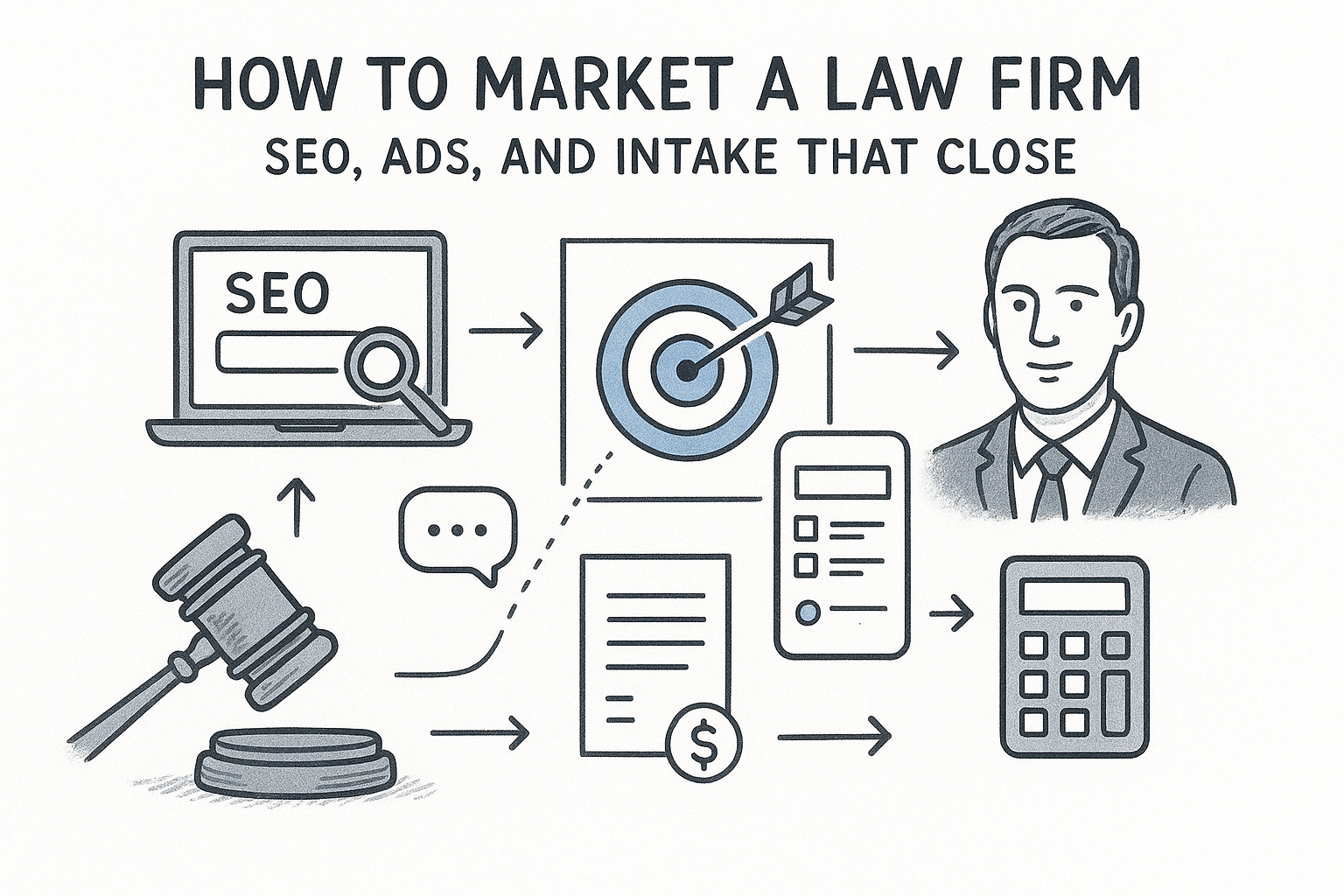
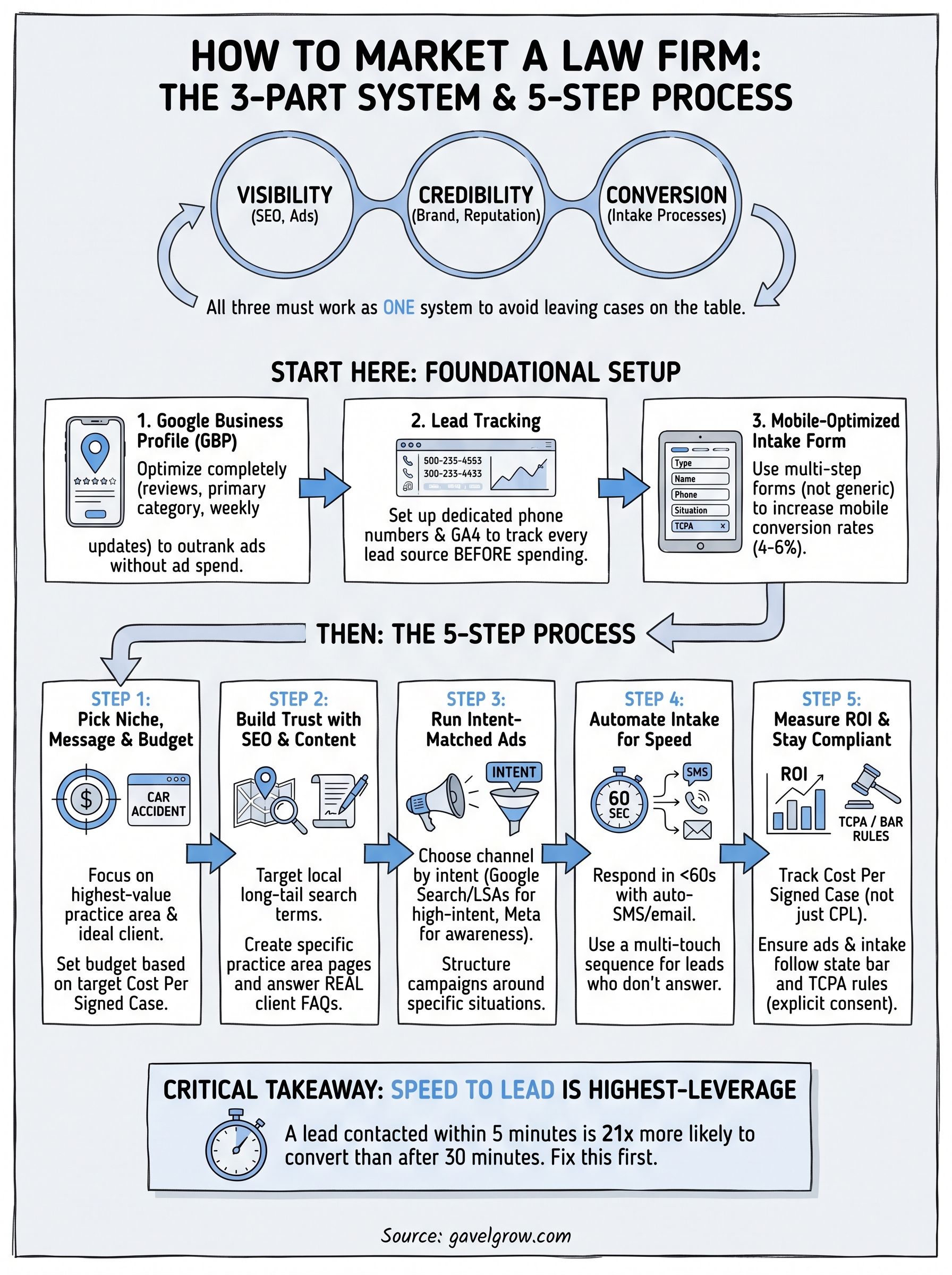
How to market a law firm comes down to three connected systems: visibility (SEO and ads that put you in front of the right people), credibility (a brand and reputation that earn trust), and conversion (intake processes that turn inquiries into signed retainers). Miss any one of those, and you're leaving cases on the table.
Most firms overspend on the first part and ignore the last. The National Law Review reported in 2025 that law firms increased digital ad budgets by 15% year over year, yet Clio's 2024 Legal Trends Report found that 42% of firms still don't return calls within three business days. That gap between spending and follow-through is where firms bleed money. You're paying to generate a lead, then letting it die in a voicemail box. Fixing that disconnect is exactly why we built GavelGrow, a platform and services company that helps over 500 U.S. law firms track every dollar from the first ad click through the signed retainer, not just to the lead form submission.
This guide walks through what actually works right now: SEO strategy built for local legal search, paid ads structured to lower your cost per signed case, intake automation that contacts leads in under 60 seconds, and reputation management that compounds over time. Whether you run marketing in-house or plan to outsource it, every tactic here is grounded in real performance data from law firms, not generic small-business advice repackaged with a gavel icon.
Key Takeaways
- SEO, ads, and intake must work as one system, not three siloed efforts.
- Speed to lead is the single highest-leverage fix most firms ignore.
- Cost per signed case matters more than cost per lead or raw click volume.
- Modelled practice-area benchmarks show what "good" actually looks like in your practice area.
- Replacing disconnected tools with full-funnel attribution eliminates reporting blind spots.
What you should set up first
Before you spend a dollar on ads or write a single blog post, three foundational pieces need to be in place. Skipping them means you'll generate interest with no reliable way to capture it, track it, or convert it into a signed case. Think of these as the infrastructure layer: without them, every tactic you add on top leaks.
Your Google Business Profile
Your Google Business Profile (GBP) is the highest-leverage free asset in local legal marketing. When someone searches "divorce attorney near me," the map pack appears before the organic listings and often before the ads. Firms that optimize their GBP correctly, including complete practice area categories, a keyword-rich description, and at least 10 recent reviews with owner responses, consistently appear in those top three local positions.
A complete, active Google Business Profile with 10 or more reviews can outrank paid ads in local search without costing you a single ad dollar.
Set your primary category to your core practice area, such as "Personal Injury Attorney" or "Family Law Attorney," not a generic "Lawyer." Add your service areas, upload real photos of your office and team, and enable the messaging feature. Post at least once per week using the Updates tab to signal consistent activity to Google's local algorithm.
A way to track every lead source
Most firms have no idea which marketing channel produces their best cases. They know they received a call, but they cannot tell you if it came from their Google Ads campaign, their organic ranking, or a referral accidentally logged under the wrong source. Before you figure out how to market a law firm effectively, you need to know what's already working.
Set up dedicated phone tracking numbers for each channel: one for Google Ads, one for your GBP, and one for your website's organic traffic. Each number should route to the same line but log separately so you can compare channel performance side by side. On top of that, install Google Analytics 4 on your website and configure a conversion event every time someone submits a contact form or clicks a call button. This baseline data shapes every budget decision you make going forward, and without it you're guessing.
A mobile-optimized intake form
Your existing contact form is almost certainly losing cases. Generic contact forms convert at 1 to 2% on mobile, while purpose-built multi-step intake forms convert at 4 to 6% or higher, based on GavelGrow's modelled benchmarks. The difference comes down to structure: a single long form feels like paperwork, while a multi-step form that asks one question at a time feels like a conversation.
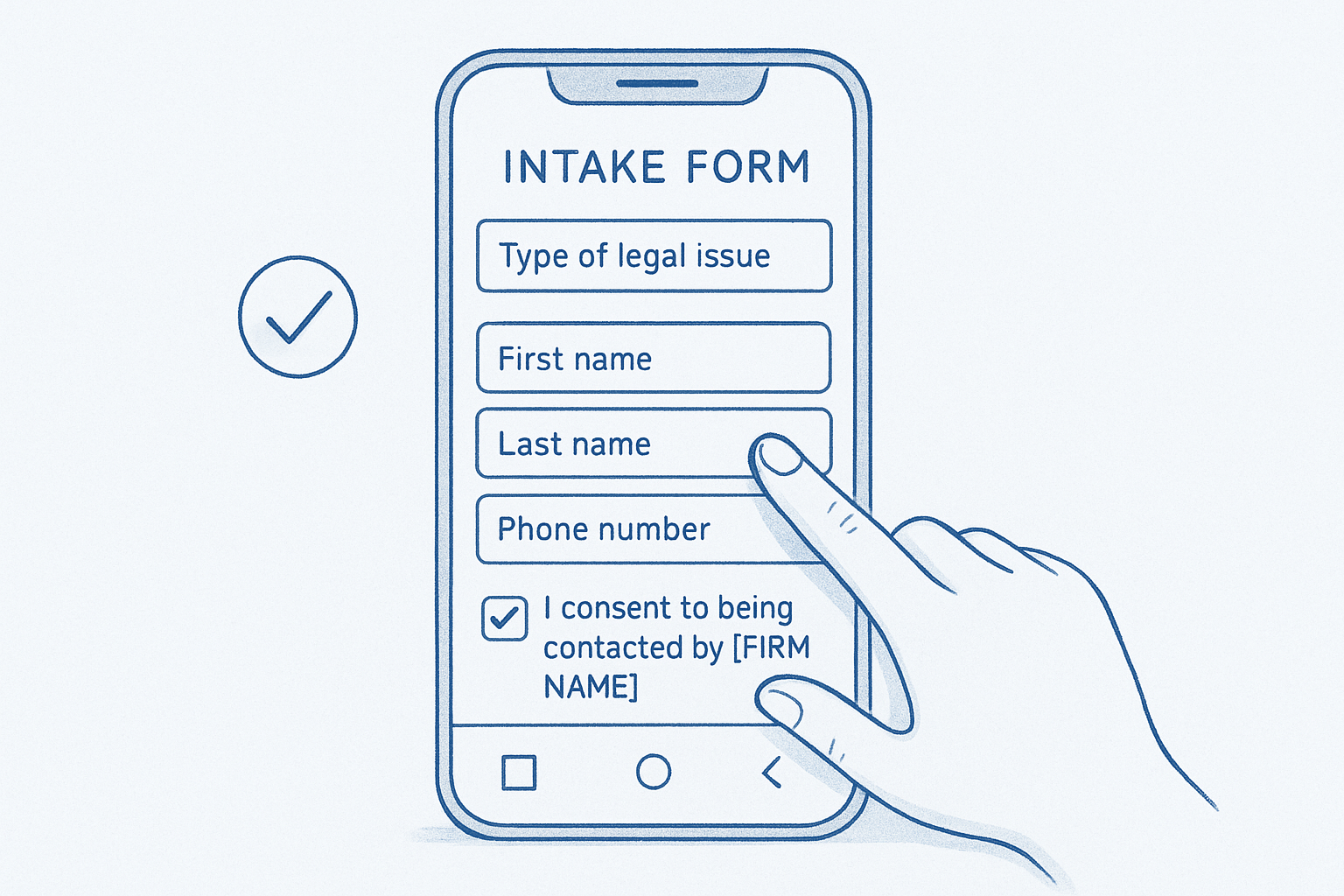
Build your intake form with these fields in this order:
- Type of legal issue (pre-qualify with a dropdown menu)
- First name and last name
- Phone number (use carrier-level validation to filter undeliverable numbers)
- Brief description of their situation (mark as optional to reduce friction)
- TCPA consent checkbox with explicit opt-in language tied to your firm's name
Do not ask for a phone number first. Starting with lower-stakes questions and gradually moving toward contact details reduces form abandonment at every step. Embed the form above the fold on your homepage and on every practice area page so a prospective client can reach it within one click from anywhere on your site. GavelGrow's hosted intake forms ship with bot protection and a 10-minute duplicate detection window built in, so you stop paying per-lead for the same person submitting twice.
Step 1. Pick a niche, message, and budget that fit
Most law firm marketing fails before it starts because the firm tries to be everything to everyone. A personal injury firm that also promotes estate planning, business formation, and DUI defense splits its budget across too many audiences, dilutes its message, and ends up ranking well for nothing. The first real step in learning how to market a law firm effectively is deciding exactly who you serve and refusing to apologize for that focus.
Define your primary practice area and ideal client
Your primary practice area should be the one that generates your highest average case value and the most referral activity. If you handle car accidents and workers' comp, but car accident cases bring in three times the revenue per matter, that is your anchor. Build your marketing infrastructure around that single practice area first, then expand once you have consistent signed cases flowing from it.
Once you have the practice area, narrow your ideal client further. Ask yourself: what geography, income level, and situation type produces the cases you actually want? A personal injury firm in Houston might target Spanish-speaking clients in specific zip codes where carrier data shows high uninsured motorist rates. The more specific your definition, the more precise your targeting becomes in both ads and content.
Craft a positioning statement you can test
Your positioning statement is the single sentence that tells a prospective client why they should choose your firm over the one across the street. Use this fill-in template as a starting point:
"We help [specific client type] in [geography] with [specific legal problem] so they can [outcome the client actually cares about]."
For example: "We help injured workers in Dallas with denied workers' comp claims so they can get the medical care and lost wages they deserve." That sentence works on a homepage headline, a Google Ads description, and a voicemail script. Test two versions of this statement by running them as Google Ads headlines against each other for 30 days and measuring click-through rate.
Set a budget tied to your case value target
Start with your average revenue per signed case and work backward. If a car accident case generates $15,000 on average and you close 1 in 4 consultations, you need four consultations to sign one case. If consultations cost $200 each in lead spend, your target cost per signed case is $800, giving you a clear ceiling for ad spend before you earn nothing on the case.
These numbers change by practice area and market size, but the logic stays the same. Anchor every budget conversation to revenue, not ad impressions.
Step 2. Build SEO and content that earns trust
Search engine optimization is how you market a law firm without paying for every click. Done right, it compounds: a practice area page that ranks on page one today keeps generating consultations six months from now with no additional ad spend. The challenge is that legal SEO is more competitive than most industries, which means generic tactics like adding your city name to a title tag will not move the needle on their own.
Target local search terms, not broad ones
Your first job is to stop chasing high-volume national keywords that large legal directories like Avvo and FindLaw already dominate. Instead, target locally-modified long-tail searches where a prospective client has already decided they need an attorney and is now looking for one in their city. These searches convert at higher rates and cost far less to rank for.
Here are the keyword patterns that produce the best results for local legal SEO:
- "[practice area] attorney [city]" (e.g., "car accident attorney Austin")
- "[specific situation] lawyer near me" (e.g., "denied workers comp claim lawyer near me")
- "[practice area] law firm [neighborhood or county]" (e.g., "DUI law firm Travis County")
Use Google Search Console to find which queries already send traffic to your site, then build dedicated pages around the ones you appear for but rank below position five.
A single well-optimized practice area page targeting a local long-tail keyword can outperform your homepage for consultation-driving traffic within 90 days.
Build practice area pages that rank and convert
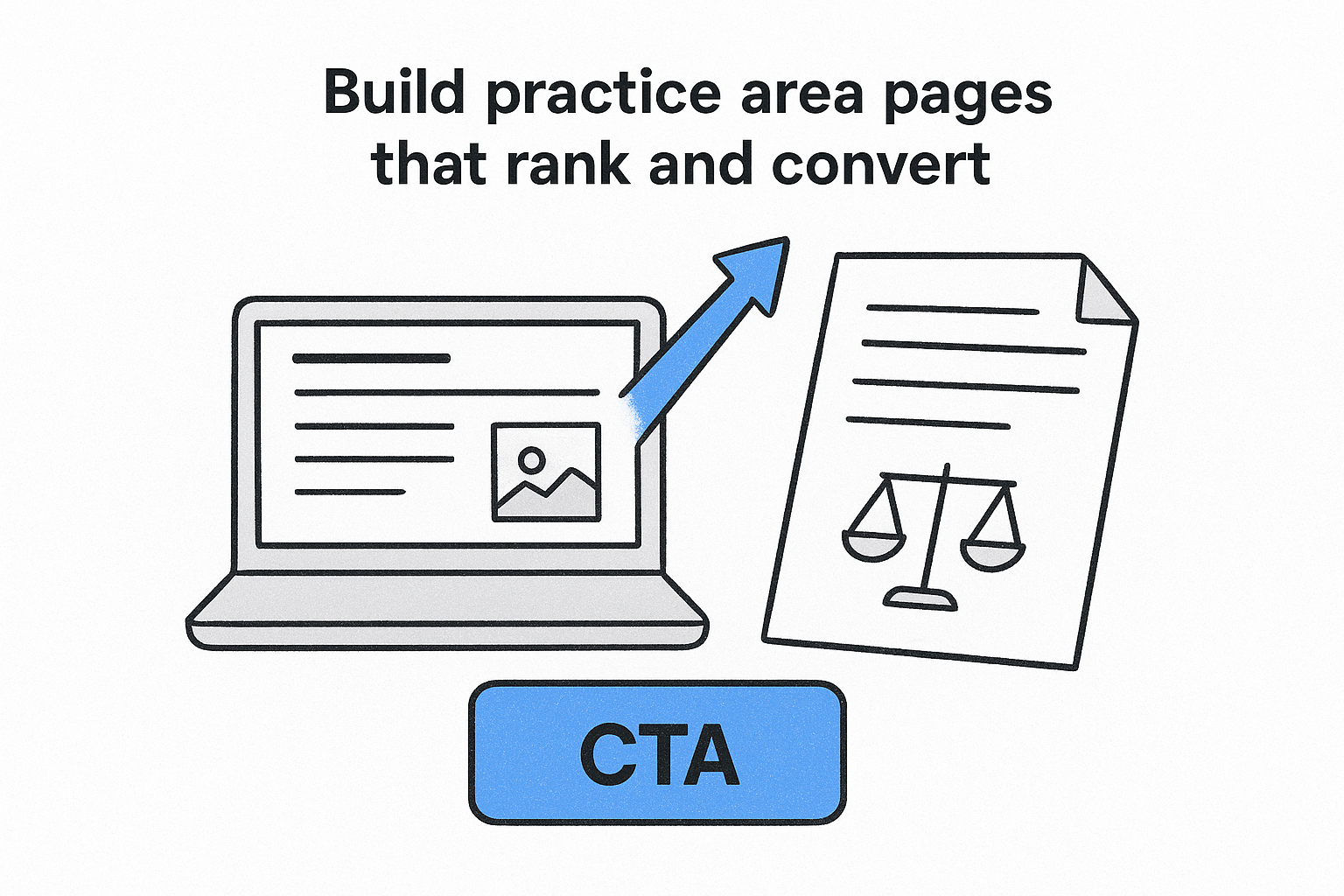
Each major practice area you handle needs its own standalone page, not a paragraph buried in a general "services" list. A strong practice area page answers three questions in order: what the legal problem is, why your firm handles it better than the alternatives, and what the client should do next. Structure the page with an H1 matching your target keyword, three to five H2 sections covering common client questions, and a consultation call-to-action above the fold.
Create content that proves expertise over time
Blog posts and FAQ content build topical authority with Google over time, but only when they answer specific legal questions a real client would ask before calling your office. Skip the "what is personal injury law" explainers and write "what happens if the other driver was uninsured in Texas" instead. That specificity signals expertise and matches the way prospective clients actually search. Publish at least two pieces of content per month, and link each one back to the relevant practice area page to pass authority where it counts.
Step 3. Run ads that match intent and track results
Paid advertising is the fastest lever in how to market a law firm, but only when your campaigns are structured around what a prospective client actually wants when they search. Spending money on broad keywords and sending all traffic to your homepage is the most common and expensive mistake firms make. Before you write a single ad, you need to understand two things: where your ideal client searches and what question they're trying to answer at that exact moment.
Choose the right ad channel for your practice area
Not every ad platform delivers the same return for every practice area. Google Search Ads work best for high-intent situations where someone already knows they need an attorney, such as car accidents, DUI charges, or divorce filings. Local Services Ads (LSAs), Google's pay-per-lead product for attorneys, sit above standard search ads and charge only when a verified lead calls your firm directly. For mass tort and class action work, where you need to reach people who don't yet know they have a claim, Meta (Facebook and Instagram) ads perform better because you can target by demographics and life event triggers.
Structure campaigns around intent signals, not just keywords
Your ad groups should mirror the specific situation a client is in, not a broad category. Create separate ad groups for "car accident lawyer Houston," "hit by uninsured driver Houston," and "rideshare accident attorney Houston" rather than grouping them under one personal injury campaign. Each ad group needs its own dedicated landing page that matches the search query's exact scenario, confirms you handle that situation, and presents one clear action: call or complete the intake form.
A landing page that matches the specific search query converts at two to three times the rate of a generic homepage.
Tie every ad dollar back to signed cases
Conversion tracking must fire when a lead submits a form or a tracked call connects, not when someone visits your site. Connect your Google Ads account to your call tracking numbers and your intake form's confirmation page so you can see cost per signed case by campaign, not just cost per click. That single data point is the only honest measure of whether your ad spend is actually working.
Step 4. Turn leads into consultations with fast intake
Knowing how to market a law firm means nothing if your intake process loses the lead before you ever speak to them. Research from the Harvard Business Review found that contacting a lead within the first five minutes makes them 21 times more likely to convert than contacting them after 30 minutes. Most firms take hours, sometimes days, to follow up. That single gap explains why firms with smaller ad budgets often outperform firms spending three times as much.
Respond within 60 seconds using automated follow-up
The moment someone submits your intake form, an automated SMS and email should fire before you even see the notification. The goal of that first message is not to close the consultation. It is to confirm you received their request, set an expectation for when a team member will call, and give them a direct way to reach you if their situation is urgent. That combination stops the lead from calling your competitor while they wait.
Here is a template for that first automated SMS:
"Hi [First Name], this is [Firm Name]. We received your message and a team member will call you within the next 15 minutes. If this is urgent, call us directly at [phone number]. Reply STOP to opt out."
Keep the message under 160 characters where possible and always include an opt-out instruction to stay TCPA compliant. GavelGrow's intake automation fires this sequence within 60 seconds of form submission and logs the timestamp in your lead pipeline so you can audit response times by campaign.
Build a multi-touch follow-up sequence for leads who don't answer
Not every lead picks up on the first call. A structured follow-up sequence of three to five touches over 72 hours captures the leads who are simply busy, not disinterested. Space your attempts across different channels and times so you aren't hitting the same person at the same hour every day.
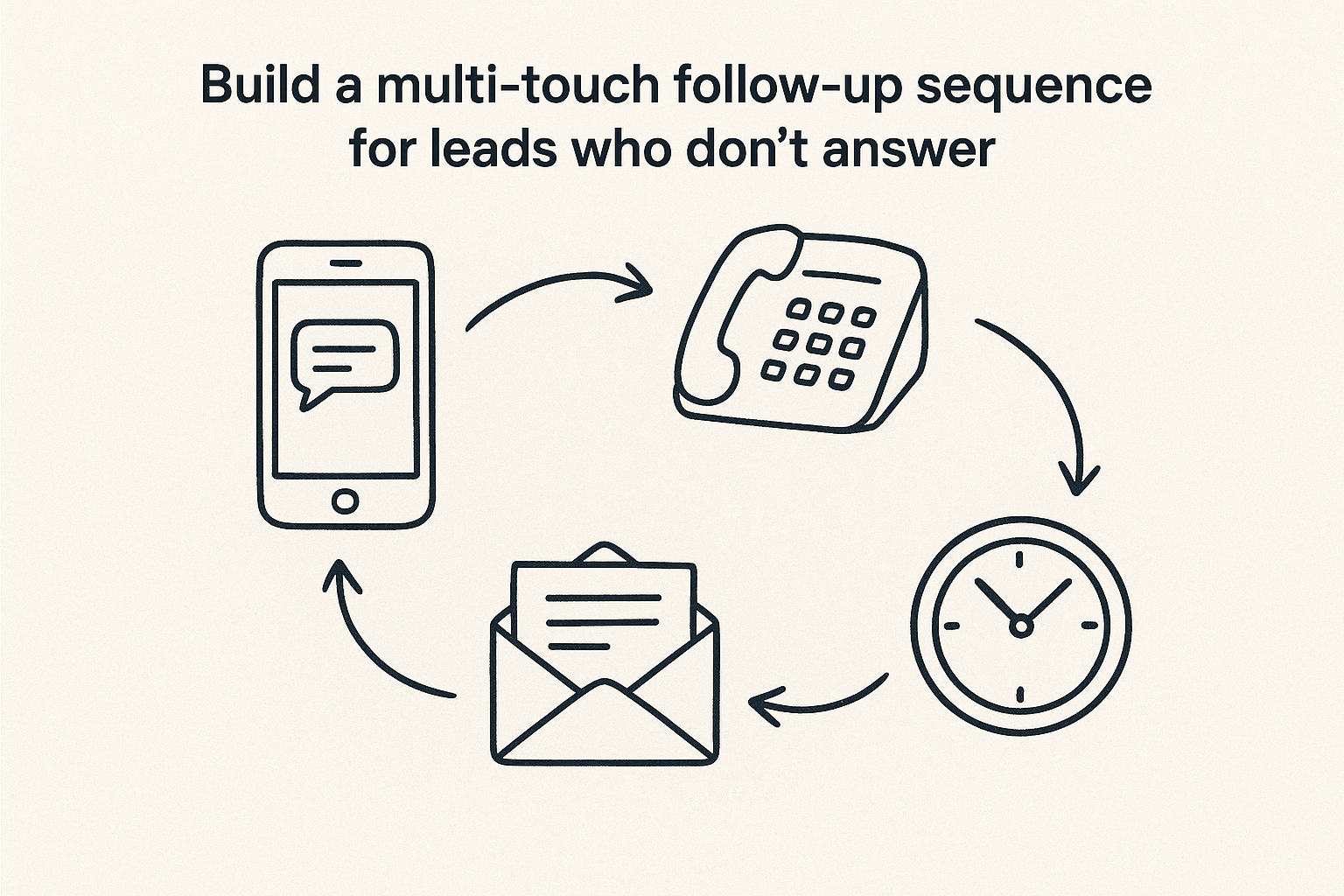
Use this sequence as your baseline:
Tag each outcome (qualified, callback scheduled, unqualified, no response) so your pipeline reflects real status and your team knows exactly where to focus their next call.
Step 5. Measure ROI and stay state-bar compliant
The final piece of how to market a law firm is knowing whether any of it is working and making sure none of it gets you sanctioned. Most firms stop at cost per lead, but that number tells you almost nothing useful. A $50 lead that never converts costs more than a $200 lead that signs a retainer, and the only way to see that clearly is to track cost per signed case by channel, not by campaign alone.
Track the metrics that actually predict revenue
Your marketing dashboard should show four numbers at a glance: cost per lead by channel, cost per consultation scheduled, cost per signed case, and close rate from consultation to retainer. Anything above those four is a vanity metric. Pull these numbers weekly, not monthly, so you can catch a campaign going off the rails before it burns through your quarterly budget.
The only number that connects your ad spend directly to firm revenue is cost per signed case, not cost per click or cost per lead.
Use this reporting structure as your weekly baseline:
How do you stay state-bar compliant in legal advertising?
State bar advertising rules vary by jurisdiction, but three requirements appear consistently across almost every state: you must include your firm's name and contact information in every ad, you cannot guarantee specific outcomes, and any claim about results must reflect what a reasonable client could expect given similar facts. Before you launch a Google Ads campaign or publish a new landing page, run the copy through your state bar's specific advertising guidelines. The American Bar Association's Model Rules of Professional Conduct serve as the baseline that most states adapt.
TCPA compliance is a separate layer that applies to your intake automation, not your ads. Every SMS you send must follow an explicit opt-in logged with a timestamp, your firm's name, and a clear opt-out path. Store those consent records in an append-only audit log so you can produce them instantly if a complaint is filed. GavelGrow's intake forms capture and store this data automatically, including the exact language the lead agreed to at the time of submission.
Frequently asked questions
These questions come from managing partners and marketing directors looking for specific, actionable answers rather than general advice. If you are still mapping out how to market a law firm for your practice, the answers below address the most common decision points before you commit budget.
How much should a law firm spend on marketing?
Most law firms allocate 5 to 12% of gross revenue to marketing, with personal injury and mass tort practices landing at the higher end due to competitive ad markets. Anchor your number to your target cost per signed case first, then build your budget backward from there. A firm targeting four new car accident cases per month at an average value of $15,000 each should set a marketing ceiling well below $1,500 per signed retainer to maintain a healthy margin.
How long does legal SEO take to produce results?
Expect 3 to 6 months before a new practice area page ranks on page one for a local search term in a mid-size market. Highly competitive searches like "car accident attorney Los Angeles" can take 9 to 12 months. Use Google Search Console to find queries where your pages already appear in positions 6 to 15, since those pages need optimization, not new content, and can move quickly with targeted improvements.
What is the best ad channel for a small law firm?
Google Local Services Ads offer the lowest-risk entry point for most small firms because you pay only when a verified lead calls directly through the ad, not per click. Pair LSAs with a dedicated tracking number and an automated SMS reply that fires within 60 seconds, and your response speed alone will outperform larger firms that let calls sit in a queue.
Responding to a lead within 5 minutes makes conversion 21 times more likely than responding after 30 minutes, according to Harvard Business Review research.
What is a good cost per signed case benchmark?
Keep cost per signed case under 10% of your average case value. GavelGrow's benchmark database across 500+ U.S. law firms shows the median personal injury firm pays $800 to $1,200 per signed retainer when intake automation is running correctly. Firms without automated follow-up consistently pay 40 to 60% more for the same case volume.
Do law firms need TCPA consent on intake forms?
Yes, and the requirement is specific: prior express written consent must name your firm, appear at the point of submission, and be stored with a timestamp you can retrieve on demand. The Federal Communications Commission sets TCPA penalties at $500 to $1,500 per unsolicited message, so an append-only audit log is not optional once you add automated SMS to your intake process.
Next Steps
Every tactic in this guide works. The problem is that most firms try to run all five steps at once without a clear starting point, spread their budget thin, and wonder why nothing produces consistent signed cases. Start with the foundation: set up your Google Business Profile, install call tracking on every channel, and replace your generic contact form with a multi-step intake form that captures TCPA consent at the point of submission. Those three moves alone will show you exactly where your current marketing budget is leaking.
Once your tracking infrastructure is in place, move through the steps in order: define your niche and budget, build out your practice area pages, launch a targeted ad campaign, and automate your lead follow-up. Knowing how to market a law firm matters far less than actually running the system. If you want a second set of eyes on your current setup, book a free 45-minute strategy call with GavelGrow to map out exactly where to start.
Prefer to hand it off? GavelGrow's law firm SEO services rank your firm for the buyer-intent searches that turn into signed cases — with every ranking tracked to a signed matter.
Frequently Asked Questions
How much should a law firm spend on marketing?
Most law firms allocate 5 to 12% of gross revenue to marketing, with personal injury and mass tort practices landing at the higher end due to competitive ad markets. Anchor your number to your target cost per signed case first, then build your budget backward from there. A firm targeting four new car accident cases per month at an average value of $15,000 each should set a marketing ceiling well below $1,500 per signed retainer to maintain a healthy margin.
How long does legal SEO take to produce results?
Expect 3 to 6 months before a new practice area page ranks on page one for a local search term in a mid-size market. Highly competitive searches like "car accident attorney Los Angeles" can take 9 to 12 months. Use Google Search Console to find queries where your pages already appear in positions 6 to 15, since those pages need optimization , not new content, and can move quickly with targeted improvements.
What is the best ad channel for a small law firm?
Google Local Services Ads offer the lowest-risk entry point for most small firms because you pay only when a verified lead calls directly through the ad, not per click. Pair LSAs with a dedicated tracking number and an automated SMS reply that fires within 60 seconds, and your response speed alone will outperform larger firms that let calls sit in a queue. Responding to a lead within 5 minutes makes conversion 21 times more likely than responding after 30 minutes, according to Harvard Business Review research.
What is a good cost per signed case benchmark?
Keep cost per signed case under 10% of your average case value . GavelGrow's benchmark database across 500+ U.S. law firms shows the median personal injury firm pays $800 to $1,200 per signed retainer when intake automation is running correctly. Firms without automated follow-up consistently pay 40 to 60% more for the same case volume.
Do law firms need TCPA consent on intake forms?
Yes, and the requirement is specific: prior express written consent must name your firm, appear at the point of submission, and be stored with a timestamp you can retrieve on demand. The Federal Communications Commission sets TCPA penalties at $500 to $1,500 per unsolicited message , so an append-only audit log is not optional once you add automated SMS to your intake process.