14 Best Marketing Attribution Software Tools Reviewed
Categories: Legal Marketing Strategies
 Abram Ninoyan
Founder & Senior Performance Marketer
Credentials: Google Partner, Google Ads Search Certified, Google Ads Display Certified, Google Ads Measurement Certified, Google Analytics (IQ) Certified, HubSpot Inbound Certified, HubSpot Social Media Marketing Certified, Conversion Optimization Certified
Expertise: Google Ads, Meta Ads, Conversion Rate Optimization, GA4 & Google Tag Manager, Lead Generation, Marketing Funnel Optimization, PPC Management
LinkedIn Profile
The right marketing attribution software connects every dollar you spend on ads, SEO, and content to actual revenue, not just clicks or form fills. Without it, you're guessing which campaigns deserve...
Key Takeaways
- 14 Best Marketing Attribution Software Tools Reviewed (2026)
- 1. GavelGrow
- 2. Ruler Analytics
- 3. HockeyStack
14 Best Marketing Attribution Software Tools Reviewed (2026)
The right marketing attribution software connects every dollar you spend on ads, SEO, and content to actual revenue, not just clicks or form fills. Without it, you're guessing which campaigns deserve more budget and which ones are burning cash.
Here's the problem most firms run into: Google Analytics tells you where traffic came from, but it can't tell you which campaign produced a signed client worth $15,000 in fees. That gap between "lead generated" and "deal closed" is where attribution software earns its keep. According to Ruler Analytics' 2025 benchmark report, 95% of marketers say attribution data directly influences their budget allocation decisions, yet fewer than half trust their current setup to deliver accurate numbers.
We built GavelGrow's platform around this exact challenge for law firms, wiring full-funnel attribution from first ad click through signed retainer into every plan. But GavelGrow is purpose-built for legal. If you operate outside that niche, or you want to see how dedicated attribution platforms stack up against industry-specific tools, you need a broader view.
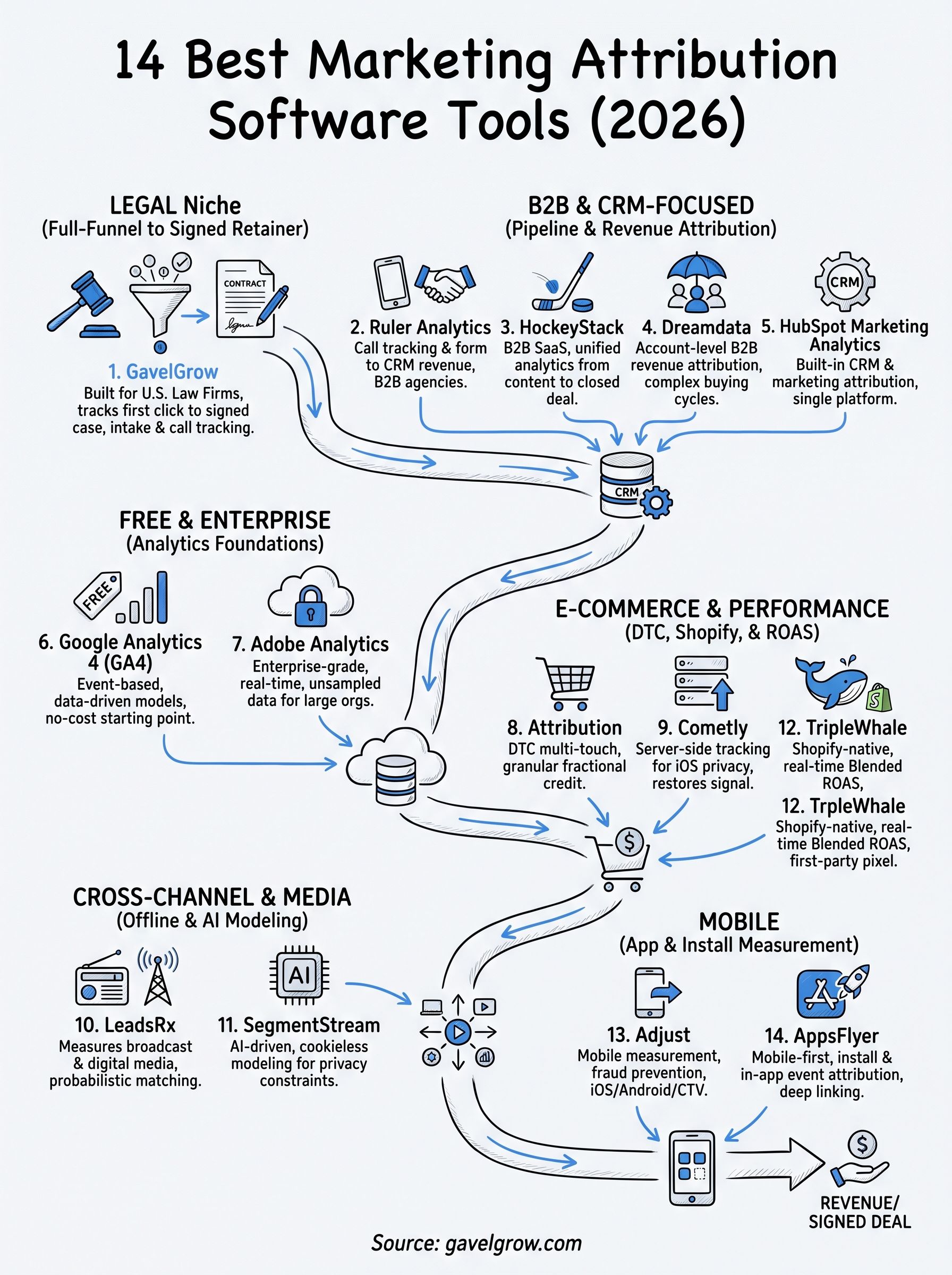
This guide reviews 14 of the strongest marketing attribution software tools available right now, breaking down their attribution models, integrations, pricing, and the specific use cases where each one shines. Whether you're a solo marketer trying to justify ad spend or a director managing multi-channel campaigns across six figures a month, you'll walk away knowing which platform fits your stack, your budget, and your reporting needs.
1. GavelGrow
GavelGrow is the only marketing attribution software built exclusively for U.S. law firms. Rather than stopping at lead generation, the platform traces every signed retainer back to its originating ad click, giving you campaign-level cost-per-signed-case data that generic attribution tools cannot produce.
How GavelGrow attribution Works for Law Firms
GavelGrow tags every inbound lead at the source, whether it arrives through a paid search ad, a Local Services Ad, or an organic form fill. The platform then follows that contact through intake, qualification, and case signing, updating attribution automatically at each stage. Full-funnel visibility from first touch to signed retainer lives in one dashboard, with no manual data stitching required.
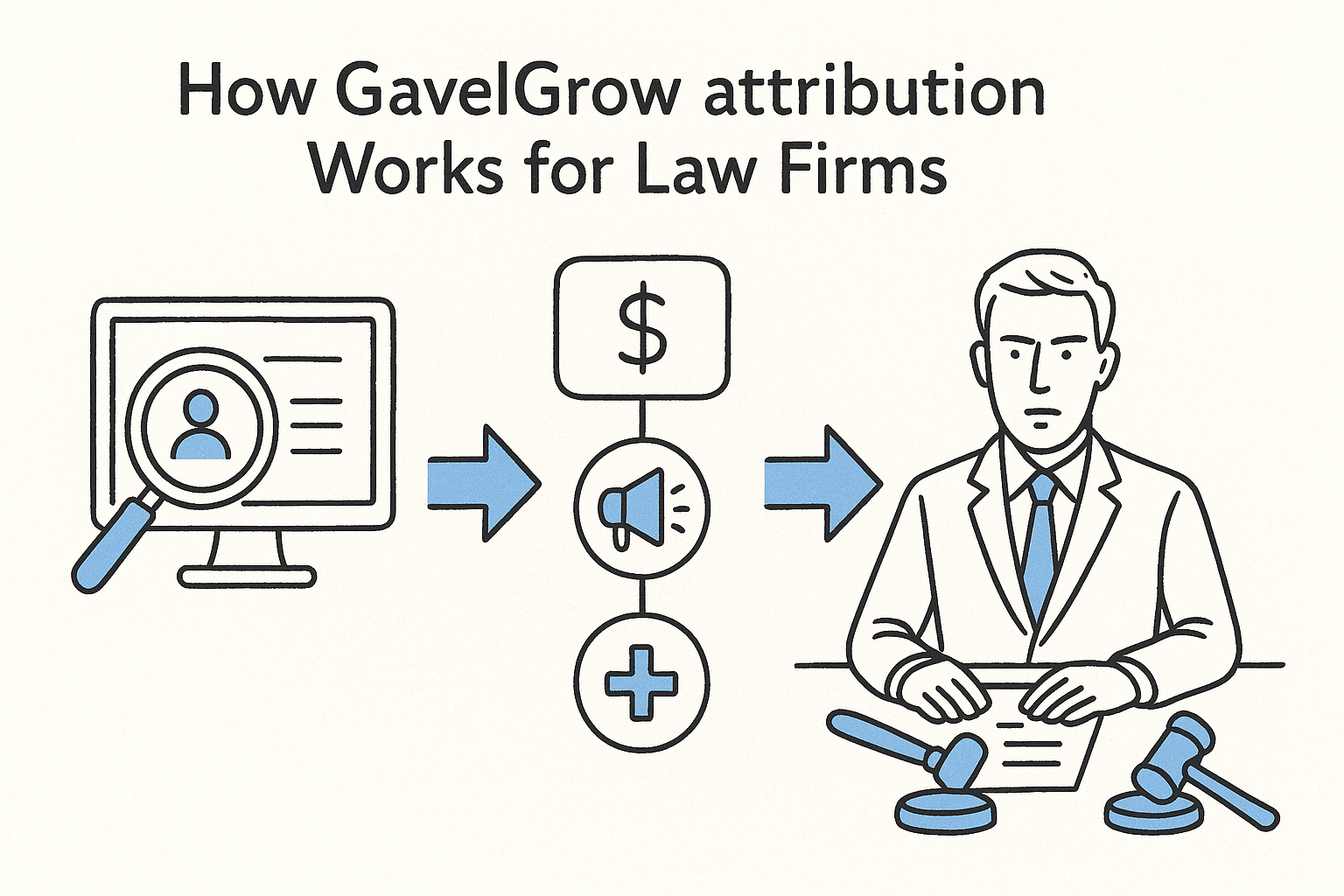
Most firms discover that their highest-volume lead source is not their most profitable one once they see cost-per-signed-case, not just cost-per-lead.
Best for
GavelGrow works best for U.S.-based law firms running Google Ads, Local Services Ads, or paid social campaigns who need attribution that reaches beyond the lead stage. It fits solo practitioners through mid-market firms across practice areas including personal injury, family law, criminal defense, and immigration.
Key Features for Signed-Case ROI and Intake Tracking
The platform ships with several capabilities that directly affect attribution accuracy:
- Built-in call tracking with per-campaign Twilio numbers, call recordings, and outcome tagging (qualified, callback, unqualified, spam)
- Hosted intake forms with TCPA consent audit logs, carrier-level phone validation, and 10-minute duplicate detection
- modelled practice-area benchmarks so you can compare your CPL and close rate against peer firms in the same practice area
- Native GA4, Meta Pixel, and GTM event firing with deduplication for Conversions API
- Intake automation that fires SMS and email sequences within 60 seconds of lead capture
Integrations and Setup Notes
GavelGrow syncs daily with Google Ads campaigns, pulling spend and conversions natively. The platform also fires events to GA4 and Meta Pixel automatically, so your ad accounts attribute conversions without additional tag configuration. Embedding the intake form on any existing website takes a single iframe or script snippet.
Pricing
GavelGrow offers three plans: Track at $199/month and Optimize at $599/month, with Managed scoped on a strategy call. Annual billing includes two months free on each plan. Every tier includes a 7-day free trial with no credit card required.
2. Ruler Analytics
Ruler Analytics is a call tracking and marketing attribution software platform built for agencies and B2B companies that need to connect offline conversions, including phone calls and form fills, back to specific marketing campaigns. It focuses on closing the gap between online ad spend and revenue reported in your CRM.
How Ruler Analytics Attribution Works
Ruler Analytics uses visitor-level tracking to tie each website session to a unique user, then follows that user through form submissions, phone calls, and CRM updates. When a deal closes in your CRM, Ruler sends the revenue value back to your ad platforms so your campaigns optimize against actual closed revenue, not just lead counts.
This closed-loop approach is what separates Ruler from simpler last-click tools that stop tracking the moment a form is submitted.
Best for
Ruler Analytics suits agencies and B2B service businesses running multi-channel campaigns who need call attribution alongside digital conversions. It works well for teams already using Salesforce, HubSpot, or Pipedrive as their source of revenue truth.
Key Features and Attribution Models
Ruler offers first-touch, last-touch, linear, and time-decay attribution models, plus custom model building. Call tracking, form tracking, and live chat attribution all feed into the same reporting view.
Integrations and Setup Notes
The platform integrates with Google Ads, Meta Ads, HubSpot, Salesforce, and GA4. Setup requires a JavaScript snippet on your site and a CRM connection to pass revenue data back upstream.
Pricing
Ruler Analytics pricing starts at approximately $199/month for up to 5,000 monthly sessions. Higher tiers scale by session volume and the number of tracking numbers required.
3. HockeyStack
HockeyStack is a B2B marketing attribution software platform that connects marketing activity to pipeline and closed revenue for SaaS companies and demand-gen teams. It replaces disconnected spreadsheets and partial data with a unified analytics layer that maps every touchpoint from first content view to won deal.
How HockeyStack Attribution Works
The platform captures every on-site and product interaction without sampling, then stitches those touchpoints into account-level journeys. When a deal closes in your CRM, HockeyStack attributes revenue across all contributing channels using the model you select, giving you a complete picture of what actually moved the deal forward.
Most B2B buying cycles involve six or more touchpoints across multiple channels, and last-click attribution misses all but the final one.
Best for
HockeyStack works best for B2B SaaS and technology companies with longer sales cycles that need attribution across content, paid ads, and product engagement. It fits marketing and revenue operations teams that already run Salesforce or HubSpot as their primary CRM.
Key Features and Attribution Models
The platform offers first-touch, last-touch, linear, U-shaped, and data-driven attribution models, plus custom funnel builders that let you define your own pipeline stages. Cookieless tracking keeps your data collection accurate as third-party cookies continue to disappear across major browsers.
Integrations and Setup Notes
HockeyStack connects with Salesforce, HubSpot, Google Ads, LinkedIn Ads, and Stripe. Setup requires a script tag and a CRM integration that typically takes under an hour to configure for most standard stacks.
Pricing
HockeyStack does not publish pricing publicly. Plans are quoted based on company size and monthly data volume, with demos available on request directly through their website.
4. Dreamdata
Dreamdata is a B2B revenue attribution platform designed to give go-to-market teams a clear view of how every marketing and sales activity contributes to pipeline and closed revenue. It positions itself as a complete marketing attribution software solution for companies that need account-level data rather than individual user journeys.
How Dreamdata Attribution Works
Dreamdata collects touchpoints across your entire customer journey at the account level, stitching together data from ads, CRM, product usage, and customer success tools into a single timeline. When a deal closes, the platform distributes credit across all contributing touchpoints using your chosen attribution model, so you can see exactly which activities drove the result.
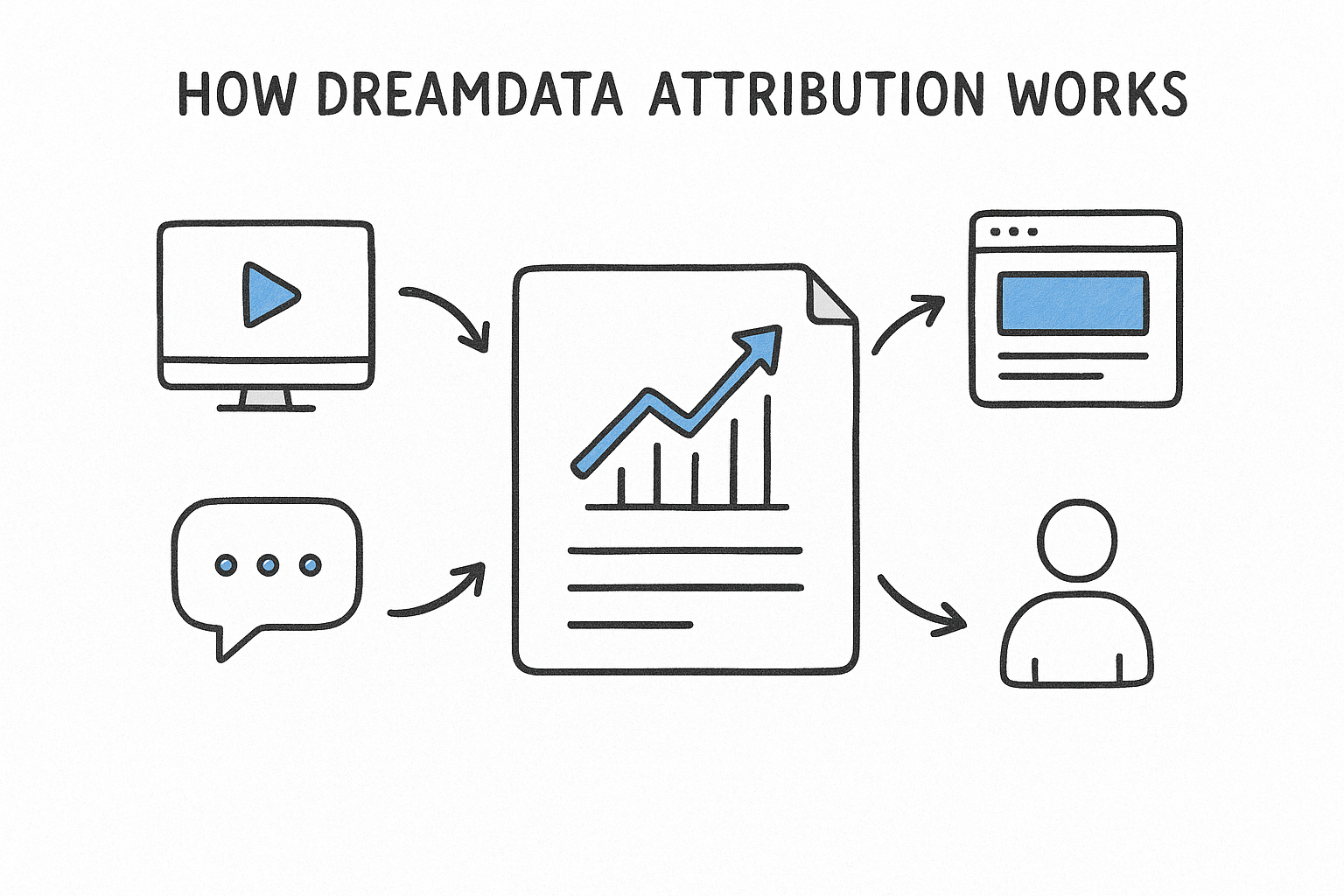
Account-level attribution matters in B2B because multiple stakeholders from the same company interact with your content before a single deal closes.
Best for
Dreamdata works best for B2B SaaS and technology companies running complex, multi-channel demand-generation programs where the buying committee involves several contacts under one account.
Key Features and Attribution Models
The platform supports first-touch, last-touch, linear, and time-decay models, along with a data-driven option that weights touchpoints based on actual conversion patterns. A built-in ROI dashboard lets your team connect ad spend directly to closed revenue by channel.
Integrations and Setup Notes
Dreamdata connects with Salesforce, HubSpot, Google Ads, LinkedIn Ads, and most major product analytics tools. Implementation centers on a JavaScript snippet combined with CRM sync, which most teams complete within a few days.
Pricing
Dreamdata offers a free tier with limited data history and paid plans starting at approximately $999/month, scaled by CRM contact volume and data retention needs.
5. HubSpot Marketing Analytics and Attribution
HubSpot combines CRM, marketing automation, and attribution reporting in a single platform, making it one of the most accessible marketing attribution software options for teams that already live inside the HubSpot ecosystem. Rather than requiring a separate attribution tool, the platform builds multi-touch reporting directly into its marketing hub.
How HubSpot Attribution Works
HubSpot tracks every interaction a contact has with your marketing assets, from first page view through email clicks, form fills, and deal closures, using its native CRM as the data backbone. Because contact records and deal data share the same system, revenue attribution does not require a separate CRM sync.
When your marketing data and CRM live in the same platform, attribution gaps shrink significantly because there is no data handoff to break.
Best for
HubSpot attribution works best for SMB to mid-market B2B companies already using HubSpot CRM who want built-in reporting without adding another tool to their stack.
Key Features and Attribution Models
The platform offers first-touch, last-touch, linear, U-shaped, W-shaped, full-path, and time-decay models. You can switch between models inside the same report to compare how credit shifts across channels.
Integrations and Setup Notes
HubSpot connects natively with Google Ads, Facebook Ads, LinkedIn Ads, Salesforce, and Google Search Console. Setup is straightforward if you already use HubSpot CRM, but teams on external CRMs will face more configuration work to pass closed revenue back accurately.
Pricing
Attribution reporting is available on Marketing Hub Professional at $800/month and Enterprise at $3,600/month. Starter plans do not include multi-touch attribution models.
6. Google Analytics 4
Google Analytics 4 is the free, event-based analytics platform from Google that replaced Universal Analytics in 2023. For teams already running Google Ads, GA4 provides a solid foundation of marketing attribution software capabilities without adding a line item to your software budget.
How GA4 Attribution Works
GA4 uses a data-driven attribution model by default, distributing credit across all touchpoints in your conversion path based on observed user behavior rather than fixed rules. You can also switch to last-click, first-click, linear, or time-decay models inside the Attribution settings panel to compare how credit shifts across channels.
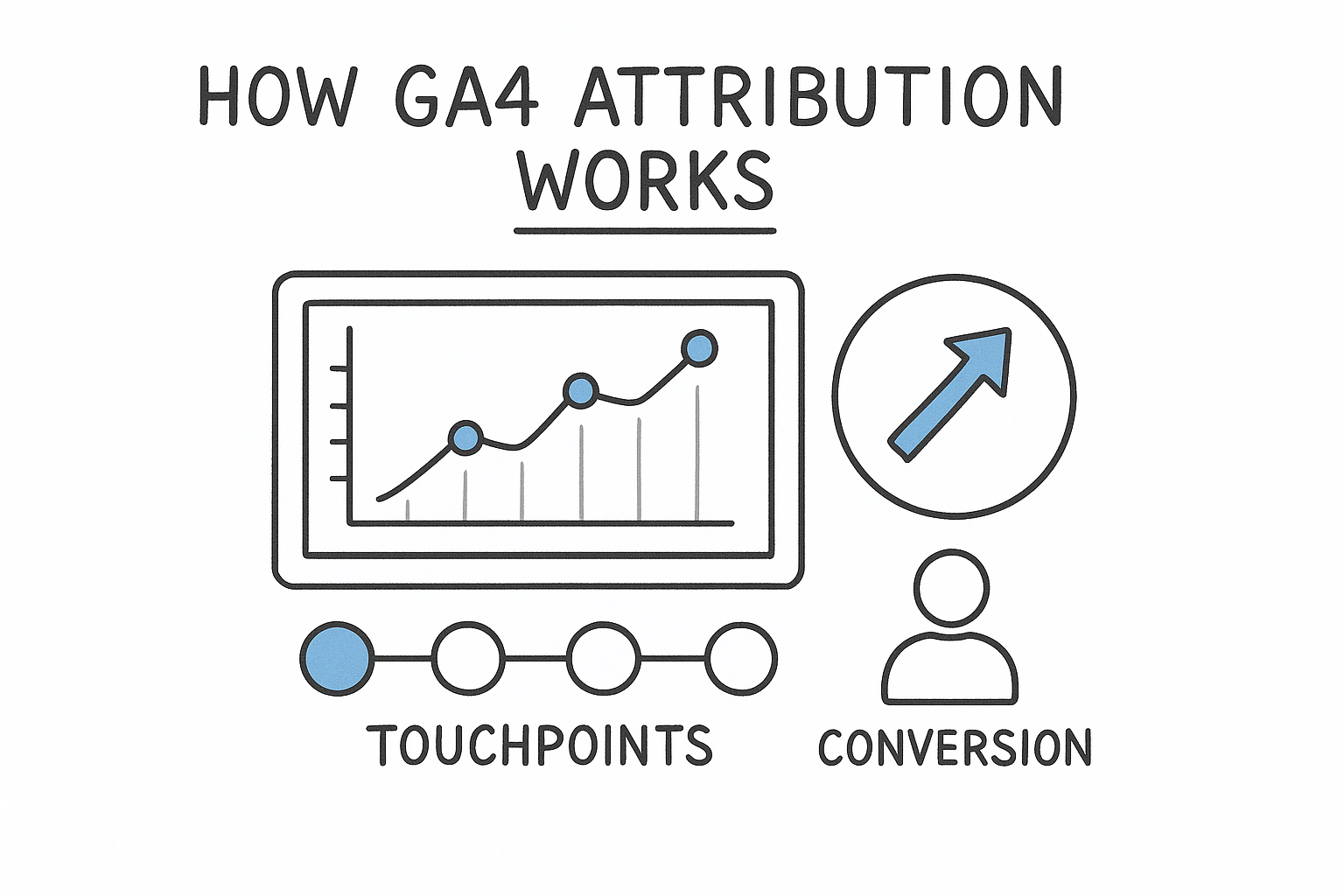
Data-driven attribution requires a minimum conversion volume to function accurately, so accounts with fewer than 400 monthly conversions may see limited model reliability.
Best for
GA4 works best for small to mid-size businesses running Google Ads campaigns who need a no-cost attribution starting point. It fits teams that want channel-level data rather than CRM-connected revenue attribution tied to closed deals.
Key Features and Attribution Models
The platform supports data-driven, last-click, first-click, linear, time-decay, and position-based models, all accessible from the Advertising workspace. Cross-channel reporting and funnel exploration tools let you trace the paths users take before converting, which helps identify where drop-off happens.
Integrations and Setup Notes
GA4 connects natively with Google Ads, Google Search Console, BigQuery, and Looker Studio. Your implementation requires placing the GA4 tag via Google Tag Manager or a direct script install, which most developers complete in under an hour.
Pricing
GA4 is completely free for standard use. GA4 360, the enterprise version, starts at approximately $50,000 per year and adds higher data thresholds, guaranteed uptime, and advanced export capabilities.
7. Adobe Analytics
Adobe Analytics is an enterprise-grade marketing attribution software platform built for large organizations that need granular, real-time data across complex digital properties. It sits inside the broader Adobe Experience Cloud, giving it tight connections to advertising, content management, and customer data tools that many enterprise teams already use.
How Adobe Analytics Attribution Works
Adobe Analytics applies algorithmic and rules-based attribution models to every conversion event you define, distributing credit across all contributing touchpoints in your customer journey. The platform processes data at the hit level without sampling, which means your reports reflect actual user behavior rather than estimates, even at high traffic volumes.
Unsampled data matters most when you run high-traffic campaigns where even small sampling errors can distort which channels appear most effective.
Best for
Adobe Analytics fits enterprise marketing and analytics teams at large B2C or B2B organizations with dedicated data engineers to manage implementation and ongoing configuration. It is not a practical fit for small firms or lean marketing teams without technical resources.
Key Features and Attribution Models
The platform supports first-touch, last-touch, linear, U-shaped, time-decay, and custom algorithmic models alongside its Attribution IQ feature, which lets you compare models side by side in a single workspace panel. Segment-level attribution lets your team isolate how specific audience groups respond to different channel combinations.
Integrations and Setup Notes
Adobe Analytics connects with Adobe Advertising, Adobe Target, Google Ads, and major data warehouses including Snowflake and BigQuery. Full implementation typically requires dedicated developer resources and several weeks of configuration.
Pricing
Adobe Analytics pricing is quote-based only, with most enterprise contracts starting above $30,000 per year depending on data volume, user seats, and included Experience Cloud products.
8. Attribution
Attribution is a multi-touch marketing attribution software platform built for performance marketing teams that need to see exactly how each channel contributes to conversions and revenue. The platform focuses on giving you granular touchpoint data across paid, organic, and referral sources without requiring a complex data engineering setup.
How Attribution Attribution Works
The platform assigns fractional credit to every touchpoint in your customer journey using the model you select. It collects data via a JavaScript snippet, maps each session to a user identity, then fires credit back to your ad platforms when a conversion occurs downstream.
Fractional attribution outperforms single-touch models when your customers interact with four or more channels before purchasing.
Best for
Attribution works best for direct-to-consumer and e-commerce brands running multi-channel paid campaigns who need touchpoint-level visibility beyond what native ad platform reporting provides. It fits growth teams with moderate technical capability who want quick implementation without a dedicated data engineer on staff.
Key Features and Attribution Models
The platform supports first-touch, last-touch, linear, and time-decay models, plus custom weighting options that let you shift how credit distributes across channels. You can compare models side by side to see how your budget allocation decisions change when you adjust underlying assumptions.
Integrations and Setup Notes
Attribution connects with Google Ads, Facebook Ads, Stripe, Shopify, and major CRM platforms. Most teams complete the JavaScript snippet installation and primary integrations within one to two business days.
Pricing
Plans start at approximately $299/month, with pricing scaling based on monthly tracked conversions and the number of active ad platform integrations your team requires.
9. Cometly
Cometly is a performance-focused marketing attribution software platform built specifically for advertisers who lost accurate conversion data after Apple's iOS 14 privacy changes gutted Meta's pixel tracking. The platform restores signal by combining server-side event tracking with first-party data, giving your ad accounts accurate conversion information to optimize campaigns.
How Cometly Attribution Works
Cometly routes conversion events through your own server rather than relying on browser-based pixel tracking, which means iOS opt-outs no longer create blind spots in your attribution data. The platform matches ad clicks to downstream purchases or conversions using its own identity resolution layer, then sends those verified events back to Meta and Google Ads for campaign optimization.
Server-side tracking recovers a significant portion of conversions that browser-based pixels miss after iOS privacy updates, which directly improves your ad platform's ability to find profitable audiences.
Best for
Cometly works best for direct-to-consumer e-commerce brands running heavy Meta Ads spend who experienced a sharp drop in reported conversions after iOS 14. It fits growth-stage teams that need accurate ROAS data without building a custom server-side infrastructure from scratch.
Key Features and Attribution Models
The platform offers first-touch and last-touch attribution models alongside a view-through attribution window you can customize. A real-time dashboard shows your cost per acquisition by ad, adset, and campaign so you can make budget decisions the same day rather than waiting for delayed reporting.
Integrations and Setup Notes
Cometly connects with Meta Ads, Google Ads, Shopify, and WooCommerce. Setup requires installing a lightweight script and configuring a server-side event endpoint, which most Shopify teams complete within a few hours.
Pricing
Plans start at approximately $149/month, scaling by monthly ad spend volume managed through the platform.
10. LeadsRx
LeadsRx is a cross-channel marketing attribution software platform that focuses on helping advertisers measure the true impact of broadcast media, digital ads, and streaming channels on customer acquisition. It fills a gap that most digital-only attribution tools miss by connecting offline media exposures, including radio, TV, and podcast ads, to online conversions.
How LeadsRx Attribution Works
LeadsRx uses a universal pixel and probabilistic matching to connect ad exposures across channels to conversion events on your website. When a visitor converts after hearing a radio spot or seeing a streaming ad, the platform maps that path using anonymized audience data and timing patterns rather than relying solely on cookie-based tracking.
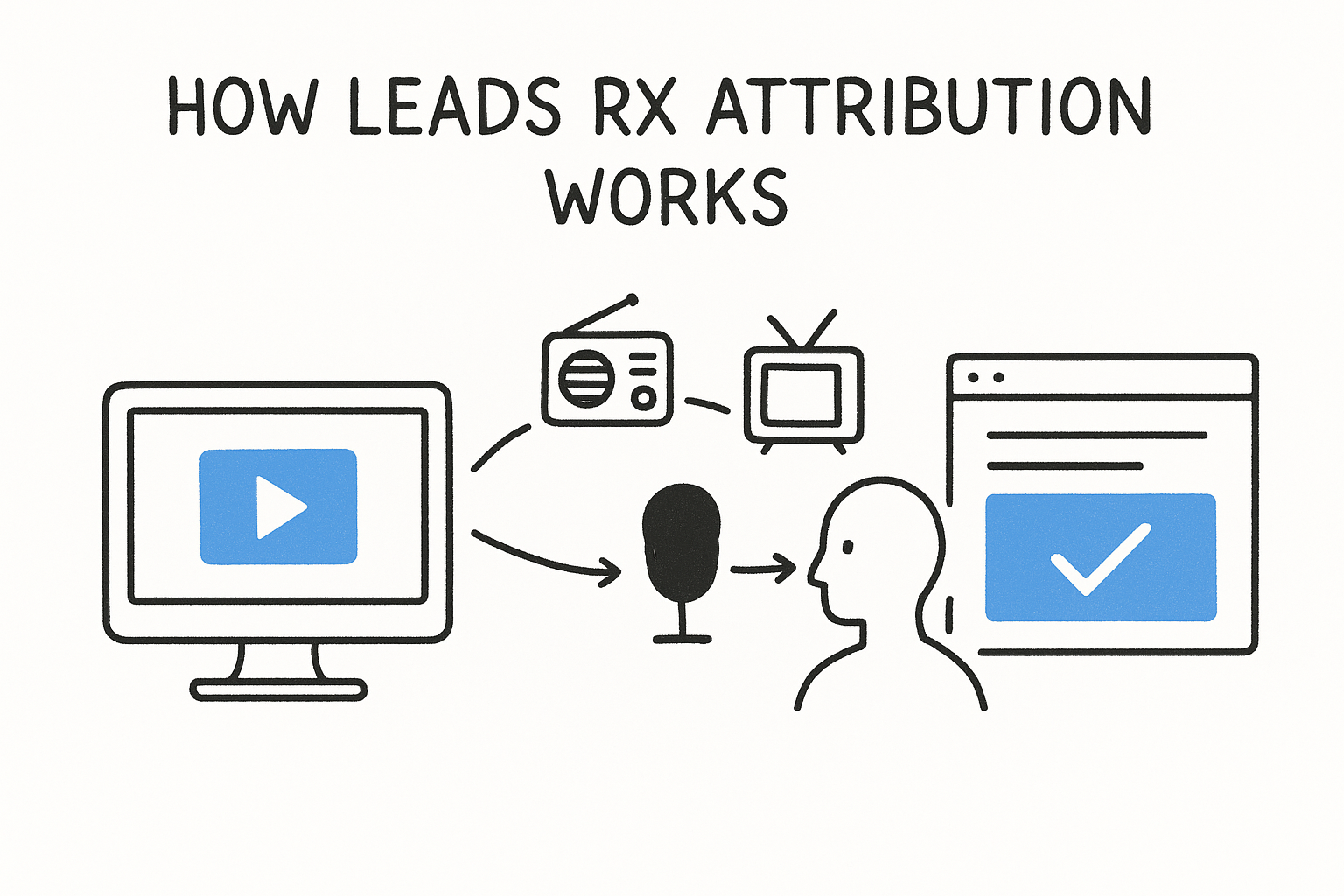
This cross-media matching capability makes LeadsRx particularly valuable for brands running significant offline advertising budgets alongside digital campaigns.
Best for
LeadsRx works best for multi-location retailers, broadcasters, and mid-market brands running campaigns across both digital and traditional media channels who need a single attribution view rather than separate reports per channel.
Key Features and Attribution Models
The platform supports first-touch, last-touch, and linear attribution models alongside its proprietary broadcast attribution layer. A customer journey report shows you which media touchpoints appeared most frequently in the paths of your highest-value converters.
Integrations and Setup Notes
LeadsRx connects with Google Ads, Facebook Ads, and major DSPs. Setup requires installing the universal pixel across your site, which most development teams complete within a single sprint.
Pricing
LeadsRx pricing is quote-based, with plans scaled by monthly ad spend volume and the number of media channels you need to track simultaneously.
11. SegmentStream
SegmentStream is a cookieless marketing attribution software platform that uses AI-driven modeling to predict the true contribution of each marketing channel, even when direct measurement breaks down due to privacy restrictions, ad blockers, or consent opt-outs.
How SegmentStream Attribution Works
SegmentStream uses AI-based conversion modeling to fill the gaps that standard pixel tracking leaves behind. Rather than relying on cookies or device fingerprinting, the platform analyzes aggregated behavioral patterns across your campaigns and predicts how much revenue each channel generates, giving you probabilistic attribution that holds up under modern privacy constraints.
This modeling approach matters most for teams running significant budgets across Meta and Google where cookie-based tracking consistently undercounts actual conversions.
Best for
SegmentStream works best for mid-market to enterprise marketing teams running large paid media budgets across multiple platforms who need accurate attribution data despite increasing cookie restrictions and falling consent rates.
Key Features and Attribution Models
The platform centers on AI-powered, data-driven attribution rather than static rule-based models. It also includes marketing mix modeling capabilities, which lets your team assess channel contribution at a strategic budget-planning level alongside day-to-day campaign reporting. Key capabilities include:
- Cookieless conversion modeling that works without third-party identifiers
- Marketing mix modeling for longer-horizon budget decisions
- Incrementality testing to measure true channel lift
Integrations and Setup Notes
SegmentStream connects with Google Ads, Meta Ads, Google Analytics 4, and major cloud data warehouses including BigQuery and Snowflake. Full model calibration typically takes one to two weeks after your initial data connection is established.
Pricing
SegmentStream pricing is quote-based only, with plans structured around your monthly ad spend volume and the number of channels requiring active modeling.
12. TripleWhale
TripleWhale is a Shopify-native marketing attribution software platform built specifically for direct-to-consumer e-commerce brands that need accurate, real-time data to manage daily ad spend decisions. The platform gives you a single dashboard that pulls together ad performance, revenue, and profitability metrics across all your active channels.
How TripleWhale Attribution Works
TripleWhale deploys a first-party pixel that tracks your customers on your Shopify store, then maps each order back to the specific ad that drove the session. Because TripleWhale collects data directly rather than relying on Meta or Google's native reporting, you get a deduplicated, cross-channel view of which campaigns actually generated revenue rather than competing overcounts from each platform's self-reported data.
Relying on each ad platform's native reports almost always leads to double-counting, since both Meta and Google claim credit for the same purchase.
Best for
TripleWhale works best for Shopify-based e-commerce brands spending between $10,000 and $500,000 per month on Meta and Google Ads who need fast, accurate ROAS data to guide daily budget decisions.
Key Features and Attribution Models
The platform offers first-touch, last-touch, linear, and post-purchase survey attribution alongside its proprietary "Triple Attribution" model that blends pixel data with customer self-reported responses. A real-time Blended ROAS metric gives you a single profitability number across all channels simultaneously.
Integrations and Setup Notes
TripleWhale connects natively with Shopify, Meta Ads, Google Ads, TikTok Ads, and Klaviyo. Setup takes under 30 minutes for most Shopify stores.
Pricing
Plans start at $129/month for stores under $1 million in annual revenue, scaling up based on your store's total yearly sales volume.
13. Adjust
Adjust is a mobile measurement and marketing attribution software platform built for app developers and mobile-first businesses that need accurate data on where their installs, in-app events, and revenue originate. The platform operates across iOS, Android, and connected TV environments, giving mobile marketing teams a unified attribution layer regardless of which channels drive their campaigns.
How Adjust Attribution Works
Adjust uses device-level and probabilistic matching to connect ad exposures to app installs and downstream in-app events. When a user clicks an ad and later installs your app, Adjust links that install back to the specific campaign, network, and creative that drove it, giving you granular cost-per-install and cost-per-event data across every active channel.
Probabilistic matching becomes critical after Apple's SKAdNetwork limitations cap the device-level data available on iOS campaigns, and Adjust's modeling fills that gap accurately.
Best for
Adjust works best for mobile app developers and gaming companies running large-scale user acquisition campaigns across paid social, programmatic networks, and app store advertising channels.
Key Features and Attribution Models
The platform supports first-touch and last-touch attribution models alongside multi-touch options. Fraud prevention runs automatically on every install, filtering invalid traffic and click injection attacks before they distort your campaign data.
Integrations and Setup Notes
Adjust connects with Meta Ads, Google Ads, TikTok Ads, Apple Search Ads, and over 2,000 ad network partners. Implementation requires adding the Adjust SDK to your iOS or Android app codebase, which most mobile development teams complete within one sprint.
Pricing
Adjust offers a free Core plan for early-stage apps and paid plans starting at custom quotes based on monthly tracked sessions and active network integrations.
14. AppsFlyer
AppsFlyer is a mobile-first marketing attribution software platform that helps app developers and performance marketers measure exactly which campaigns drive installs, in-app purchases, and long-term user value. The platform serves over 12,000 app developers worldwide, making it one of the most widely adopted mobile measurement providers in the industry.
How AppsFlyer Attribution Works
AppsFlyer captures the full user journey from ad exposure to in-app event, using its proprietary SDK to match installs and downstream actions back to the specific campaign and creative that generated them. On iOS, the platform works within Apple's SKAdNetwork framework while layering its own probabilistic modeling to recover attribution signal that device-level privacy restrictions would otherwise eliminate.
Recovering lost iOS signal through probabilistic modeling directly improves your campaign optimization because your ad platforms receive more complete conversion data to train their algorithms.
Best for
AppsFlyer works best for mobile app companies, gaming studios, and subscription app businesses running paid user acquisition campaigns across multiple ad networks who need a single source of truth for install and revenue attribution.
Key Features and Attribution Models
The platform supports multi-touch attribution, view-through attribution, and data-driven models alongside built-in fraud protection that blocks install fraud, click flooding, and device farm activity before it reaches your reporting. A deep linking suite lets you route users to specific in-app destinations directly from your ads.
Integrations and Setup Notes
AppsFlyer connects with Meta Ads, Google Ads, TikTok Ads, Apple Search Ads, and over 10,000 partner integrations. Implementation requires adding the AppsFlyer SDK to your iOS or Android codebase.
Pricing
AppsFlyer offers a free tier for early-stage apps and paid plans on custom quotes based on monthly attributed conversions and active network partners.
Next Steps
You now have a clear picture of the 14 strongest marketing attribution software platforms available in 2026. The right choice depends on where your biggest measurement gap sits. If you run a mobile app, AppsFlyer or Adjust will serve you better than a B2B revenue platform. If you operate a Shopify store, TripleWhale fits your stack faster than an enterprise solution. And if you run a U.S. law firm that needs attribution from first ad click through signed retainer, GavelGrow is built specifically for that outcome.
Before you commit to any tool, run the numbers on what a single missed attribution insight costs you in wasted ad spend each month. That figure usually makes the platform decision obvious. If you want a second set of eyes on your current setup, book a free 45-minute strategy call with GavelGrow and walk away with a concrete plan for fixing your attribution gaps.
Frequently Asked Questions
What is marketing attribution software?
Marketing attribution software connects every touchpoint — ads, SEO, content, calls, and forms — to the revenue it ultimately produces, so you can see which campaigns generate paying clients rather than just clicks or leads. It closes the gap between a lead being generated and a deal actually closing.
Why is Google Analytics not enough for attribution?
Google Analytics 4 shows where traffic comes from, but it cannot tell you which campaign produced a signed client worth thousands in fees. It tracks online events, not closed revenue, and struggles with offline conversions like phone calls. Dedicated attribution software links the click to the actual signed case.
How much does marketing attribution software cost?
Pricing ranges widely — lightweight tools start around $200 per month, while enterprise platforms run into the thousands per month. Cost usually scales with traffic volume, integrations, and how much revenue data you connect. For a law firm, the key question is whether it ties spend to signed cases, not just leads.
What is the difference between first-touch, last-touch, and multi-touch attribution?
First-touch credits the campaign that first found the lead; last-touch credits the final one before conversion; multi-touch distributes credit across every touchpoint. Multi-touch is the most accurate for long, multi-channel journeys — like the six-to-twelve-month path many legal clients take before signing.
Can marketing attribution software track phone calls?
The best tools can, through call tracking and dynamic number insertion that ties each call back to the campaign, keyword, and ad that produced it. For service businesses like law firms — where most high-value inquiries arrive by phone — call attribution is essential rather than optional.
How does attribution software help a law firm specifically?
It answers the question generic analytics cannot: which ad, keyword, or call produced a signed case, and at what cost. That lets a firm shift budget toward the campaigns that generate retained clients and cut the ones that only produce cheap, unqualified leads.
What should I look for when choosing attribution software?
Prioritize accurate revenue tracking rather than just form fills, call and offline-conversion tracking, integrations with your ad platforms and CRM, and reporting you will actually use. If your business runs on phone calls and long sales cycles, make sure the tool ties both to closed revenue.
Frequently Asked Questions
What is marketing attribution software?
Marketing attribution software connects every touchpoint — ads, SEO, content, calls, and forms — to the revenue it ultimately produces, so you can see which campaigns generate paying clients rather than just clicks or leads. It closes the gap between a lead being generated and a deal actually closing.
Why is Google Analytics not enough for attribution?
Google Analytics 4 shows where traffic comes from, but it cannot tell you which campaign produced a signed client worth thousands in fees. It tracks online events, not closed revenue, and struggles with offline conversions like phone calls. Dedicated attribution software links the click to the actual signed case.
How much does marketing attribution software cost?
Pricing ranges widely — lightweight tools start around $200 per month, while enterprise platforms run into the thousands per month. Cost usually scales with traffic volume, integrations, and how much revenue data you connect. For a law firm, the key question is whether it ties spend to signed cases, not just leads.
What is the difference between first-touch, last-touch, and multi-touch attribution?
First-touch credits the campaign that first found the lead; last-touch credits the final one before conversion; multi-touch distributes credit across every touchpoint. Multi-touch is the most accurate for long, multi-channel journeys — like the six-to-twelve-month path many legal clients take before signing.
Can marketing attribution software track phone calls?
The best tools can, through call tracking and dynamic number insertion that ties each call back to the campaign, keyword, and ad that produced it. For service businesses like law firms — where most high-value inquiries arrive by phone — call attribution is essential rather than optional.
How does attribution software help a law firm specifically?
It answers the question generic analytics cannot: which ad, keyword, or call produced a signed case, and at what cost. That lets a firm shift budget toward the campaigns that generate retained clients and cut the ones that only produce cheap, unqualified leads.
What should I look for when choosing attribution software?
Prioritize accurate revenue tracking rather than just form fills, call and offline-conversion tracking, integrations with your ad platforms and CRM, and reporting you will actually use. If your business runs on phone calls and long sales cycles, make sure the tool ties both to closed revenue.