Criminal Defense Lawyer Marketing: How to Get More Clients
Categories: Legal Marketing Strategies
 Abram Ninoyan
Founder & Senior Performance Marketer
Credentials: Google Partner, Google Ads Search Certified, Google Ads Display Certified, Google Ads Measurement Certified, Google Analytics (IQ) Certified, HubSpot Inbound Certified, HubSpot Social Media Marketing Certified, Conversion Optimization Certified
Expertise: Google Ads, Meta Ads, Conversion Rate Optimization, GA4 & Google Tag Manager, Lead Generation, Marketing Funnel Optimization, PPC Management
LinkedIn Profile
Someone gets arrested at 11pm on a Friday and starts searching "criminal defense lawyer near me" from a phone in a holding cell waiting room. That search happens thousands of times a day acr...
Key Takeaways
- Criminal Defense Lawyer Marketing: How to Get More Clients
- Why criminal defense marketing needs its own playbook
- Step 1. Build a website that converts scared searchers
- Step 2. Rank locally with SEO and Google Business Profile
Criminal Defense Lawyer Marketing: How to Get More Clients
Someone gets arrested at 11pm on a Friday and starts searching "criminal defense lawyer near me" from a phone in a holding cell waiting room. That search happens thousands of times a day across the U.S., and criminal defense lawyer marketing wins or loses in the first five minutes after that click. If your intake form is clunky, your phone goes to voicemail, or your ad spend isn't tracked past the click, you're losing signed cases to firms with faster, better-organized systems, not necessarily better lawyers.
Getting more clients in criminal defense comes down to three things: showing up when someone is searching in a panic, responding fast enough to beat the other firms they're also calling, and proving which channels actually produce signed retainers instead of just phone calls. Speed matters more here than in almost any other practice area. Leads contacted within 5 minutes are 21 times more likely to qualify than those contacted after 30 minutes, according to widely cited lead-response research, and criminal cases are the definition of urgent.
This guide walks through the practical playbook: where to spend on Google Ads and Local Services Ads, how to build an intake process that doesn't lose leads at 2am, what your website and reviews need to say, and how to measure cost-per-signed-case instead of vanity metrics like clicks or calls. You'll also see where a purpose-built platform, like GavelGrow's marketing dashboard, replaces the patchwork of tools most firms cobble together.
Why criminal defense marketing needs its own playbook
Most legal marketing advice gets written for personal injury or estate planning firms, where the client has weeks to compare attorneys and read reviews at their leisure. Criminal defense doesn't work that way, and treating it like every other practice area is why so many firms waste ad spend on tactics built for a slower sale. Criminal defense lawyer marketing has to account for a client who is scared, often in custody or about to be, and deciding in minutes, not days.
Clients are in crisis, not comparison-shopping
Someone searching for marketing for criminal defense attorneys-style keywords like "DUI lawyer near me" or "criminal attorney available now" isn't building a shortlist. They're calling the first firm that picks up and sounds confident. That changes what your website, ads, and intake process need to do: reduce friction and prove availability, not just credentials. A slow-loading page, a contact form that asks for eight fields, or a phone line that rings through to voicemail after hours costs you the case before the lawyer ever gets a chance to talk to the client.
A criminal defense client doesn't shop around, they call whoever answers first.
Bar advertising rules add guardrails other practices don't have
Criminal defense advertising sits squarely under state bar rules governing attorney advertising, and those rules are stricter than what most industries deal with. The ABA Model Rules of Professional Conduct set the baseline that states build from, covering everything from testimonials to guarantees of outcome. A few things that trip up firms specifically in this practice area:
- No implied outcome guarantees. Ads that suggest "we'll get your charges dropped" or similar promises violate most state bar rules on advertising.
- Testimonials need disclaimers in many states. A past client saying "they got my case dismissed" often requires a disclosure that results vary by case.
- "Specialist" claims are restricted. Unless you hold a state-bar-certified specialization, calling yourself a "criminal defense specialist" can run afoul of advertising rules.
- Solicitation rules limit direct contact. Reaching out to someone who was just arrested, before they've engaged you, is regulated or banned outright in most states.
Getting this wrong isn't just a marketing problem, it's a bar complaint risk. That's one reason firms lean on legal-specific intake tooling with a built-in TCPA consent audit log rather than generic marketing software that was never designed with bar compliance in mind.
The sales cycle is hours, not weeks
Unlike a business law client who might take a month to sign an engagement letter, a criminal defense lead frequently signs the same day, sometimes the same hour, they first make contact. That compression means your cost-per-signed-case math looks completely different from other practice areas. You don't have the luxury of a long nurture sequence with monthly newsletters warming someone up over six months. You have a phone call, maybe two, and a same-day decision.
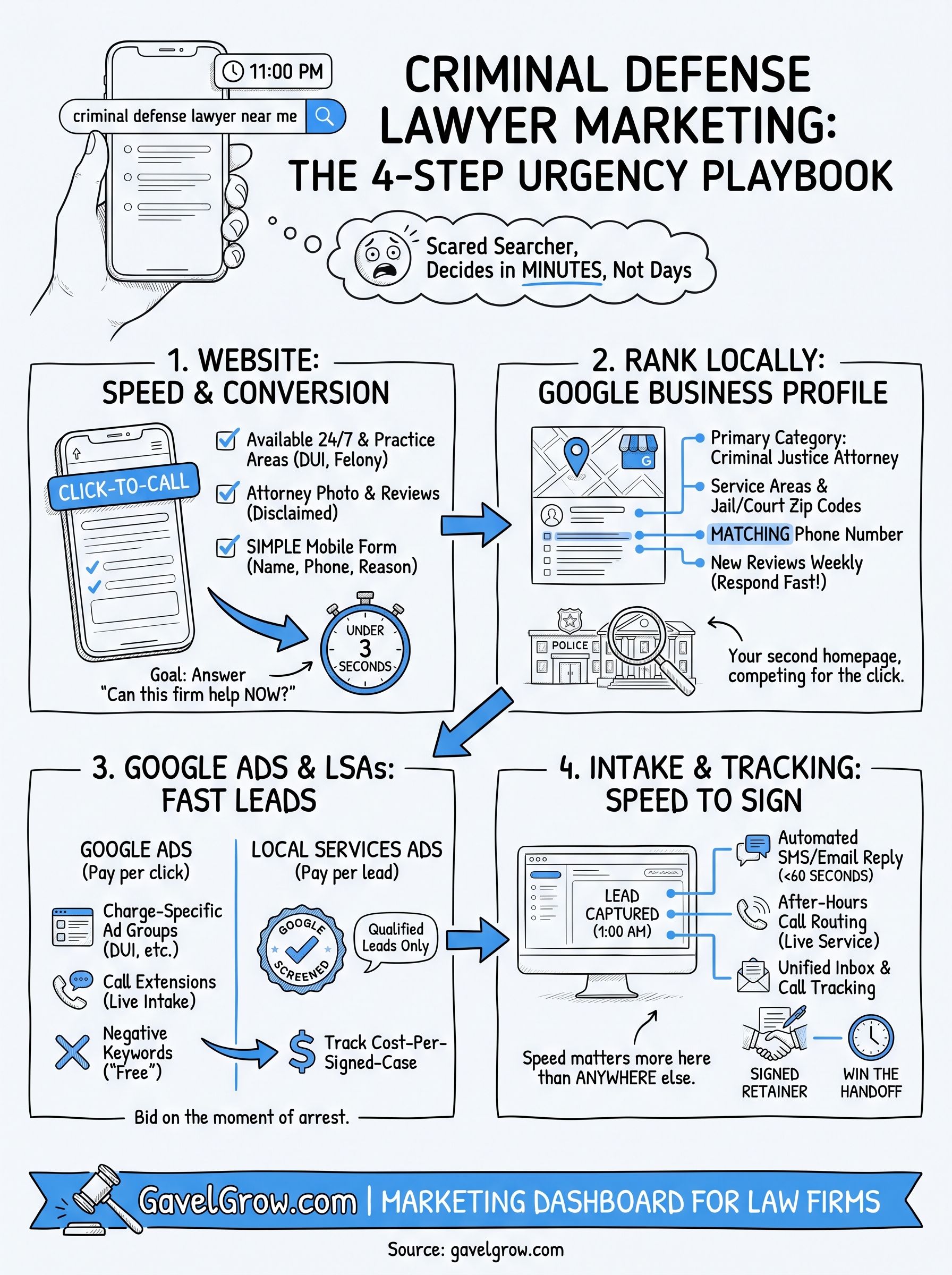
Firms that treat criminal defense like a long-consideration purchase end up building marketing funnels that don't match how clients actually behave. They spend on brand awareness content when they should be spending on being the fastest, most reachable option at 2am. The rest of this guide walks through the four moves that matter most given that reality: a website built for urgency, local visibility that shows up the moment someone searches, paid ads that generate leads fast, and an intake process fast enough to convert them before a competitor does. If you handle multiple practice areas beyond criminal defense, the same principles apply, but nowhere is the urgency higher than here.
Step 1. Build a website that converts scared searchers
Your website is the first thing a scared searcher judges you on, and it happens in under three seconds. Google's own research on mobile page speed shows bounce rates climb sharply as load time increases past 3 seconds, and a criminal defense visitor won't wait around to find out if you're any good. Every element on the page should answer one question fast: can this firm help me right now?
What needs to be above the fold
Don't bury your phone number in a footer or hide behind a "contact us" nav item, which is the first rule of high-converting law firm website design. Someone searching for criminal defense attorney marketing-driven terms like "lawyer for DUI arrest tonight" wants proof of availability before they read a single word of your bio.
- Click-to-call phone number in the header, visible without scrolling
- "Available 24/7" or your actual after-hours coverage, stated plainly
- Practice area clarity (DUI, felony, drug charges) so visitors know they're in the right place
- Attorney photo and years practicing, because a scared client wants a face, not a logo
- Recent case results or reviews, disclaimed appropriately per your state bar rules
A website that makes someone scroll to find your phone number has already lost the case.
Mobile-first forms beat long-form contact pages
Generic contact forms built for slower practice areas ask for case details, referral source, and a paragraph description before submitting, which is exactly wrong for a client typing one-handed from a parking lot or a jail visitation room. Keep the form to name, phone, and a one-line reason for contact, nothing more. Mobile conversion on generic contact forms tends to run far below desktop, and that gap is almost always a form-design problem, not a traffic problem.
Hosted and embeddable intake forms designed specifically for law firms close that gap. GavelGrow's mobile-first intake forms for law firms are multi-step, with invisible bot protection and carrier-level phone validation so you're not chasing fake numbers at 2am. Instant SMS and email auto-replies fire the moment someone submits, which matters more here than almost anywhere else, since a criminal defense lead who doesn't hear back in minutes is already dialing the next firm on the results page.
Step 2. Rank locally with SEO and Google Business Profile
Before anyone clicks a paid ad, most searchers scan the local map pack and organic results first, and criminal defense lawyer marketing that ignores how attorneys rank in the map pack leaves free visibility on the table. Ranking locally isn't about outranking every firm in the state, it's about owning the three-pack for your city and the surrounding jail, courthouse, and police-precinct zip codes where arrests actually happen.
Google Business Profile is your highest-leverage local asset
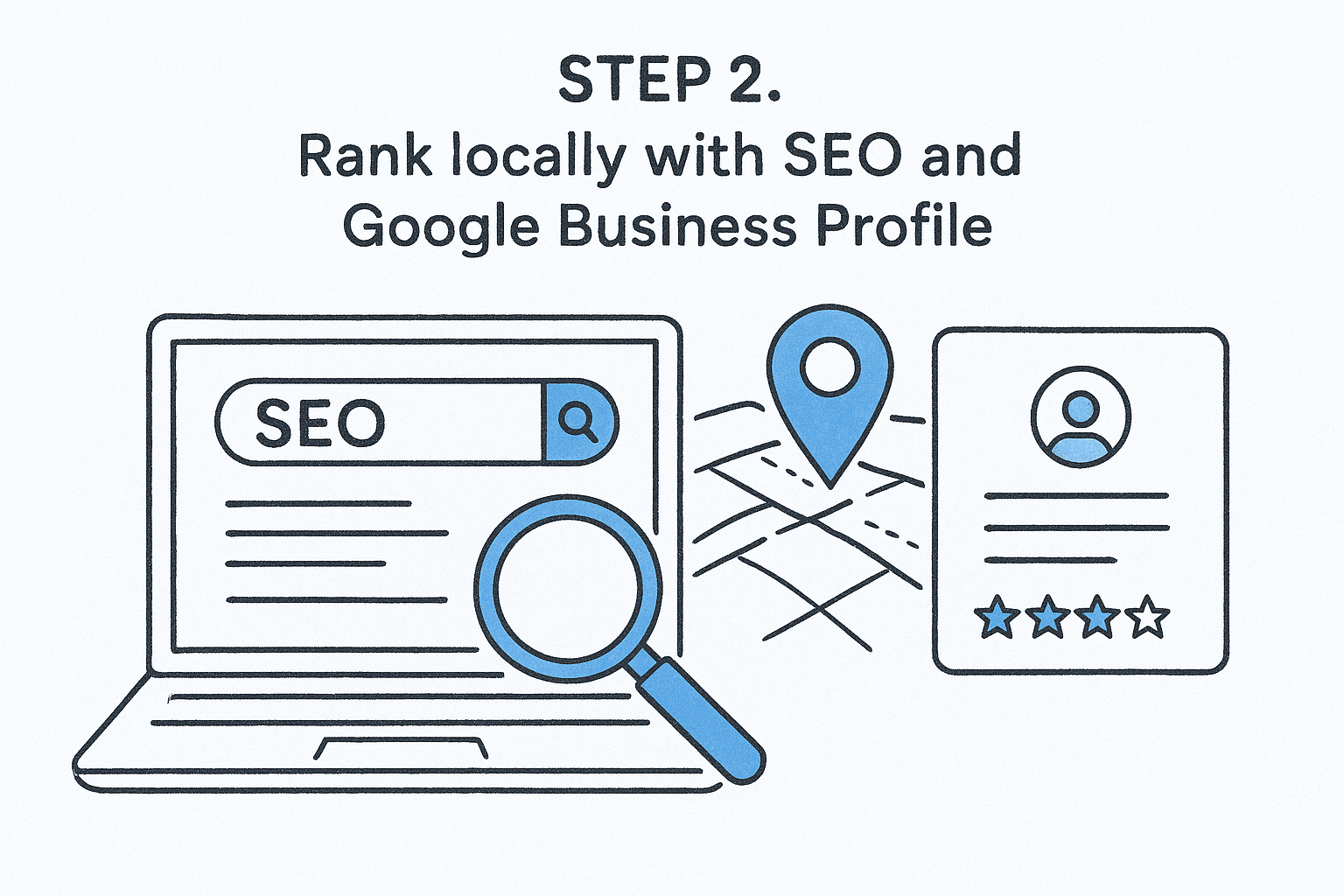
Your Google Business Profile (GBP) often ranks above your own website for "criminal defense lawyer [city]" searches, so treat it like a second homepage, not an afterthought you filled out once and forgot. A few things move the needle fast:
- Primary category set to "Criminal Justice Attorney" or the closest match, not a generic "Lawyer" category
- Service areas listed explicitly for every county or city you actually cover
- Phone number matching your website exactly, since mismatched numbers confuse Google's local algorithm
- New reviews weekly, since review recency correlates with map pack rankings more than total review count
- Photos of your office and attorneys, which build the trust a scared searcher needs before calling
Your Google Business Profile is competing for the click before your website even loads.
Respond to every review, good or bad, within a day or two. Google's guidance on managing Business Profiles notes that responding to reviews signals an active, trustworthy business, and for criminal defense that responsiveness matters as much for search ranking as it does for reputation.
Local SEO content that matches crisis search intent
Generic "About Our Firm" pages don't rank for the searches that actually convert. Someone typing marketing for criminal defense attorneys-adjacent queries like "arrested for DUI in [county] what to do" wants a practical, specific answer, not a bio. Build dedicated pages for each charge type (DUI, drug possession, domestic violence, assault) crossed with each city or county you serve, and answer the exact question in the first two sentences before going deeper.
Backlinks still carry weight too. Local bar association directories, county court resource pages, and bail bondsman referral pages are realistic, legitimate link sources for this practice area, unlike the generic guest-post networks that plague other industries. Combine that with consistent name, address, and phone (NAP) data across directories, and local rankings compound over months even while your paid campaigns handle the leads you need right now.
Step 3. Run Google Ads and Local Services Ads for fast leads
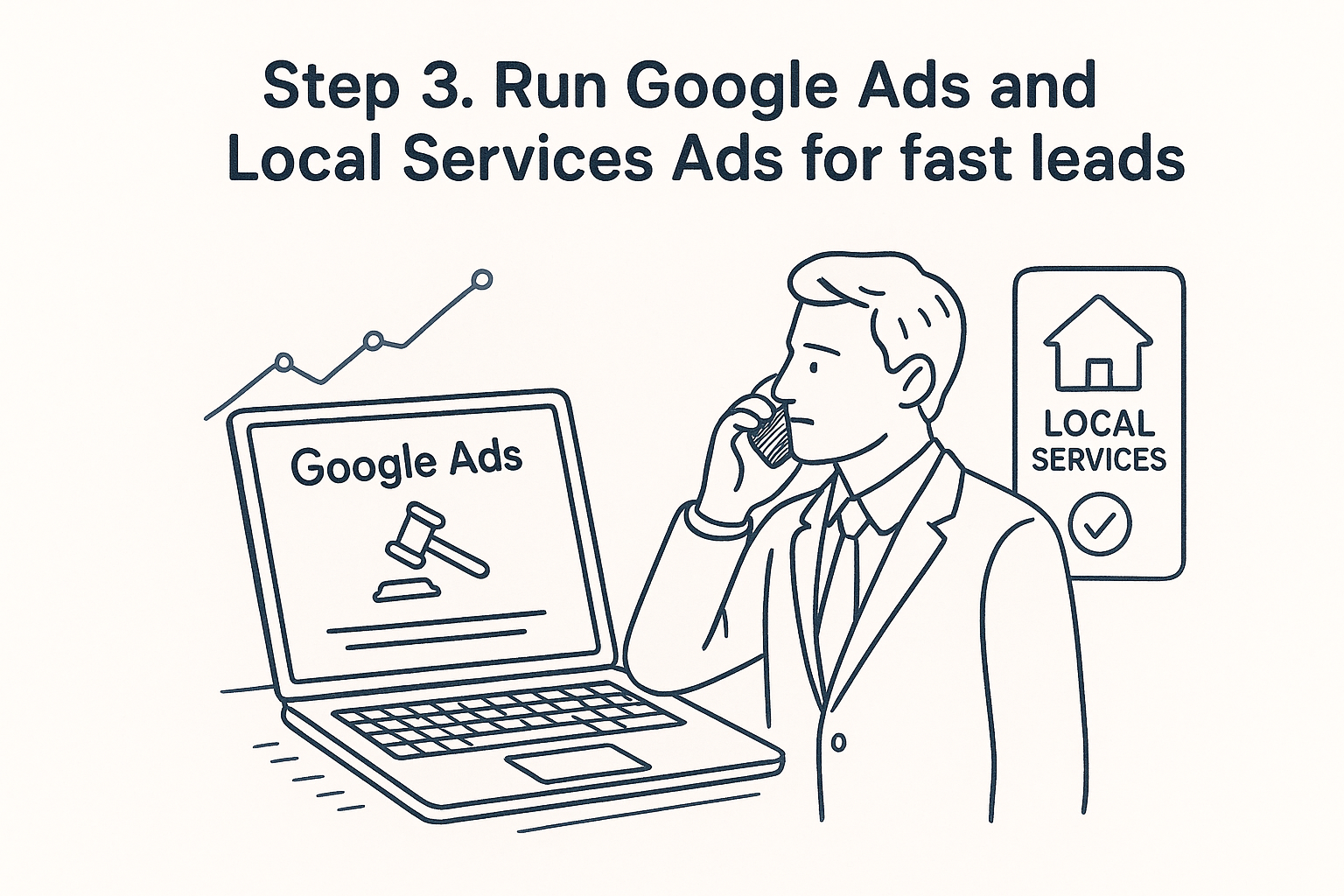
SEO takes months to compound, but a person arrested tonight can't wait for your rankings to climb. Paid search is where criminal defense lawyer marketing earns its money fastest, because you can put your firm in front of someone typing "DUI lawyer" or "assault charge attorney" within hours of launching a campaign. The tradeoff is cost. Criminal defense keywords run among the most expensive in legal, often $50 to $150+ per click in competitive metros, so every dollar needs to be tracked past the click or you're guessing.
Google Ads: bid on the moment of arrest
Structure campaigns around charge type and urgency, not generic "criminal lawyer" terms that pull in tire-kickers. Separate ad groups for DUI, drug possession, domestic violence, and felony charges each convert differently, and lumping them together wastes budget on searchers you can't help. A few things that actually move cost-per-signed-case in this practice area:
- Dayparting toward evenings and weekends, since arrests spike Friday and Saturday nights
- Call extensions with your real intake line, not a tracking number that changes weekly
- Negative keywords for "free" and "public defender" to cut spend on searchers who won't pay
- Landing pages matched to the exact charge, never your generic homepage
Ranking a criminal defense ad well means nothing if the click lands on a page that doesn't say "call now."
Local Services Ads: pay only for qualified leads
Local Services Ads (LSAs) sit above regular Google Ads results with a "Google Screened" badge, and they charge per qualified lead rather than per click, which suits a practice area where accidental clicks are common. Google's Local Services Ads guidelines require a background check and license verification, a bar you're already clearing as a licensed attorney.
Run both simultaneously and route every lead through GavelGrow's daily Google Ads sync so spend, campaigns, and conversions line up against signed cases instead of raw click counts, letting you cut the ad groups burning budget without producing retainers.
Step 4. Speed up intake and track leads to signed cases
Every dollar spent on ads and SEO gets wasted if intake can't keep up once the phone rings or the form submits. Criminal defense lawyer marketing succeeds or fails at this exact handoff, the moment between a click and a human response, and most firms lose leads here without ever knowing it happened. A missed call at 1am or a form submission that sits unanswered until Monday morning isn't a small leak, it's the difference between a signed retainer and a competitor's case file.
Respond within minutes, not hours
Speed-to-lead isn't a nice-to-have in this practice area, it's the entire game. Set up automated intake sequences that fire the second a lead comes in, and staff someone (or an answering service) to pick up calls around the clock, since a criminal defense searcher rarely waits until business hours to get arrested.
- SMS and email auto-reply within 60 seconds of form submission, confirming you received it and someone is calling shortly
- After-hours call routing to a live answering service or on-call attorney, never straight to voicemail
- CTIA opt-out handling (STOP/HELP keywords) built in automatically, so you stay compliant while texting leads
- Unified inbox so no lead's SMS, email, and voicemail thread gets missed across three different tools
The firm that answers first usually signs the case, regardless of who's the better lawyer.
GavelGrow's intake automation fires SMS and email sequences within 60 seconds of lead capture and handles opt-out keywords without manual work, which matters when a paralegal can't monitor five inboxes at 2am on a Saturday.
Track every lead to a signed case, not just a phone call
Counting calls and form fills tells you almost nothing about which ads actually produce clients. You need attribution that follows a lead from the ad click through the signed retainer, otherwise you're optimizing for volume instead of revenue. Built-in call tracking with per-campaign tracking numbers, recordings, and outcome tagging (qualified, callback, unqualified, spam) shows you which keywords and ad groups produce real cases versus wrong numbers and spam calls that inflate your lead count without adding a single client.
Case management tied to that same attribution chain closes the loop. GavelGrow's marketing dashboard connects originating campaign to signed retainer automatically, replacing the CallRail-plus-spreadsheet setup most firms cobble together, so your cost-per-signed-case number reflects reality instead of a guess based on total calls received.
Keeping your case pipeline full
Criminal defense marketing rewards firms that treat speed as a strategy, not an afterthought. Getting a scared searcher to click is only half the job. Winning the case means answering fast, texting back faster, and knowing exactly which campaign paid for that signed retainer. Nail the four steps in this guide, a website built for urgency, local visibility where arrests happen, paid ads tracked past the click, and intake that never sleeps, and you'll out-convert firms still relying on voicemail and guesswork.
Most firms don't lose cases because their lawyers are worse. They lose because a competitor answered the phone thirty seconds sooner or texted back before they did. Fixing that isn't complicated, it just requires the right systems running in the background.
If you want to see exactly where your intake, tracking, and response times are leaking cases, book a free 45-minute criminal defense marketing strategy call and we'll walk through it together.
Frequently Asked Questions
What is the best way to market a criminal defense law firm?
There is no single channel, but the winning mix reflects how criminal clients search: in a panic, on a phone, ready to hire in minutes. That means a fast, mobile-first website that reassures a scared searcher, strong local SEO and a complete Google Business Profile so you appear for "[city] criminal defense lawyer," and Google Search or Local Services Ads to capture urgent intent, all backed by intake that responds within minutes. Speed and local visibility matter more here than brand-building campaigns.
How fast should a criminal defense firm respond to a new lead?
As close to immediately as possible. Criminal matters are urgent, and prospects are usually calling several firms at once. Widely cited lead-response research found that reaching a new lead within five minutes makes you far more likely to qualify it than waiting even half an hour. An instant text or call the moment a lead comes in, day or night, is often the difference between signing the case and losing it to whoever answered first.
Do criminal defense lawyers need Google Ads, or is local SEO enough?
Most competitive firms use both. Google Search and Local Services Ads capture urgent, ready-to-hire intent immediately, which fits a practice area where someone needs a lawyer today, not next month. Local SEO and your Google Business Profile compound over time and keep generating calls after the ad budget stops. Ads buy speed; SEO builds an asset, and criminal defense keywords are expensive enough that tracking each to signed cases matters more than the channel choice itself.
How do you stay compliant with bar rules when marketing a criminal defense firm?
Follow your state bar’s advertising rules closely, since criminal defense advertising draws scrutiny. In general, you cannot guarantee outcomes or imply a specific result, testimonials and case results need required disclaimers, and some states restrict direct solicitation of recently arrested individuals. Keep records of what you ran and the consent behind any lead you text or call, and when in doubt, use a compliant disclaimer rather than a bold claim.
How much does criminal defense marketing cost?
It varies widely by market and channel. Criminal defense keywords are among the more expensive in legal search, so paid ads can run a meaningful monthly budget, while local SEO costs mostly time or an agency retainer. Rather than compare monthly spend, judge it by cost per signed case: a smaller budget tracked to retained clients usually beats a larger one spread across channels you cannot attribute.
How do you know if your criminal defense marketing is actually producing clients?
Track past calls and form fills to cost per signed case by channel, not just cost per lead. Criminal leads skew heavily toward phone calls, and counting calls tells you nothing about which ad produced a paying client versus a wrong number. Connect every lead, including calls, back to the campaign that produced it and follow it through intake to a signed retainer, which is the only way to tell which channels fill your caseload and which just inflate your lead count.
Frequently Asked Questions
What is the best way to market a criminal defense law firm?
There is no single channel, but the winning mix reflects how criminal clients search: in a panic, on a phone, ready to hire in minutes. That means a fast, mobile-first website that reassures a scared searcher, strong local SEO and a complete Google Business Profile so you appear for "[city] criminal defense lawyer," and Google Search or Local Services Ads to capture urgent intent, all backed by intake that responds within minutes. Speed and local visibility matter more here than brand-building campaigns.
How fast should a criminal defense firm respond to a new lead?
As close to immediately as possible. Criminal matters are urgent, and prospects are usually calling several firms at once. Widely cited lead-response research found that reaching a new lead within five minutes makes you far more likely to qualify it than waiting even half an hour. An instant text or call the moment a lead comes in, day or night, is often the difference between signing the case and losing it to whoever answered first.
Do criminal defense lawyers need Google Ads, or is local SEO enough?
Most competitive firms use both. Google Search and Local Services Ads capture urgent, ready-to-hire intent immediately, which fits a practice area where someone needs a lawyer today, not next month. Local SEO and your Google Business Profile compound over time and keep generating calls after the ad budget stops. Ads buy speed; SEO builds an asset, and criminal defense keywords are expensive enough that tracking each to signed cases matters more than the channel choice itself.
How do you stay compliant with bar rules when marketing a criminal defense firm?
Follow your state bar’s advertising rules closely, since criminal defense advertising draws scrutiny. In general, you cannot guarantee outcomes or imply a specific result, testimonials and case results need required disclaimers, and some states restrict direct solicitation of recently arrested individuals. Keep records of what you ran and the consent behind any lead you text or call, and when in doubt, use a compliant disclaimer rather than a bold claim.
How much does criminal defense marketing cost?
It varies widely by market and channel. Criminal defense keywords are among the more expensive in legal search, so paid ads can run a meaningful monthly budget, while local SEO costs mostly time or an agency retainer. Rather than compare monthly spend, judge it by cost per signed case: a smaller budget tracked to retained clients usually beats a larger one spread across channels you cannot attribute.
How do you know if your criminal defense marketing is actually producing clients?
Track past calls and form fills to cost per signed case by channel, not just cost per lead. Criminal leads skew heavily toward phone calls, and counting calls tells you nothing about which ad produced a paying client versus a wrong number. Connect every lead, including calls, back to the campaign that produced it and follow it through intake to a signed retainer, which is the only way to tell which channels fill your caseload and which just inflate your lead count.