Do Law Firms Need SEO? Yes, and Here's Why It Pays Off
Categories: Legal Marketing Strategies
 Abram Ninoyan
Founder & Senior Performance Marketer
Credentials: Google Partner, Google Ads Search Certified, Google Ads Display Certified, Google Ads Measurement Certified, Google Analytics (IQ) Certified, HubSpot Inbound Certified, HubSpot Social Media Marketing Certified, Conversion Optimization Certified
Expertise: Google Ads, Meta Ads, Conversion Rate Optimization, GA4 & Google Tag Manager, Lead Generation, Marketing Funnel Optimization, PPC Management
LinkedIn Profile
Do law firms need SEO? Yes — a 2024 iLawyerMarketing survey found 92% of consumers would use Google to research which firm to hire, so organic visibility is essential.
Key Takeaways
- Do Law Firms Need SEO? Yes, and Here's Why It Pays Off
- Why do law firms need SEO to win more clients?
- How do law firms build an SEO strategy that works?
- How long until SEO pays off for a law firm?
Do Law Firms Need SEO? Yes, and Here's Why It Pays Off
Yes. Do law firms need SEO? If you want consistent, lower-cost cases instead of a constant scramble for the next Google Ads click, the answer is a firm yes. A 2024 iLawyerMarketing survey of 1,050 consumers found that 92% would use Google to research which firm to hire, and organic results still capture more clicks than paid ads on most legal search terms. Skip SEO and you're ceding that traffic to competitors who show up first.
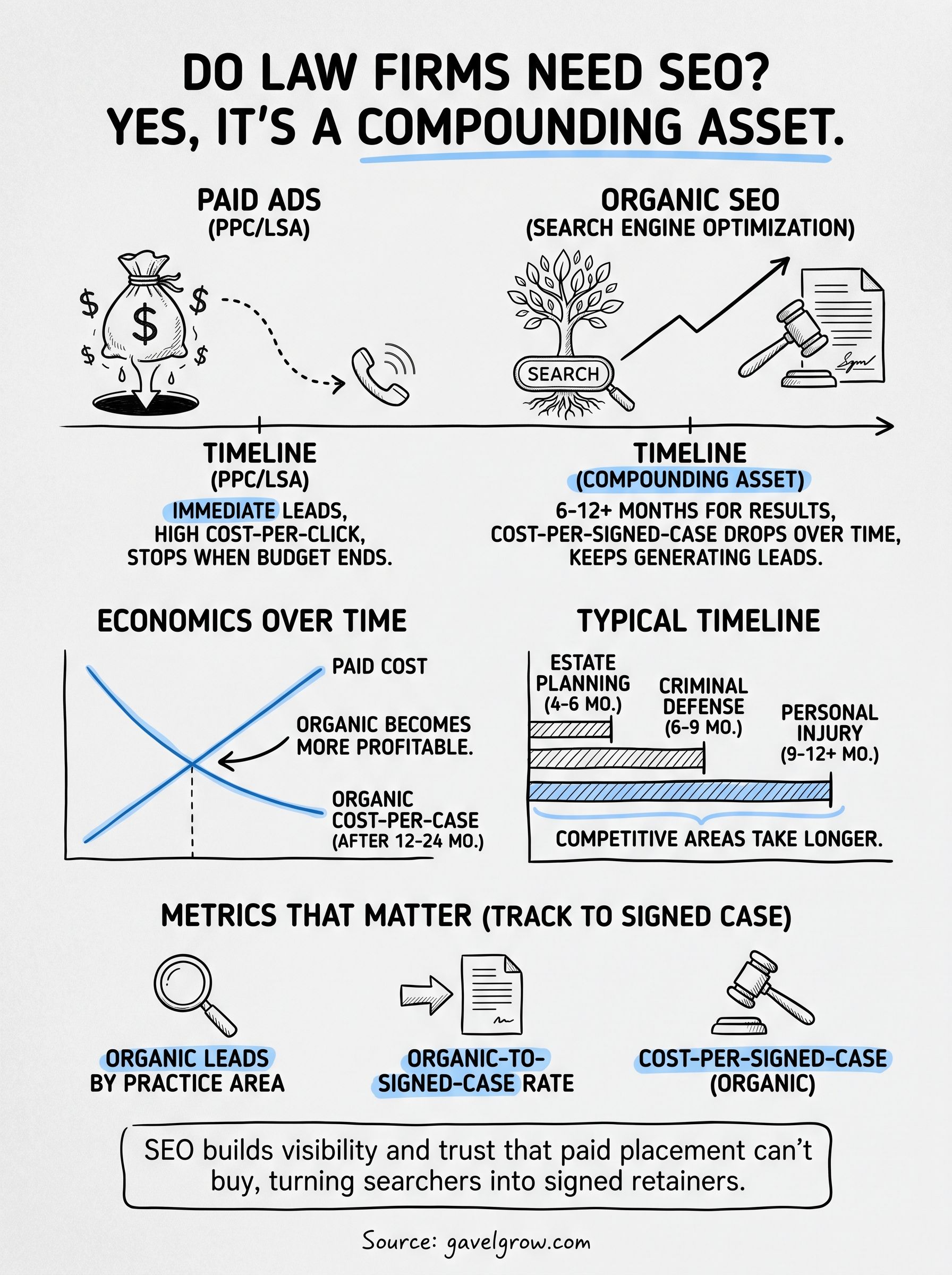
The short version: SEO builds a compounding asset that keeps generating leads long after you stop actively paying for them, unlike ads that vanish the moment your budget does. It costs more upfront in time and patience, usually 6 to 12 months before you see meaningful ranking movement, but the cost-per-signed-case typically drops well below what paid channels deliver once you're established.
This article breaks down exactly what SEO does for law firms, how it compares to Google Ads and Local Services Ads, what a realistic timeline and budget look like by practice area, and how to tell if your firm is actually ready to invest. We'll also cover how tracking tools inside platforms like GavelGrow's marketing dashboard help you prove which channel, organic or paid, is actually signing clients.
Why do law firms need SEO to win more clients?
Legal advertising runs on visibility, and visibility runs on search. When someone types "car accident lawyer near me" or "criminal defense attorney [city]" into Google, they're not browsing, they're ready to hire. Google's own guidance on how people search for local services confirms legal queries sit among the highest-intent categories on the platform, meaning the person clicking that organic result is often signing a retainer within days, not weeks. That's the core reason do law firms need SEO keeps showing up as a top question among marketing directors: the traffic is already searching for you, and SEO decides whether they find you or the firm down the street.
The economics of organic vs. paid traffic
Paid clicks for competitive practice areas like personal injury and mass torts routinely run $50 to $150 per click, based on 2024 industry benchmarks pulled from Google Ads' own keyword planner data for legal terms. That cost compounds every month you run campaigns, and it disappears the second you pause spending. Organic rankings behave differently: once a page holds a page-one spot, it keeps pulling in clicks without a per-click charge, which is why firms that invest early in SEO usually see their cost-per-signed-case fall well below paid channels within 18 to 24 months.
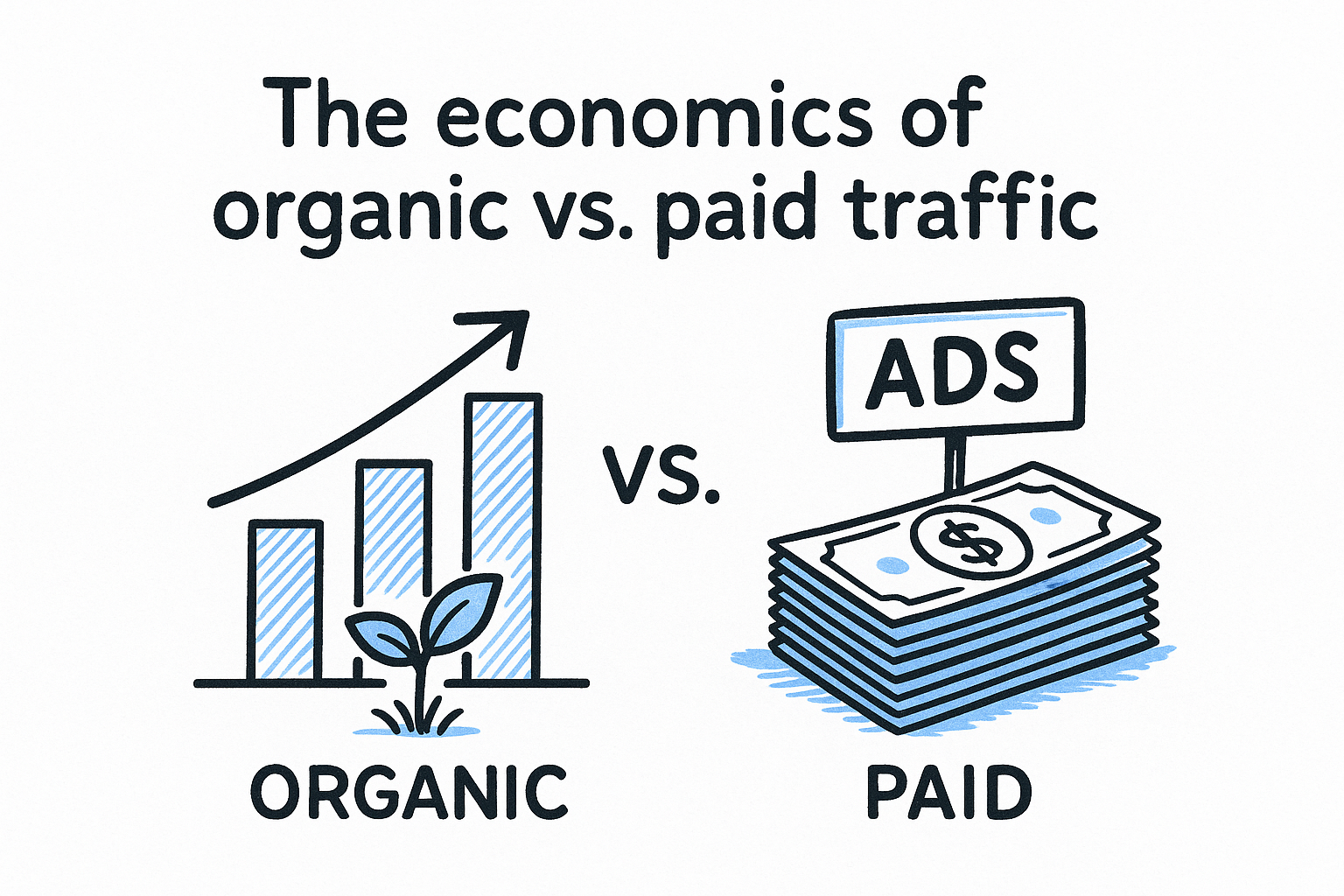
A dollar spent on SEO today keeps working for years; a dollar spent on ads stops working the moment you stop paying.
What you lose by skipping it entirely
Firms that skip SEO don't just lose clicks, they lose a trust advantage that paid placement can't buy. Searchers know firms pay to appear in ads but have to earn organic listings, and that distinction matters more in legal than almost any other vertical, since someone researching a divorce or a car accident is already anxious and looking for signals of credibility, not just visibility. Skip organic entirely and you're relying on your ad budget to do all the trust-building work, every single month, forever.
The competitive reality in legal markets
Competitors filling page one for your practice area and city are capturing the leads you're not converting, full stop. If three other injury firms in your market outrank you for "personal injury lawyer [city]," you're paying premium PPC rates just to compete for scraps while they collect free organic traffic day after day. The table below shows how the three main acquisition channels typically stack up for a mid-size firm running local campaigns:
Signs your firm needs SEO right now
If you recognize your firm in more than one of these, SEO isn't optional anymore, it's overdue:
- Your cost-per-lead from ads has climbed for three straight quarters
- Competitors outrank you for your city plus your main practice area
- Nearly all your intake budget goes to ads, with zero organic backup
- Your website content hasn't changed in over two years
- You can't say what your organic conversion rate even is
Why full-funnel tracking matters here
None of this matters if you can't prove which channel actually closes cases. A firm ranking well organically but tracking only raw lead counts will underestimate SEO's real value, since organic leads often convert at higher rates but take longer to close than a paid click does. This is exactly the gap GavelGrow's marketing dashboard is built to close: it ties every lead back to its originating channel, whether that's an organic click, a Google Ads campaign, or a referral, all the way through to a signed case, so you're comparing cost-per-signed-case across channels instead of comparing lead counts that behave completely differently.
How do law firms build an SEO strategy that works?
Building SEO that actually converts starts with practice-area and location targeting, not generic keyword stuffing. A personal injury firm in Dallas needs a completely different keyword map than a family law solo practitioner in a mid-size suburb, and treating them the same way is why so many law firm SEO campaigns underperform. Google's SEO Starter Guide makes the same point for any business: relevance to a specific searcher beats broad coverage every time, and legal search is about as specific as it gets.
Start with local and practice-area keyword research
Map your keywords around the intersection of practice area, city, and intent, then build content that answers the exact question behind each search. "Car accident lawyer Houston" and "what to do after a car accident in Texas" pull completely different searchers at completely different points in their decision, and your site needs pages for both. Keyword research grounded in real search volume, not guesswork, keeps you from wasting months writing content nobody searches for.
Fix technical SEO and Google Business Profile basics
Before you write another blog post, confirm the technical foundation is solid. A slow site, broken mobile layout, or unclaimed Google Business Profile undercuts even the best content, and Google has said directly that page experience factors into ranking. Run through this checklist:
- Claim and fully complete your Google Business Profile, including practice areas, hours, and photos
- Confirm your site loads in under 3 seconds on mobile
- Fix duplicate or missing title tags and meta descriptions on every practice-area page
- Make sure every location you serve has its own dedicated landing page, not one generic "service areas" list
- Verify your NAP (name, address, phone) matches exactly across your site, GBP, and directories
Build content that demonstrates real legal experience
Content that ranks and converts does more than repeat keywords, it demonstrates that a real attorney with real experience wrote it. Google's own guidance on helpful content rewards pages that show first-hand expertise, so case results, attorney bios with bar admission details, and plain-language explanations of local court procedures outperform recycled legal boilerplate every time. Content depth matters less than content specificity: a page walking through exactly how a slip-and-fall claim works under your state's comparative negligence rule will beat a generic "personal injury FAQ" nearly every time.
SEO content that sounds like it came from a real attorney in your market will always outrank content that sounds like it came from nowhere.
Earn links and reviews that signal trust
Backlinks from local news, bar association directories, and legal aid organizations still carry real weight, and so do a steady flow of fresh, detailed client reviews. Firms that treat review generation as part of their SEO strategy, not an afterthought, tend to see faster movement in local map rankings, since review volume and recency both factor into how Google ranks local business results.
Track the strategy against real business outcomes
None of this works without measurement. Tie every ranking gain back to actual leads and signed cases using a tool like GavelGrow's platform, which connects organic traffic to your intake pipeline so you know whether your SEO strategy is producing cases, not just clicks.
How long until SEO pays off for a law firm?
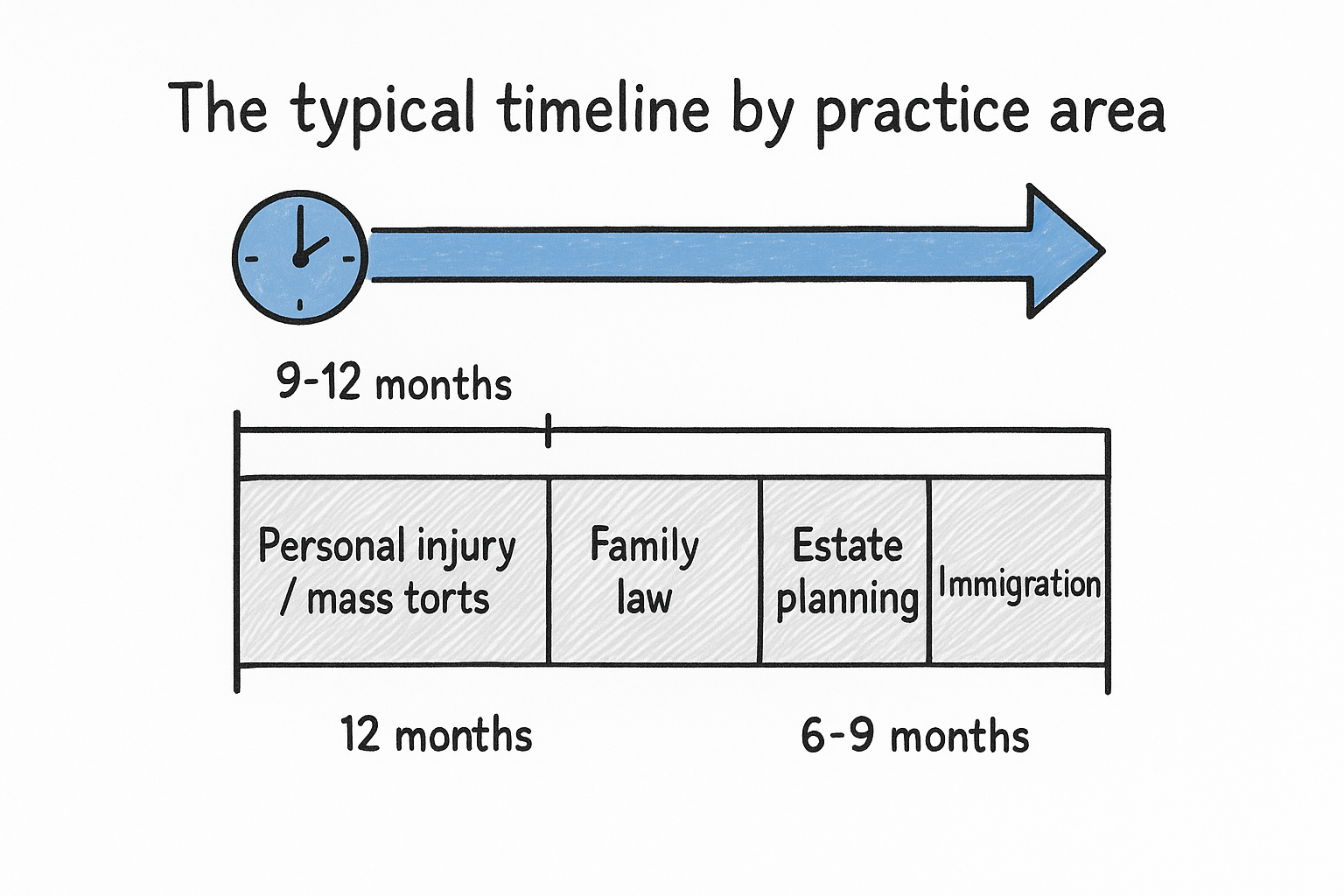
Most law firms start seeing measurable ranking movement between 4 and 6 months, but the real payoff, a steady stream of signed cases from organic traffic, usually takes 9 to 12 months. That timeline isn't arbitrary. Google's own Search Central documentation notes that ranking changes for new or improved content can take weeks to reflect fully in search results, and legal keywords carry extra competition that slows things further. SEO timelines vary by practice area and by how much authority your domain already has, but almost no firm sees case volume from organic search in the first 60 days.
The typical timeline by practice area
High-competition practice areas take longer to move because dozens of firms are fighting for the same handful of page-one spots. Lower-competition areas, especially in smaller markets, can see faster wins simply because fewer firms are actively optimizing.
Why competitive practice areas take longer
Personal injury and mass tort firms compete against national brands with decade-long content libraries and thousands of backlinks, so catching up takes sustained, consistent publishing rather than a short campaign. Estate planning and other lower-competition practice areas often see quicker movement because fewer firms have invested seriously in SEO for those terms, leaving more openings on page one. Judging your timeline against a personal injury benchmark when you practice estate planning will make your progress look slower than it actually is.
What happens in the first 90 days
Don't expect case volume in this window. Instead, watch for these early signals that your strategy is working:
- Indexed pages increasing in Google Search Console
- Impressions rising for target keywords, even before rankings improve
- Google Business Profile views and calls trending upward
- Technical fixes (site speed, mobile layout) reflected in Core Web Vitals reports
- New backlinks appearing from directories and local press
When SEO overtakes paid ads in ROI
Most firms cross the break-even point, where cumulative organic case value exceeds cumulative SEO spend, somewhere between month 12 and month 18. Paid ads generate leads faster, but the cost stays flat or climbs; organic leads start slow and then compound, which is why the crossover point matters more than the starting speed.
SEO rarely wins the first quarter, but it almost always wins the second year.
Firms that track this properly, using something like GavelGrow's cost-per-signed-case reporting, can pinpoint the exact month organic overtakes paid, instead of guessing based on lead counts alone. Without that visibility, it's easy to abandon SEO right before it starts paying off.
Should your firm handle SEO in-house or outsource it?
The honest answer depends on your firm's size, existing marketing bandwidth, and how fast you need results. Solo practitioners and small firms with one marketing coordinator wearing five hats usually struggle to keep pace with legal SEO's demands, since it requires consistent publishing, technical monitoring, and link building all running at once. Larger firms with dedicated marketing staff can handle pieces of it internally, but even they often outsource the technical and link-building work while keeping content creation in-house, since attorneys writing about their own cases still produce the most credible pages.
What in-house SEO actually requires
Running SEO internally means someone on your team owns keyword research, content calendars, technical audits, and review generation, month after month, not as a side project squeezed between client work. In-house SEO works best when you already have a marketing hire who understands your practice areas and can commit real hours weekly, not just when something breaks. Firms that try to run SEO as an afterthought, handled by whoever has spare time that week, almost always see it stall within a quarter.
What outsourcing actually buys you
Outsourcing to an agency or a managed-services provider buys you specialized expertise across technical SEO, content strategy, and link building that would take years to build internally, plus someone whose full-time job is watching algorithm updates and competitor movement. The tradeoff is cost and, in some cases, a loss of direct control over messaging, which matters in a field where compliance language has to be exact. Outsourced SEO through a managed-services arrangement, like GavelGrow's fully-managed marketing services, can also include market exclusivity on managed engagements: GavelGrow does not run marketing for two direct competitors in the same market.
A quick framework for deciding
Use this checklist to figure out which path fits your firm right now:
- Choose in-house if you have a marketing hire with 15+ hours a week free and genuine SEO experience
- Choose in-house if your practice area is low-competition and your market is small
- Choose outsourcing if you're competing against national mass-tort or personal injury brands
- Choose outsourcing if nobody on staff has run a technical SEO audit before
- Choose a hybrid model if you want attorneys writing content while a managed service handles technical work and link building
The firms that struggle most with SEO are the ones that never actually decide, they just let it drift between whoever has spare time.
Where the self-serve platform fits either way
Whichever path you pick, you still need to prove SEO is producing cases, not just traffic, and that's where a dedicated marketing dashboard earns its cost. Firms running SEO in-house use GavelGrow's platform to see exactly which organic pages generate leads that turn into signed retainers, while firms outsourcing to an agency use the same dashboard to hold that agency accountable for case volume instead of vanity ranking reports. Either way, the tooling matters as much as who's doing the actual optimization work.
Which SEO metrics actually prove it's working?
Most firms track the wrong numbers, and that's why so many managing partners quietly wonder whether SEO is actually worth the spend. Rankings and raw traffic feel like progress, but neither one tells you if a searcher became a client. The metrics that matter connect organic activity all the way to a signed retainer, which is the only number that actually answers whether law firms need SEO in the first place.
Vanity metrics vs. metrics that matter
Separating the two isn't complicated once you see them side by side. The table below shows what firms typically watch versus what they should be watching instead:

The metrics that actually tie to revenue
Once you shift focus, five numbers deserve a permanent spot on your monthly report. Organic leads by practice area tells you which content is actually pulling in intake, not just traffic. Organic-to-signed-case conversion rate shows whether those leads turn into paying clients or stall in your pipeline. Cost-per-signed-case for organic lets you compare SEO directly against paid channels using the same yardstick. Google Business Profile calls and direction requests capture the local intent that a lot of standard analytics setups miss entirely. And branded search volume, meaning how often people search your firm's name directly, signals growing trust that compounds alongside your rankings.
If a metric can't be traced to a signed case, it's a distraction dressed up as progress.
How to track these without guessing
Getting this right requires tying your Google Search Console and Google Analytics data to your actual case management records, which most firms never do because it means manually cross-referencing spreadsheets every month. Skipping that step is exactly why firms underestimate SEO's value: leads that came from an organic blog post six months ago get credited to "direct traffic" or nothing at all by the time they close. Google's own Search Console documentation can tell you which queries and pages drive clicks, but it stops at the click, not the retainer.
Running this analysis by hand every month isn't realistic for most marketing directors, and that gap is exactly what GavelGrow's marketing dashboard closes. It tags every lead by originating channel and follows it through your case pipeline to a signed retainer, so cost-per-signed-case for organic sits right next to the same number for Google Ads and Local Services Ads. Firms comparing benchmarks in GavelGrow's modelled practice-area benchmarks can also see whether their organic conversion rate is actually competitive for their practice area and market size, instead of guessing based on gut feel.
Where SEO fits in your firm's growth plan
So, do law firms need SEO? Yes, but it works best as one piece of a bigger acquisition strategy, not a replacement for every other channel. Organic search builds the compounding asset that keeps signing cases years after you've stopped actively paying for that specific piece of content, while paid ads and referrals fill the gaps SEO can't close on day one. Treat SEO as infrastructure, not a campaign with a start and end date, and budget the 6 to 12 months it needs before expecting real case volume.
The firms that get this right track everything back to cost-per-signed-case, not rankings or raw traffic, so they know exactly where every dollar is working. If you want a clear picture of where your firm stands right now, book a free 45-minute strategy call and walk through your numbers with someone who's done this for 500+ law firms.
Frequently Asked Questions
Do law firms really need SEO?
Yes, if you want a steady flow of cases instead of depending entirely on paid ads. The large majority of people seeking legal help start with a search engine, and organic results capture clicks that never reach paid listings. SEO builds a compounding channel that lowers your cost per case over time — but only pays off when you track rankings through to signed matters.
Is SEO or Google Ads better for law firms?
They solve different problems. Google Ads buys immediate visibility but stops the moment you stop paying; SEO takes months to build but keeps producing cases at a declining cost. Most firms run ads for speed while building SEO for durable, lower-cost pipeline — and measure both by cost-per-signed-case, not clicks.
How long does SEO take to work for a law firm?
Most firms see early movement within 90 days and meaningful case flow in six to twelve months, depending on how competitive their practice area and market are. Crowded fields like personal injury in major metros take longer than niche or suburban practices. That timeline is why starting sooner beats waiting for a slow quarter.
How much does SEO cost for a law firm?
It varies widely by market competitiveness and scope — whether you cover one practice area in one city or several across a region. What matters more than the monthly figure is the return: track cost-per-signed-case so you can compare SEO against paid ads and referrals on equal footing, rather than judging it on traffic alone.
Should a law firm do SEO in-house or hire an agency?
In-house gives you control but demands real time and specialized skills across content, technical SEO, and link building; outsourcing buys that expertise and execution speed without hiring. Small firms with a marketing-minded partner can start in-house; firms that want faster results or lack the bandwidth usually get more from an agency — ideally one that reports on signed cases.
What SEO metrics actually matter for a law firm?
Skip vanity metrics like raw traffic and keyword counts, and focus on the ones tied to revenue: rankings for buyer-intent keywords, qualified leads from organic search, and cost-per-signed-case. Full-funnel tracking that connects a search to a consultation to a retainer is the only way to prove SEO is funding itself.
What happens if a law firm ignores SEO?
Competitors who invest in search capture the clients actively looking for your services, and you are left renting visibility through paid ads that disappear when the budget does. Over time that means a higher cost per case and a pipeline that is fragile whenever ad costs spike — the opposite of the durable channel SEO is meant to build.
Frequently Asked Questions
Do law firms really need SEO?
Yes, if you want a steady flow of cases instead of depending entirely on paid ads. The large majority of people seeking legal help start with a search engine, and organic results capture clicks that never reach paid listings. SEO builds a compounding channel that lowers your cost per case over time — but only pays off when you track rankings through to signed matters.
Is SEO or Google Ads better for law firms?
They solve different problems. Google Ads buys immediate visibility but stops the moment you stop paying; SEO takes months to build but keeps producing cases at a declining cost. Most firms run ads for speed while building SEO for durable, lower-cost pipeline — and measure both by cost-per-signed-case, not clicks.
How long does SEO take to work for a law firm?
Most firms see early movement within 90 days and meaningful case flow in six to twelve months, depending on how competitive their practice area and market are. Crowded fields like personal injury in major metros take longer than niche or suburban practices. That timeline is why starting sooner beats waiting for a slow quarter.
How much does SEO cost for a law firm?
It varies widely by market competitiveness and scope — whether you cover one practice area in one city or several across a region. What matters more than the monthly figure is the return: track cost-per-signed-case so you can compare SEO against paid ads and referrals on equal footing, rather than judging it on traffic alone.
Should a law firm do SEO in-house or hire an agency?
In-house gives you control but demands real time and specialized skills across content, technical SEO, and link building; outsourcing buys that expertise and execution speed without hiring. Small firms with a marketing-minded partner can start in-house; firms that want faster results or lack the bandwidth usually get more from an agency — ideally one that reports on signed cases.
What SEO metrics actually matter for a law firm?
Skip vanity metrics like raw traffic and keyword counts, and focus on the ones tied to revenue: rankings for buyer-intent keywords, qualified leads from organic search, and cost-per-signed-case. Full-funnel tracking that connects a search to a consultation to a retainer is the only way to prove SEO is funding itself.
What happens if a law firm ignores SEO?
Competitors who invest in search capture the clients actively looking for your services, and you are left renting visibility through paid ads that disappear when the budget does. Over time that means a higher cost per case and a pipeline that is fragile whenever ad costs spike — the opposite of the durable channel SEO is meant to build.