Email Marketing Funnel: What It Is and How to Build One
Categories: Legal Marketing Strategies
 Abram Ninoyan
Founder & Senior Performance Marketer
Credentials: Google Partner, Google Ads Search Certified, Google Ads Display Certified, Google Ads Measurement Certified, Google Analytics (IQ) Certified, HubSpot Inbound Certified, HubSpot Social Media Marketing Certified, Conversion Optimization Certified
Expertise: Google Ads, Meta Ads, Conversion Rate Optimization, GA4 & Google Tag Manager, Lead Generation, Marketing Funnel Optimization, PPC Management
LinkedIn Profile
A prospective client fills out your intake form, gets an automated "thanks, we'll be in touch" email, then never hears from you again until the next newsletter blast six months later. That g...
Key Takeaways
- Email Marketing Funnel: What It Is and How to Build One
- Why does an email marketing funnel matter for law firms?
- What are the stages of a law firm's email marketing funnel?
- How do you build an email marketing funnel step by step?
Email Marketing Funnel: What It Is and How to Build One
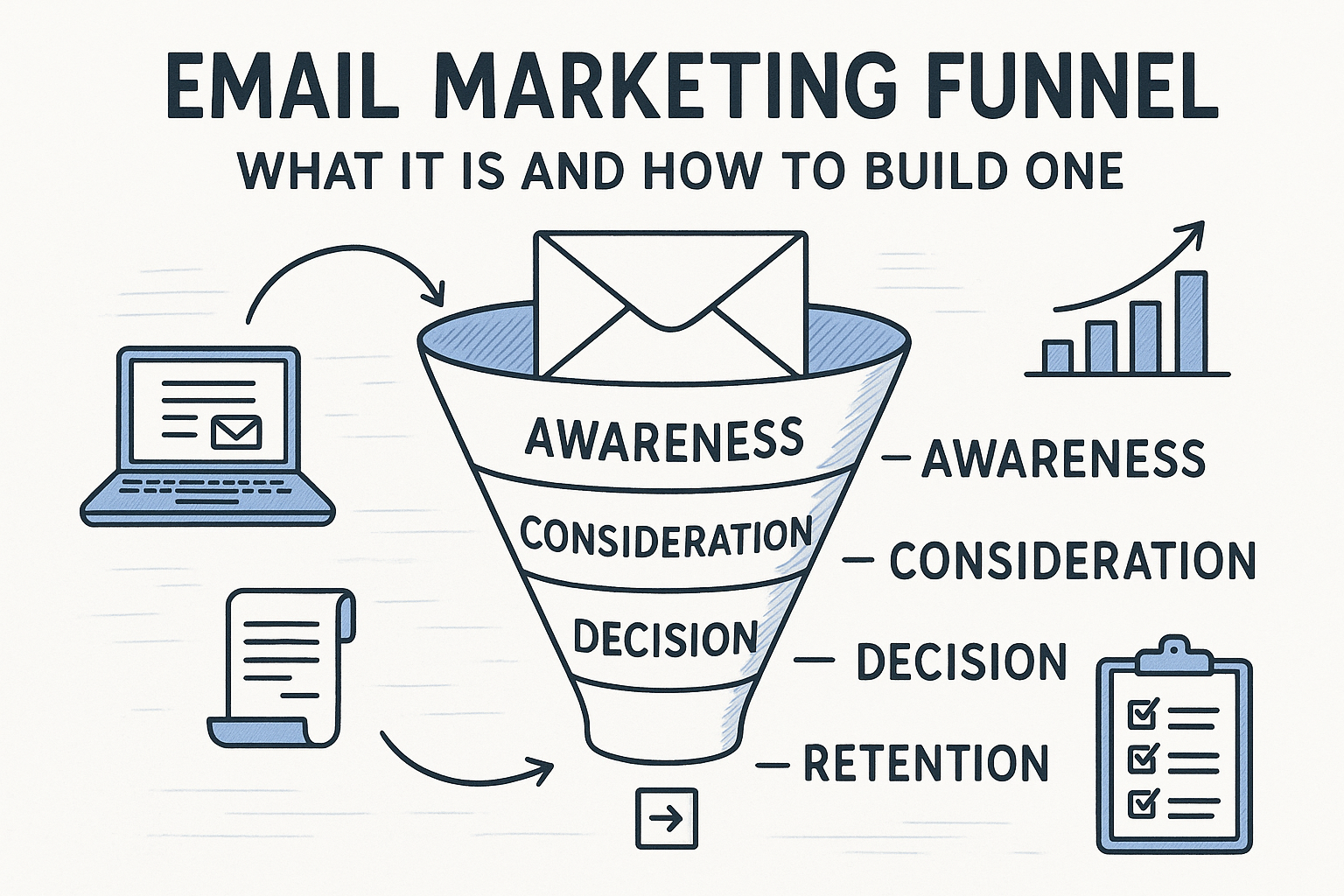
A prospective client fills out your intake form, gets an automated "thanks, we'll be in touch" email, then never hears from you again until the next newsletter blast six months later. That gap is where signed cases go to die. An email marketing funnel is the sequence of automated emails that moves a lead from first contact to signed retainer, built around where that person actually sits in their decision process rather than a one-size-fits-all blast list.
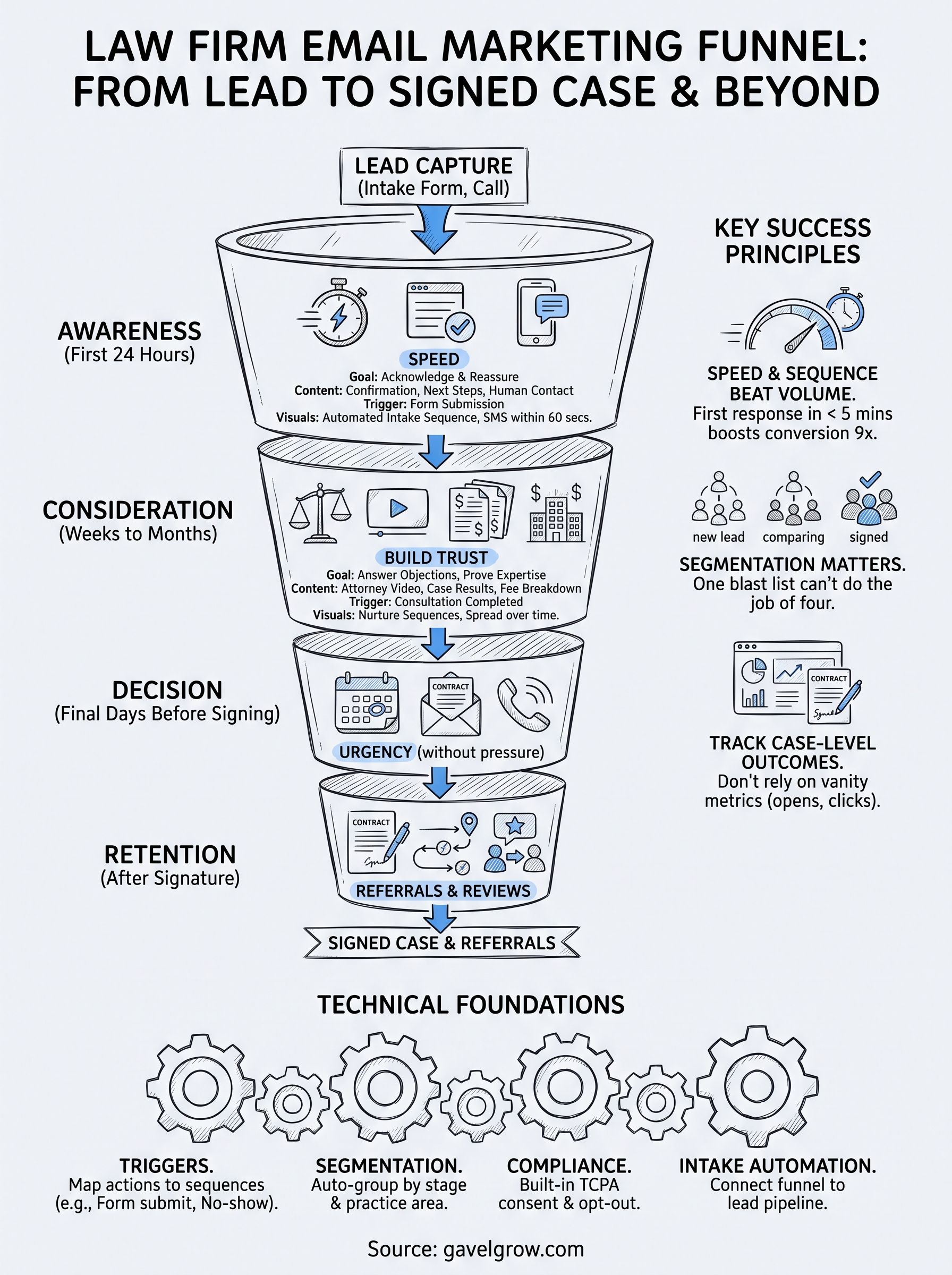
For law firms, the funnel does one job: it keeps your firm top of mind during the 6 to 12 month sales cycle that's normal in personal injury, family law, and estate planning cases, so prospects don't drift to a competitor who responds faster. A working funnel has distinct stages, awareness, consideration, decision, and retention, each with its own message, timing, and call to action.
This article breaks down what an email marketing funnel actually looks like for a law firm, walks through how to build each stage, and shows where automated sequences and intake timing matter most for turning leads into signed cases instead of dead inbox threads.
Why does an email marketing funnel matter for law firms?
Most law firms treat email as an afterthought, something the intake software fires off automatically and nobody looks at again. That's a mistake, because a prospect who just got rear-ended or is weighing a divorce doesn't decide who to hire in one sitting. They research for weeks, sometimes months, comparing your firm against two or three others they also contacted. An email marketing funnel keeps you in front of that person with the right message at the right moment, instead of leaving your firm's name to fade after the first phone call.
Speed and sequence beat volume
The research on lead response is blunt. Harvard Business Review's 2011 analysis of online sales leads found that firms that tried to contact a lead within an hour were nearly seven times as likely to qualify it as firms that tried even an hour later. The Lead Response Management Study found that leads contacted within five minutes were 21 times more likely to qualify than those first reached at 30 minutes. A funnel with automated speed-to-lead sequences solves the timing problem before a human ever has to think about it, firing a first email and text within seconds of form submission rather than whenever someone gets around to checking a shared inbox.
A prospect who hears from you in five minutes is worth many times more than one who waits thirty.
One blast list can't do the job of four
A newsletter sent to your entire contact list, current clients, cold leads, and closed cases alike, ignores the fact that each group needs a completely different message. A funnel fixes that by segmenting contacts based on where they actually sit in the decision process:
Sending the wrong message to the wrong segment doesn't just waste an email, it erodes trust right when a prospect is deciding whether your firm pays attention to detail.
The sales cycle is longer than most marketing plans assume
Personal injury cases often take 6 to 12 months to resolve, and family law or estate planning matters can stretch even longer before a prospect actually signs. During that window, competitors are running their own ads, and a prospect who liked your firm in March can forget your name by June if nothing shows up in their inbox in between. A funnel built for the long haul keeps sending relevant touchpoints, not just at intake but through the entire consideration window, so your firm is still the one they call when they finally decide to act.
It protects the marketing spend you're already making
Every dollar spent on Google Ads, Local Services Ads, or SEO is wasted the moment a captured lead goes cold from neglect. A funnel is the mechanism that converts that spend into signed cases rather than into a spreadsheet of dead leads. This is also where full-funnel attribution matters: GavelGrow's marketing dashboard ties each email touchpoint back to the original ad click and campaign, so you can see which funnel stage is actually producing signed retainers instead of guessing based on open rates. Firms running managed campaigns through GavelGrow's services get this attribution built in rather than bolted on through a separate tool.
Compliance risk goes up without a structured funnel
Ad hoc email blasts also create compliance exposure that a structured funnel avoids. State bar advertising rules and TCPA consent requirements apply to marketing emails and texts, and a funnel built with opt-out handling and consent logging baked in keeps you from accidentally emailing someone who never agreed to receive marketing communications. That protection matters more than it seems, since a compliance complaint can cost far more time and money than any single lead is worth.
What are the stages of a law firm's email marketing funnel?
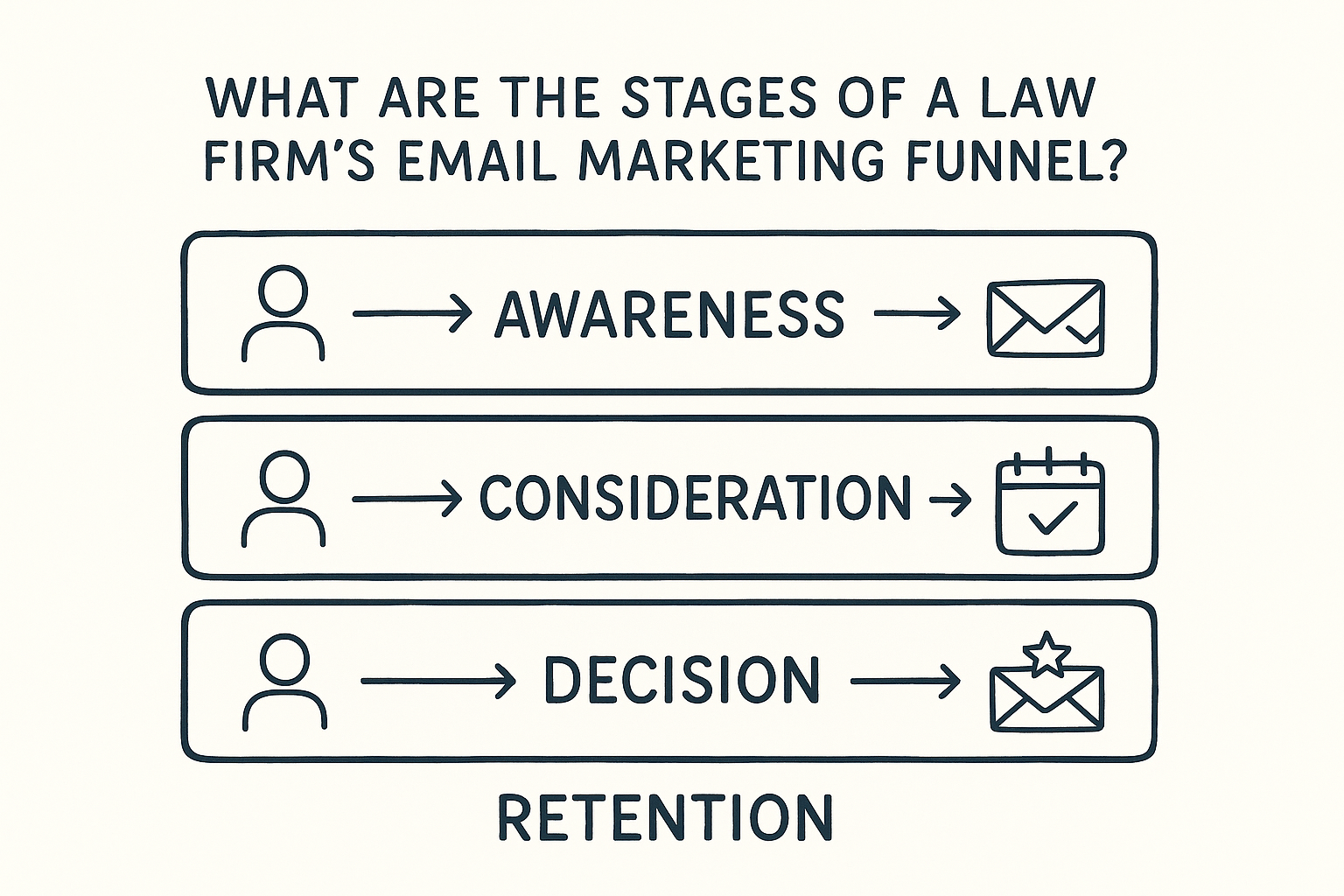
A law firm's email marketing funnel breaks into four distinct stages, each mapped to where a prospect actually sits in their decision process, not to how long they've been in your database. Skipping a stage, or worse, sending every contact the same generic sequence, is exactly what causes leads to go quiet mid-funnel. Here's how the stages break down and what each one needs to accomplish before a lead moves forward.
Awareness: the first 24 hours after contact
Awareness starts the moment someone fills out an intake form, calls your office, or requests a consultation. This person doesn't know yet whether they'll hire you, a competitor, or nobody at all, so the goal here is pure acknowledgment and reassurance: confirm you received their information, tell them what happens next, and give them a direct way to reach a human. Automated intake sequences that fire within 60 seconds of form submission, the kind built into GavelGrow's platform, belong here because speed is the entire point of this stage.
Consideration: weeks of quiet comparison shopping
Consideration covers the stretch where a prospect has spoken with your intake team or attorney but hasn't signed a retainer yet. They're comparing you against two or three other firms, reading reviews, and weighing cost and comfort level. Emails at this stage should answer objections directly, case results in similar matters, what the attorney-client relationship looks like, and how fees work, rather than pushing a hard sell.
A lead in consideration isn't stalling, they're comparing, and silence from your firm just makes the comparison easier for a competitor.
Decision: the push toward a signed retainer
Decision is the narrow window right before someone commits, and it needs urgency without pressure tactics that feel like a sales pitch. A short deadline reminder, a clear next step to schedule the signing, or a direct line to the attorney handling their case all belong here. Get this stage wrong and a warm lead cools off permanently.
Retention: after the signature, not after the case closes
Retention starts the day someone signs, not the day their case resolves, and it covers status updates, expectation-setting, and eventually review and referral requests once the matter closes. Firms that skip retention lose the highest-value output of a funnel: repeat referrals from clients who already trust them.
Overlap between stages is normal in a long sales cycle. A personal injury prospect might sit in consideration for three months, while a straightforward estate planning lead moves from awareness to decision in a week. Building the funnel around triggers and behavior, not a fixed calendar, is what keeps each stage doing its job regardless of how fast an individual case moves.
How do you build an email marketing funnel step by step?
Building a working funnel isn't about writing clever copy first. It's about setting up the plumbing, triggers, timing, and segmentation, so the right email fires automatically when a lead does something specific. Get the structure right and the content becomes the easy part.
Map your triggers before you write a single email
Start by listing every action a lead can take: submit an intake form, book a consultation, sign a retainer, miss a call, go silent for two weeks. Each of these becomes a trigger point that kicks off a specific sequence rather than dumping everyone into one generic drip. A firm running personal injury and family law under one roof needs separate trigger maps for each practice area, since a car accident lead and a divorce lead ask completely different questions before they sign.
If you can't name the trigger that fires an email, you don't have a funnel, you have a mailing list.
Segment your list by stage and practice area
Once triggers are mapped, group contacts into segments that match the funnel stages already covered, awareness, consideration, decision, and retention, and cross that with practice area whenever your firm handles more than one. This is where a purpose-built system beats a generic email tool, since segmentation needs to update automatically as a lead moves through your pipeline instead of requiring someone to manually drag contacts between lists every day.
Build the sequences in order
Work through the funnel in this order so nothing launches half-finished:
- Write the awareness sequence first, since it fires the moment a lead exists and has the biggest impact on conversion.
- Build the consideration sequence next, spacing emails across the weeks a prospect typically takes to decide.
- Add the decision sequence, keeping it short, three to five emails at most, so it doesn't feel like pressure.
- Finish with the retention sequence, covering status updates through the review and referral ask.
- Set exit conditions on every sequence, so a lead who signs stops receiving consideration emails.
Connect the funnel to intake automation
None of this works if the first email fires an hour after form submission instead of within seconds. Intake automation, the kind wired directly into your lead pipeline, is what fires the awareness email and the follow-up SMS the moment a form lands, without a staff member touching it. GavelGrow's platform handles this piece natively, firing sequences within 60 seconds and logging TCPA consent automatically, which matters as much for compliance as for speed.
Test the sequence on yourself before it goes live
Run a test lead through every sequence from your own inbox before turning it on for real prospects. Check that timing feels natural, links work, and the tone matches how your firm actually talks to clients. Sloppy testing is how firms end up sending a decision-stage urgency email to someone who already signed three weeks earlier, which reads as careless at exactly the wrong moment.
What should you send at each stage of the funnel?
Each stage of an email marketing funnel needs its own content, not a reworded version of the same pitch. Copying and pasting a template across all four stages is how firms end up sending a review request to someone who hasn't even had a consultation yet. Below is what actually belongs in each stage, plus a quick reference table you can use to audit your own sequences.
Awareness: confirmation, not sales copy
Send a confirmation email within seconds that states plainly what happens next: who will call, when, and how to reach a human if they can't wait. Follow it with a short SMS carrying the same message, since a text often gets read before the email does. Keep this stage free of case results, testimonials, or fee discussion. The prospect just needs to know someone is paying attention.
Consideration: proof over pressure
This stage runs longest, sometimes for months on a personal injury or family law matter, so the content needs to answer the objections a prospect is quietly weighing. Useful sends include a short video from the attorney explaining how the process works, a plain-language breakdown of fees, and one or two case results in similar matters. Avoid stacking discount offers or urgency language here; a prospect still comparing firms reads that as desperation, not confidence.
The consideration stage isn't the place to close, it's the place to earn trust one email at a time.
Decision: remove the last obstacle
Decision emails should be short and specific. A reminder that the retainer is ready to sign, a direct scheduling link for the signing appointment, and a line offering a quick call with the attorney cover most of what's needed. Three to five emails over one to two weeks is plenty; more than that starts to feel like a hard sell and can undo the trust built during consideration.
Retention: the stage most firms skip
Few firms build retention content at all, which is a mistake since this is where referrals and reviews come from. Send status updates as the case progresses, a plain explanation of what to expect at each milestone, and a review request once the matter closes. Add a referral ask a few weeks after that, once the client has had time to feel satisfied with the outcome.
All of this content only performs if the underlying delivery is reliable. Automated sequencing built directly into your intake and case pipeline, rather than a separate email tool bolted on afterward, is what keeps the right message firing at the right moment without a staff member remembering to hit send. GavelGrow's platform ties these sends to the same record that tracks intake, call outcomes, and case status, so the content and the timing stay in sync as a lead moves through the funnel.
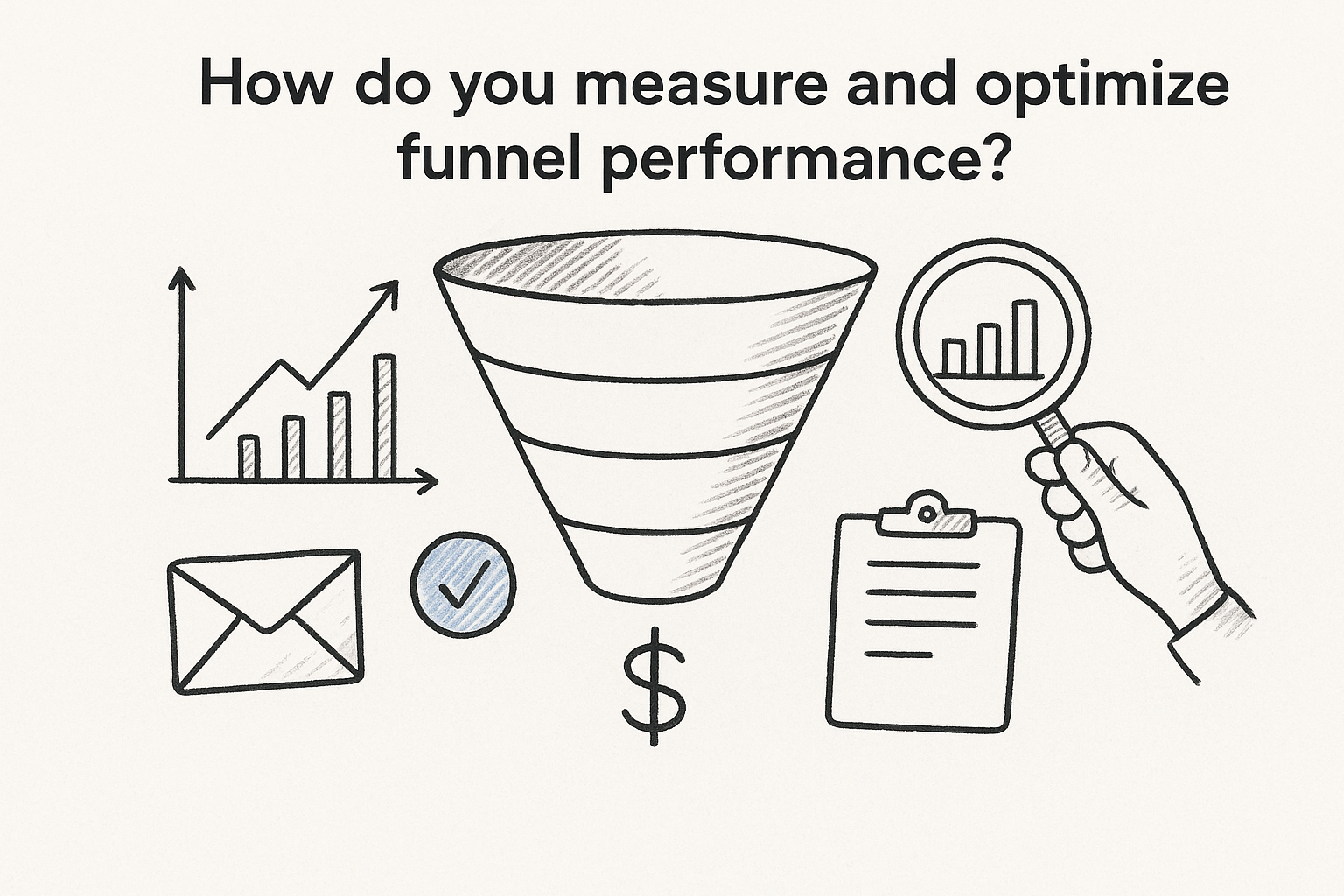
How do you measure and optimize funnel performance?
Most firms measure email performance the way a consumer brand would, open rates, click rates, unsubscribe counts. Those numbers tell you whether people are reading, not whether your email marketing funnel is producing signed cases. A 40% open rate on a consideration email means nothing if none of those prospects ever book a signing appointment. The metric that matters is cost-per-signed-case by funnel stage, which requires tying every email send back to the lead record that eventually becomes a client or doesn't.
Track case-level outcomes, not just opens and clicks
Open and click rates still have a place, they tell you whether subject lines and send times are working, but they're diagnostic tools, not success metrics. The real question is whether leads move from one funnel stage to the next after receiving a given sequence. Set up your reporting around stage-to-stage conversion:
An open rate tells you someone glanced at your email, a signed retainer tells you the funnel actually worked.
This kind of tracking only works if your platform connects the email touchpoint to the case outcome automatically. GavelGrow's marketing dashboard attributes each send back to the original lead and campaign, so you can see cost-per-signed-case by funnel stage instead of estimating it from a spreadsheet built by hand.
Compare against benchmarks, not gut feeling
A 15% consultation-booking rate out of consideration-stage emails might sound low, or it might be well above average for family law leads in your market. Without a benchmark, you're guessing. GavelGrow's platform compares your funnel's conversion rate, cost-per-lead, and close rate against modelled ranges for your practice area and market size. Firms working with the managed services team get the same comparison built into their monthly reporting rather than having to request it separately.
Run one change at a time
Optimization fails when firms change five things at once, subject line, send time, and offer, then can't tell which change moved the needle. Adjust one variable per test: the subject line on the third awareness email, the send time on the first consideration email, the call to action on the final decision email. Give each test enough volume to mean something, generally a few dozen leads per variant for a firm running steady intake volume, before drawing a conclusion.
Watch the intake pipeline for warning signs
Beyond formal testing, watch your lead pipeline for stalled contacts, leads sitting in consideration for months with no engagement, or decision-stage leads who went quiet after the retainer was sent. Those stalls point to a specific email or timing gap worth fixing rather than a funnel-wide problem. A pipeline view that flags last-activity aging on every lead, built into GavelGrow's platform, makes these stalls visible before they turn into dead leads instead of after.
What mistakes commonly break a law firm's email funnel?
Most broken funnels don't fail because the copy is bad, they fail because of structural mistakes that undo everything the copy is trying to do. Here are the mistakes that show up most often when auditing a law firm's email marketing funnel, along with what to fix instead.
Treating every lead like it's in the same stage
Sending a review request to someone who hasn't even had a consultation yet, or a hard sell to a client who signed last month, tells the prospect nobody is actually paying attention. This happens when a firm runs one drip campaign off a single list instead of segmenting by stage and practice area. Fixing it requires the segmentation setup covered earlier, not better subject lines.
Letting the first email lag behind the phone call
A funnel that fires its first email an hour after form submission has already lost ground, since a competitor's automated system likely responded in under a minute. Speed-to-lead is the single biggest lever in the whole funnel, and a delay here undoes every other optimization downstream.
A perfectly written consideration sequence can't fix a lead who went cold waiting for the first reply.
Never setting exit conditions
Sequences that keep running after a lead signs, settles, or asks to stop hearing from the firm create real damage beyond annoyance. A signed client getting a "schedule your consultation" reminder looks careless, and a prospect who opted out but keeps receiving texts creates a TCPA compliance problem, not just a bad impression.
Ignoring compliance until a complaint arrives
Firms that build funnels around a generic email tool often don't have consent logging or opt-out handling built in, which leaves a gap that only shows up after a bar complaint or TCPA claim lands on the desk. State bar advertising rules and federal consent requirements apply to every automated send, not just the first one. A funnel with an append-only consent audit log and automatic opt-out handling, the kind built into GavelGrow's platform, closes this gap at the source instead of relying on someone remembering to check a list.
Measuring the wrong thing and never finding out
A firm that only tracks open rates has no way to know a funnel stopped converting leads into signed cases months ago. Without stage-to-stage tracking tied to case outcomes, a broken decision sequence can run for a year before anyone notices the consultation-to-signature rate quietly dropped. This is the same measurement gap covered in the previous section, and it's often the root cause behind every other mistake on this list going unnoticed for so long.
Frequently asked questions
How many emails should a law firm's email marketing funnel include?
Most effective funnels run 12 to 20 emails total across all four stages: 2 to 3 in awareness, 6 to 10 in consideration since that stage stretches longest, 3 to 5 in decision, and an open-ended retention sequence tied to case milestones. A personal injury funnel typically needs more consideration emails than an estate planning funnel, since the sales cycle runs longer and prospects compare more firms. Don't chase a specific number; build enough emails to answer every objection a prospect raises before signing, then stop.
How long should the consideration stage last before I stop nurturing a lead?
Keep nurturing as long as the lead is realistically still deciding, which for personal injury and family law often means 3 to 6 months. Set your consideration sequence to space emails weekly at first, then every two to three weeks after month two, so the lead doesn't feel bombarded while your firm stays visible. If a lead goes fully silent, meaning no opens or replies for 60 days, move them into a lighter re-engagement track rather than dropping them entirely or continuing the same cadence indefinitely.
A funnel that gives up on a lead after 30 days is giving up before most personal injury prospects have even finished comparing firms.
Can I run an email funnel through my existing CRM instead of a dedicated platform?
You can, but a general-purpose CRM like a generic email marketing tool doesn't handle TCPA consent logging, CTIA opt-out keywords, or case-status-triggered exit conditions out of the box, which means someone on your team has to build and maintain that compliance layer manually. GavelGrow's platform was built for exactly this gap, since it ties sequences directly to intake, call outcomes, and case status so exit conditions fire automatically instead of requiring manual list management.
What's the difference between an email funnel and a monthly newsletter?
A newsletter is a single message sent to everyone on a list at the same time, regardless of where they sit in the decision process. An email marketing funnel sends different content to different segments based on triggers, a form submission, a completed consultation, a signed retainer, rather than a calendar date. Newsletters have a place for staying visible with past clients, but they can't replace the stage-specific sequencing a funnel provides for active leads.
How much does it cost to build a proper email marketing funnel?
Costs vary by approach. A self-serve platform runs $199 to $599 a month depending on firm size, which typically covers the intake automation, segmentation, and sequencing tools needed to build the funnel yourself. Fully managed setups, where a team builds and maintains the funnel for you, are quoted per firm and include ongoing optimization. Check GavelGrow's pricing page for a breakdown of what's included at each tier before committing to either path.
Turning your funnel into signed cases
An email marketing funnel only earns its keep when it's judged by signed retainers, not open rates. The structure matters more than clever copy: fast acknowledgment in awareness, patient proof in consideration, gentle urgency in decision, and genuine care in retention. Skip a stage, or measure the wrong metric, and leads drift to whichever firm responded faster.
Getting there requires plumbing you can trust: triggers that fire automatically, segmentation that updates itself, and compliance baked in rather than bolted on after a complaint. Most firms don't have that plumbing today, which is exactly why leads go quiet between the intake form and the retainer signature.
If you're still stitching together separate tools for intake, call tracking, and sequencing, that gap is worth closing before your next campaign launches. Book a free strategy call and walk through your current funnel with someone who's built them for over 500 law firms.
Frequently Asked Questions
How many emails should a law firm's email marketing funnel include?
Most effective funnels run 12 to 20 emails total across all four stages: 2 to 3 in awareness, 6 to 10 in consideration since that stage stretches longest, 3 to 5 in decision, and an open-ended retention sequence tied to case milestones. A personal injury funnel typically needs more consideration emails than an estate planning funnel, since the sales cycle runs longer and prospects compare more firms. Don't chase a specific number; build enough emails to answer every objection a prospect raises before signing, then stop.
How long should the consideration stage last before I stop nurturing a lead?
Keep nurturing as long as the lead is realistically still deciding, which for personal injury and family law often means 3 to 6 months. Set your consideration sequence to space emails weekly at first, then every two to three weeks after month two, so the lead doesn't feel bombarded while your firm stays visible. If a lead goes fully silent, meaning no opens or replies for 60 days, move them into a lighter re-engagement track rather than dropping them entirely or continuing the same cadence indefinitely. A funnel that gives up on a lead after 30 days is giving up before most personal injury prospects have even finished comparing firms.
Can I run an email funnel through my existing CRM instead of a dedicated platform?
You can, but a general-purpose CRM like a generic email marketing tool doesn't handle TCPA consent logging , CTIA opt-out keywords, or case-status-triggered exit conditions out of the box, which means someone on your team has to build and maintain that compliance layer manually. GavelGrow's platform was built for exactly this gap, since it ties sequences directly to intake, call outcomes, and case status so exit conditions fire automatically instead of requiring manual list management.
What's the difference between an email funnel and a monthly newsletter?
A newsletter is a single message sent to everyone on a list at the same time, regardless of where they sit in the decision process. An email marketing funnel sends different content to different segments based on triggers , a form submission, a completed consultation, a signed retainer, rather than a calendar date. Newsletters have a place for staying visible with past clients, but they can't replace the stage-specific sequencing a funnel provides for active leads.
How much does it cost to build a proper email marketing funnel?
Costs vary by approach. A self-serve platform runs $199 to $599 a month depending on firm size, which typically covers the intake automation, segmentation, and sequencing tools needed to build the funnel yourself. Fully managed setups, where a team builds and maintains the funnel for you, are quoted per firm and include ongoing optimization. Check GavelGrow's pricing page for a breakdown of what's included at each tier before committing to either path.