Law Firm PPC: 8 Strategies to Attract More Clients
Categories: Legal Marketing Strategies
 Abram Ninoyan
Founder & Senior Performance Marketer
Credentials: Google Partner, Google Ads Search Certified, Google Ads Display Certified, Google Ads Measurement Certified, Google Analytics (IQ) Certified, HubSpot Inbound Certified, HubSpot Social Media Marketing Certified, Conversion Optimization Certified
Expertise: Google Ads, Meta Ads, Conversion Rate Optimization, GA4 & Google Tag Manager, Lead Generation, Marketing Funnel Optimization, PPC Management
LinkedIn Profile
Google Ads for lawyers isn't cheap. Personal injury keywords routinely run $80 to $150 per click in major markets, and if your intake process leaks leads, you're burning budget on cases that never sig...
Key Takeaways
- Law Firm PPC: 8 Strategies to Attract More Clients in 2026
- 1. Track cost per signed case, not just clicks
- 2. Target high-intent, long-tail keywords
- 3. Add Local Services Ads to your mix
Law Firm PPC: 8 Strategies to Attract More Clients in 2026
Google Ads for lawyers isn't cheap. Personal injury keywords routinely run $80 to $150 per click in major markets, and if your intake process leaks leads, you're burning budget on cases that never sign. Law firm PPC only works when the strategy behind it accounts for legal's long sales cycle, strict ad policies, and the reality that a click means nothing until it becomes a signed retainer.
If you're searching for how to actually make paid search profitable, the answer isn't just "bid higher" or "write better ad copy." It's a combination of tight campaign structure, fast lead response, and measurement that tracks dollars through to signed cases, not just cost-per-lead. Firms that treat PPC as a full-funnel system, from the ad click to the retainer, consistently outperform firms optimizing clicks in isolation.
Below are eight strategies pulled from what's working for law firms running paid search in 2026, covering campaign structure, call tracking, intake speed, landing pages, and the compliance issues that trip up firms in regulated practice areas. Whether you're managing campaigns in-house on GavelGrow's marketing dashboard or evaluating a managed-services partner, these tactics apply directly to reducing your cost-per-signed-case.
1. Track cost per signed case, not just clicks
How it works
Cost per signed case is the total marketing spend for a campaign divided by the number of cases that actually got signed, not just the leads that filled out a form. Most law firms running law firm PPC campaigns still report on cost-per-click or cost-per-lead in Google Ads, which tells you how cheaply you're generating form fills but says nothing about whether those leads turned into retainers. To calculate cost per signed case, you need attribution that follows a lead from the originating ad click through intake, through attorney review, to a signed engagement letter. That requires connecting your ad platform data to your case management data, which most firms currently do through a patchwork of spreadsheets and manual tagging.
Why it works
Switching the metric changes which campaigns you fund. A personal injury campaign with a $220 cost-per-lead might look expensive next to a $90 cost-per-lead campaign, but if the $220 campaign converts 1 in 4 leads into signed cases and the cheap campaign converts 1 in 20, the expensive campaign is actually cheaper per case. Full-funnel attribution exposes this gap immediately, while lead-only reporting hides it entirely. Firms that only watch cost-per-lead routinely overfund campaigns that generate volume without generating revenue.
If you can't tie an ad click to a signed retainer, you're guessing, not measuring.
How to get started
Start by auditing what your current reporting actually shows. If your dashboard stops at "lead generated," you're missing the half of the funnel that determines profitability.
- Tag every campaign with a UTM structure that survives into your intake form and case record
- Connect your case management system to your ad data so signed cases map back to the originating campaign
- Calculate cost per signed case monthly, by practice area and by campaign, not just in aggregate
- Compare against peer benchmarks where available, since a $600 cost-per-signed-case might be excellent in mass torts and poor in a smaller family law market
GavelGrow's marketing dashboard was built around this exact gap. It syncs directly with Google Ads and tracks each lead from click to signed retainer, so campaign-level cost-per-signed-case shows up automatically instead of requiring a spreadsheet reconciliation every month. If you're currently stitching together CallRail, a CRM, and a reporting tool to get a partial answer, that's the workflow this replaces. Firms evaluating whether their current stack can do this should check the full breakdown on the GavelGrow platform page.
2. Target high-intent, long-tail keywords
How it works
Long-tail keywords are specific, multi-word search phrases like "car accident lawyer no fault Texas" instead of just "car accident lawyer." These phrases have lower search volume than broad terms, but they carry far more buying intent because the searcher has already narrowed down what they need. In law firm PPC, this means building keyword lists around specific injury types, case circumstances, locations, and even procedural questions ("how much does a DUI lawyer cost in Ohio") rather than competing head-on for generic two-word terms that every firm in your market is already bidding on.
Why it works
Broad terms like "personal injury lawyer" attract browsers, researchers, and competitors clicking to see your ad copy. Long-tail terms attract people close to hiring. A searcher typing "truck accident lawyer for jackknife crash" has usually already decided they need representation and is comparing specific options. Google's own keyword planning guidance confirms that more specific search terms typically convert at higher rates precisely because they match narrower intent (source: Google Ads Help). For law firms paying $80 to $150 per click on competitive terms, shifting spend toward long-tail phrases often cuts cost-per-lead while raising the percentage of leads worth pursuing.
The searcher typing a longer, weirder phrase into Google is almost always closer to hiring you than the one typing two generic words.
How to get started
Build your long-tail list from real client language, not guesswork.
- Pull search terms reports from existing campaigns to find long-tail phrases already converting
- Mine your intake calls for the exact wording clients use to describe their situation
- Layer in location and case-type modifiers (city, injury type, statute-specific phrasing)
- Set these as separate ad groups so you can control bids and ad copy independently from broad-match campaigns
GavelGrow's lead pipeline tags each lead with the originating campaign, so you can see which long-tail keywords are actually producing signed cases, not just cheap clicks.
3. Add Local Services Ads to your mix
How it works
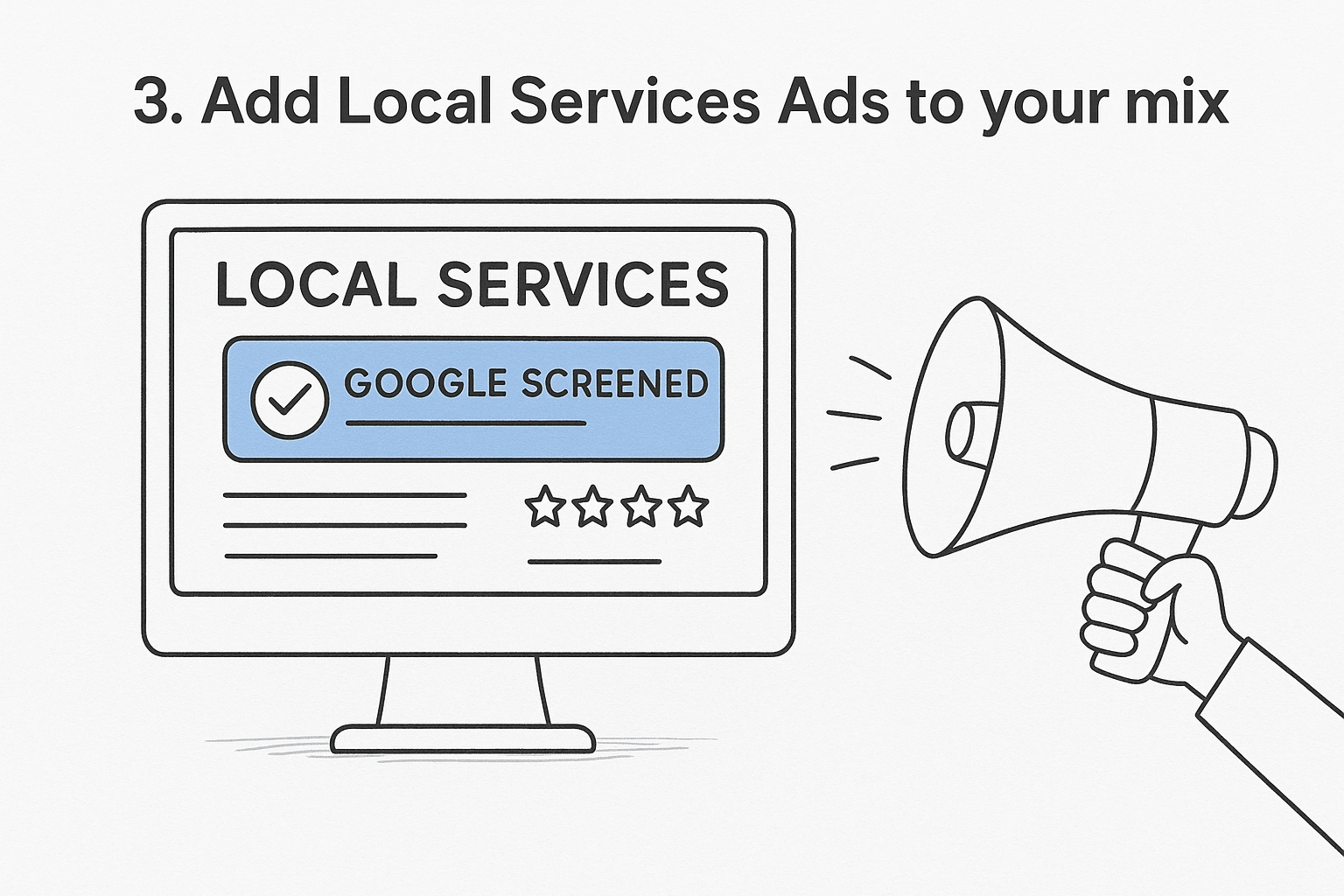
Local Services Ads (LSA) appear above regular Google Ads results with a "Google Screened" badge, your average rating, and years in business. Instead of paying per click, you pay per lead when someone calls or messages through the ad. Google verifies your bar license, insurance, and background before approving you, which is a heavier setup lift than standard law firm PPC campaigns but pays off in trust signals your competitors' text ads can't match. You set a weekly budget, and Google's algorithm decides which searches trigger your listing based on your profile completeness, reviews, and responsiveness.
Why it works
LSA listings sit at the very top of the results page, above the traditional ad slots you're already bidding on. That placement, combined with the badge and star rating, pulls clicks from searchers who specifically want a vetted, local option rather than whoever wrote the most clever headline. Google's own program guidance confirms leads only get billed when they meet your defined service criteria, and disputed leads can be credited back (source: Google LSA Help). For solo and small firms competing against larger PPC budgets, LSAs offer a way to win visibility without out-bidding a firm spending 10 times your daily budget.
Local Services Ads let a two-attorney firm outrank a regional player without ever entering a bidding war.
How to get started
Running LSAs alongside standard search campaigns means managing two separate lead sources with different cost models.
- Complete Google's screening process, including license verification and background checks for every attorney listed
- Actively collect Google reviews, since rating volume and recency directly affect how often you're shown
- Set a realistic weekly budget separate from your search campaign spend
- Dispute unqualified leads promptly, since spam calls and wrong-practice-area leads are billable unless flagged
Route LSA calls through the same call tracking numbers you use elsewhere so miss-rate and outcome tagging stay consistent across every channel feeding your pipeline.
4. Write ad copy that clears bar compliance
How it works
Bar advertising rules vary by state, but most share common restrictions: no guarantees of results, no comparisons claiming you're "the best" without substantiation, and mandatory disclaimers in certain practice areas like mass torts. Law firm PPC copy has to work within Google's character limits while still avoiding language that triggers a bar complaint or an ad disapproval. That means every headline and description gets reviewed against your state's specific rules before it goes live, not after a client or competitor flags it.
Why it works
Ads that skirt bar rules eventually get pulled, either by Google's own policy enforcement or by a state bar complaint that costs you far more than a rewritten headline would have. The American Bar Association's Model Rules of Professional Conduct, Rule 7.1, prohibit false or misleading communications about a lawyer's services, and most state bars adopt similar language (source: ABA Center for Professional Responsibility). Compliant copy also tends to perform better anyway, since specific, honest claims about experience and case results build more trust than vague superlatives.
Compliant ad copy isn't a constraint on performance, it's the version that actually earns the click.
How to get started
Build a compliance checklist before you write a single headline, not after.
- Pull your state bar's current advertising rules and note any practice-area-specific disclaimer requirements
- Avoid superlative claims ("best," "top-rated") unless you can substantiate them with a named source
- Include required disclaimers in ad extensions or landing page footers when space runs short
- Have a second reviewer check new ad copy against your checklist before launch
GavelGrow's platform ships with state-bar compliance defaults built into intake forms and consent language, which removes one layer of risk from firms already juggling ad copy review, TCPA rules, and case management in a single afternoon.
5. Send clicks to dedicated landing pages
How it works
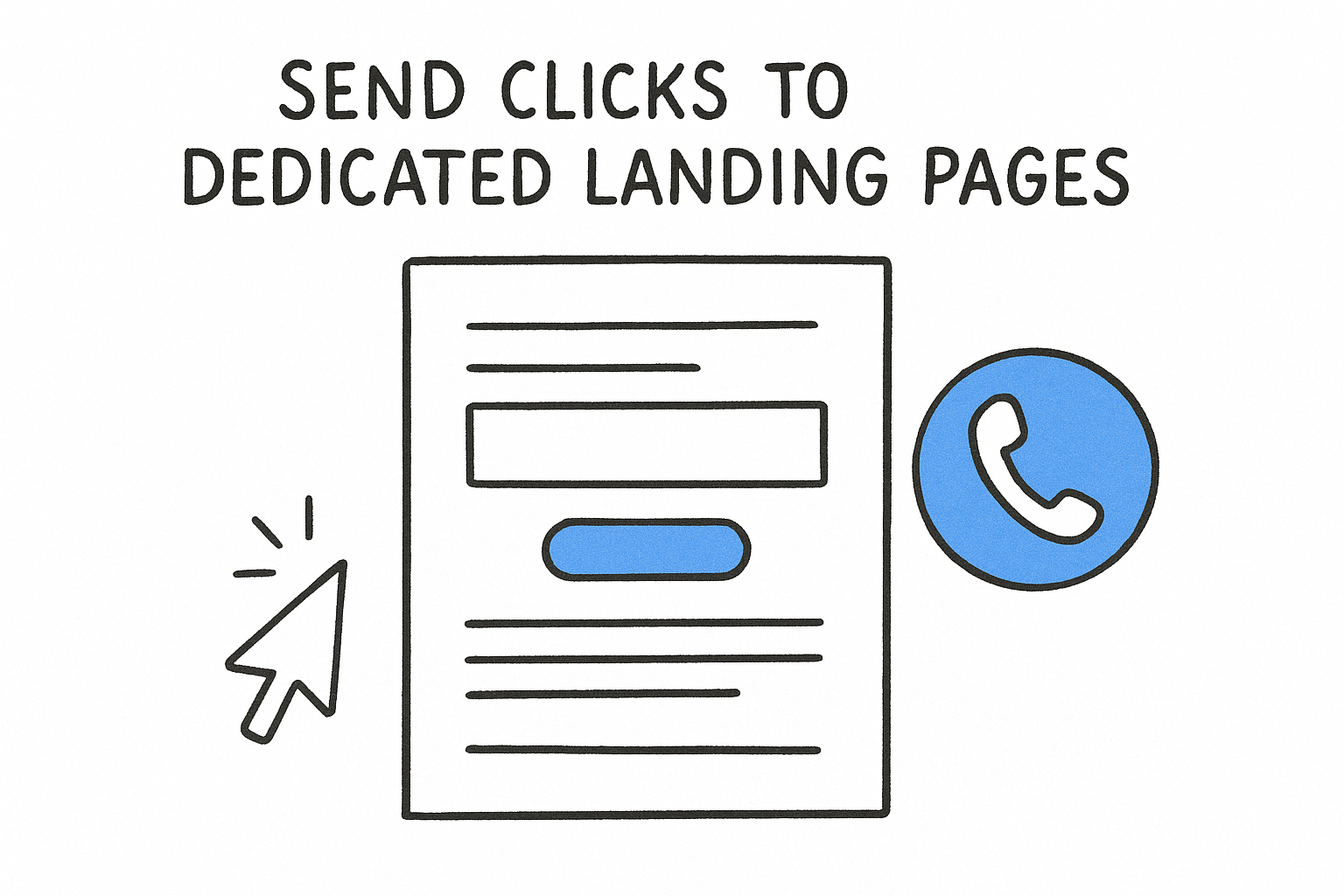
A dedicated landing page is built for one campaign, one practice area, and one action: get the visitor to call or fill out a form. Law firm PPC campaigns that send clicks to a generic homepage force visitors to hunt through firm bios, practice area menus, and blog links before finding a way to contact you. A dedicated page strips that away. It matches the ad's headline, leads with a mobile-first intake form, and removes every navigation link that could pull someone off the page before they convert.
Why it works
Matching message and landing page raises conversion rates because the visitor never has to second-guess whether they clicked the right ad. Generic contact forms on a firm's main site typically convert desktop traffic at 4 to 6 percent but drop to 1 to 2 percent on mobile, largely because forms weren't built for a phone screen. Dedicated, mobile-first pages close that gap by cutting form fields, enlarging tap targets, and putting the phone number in a sticky header. Campaign relevance also affects your Quality Score in Google Ads, which lowers your cost per click over time.
A landing page that matches the ad word-for-word converts better than a homepage that makes visitors search for the reason they clicked.
How to get started
Build landing pages by campaign, not by practice area alone, so ad copy and page copy always match.
- Mirror the ad's headline and offer on the page's first visible section
- Cut the form to essential fields only: name, phone, brief case description
- Remove header navigation so the only path forward is the form or the phone number
- Test load speed on mobile, since slow pages lose clicks before the form ever loads
GavelGrow's hosted intake forms embed directly into these pages, with built-in TCPA consent capture and instant SMS auto-reply already handled.
6. Set your budget around case value
How it works
Budgeting by case value means you set daily and monthly spend limits based on what a signed case is actually worth to your firm, not on some flat percentage of revenue or a number a rep suggested. A mass tort case might be worth $40,000 to $200,000 over its life, while a simple traffic ticket case might net $500. Law firm PPC budgets that ignore this gap end up either underfunding the practice areas that matter most or overspending on low-value work that happens to convert cheaply. You calculate case value by practice area first, then work backward to figure out what you can afford to pay per lead and still profit.
Why it works
Spending decisions built on case value rather than gut feel stop you from starving your most profitable campaigns. A firm running both family law and mass tort campaigns might see mass tort leads cost 5 times more per click, but if the average mass tort case is worth 20 times more than a family law retainer, that spend is justified and should probably increase. Case value math also protects you from panicking when cost-per-click rises during a competitive season, since you already know your ceiling.
Your budget should follow the money a case brings in, not the number that felt comfortable last quarter.
How to get started
Work out lifetime case value per practice area before touching your daily budgets:
- Calculate average case value using closed cases from the past 12 months, by practice area
- Set a maximum allowable cost-per-signed-case at roughly 20 to 30 percent of that value
- Reallocate budget toward practice areas where you're currently underspending relative to case value
- Revisit these numbers quarterly, since settlement values and case mix shift
GavelGrow's modelled practice-area benchmarks let you compare your cost-per-signed-case with typical ranges for your practice area before you decide where to push spend.
7. Respond to leads within minutes
How it works
Speed to lead means the gap between when someone submits your intake form or misses your call and when a human actually reaches them. Law firm PPC spend gets wasted the moment a lead sits in an inbox overnight, because that same person is likely calling three other firms while they wait. A response system built for speed pairs automated text and email acknowledgment within seconds of form submission with a staff workflow that gets a live callback out inside five minutes, not five hours.
Why it works
A 2011 analysis of online sales leads found that firms that tried to contact a lead within an hour were nearly seven times as likely to qualify it as firms that tried even an hour later (source: Harvard Business Review). Legal leads behave the same way. Someone searching "DUI lawyer near me" at 9pm on a Friday isn't waiting until Monday for a callback; they're filling out three more forms in the next ten minutes. Fast response turns an expensive click into a signed case before a competitor even sees the lead.
The firm that calls back first usually signs the case, regardless of who wrote the better ad.
How to get started
Build speed into your intake process instead of relying on staff to remember:
- Set up instant auto-reply by SMS and email the moment a form submits
- Assign a rotating intake staffer whose only job during business hours is answering new leads
- Track time-to-first-contact as its own metric, separate from conversion rate
- Escalate aging leads automatically if no contact happens within 15 minutes
GavelGrow's intake automation fires SMS and email sequences within 60 seconds of lead capture, and the lead pipeline flags aging leads by last-activity time so nothing sits untouched overnight.
8. Test, track, and optimize continuously
How it works
Continuous testing means you never let a campaign run untouched for months just because it hit an acceptable cost-per-lead once. Law firm PPC performance shifts constantly as competitors adjust bids, seasonal search volume swings, and Google's own algorithm updates change how your ads get served. A disciplined testing cadence means running one ad variant against another, checking landing page conversion weekly, and reviewing search term reports for waste before it compounds into thousands of wasted dollars.
Why it works
Campaigns that sit static lose ground even when nothing about your firm changed. Quality Score erosion happens quietly when click-through rates dip below what Google expects for your keywords, and that erosion raises your cost per click without any obvious warning sign until you check. Firms running structured A/B tests on headlines, descriptions, and landing pages typically find a 10 to 20 percent swing in conversion rate between winning and losing variants, which compounds fast across a $20,000 monthly budget. Ongoing optimization also catches negative keyword opportunities before irrelevant clicks drain spend for weeks.
A campaign you haven't touched in 90 days is a campaign that's already underperforming, you just haven't measured it yet.
How to get started
Build a recurring review cadence instead of reacting only when numbers look bad:
- Run one A/B test at a time on headlines, descriptions, or landing pages so you know what actually moved the number
- Review search term reports weekly to add negative keywords before waste accumulates
- Check cost-per-signed-case monthly by campaign, not just cost-per-lead
- Benchmark against peer firms to know whether a dip is market-wide or specific to your account
GavelGrow's marketing dashboard surfaces campaign-level cost-per-signed-case alongside the modelled practice-area benchmarks, so you can spot a slipping campaign before it burns through another month of budget.
Where to go from here
None of these eight strategies work in isolation. Tracking cost per signed case only matters if you're also feeding leads through fast intake, and fast intake only matters if the campaigns behind it are targeting the right keywords with compliant, high-converting ad copy. The firms winning at law firm PPC in 2026 treat these as one connected system, not eight separate checkboxes to knock out over a slow quarter.
If you're still piecing this together across a spreadsheet, CallRail, and whatever your ad rep sends monthly, that gap is costing you signed cases right now, not just reporting clarity. Start by seeing where your current numbers actually stand against firms in your practice area. Book a free strategy call and walk through your cost-per-signed-case, your intake speed, and your campaign structure with someone who's done this for law firms since 2015. Forty-five minutes usually surfaces the leak.
Frequently Asked Questions
What is law firm PPC?
Law firm PPC (pay-per-click) is paid advertising — primarily Google Ads and Local Services Ads — where your firm pays each time someone clicks your ad for searches like "personal injury lawyer near me." Done well, it puts you in front of people actively looking to hire a lawyer and can produce signed cases within days, unlike SEO which compounds over months.
How much does PPC cost for law firms?
Legal keywords are among the most expensive in any industry — personal injury clicks routinely run well over $100 in competitive markets, while less contested practice areas cost less. Rather than fixate on cost per click, judge PPC by cost per signed case: a $150 click that produces a $30,000 case is a bargain, while cheap clicks that never sign are the real waste.
Is PPC worth it for law firms?
For most firms, yes — it is the fastest way to generate high-intent leads, and it is fully measurable. The catch is that PPC only pays off when the intake process behind it converts. Firms that pour budget into ads but respond slowly or lose leads in a messy intake burn money; those that pair tight campaigns with fast, tracked intake see strong returns.
What is the difference between Google Ads and Local Services Ads for lawyers?
Google Ads (search PPC) charges per click and puts text ads at the top of results — you control keywords, copy, and landing pages. Local Services Ads charge per lead rather than per click, show a Google Screened badge, and appear above regular ads for local searches. Most firms run both: LSAs for cost-efficient local leads and Search for broader, controllable reach.
How do you lower cost per lead on law firm PPC?
Focus on high-intent, long-tail keywords instead of broad expensive terms, tighten negative keyword lists to cut wasted spend, improve Quality Score with relevant ad copy and fast landing pages, and add Local Services Ads to the mix. Most importantly, fix intake — faster response and better conversion lower your effective cost per signed case more than any bidding tweak.
Are there compliance rules for law firm PPC ads?
Yes. State bar advertising rules govern claims, guarantees, testimonials, and required disclaimers, and they apply to your ad copy and landing pages. Avoid unqualified superlatives like "best lawyer" and outcome guarantees, include any required disclaimers, and keep claims substantiated. Compliant copy protects your license and often performs better by setting honest expectations.
How do you measure PPC ROI for a law firm?
Track past the click: cost per lead, lead-to-consultation rate, intake-to-retainer conversion, and cost per signed case by campaign and keyword. Connect call tracking and your intake system to the campaign so every signed case is attributed to the ad that produced it — the only way to know which keywords and campaigns actually fund the firm.
Frequently Asked Questions
What is law firm PPC?
Law firm PPC (pay-per-click) is paid advertising — primarily Google Ads and Local Services Ads — where your firm pays each time someone clicks your ad for searches like "personal injury lawyer near me." Done well, it puts you in front of people actively looking to hire a lawyer and can produce signed cases within days, unlike SEO which compounds over months.
How much does PPC cost for law firms?
Legal keywords are among the most expensive in any industry — personal injury clicks routinely run well over $100 in competitive markets, while less contested practice areas cost less. Rather than fixate on cost per click, judge PPC by cost per signed case: a $150 click that produces a $30,000 case is a bargain, while cheap clicks that never sign are the real waste.
Is PPC worth it for law firms?
For most firms, yes — it is the fastest way to generate high-intent leads, and it is fully measurable. The catch is that PPC only pays off when the intake process behind it converts. Firms that pour budget into ads but respond slowly or lose leads in a messy intake burn money; those that pair tight campaigns with fast, tracked intake see strong returns.
What is the difference between Google Ads and Local Services Ads for lawyers?
Google Ads (search PPC) charges per click and puts text ads at the top of results — you control keywords, copy, and landing pages. Local Services Ads charge per lead rather than per click, show a Google Screened badge, and appear above regular ads for local searches. Most firms run both: LSAs for cost-efficient local leads and Search for broader, controllable reach.
How do you lower cost per lead on law firm PPC?
Focus on high-intent, long-tail keywords instead of broad expensive terms, tighten negative keyword lists to cut wasted spend, improve Quality Score with relevant ad copy and fast landing pages, and add Local Services Ads to the mix. Most importantly, fix intake — faster response and better conversion lower your effective cost per signed case more than any bidding tweak.
Are there compliance rules for law firm PPC ads?
Yes. State bar advertising rules govern claims, guarantees, testimonials, and required disclaimers, and they apply to your ad copy and landing pages. Avoid unqualified superlatives like "best lawyer" and outcome guarantees, include any required disclaimers, and keep claims substantiated. Compliant copy protects your license and often performs better by setting honest expectations.
How do you measure PPC ROI for a law firm?
Track past the click: cost per lead, lead-to-consultation rate, intake-to-retainer conversion, and cost per signed case by campaign and keyword. Connect call tracking and your intake system to the campaign so every signed case is attributed to the ad that produced it — the only way to know which keywords and campaigns actually fund the firm.