Law Firm SEO: What It Is and How to Choose a Strategy
Categories: Legal Marketing Strategies
 Abram Ninoyan
Founder & Senior Performance Marketer
Credentials: Google Partner, Google Ads Search Certified, Google Ads Display Certified, Google Ads Measurement Certified, Google Analytics (IQ) Certified, HubSpot Inbound Certified, HubSpot Social Media Marketing Certified, Conversion Optimization Certified
Expertise: Google Ads, Meta Ads, Conversion Rate Optimization, GA4 & Google Tag Manager, Lead Generation, Marketing Funnel Optimization, PPC Management
LinkedIn Profile
Ranking on page one of Google for "personal injury lawyer near me" doesn't happen by accident, and it doesn't happen overnight either. Law firm SEO is the practice of optimizing your website...
Key Takeaways
- Law Firm SEO: What It Is and How to Choose a Strategy
- Why law firm SEO matters more than ever
- How to choose the right law firm SEO strategy
- What a strong law firm SEO strategy includes
Law Firm SEO: What It Is and How to Choose a Strategy
Ranking on page one of Google for "personal injury lawyer near me" doesn't happen by accident, and it doesn't happen overnight either. Law firm SEO is the practice of optimizing your website, Google Business Profile, and content so your firm shows up when someone searches for the legal help you provide, but most partners treat it like a checkbox instead of a revenue channel that compounds over 6 to 12 months.
At its core, law firm SEO combines technical site health, local citation building, and practice-area content to move you up the map pack and organic results for the searches that actually convert into signed cases. The right approach depends on your practice area, your market's competition level, and whether you have the internal bandwidth to manage it or need a vetted provider who understands legal advertising rules.
Below, you'll get a plain-language breakdown of what law firm SEO actually includes, how it differs from paid ads, what a realistic budget and timeline look like, and the specific questions to ask any agency before you sign a contract. If you're also running paid campaigns, GavelGrow's attribution tools on the platform show you exactly which channel, organic or paid, is producing signed retainers, not just clicks.
For a firm that wants this done rather than explained, GavelGrow's law firm SEO agency page covers the engagement end to end: technical foundation, local pack, content, reviews, and attribution to signed cases.
Why law firm SEO matters more than ever
Search has quietly become the intake desk for most law firms, whether you've invested in it or not. Potential clients searching "divorce lawyer Dallas" or "truck accident attorney near me" are already deciding who they trust before your phone ever rings, and if your site isn't ranking, a competitor's is answering that decision for you.
Search is where legal shoppers start
The American Bar Association's 2023 Legal Technology Survey Report found that firm websites have overtaken referrals as the top driver of new client contacts for solo and small firms, a shift that would have seemed backwards a decade ago. People with a legal problem, whether it's a custody dispute or a car wreck, now default to Google before they call a friend or check a bar association directory. That means your organic rankings function less like a nice-to-have and more like a 24/7 referral network that never sleeps and never asks for a favor in return.
Speed and visibility compound together
Ranking well only pays off if you can act fast once someone clicks. The Lead Response Management Study found that leads contacted within five minutes were 21 times more likely to qualify than those first reached at 30 minutes, which means the SEO traffic you worked months to earn can evaporate if your intake process lags. Firms that pair strong rankings with instant follow-up, through tools like GavelGrow's intake automation, turn that search visibility into signed retainers instead of missed calls.
Ranking on page one only matters if your intake process is fast enough to convert the click before a competitor does.
AI search raises the bar
Google's rollout of AI Overviews and generative search results, confirmed in Google's own 2024 Search Generative Experience updates, means fewer users click past the first answer they see. For law firms, that shrinks the room for mediocre content and rewards sites with clear, specific, practice-area expertise, like a detailed breakdown of how a wrongful death claim works in your state versus a generic "personal injury FAQ" page copied from a template. Firms that treat content as a compliance obligation rather than a genuine resource are the ones losing ground first.
Ignoring it has a real cost
Every month you're absent from the map pack or page one, competitors are capturing cases that should have been yours, and mass-tort and personal injury markets in particular are unforgiving about it. A firm spending heavily on Google Ads while ignoring organic search is effectively renting visibility it could be earning for free, and that gap widens every quarter a competitor invests while you wait. Law firm SEO isn't a marketing luxury anymore; it's the baseline cost of staying visible in a market where the courthouse steps have moved online.
How to choose the right law firm SEO strategy
Choosing an SEO approach starts with an honest look at your practice area and market, not a generic package from whoever pitches you first. Mass tort and personal injury markets often require months of aggressive link building and content investment before you see movement, while a solo estate planning attorney in a mid-size city might rank in weeks with solid local citations. Matching effort to your competitive reality keeps you from overpaying for tactics you don't need or underinvesting where the fight is genuinely tough.
Vet experience with legal clients specifically
Ask any agency or consultant for case studies from firms in your practice area, not just "legal marketing" in general terms. A provider who's grown a family law firm's local rankings understands review generation and custody-search intent completely differently than one who's only worked with mass-tort intake pages. If they can't name specific practice areas they've handled or show ranking movement with dates attached, keep looking.
The right SEO strategy fits your practice area's competition level, not a template built for every firm at once.
Demand reporting tied to cases, not clicks
Most SEO reports stop at traffic and keyword rankings, which tells you almost nothing about revenue. A strong provider connects organic visits to signed retainers, the same way GavelGrow's full-funnel attribution shows which channel actually produced a client, not just a form fill. Before signing anything, ask these questions:
- Can you show ranking history for firms in my exact practice area?
- How do you report organic traffic against signed cases, not just leads?
- What's your process for state-bar advertising compliance in content?
- Who owns the content and site if we part ways?
A provider who answers all four without hedging is worth a real conversation. One who dodges the compliance or ownership questions is a warning sign, regardless of how polished their pitch deck looks.
What a strong law firm SEO strategy includes
A real law firm SEO strategy has moving parts that work together, not a single tactic you can buy off a menu. Skip any one of these and you're left with a site that looks fine but never earns the rankings that turn into signed cases.
Technical foundation and site health
Before content or links matter, your site needs to load fast, work on mobile, and let Google crawl it without errors. Google's own Search Central documentation confirms that Core Web Vitals and mobile usability directly influence how pages rank, so a slow, clunky site caps everything else you do. Technical audits should catch broken schema markup, duplicate practice-area pages, and crawl errors before you spend a dollar on content.
Local SEO and Google Business Profile optimization
For most practice areas, especially personal injury, family law, and criminal defense, the map pack decides who gets the call. That means consistent NAP citations (name, address, phone) across directories, a fully built-out Google Business Profile with real client photos and service categories, and a steady stream of fresh, specific reviews.
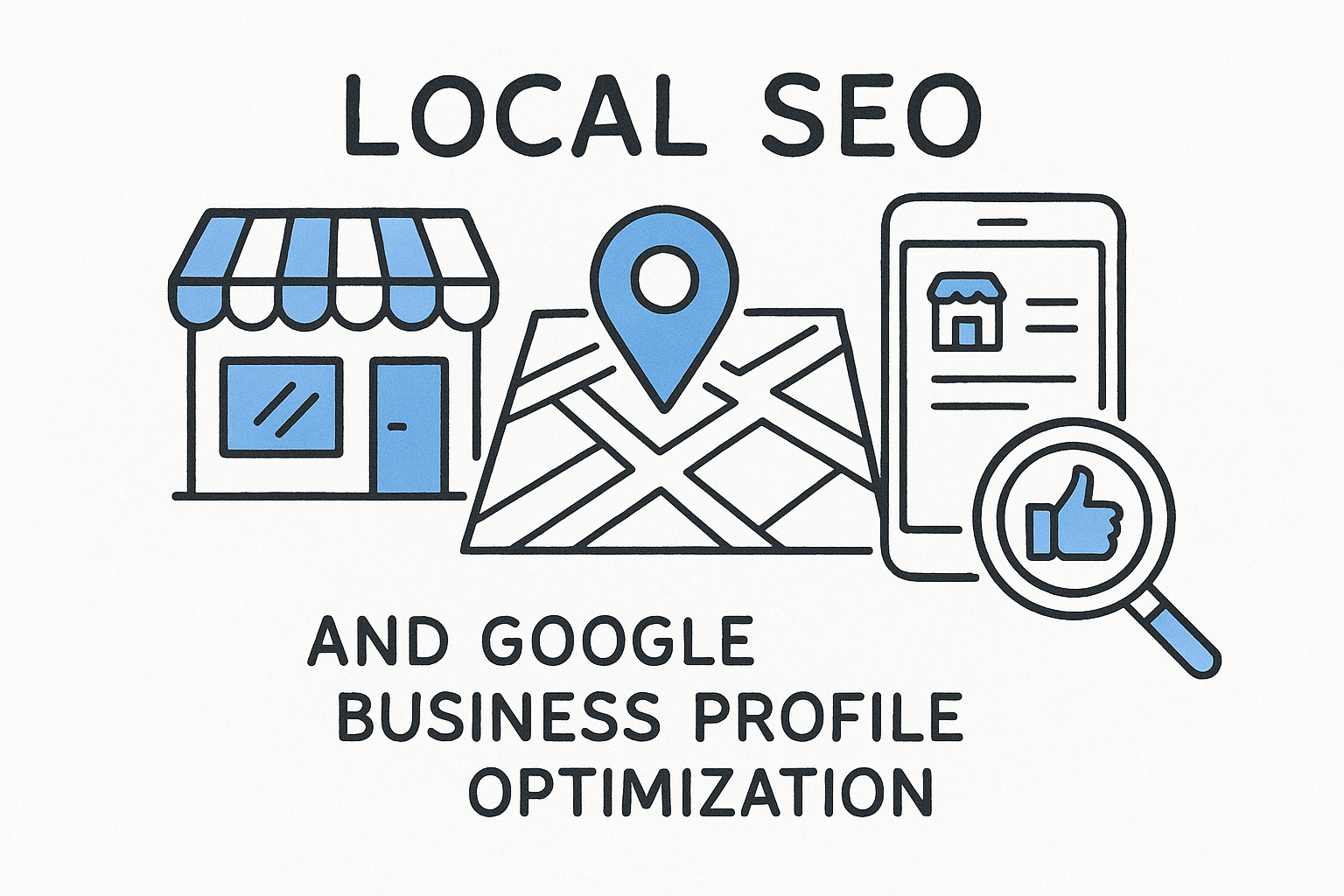
Local pack visibility often matters more than page-one organic rankings for firms serving a single metro area.
Practice-area content that answers real questions
Generic "personal injury FAQ" pages don't rank anymore. Content needs to answer the specific questions your potential clients are typing, like "how long does a wrongful death claim take in Texas" or "what happens if I miss a custody hearing in Ohio." Depth and specificity beat volume every time.
Reputation and link authority
Google weighs backlinks and reviews as trust signals, and legal is a YMYL (Your Money or Your Life) category where that trust bar sits higher, per Google's search quality rater guidelines. A strategy needs both:
- Earned links from legal directories, local press, and bar associations
- A steady review-generation process, not a one-time push
Miss either piece and rankings plateau no matter how good your content is.
How much does law firm SEO cost and take to work?
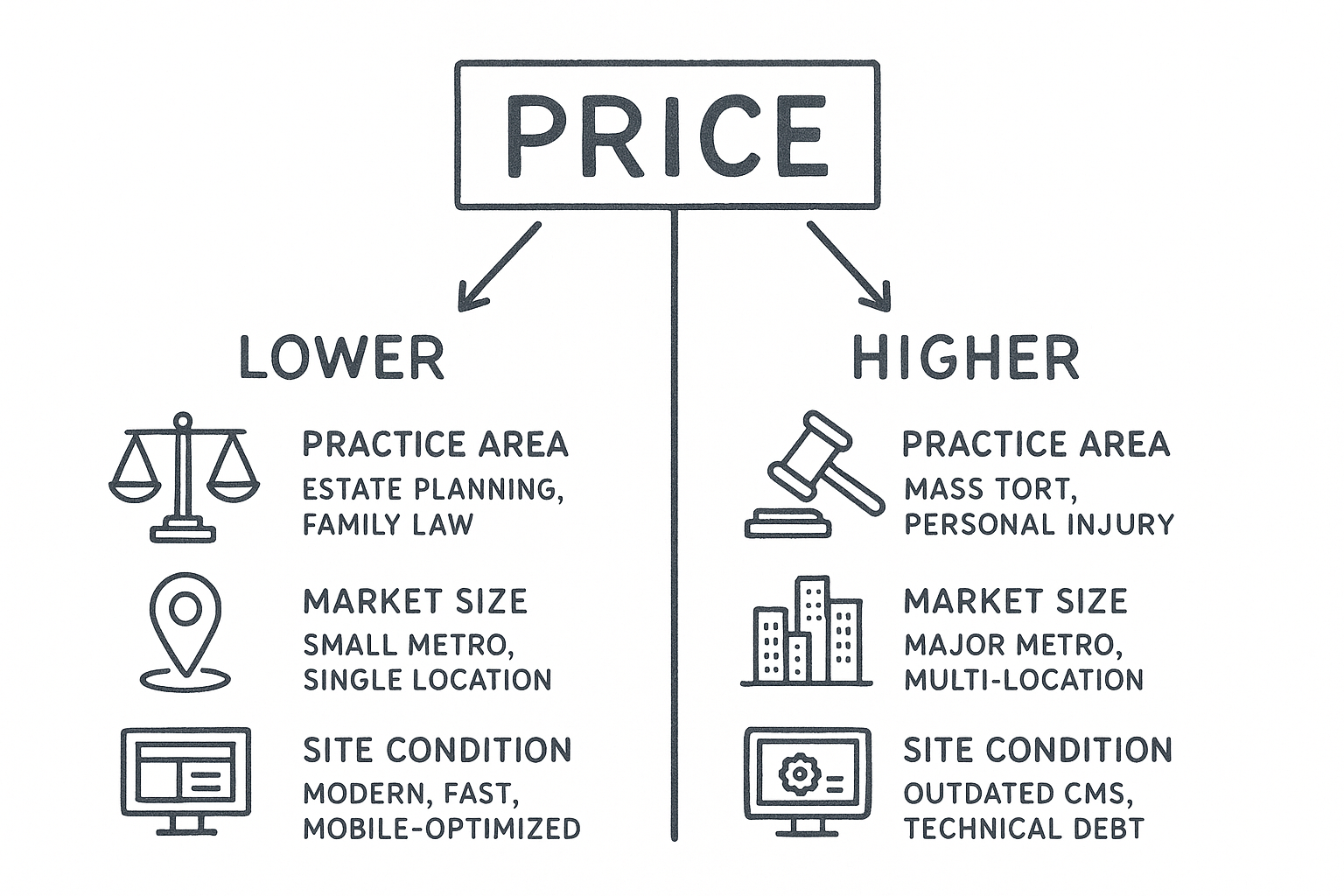
Budget for law firm SEO the way you'd budget for a associate's salary, not a one-time software purchase. Most legal SEO retainers run $1,500 to $10,000+ per month depending on your market size and competition, and mass-tort or personal injury campaigns in major metros often sit at the top of that range because the keyword competition is brutal. Solo practitioners in smaller markets, like a single-location estate planning attorney, can sometimes get meaningful results at the lower end if the local citation and content work is done well.
What drives the price up or down
Competition level in your practice area and metro is the single biggest cost driver, followed by how much content and technical cleanup your current site needs. A firm switching from a five-year-old template site will pay more upfront than one starting with a modern, fast-loading platform.
Timeline expectations that won't disappoint you
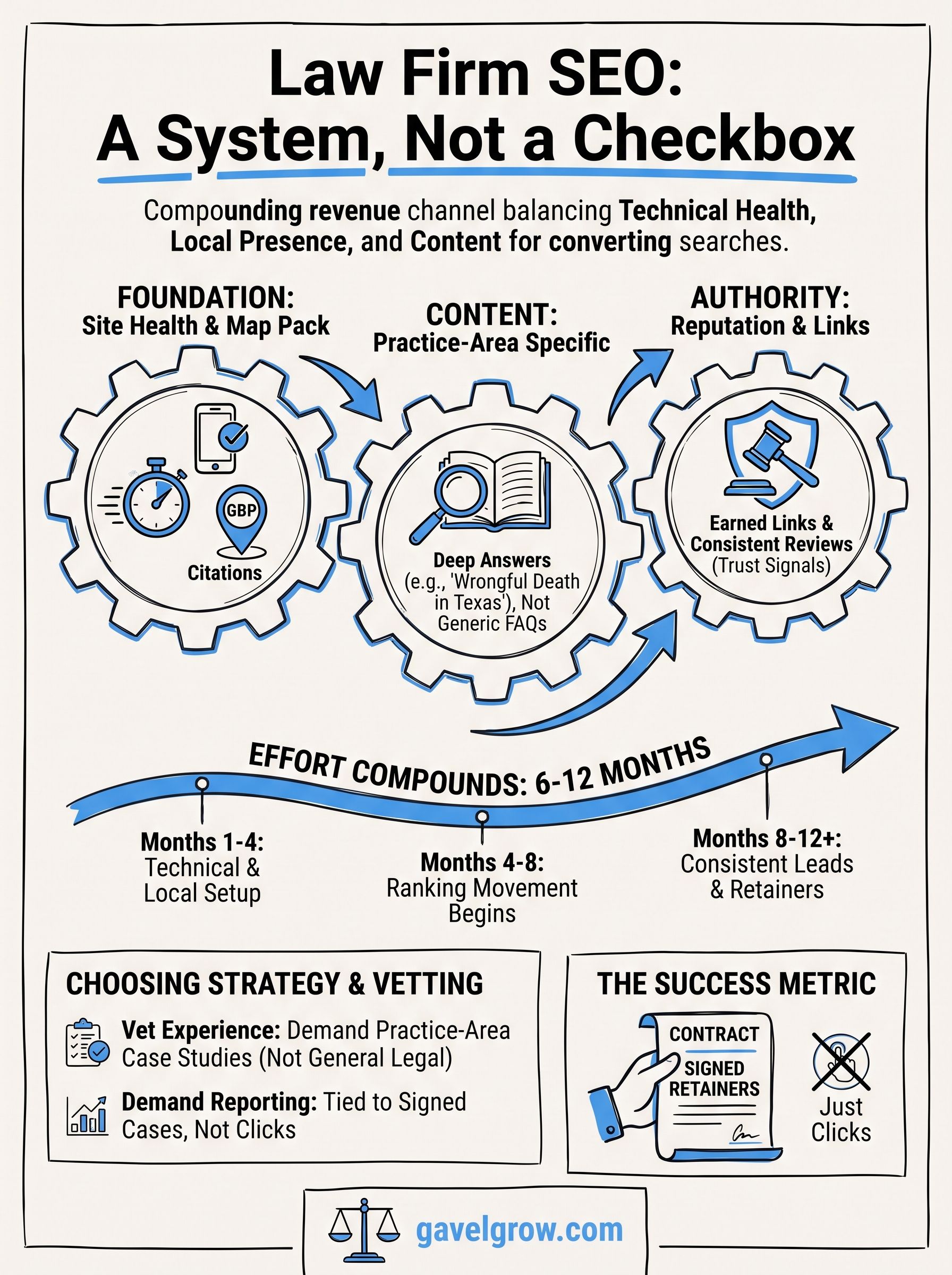
Expect 4 to 6 months before you see meaningful ranking movement, and 8 to 12 months before organic search becomes a reliable source of signed cases. Google's own Search Central guidance confirms there's no fixed timeline for ranking changes, since crawling, indexing, and competitor activity all factor in, but anyone promising page-one results in 30 days is either inexperienced or overselling.
Any provider promising first-page rankings in 30 days is selling a fantasy, not a strategy.
Rather is to think of SEO cost as an investment that compounds. A campaign that costs $3,000 a month and takes six months to show traction will keep producing cases in month 18 without additional spend, which paid ads never do once you stop paying for clicks.
In-house, agency, or platform: what fits your firm?
Deciding who runs your SEO comes down to three variables: your budget, your team's bandwidth, and how much control you want over daily execution. Each option below solves a different problem, and picking the wrong one often costs more than the SEO itself.
When in-house makes sense
Handling SEO internally works best when you already have a marketing coordinator with some technical skill and enough time to own content calendars, citation cleanup, and review requests every week. Firms with multiple locations or aggressive growth targets rarely have that bandwidth, so in-house SEO often stalls after the first few months once other priorities crowd it out.
When an agency makes sense
Hiring an agency makes sense once your market is competitive enough that you need dedicated link-building, content production, and technical monitoring running simultaneously. Look for a legal-specific agency with named practice-area case studies, not a generalist shop that added "law firm SEO" to its service list this quarter because it saw the demand.
The wrong provider costs you more in wasted months than the wrong price ever will.
When a platform fills the gap
A platform fits firms that want visibility into what's actually converting without paying agency retainers for reporting alone. GavelGrow's platform won't build backlinks for you, but it does show whether your organic traffic is turning into signed cases, not just leads, so you can direct your SEO budget with real data instead of a hunch.
Rarely does one option work alone in practice. Most firms that grow steadily combine a platform for measurement with either in-house effort or an agency handling execution, so no dollar spent on SEO goes untracked.
Turning search visibility into signed cases
Law firm SEO only pays off when you treat it as a system, not a one-time project. Technical health, local citations, practice-area content, and reputation building all have to work together, and the payoff takes months, not days. The firms that win aren't necessarily the ones with the biggest budgets; they're the ones who match strategy to their market and track results all the way to signed retainers, not just clicks or rankings.
Once your organic traffic starts climbing, the next challenge is proving which searches actually turn into paying clients. That's where full-funnel attribution matters more than another vanity metric on a monthly report. If you want a clear picture of what's working across your search, ads, and intake process before you commit another dollar to SEO, book a free 45-minute strategy call and get a plan built around your practice area.
Frequently Asked Questions
What is law firm SEO?
Law firm SEO is the practice of optimizing your website, Google Business Profile, and online content so your firm ranks for the searches potential clients use — like "[practice area] lawyer near me." It combines technical site health, local SEO, practice-area content, and link authority to turn organic search into a steady, lower-cost source of signed cases.
How much does law firm SEO cost?
It varies widely by market competitiveness, practice area, and scope — a solo firm in a smaller market pays far less than a personal injury firm competing in a major metro. Rather than a flat monthly figure, judge it by return: track cost per signed case so you can compare SEO against paid ads and referrals on equal footing, not by traffic alone.
How long does law firm SEO take to work?
Most firms see early movement within 90 days and meaningful case flow in six to twelve months, depending on how competitive their practice area and market are. Crowded fields like personal injury in major metros take longer than niche or suburban practices. SEO compounds — the longer it runs, the lower your cost per case tends to fall.
Is SEO worth it for a law firm?
Yes, for most firms, because it builds a durable channel instead of renting visibility through ads that stop the moment you stop paying. The caveat: SEO only pays off when it is tied to signed cases, not vanity metrics. A provider that reports rankings and traffic but cannot connect that work to retained clients is hard to justify.
How do I choose a law firm SEO company?
Vet experience with law firms specifically — legal SEO has unique compliance and competitiveness challenges — and demand reporting tied to cases, not clicks. Ask how they track a search through intake to a signed matter, whether the work is done in-house, and how they handle Google Business Profile and reviews. Avoid anyone promising guaranteed #1 rankings.
What is the difference between local SEO and regular SEO for law firms?
Local SEO focuses on ranking in the map pack and for "near me" searches — driven heavily by your Google Business Profile, reviews, and local citations. Broader organic SEO targets informational and practice-area queries across a wider area. Most firms need both: local SEO captures high-intent nearby searchers, while content SEO builds authority and reach.
Can a law firm do SEO in-house or should it hire an agency?
Small firms with a marketing-minded partner can start in-house on the basics — Google Business Profile, reviews, and a few practice-area pages. But technical SEO, competitive content, and link building take specialized time and skill, so firms that want faster results or lack the bandwidth usually get more from an agency — ideally one that reports on signed cases.
Frequently Asked Questions
What is law firm SEO?
Law firm SEO is the practice of optimizing your website, Google Business Profile, and online content so your firm ranks for the searches potential clients use — like "[practice area] lawyer near me." It combines technical site health, local SEO, practice-area content, and link authority to turn organic search into a steady, lower-cost source of signed cases.
How much does law firm SEO cost?
It varies widely by market competitiveness, practice area, and scope — a solo firm in a smaller market pays far less than a personal injury firm competing in a major metro. Rather than a flat monthly figure, judge it by return: track cost per signed case so you can compare SEO against paid ads and referrals on equal footing, not by traffic alone.
How long does law firm SEO take to work?
Most firms see early movement within 90 days and meaningful case flow in six to twelve months, depending on how competitive their practice area and market are. Crowded fields like personal injury in major metros take longer than niche or suburban practices. SEO compounds — the longer it runs, the lower your cost per case tends to fall.
Is SEO worth it for a law firm?
Yes, for most firms, because it builds a durable channel instead of renting visibility through ads that stop the moment you stop paying. The caveat: SEO only pays off when it is tied to signed cases, not vanity metrics. A provider that reports rankings and traffic but cannot connect that work to retained clients is hard to justify.
How do I choose a law firm SEO company?
Vet experience with law firms specifically — legal SEO has unique compliance and competitiveness challenges — and demand reporting tied to cases, not clicks. Ask how they track a search through intake to a signed matter, whether the work is done in-house, and how they handle Google Business Profile and reviews. Avoid anyone promising guaranteed #1 rankings.
What is the difference between local SEO and regular SEO for law firms?
Local SEO focuses on ranking in the map pack and for "near me" searches — driven heavily by your Google Business Profile, reviews, and local citations. Broader organic SEO targets informational and practice-area queries across a wider area. Most firms need both: local SEO captures high-intent nearby searchers, while content SEO builds authority and reach.
Can a law firm do SEO in-house or should it hire an agency?
Small firms with a marketing-minded partner can start in-house on the basics — Google Business Profile, reviews, and a few practice-area pages. But technical SEO, competitive content, and link building take specialized time and skill, so firms that want faster results or lack the bandwidth usually get more from an agency — ideally one that reports on signed cases.