Personal Injury Lawyer Marketing: 22 Strategies to Win Cases
Categories: Legal Marketing Strategies
 Abram Ninoyan
Founder & Senior Performance Marketer
Credentials: Google Partner, Google Ads Search Certified, Google Ads Display Certified, Google Ads Measurement Certified, Google Analytics (IQ) Certified, HubSpot Inbound Certified, HubSpot Social Media Marketing Certified, Conversion Optimization Certified
Expertise: Google Ads, Meta Ads, Conversion Rate Optimization, GA4 & Google Tag Manager, Lead Generation, Marketing Funnel Optimization, PPC Management
LinkedIn Profile
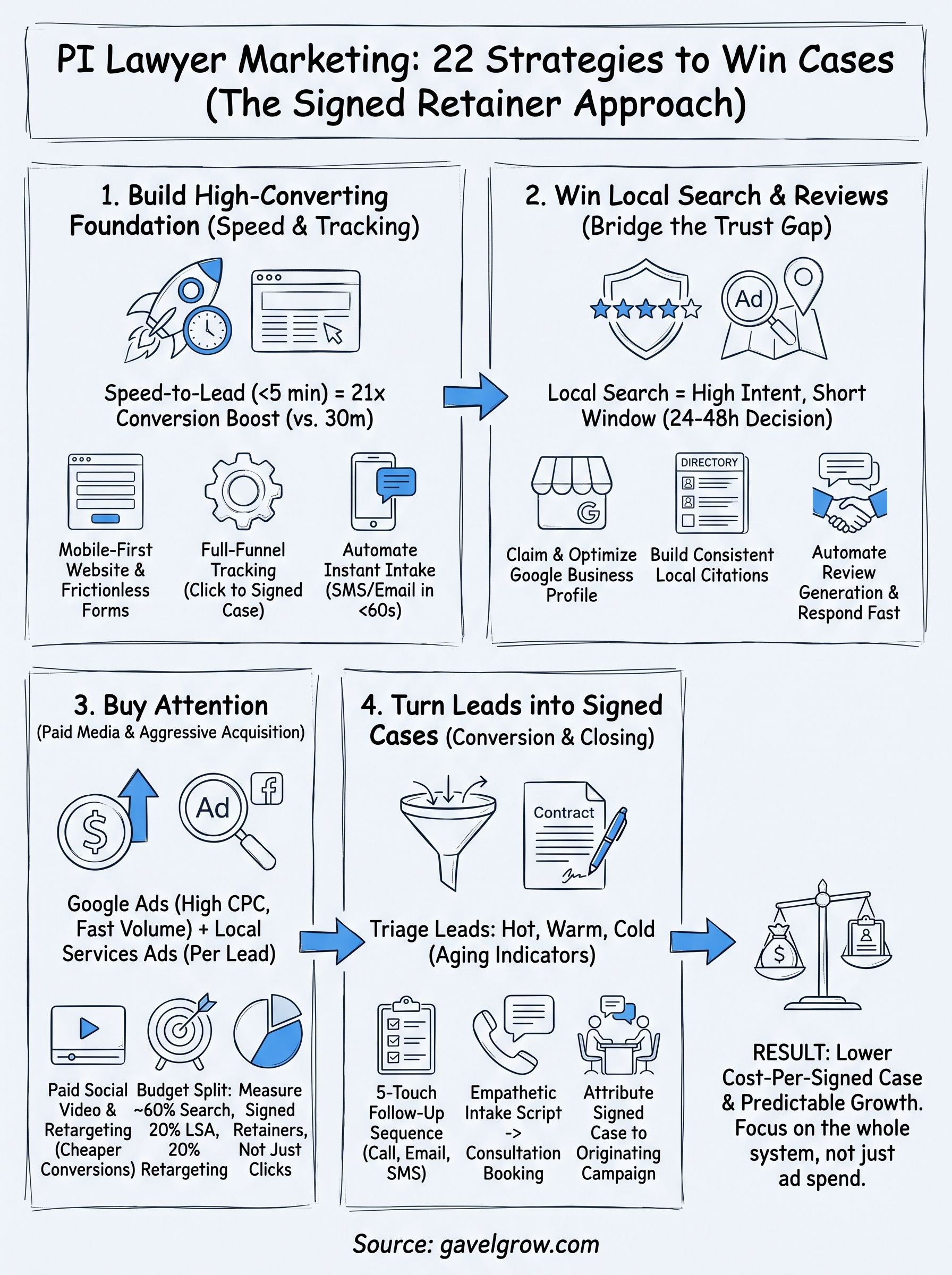
The most effective personal injury lawyer marketing combines aggressive paid acquisition with long-term organic strategies, then measures everything down to the signed retainer, not the click. Firms t...
Key Takeaways
- Personal Injury Lawyer Marketing: 22 Strategies to Win Cases
- What makes personal injury marketing different
- Step 1–6. Build a high-converting foundation
- Step 7–12. Win local search and reviews
Personal Injury Lawyer Marketing: 22 Strategies to Win Cases
The most effective personal injury lawyer marketing combines aggressive paid acquisition with long-term organic strategies, then measures everything down to the signed retainer, not the click. Firms that nail this consistently grow caseloads while competitors burn budget chasing vanity metrics.
Here's the problem most PI firms run into: they're spending $10K–$50K per month on Google Ads, SEO retainers, and intake software that don't talk to each other. A lead comes in from a paid search campaign, sits in a generic CRM for six hours, and by the time someone calls back, that potential client has already signed with the firm across town. Clio's 2024 Legal Trends Report found that 42% of firms don't return calls within three days. In personal injury, where cases can be worth $50K to $500K+ in fees, that gap between lead capture and first contact is where revenue disappears.
This guide lays out 22 specific strategies we've seen work across the 500+ U.S. law firms that use GavelGrow's platform and managed services. These aren't recycled tips from a generic marketing blog. They're built from real campaign data, conversion benchmarks, and intake workflows purpose-built for legal. Whether you run marketing in-house or outsource everything, you'll walk away with a prioritized playbook to lower your cost per signed case and fill your docket with the cases you actually want.
Key Takeaways:
- Google Ads still drives the fastest PI case volume when paired with proper conversion tracking.
- Speed-to-lead under five minutes increases conversion rates by up to 21×.
- Full-funnel attribution, ad click through signed retainer, eliminates wasted spend.
- SEO and content marketing compound over 6–12 months but reduce long-term acquisition costs.
- Replacing disconnected tools with one legal-specific platform cuts reporting gaps and compliance risk.
What makes personal injury marketing different
Personal injury is one of the most competitive and expensive practice areas to market in the entire legal industry. Google Ads CPCs for PI keywords regularly hit $50–$300 per click in major markets, and organic rankings for terms like "car accident lawyer [city]" can take 12–18 months of consistent SEO investment to crack. If you treat personal injury lawyer marketing the same way a family law firm or estate planner would approach it, you'll burn budget fast and sign fewer cases than your spend should produce.
Why the cost-per-click is higher in PI than almost any other practice area
The contingency fee model drives this dynamic. A single signed PI case can generate $25,000 to $500,000+ in attorney fees, so firms will pay $200–$500 per lead if the math still works at their conversion rate. That willingness to bid high pushes CPCs up across the entire market, not just for top competitors. Google's keyword planner data shows personal injury terms consistently ranking among the top five most expensive legal keyword categories in the U.S. as of 2025.
If your intake process can't convert leads fast, every dollar you spend acquiring them is worth less than what your competitor pays for the same click.
Your marketing budget alone does not determine your ROI. Your conversion rate and speed-to-lead matter just as much as your ad spend. A firm closing 20% of qualified leads at $300 CPL will outperform a firm closing 8% of leads at $200 CPL every time.
How the trust gap shapes your entire funnel
People searching for a PI attorney are often in physical pain, dealing with insurance adjusters, and making decisions under significant stress. They typically interview two to four firms before signing, and they make those decisions quickly, often within 24–48 hours of first contact. Unlike business law or estate planning, where prospects might take weeks to decide, PI clients need to feel confident in your firm within the first conversation.
Your Google reviews, settlement results, and attorney bios carry more weight here than in almost any other practice area. A firm with 200 five-star reviews and publicized case results will consistently convert leads at a higher rate than a competitor with a sharper website but thin social proof. Building that social proof needs to be a core part of your marketing system from day one, not an afterthought you add after the website is live.
What the short intake window means for your budget planning
PI cases close fast at intake, but referral relationships and case outcomes build over years. Your marketing strategy needs to account for both timelines. Consider splitting your investment across two tracks:
- Short-term (0–3 months): Google Ads, Local Services Ads, and paid social to generate inbound volume now
- Medium-term (3–12 months): SEO, content, and review generation to lower acquisition costs as organic rankings build
- Ongoing: Intake automation and attribution tracking to measure which channels actually produce signed retainers, not just leads
Step 1–6. Build a high-converting foundation
Your entire personal injury lawyer marketing system breaks down if the foundation is weak. Before you spend a dollar on paid ads or SEO, you need a website that loads fast, forms that capture leads without friction, and tracking that connects every lead from first click to signed retainer.
Steps 1–3: Website, Conversion Tracking, and Intake Forms
Step 1: Build a mobile-first website that loads in under 2.5 seconds. Google's Core Web Vitals data shows pages loading above three seconds see bounce rates jump by 32%. Each page needs one clear call-to-action, a prominent click-to-call number, and a short intake form above the fold.
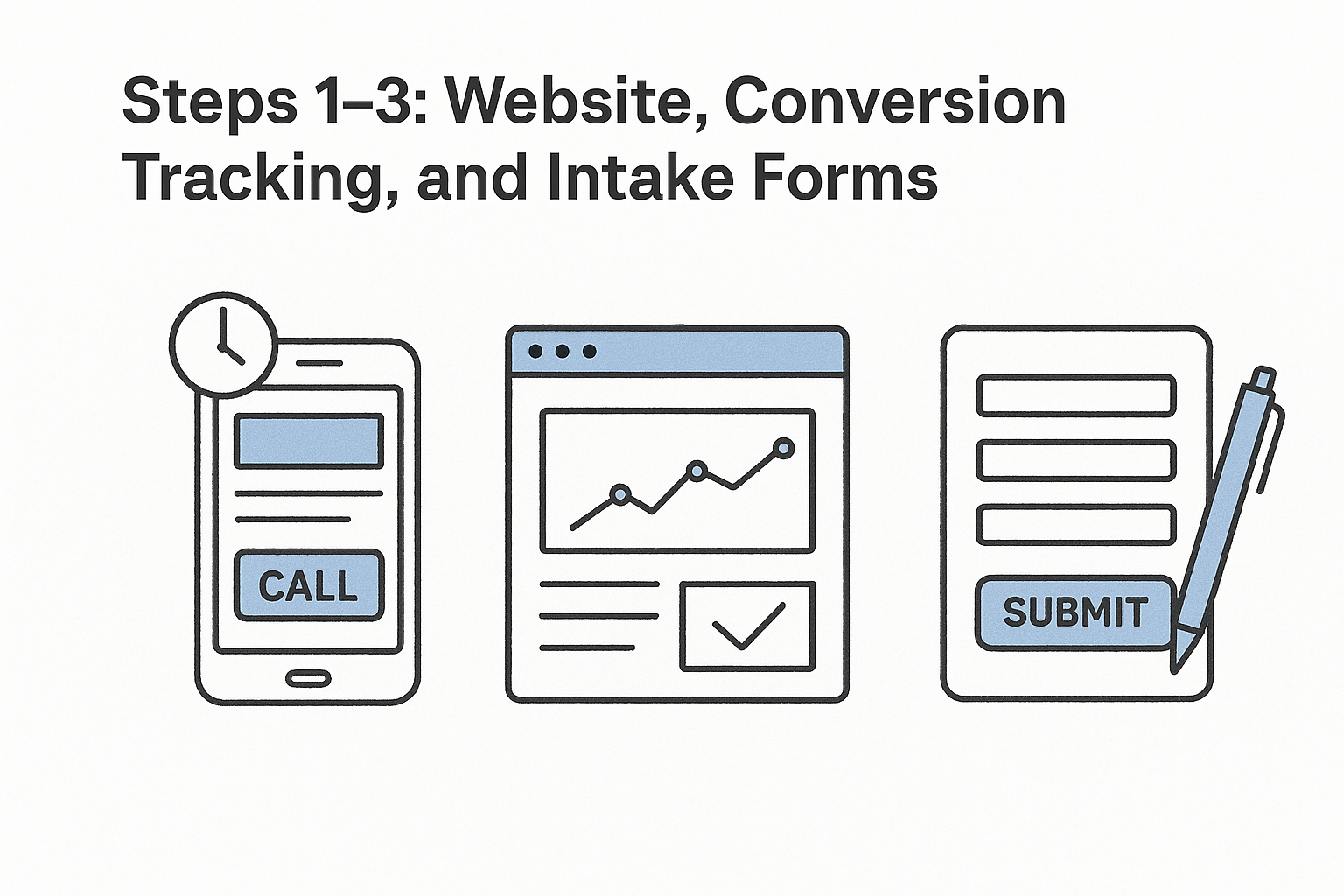
Full-funnel conversion tracking (Step 2) means installing GA4 with a generate_lead event that fires on form submission and passes case value. Add Meta Pixel with Conversions API deduplication so your paid social campaigns attribute signed cases, not just page views.
Replacing generic contact forms is Step 3. A single long-form page loses a large share of mobile visitors before they submit. Break your intake into three to four steps: incident type, injury description, contact details, and TCPA consent. This structure alone can meaningfully lift mobile conversion rates.
If your intake form puts more than two questions on one screen, you're losing mobile leads before they can become cases.
Steps 4–6: Call Tracking, Speed-to-Lead, and Intake Automation
Step 4 requires per-campaign call tracking numbers so you know exactly which ads drive calls that convert. Assign a unique tracking number to each Google Ads campaign and tag every call outcome as qualified, callback, unqualified, or spam. Without this, you are guessing which campaigns work.
Responding to every new lead within five minutes is Step 5. Harvard Business Review research found that firms contacting leads within five minutes are 21 times more likely to qualify them than firms that wait 30 minutes.
Step 6 means triggering automated SMS and email sequences the moment someone submits your form. Your first message should confirm receipt and set a callback window. GavelGrow's intake automation fires these sequences within 60 seconds of lead capture, keeping your firm top of mind before any competitor picks up the phone.
Step 7–12. Win local search and reviews
Local search drives a significant share of signed personal injury cases because most clients hire a firm near where they live or where the accident occurred. Before scaling any personal injury lawyer marketing campaign, you need your local presence locked down from the ground up.
Steps 7–9: Google Business Profile, Local Citations, and On-Page SEO
Step 7 is claiming and fully completing your Google Business Profile. Add your practice areas, upload photos of your office and team, and set your service area to the specific counties or cities you target. According to Google's own GBP documentation, complete profiles receive significantly more clicks than profiles missing key information.
Step 8 requires building consistent citations across legal directories like Avvo, Martindale-Hubbell, and Justia. Your name, address, and phone number must match exactly across every listing. Even small discrepancies, such as "Suite 200" versus "Ste 200," dilute your local authority signals in Google's ranking systems.
For Step 9, add location-specific landing pages to your website. Each page should target one city or county, include that location's name in the H1 and title tag, and contain at least 600 words of unique local content. Avoid copy-pasted boilerplate across pages; Google's quality systems flag thin duplicate content and suppress those pages from local rankings.
One location page done well beats ten thin pages that Google treats as near-duplicate content.
Steps 10–12: Review Generation, Response Templates, and Reputation Monitoring
Step 10 automates your review requests. Send a two-message sequence: an SMS within 48 hours of case resolution, followed by an email containing a direct Google review link if the first message gets no response.
Step 11 means responding to every review within 72 hours. Use this template for five-star responses:
"Thank you, [first name]. We're glad we could help you during such a difficult time. Your trust in our firm means a great deal to us."
Step 12 requires setting up Google Alerts for your firm name and tracking your average star rating monthly. Any drop below 4.5 signals a review-generation gap you need to close before it affects conversion rates on your local listings.
Step 13–17. Buy attention with paid media
Paid media is where most personal injury lawyer marketing budgets either produce explosive ROI or drain silently with nothing to show for it. The five steps in this section help you structure your paid channels so every dollar connects to a measurable signed case, not just a click or form fill.
Steps 13–14: Google Search Ads and Local Services Ads
Step 13 requires building tightly themed ad groups around specific injury types: car accident, truck accident, slip and fall, and wrongful death. Each ad group needs 10–15 exact-match and phrase-match keywords, a dedicated landing page, and a headline that mirrors the injury type directly. Google's Smart Bidding documentation recommends feeding your campaigns at least 30 conversions per month before switching to Target CPA bidding.
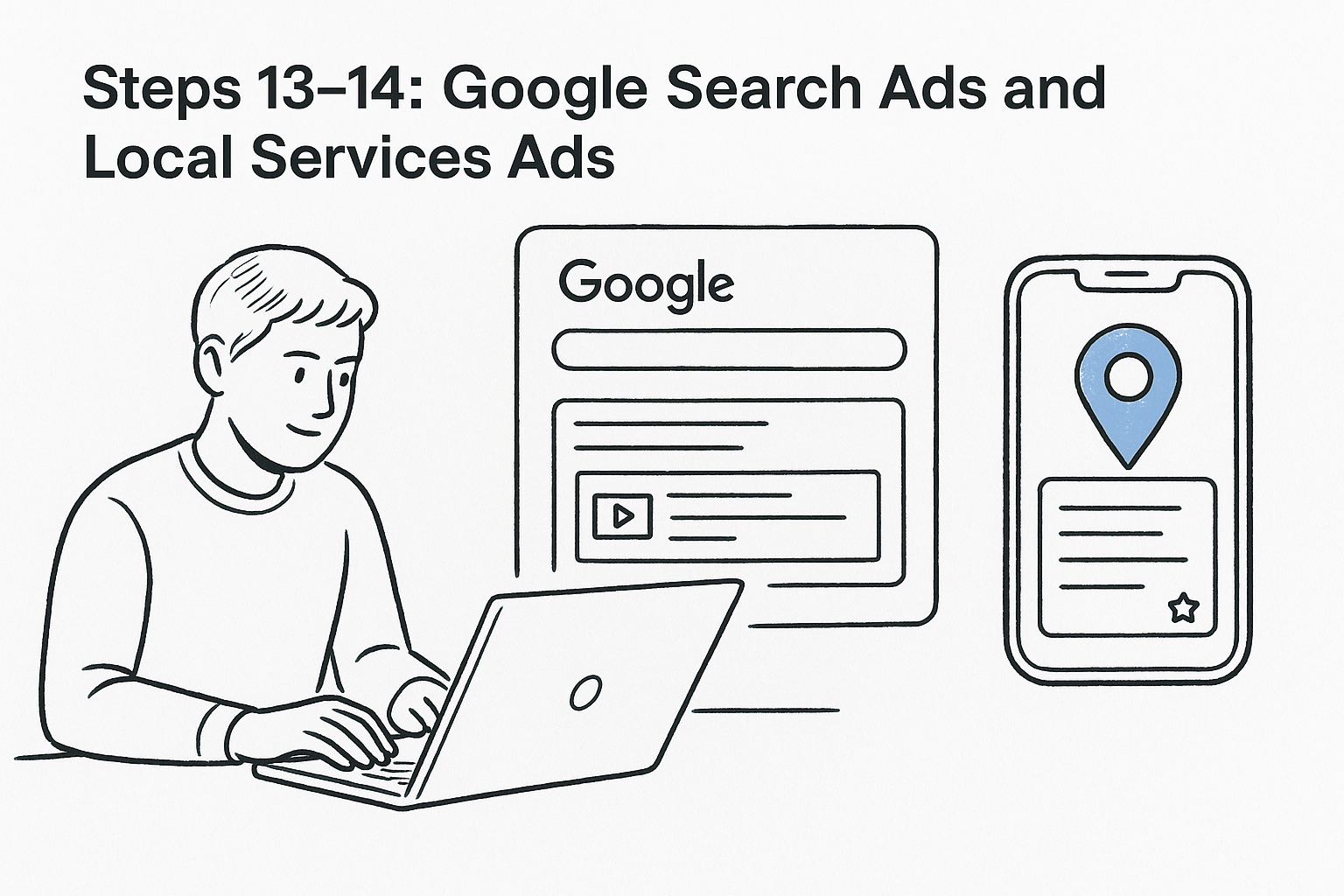
Step 14 means activating Local Services Ads alongside your search campaigns. LSAs appear above standard paid results and charge per lead rather than per click. Firms with a verified Google Screened badge and 50+ reviews consistently win top LSA placement in competitive markets.
Steps 15–17: Paid Social, Retargeting, and Budget Allocation
Step 15 uses Facebook and Instagram to target users by location, life event, and interest. Run video ads featuring client testimonials and attorney introductions rather than generic creative. Video consistently outperforms static images on Meta for high-consideration decisions like hiring a lawyer.
Step 16 sets up retargeting audiences for visitors who left without submitting a form. Retargeting campaigns typically cost 60–70% less per conversion than cold-traffic campaigns because you are reaching people who already know your firm.
Track which paid channel produces signed retainers before you reallocate budget away from any channel.
Step 17 splits your total paid budget: put 60% into Google Search, 20% into LSAs, and 20% into Meta retargeting. Adjust the split quarterly based on signed case data, not lead volume alone.
Step 18–22. Turn leads into signed cases
Generating leads is only half the battle in personal injury lawyer marketing. The firms that consistently outperform competitors don't just attract more leads; they convert a higher percentage of them into signed retainers through disciplined follow-up and attribution systems.
Steps 18–19: Lead Triage and Multi-Touch Follow-Up
Step 18 requires setting up a lead pipeline with aging indicators so your intake team can see at a glance which leads have gone cold. Sort every new lead into three buckets: hot (contacted within five minutes), warm (24-hour follow-up pending), and cold (needs re-engagement). Any lead sitting in the hot bucket longer than ten minutes should trigger an automatic supervisor alert.
Building a five-touch follow-up sequence for leads who don't answer your first call is Step 19. Use this structure:
- Minute 1: Automated SMS confirmation with callback window
- Hour 1: Second call attempt from intake staff
- Hour 4: Personalized email with attorney bio link
- Day 2: SMS with a direct scheduling link
- Day 4: Final email offering a 15-minute phone consultation
Steps 20–22: Intake Call Script, Consultation Booking, and Closing Attribution
Step 20 standardizes your intake call with a script that leads with empathy before facts. Open every call with: "I'm glad you reached out. Can you tell me what happened?" Let the prospect talk for 90 seconds before asking qualifying questions. This structure increases verbal commitment rates because the client feels heard before they feel evaluated.
The fastest way to lose a qualified PI lead is to open your intake call with a liability checklist instead of a human conversation.
Giving every qualified lead an immediate path to book a consultation is Step 21. Embed a direct scheduling link in your confirmation SMS and email so prospects can self-schedule without waiting on a callback.
Closing the attribution loop is Step 22. Tag every signed retainer back to its originating campaign and channel inside your platform. GavelGrow's case management module links each retainer directly to the lead source, so you see true cost-per-signed-case instead of cost-per-lead.
Next Steps
These 22 strategies cover every layer of personal injury lawyer marketing, from your website foundation to the attribution system that proves which campaigns produce signed retainers. The fastest path forward is to start where your current system breaks down, not at Step 1.
Run through each step and mark the ones where you have no tracking, no automation, or no data. Those gaps are where your budget leaks. If you're losing leads between form submission and first contact, fix your intake automation before adding more ad spend. If you can't trace a signed case back to its originating campaign, set up full-funnel attribution before scaling anything.
If you want a clear picture of where your firm stands right now, run GavelGrow's free law firm marketing scorecard to identify your highest-priority gaps in under ten minutes. Or book a free 45-minute strategy call to build a custom plan with your actual numbers.
Frequently Asked Questions
How much should a personal injury law firm spend on marketing per month?
Most competitive PI firms allocate 5–10% of gross revenue to marketing, which translates to roughly $10,000–$50,000 per month in major metro markets. Your exact budget depends on your target case volume and average case value. A firm closing cases worth $75,000 in fees can justify spending $3,000–$5,000 per signed case if the math supports it. Start with a baseline of $5,000–$10,000 per month in Google Ads before expanding to LSAs and paid social.
What is the best marketing channel for personal injury lawyers?
Google Search Ads drives the fastest inbound case volume for PI firms because it captures users with immediate, high-intent needs like "car accident lawyer near me." According to Google's own search data, personal injury keywords see some of the highest CPCs in legal, averaging $50–$300 per click in competitive markets. Pair Google Ads with Local Services Ads to cover both intent-based and trust-based placements in the same search results page.
How long does SEO take to work for a personal injury firm?
Most PI firms see meaningful organic traffic growth within 9–12 months of consistent SEO investment, assuming regular content publishing, citation building, and link acquisition. Competitive markets like Los Angeles, New York, and Chicago can take 18–24 months to crack the first page for core terms like "car accident lawyer." Budget for paid acquisition to cover your pipeline during the organic ramp period.
Why is speed-to-lead so important in personal injury marketing?
Personal injury prospects hire fast. Most clients make a hiring decision within 24–48 hours of first contact, and they typically speak with two to four firms before signing. Harvard Business Review research found that firms contacting leads within five minutes are 21 times more likely to qualify them than firms that wait 30 minutes. In PI, where a single signed case can generate $25,000–$500,000 in fees, each hour of delay directly reduces your close rate.
How do I track which marketing channels produce signed cases, not just leads?
You need full-funnel attribution that links every lead back to its originating campaign and tracks that lead through to a signed retainer. This requires installing GA4 with custom conversion events, assigning per-campaign call tracking numbers, and using a case management system that ties each signed case to a lead source. GavelGrow's platform features handle this natively, so you see true cost-per-signed-case rather than cost-per-lead in your reporting dashboard.
What should a personal injury law firm's intake form include?
Your intake form should collect four pieces of information across three to four separate steps: incident type, injury description, contact details, and TCPA consent language. Putting all fields on one screen increases abandonment, especially on mobile. Include a visible progress bar so prospects know how close they are to finishing. Add carrier-level phone validation to block fake numbers before they enter your pipeline, and trigger an automated SMS confirmation within 60 seconds of submission.
How do Google Local Services Ads differ from standard Google Ads for PI firms?
Local Services Ads charge per lead instead of per click, which changes your risk profile significantly. Standard Google Search Ads charge per click regardless of whether the visitor converts. LSAs charge per lead, and Google's verification process includes background checks and license verification for legal. Firms with a Google Screened badge and 50 or more reviews consistently win top LSA placement. Running both simultaneously maximizes your visibility across different segments of the same search results page.
Frequently Asked Questions
How much should a personal injury law firm spend on marketing per month?
Most competitive PI firms allocate 5–10% of gross revenue to marketing , which translates to roughly $10,000–$50,000 per month in major metro markets. Your exact budget depends on your target case volume and average case value. A firm closing cases worth $75,000 in fees can justify spending $3,000–$5,000 per signed case if the math supports it. Start with a baseline of $5,000–$10,000 per month in Google Ads before expanding to LSAs and paid social.
What is the best marketing channel for personal injury lawyers?
Google Search Ads drives the fastest inbound case volume for PI firms because it captures users with immediate, high-intent needs like "car accident lawyer near me." According to Google's own search data, personal injury keywords see some of the highest CPCs in legal, averaging $50–$300 per click in competitive markets. Pair Google Ads with Local Services Ads to cover both intent-based and trust-based placements in the same search results page.
How long does SEO take to work for a personal injury firm?
Most PI firms see meaningful organic traffic growth within 9–12 months of consistent SEO investment, assuming regular content publishing, citation building, and link acquisition. Competitive markets like Los Angeles, New York, and Chicago can take 18–24 months to crack the first page for core terms like "car accident lawyer." Budget for paid acquisition to cover your pipeline during the organic ramp period.
Why is speed-to-lead so important in personal injury marketing?
Personal injury prospects hire fast. Most clients make a hiring decision within 24–48 hours of first contact, and they typically speak with two to four firms before signing. Harvard Business Review research found that firms contacting leads within five minutes are 21 times more likely to qualify them than firms that wait 30 minutes. In PI, where a single signed case can generate $25,000–$500,000 in fees, each hour of delay directly reduces your close rate.
How do I track which marketing channels produce signed cases, not just leads?
You need full-funnel attribution that links every lead back to its originating campaign and tracks that lead through to a signed retainer. This requires installing GA4 with custom conversion events, assigning per-campaign call tracking numbers, and using a case management system that ties each signed case to a lead source. GavelGrow's platform features handle this natively, so you see true cost-per-signed-case rather than cost-per-lead in your reporting dashboard.
What should a personal injury law firm's intake form include?
Your intake form should collect four pieces of information across three to four separate steps : incident type, injury description, contact details, and TCPA consent language. Putting all fields on one screen increases abandonment, especially on mobile. Include a visible progress bar so prospects know how close they are to finishing. Add carrier-level phone validation to block fake numbers before they enter your pipeline, and trigger an automated SMS confirmation within 60 seconds of submission.