Exclusive Attorney Leads: 6 Providers and Sources Compared
Categories: Legal Marketing Strategies
 Abram Ninoyan
Founder & Senior Performance Marketer
Credentials: Google Partner, Google Ads Search Certified, Google Ads Display Certified, Google Ads Measurement Certified, Google Analytics (IQ) Certified, HubSpot Inbound Certified, HubSpot Social Media Marketing Certified, Conversion Optimization Certified
Expertise: Google Ads, Meta Ads, Conversion Rate Optimization, GA4 & Google Tag Manager, Lead Generation, Marketing Funnel Optimization, PPC Management
LinkedIn Profile
The right source of exclusive attorney leads sells each prospect to your firm alone and prices the lead at a level your intake team can turn into signed cases. 4LegalLeads and FindLaw suit firms that...
Key Takeaways
- Exclusive Attorney Leads: 6 Providers and Sources Compared
- What makes a lead exclusive, and what does it cost?
- 1. GavelGrow managed campaigns
- 2. 4LegalLeads
Exclusive Attorney Leads: 6 Providers and Sources Compared
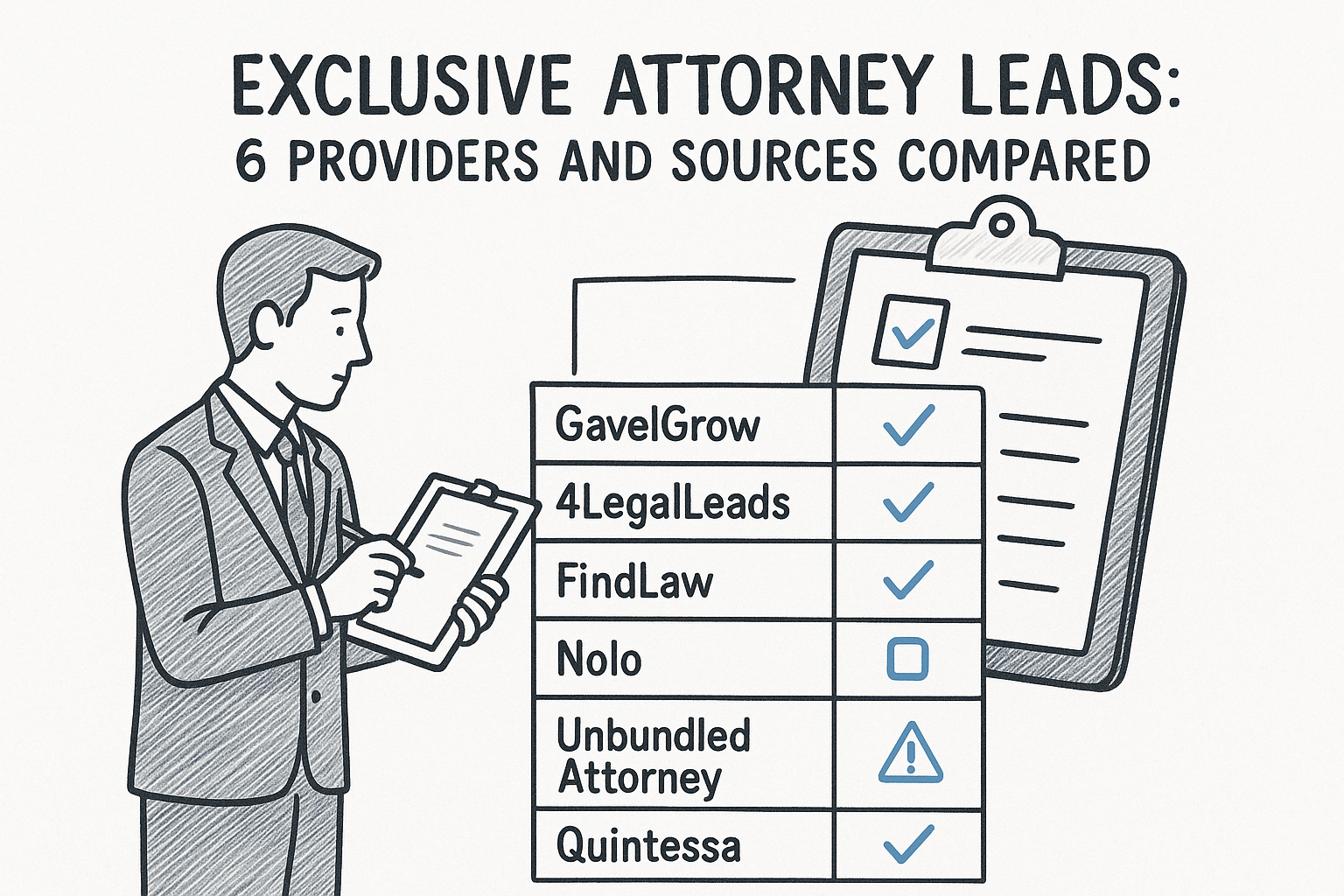
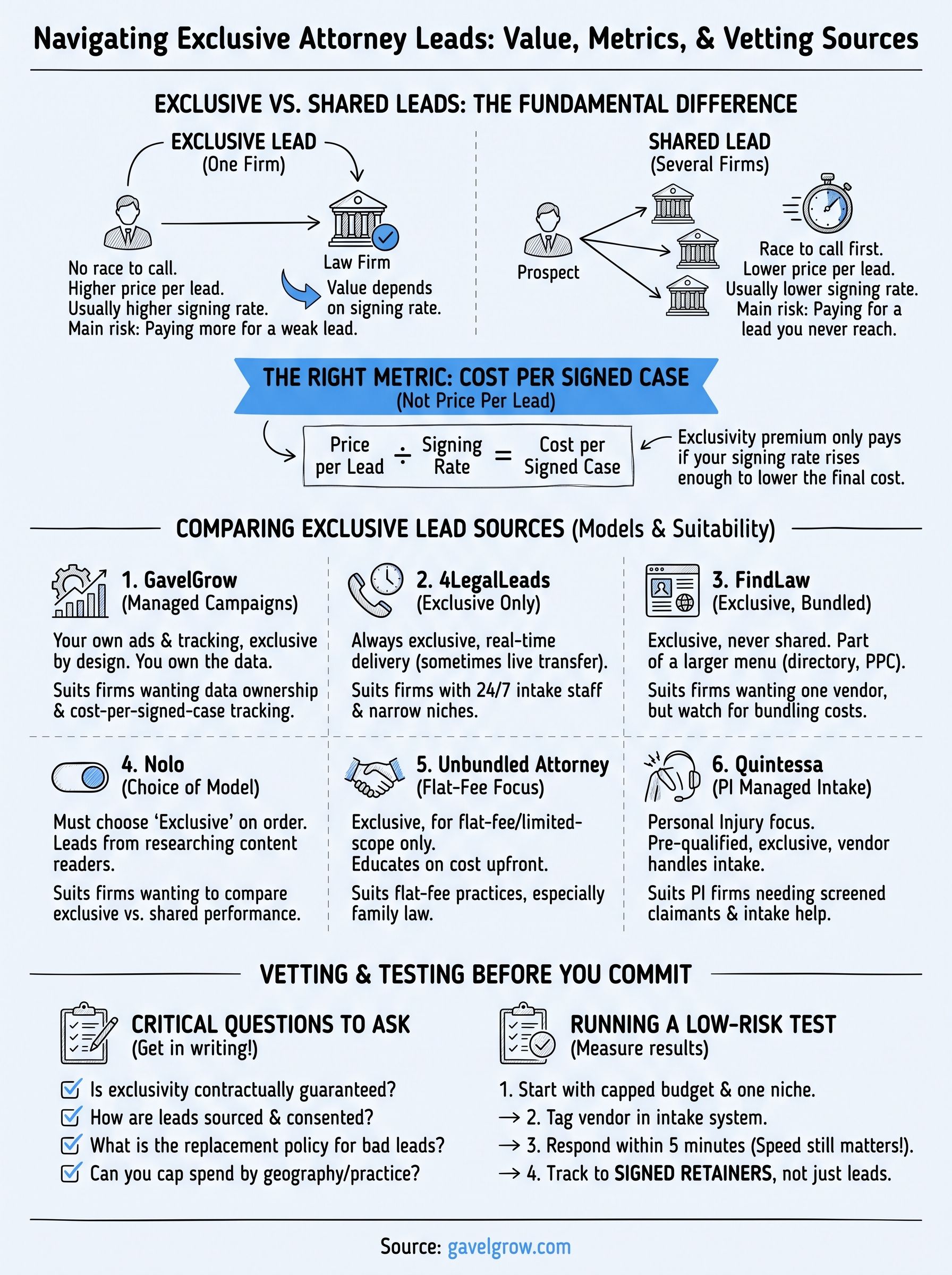
The right source of exclusive attorney leads sells each prospect to your firm alone and prices the lead at a level your intake team can turn into signed cases. 4LegalLeads and FindLaw suit firms that want every purchased lead to be exclusive. Nolo suits firms that want a choice between exclusive and shared. Unbundled Attorney suits flat-fee practices, Quintessa suits personal injury firms, and your own managed campaigns suit firms that want to own the lead data.
A shared lead sounds cheap until three other firms call the same prospect before you do. Exclusive leads remove that race, but they cost more per lead, and every vendor defines "exclusive" a little differently. This article compares six sources, shows how to judge them by cost per signed case, and lists what to ask before you pay.
GavelGrow has marketed only for law firms since 2015, and we measure marketing by signed retainers, not lead counts. That is the lens for every comparison below.
Key Takeaways
- Exclusive leads go to one firm, so you skip the race to dial.
- Exclusive costs more per lead, but cost per signed case decides value.
- Get exclusivity, delivery speed, and replacement terms in writing before you pay.
- Your own ad campaigns produce leads no vendor can resell.
- Test one vendor with a capped budget and track to signed retainers.
What makes a lead exclusive, and what does it cost?
An exclusive lead is a prospect whose contact details are sold to one firm only. A shared lead is sold to several firms at once. Exclusive leads cost more per lead, and the premium only pays off if your team signs a larger share of them. Price per lead is the wrong yardstick. Cost per signed case is the right one.
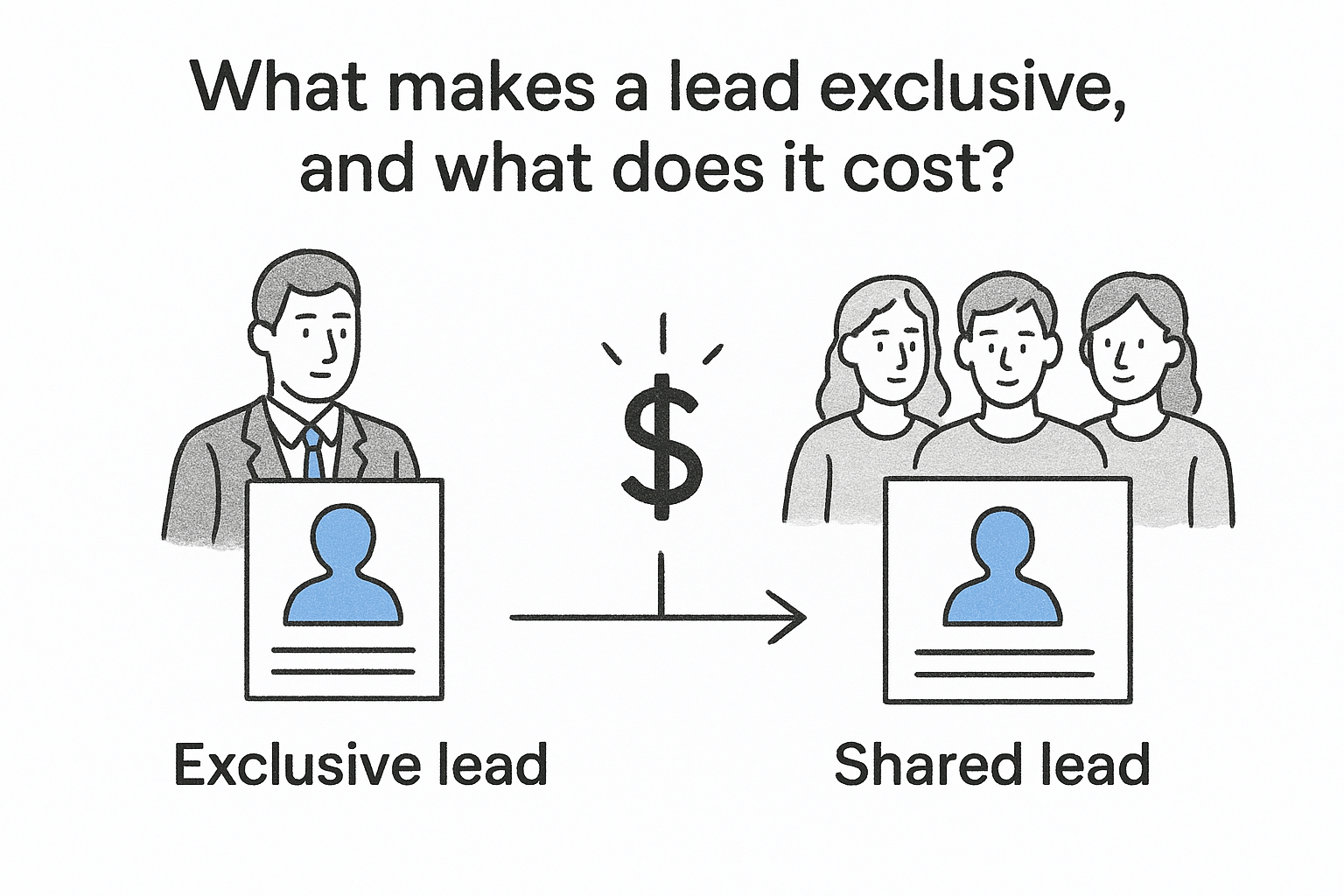
Exclusive vs shared leads at a glance
Shared leads put you in a race. When a vendor sells one prospect to several firms, the phone rings from every direction, and the firm that dials first usually gets the conversation. Speed still matters with exclusive leads too. The Lead Response Management Study found that leads contacted within five minutes are far more likely to be qualified than those first reached at thirty minutes.
Marketplace models such as LegalMatch and Thumbtack work differently again. They send a prospect's request to several matching lawyers, who then decide whether to respond or pay to make contact. For comparison purposes, treat marketplaces as shared.
How to compare cost per signed case
Divide the price per lead by your signing rate. The figures below are illustrative, not market prices, but they show how the math can flip.
The exclusive lead costs 2.4 times as much as the shared one. It beats the shared lead only if it signs more than 2.4 times as often, which means a rate above 12% in this example. Run your own figures in the cost per acquisition calculator.
Pay a premium for exclusivity only if your signing rate rises by more than the price does.
1. GavelGrow managed campaigns
How it works
GavelGrow is not a lead reseller, so this is the one entry where you generate exclusive attorney leads instead of buying them. GavelGrow's legal-only team builds and runs Google Ads, Local Services Ads, and paid social campaigns. Every lead arrives in your own intake forms or on your own tracking numbers, and nobody resells it to another firm.
- Ad accounts and tracking numbers are created in your firm's name
- GavelGrow charges no markup on ad spend
- You review every ad asset before it runs
- Each call is credited to the campaign that rang the phone
- GavelGrow does not run marketing for two direct competitors in the same market
Leads from your own ad accounts are exclusive by design, because no vendor sits between the click and your intake team.
One caveat: a prospect who clicks your ad can still call another firm. You get a lead that is yours alone to work, not a guarantee that nobody else is competing for it.
Who it suits and how pricing works
This route suits firms that want to own their lead data and judge every dollar by cost per signed case. It ramps slower than buying leads, because campaigns need time to launch and tune. It fits firms that can plan beyond the next few weeks.
Managed engagements are scoped on a strategy call, plus your ad spend, and GavelGrow publishes no managed price. If you would rather run campaigns yourself, the platform costs $199 a month on Track or $599 a month on Optimize, with a 7-day free trial and no credit card. You can read more on the managed services page.
2. 4LegalLeads
How it works
4LegalLeads is an independent, nationwide U.S. service founded in 2001 that sells exclusive attorney leads only. It draws prospects through its own advertising and through partner lead generation and search marketing companies. It then delivers each lead in real time, sometimes as a live call transfer.
- Leads are always exclusive, never shared
- Real-time delivery, with live transfers in some cases
- A long practice-area list, including niches such as nursing home abuse
- You set geography, practice areas, and budget
- A return policy for poor-quality leads, so confirm the current terms
Live transfers run on a rotating basis. The first available attorney in the queue gets the call. That helps in competitive areas such as personal injury, and it hurts if nobody answers your phones at night or on weekends.
With live transfers, the lead goes to whoever picks up first, so staffing the phones is part of the price.
Who it suits and how pricing works
4LegalLeads suits firms with intake staff who can answer at any hour. It also suits firms in narrow practice areas that other vendors do not cover. Firms that want exclusive leads on every order without negotiating for them each time will find the model simple.
Pricing is pay-per-lead. The vendor posts current rates for each lead category on its website, so you can check a price for your practice area before you speak with sales. Rates follow market conditions, so compare quotes from different vendors on the same day.
3. FindLaw
How it works
FindLaw has been part of Thomson Reuters since 2001, and one of its services is pay-per-lead generation. It uses targeted online advertising to send prospects to landing pages, where a basic contact form captures the lead. The lead then goes to one attorney in the matching practice area and location. FindLaw leads are exclusive and never shared, which is why the cost per lead runs higher.
- Exclusive pay-per-lead service across major practice areas
- Premium directory profiles, sold separately
- PPC campaign management and website services
- Bundled marketing packages for firms that want one vendor
FindLaw's exclusivity is built into the product, but the lead program is only one line on a longer menu.
Who it suits and how pricing works
FindLaw suits firms that want exclusive attorney leads and may add directory, PPC, or website work from the same vendor. The risk is bundling. Directory listings and ad management are extra cost, so ask for the lead program priced and tracked on its own.
Lead pricing varies by practice area and location, and the vendor quotes it directly. Before you sign, ask what counts as a billable lead, how you report a bad one, and whether a quote includes add-on services you did not request.
4. Nolo
How it works
Nolo began more than 40 years ago as an independent source of free legal information. It has been part of Internet Brands since 2011. It ranks informational content in search, and each article carries a "speak with an attorney" prompt that captures the lead. The lead is sold to attorneys in the same geography and practice area for a flat fee.
- Both exclusive and shared access are available
- Major practice areas, including bankruptcy, criminal defense, DUI, divorce, employment, estate planning, immigration, personal injury, and workers' comp
- Integration with law firm CRMs
- Leads come from content readers who are still researching
Nolo sells both models, so exclusive has to appear on your order. Otherwise you may be buying a lead several other firms receive.
With Nolo, the word "exclusive" is an option you choose, not the default.
Who it suits and how pricing works
Nolo suits firms that want a choice. You can start with shared leads at a lower price, then compare their signing rate against exclusive leads at a higher one. Because many prospects are still researching rather than ready to hire, your intake process matters.
Nolo does not publish prices. Cost depends on practice area, location, and whether the lead is exclusive or shared, so request a written quote for each option. Then run the cost per signed case math from earlier before choosing.
5. Unbundled Attorney
How it works
Unbundled Attorney is a smaller company with a narrow model. It works only with attorneys who offer unbundled services, meaning flat-fee, limited-scope help with specific tasks. It runs PPC advertising on Google and social platforms and educates each prospect upfront about what unbundled services are and the typical cost range.
- Exclusive leads only
- A cap on the number of attorneys it works with in a region
- Practice areas: family law, immigration, estate planning, and bankruptcy
- Prospects see an estimated cost range before they reach you
Telling prospects the price range upfront is what makes these leads arrive ready to hire.
Who it suits and how pricing works
This source suits firms that already sell flat-fee, limited-scope work, especially in family law. The regional cap gives you a steadier lead flow and less competition from other buyers in your market. It does not suit contingency practices or firms that take only full-representation retainers.
Pricing is not public and depends on practice area and location, so ask for a quote. Ask also how many attorneys the vendor already works with in your region, because that cap is the main reason to choose this source.
6. Quintessa
How it works
Quintessa connects personal injury attorneys with high-intent claimants through a fully managed lead generation and intake service. It describes its leads as pre-qualified and exclusive, delivered in real time, with support for case acquisition from first contact onward.
- Personal injury focus
- Pre-qualified, exclusive leads
- Real-time delivery
- Intake handled by the vendor rather than your staff
Public detail on this vendor is thinner than for the others here. Treat the first call as due diligence and ask for sample leads, the screening criteria, and the delivery method.
A managed intake service moves the quality question from the lead to the screening, so ask how prospects are qualified.
Who it suits and how pricing works
Quintessa suits personal injury firms that want a vendor to screen claimants before they reach the firm, especially firms with a thin in-house intake team. It fits less well if you want to control every first conversation with a prospect yourself.
Pricing is not published here. Ask whether you pay per lead, per qualified lead, or on another basis, and what happens when a claimant turns out to be unqualified or outside your area. Get those answers in the contract.
How do you vet an exclusive lead provider before you buy?
Vet a provider the way you would vet any vendor that touches your intake: get its promises in writing and measure its results by signed cases. A sales page that says "exclusive" proves nothing until the contract and a pilot confirm it.
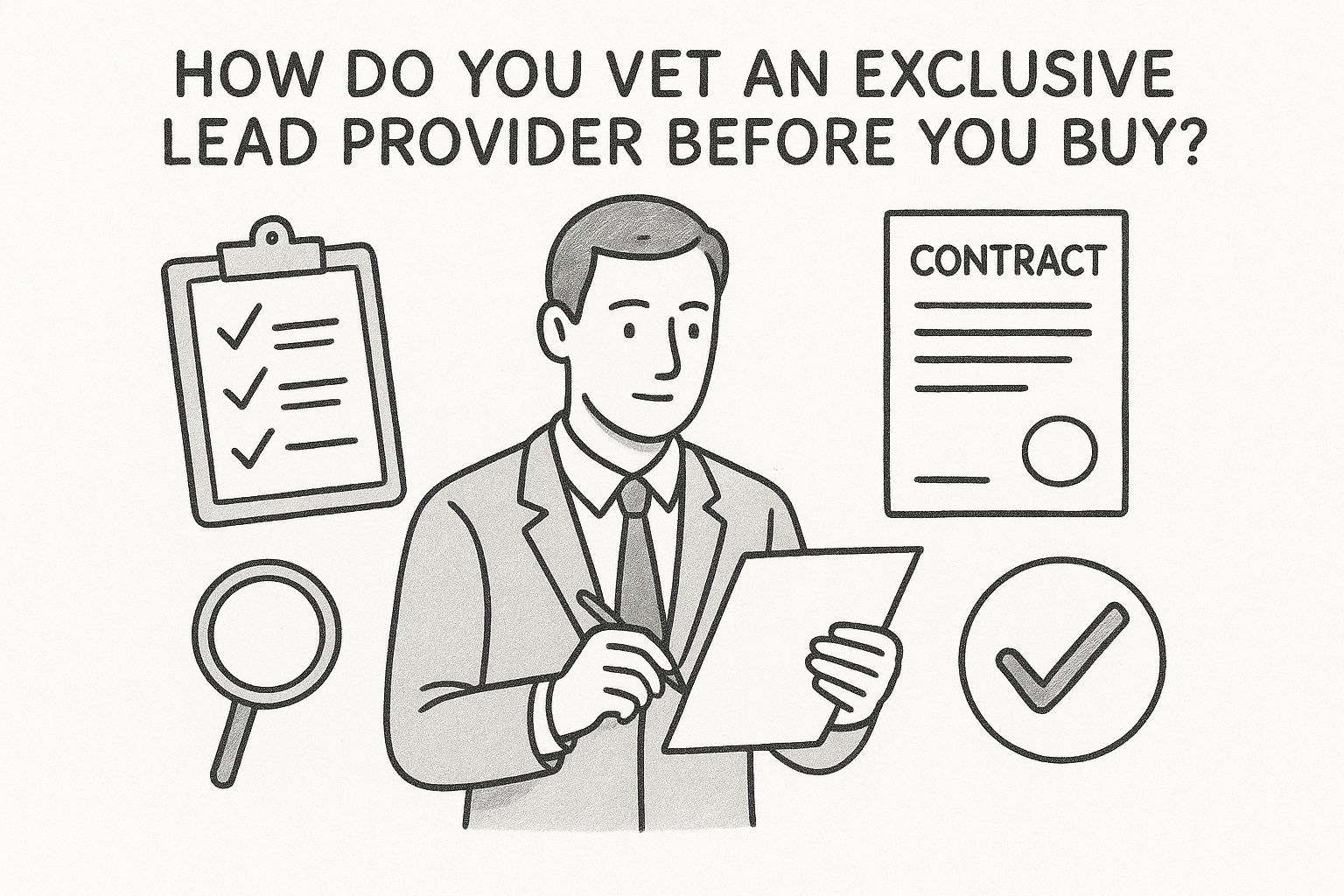
Questions to ask before you pay
Send these questions to every vendor, and compare the written answers side by side.
- Is exclusivity written into the contract, and does any other firm ever receive the same prospect?
- How are leads sourced: your own ads, search content, or partner networks?
- What proof of consent comes with each lead, and does it name your firm?
- What counts as a replaceable lead, and how long do you have to report one?
- How fast is delivery, and in what form: web, text, or live transfer?
- Can you cap spend by geography and practice area?
Whatever a vendor tells you on a call only counts if it appears in the contract.
Compliance deserves its own line. Consent rules under the Telephone Consumer Protection Act apply to your calls and texts, and state-bar advertising rules vary by state. Check your own bar's rules, and ask counsel to review the vendor agreement.
How to run a low-risk test
Start with one practice area, one geography, and a budget you can afford to lose. Tag each vendor as its own source in your intake system, so every lead, call, and signed retainer traces back to where it came from. Platforms with built-in call tracking and attribution, like GavelGrow's, make that comparison easier when leads arrive by phone as well as by form.
Judge the pilot on signed cases, not on lead volume. Legal matters take time to close, so give the test enough weeks to show retainers. Respond to every lead within minutes, because a slow team will make any vendor look bad.
Frequently asked questions
Are exclusive attorney leads worth the higher price?
They are worth it when your signing rate rises by more than the price does. In the earlier illustration, a $120 exclusive lead signing at 15% costs $800 per signed case, against $1,000 for a $50 shared lead signing at 5%. The same exclusive lead signing at 8% costs $1,500. Slow intake can erase the advantage, so check how quickly your team calls back before you pay a premium.
Exclusivity only pays when your intake team answers fast enough to use it.
How much do lawyers pay for leads?
There is no single price. Cost per lead depends on practice area, location, and whether the lead is exclusive, and competitive areas such as personal injury generally cost more than lower-value matters. 4LegalLeads posts current rates by lead category on its website. Nolo, FindLaw, and Unbundled Attorney price by practice area and location. Ask for a written quote, then divide it by your signing rate to get your cost per signed case.
Where can you find exclusive family law leads?
Unbundled Attorney sells exclusive family law leads to attorneys who offer flat-fee, limited-scope services, and it caps how many attorneys it works with in a region. Nolo covers divorce and 4LegalLeads covers family law, though Nolo sells both exclusive and shared leads, so confirm which you are ordering. If you take full-representation matters, Google Ads campaigns in your firm's own account give you leads that are yours alone to follow up.
Do exclusive lead vendors refund bad leads?
Some do, but terms differ, so get them in writing. 4LegalLeads has a return policy for poor-quality leads. Common replaceable problems are invalid contact details and prospects outside your service area. Ask how many days you have to report a bad lead, whether you receive a credit or a refund, and who decides whether a lead qualifies. A vague answer to any of those three is a warning sign.
How fast should you respond to an exclusive lead?
Call within five minutes if you can. The Lead Response Management Study found that leads contacted within five minutes are far more likely to be qualified than those first reached at thirty minutes. That measures the odds of qualifying a lead, not of signing it, but it shows why a live transfer or text alert beats checking email at lunch. Send alerts to a person, not a shared inbox.
Do you need TCPA consent for purchased leads?
Marketing calls or texts made with an autodialer or prerecorded voice generally require prior express written consent under the Telephone Consumer Protection Act. Ask each vendor for the consent language the prospect saw and a record for every lead, and check whether it names your firm. Keep those records yourself, and ask your counsel how TCPA and your state bar's rules apply to your outreach.
Picking a source you can measure
Exclusive attorney leads remove the race to the phone, and they cost more per lead for that reason. Whether the premium pays off depends on your signing rate, so compare every source by cost per signed case. Buy from 4LegalLeads or FindLaw for exclusive leads on every order, Nolo if you want to test both models, Unbundled Attorney for flat-fee work, and Quintessa for personal injury. Run your own campaigns if you want the leads and the data to stay yours.
Whichever route you choose, get exclusivity and replacement terms in writing, track every lead to a signed retainer, and test with a capped budget first. If you want to see what your own campaigns would cost per signed case against a purchased lead, book a free strategy call with GavelGrow and we will scope it with you.
Frequently Asked Questions
Are exclusive attorney leads worth the higher price?
They are worth it when your signing rate rises by more than the price does. In the earlier illustration, a $120 exclusive lead signing at 15% costs $800 per signed case, against $1,000 for a $50 shared lead signing at 5%. The same exclusive lead signing at 8% costs $1,500. Slow intake can erase the advantage, so check how quickly your team calls back before you pay a premium. Exclusivity only pays when your intake team answers fast enough to use it.
How much do lawyers pay for leads?
There is no single price. Cost per lead depends on practice area , location, and whether the lead is exclusive, and competitive areas such as personal injury generally cost more than lower-value matters. 4LegalLeads posts current rates by lead category on its website. Nolo, FindLaw, and Unbundled Attorney price by practice area and location. Ask for a written quote, then divide it by your signing rate to get your cost per signed case.
Where can you find exclusive family law leads?
Unbundled Attorney sells exclusive family law leads to attorneys who offer flat-fee, limited-scope services, and it caps how many attorneys it works with in a region. Nolo covers divorce and 4LegalLeads covers family law, though Nolo sells both exclusive and shared leads, so confirm which you are ordering. If you take full-representation matters, Google Ads campaigns in your firm's own account give you leads that are yours alone to follow up.
Do exclusive lead vendors refund bad leads?
Some do, but terms differ, so get them in writing. 4LegalLeads has a return policy for poor-quality leads. Common replaceable problems are invalid contact details and prospects outside your service area. Ask how many days you have to report a bad lead, whether you receive a credit or a refund, and who decides whether a lead qualifies. A vague answer to any of those three is a warning sign.
How fast should you respond to an exclusive lead?
Call within five minutes if you can. The Lead Response Management Study found that leads contacted within five minutes are far more likely to be qualified than those first reached at thirty minutes. That measures the odds of qualifying a lead, not of signing it, but it shows why a live transfer or text alert beats checking email at lunch. Send alerts to a person, not a shared inbox.
Do you need TCPA consent for purchased leads?
Marketing calls or texts made with an autodialer or prerecorded voice generally require prior express written consent under the Telephone Consumer Protection Act. Ask each vendor for the consent language the prospect saw and a record for every lead, and check whether it names your firm. Keep those records yourself, and ask your counsel how TCPA and your state bar's rules apply to your outreach.