Law Firm Call Tracking Software: What It Is, How It Works
Categories: Legal Marketing Strategies
 Abram Ninoyan
Founder & Senior Performance Marketer
Credentials: Google Partner, Google Ads Search Certified, Google Ads Display Certified, Google Ads Measurement Certified, Google Analytics (IQ) Certified, HubSpot Inbound Certified, HubSpot Social Media Marketing Certified, Conversion Optimization Certified
Expertise: Google Ads, Meta Ads, Conversion Rate Optimization, GA4 & Google Tag Manager, Lead Generation, Marketing Funnel Optimization, PPC Management
LinkedIn Profile
Law firm call tracking software assigns unique phone numbers to each marketing campaign, then records which ads, keywords, and landing pages generated every inbound call. It's the difference between k...
Key Takeaways
- Law Firm Call Tracking Software: What It Is, How It Works
- Why does call tracking matter for law firms?
- How does law firm call tracking software work?
- What should you look for in call tracking software?
Law Firm Call Tracking Software: What It Is, How It Works
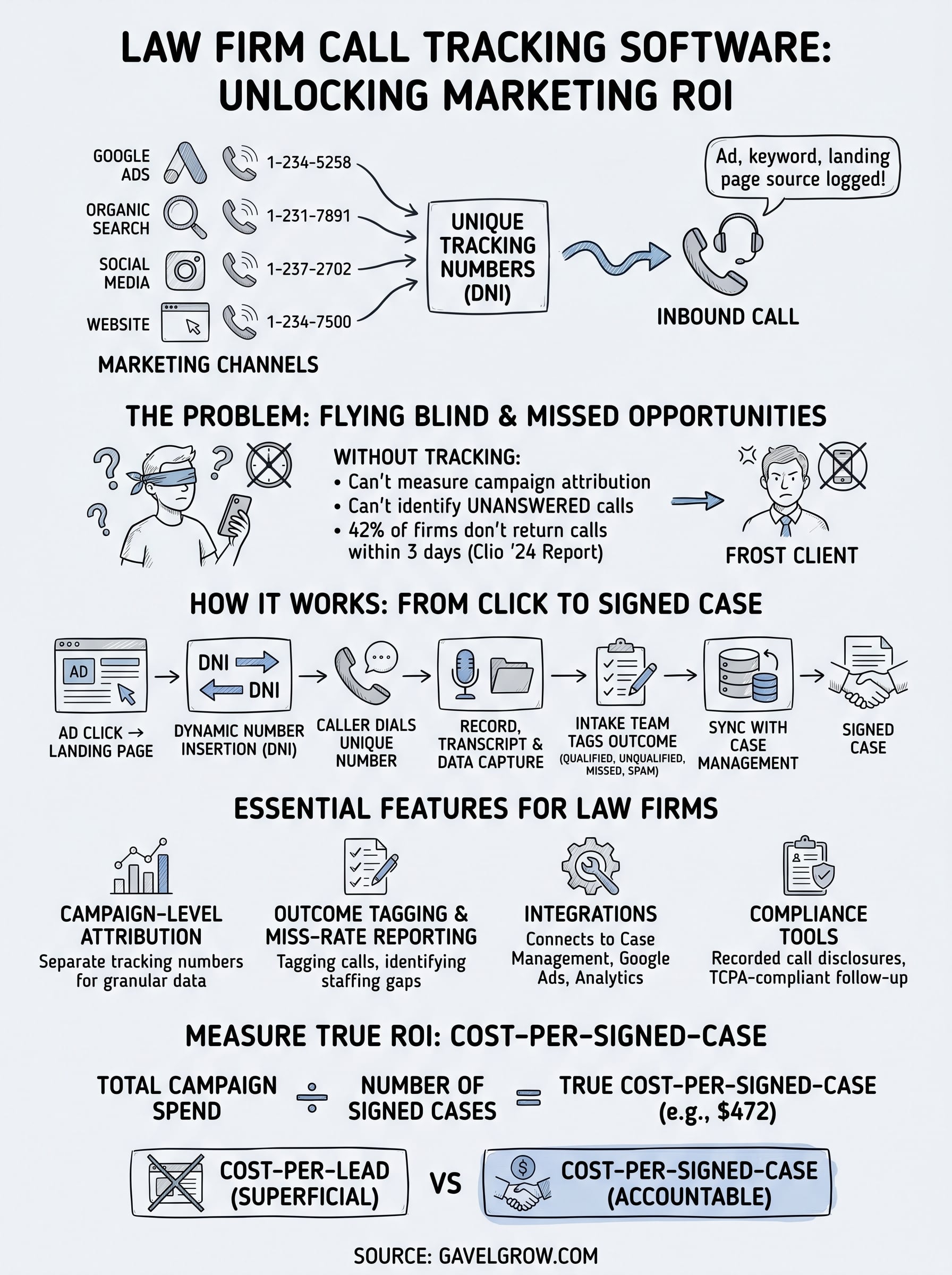
Law firm call tracking software assigns unique phone numbers to each marketing campaign, then records which ads, keywords, and landing pages generated every inbound call. It's the difference between knowing you got 40 calls last month and knowing which 12 of those calls came from your Google Ads personal injury campaign, and what each one cost.
Pricing figures in this article reflect each vendor’s publicly listed rates as of July 2026 and are subject to change — always confirm current pricing on the vendor’s own site.
Phone calls still drive the majority of first contacts at most law firms, yet Clio's 2024 Legal Trends Report found that 42% of firms don't return calls within three days. Without call tracking, you're flying blind twice: you can't measure which campaigns produce calls, and you can't identify which calls your team failed to answer. That blind spot makes it nearly impossible to calculate a real cost-per-signed-case instead of a superficial cost-per-click.
This article breaks down exactly how call tracking works in a legal context, what features matter most for firms spending $2K–$100K+ per month on ads, and how to evaluate software options without overpaying for tools that don't talk to each other. We built GavelGrow's built-in call tracking specifically to replace standalone tools like CallRail, giving firms per-campaign Twilio tracking numbers, call recordings, outcome tagging, and miss-rate breakdowns inside the same platform that handles intake, attribution, and case management. Whether you use our platform or not, understanding call tracking is foundational to running accountable marketing at any firm.
Why does call tracking matter for law firms?
Phone calls remain the primary intake channel for most practice areas, from personal injury to criminal defense. According to a 2023 Google study on legal consumer behavior, 62% of people searching for legal services prefer to call a firm directly rather than fill out a web form. That volume creates both an opportunity and a risk: every call is a potential signed case, but without law firm call tracking software, you have no reliable way to know which marketing dollars produced it.
Most Law Firm Marketing Reports Are Incomplete
Most agencies hand you a report showing clicks, impressions, and cost-per-click. None of those numbers tell you whether a person picked up the phone, asked qualifying questions, and booked the caller for a consult. Without tracking numbers tied to specific campaigns, your Google Ads data captures conversions from form fills but misses every caller who bypassed the form entirely and dialed the number directly on the landing page. For firms spending $5,000 to $50,000 per month on ads, that blind spot is expensive.
When you can't attribute calls to specific campaigns, you're measuring the marketing you can see, not the marketing that's actually working.
Your intake team might tell you 40 people called last week. But which 12 came from paid search, which 15 came from organic, and which 13 came from your Google Business Profile? Without dedicated tracking numbers per channel, those distinctions collapse into a single unattributed phone line, and budget decisions become guesswork.
Why Response Speed Compounds the Problem
Speed-to-lead is a well-documented issue in legal intake. Research cited by the Harvard Business Review found that firms responding within five minutes of a lead inquiry are 21 times more likely to qualify that lead compared to firms that wait 30 minutes or longer. When calls go untracked, you also lose visibility into your miss rate, the percentage of inbound calls your team failed to answer during business hours or after-hours.
A high miss rate on your best-performing campaigns quietly drains your budget. You might be generating strong call volume from a specific keyword group, but if 30% of those calls go unanswered, you're paying for leads that evaporate before anyone speaks with a potential client. Call tracking surfaces this problem directly, giving you the data you need to fix staffing gaps or trigger automated follow-up sequences before the caller contacts a competitor.
The Link Between Call Data and Cost-Per-Signed-Case
Most law firm marketing dashboards stop at cost-per-lead, which treats a phone call or a form submission as the final metric. That number feels useful but it obscures what actually drives revenue. A campaign generating 80 cheap leads that convert to two retained clients is worse than a campaign generating 20 expensive leads that convert to 12 retained clients.
Call tracking connects the top of your funnel to the bottom by letting you tag each recorded call with an outcome: qualified, unqualified, callback needed, or spam. When those tags sync with your case management and attribution data, you can calculate a true cost-per-signed-case at the campaign level. That single number tells you exactly where to put your next marketing dollar, and it's impossible to calculate without tracking every call back to its source.
How does law firm call tracking software work?
Law firm call tracking software works by assigning a unique phone number to each marketing channel, campaign, or even individual keyword group. When a potential client sees your ad and dials that number, the software captures the call, records it if permitted, and logs the source, time, duration, and caller data before forwarding the call to your main firm line. Your intake team handles the conversation exactly as they normally would, while the system silently ties every call back to the specific campaign that produced it.
Dynamic Number Insertion Ties Keywords to Calls
When someone lands on your website from a paid search ad, the software automatically swaps the displayed phone number using a script called dynamic number insertion (DNI). Each visitor sees a tracking number that matches exactly how they found you: a specific Google Ads campaign, an organic search result, or a social media post. The moment they call, that number routes to your firm while logging the originating keyword, session data, and referral source in your dashboard.
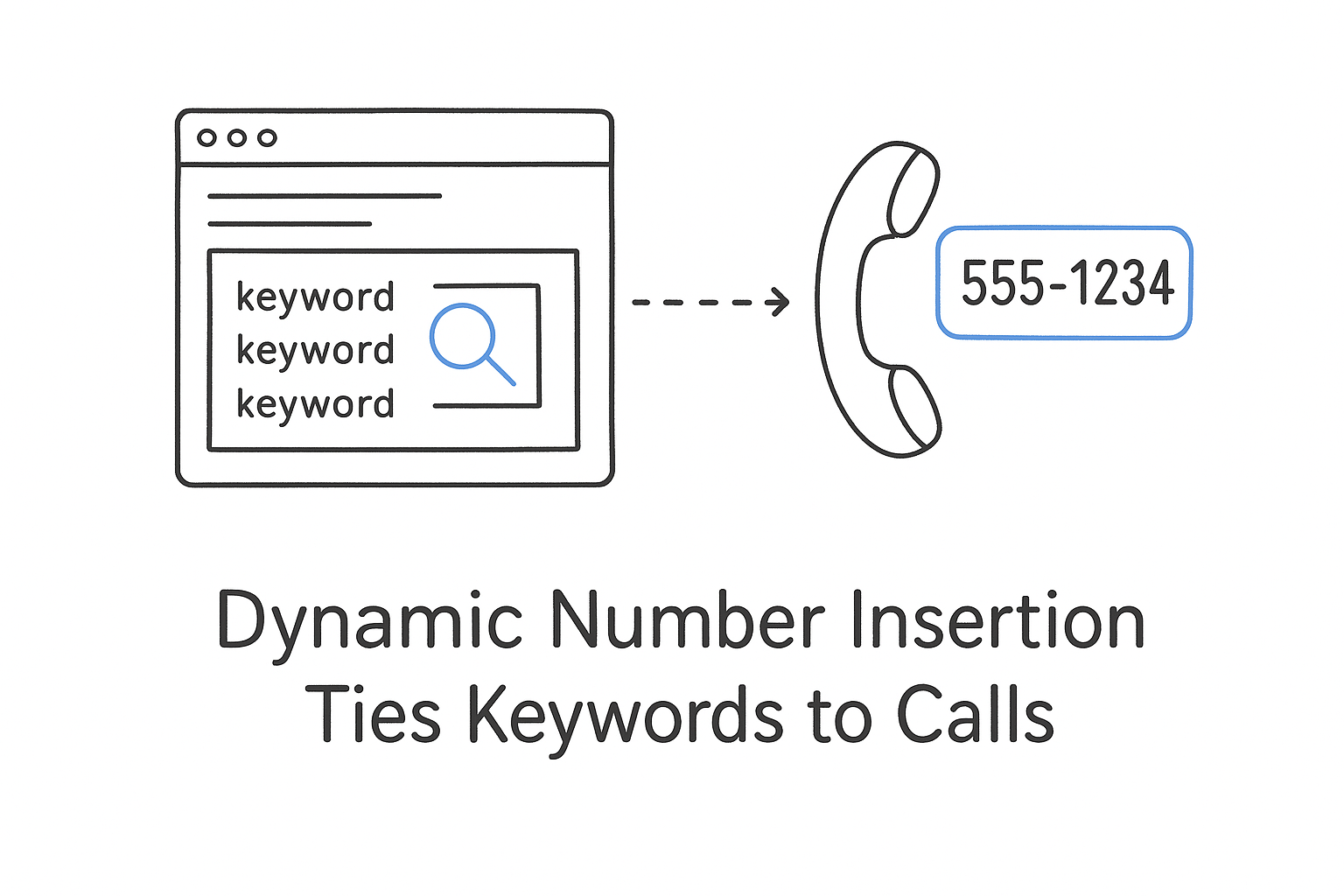
Without dynamic number insertion, your website shows the same number to every visitor, making it impossible to separate paid traffic calls from organic ones.
Running three separate ad campaigns becomes measurable in a way it never was before. You can see exactly how many calls each campaign generated, how long those calls lasted, and how many went unanswered during business hours. No more lumping all inbound calls into one unattributed bucket.
What Happens After the Call Connects
Once the call ends, the software stores a recording and a transcript (where two-party consent rules permit) and prompts your intake team to tag the outcome: qualified, unqualified, callback needed, or spam. Those tags become the bridge between raw call volume and revenue data. When the outcome syncs with your case management records, you can trace a signed retainer back to the original keyword, ad group, and spend amount that generated the call.
Good call tracking software also surfaces your miss rate per tracking number, showing which campaigns produce calls that go unanswered. That single metric tells you whether your intake coverage matches your advertising investment, and it gives you the data to fix the gap before another potential client dials a competitor instead.
What should you look for in call tracking software?
Not all call tracking tools are built for legal. Generic platforms give you call volume and duration, but they lack the legal-specific features that turn raw call data into actionable intake intelligence. When you evaluate law firm call tracking software, prioritize tools that connect every call to a specific campaign, capture outcome data, and integrate directly with your ad accounts and case management system.
Campaign-Level Attribution, Not Just Call Volume
The most important feature you need is per-campaign tracking numbers with dynamic number insertion (DNI). A platform that gives you only a single tracking number tells you how many calls came in; it cannot tell you which Google Ads campaign, organic keyword, or referral source produced each one. You need a distinct number assigned to every channel so your dashboard separates paid search calls from organic calls, and breaks paid results down by campaign or ad group.
If your call tracking tool can't connect a call to the specific campaign that generated it, you're measuring activity, not attribution.
Look for platforms that sync call data natively with Google Ads and Google Analytics 4 so conversions appear inside your own ad accounts without manual imports. That native sync keeps your bidding algorithms accurate and prevents attribution gaps that inflate your reported cost-per-lead.
Outcome Tagging and Miss-Rate Reporting
Raw call volume doesn't tell you whether a caller was a qualified personal injury prospect or a wrong number. Your intake team needs to tag every call with an outcome: qualified, unqualified, callback needed, or spam. Those tags are what allow you to calculate a true cost-per-signed-case rather than a cost-per-call, which is a far less useful number for budget decisions.
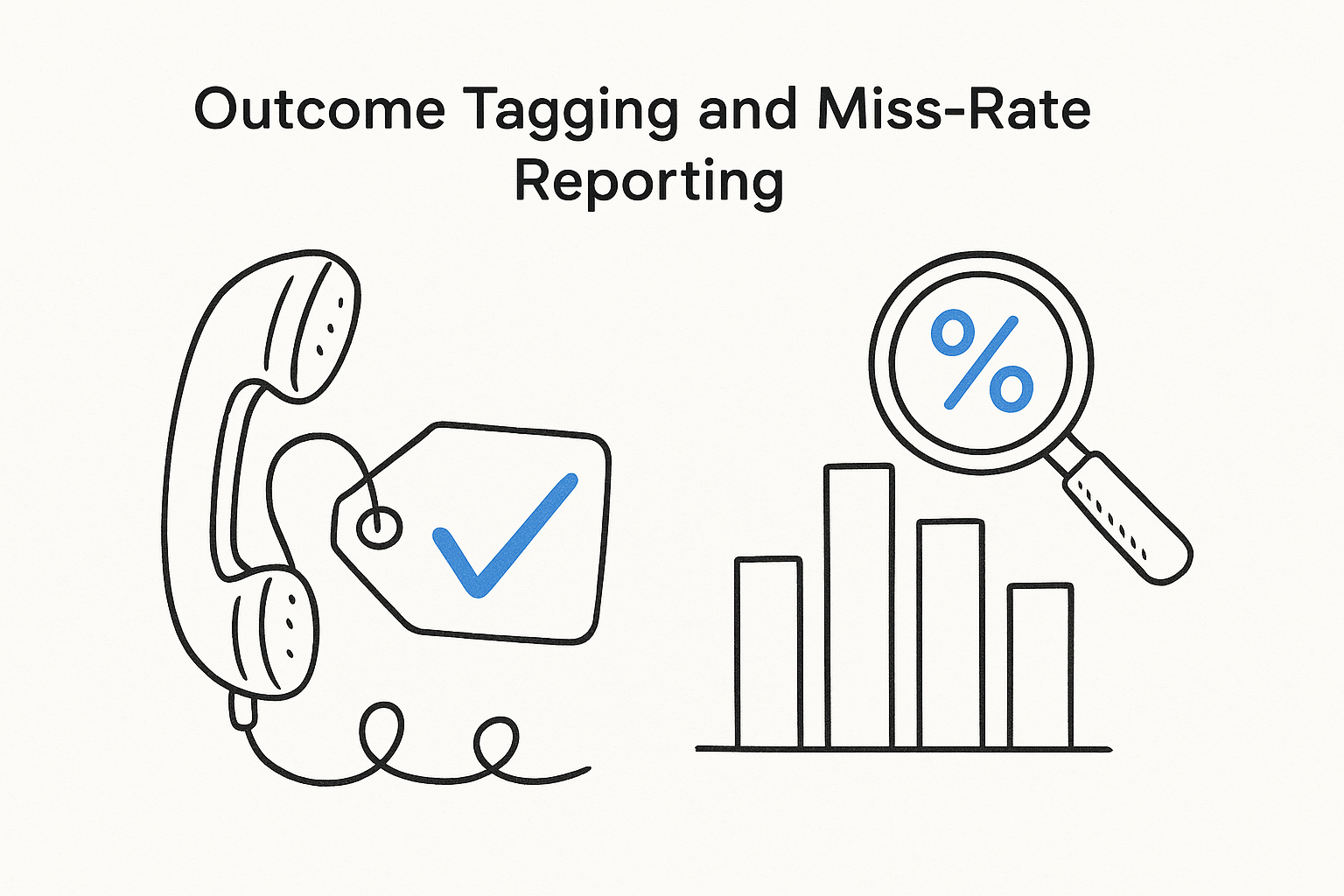
Miss-rate reporting is equally critical. Your software should show you what percentage of calls went unanswered per tracking number, broken down by time of day. That data tells you whether your intake staffing matches your advertising investment and surfaces the exact hours when you're paying for calls that nobody answers.
Integration With Case Management and Intake Automation
Call tracking data loses most of its value if it lives in a separate silo. Look for a platform that connects call outcomes to your case management records and intake automation workflows so a missed call can trigger an immediate SMS follow-up sequence. At minimum, your call tracking platform should handle these without manual exports:
- Link recorded calls to the originating lead record
- Push outcome tags to your attribution dashboard
- Fire conversion events to Google Ads and Meta automatically
- Trigger follow-up sequences on missed or unqualified calls
How do you set up call tracking without compliance risk?
Setting up law firm call tracking software requires more than assigning phone numbers to campaigns. You need to account for call recording consent laws, TCPA requirements, and your state bar's advertising rules before a single tracked call hits your intake team. The good news is that compliance is straightforward when you build it into the setup process rather than bolting it on afterward.
Know Your State's Call Recording Laws
Call recording consent rules vary significantly by state, and the distinction matters before you record a single intake call. Federal law (18 U.S.C. § 2511) requires one-party consent, meaning only one person on the call needs to know it's being recorded. However, twelve states, including California, Florida, and Illinois, require two-party (all-party) consent, meaning every person on the call must be notified before recording begins.
If your firm operates in a two-party consent state and you record without notifying callers, you risk both criminal liability and civil claims, regardless of whether the recording was used for anything other than quality review.
The cleanest way to handle this is to configure your call tracking platform to play a short recorded disclosure at the start of every inbound call, such as "This call may be recorded for quality purposes." That single step keeps you compliant in all fifty states and protects your firm if a recording is ever challenged.
Apply TCPA-Compliant Practices to Follow-Up Sequences
Your call tracking setup does not end when the call disconnects. If a caller opts into SMS follow-up or a callback sequence after an unanswered call, TCPA consent requirements apply to every outbound text or automated message your intake system sends. You need a written consent record tied to each lead before any automated outreach begins.
Build your intake workflow so that consent is captured at the form or intake level and stored in an append-only audit log. That log should record the exact timestamp, the consent language the lead agreed to, and the channel through which consent was given. If your call tracking platform does not generate that log automatically, you are carrying compliance risk on every follow-up message your team sends.
Keep Tracking Numbers Off State Bar Violation Lists
Most state bars treat each tracking number as a separate advertisement, which means your firm name and required disclaimers need to appear on any landing page or ad that displays a tracking number. Review your state bar's specific advertising rules before you assign tracking numbers to campaigns, because some jurisdictions require additional disclosures for pay-per-click legal ads that go beyond what a general marketing agency would flag.
How do you measure ROI from calls to signed cases?
Measuring ROI from law firm call tracking software starts with connecting every tracked call to a final case outcome, not stopping at cost-per-call or cost-per-lead. Your goal is a single number at the campaign level: cost-per-signed-case. That figure tells you exactly which campaigns generate retained clients, not just phone activity, and it's the only metric that justifies or challenges your ad spend with any precision.
Build a Call-to-Case Attribution Chain
Your attribution chain needs to link four data points without any manual steps: the originating campaign, the call record, the intake outcome, and the signed retainer. When those four points connect automatically inside one platform, you can pull a report showing that your branded Google Ads campaign produced 18 qualified calls at $210 each, eight of which converted to signed cases at a true cost-per-signed-case of $472. Without that chain, you're calculating averages across all campaigns and all channels, which hides the campaigns that actually work.
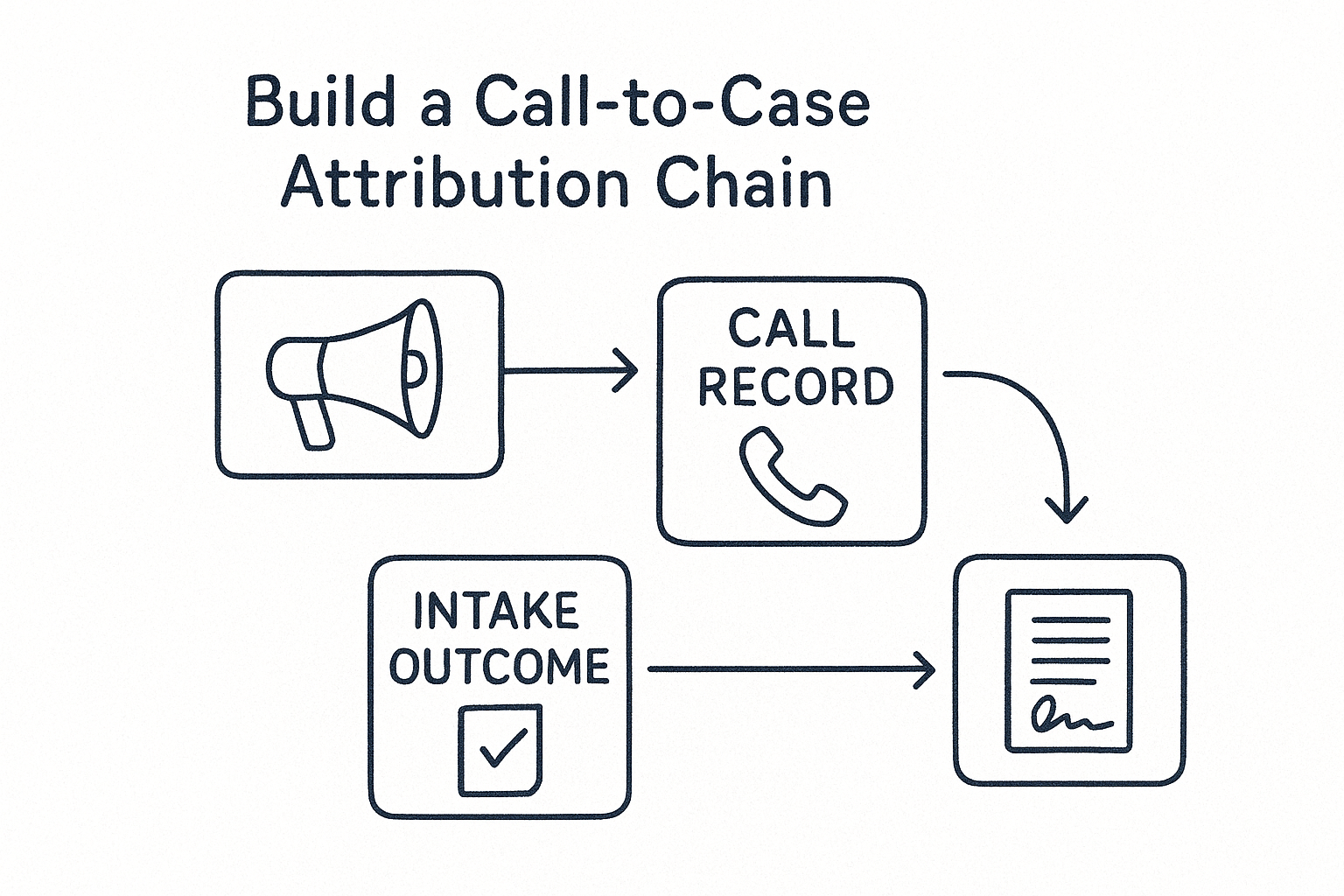
If you measure cost-per-lead instead of cost-per-signed-case, you optimize for lead volume, which often means filling your pipeline with cases your firm won't retain.
Build the chain by assigning tracking numbers to every campaign, tagging every call outcome in real time, and syncing those tags to your case management records so a signed retainer closes the loop back to the original ad click.
Use Outcome Tags to Calculate True Campaign Value
Your intake team tags each call as qualified, unqualified, callback needed, or spam. Those tags are the filter that separates revenue-generating call volume from noise. Once you apply that filter, your cost-per-signed-case calculation becomes straightforward.
Take your total campaign spend for a given period and divide it by the number of calls tagged as qualified that your team converted to a signed retainer. Run that calculation at the campaign level, not across your entire marketing budget, and you'll see which campaigns are profitable and which ones are generating cheap calls that never become clients. A personal injury campaign spending $8,000 per month that produces four signed cases has a cost-per-signed-case of $2,000. Whether that number is acceptable depends on your average case value, which you already know from your case management records. Connecting those two numbers is what makes ROI measurement concrete rather than approximate.
Frequently asked questions
The questions below cover what managing partners and marketing directors ask most often before committing to a call tracking setup. Each answer gives you a direct response so you can make a confident decision without digging through vendor documentation or scheduling unnecessary sales calls.
How much does law firm call tracking software cost?
Most standalone call tracking platforms charge between $50 and $500 per month depending on the number of tracking numbers, call minutes, and integrations you need. CallRail starts around $45 per month for basic plans, but legal firms typically need higher call volumes and deeper integrations, pushing costs up. Platforms that bundle call tracking with intake automation, attribution, and case management often cost less in total than paying for three disconnected tools separately.
Does call recording violate attorney-client privilege?
Recording does not violate attorney-client privilege on its own, because privilege applies to confidential communications after a formal representation relationship exists. Most intake calls happen before that relationship is established. Your firm should configure your call tracking platform to play a brief consent disclosure at the start of every call and store recordings with access limited to authorized staff. Review your state bar's ethics opinions on recording before going live.
How many tracking numbers does my firm actually need?
A practical starting point is one tracking number per active marketing channel: one for Google Ads, one for organic search, one for your Google Business Profile, and one for any paid social campaigns you run. If you run multiple campaigns targeting different practice areas, assign a separate number to each so you can compare cost-per-call across personal injury, family law, or criminal defense without blending the data.
The more granularly you assign tracking numbers, the more precisely you can identify and cut underperforming spend.
Can call tracking sync directly with Google Ads?
Yes. Most call tracking platforms support native Google Ads integration, which pushes call conversion data into your ad account so the bidding algorithm optimizes toward calls that produce qualified leads. Google also offers built-in call extensions and call reporting within Google Ads, though those native options deliver less outcome detail than a dedicated platform connected directly to your intake workflow and case management records.
What is a reasonable call miss rate benchmark for a law firm?
Anything above 15% during business hours signals a staffing or routing gap worth fixing immediately. Clio's 2024 Legal Trends Report noted that firms failing to respond quickly lose qualified leads to competitors who answered faster. Track your miss rate per tracking number rather than as a single firm-wide figure so you can pinpoint exactly which campaigns your intake team is consistently underserving.
Next steps
You now have everything you need to evaluate, set up, and measure law firm call tracking software without wasting budget on tools that don't connect to your actual intake workflow. The core principle is simple: every inbound call should trace back to the campaign, keyword, and spend that generated it, and every outcome should feed your cost-per-signed-case calculation.
Start by auditing your current setup. If your firm runs any paid advertising without dedicated tracking numbers per campaign, you are making budget decisions on incomplete data. Pull your last 90 days of ad spend, identify which campaigns lack call attribution, and assign a tracking number to each one before your next billing cycle.
If you want a faster path to full-funnel attribution, explore GavelGrow's built-in call tracking and intake automation platform to see how it connects calls to signed cases inside one dashboard. You can also book a free 45-minute strategy call to walk through your current setup with someone who has done this for 500+ law firms.
Frequently Asked Questions
How much does law firm call tracking software cost?
Most standalone call tracking platforms charge between $50 and $500 per month depending on the number of tracking numbers, call minutes, and integrations you need. CallRail starts around $45 per month for basic plans, but legal firms typically need higher call volumes and deeper integrations, pushing costs up. Platforms that bundle call tracking with intake automation, attribution, and case management often cost less in total than paying for three disconnected tools separately.
Does call recording violate attorney-client privilege?
Recording does not violate attorney-client privilege on its own, because privilege applies to confidential communications after a formal representation relationship exists. Most intake calls happen before that relationship is established. Your firm should configure your call tracking platform to play a brief consent disclosure at the start of every call and store recordings with access limited to authorized staff. Review your state bar's ethics opinions on recording before going live.
How many tracking numbers does my firm actually need?
A practical starting point is one tracking number per active marketing channel : one for Google Ads, one for organic search , one for your Google Business Profile, and one for any paid social campaigns you run. If you run multiple campaigns targeting different practice areas , assign a separate number to each so you can compare cost-per-call across personal injury, family law, or criminal defense without blending the data. The more granularly you assign tracking numbers, the more precisely you can identify and cut underperforming spend.
Can call tracking sync directly with Google Ads?
Yes. Most call tracking platforms support native Google Ads integration , which pushes call conversion data into your ad account so the bidding algorithm optimizes toward calls that produce qualified leads. Google also offers built-in call extensions and call reporting within Google Ads, though those native options deliver less outcome detail than a dedicated platform connected directly to your intake workflow and case management records.
What is a reasonable call miss rate benchmark for a law firm?
Anything above 15% during business hours signals a staffing or routing gap worth fixing immediately. Clio's 2024 Legal Trends Report noted that firms failing to respond quickly lose qualified leads to competitors who answered faster. Track your miss rate per tracking number rather than as a single firm-wide figure so you can pinpoint exactly which campaigns your intake team is consistently underserving.