Best Lead Source for Law Firms: 11 Proven Options
Categories: Legal Marketing Strategies
 Abram Ninoyan
Founder & Senior Performance Marketer
Credentials: Google Partner, Google Ads Search Certified, Google Ads Display Certified, Google Ads Measurement Certified, Google Analytics (IQ) Certified, HubSpot Inbound Certified, HubSpot Social Media Marketing Certified, Conversion Optimization Certified
Expertise: Google Ads, Meta Ads, Conversion Rate Optimization, GA4 & Google Tag Manager, Lead Generation, Marketing Funnel Optimization, PPC Management
LinkedIn Profile
The best lead source for law firms depends on your practice area, market size, and how much of the intake process you want to control, but Google Ads, LSAs, and SEO-driven content consistently produce...
Key Takeaways
- Best Lead Source for Law Firms: 11 Proven Options in 2026
- 1. GavelGrow
- 2. Google Local Services Ads
- 3. Google Ads Search Campaigns
Best Lead Source for Law Firms: 11 Proven Options in 2026
The best lead source for law firms depends on your practice area, market size, and how much of the intake process you want to control, but Google Ads, LSAs, and SEO-driven content consistently produce the highest-intent prospects in GavelGrow's modelled benchmarks. There's no single magic channel; the firms signing the most cases in 2026 are stacking multiple sources and measuring each one down to cost-per-signed-retainer.
That measurement piece is where most firms get stuck. They're spending $5K, $25K, even $80K a month across platforms like Google, Meta, and legal directories, yet they can't tell you which source actually produced a signed case versus which one just generated a form fill that ghosted. At GavelGrow, we built our platform specifically to solve this: full-funnel attribution from ad click to signed retainer, so every dollar you spend can be traced to revenue. Without that visibility, picking the "best" lead source is just guessing with a bigger budget.
This guide breaks down 11 proven lead sources for law firms, covering paid, organic, and referral-based channels. For each one, you'll get a clear picture of how it works, what it typically costs, which practice areas benefit most, and where it falls short. Whether you're a solo PI attorney spending $3K a month or a 40-lawyer firm running national mass tort campaigns, at least three of these options deserve a hard look.
1. GavelGrow
GavelGrow is both a legal marketing platform and a managed-services agency built exclusively for U.S. law firms. Unlike generic marketing tools that serve dentists, contractors, and law firms in the same dashboard, GavelGrow ships with state-bar compliance defaults, TCPA-compliant SMS, and a benchmark database drawn from 500+ peer firms across every major practice area.
What it is and what leads it helps you win
GavelGrow helps firms capture and convert leads across every paid and organic channel you're already running. The platform pulls lead data from Google Ads, Local Services Ads, Meta, intake forms, and inbound calls into one place so you can see which source is producing signed cases, not just form fills. That distinction matters more than most firms realize until they audit their numbers.
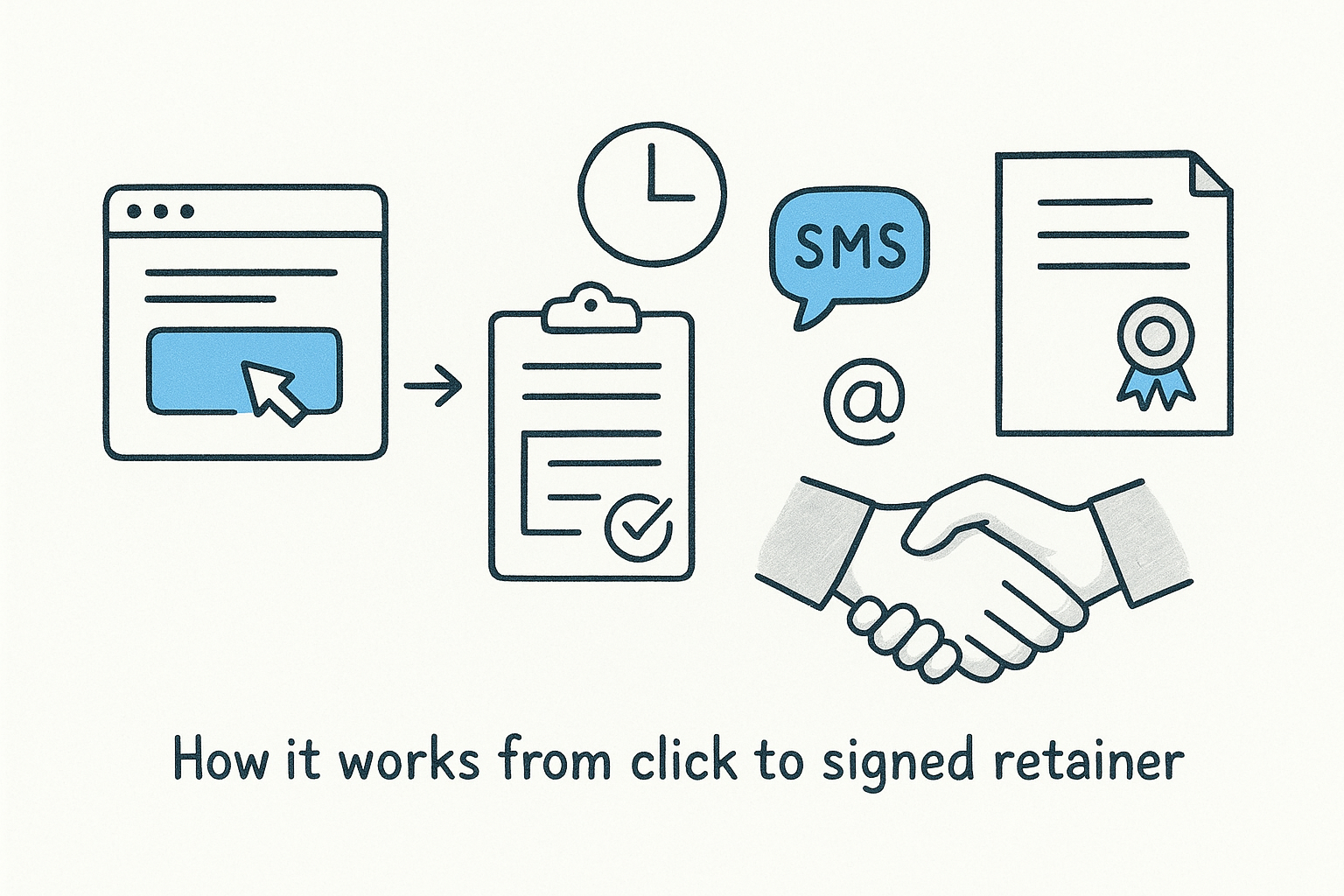
How it works from click to signed retainer
The platform fires GA4, Meta Pixel, and GTM custom events the moment a lead completes your intake form, so attribution lands natively inside your own ad accounts. Intake automation triggers SMS and email follow-up within 60 seconds of lead capture. Built-in call tracking replaces CallRail with per-campaign Twilio numbers, call recordings, and outcome tagging so every inbound call ties back to the campaign that generated it.
Leads contacted within 5 minutes convert 21x higher than those reached after 30 minutes, which makes automated speed-to-lead a functional requirement, not a nice-to-have.
Best fit firms and practice areas
GavelGrow works best for personal injury, mass tort, family law, criminal defense, and immigration firms already spending on paid media and needing clearer attribution. The self-serve platform fits solo practitioners to 15-seat firms running their own marketing. Managed services fit mid-market firms spending $15,000 or more per month on ads and preferring a dedicated strategist.
Typical pricing
The self-serve platform runs $199 to $599 per month across the Track and Optimize tiers, with a 7-day free trial that requires no credit card. Managed services are scoped on a strategy call, with management fees quoted on top of your ad spend. Annual billing includes two months free on the platform rate.
What to track to prove ROI
Focus on cost-per-signed-retainer rather than cost-per-lead. GavelGrow's dashboard surfaces campaign-level cost-per-signed-case, conversion rate by source, and miss-rate breakdowns per call tracking number. When you're comparing the best lead source for law firms across multiple channels simultaneously, that signed-case view is the one that tells you where to scale and where to stop spending.
2. Google Local Services Ads
Google Local Services Ads place your firm's name, phone number, and star rating at the very top of Google's results, above every paid search ad and organic listing. That positioning makes LSAs worth understanding if you're evaluating the best lead source for law firms in 2026.
Why LSAs can produce high-intent calls
LSAs capture people who have already decided they need a lawyer and are choosing who to call next. Google's "Google Screened" badge signals that your firm passed background and license verification, which reduces the trust barrier before the first call comes in.
Prospects who find you through an LSA listing are further along in the decision process than nearly any other digital channel.
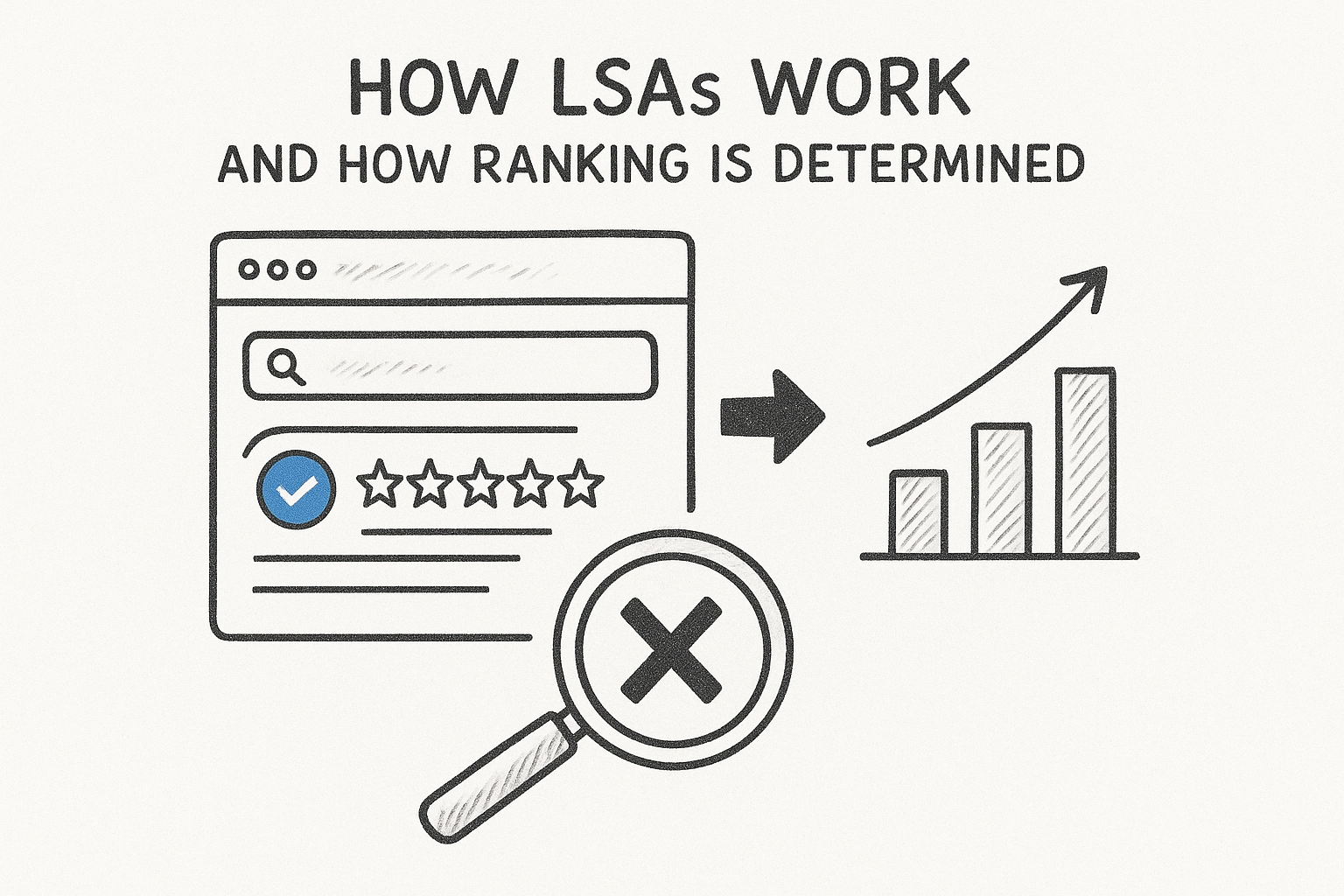
How LSAs work and how ranking is determined
Ranking with LSAs doesn't involve keyword bidding. Google scores your profile using review count, star rating, proximity, and message responsiveness. Firms that reply to inquiries quickly and collect verified Google reviews consistently rank higher within their service area.
Best fit firms and markets
Personal injury, criminal defense, family law, and DUI firms in mid-size to large metro markets see the most return from LSAs. You need sufficient local search volume to keep your profile generating leads week over week.
Typical pricing and how pay-per-lead is charged
Pricing runs on a pay-per-lead model, not cost-per-click. Most practice areas run $50 to $150 per lead, though competitive PI markets in cities like Los Angeles or New York can push costs above $200.
Lead quality, disputes, and common compliance issues
Lead quality varies more than Google's interface suggests. You can dispute invalid leads (spam, misdials, wrong practice area) directly in the LSA dashboard for a credit. The most common operational issue is letting your license verification lapse, which pauses your ads immediately.
3. Google Ads Search Campaigns
Google Ads search campaigns remain one of the most reliable ways to generate high-intent legal leads at volume. When someone types "car accident lawyer near me" into Google, they're actively looking to hire right now, and a well-structured search campaign puts your firm directly in front of that moment.
Why Search PPC Still Drives the Most Direct Demand
No other paid channel captures active purchase intent the way search does. The person clicking your ad already decided they have a legal problem; you're just competing for their call.
Search PPC is the only channel where the prospect's query tells you exactly what case type they need help with before they've ever contacted you.
How to Structure Campaigns for Legal Intake
Segment your campaigns by practice area and case type rather than running one broad legal campaign. Separate ad groups for "DUI attorney," "child custody lawyer," and "personal injury attorney" let you match ad copy to intent and send traffic to dedicated landing pages with practice-specific intake forms.
Best Fit Firms and Practice Areas
PI, criminal defense, family law, and immigration firms benefit most. Firms with a strong intake process and fast follow-up will outperform competitors spending twice as much.
Typical Costs and Budget Ranges
Cost-per-click in legal ranges from $15 to $150+, depending on practice area and market. Personal injury keywords in competitive markets routinely exceed $80 per click, so a realistic test budget starts at $3,000 to $5,000 per month.
How to Reduce Wasted Spend and Improve Conversion
Build a robust negative keyword list from day one to filter out irrelevant traffic like "free legal advice" or "law school." Pairing Google Ads with call tracking and intake automation lets you identify which keywords are producing signed cases, which is the only metric that matters when evaluating the best lead source for law firms.
4. Local SEO and Google Business Profile
Local SEO is one of the most sustainable lead channels a law firm can build because, unlike paid ads, organic rankings keep generating calls without a cost-per-click attached. Firms that rank in Google's local pack for searches like "personal injury attorney Chicago" receive traffic from people who are actively comparing lawyers in their area and ready to call.
Why Organic Local Traffic Converts Differently Than Ads
People who find your firm through organic local results tend to carry higher baseline trust than those who clicked a paid placement, partly because they perceive those results as earned rather than bought. That trust gap frequently produces stronger contact-to-consultation rates compared to equivalent paid traffic.
How the Google Business Profile Drives Calls and Forms
Your Google Business Profile is the core asset in any local SEO strategy. It surfaces your phone number, office hours, reviews, and a direct messaging option inside Google Search and Maps results. Firms that actively collect reviews and keep their profile updated consistently see more calls per 1,000 impressions than those with thin or neglected listings.

A well-managed Google Business Profile can become the best lead source for law firms in small and mid-size markets where paid search costs make Google Ads unsustainable.
Best Fit Firms and Market Conditions
Local SEO performs strongest for estate planning, family law, criminal defense, and immigration practices serving a defined geographic area where paid search cost-per-click exceeds intake economics.
Typical Costs and Time to Results
Budget $1,000 to $3,000 per month for local SEO services and plan for six to twelve months before consistent lead volume arrives.
What to Measure Beyond Rankings
Track call volume, form submissions, and direction requests pulled directly from your Google Business Profile insights, not just keyword position reports.
5. Avvo
Avvo is one of the most recognized legal directories in the U.S., drawing millions of monthly visitors who research attorney profiles and ratings. When evaluating the best lead source for law firms, Avvo occupies a distinct position: it captures people researching attorneys before they commit rather than ready-to-hire prospects making an immediate call.
What Avvo Leads Look Like in 2026
Leads through Avvo in 2026 are primarily information seekers with a longer decision timeline than search PPC traffic. Prospects contact attorneys through profile forms, so your response speed and profile completeness directly shape whether they book a consultation.
A complete Avvo profile with strong verified ratings and recent reviews can meaningfully improve your contact rate against competing listings on the same page.
How Avvo Matches Prospects to Attorneys
Avvo surfaces attorneys using practice area, location, and Avvo Rating, a score calculated from credentials, reviews, and peer endorsements. When a prospect submits a contact request, Avvo routes it to multiple attorneys the prospect chose, so your firm is never the sole recipient of that lead.
Best Fit Firms and Practice Areas
Family law, immigration, and criminal defense firms in competitive metro markets see the strongest return because those categories drive high search volume on the platform consistently. Firms in rural markets or niche practice areas typically see thinner lead flow.
Typical Pricing
Avvo Pro costs approximately $100 to $300 per month depending on your market, removing competitor ads from your profile and unlocking direct contact features.
Lead Quality Risks and How to Screen Fast
Avvo leads require more qualification effort than inbound paid search calls because many prospects haven't committed to hiring an attorney yet. Build a two-question intake script that confirms case type and urgency within the first 90 seconds of contact.
6. FindLaw
FindLaw is one of the oldest legal marketing platforms in the U.S., operated by Thomson Reuters. It bundles attorney directory listings, lead generation, and website services under one contract, making it a frequent consideration when firms research the best lead source for law firms in established practice areas.
What FindLaw sells: listings, leads, and services
FindLaw packages several distinct products that you can purchase separately or together:
- Enhanced directory profile listings with boosted placement over basic free profiles
- Pay-per-lead programs targeted to specific practice areas and geographies
- Full website builds and content marketing services managed by their in-house team
Their directory attracts millions of monthly visitors through educational legal content that ranks for broad, informational queries across dozens of practice areas.
How FindLaw generates and routes leads
FindLaw drives traffic through long-form legal content articles and funnels readers toward attorney profiles. Leads are typically shared across multiple attorneys in the same geography and practice area, meaning you compete against other listed firms for the same prospect the moment that contact form gets submitted.
Shared lead models put the outcome entirely in your hands: your intake speed and follow-up quality determine who wins the case, not who paid more for the listing.
Best fit firms and practice areas
Personal injury, bankruptcy, and family law firms in mid-size markets benefit most from FindLaw's volume. Their content library performs best where high-volume educational queries consistently drive search traffic in your practice area.
Typical pricing and contract considerations
Packages range from $500 to $5,000+ per month, and most agreements lock you into 12-month commitments with auto-renewal clauses. Review the cancellation window carefully before signing anything.
Red flags to watch before you sign
Always confirm whether your leads are exclusive or shared during the sales call, and ask the representative for verified historical lead volume data specific to your practice area and market before committing.
7. Nolo
Nolo has built one of the largest free legal content libraries on the internet, attracting millions of readers each month who search for answers to specific legal questions. That organic traffic becomes your lead pipeline when your firm is listed as a featured attorney in the relevant practice area.
How Nolo Generates Leads Through Content
Nolo publishes thousands of plain-language legal articles and guides across every major practice area, ranking prominently for informational legal queries that capture people in the early stages of their decision. When a reader reaches the end of an article and wants professional help, Nolo surfaces featured attorney profiles that match the topic and geography.
Exclusive vs Shared Leads and What Changes Conversion
Most Nolo leads route to multiple attorneys simultaneously, which makes intake speed your primary competitive variable.
The firms that convert Nolo leads at the highest rate are the ones that call back within five minutes of receiving the notification, not the ones with the largest profile budget.
Best Fit Firms and Practice Areas
Estate planning, bankruptcy, and family law firms perform consistently well on Nolo because the platform's educational content maps directly to those practice areas and drives sustained query volume year over year.
Typical Pricing Ranges by Category
Nolo's featured attorney programs typically run $200 to $1,000 per month depending on practice area and market competitiveness. More competitive markets and higher-volume categories command the upper end of that range.
How to Qualify Nolo Leads in Under 2 Minutes
Ask two questions immediately: what specific legal issue they need help with and when the matter needs to be resolved. Those two data points tell you whether this is the best lead source for law firms in your category or a prospect who needs a referral elsewhere.
8. LegalMatch
LegalMatch operates differently from directory platforms like Avvo or Nolo. Instead of listing your profile and waiting for prospects to find you, LegalMatch flips the model: prospects submit their case details first, and then attorneys in the relevant area review those details and decide whether to respond.
Why LegalMatch Works Like a Marketplace
LegalMatch functions as a two-sided marketplace where the prospect describes their legal issue upfront and attorneys compete to earn the consultation. This structure means you're reviewing case summaries before committing to follow up, which gives your intake team better pre-screening data than most other lead sources provide at the point of first contact.
How the Intake Flow and Attorney Matching Works
Prospects complete a structured intake form that captures case type, location, and urgency level. LegalMatch then notifies matched attorneys in the area, and each attorney decides independently whether to respond. The prospect receives all attorney responses and chooses who to contact, so your profile quality and response message carry significant weight.
Best Fit Firms and Practice Areas
Family law, employment law, and immigration firms see consistent lead flow because those practice areas generate strong consumer demand on the platform.
Typical Pricing and Commitment Terms
Annual memberships typically run $1,000 to $3,000 per year depending on practice area and market, often paid upfront.
How to Stand Out When Prospects Contact Multiple Firms
When evaluating the best lead source for law firms, speed matters most here. Respond to every case notification within 15 minutes with a personalized message that references the specific issue the prospect described.
Attorneys who respond with generic template messages lose to competitors who acknowledge the prospect's actual situation in the first sentence.
9. 4LegalLeads
4LegalLeads operates as a dedicated legal lead generation service rather than a directory where prospects browse attorney profiles. If you're searching for the best lead source for law firms that delivers ready-to-contact prospects directly to your intake team, 4LegalLeads takes a more transactional approach than any platform covered so far.
What Makes 4LegalLeads Different From Directories
Unlike Avvo or Nolo, 4LegalLeads doesn't ask prospects to browse and choose an attorney. Instead, it captures consumer inquiries through form submissions and inbound calls, then delivers those leads directly to subscribing firms in real time.
The distinction between directory discovery and direct delivery changes how quickly your intake team needs to respond after a lead arrives.
How Delivery Works: Forms, Calls, and Transfers
4LegalLeads routes leads through three delivery methods: web form submissions sent via email or SMS, inbound call transfers connected live to your office, and hosted call center transfers where a screener speaks to the prospect first. Live call transfers typically produce the strongest conversion rates because the prospect is already on the line when your staff answers.
Best Fit Firms and Practice Areas
Personal injury, workers' compensation, and criminal defense firms use 4LegalLeads most consistently. Firms handling high case volume with staffed intake teams available during business hours convert these leads at the highest rates.
Typical Pricing and Refund Policies to Confirm
Lead prices run $30 to $100+ per lead depending on practice area and delivery method. Always confirm the refund criteria in writing before you fund your account.
How to Protect Your Team From Spam and Duplicates
Tag every incoming lead with its source and delivery type inside your CRM immediately on receipt. Running carrier-level phone validation on each number before your team calls back cuts wasted time on disconnected lines and eliminates obvious spam before it burns your staff's capacity.
10. Unbundled Attorney
Unbundled Attorney connects law firms with clients who want limited-scope legal representation rather than full-service retainers. If your firm is open to helping clients with specific tasks like drafting documents or coaching them through a hearing, this platform opens a lead stream that most competitors completely ignore.
Why Unbundled Services Change the Lead Economics
Unbundled legal services lower the financial barrier for prospects who would otherwise try to handle their matter without a lawyer. That broader pool of potential clients means higher lead volume at a lower entry price point compared to traditional full-retainer channels, and many limited-scope clients convert to full representation once trust is established.
Firms that treat unbundled clients well consistently report that a meaningful share convert into full-retainer relationships within six months of the initial engagement.
How Unbundled Attorney Sources and Pre-Educates Leads
Unbundled Attorney drives traffic through targeted content and outreach to consumers who searched specifically for affordable legal help. Before a lead reaches your inbox, the platform educates them on what limited-scope representation means, which reduces the explanation burden on your intake team during the first call.
Best Fit Firms and Practice Areas
Family law and immigration firms see the strongest volume through this platform because both practice areas generate high demand among cost-sensitive clients.
Typical Pricing
Monthly plans typically run $200 to $1,000 depending on your practice area and territory.
Intake Workflow That Converts Limited-Scope Matters
When evaluating the best lead source for law firms at lower price points, your intake script needs to clearly define scope boundaries upfront and confirm the specific task the client needs completed before you schedule anything.
11. LegalZoom Attorney Network
LegalZoom attracts millions of consumers each year who start their legal process through online document tools. The LegalZoom attorney network connects those users with licensed attorneys when their matter exceeds what a DIY form can handle.
What Types of Matters LegalZoom Sends to Attorneys
Referrals from this network cover business formation, estate planning, and trademark matters most frequently because those align with LegalZoom's core document products. Clients who upgrade from a DIY workflow arrive partially educated on their legal situation, cutting explanation time during intake.
How the Network Model Works and Where Leads Come From
The platform generates leads internally from its existing customer base rather than buying external traffic. When a customer hits a complexity threshold, LegalZoom surfaces attorney options from its network. Your firm receives a referral notification, and you initiate contact from there.
Best Fit Firms and Practice Areas
Business law, estate planning, and intellectual property firms see the most relevant referrals. Solo practitioners comfortable handling transactional matters at competitive rates fit this model better than litigation-heavy practices.
Typical Pricing and Required Discounts
LegalZoom charges referral fees or monthly network access fees depending on the arrangement, and most agreements require you to offer clients a discounted rate compared to your standard billing. Confirm exact terms directly with LegalZoom's network team before enrolling.
The discount requirement compresses your margin per case, so volume determines whether this qualifies as the best lead source for law firms in your practice area.
Conflict Checks, Expectations, and Client Experience Risks
Clients arriving through LegalZoom often expect faster turnaround and lower fees than traditional referral clients because they started the process themselves online. Run conflict checks immediately on every referral since LegalZoom's consumer base spans high volumes of business and family matters where prior relationships surface frequently.
How to Pick the Right Lead Source Mix
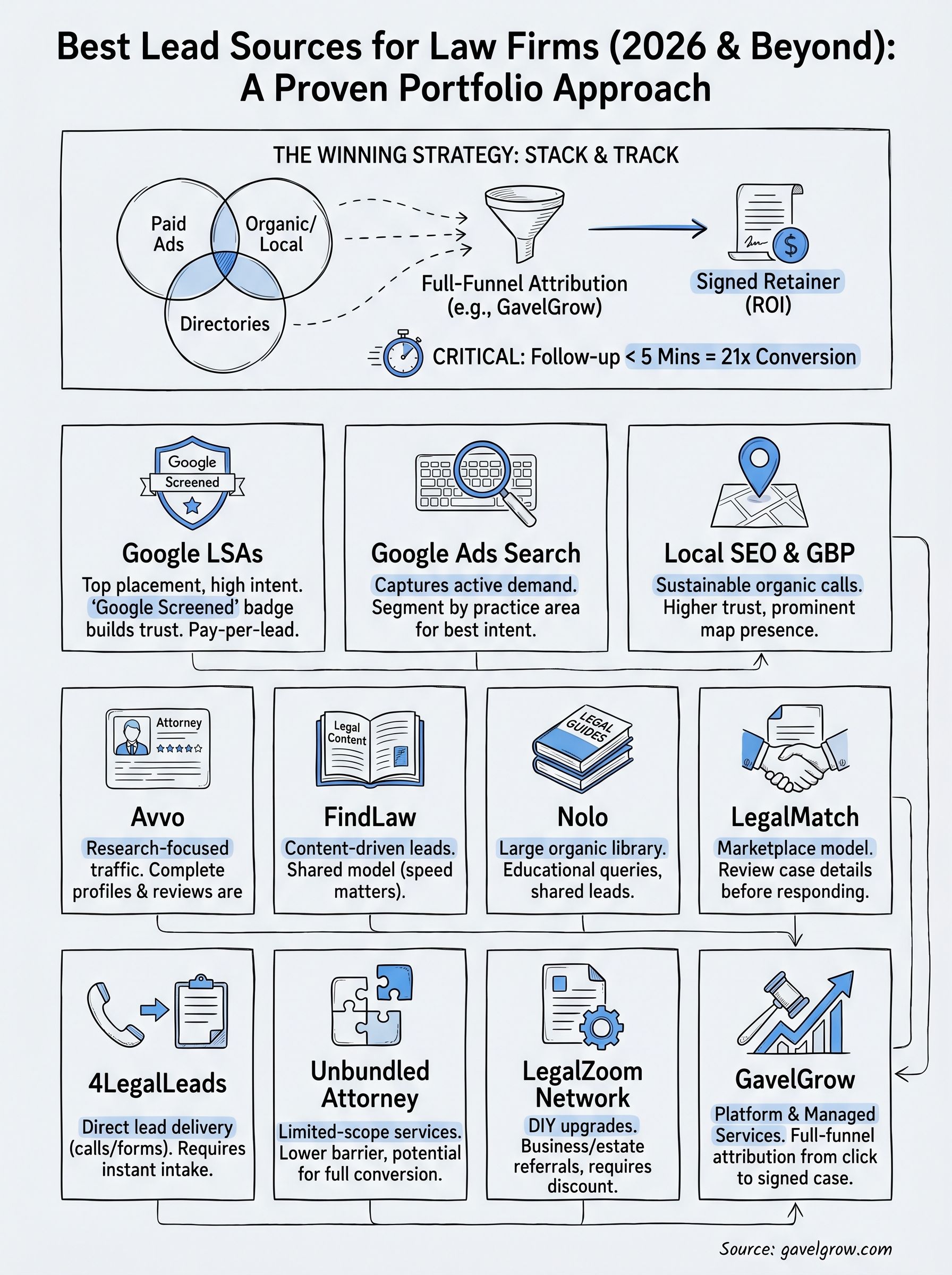
No single channel qualifies as the best lead source for law firms in every situation. Your practice area, market size, intake capacity, and budget all shape which combination produces the best cost-per-signed-retainer. Personal injury firms in large metros typically run Google Ads and LSAs together while building local SEO in the background. Family law and estate planning firms in smaller markets often extract stronger returns from organic local rankings and a single directory like Nolo or Avvo. The firms signing the most cases in 2026 treat lead generation as a portfolio: they test two or three sources, measure each one down to signed cases, kill what doesn't convert, and scale what does.
Before you add another lead source, audit what your current channels are actually producing. Run the GavelGrow free marketing scorecard to identify where your funnel is leaking, then book a free strategy call to build a channel mix around your specific numbers.
Frequently Asked Questions
What is the best lead source for law firms in 2026?
The best lead source for your firm depends on your practice area and intake capacity. Google Ads and Local Services Ads consistently produce the highest-intent prospects across most practice areas, particularly personal injury, criminal defense, and family law. GavelGrow's benchmark database from 500+ U.S. law firms shows that firms stacking paid search with local SEO and one directory source outperform single-channel competitors on cost-per-signed-retainer in most markets.
How much should a law firm spend on lead generation per month?
Your lead generation budget should connect to your cost-per-signed-case target, not an arbitrary percentage of revenue. Solo practitioners in lower-cost markets can generate consistent case flow at $2,000 to $5,000 per month, while personal injury firms in competitive metros typically spend $20,000 to $80,000 or more per month across Google Ads, LSAs, and directory listings to maintain case volume.
Are shared leads or exclusive leads better for law firms?
Exclusive leads almost always produce stronger conversion rates because your intake team isn't racing four competing firms to the same prospect. Shared lead models from platforms like FindLaw, Nolo, and Avvo can still generate signed cases, but only if your firm responds within five minutes and your intake process is sharp enough to win the comparison.
How do I measure which lead source is actually producing signed cases?
You need full-funnel attribution that traces every lead from its originating ad click or form submission through to a signed retainer, not just a cost-per-lead report. Tools like GavelGrow's platform assign campaign-level tracking to each lead and fire conversion events to GA4, Meta Pixel, and Google Ads the moment intake is complete, so your ad accounts reflect actual case acquisition rather than form fills.
Which lead source works best for personal injury law firms?
Google Ads and Local Services Ads produce the strongest ROI for most personal injury firms because the search intent at that moment is explicit and immediate. PI firms in major markets like Los Angeles, Chicago, or Houston typically layer LSAs for top-of-page presence with branded Google Ads campaigns and an active Google Business Profile to capture every intent level from ready-to-hire to still-researching.
How quickly do I need to respond to incoming leads?
Research consistently shows that contacting a lead within five minutes of inquiry produces conversion rates 21 times higher than waiting thirty minutes or longer. Most firms lose cases not because their marketing failed but because their intake follow-up is too slow. Automated SMS and email triggered within 60 seconds of form submission, like what GavelGrow's intake automation delivers, closes that gap before a competitor calls first.
Is it worth paying for legal directory listings in 2026?
Legal directory listings on platforms like Avvo, Nolo, and FindLaw still generate signed cases for firms in the right practice areas, but they work best as a secondary channel layered on top of owned-and-operated lead sources like Google Ads and local SEO. Firms that treat directories as their primary lead source typically pay more per signed case than those running their own campaigns with proper attribution tracking in place.
Frequently Asked Questions
What is the best lead source for law firms in 2026?
The best lead source for your firm depends on your practice area and intake capacity. Google Ads and Local Services Ads consistently produce the highest-intent prospects across most practice areas, particularly personal injury, criminal defense, and family law. GavelGrow's benchmark database from 500+ U.S. law firms shows that firms stacking paid search with local SEO and one directory source outperform single-channel competitors on cost-per-signed-retainer in most markets.
How much should a law firm spend on lead generation per month?
Your lead generation budget should connect to your cost-per-signed-case target , not an arbitrary percentage of revenue. Solo practitioners in lower-cost markets can generate consistent case flow at $2,000 to $5,000 per month , while personal injury firms in competitive metros typically spend $20,000 to $80,000 or more per month across Google Ads, LSAs, and directory listings to maintain case volume.
Are shared leads or exclusive leads better for law firms?
Exclusive leads almost always produce stronger conversion rates because your intake team isn't racing four competing firms to the same prospect. Shared lead models from platforms like FindLaw, Nolo, and Avvo can still generate signed cases, but only if your firm responds within five minutes and your intake process is sharp enough to win the comparison.
How do I measure which lead source is actually producing signed cases?
You need full-funnel attribution that traces every lead from its originating ad click or form submission through to a signed retainer, not just a cost-per-lead report. Tools like GavelGrow's platform assign campaign-level tracking to each lead and fire conversion events to GA4, Meta Pixel, and Google Ads the moment intake is complete, so your ad accounts reflect actual case acquisition rather than form fills.
Which lead source works best for personal injury law firms?
Google Ads and Local Services Ads produce the strongest ROI for most personal injury firms because the search intent at that moment is explicit and immediate. PI firms in major markets like Los Angeles, Chicago, or Houston typically layer LSAs for top-of-page presence with branded Google Ads campaigns and an active Google Business Profile to capture every intent level from ready-to-hire to still-researching.
How quickly do I need to respond to incoming leads?
Research consistently shows that contacting a lead within five minutes of inquiry produces conversion rates 21 times higher than waiting thirty minutes or longer. Most firms lose cases not because their marketing failed but because their intake follow-up is too slow . Automated SMS and email triggered within 60 seconds of form submission, like what GavelGrow's intake automation delivers, closes that gap before a competitor calls first.