4 Legal Directory Listings for Law Firms Worth Claiming
Categories: Legal Marketing Strategies
 Abram Ninoyan
Founder & Senior Performance Marketer
Credentials: Google Partner, Google Ads Search Certified, Google Ads Display Certified, Google Ads Measurement Certified, Google Analytics (IQ) Certified, HubSpot Inbound Certified, HubSpot Social Media Marketing Certified, Conversion Optimization Certified
Expertise: Google Ads, Meta Ads, Conversion Rate Optimization, GA4 & Google Tag Manager, Lead Generation, Marketing Funnel Optimization, PPC Management
LinkedIn Profile
The most useful legal directory listings for law firms are your state bar profile, a claimed Justia profile, a Martindale-Hubbell profile, and a FindLaw profile. Start with the state bar and Justia, b...
Key Takeaways
- 4 Legal Directory Listings for Law Firms Worth Claiming
- 1. Martindale-Hubbell
- 2. Justia
- 3. FindLaw
4 Legal Directory Listings for Law Firms Worth Claiming
The most useful legal directory listings for law firms are your state bar profile, a claimed Justia profile, a Martindale-Hubbell profile, and a FindLaw profile. Start with the state bar and Justia, because they are the cheapest to keep accurate. Add Martindale-Hubbell if peer ratings matter to your clients, and FindLaw if you want a paid presence. If you are searching for a lawyer instead of listing one, the same four sites work. Check the license with the state bar first, then read profiles and reviews elsewhere.
Most firms treat directories as a one-time chore. They claim a profile, forget it, and then find an old address still showing when someone searches for their own name. Others sign a paid contract with no way to tell whether a single signed case came from it. Both mistakes cost money and client trust.
This list covers four directories: what each one lists, who it suits, and what to check before you pay. It also shows how to tie each listing to signed cases instead of clicks, which is the measurement GavelGrow has built its legal-only work around since 2015.
Key Takeaways
- Which directories should every firm claim first? Justia and your state bar listing.
- Do directory listings cost money? Justia claims are free; other costs vary by package.
- How do you check a lawyer's license? Use your state bar or court attorney search.
- How do you know a listing pays off? Give each paid listing its own tracking number.
1. Martindale-Hubbell
How the listing works
Martindale-Hubbell is one of the oldest attorney directories in the country, and it says it has served attorneys for 150 years. Visitors browse lawyers by practice area, city or state, and they can read peer and client reviews. Attorneys can also be rated, and the company sells growth tools on top of the free listing.
Its paid tools, as the company describes them, include:
- Enhanced profiles
- Websites
- Lead generation
- Live chat
Who it suits and what to check
Firms whose clients compare credentials before they call get the most from it. Business, estate and appellate lawyers are natural fits. A firm that wins matters on speed and price gets less from it.
Ask for current pricing in writing. Ask whether leads are exclusive to your firm or shared with others. Before you show a rating badge on your own website, check your state bar's advertising rules. ABA Model Rule 7.1 bars false or misleading statements about a lawyer's services, and states apply it differently.
A rating is a credential for clients to weigh, so display it only where your bar's rules allow.
2. Justia
How the listing works

Justia's lawyer directory sorts profiles by practice area, state and city. Visitors can save profiles and compare up to three side by side. Justia says claiming, verifying and updating a profile is free. A claimed profile can carry full contact details, education, associations, practice areas, and links to your website, blog and social accounts.
Fill in every field, and keep three things consistent:
- Your firm name, address and phone number, exactly as they appear on your website
- Practice areas you actually want cases in
- Links to your own site and active profiles only
Who it suits and what to check
Every firm should claim this listing, solos and small firms especially. The only cost is the staff time to fill it out and revisit it when something changes. That makes it the baseline for any legal directory listings plan.
Resist listing fifteen practice areas. A profile that claims everything reads as unfocused to a prospective client comparing three lawyers. Also confirm that your profile matches what your state bar permits you to say, since a directory page is still advertising.
A free profile still costs you if the phone number on it is wrong.
3. FindLaw
How the listing works

FindLaw presents detailed profiles of attorneys and law firms across the United States, and visitors search by legal issue and location. Paid marketing products sit alongside the directory, so what your listing includes depends on the package you buy. Get the scope in writing before you compare it with a free profile.
Put these questions to any paid directory seller:
- Is the listing exclusive to your firm in your market, or shared?
- Who owns the profile content and the phone number if you cancel?
- How long is the contract, and how do you exit it?
Who it suits and what to check
This fits firms that have a marketing budget and a clear target matter, such as personal injury or family law in a defined area. Judge it by cost per signed case, not cost per call. A listing that produces cheap, unqualified calls is expensive.
Give the listing its own tracking number so you can see which calls became retainers. Keep the number identical wherever that listing appears, so your name, address and phone data stays consistent.
Never renew a paid listing until you know what it cost per signed case.
4. State bar and ABA directories
How the listing works
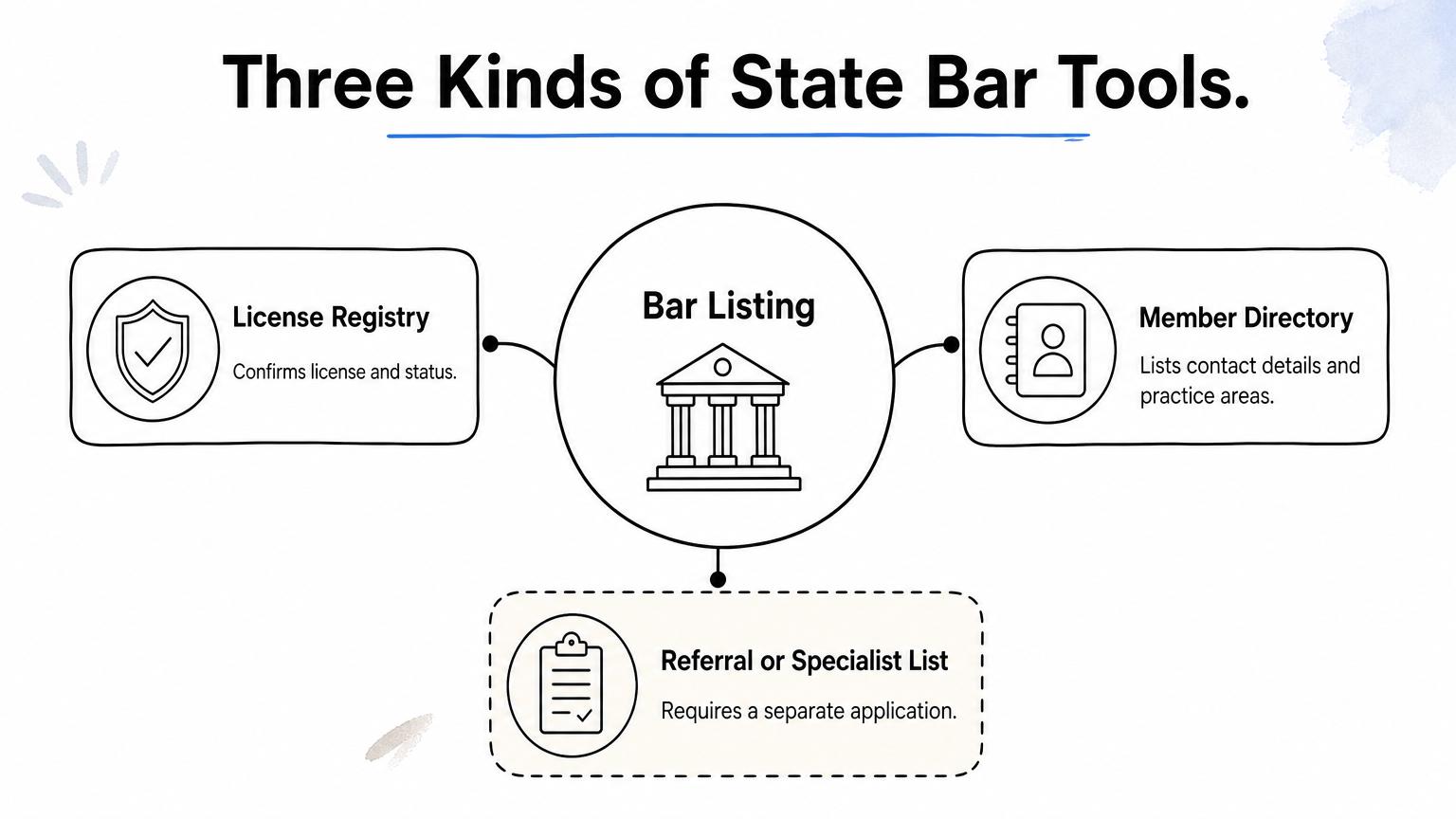
Every state has an official way to confirm a lawyer's standing, and the American Bar Association keeps a state-by-state list of bar directories and lawyer finders. Some tools are registries, such as the Supreme Court of Ohio's attorney search. Others are member directories, referral services, or lists of certified specialists, like the ones in Ohio and North Carolina.
Which type you meet depends on the state:
- Registry: confirms license and status
- Member directory: lists contact details and practice areas
- Referral service or specialist list: requires a separate application
Who it suits and what to check
Every licensed lawyer has a bar listing, and every client doing due diligence will find it. If you are the one searching, start here to verify a license before you hire anyone. If you are the firm, audit your entry for your name, firm, address, phone and status.
Costs usually follow bar membership, while referral programs and specialist certification have their own applications and terms. Check your bar's site for the current rules, since they vary by state.
A wrong bar listing is the first thing a careful client finds.
Frequently asked questions
Where can I find a law firm directory in the USA?
Start with Justia, Martindale-Hubbell and FindLaw, which all search by practice area and location. For verification, use the ABA's state-by-state list of bar directories or your state's official attorney search, such as the Supreme Court of Ohio attorney search. LawInfo and Lawline also run directories. Use the official registry to confirm the license, then use commercial directories to compare profiles.
Are legal directory listings free?
Some are. Justia says claiming and updating a profile is free, and bar listings generally come with licensure or membership. Paid tiers are where costs appear: Martindale-Hubbell sells profiles, websites and lead generation, and FindLaw sells marketing packages. Ask any seller for a written scope, a contract length and an exit clause before you sign.
Do directory listings help law firm SEO?
They help you stay consistent and visible, but they are one signal among many. Matching name, address and phone details across directories supports your local presence, and a profile can link to your site. They do not replace a strong Google Business Profile or good site content. If you want ranking help beyond listings, see GavelGrow's local SEO service for law firms.
How do I know whether a directory listing brings in signed cases?
Give each paid listing a dedicated call tracking number and a tagged intake form, then match every lead to its outcome. Track the retainers that result, not the calls. GavelGrow's platform does this with built-in call tracking and cost per signed case by source. Track is $199 per month with two tracking numbers, and Optimize includes ten.
Can I advertise a directory rating on my website?
Only if your state bar's advertising rules allow it. ABA Model Rule 7.1 prohibits false or misleading communications about a lawyer or the lawyer's services, and states add their own rules on ratings, awards and superlatives. Read your bar's rules and any ethics opinions first. When in doubt, call your bar's ethics hotline before the badge goes live.
Check the rule before you publish the badge, not after a complaint.
Which listings should you claim first?
Claim your state bar entry and your Justia profile this week, because they cost little and clients find them first. Add Martindale-Hubbell or FindLaw only when you can name the matters you want from them. Then judge every paid listing by signed cases, not calls, and check your state bar's advertising rules before you display any rating.
If you want a clear read on which listings actually produce retainers, book a free strategy call with GavelGrow's legal-only team.
Frequently Asked Questions
Where can I find a law firm directory in the USA?
Start with Justia, Martindale-Hubbell and FindLaw, which all search by practice area and location. For verification, use the ABA's state-by-state list of bar directories or your state's official attorney search, such as the Supreme Court of Ohio attorney search . LawInfo and Lawline also run directories. Use the official registry to confirm the license, then use commercial directories to compare profiles.
Are legal directory listings free?
Some are. Justia says claiming and updating a profile is free, and bar listings generally come with licensure or membership. Paid tiers are where costs appear : Martindale-Hubbell sells profiles, websites and lead generation, and FindLaw sells marketing packages. Ask any seller for a written scope, a contract length and an exit clause before you sign.
Do directory listings help law firm SEO?
They help you stay consistent and visible, but they are one signal among many. Matching name, address and phone details across directories supports your local presence, and a profile can link to your site. They do not replace a strong Google Business Profile or good site content. If you want ranking help beyond listings, see GavelGrow's local SEO service for law firms .
How do I know whether a directory listing brings in signed cases?
Give each paid listing a dedicated call tracking number and a tagged intake form, then match every lead to its outcome. Track the retainers that result, not the calls. GavelGrow's platform does this with built-in call tracking and cost per signed case by source. Track is $199 per month with two tracking numbers , and Optimize includes ten.
Can I advertise a directory rating on my website?
Only if your state bar's advertising rules allow it. ABA Model Rule 7.1 prohibits false or misleading communications about a lawyer or the lawyer's services, and states add their own rules on ratings, awards and superlatives. Read your bar's rules and any ethics opinions first. When in doubt, call your bar's ethics hotline before the badge goes live. Check the rule before you publish the badge, not after a complaint.