What Is Lead Generation? Definition, Examples, and Steps
Categories: Legal Marketing Strategies
 Abram Ninoyan
Founder & Senior Performance Marketer
Credentials: Google Partner, Google Ads Search Certified, Google Ads Display Certified, Google Ads Measurement Certified, Google Analytics (IQ) Certified, HubSpot Inbound Certified, HubSpot Social Media Marketing Certified, Conversion Optimization Certified
Expertise: Google Ads, Meta Ads, Conversion Rate Optimization, GA4 & Google Tag Manager, Lead Generation, Marketing Funnel Optimization, PPC Management
LinkedIn Profile
Lead generation is the process of attracting potential clients and capturing their contact information so your sales team can convert them into paying customers. If you've ever wondered what is lead g...
Key Takeaways
- What Is Lead Generation? Definition, Examples, and Steps
- Key takeaways on lead generation
- What is lead generation and what counts as a lead?
- Which lead generation channels work best today?
What Is Lead Generation? Definition, Examples, and Steps
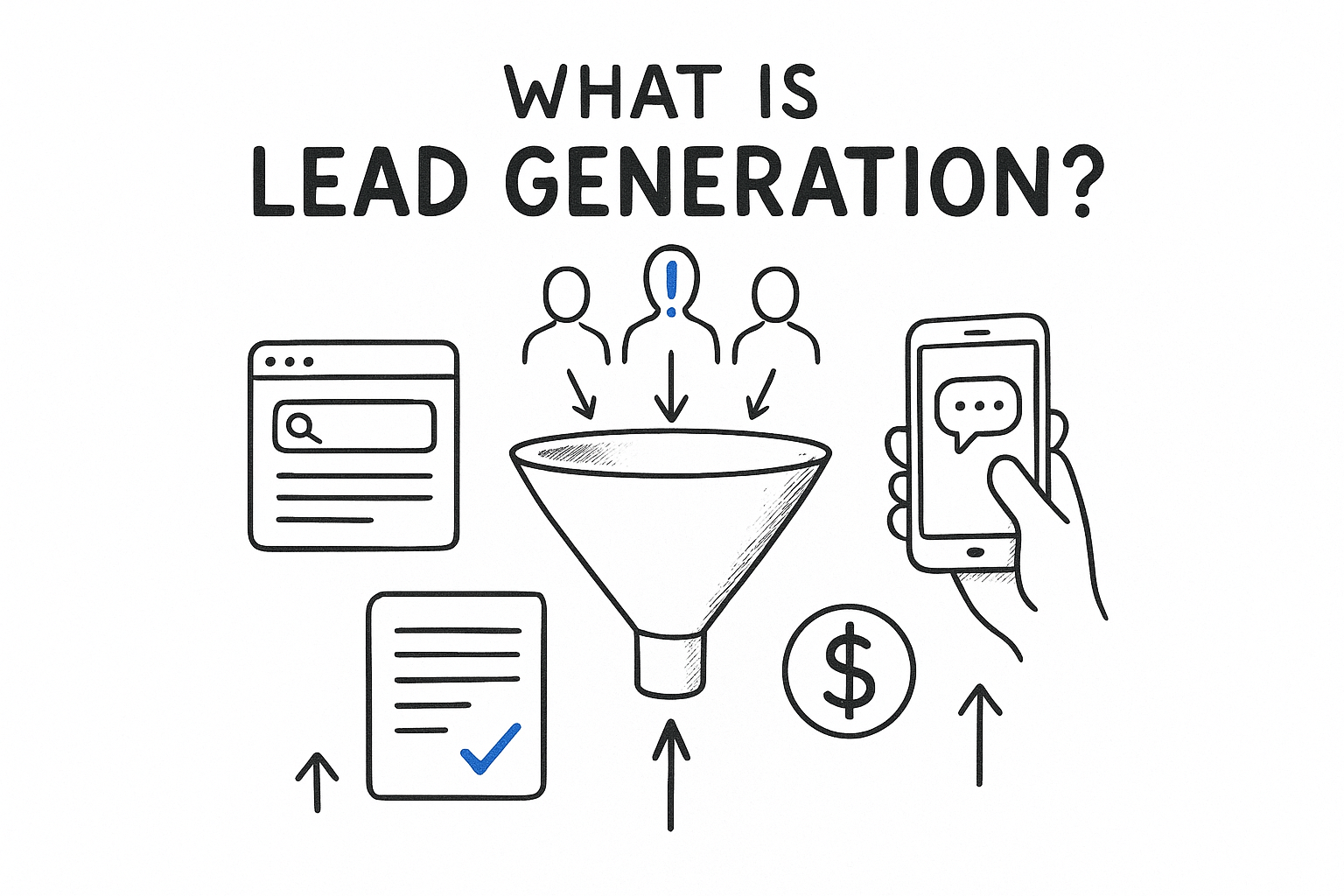
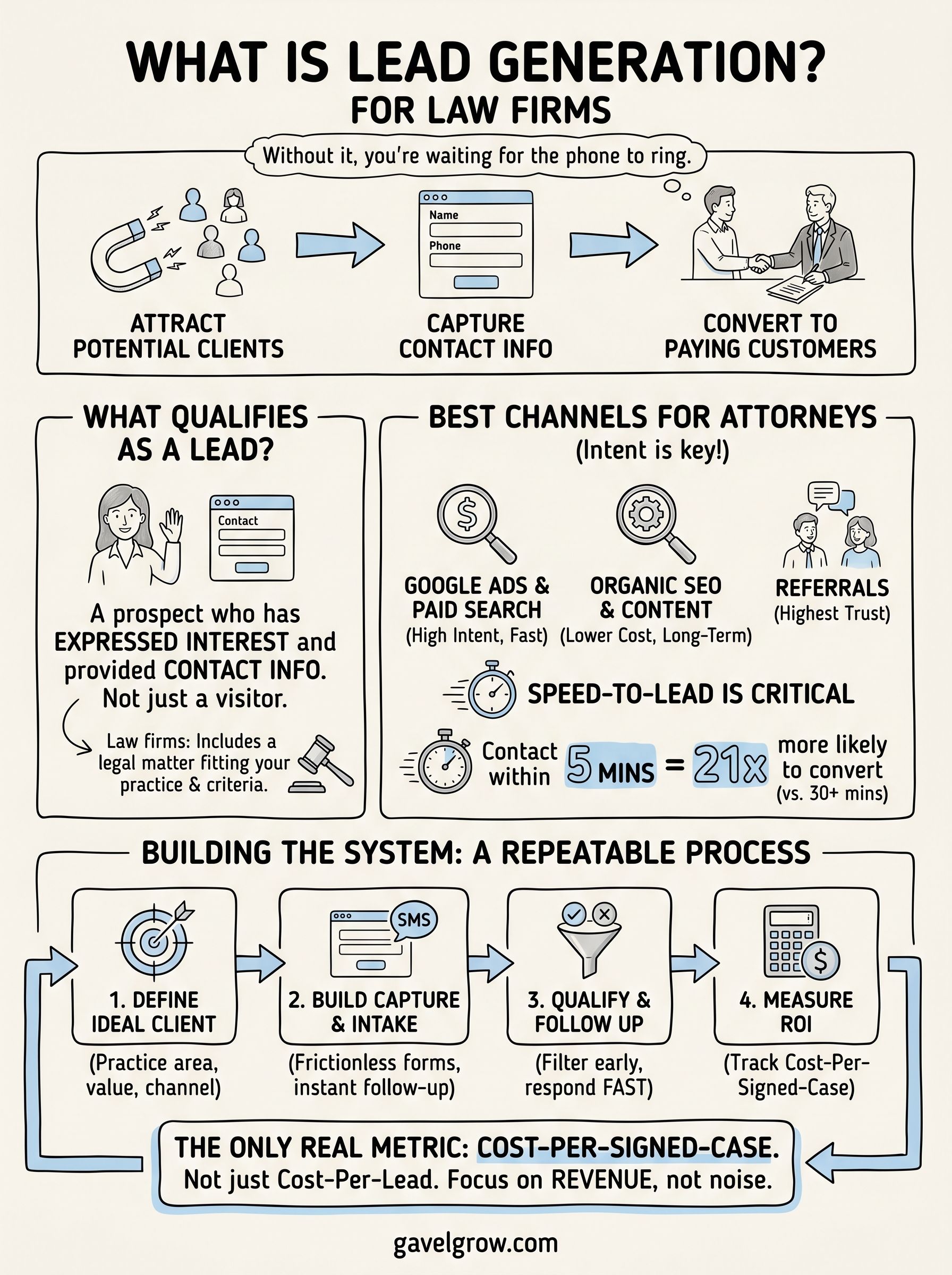
Lead generation is the process of attracting potential clients and capturing their contact information so your sales team can convert them into paying customers. If you've ever wondered what is lead generation and why every marketing conversation seems to circle back to it, the short answer is this: without a reliable system for finding and qualifying prospects, even the best service providers, law firms included, are left waiting for the phone to ring.
For attorneys, the stakes are especially high. A single personal injury case can be worth tens or even hundreds of thousands of dollars, which means every missed or mishandled lead carries real revenue consequences. Yet Clio's 2024 Legal Trends Report secret-shopper study found that nearly half of firms (48%) were unreachable by phone. The lead existed; the generation worked. The follow-through didn't.
That gap between capturing a lead and signing a retainer is exactly what we built GavelGrow's platform to close, with intake automation, call tracking, and full-funnel attribution designed exclusively for law firms. This article breaks down lead generation from the ground up: what it means, how it works in practice, and the concrete steps you can take to build a process that consistently turns strangers into signed clients.
Key takeaways on lead generation
Before diving into the full breakdown of what is lead generation and how to build a system around it, here are five things you need to know. These answers address the most common questions law firm owners and marketing managers ask when they first start mapping out a client acquisition strategy.
- A lead is any prospect who has expressed interest and given you enough contact information to follow up on.
- Speed-to-lead is the single biggest conversion lever: prospects contacted within 5 minutes are 21 times more likely to qualify than those reached after 30 minutes, according to the Lead Response Management Study.
- Multiple channels generate leads, including Google Ads, organic search, referrals, and social media, but the best channel is the one your target clients actually use.
- Qualifying leads early saves time and ad spend: not every inquiry is a viable case, and a structured intake process filters out poor fits fast.
- Attribution matters as much as volume: knowing which campaign produced a signed retainer is what separates profitable marketing from expensive guesswork.
Tracking cost-per-signed-case, not just cost-per-lead, is the only metric that tells you whether your marketing spend is actually building your firm.
Why law firms need a different approach
Generic lead generation advice is built for e-commerce or SaaS sales cycles that close in days. Law firm client acquisition routinely runs 6 to 12 months from first contact to signed retainer in practice areas like personal injury or mass torts, which means your lead generation process must account for long nurture windows, trust-building, and follow-up sequences that most generic frameworks skip entirely.
Your intake process is not separate from your marketing strategy; it is the final stage of it. A weak handoff between marketing and intake kills the ROI of every dollar spent getting the lead to your door in the first place, and no amount of ad budget fixes a broken follow-up sequence.
What is lead generation and what counts as a lead?
At its core, understanding what is lead generation comes down to one practical idea: you are identifying people who have a problem you can solve and capturing enough information about them to start a real conversation. In a law firm context, that means attracting someone who needs legal help and getting them to submit a contact form, call your office, or engage with your intake team.
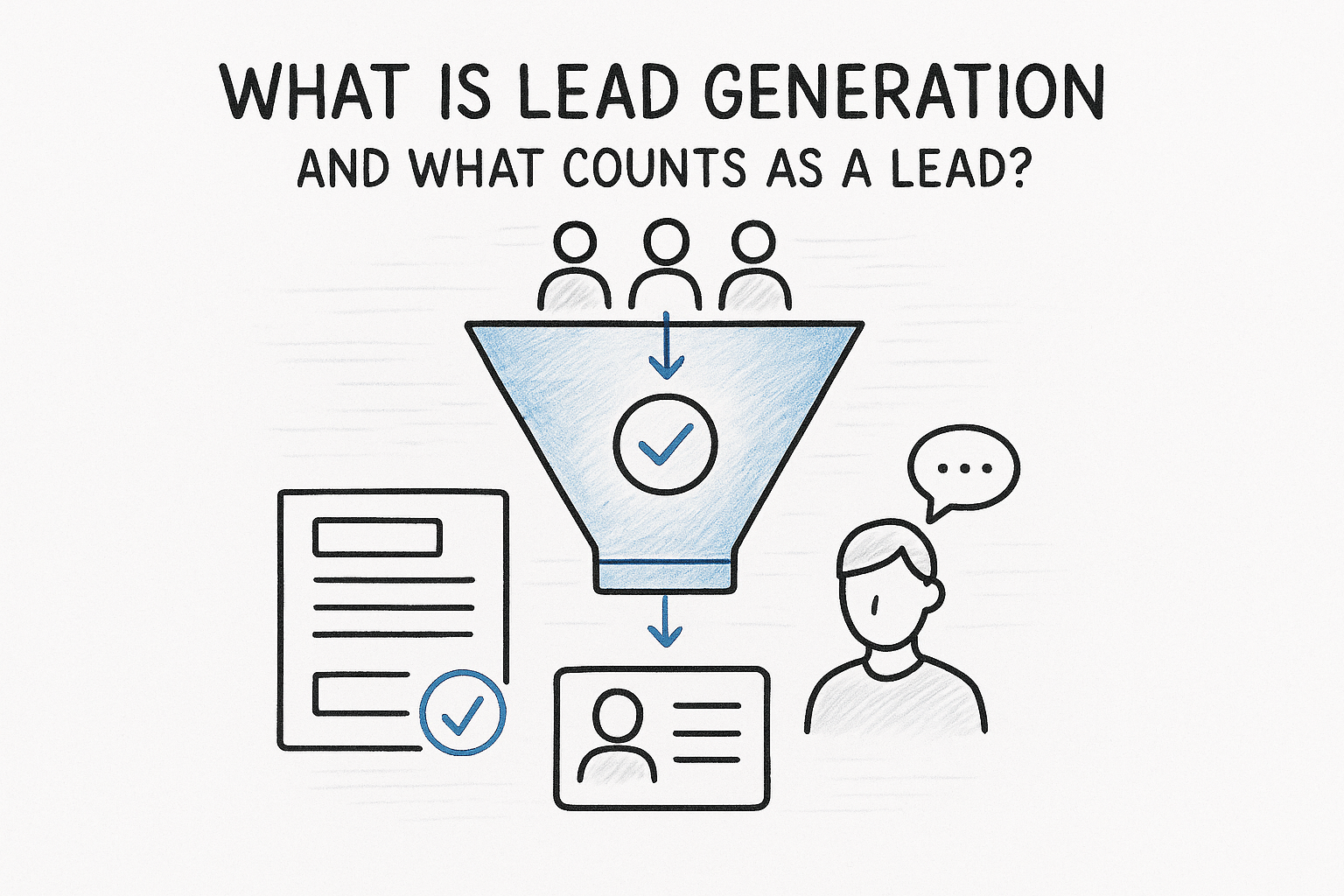
Not every website visitor is a lead; a lead only exists once someone raises their hand and gives you a way to reach them.
What qualifies someone as a lead?
A lead is a person who has expressed interest in your services and provided at least one piece of contact information, typically a name, phone number, or email address. Passive website visitors do not count because they have not yet signaled intent. For law firms specifically, a qualified lead goes one step further: the person has a legal matter that matches your practice area, jurisdiction, and case criteria.
This distinction matters because it directly changes how you measure your marketing spend. Counting raw form submissions inflates your numbers and creates a false sense of progress. Counting the signed retainers that originated from those submissions tells you whether your lead generation system is producing real revenue or just generating noise you have to sort through manually.
Which lead generation channels work best today?
The channel that works best for your firm depends on your practice area, budget, and how fast you need signed cases. That said, Google Ads and organic search consistently outperform other channels for law firms because prospects are already searching for legal help, which means intent is established before they ever reach your website.
Paid search and local services ads
Google Local Services Ads (LSAs) place your firm at the very top of search results with a "Google Screened" badge, making them one of the highest-converting paid channels available to attorneys today. Google Ads (pay-per-click) let you target specific keywords, practice areas, and geographies with precision, and you only pay when someone clicks through to your site.
Organic search and referrals
Search engine optimization (SEO) takes longer to produce results, typically 6 to 12 months, but it generates leads at a much lower cost per acquisition over time. Practice area pages, blog content, and local citations all build the organic visibility that keeps your phone ringing without a running ad budget.
Referrals from past clients still convert at the highest rate of any channel because trust is already established before the first call.
Social media and paid social (Facebook, Instagram) work well for awareness-stage campaigns in practice areas like mass torts, where you need to reach people who do not yet know they have a viable claim worth pursuing.
How do you build a lead generation process step by step?
Understanding what is lead generation in theory only takes you so far. Building a repeatable system that consistently delivers qualified prospects requires connecting several moving parts in the right sequence.
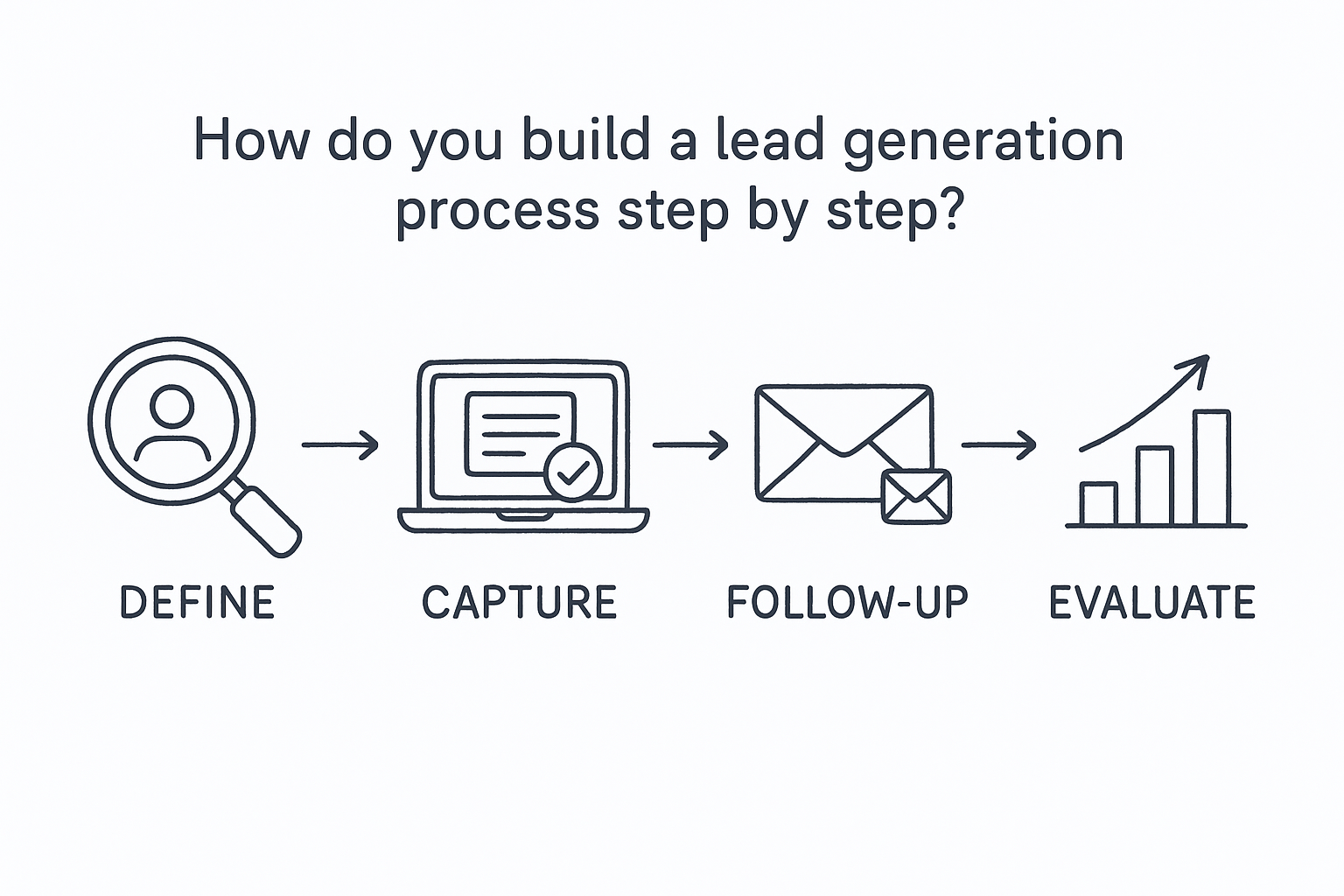
A lead generation process without a defined follow-up step is just an expensive way to collect names you never contact.
Define your ideal client and channel first
Before you run a single ad or publish a piece of content, identify exactly who you are trying to reach: practice area, case type, geography, and minimum case value. This clarity determines which channels deserve your budget and which ones will drain it.
- Define your target case type and minimum acceptable case value
- Choose one or two primary acquisition channels (paid search, organic, referrals)
- Set a monthly budget with a firm target cost-per-lead ceiling
Build your capture and intake infrastructure
Once traffic starts arriving, you need a frictionless way to capture contact information and an automated sequence that follows up within minutes. A mobile-first intake form with instant SMS confirmation, combined with a tracked phone number, ensures every inquiry gets logged and responded to before a competing firm beats you to it.
- Set up a dedicated call tracking number for each campaign
- Deploy a multi-step intake form with TCPA consent capture built in
- Configure automated SMS and email replies that fire within 60 seconds of submission
How do you qualify and follow up on leads?
Capturing a contact is only half of what is lead generation in practice. The other half is separating viable prospects from poor fits as quickly as possible and reaching out before a competing firm does. Without a structured qualification and follow-up process, your intake team wastes time on leads that will never convert while genuinely strong cases go cold.
How to qualify a lead at intake
Your intake form and first call should answer three core questions: Does the person have a legal matter that fits your practice area? Does the case fall within your geographic jurisdiction? And does the case value justify the time investment? Firms that build these filters directly into their intake form reduce wasted attorney time and focus energy on prospects most likely to sign.
- Ask case-specific screening questions inside your intake form
- Use phone validation to confirm real contact numbers before follow-up
- Tag leads as qualified, callback needed, or unqualified during the first conversation
How fast should you follow up after a lead comes in?
Speed is your most powerful conversion tool. The Lead Response Management Study found that prospects contacted within 5 minutes were 21 times more likely to qualify than those reached after 30 minutes. Set up automated SMS and email replies that confirm receipt the moment a form is submitted, then have a team member call within that same window.
The firms that win the most signed cases are not always the best lawyers in the market; they are the fastest to respond after a lead comes in.
How do you measure lead generation ROI for a law firm?
Measuring what is lead generation worth to your firm requires tracking more than the number of inquiries you receive each month. Raw lead volume tells you how much traffic your campaigns are producing, but it says nothing about whether that traffic is profitable. The only metric that ties your marketing spend directly to revenue is cost-per-signed-case: total campaign spend divided by the number of signed retainers that originated from that campaign.
Firms that optimize for cost-per-lead instead of cost-per-signed-case often discover they are buying cheap inquiries that never convert into revenue.
Which metrics should you track at every stage?
Tracking the right numbers at each stage of your pipeline lets you pinpoint exactly where leads are dropping off, whether that is the ad click, the intake form, or the follow-up call. Conversion rate by stage (visitor to lead, lead to consultation, consultation to signed retainer) gives you a clear map of where your process needs the most attention.
- Cost-per-lead (CPL): total ad spend divided by total leads captured
- Lead-to-consultation rate: percentage of leads that book an intake call
- Close rate: percentage of consultations that convert to signed retainers
- Cost-per-signed-case: your true bottom-line ROI metric
GavelGrow's platform tracks each of these metrics automatically, pulling campaign-level attribution from first ad click through signed retainer so you know exactly which channels are worth scaling and which ones are quietly draining your budget.
A simple plan to start this week
Now that you understand what is lead generation and how each piece connects, the most important move is picking one action and executing it before the week is over. Start by auditing your current intake process: call your own firm as a prospective client and measure how long it takes to get a response. That single test will reveal more about your conversion problem than any analytics dashboard.
Next, pick one acquisition channel that matches your practice area and set a 30-day test budget with a defined cost-per-lead ceiling. Build a mobile-first intake form with automated SMS follow-up so every inquiry gets a response within 60 seconds. Track results at the campaign level, not just total lead count.
If you want a faster path, book a free 45-minute strategy call with GavelGrow and get a custom growth plan built around your practice area, market, and budget.
Frequently Asked Questions
What is lead generation?
Lead generation is the process of attracting potential clients and capturing enough of their contact information to follow up and convert them into paying clients. A lead only exists once someone raises their hand and gives you a way to reach them; passive website visitors don't count because they haven't signaled intent. For law firms, a qualified lead also has a matter that fits your practice area, jurisdiction, and case criteria.
Which lead generation channels work best for law firms?
The best channel depends on your practice area, budget, and how fast you need cases, but Google Ads and organic search consistently perform well because prospects are already searching for legal help, so intent is established before they reach your site. Local Services Ads place you at the top with a Google Screened badge, SEO builds lower-cost leads over time, and referrals convert at the highest rate because trust already exists.
How do I build a lead generation process step by step?
Define your ideal client and one or two primary channels first, including target case type and minimum case value. Then build frictionless capture and intake: a dedicated call-tracking number per campaign, a mobile-first intake form with TCPA consent capture, and automated SMS and email replies that fire quickly after submission. A process without a defined follow-up step is just an expensive way to collect names you never contact.
Why should I track cost-per-signed-case instead of cost-per-lead?
Cost-per-lead tells you how much traffic your campaigns produce but says nothing about profitability. Cost-per-signed-case, total campaign spend divided by the retainers that originated from it, is the only metric that ties marketing spend directly to revenue. Firms that optimize for cost-per-lead often discover they're buying cheap inquiries that never convert, while a higher-cost channel actually produces the signed cases.
How do I qualify a lead at intake?
Your intake form and first call should answer three questions: does the person have a matter that fits your practice area, does the case fall within your jurisdiction, and does the case value justify the time investment. Build screening questions into the form, use phone validation to confirm real numbers, and tag leads as qualified, callback needed, or unqualified during the first conversation to focus attorney time on strong cases.
Frequently Asked Questions
What is lead generation?
Lead generation is the process of attracting potential clients and capturing enough of their contact information to follow up and convert them into paying clients. A lead only exists once someone raises their hand and gives you a way to reach them; passive website visitors don't count because they haven't signaled intent. For law firms, a qualified lead also has a matter that fits your practice area, jurisdiction, and case criteria.
Which lead generation channels work best for law firms?
The best channel depends on your practice area, budget, and how fast you need cases, but Google Ads and organic search consistently perform well because prospects are already searching for legal help, so intent is established before they reach your site. Local Services Ads place you at the top with a Google Screened badge, SEO builds lower-cost leads over time, and referrals convert at the highest rate because trust already exists.
How do I build a lead generation process step by step?
Define your ideal client and one or two primary channels first, including target case type and minimum case value. Then build frictionless capture and intake: a dedicated call-tracking number per campaign, a mobile-first intake form with TCPA consent capture, and automated SMS and email replies that fire quickly after submission. A process without a defined follow-up step is just an expensive way to collect names you never contact.
Why should I track cost-per-signed-case instead of cost-per-lead?
Cost-per-lead tells you how much traffic your campaigns produce but says nothing about profitability. Cost-per-signed-case, total campaign spend divided by the retainers that originated from it, is the only metric that ties marketing spend directly to revenue. Firms that optimize for cost-per-lead often discover they're buying cheap inquiries that never convert, while a higher-cost channel actually produces the signed cases.
How do I qualify a lead at intake?
Your intake form and first call should answer three questions: does the person have a matter that fits your practice area, does the case fall within your jurisdiction, and does the case value justify the time investment. Build screening questions into the form, use phone validation to confirm real numbers, and tag leads as qualified, callback needed, or unqualified during the first conversation to focus attorney time on strong cases.