4 Tests to Know If Law Firm Intake Software Is Worth It
Categories: Legal Marketing Strategies
 Abram Ninoyan
Founder & Senior Performance Marketer
Credentials: Google Partner, Google Ads Search Certified, Google Ads Display Certified, Google Ads Measurement Certified, Google Analytics (IQ) Certified, HubSpot Inbound Certified, HubSpot Social Media Marketing Certified, Conversion Optimization Certified
Expertise: Google Ads, Meta Ads, Conversion Rate Optimization, GA4 & Google Tag Manager, Lead Generation, Marketing Funnel Optimization, PPC Management
LinkedIn Profile
Is law firm intake software worth it? Yes, when your firm loses leads to slow follow-up or cannot say which campaign produced a signed retainer. No, when you get a handful of inquiries a month and a p...
Key Takeaways
- 4 Tests to Know If Law Firm Intake Software Is Worth It
- 1. Does your firm answer every lead within minutes?
- 2. Does the math beat what the software costs?
- 3. Can you trace a signed case back to its source?
4 Tests to Know If Law Firm Intake Software Is Worth It
Is law firm intake software worth it? Yes, when your firm loses leads to slow follow-up or cannot say which campaign produced a signed retainer. No, when you get a handful of inquiries a month and a person replies to each within minutes. Four tests you can run this week will settle it better than any vendor demo.
Legal client intake software ranges from a basic web form to a system that texts every new lead, logs consent, tracks calls and ties each signed case back to the ad that produced it. Most managing partners buy it after a painful month. Ad spend went up, signed cases did not, and nobody can explain where the leads went. GavelGrow has served 500+ law firms since 2015 and built intake, call tracking and attribution into one platform.
You will run four tests: speed to lead, cost math, source tracing and fit. Each one shows what it measures, how to run it and how to read the result. Along the way, the article clears up two common misconceptions: that you need a specialist intake team, and that you need a separate CRM.
Key Takeaways
- Is it worth it? Yes, if slow replies or unknown lead sources cost you cases.
- Do you need an intake specialist? No, automation handles first contact and your staff handle conversations.
- What does it cost? At a $4,000 case value, one or two extra signed cases a year covers it.
- How do you choose? Match the tool type to your channels, staff and consent needs.
1. Does your firm answer every lead within minutes?
What the test measures
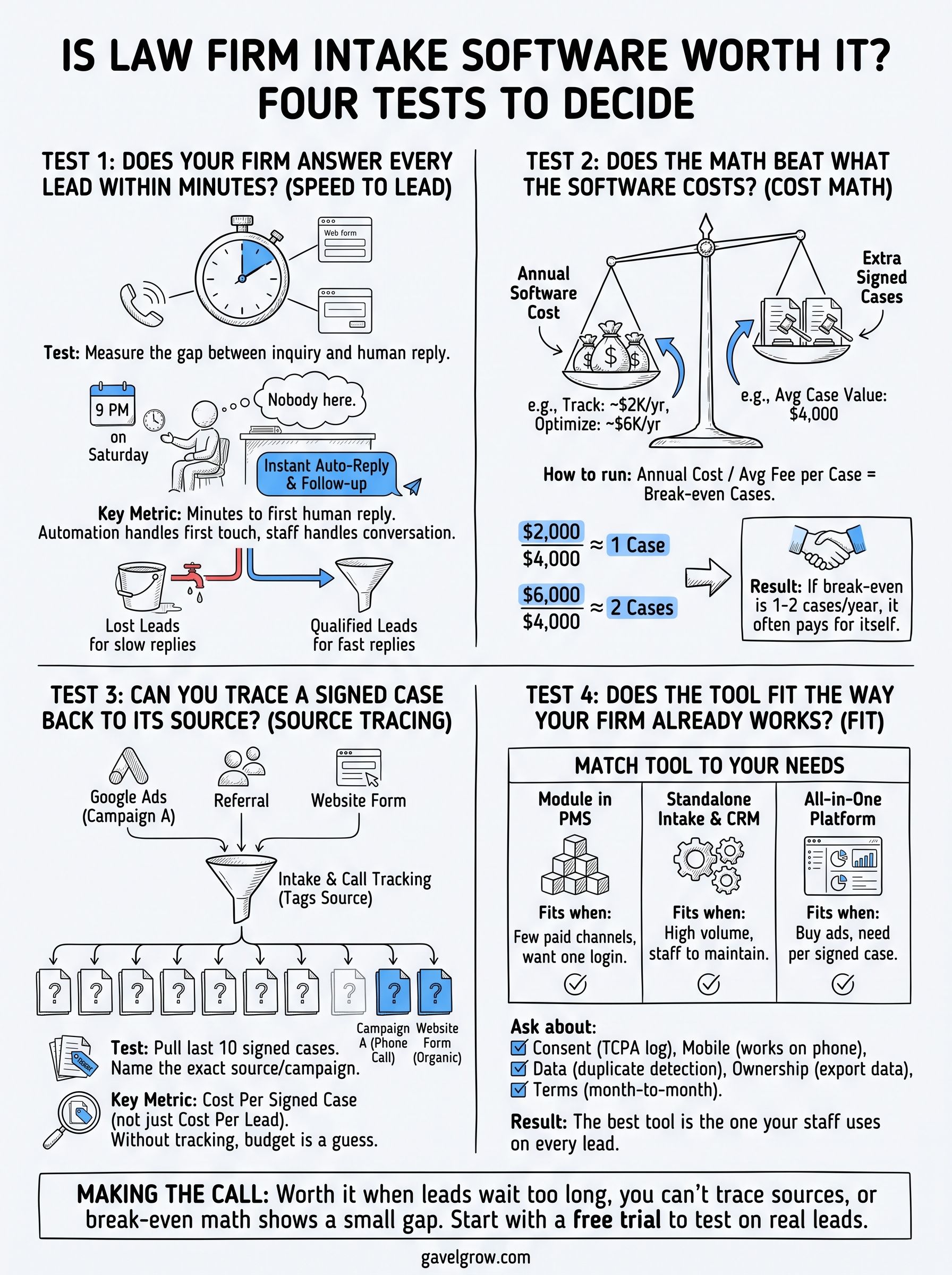
This test measures the gap between a prospect reaching out and a person replying. Intake software is worth it first when that gap is long, because automation answers at 9 p.m. on a Saturday when nobody is at a desk.
The Lead Response Management Study found that leads contacted within five minutes are far more likely to be qualified than leads first reached at thirty minutes. It measures the odds of qualifying a lead, not signed cases. Software sends an instant email auto-reply and starts automated follow-up sequences within minutes. Once US carriers approve your number, it can also text missed callers.
How to run it
Run this check yourself, without telling your staff:
- Submit your own web form from a phone at midday, in the evening and on a weekend.
- Call your main number after hours from a personal phone.
- Record the minutes until a human replies, and whether it was a call, text or email.
- Repeat the whole set on a second day.
Keep the log. Minutes to first human reply is the number that matters, and most firms have never measured it.
How to read the result
If every attempt gets a person within five minutes, you are covered, and software mostly buys you reporting. If any attempt waits hours, you have found the leak. You do not need highly skilled intake specialists to fix it. Automation handles the first touch, and your staff handle the conversation that follows.
A slow first reply costs you leads that never tell you why they left.
2. Does the math beat what the software costs?
What the test measures

This test compares the annual price of the software with the fees from the extra signed cases it should add. Legal client intake software falls into three price tiers: a module bundled with practice management, a standalone intake and CRM tool, or an all-in-one platform like GavelGrow. Vendor prices change, so check each current page.
GavelGrow publishes Track at $199 a month and Optimize at $599 a month, each with a 7-day free trial and no credit card. Extra seats are $79 a month, and SMS packs are $15 per 500 messages. Also count setup hours, because a tool nobody configures recovers nothing.
How to run it
Take your real average fee per signed case and divide the annual software cost by it. The example below uses a hypothetical $4,000 fee per case. Swap in your own number, and see current plans on the GavelGrow pricing page.
Round up to whole cases. Annual billing gives two months free, which is why $599 a month becomes $5,990 a year.
How to read the result
If break-even is one or two cases a year and test 1 showed a real leak, the software pays for itself on the first recovered leads. If you sign few cases and already reply fast, a plain form and a spreadsheet may be enough. Be honest about one limit: intake software does not create demand. It stops you from wasting the demand your ads and referrals already produce.
Divide the annual price by your average fee, and you know how many cases it must add.
3. Can you trace a signed case back to its source?
What the test measures
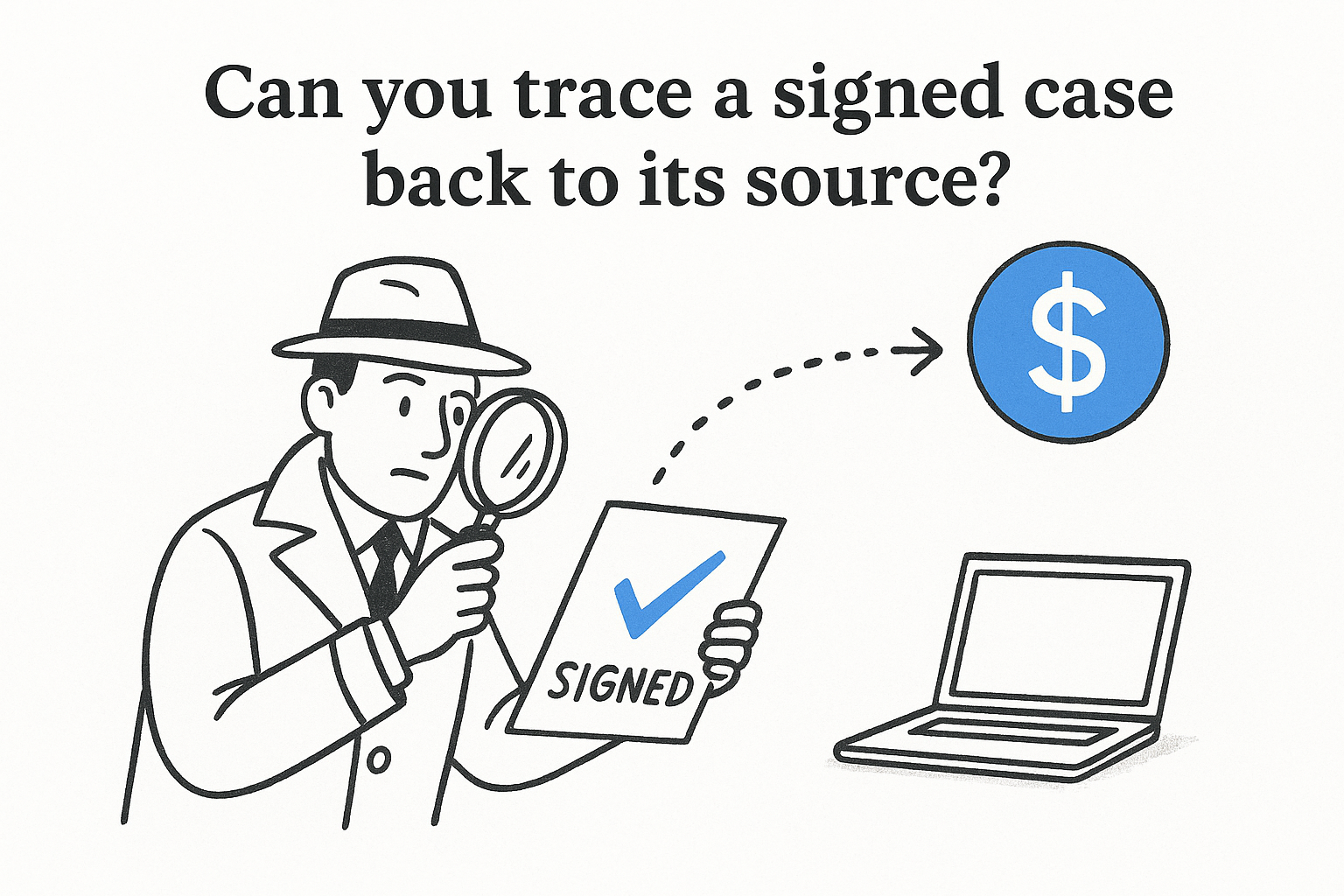
This test measures whether you can name the campaign behind each signed retainer, including clients who only phoned. Cost per lead tells you what a click cost. Cost per signed case tells you whether the spend worked. Many owners assume tracking a lead from intake to settlement is too hard, or that they need a separate law firm CRM. You do not. A good intake tool tags the source on every form and call, then carries it onto the case record.
How to run it
Pull your last ten signed cases. For each one, write down the source from your records, without asking the client.
- How many can you name down to the campaign, not just "Google"?
- How many came by phone, and can you tell which number they dialed?
- Do you know what you spent on the campaign that produced each one?
Anything you cannot answer is a blind spot in your budget.
How to read the result
If you can name the campaign for only a few of the ten, you are setting budgets on guesses. Platforms built for this tie built-in call tracking, intake and case management into one dashboard, so campaign-level cost per signed case shows up without a spreadsheet. On GavelGrow's Optimize plan, Smart Conversions also sends signed cases back to Google Ads as offline conversions, so your bidding learns from retained clients. It does not change Local Services Ads bidding, because those ads cannot accept that signal.
If you cannot name the source of a signed case, you cannot defend the budget that produced it.
4. Does the tool fit the way your firm already works?
What the test measures
This test measures whether a tool's design matches your channels, staff and systems. Legal client intake software comes in three shapes, and each fits a different firm.
How to run it
Use this checklist in every demo, and have the people who will use the tool in the room:
- Consent: does it log TCPA consent at the source and handle STOP and HELP replies?
- Mobile: does the form work on your own phone?
- Data quality: does it offer duplicate detection, phone validation and bot protection?
- Ownership: do ad accounts and tracking numbers stay in your firm's name, and can you export your data?
- Terms: is it month-to-month with a trial?
GavelGrow's platform features cover consent, mobile forms, data quality, account ownership and month-to-month terms, so you can compare any vendor against the same list.
How to read the result
Choose the type that fixes your biggest leak from tests 1 to 3 and that your staff will actually use. Intake software collects information, but it does not replace your own conflict check or your judgment on whether to take a matter. Check your state bar's rules on advertising and on communicating with prospective clients, especially for texting. If you would rather not run the tooling, a managed engagement is scoped on a strategy call.
The right tool is the one your staff uses on every lead.
Frequently asked questions
What does legal client intake software actually do?
It captures every inquiry from forms, calls and texts, checks the contact data, and starts follow-up automatically. It also keeps a record of where each lead came from and moves qualified prospects toward a signed retainer. It does not clear conflicts for you, so keep your conflict check in your own system, and have an attorney decide whether to accept the matter.
How much does law firm intake software cost?
Prices vary by vendor and tier, so compare current pages rather than relying on old figures. GavelGrow's Track plan is $199 a month and Optimize is $599 a month, both with a 7-day free trial and no credit card. Extra seats cost $79 a month. Managed service is scoped on a strategy call, plus your ad spend.
What is the best client intake software for law firms?
No single tool wins for every firm. A firm running one channel with low volume needs something different from a firm buying ads in several markets. Judge tools by how fast they reply, whether they trace signed cases to a campaign, and whether they fit your staff and consent requirements. Test two or three on your own leads before committing.
The best intake software is the one your team uses on every lead.
Do I need to worry about TCPA rules when texting leads?
Yes. The TCPA governs automated texts, and marketing texts generally require prior express written consent. Look for software that records consent at the form, keeps a tamper-resistant consent log and handles STOP and HELP keywords automatically. Have your own counsel confirm your consent language, because requirements and risk tolerance differ by firm.
Do solo attorneys need intake software?
Often yes, because a solo has no one to answer the phone while in court. Run the speed test first. If you miss calls or reply to web forms hours later, even Track at $199 a month with two call tracking numbers can recover cases. If you rarely miss an inquiry, wait until volume grows.
Making the call on intake software
Intake software is worth it when one of three things is true. Leads wait too long for a reply, you cannot trace signed cases to their source, or the break-even math shows a gap of just a few cases a year. If none applies, a form and a spreadsheet can carry you for now. Run the four tests, write the numbers down, and the answer will be obvious.
If the tests show a leak, you can try the fix without a big commitment. Both self-serve plans include a 7-day free trial with no credit card, and ad accounts stay in your firm's name. Start a free trial of the GavelGrow platform and run your own leads through it before you decide.
Frequently Asked Questions
What does legal client intake software actually do?
It captures every inquiry from forms, calls and texts, checks the contact data, and starts follow-up automatically. It also keeps a record of where each lead came from and moves qualified prospects toward a signed retainer. It does not clear conflicts for you, so keep your conflict check in your own system, and have an attorney decide whether to accept the matter.
How much does law firm intake software cost?
Prices vary by vendor and tier, so compare current pages rather than relying on old figures. GavelGrow's Track plan is $199 a month and Optimize is $599 a month , both with a 7-day free trial and no credit card. Extra seats cost $79 a month. Managed service is scoped on a strategy call, plus your ad spend.
What is the best client intake software for law firms?
No single tool wins for every firm. A firm running one channel with low volume needs something different from a firm buying ads in several markets. Judge tools by how fast they reply , whether they trace signed cases to a campaign, and whether they fit your staff and consent requirements. Test two or three on your own leads before committing. The best intake software is the one your team uses on every lead.
Do I need to worry about TCPA rules when texting leads?
Yes. The TCPA governs automated texts, and marketing texts generally require prior express written consent. Look for software that records consent at the form, keeps a tamper-resistant consent log and handles STOP and HELP keywords automatically. Have your own counsel confirm your consent language, because requirements and risk tolerance differ by firm.
Do solo attorneys need intake software?
Often yes, because a solo has no one to answer the phone while in court. Run the speed test first. If you miss calls or reply to web forms hours later, even Track at $199 a month with two call tracking numbers can recover cases. If you rarely miss an inquiry, wait until volume grows.