4 Motorcycle Accident Lawyer Marketing Channels Worth Using
Categories: Legal Marketing Strategies
 Abram Ninoyan
Founder & Senior Performance Marketer
Credentials: Google Partner, Google Ads Search Certified, Google Ads Display Certified, Google Ads Measurement Certified, Google Analytics (IQ) Certified, HubSpot Inbound Certified, HubSpot Social Media Marketing Certified, Conversion Optimization Certified
Expertise: Google Ads, Meta Ads, Conversion Rate Optimization, GA4 & Google Tag Manager, Lead Generation, Marketing Funnel Optimization, PPC Management
LinkedIn Profile
The most reliable motorcycle accident lawyer marketing pairs a dedicated, rider-focused search presence with real community credibility, then measures every channel by signed cases instead of leads. D...
Key Takeaways
- 4 Motorcycle Accident Lawyer Marketing Channels Worth Using
- 1. Dedicated motorcycle pages and local SEO
- 2. How do Google Ads and Local Services Ads win calls?
- 3. Rider community presence, referrals and reviews
4 Motorcycle Accident Lawyer Marketing Channels Worth Using
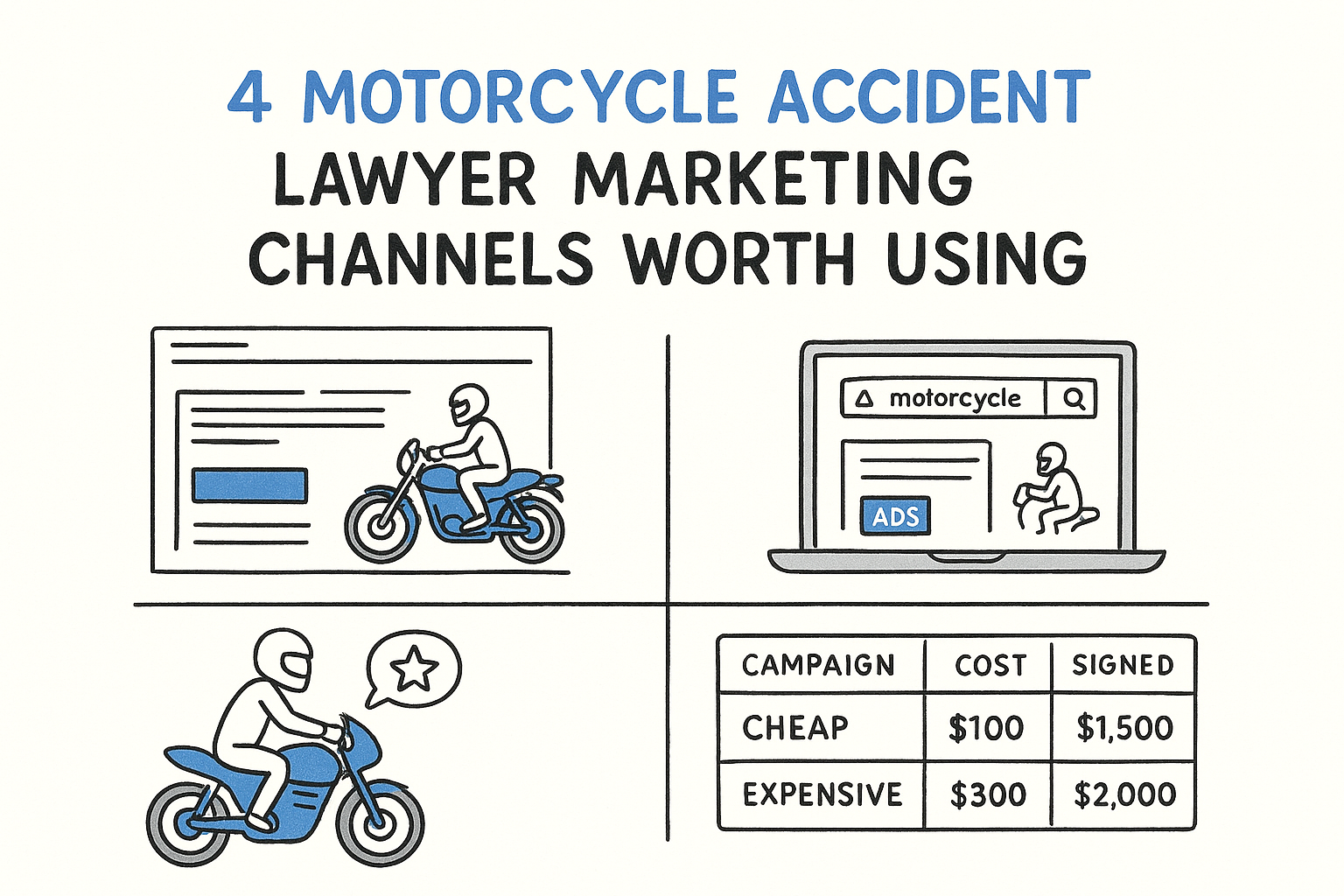
The most reliable motorcycle accident lawyer marketing pairs a dedicated, rider-focused search presence with real community credibility, then measures every channel by signed cases instead of leads. Dedicated pages and local SEO suit firms that can build for the long run, and paid search suits firms that need cases sooner. Community work suits firms with local roots, and case-level tracking suits every firm.
The problem is that motorcycle cases are valuable and every injury firm knows it. Riders expect to be blamed, they distrust lawyers who show up only when a fee is involved, and they ignore generic "injured? call now" ads. A firm that markets to riders the way it markets to everyone else gets treated like everyone else.
This guide covers four moves in the order most firms should tackle them. For each one you get how it works, who it fits, and what to watch for. GavelGrow has marketed only for law firms since 2015, so the advice leans on how cases actually get signed. Check your state bar's advertising rules before you run any of it.
Key Takeaways
- Do riders need their own pages? Yes, dedicated pages match rider searches better than generic ones.
- Which ads work? Motorcycle-specific ad groups sending clicks to motorcycle landing pages.
- Who do riders hire? Lawyers they recognized from rides, events and reviews before the crash.
- How should you judge results? By cost per signed case, not cost per lead.
1. Dedicated motorcycle pages and local SEO
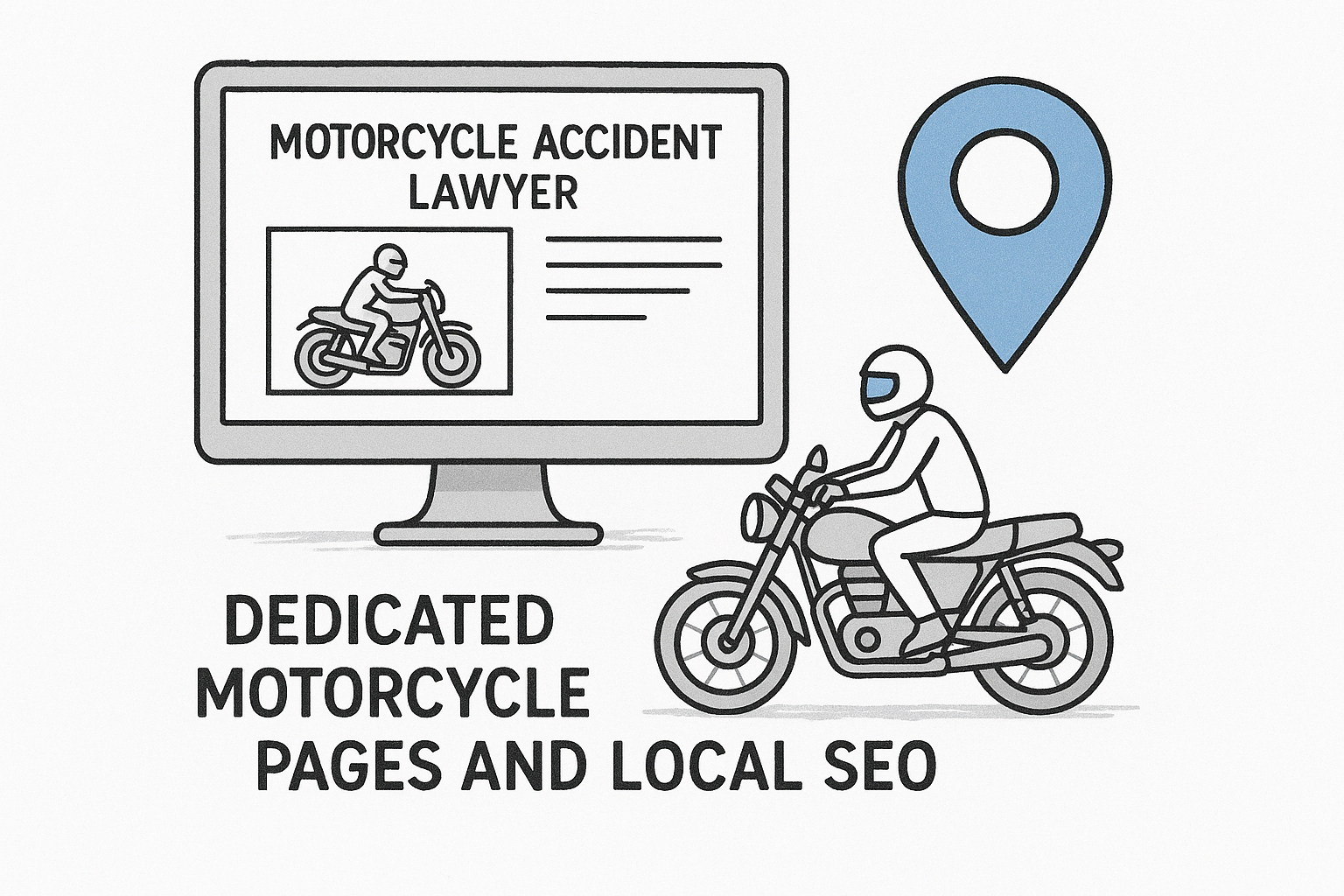
A dedicated motorcycle accident page, built to rank for "[city] motorcycle accident lawyer" searches, is the base layer of any rider marketing plan. Riders search for a specific situation, and a generic injury page does not match it.
How it works
Start with one motorcycle accident practice page, then add supporting pages that answer what riders actually search. Good topics are what to do after a crash, how your state's helmet law affects a claim, lane splitting rules, and what underinsured motorist coverage means for a rider. Cite your state's real statutes on each page, because that is what separates a specialist from a template.
Keep your Google Business Profile accurate and consistent with your site, and name the cities each office serves. Local search rewards a firm that is clearly tied to a place.
A rider searches for a crash like theirs, so give them a page about that crash.
Who it suits and what to watch
This suits firms that can invest for months before it pays. Organic rankings compound, but they are slow, so a firm that needs signed cases this quarter should pair SEO with paid search.
Watch for thin, copied pages. One thorough page built on your state's law beats ten near-identical city pages. Never write a page that promises an outcome.
2. How do Google Ads and Local Services Ads win calls?
Paid search puts you in front of riders searching right now, and it works when motorcycle ad groups send clicks to a motorcycle landing page. Local Services Ads add pay-per-lead calls above the standard results.
How it works
Build motorcycle-specific ad groups with their own ad copy. Send them to a landing page with rider-relevant content, a click-to-call button and a short form. Add call assets so a rider can phone straight from the ad. A click that lands on a generic injury page tends to bounce, while one that lands on a page about rider cases converts better.
Local Services Ads charge per lead rather than per click. Law firms can earn the Google Screened badge once Google completes its checks.
Send a rider click to a rider page, and track the call that follows.
Who it suits and what to watch
Paid search suits firms that want cases sooner than SEO can deliver and can fund a monthly ad budget. Expect to refine it as search data comes in.
Review your search terms often. Add negative keywords for news reports, motorcycle parts and job seekers, or the budget leaks into searches that never become cases. If you would rather have a team run it, see managed Google Ads for law firms.
3. Rider community presence, referrals and reviews
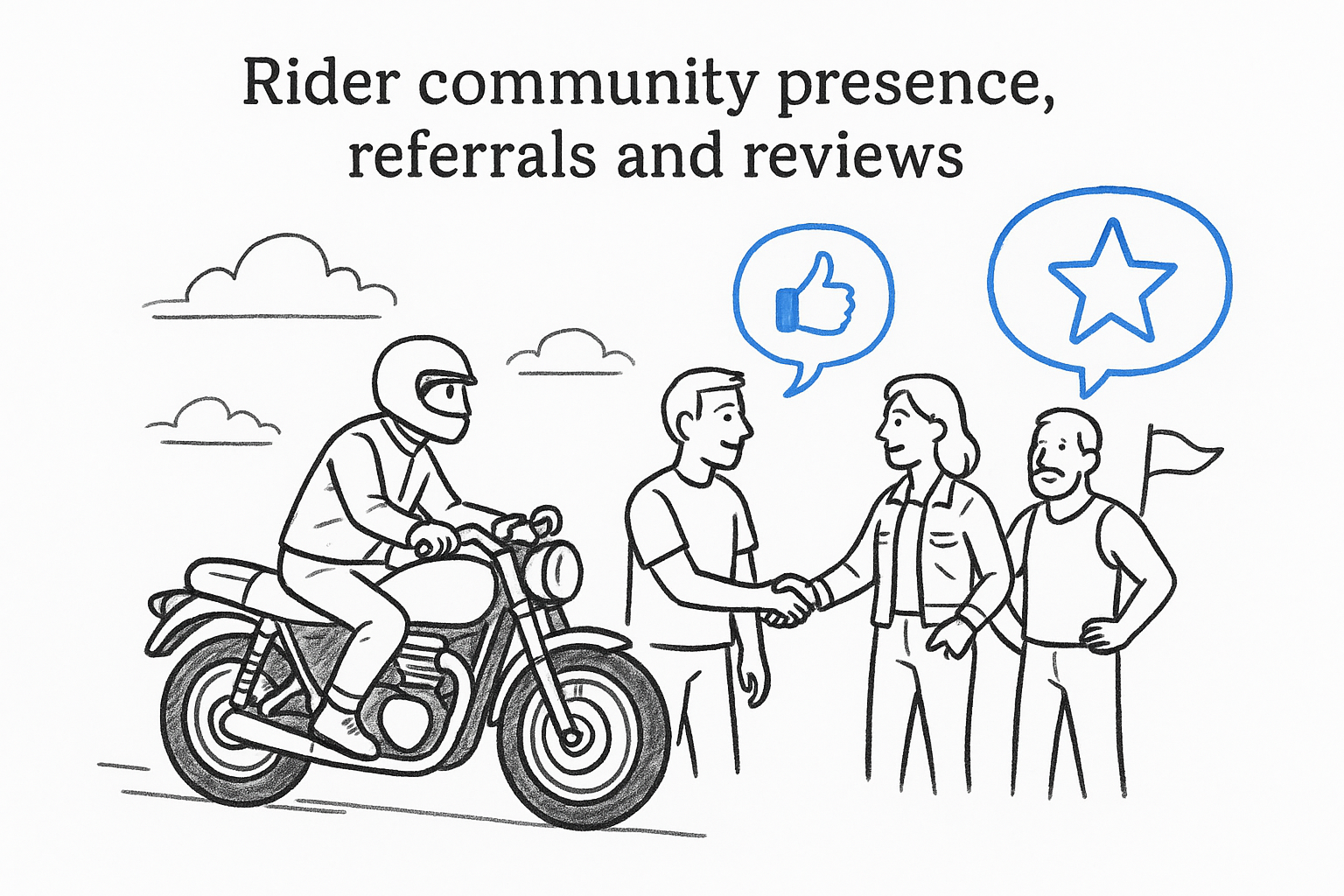
Riders trust lawyers they have seen at rides, safety courses and local shops before a crash. Community presence plus honest reviews turns that familiarity into referrals.
How it works
Sponsor a charity ride, host a rider safety event, show up at bike nights, and partner with riding groups and local motorcycle shops. Use real bikes and real roads in your creative instead of gavels and handshakes. Riders can tell when a firm treats them as a community and when it treats them as a demographic.
Reviews carry the same trust online. Ask every client for a review, respond professionally to every public review, and resolve complaints directly with the client. Do not route unhappy clients to a private form, ask only happy ones, or offer anything in exchange, because Google's review policies prohibit all three.
Riders refer the lawyer they already recognize, so be recognizable before the crash.
Who it suits and what to watch
Firms with local roots and a long view fit best, since the payoff is slow and hard to see in a dashboard. One sponsorship logo is not a strategy. Consistent presence is.
Ask every new client how they heard about you, and record the answer at intake. Without it, the referral source disappears and community spend looks like a cost with no return. Check your state bar's rules on testimonials and sponsorship messaging before you publish.
4. How do you track cost per signed motorcycle case?
Judge each motorcycle campaign by cost per signed case, not cost per lead. Rider campaigns often produce fewer, better leads, so a lead-count report can make your strongest program look like your weakest.
How it works
Record the case type at intake, give each campaign its own call tracking number, and log the outcome of every lead. Then divide spend by signed cases each month. This hypothetical example shows why it matters:
The motorcycle campaign costs three times as much per lead, yet it costs $800 less per signed case. A firm watching only cost per lead would cut the wrong campaign.
GavelGrow's marketing platform ties calls, intake and case outcomes to the campaign behind them. On Optimize, signed cases can also be sent back to Google Ads as offline conversions. That does not change Local Services Ads bidding.
Cost per lead tells you what clicks cost, and cost per signed case tells you what clients cost.
Who it suits and what to watch
Every firm running motorcycle marketing needs this, whatever the channel mix. It matters most when you split budget between SEO, paid search and community work.
Motorcycle cases are few, so small samples mislead. Review results by quarter, not by week. A case can take months to sign after first contact, so recent leads often look worse than they are.
Frequently asked questions
Is it worth marketing specifically for motorcycle accident cases?
Yes, if your firm has the capacity to handle them well. Riders search for details that differ from a car crash, and helmet laws differ from state to state. A dedicated page and campaign let you answer your state's rules directly. Generic injury marketing cannot do that, and few firms build the dedicated version, so the specific searches are often less crowded.
Which keywords matter for motorcycle accident lawyer marketing?
Start with "[city] motorcycle accident lawyer" and "motorcycle accident attorney near me," which signal readiness to hire. Add informational searches such as "what to do after a motorcycle accident" and "helmet law and injury claim." Riders research before they call, and those searches are where you can earn trust first. Keep your negative keyword list current so the budget stays on rider cases.
Can you advertise motorcycle cases under state bar rules?
Yes, but the rules differ by state, so check yours before launching. ABA Model Rule 7.1, which many states have adopted in some form, bars false or misleading communications about a lawyer's services. In practice, never promise or guarantee results, avoid superlatives such as "best," and confirm your state's rules on testimonials before publishing rider videos.
How long does motorcycle accident lawyer marketing take to work?
Paid search can send calls as soon as campaigns are approved and live, while organic pages usually take months to rank. Signing also lags behind the first contact, so a campaign that looks weak after a few weeks may not be. Judge each channel by cost per signed case over a full quarter, not by its first month of leads.
How fast should you respond to a motorcycle accident lead?
As fast as you can. The Lead Response Management Study found that leads contacted within five minutes are far more likely to be qualified than those first reached at thirty minutes. It measures the odds of qualifying a lead, not signed cases. Use an instant auto-reply on every form and a clear after-hours call process.
Where to start with rider marketing
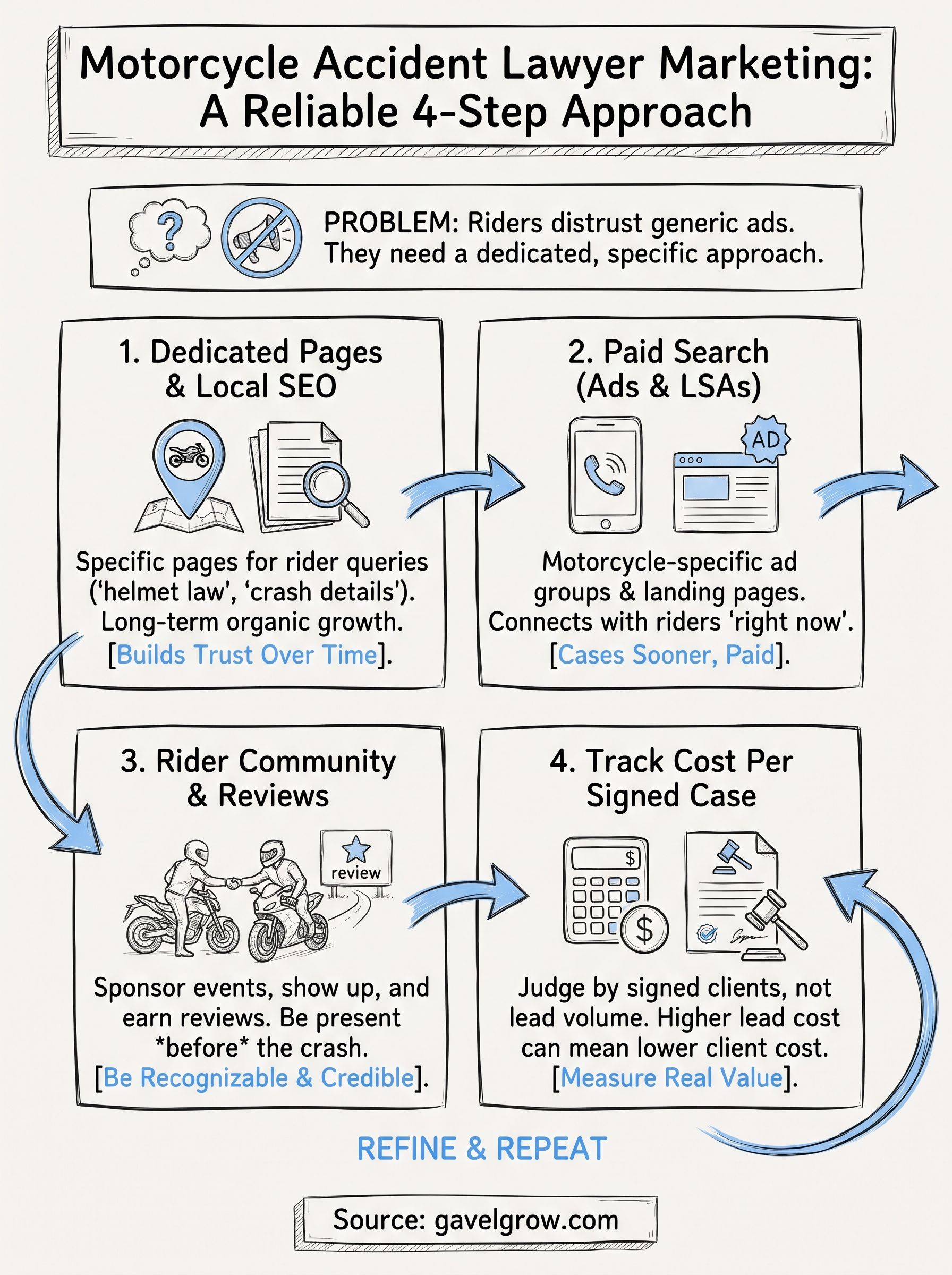
Motorcycle cases reward specificity. A dedicated page, motorcycle-only ads, a visible presence in the riding community and tracking by signed case work together, and each one makes the others easier to judge.
Pick your starting point by timeline. Choose paid search if you need cases soon, and SEO and community work if you are building for the long run. Set up case-level tracking from day one either way, so every dollar has a signed-case number behind it.
If you want a legal-only team to build the program or the tracking behind it, book a free 45-minute strategy call with GavelGrow and we will map it to your market.
Frequently Asked Questions
Is it worth marketing specifically for motorcycle accident cases?
Yes, if your firm has the capacity to handle them well. Riders search for details that differ from a car crash, and helmet laws differ from state to state. A dedicated page and campaign let you answer your state's rules directly . Generic injury marketing cannot do that, and few firms build the dedicated version, so the specific searches are often less crowded .
Which keywords matter for motorcycle accident lawyer marketing?
Start with "[city] motorcycle accident lawyer" and "motorcycle accident attorney near me," which signal readiness to hire. Add informational searches such as "what to do after a motorcycle accident" and "helmet law and injury claim." Riders research before they call , and those searches are where you can earn trust first. Keep your negative keyword list current so the budget stays on rider cases.
Can you advertise motorcycle cases under state bar rules?
Yes, but the rules differ by state, so check yours before launching. ABA Model Rule 7.1, which many states have adopted in some form, bars false or misleading communications about a lawyer's services. In practice, never promise or guarantee results, avoid superlatives such as "best," and confirm your state's rules on testimonials before publishing rider videos.
How long does motorcycle accident lawyer marketing take to work?
Paid search can send calls as soon as campaigns are approved and live , while organic pages usually take months to rank. Signing also lags behind the first contact, so a campaign that looks weak after a few weeks may not be. Judge each channel by cost per signed case over a full quarter , not by its first month of leads.
How fast should you respond to a motorcycle accident lead?
As fast as you can. The Lead Response Management Study found that leads contacted within five minutes are far more likely to be qualified than those first reached at thirty minutes. It measures the odds of qualifying a lead, not signed cases. Use an instant auto-reply on every form and a clear after-hours call process.