5 Tax Attorney Marketing Strategies That Win Clients
Categories: Legal Marketing Strategies
 Abram Ninoyan
Founder & Senior Performance Marketer
Credentials: Google Partner, Google Ads Search Certified, Google Ads Display Certified, Google Ads Measurement Certified, Google Analytics (IQ) Certified, HubSpot Inbound Certified, HubSpot Social Media Marketing Certified, Conversion Optimization Certified
Expertise: Google Ads, Meta Ads, Conversion Rate Optimization, GA4 & Google Tag Manager, Lead Generation, Marketing Funnel Optimization, PPC Management
LinkedIn Profile
Tax attorney marketing works when your firm is visible at the moment someone is scared: an IRS letter, a levy notice, an audit. The strongest mix is SEO built around specific tax problems, Google Ads...
Key Takeaways
- 5 Tax Attorney Marketing Strategies That Win Clients
- 1. SEO built around the tax problem
- 2. Why PPC works for urgent tax searches
- 3. Google Business Profile and reviews
5 Tax Attorney Marketing Strategies That Win Clients
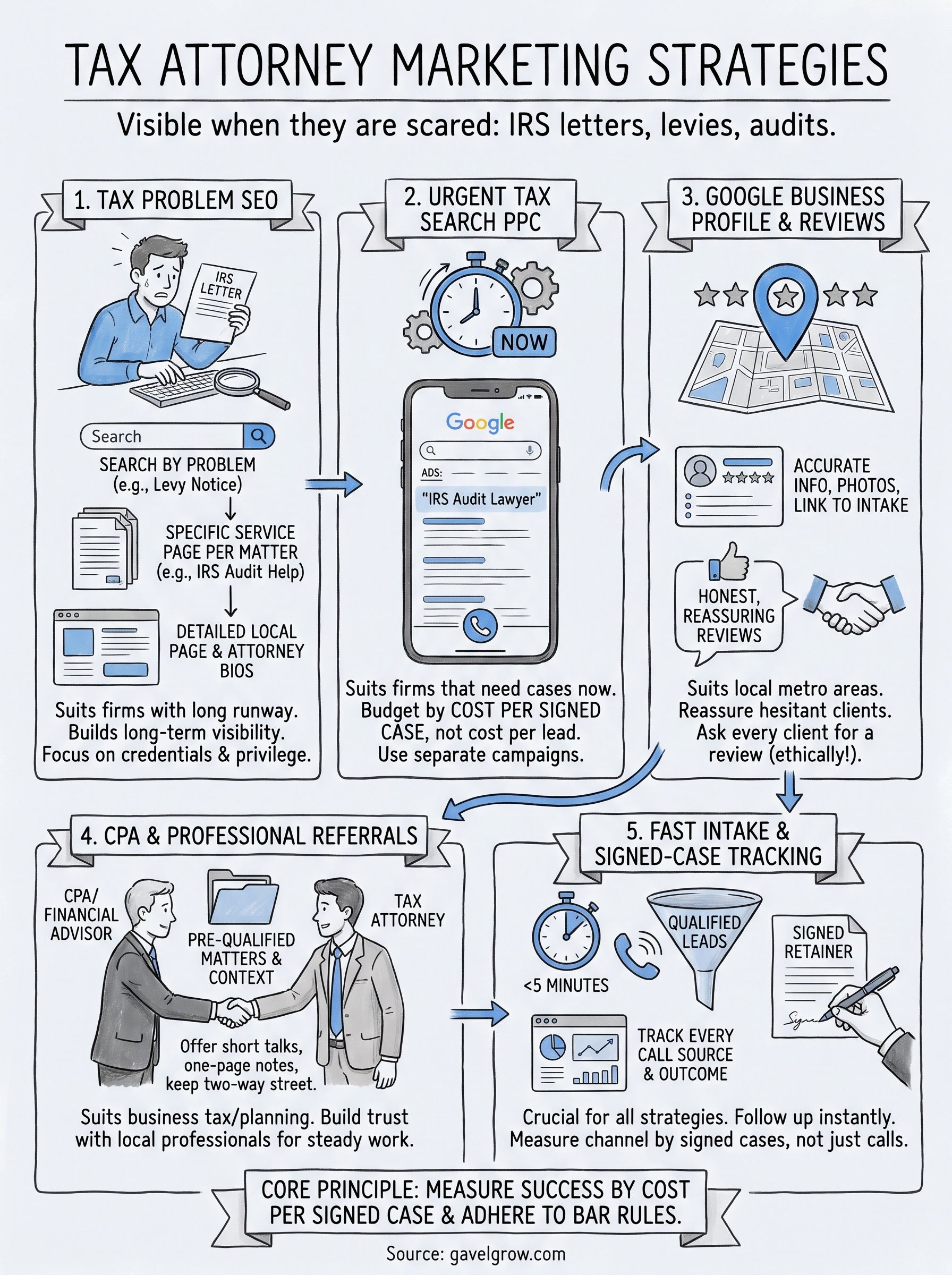
Tax attorney marketing works when your firm is visible at the moment someone is scared: an IRS letter, a levy notice, an audit. The strongest mix is SEO built around specific tax problems, Google Ads on urgent searches, and fast intake that turns a call into a signed retainer. SEO suits firms with a long runway. PPC suits firms that need cases now. Referral partnerships suit firms with business tax and planning work.
The hard part is that tax clients search by problem, not by practice area. Tax relief companies also compete for the same clicks with louder promises. Most marketing advice stops at traffic, but you need to know which channel produced a signed case, not just a phone call. This article covers five strategies. Each one explains how it works for tax matters, what to do first, and what to watch for, including the advertising limits that apply to tax lawyers.
GavelGrow has marketed only for law firms since 2015, so the advice below comes from a legal-only view of cost per signed case. Where a strategy gets easier with the right tooling, we say so. Otherwise we keep it neutral.
1. SEO built around the tax problem
Tax SEO works when each page answers one specific problem, such as an IRS audit, unfiled returns, or an offer in compromise, instead of one generic "tax attorney" page. It is the slowest strategy here and the one that keeps paying longest. It suits firms with steady controversy or planning work and time to wait.
How it works for tax cases
Taxpayers search by problem. Someone holding a levy notice types the notice, not your practice area, so the page that explains that exact situation meets them first. Build one service page per matter type. For each city you serve, add a local page with real detail about how you handle that matter.
Page types worth building:
- IRS audit and appeals representation
- Payment plans and offers in compromise
- Unfiled returns and back-tax cleanup
- Payroll tax and trust fund problems
- Business tax planning and entity structuring
A tax client searches for the problem in front of them, so organize your pages the same way.
What to do first
Start with the matter type that pays best and that you most want to handle. Write that page in full: who it is for, how the process runs, what you need from the client, and plain answers to the questions people ask on a first call. Add attorney bios with bar admissions, because credentials and attorney-client privilege are what set you apart from tax relief companies. Then repeat for the next matter type. If you would rather not do this in-house, GavelGrow's done-for-you SEO service is built for law firms.
What to watch for
Tax law changes, so review every page at least once a year and remove statements that no longer hold. Skip near-duplicate city pages that only swap the city name, since they give the reader nothing new. Never promise outcomes such as wiping out a tax debt. State bar advertising rules vary, and Treasury Circular 230 (section 10.30) also governs how practitioners before the IRS may solicit. Check both before you publish any claim.
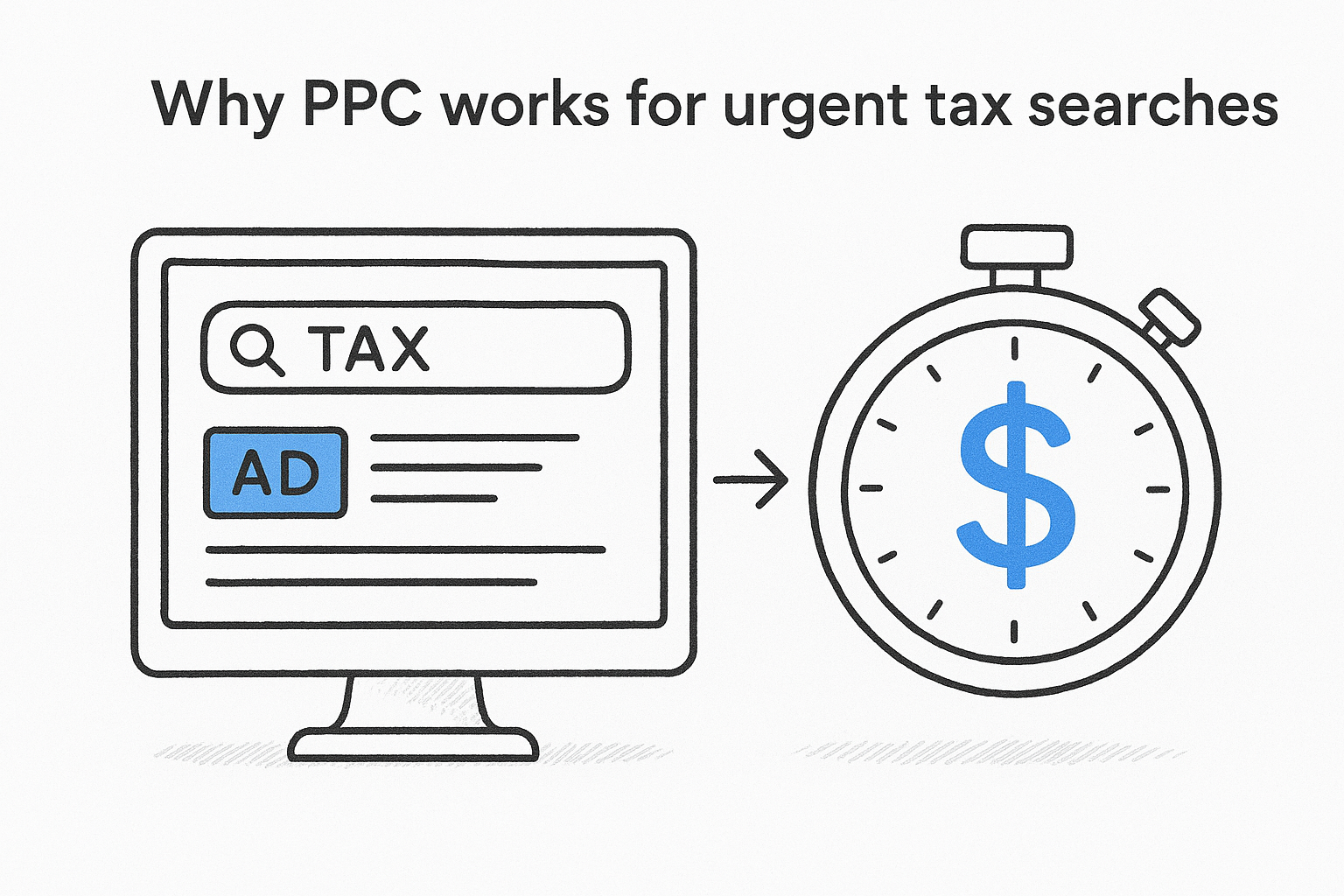
2. Why PPC works for urgent tax searches
PPC works for tax controversy because the searcher has a deadline, and the click arrives the day your campaign goes live. It suits firms that need cases within weeks and can handle the calls that follow.
How it works for tax cases
Google Ads puts your firm above the organic results for searches like "IRS audit lawyer" or "wage garnishment help". Run separate campaigns by matter type so the ad, keyword and landing page all say the same thing. Add call buttons, since many people with a tax emergency would rather phone than fill out a form. Lead with what tax relief companies cannot offer: a licensed attorney and privileged conversations.
What to do first
Set the budget from cost per signed case, not cost per lead. Here is a hypothetical example, not a benchmark:
If weak follow-up drops signings from 10 to 6, the same spend costs about $833 per signed case. Run your own figures through GavelGrow's cost-per-acquisition calculator.
Judge your ads by what each signed case costs, because the same spend can look cheap or expensive depending on intake.
What to watch for
Broad keyword matching pulls in people searching for free tax software or IRS phone numbers, so add negative keywords early and review search terms weekly. The claim rules from section 1 apply to ad copy too. Advertising is generally an ordinary business expense, but confirm the tax treatment with your CPA. For hands-on help, see GavelGrow's managed Google Ads service.
3. Google Business Profile and reviews
A complete Google Business Profile and a steady flow of honest reviews put you in local map results and reassure hesitant clients. It suits firms that serve a defined metro area and want a low-cost channel that builds on itself.

How it works for tax cases
When someone searches for a tax attorney in their city, Google often shows a map pack before the organic listings. Your profile decides whether you appear there. Reviews then decide whether the person calls you or the firm next to you. Tax clients are often embarrassed or worried about privacy, so a reassuring review carries real weight.
What to do first
Set up the profile in this order:
- Choose the most accurate primary category and list each tax service you offer.
- Keep your name, address and phone number identical on your site and directories.
- Add real photos of your office and team, and link to your intake form.
- Ask every client for a review once the matter closes, using one direct link.
Ask every client for a review, resolve problems directly, and answer every public review professionally.
What to watch for
Google's policies prohibit routing unhappy clients to a private form, asking only happy clients, and offering incentives. Do none of the three. When you reply to a review, never confirm that the person was a client or mention any detail of the matter. That would break confidentiality. A short thank-you, or a polite invitation to call you, is enough.
4. How do CPA referral partnerships work?
Referral partnerships work because CPAs, enrolled agents, bookkeepers and financial advisors meet taxpayers in trouble before anyone else does. They send you pre-qualified matters without an ad budget. They suit firms with business tax, planning or high-stakes controversy work.
How it works for tax cases
An accountant who finds a disputed assessment, a payroll tax problem, or exposure that calls for attorney-client privilege needs someone to hand the client to. If they trust you, they pick up the phone. Estate planning and business attorneys are natural partners too, since their clients run into tax questions outside their own practice. These referrals tend to arrive with context, so first calls go faster.
What to do first
Keep it small and consistent:
- List ten local professionals whose clients match your best matters.
- Offer a short talk on when to bring in a tax attorney.
- Send a one-page note explaining how you take referrals and how you keep the referrer informed.
- Record the referral source on every new inquiry.
A referral partner sends clients only to a lawyer they have seen handle the first call well.
What to watch for
Most states bar lawyers from paying for recommendations, so thank partners without payment and check your own state's rule. Share client details with a referrer only with the client's consent. Treat the relationship as two-way: when a client needs return preparation or bookkeeping, send them back.
5. Fast intake and signed-case tracking
Intake turns marketing spend into revenue. Answer quickly, follow up within minutes, and record which campaign produced each signed retainer. Every other strategy here depends on it, and it suits any firm already paying for leads.
How it works for tax cases
The Lead Response Management Study found that leads contacted within five minutes are far more likely to be qualified than leads first reached at thirty minutes. That measures odds of qualifying, not signed cases, but the direction is clear for people in a tax emergency who contact several firms. Give each channel its own call tracking number, so the leads that only phoned still count.
What to do first
Fix the basics before adding spend:
- Assign a tracking number per channel and log the outcome of every call.
- Make your intake form short, multi-step and easy on a phone.
- Send an automatic reply the moment a form comes in.
- Review missed calls every morning.
GavelGrow's platform combines these in one dashboard, from Track at $199/month to Optimize at $599/month, with a 7-day free trial and no credit card.
You cannot tell which channel works until every call and form is tied to a signed case.
What to watch for
Text a lead only with documented consent, and give a clear way to opt out. Call recording rules vary by state, so tell callers they are being recorded. Never let intake staff give legal advice or promise outcomes.
Where to start
Tax attorney marketing comes down to a few steps in order. Fix intake first, so every call is answered and tracked. Add PPC when you need cases soon. Build SEO and your Google Business Profile for the long run. Keep referral partnerships going all year. Measure all of it by cost per signed case, and keep every claim inside your state bar and Circular 230 limits.
If you want help choosing the mix for your firm, book a free strategy call with GavelGrow's legal-only team.