Medical Malpractice Lawyer Marketing: 7 Ways to Sign Cases
Categories: Legal Marketing Strategies
 Abram Ninoyan
Founder & Senior Performance Marketer
Credentials: Google Partner, Google Ads Search Certified, Google Ads Display Certified, Google Ads Measurement Certified, Google Analytics (IQ) Certified, HubSpot Inbound Certified, HubSpot Social Media Marketing Certified, Conversion Optimization Certified
Expertise: Google Ads, Meta Ads, Conversion Rate Optimization, GA4 & Google Tag Manager, Lead Generation, Marketing Funnel Optimization, PPC Management
LinkedIn Profile
The most effective medical malpractice lawyer marketing starts with case-screening intake and tracking. Practice-area SEO, tightly controlled Google Ads, a clean review profile, attorney referrals and...
Key Takeaways
- Medical Malpractice Lawyer Marketing: 7 Ways to Sign Cases
- 1. Case-screening intake with call tracking
- 2. Practice-area SEO that pre-qualifies cases
- 3. How should you run Google Ads for malpractice cases?
Medical Malpractice Lawyer Marketing: 7 Ways to Sign Cases
The most effective medical malpractice lawyer marketing starts with case-screening intake and tracking. Practice-area SEO, tightly controlled Google Ads, a clean review profile, attorney referrals and a legal-only partner come after that. Solo and small firms get the most from SEO, referrals and reviews, because those compound without a big ad budget. Firms with a budget and an intake team get the most from paid search and click-to-retainer attribution.
Malpractice is a low-volume, high-stakes practice. Most inquiries are not viable, since a claim usually needs a medical record review and a qualified expert before you can accept it, and you pay for that expert work long before any recovery. Raw lead volume is the wrong target. A cheap form fill that never becomes a signed retainer still costs you intake time and review time.
This guide gives seven ways to attract qualified malpractice leads, each with how it works, who it suits and what to watch for. GavelGrow has marketed only for law firms since 2015, and the advice below reflects that legal-only focus. Check your state bar's advertising rules before you publish any of it.
1. Case-screening intake with call tracking
How it works
Intake is where malpractice marketing pays off or leaks money, so fix it before you add channels. Every call and form should trace back to the campaign that produced it, and every inquiry should get an outcome tag such as qualified, callback, unqualified or spam. Then judge campaigns by cost per signed case, not cost per lead. A campaign with cheap leads and no retainers is losing money.
Start with a short screening form or script, and ask for the dates early, because state filing deadlines can be short. Ask about:
- What happened, and which provider or facility was involved
- The treatment date and the date the person learned of the harm
- The current outcome, such as further surgery, ongoing care or a death
- Whether another firm has already reviewed the matter
Speed still matters. The Lead Response Management Study found that leads contacted within five minutes are far more likely to be qualified than leads first reached at thirty minutes. You may need weeks to accept a case, but you can reply in minutes.
A malpractice lead is only worth what it costs to turn into a signed retainer.
Who it suits and what to expect
The GavelGrow platform puts per-campaign call tracking numbers, firm-branded intake forms with TCPA consent logging, a lead pipeline and click-to-retainer attribution in one dashboard. Track is $199 per month for one connected ad account, 2 tracking numbers and 5 seats. Optimize is $599 per month with unlimited ad accounts, 10 tracking numbers, 15 seats, and Smart Conversions that send signed cases back to Google Ads. Both include a 7-day free trial with no credit card.
This fits any firm that cannot say which campaign produced its last signed case. Watch the timeline, though. Malpractice matters close slowly, so a click can take months to become a retainer. Judge campaigns over quarters, not weeks.
2. Practice-area SEO that pre-qualifies cases
How it works
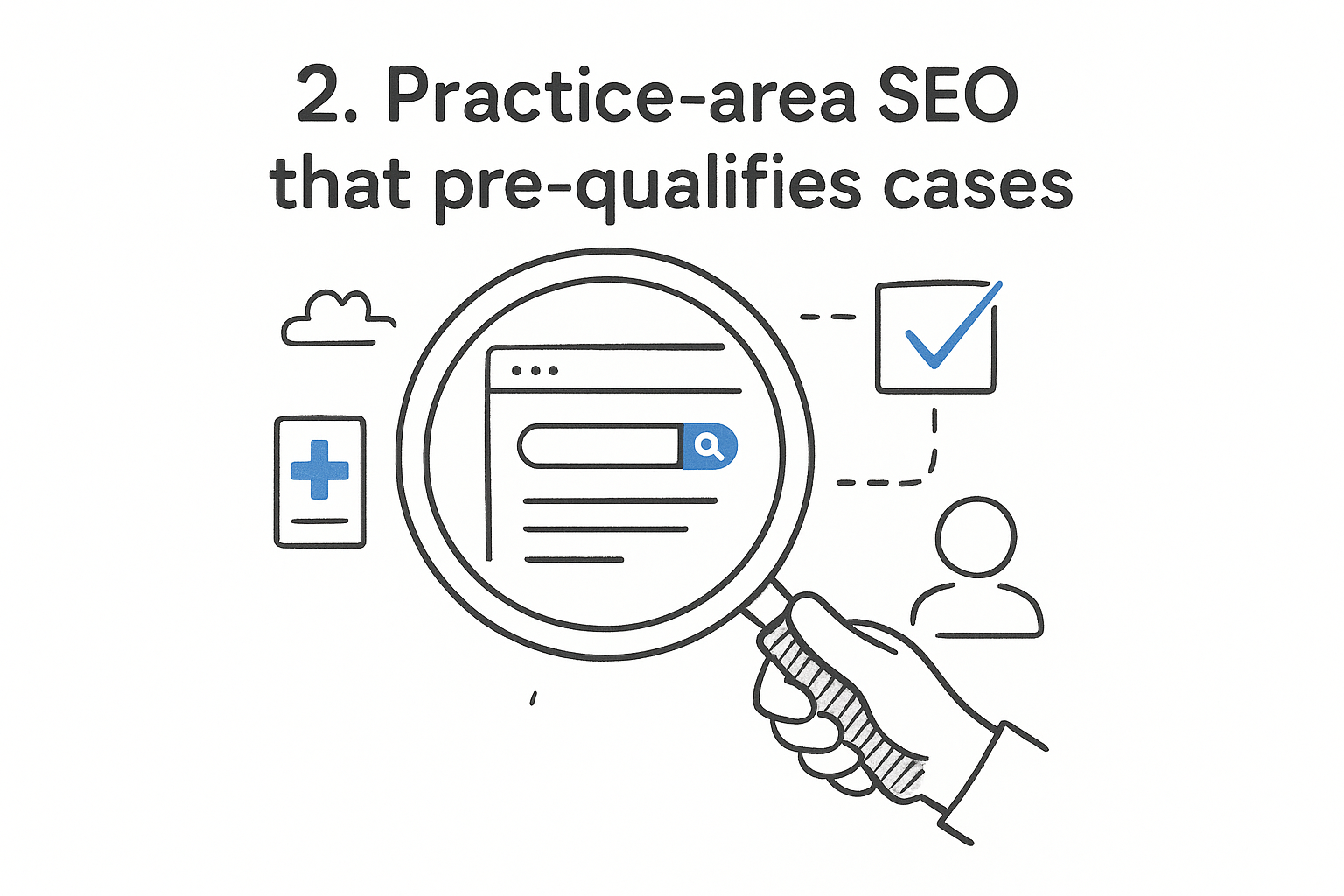
Build one deep page per case type instead of a single generic malpractice page. People often search the problem before they search for a lawyer, so each page should answer its question in the first two sentences. Then it should explain the standard of care, causation, and the difference between a bad outcome and negligence.
State-specific pages deserve extra care. Filing deadlines and pre-suit requirements, such as expert affidavits, vary by state. Readers may act on this content, so have an attorney review every page. Add attorney bio pages that show credentials and trial experience, plus a local page for each office.
The best malpractice content talks some readers out of calling, and that saves your intake team hours.
Who it suits and what to expect
SEO suits firms playing a long game and wanting fewer, better-qualified calls. It pays back in months, not weeks, and the gains compound. Watch for thin pages, text lifted from medical sites, and any provider that guarantees a ranking, because nobody controls Google. If you would rather not write and maintain this yourself, GavelGrow's done-for-you SEO service covers practice-area and local SEO for law firms.
3. How should you run Google Ads for malpractice cases?
How it works
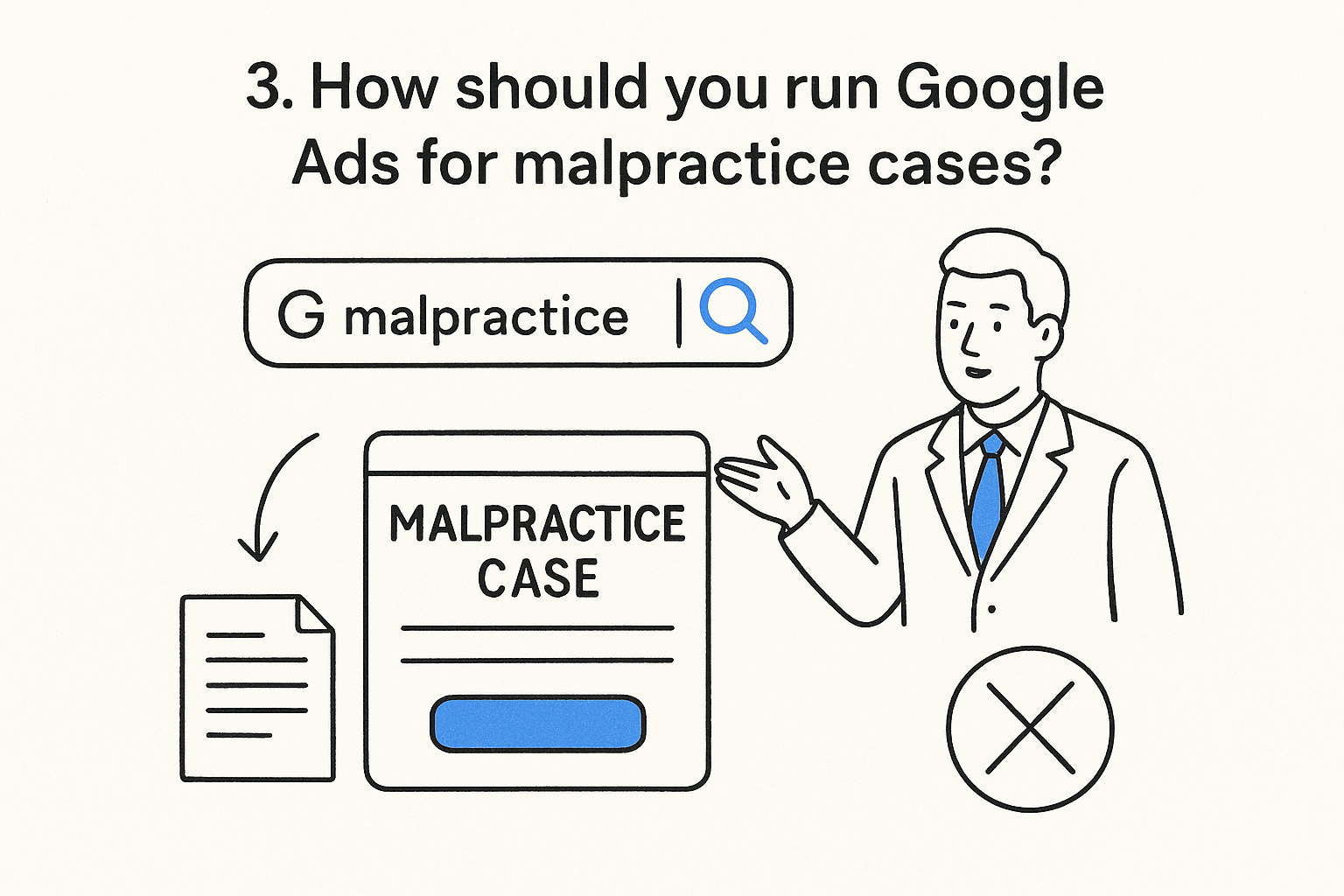
Run narrow campaigns by case type on high-intent searches, send each to a matching page, and exclude everyone who is not a potential plaintiff. Malpractice terms attract doctors, nurses, students and people shopping for insurance. Your negative keyword list is as important as your keyword list. Start with terms like these:
- malpractice insurance
- salary, jobs, how to become
- defense lawyer for doctors
- free, template, form
Broad match paired with form-fill optimization fills your inbox with junk. Begin with phrase and exact match, and review the search terms report weekly. Then feed signed cases back to Google Ads as offline conversions, so bidding learns from retainers instead of form fills.
In paid search, the negative keyword list protects your budget more than the keyword list grows it.
Who it suits and what to expect
Paid search suits firms that can answer fast and absorb a long case cycle. Legal clicks are expensive and malpractice terms are competitive, so a small budget spread across many case types teaches you nothing. Pick one or two case types and test them properly.
Watch your ad copy. Never promise results or use "best" or "top" claims, because bar rules prohibit them in many states. Ad platforms also restrict copy that implies you know a viewer's medical history, so write about the law and the process, not "Did your surgeon hurt you?"
4. Do reviews and Google Business Profile still matter?
How it works
Yes, because malpractice clients research heavily before they call, and your profile is often the first thing they see. Claim and complete a Google Business Profile for each office, with accurate categories and consistent name, address and phone details. Then build a steady review habit. Ask every client at a consistent point, usually after the matter resolves, and send a direct review link.
Google's review policies set firm limits:
- Ask every client, not only the ones you think are happy
- Never offer rewards for reviews
- Never route unhappy clients to a private form before they can review publicly
- Resolve complaints with the client directly and respond to every public review
Reply to reviews without confirming the reviewer is a client or mentioning the matter, because client confidentiality still applies. A short, polite reply that invites a phone call is enough.
Your reply to a negative review is read by more future clients than the review itself.
Who it suits and what to expect
Every firm needs this, and it costs time rather than money. Reviews rarely sign cases alone, but they often decide whether a searcher calls you or the firm listed next to you. Referring attorneys also check them.
Be sensitive. Many malpractice clients want privacy, and settlements may carry confidentiality terms, so never press anyone. State bars also differ on testimonials and case-result disclaimers, so check yours before you display reviews on your own site.
5. Referral relationships with other attorneys
How it works
Many malpractice matters reach a specialist through other lawyers. Personal injury, workers' compensation, elder law, family law and estate planning attorneys often spot a possible claim they do not handle. Make yourself easy to refer to. Four steps cover most of the work:
- Publish a referral page that explains which cases you screen for and how fast you respond
- Offer referring lawyers a short, no-pressure case evaluation
- Send status updates on referred matters, within your ethics rules
- Write for bar newsletters or speak at local continuing legal education events
Referral fees and co-counsel arrangements are regulated and differ by state. Put terms in writing and check your bar's rules before you offer or accept a fee share.
One referring attorney who trusts your screening can outperform a month of ad spend.
Who it suits and what to expect
This suits small firms with limited budgets and firms new to malpractice, because it costs time and reputation instead of ad dollars. It is slow and relationship-driven. Referral sources mature over a year or more, and one careless handoff can end a relationship.
Watch your tracking. Log the referral source on every case, so you know which relationships produce signed retainers and which only produce phone calls. Without that record, referral work turns into a feeling instead of a number.
6. Where do social media and video fit in?
How it works
Social media marketing for attorneys and video support the other channels. They rarely sign malpractice cases alone. Use paid social on Facebook and Instagram to retarget visitors who read a case-type page, and use LinkedIn to stay visible to referring attorneys. Short attorney-led videos on YouTube work well for explainers, such as what standard of care means or what happens in a case evaluation.
Platform rules shape the copy. Avoid addressing a viewer's health or medical history, and never use a real patient's story without consent. Talk about the law, the process and the deadlines that apply. Put a tracked phone number and a tracked landing page in every video description, so you can see whether any of it leads to calls.
Treat social media as a way to stay in front of people who already read your pages.
Who it suits and what to expect
This suits firms that already have case-type pages worth retargeting and an attorney comfortable on camera. If your site has no deep content yet, spend on items 1 and 2 first. Watch for vanity metrics. Likes and views do not pay expert fees, so judge every post and ad by inquiries and signed cases.
7. How do you pick a malpractice marketing agency?
How it works
Choose an agency that works only with law firms, reports cost per signed case, and keeps ad accounts in your name. Ask each candidate these questions:
- Do you work only with law firms, and do you know bar advertising rules?
- Can your reporting follow a click or call through to a signed retainer?
- Will ad accounts and tracking numbers be in my firm's name, with no markup on ad spend?
- Will you work for a direct competitor in my market?
- Are terms month-to-month, and will I have a named contact?
- Who reviews medical and legal content for accuracy?
GavelGrow's managed service is built around those answers. It has served 500+ law firms since 2015. It gives you a named contact, holds every ad asset for your review before it runs, and builds and runs campaigns on the same platform you can see. It does not run marketing for two direct competitors in the same market. Pricing is scoped on a strategy call, plus your ad spend, and you can learn more on the managed services page.
An agency that cannot report cost per signed case is selling you activity.
Who it suits and what to expect
An agency suits firms without an in-house marketer or intake lead, or firms that want results without learning ad platforms. If you want to run things yourself, a self-serve platform plan fits better. Watch for guaranteed rankings or case counts, reports that stop at clicks and leads, and long lock-in contracts. Those are signs the agency is protecting itself, not your pipeline.
Where to start with malpractice marketing
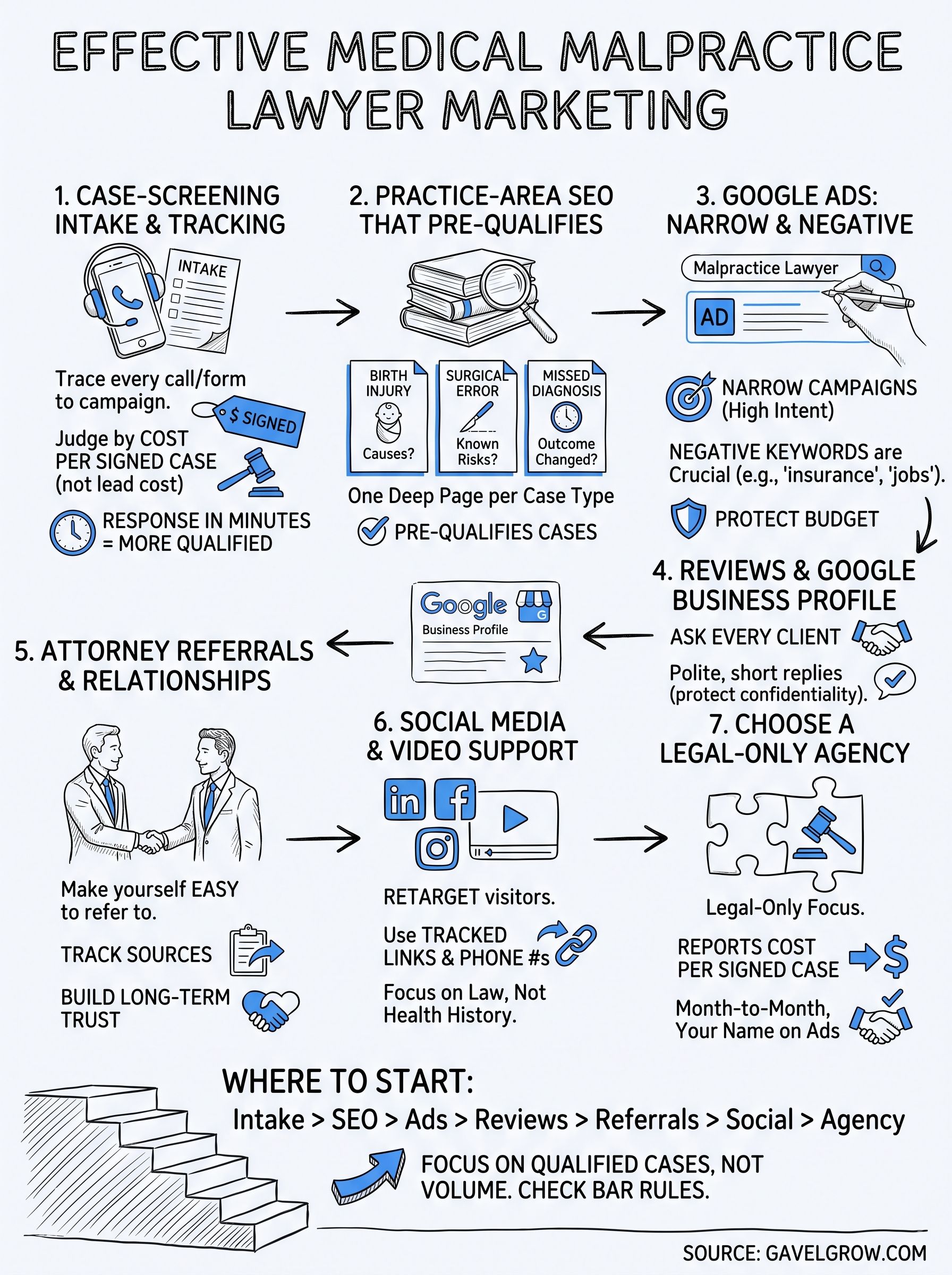
Qualified cases matter more than lead volume in this practice. Start with intake and tracking, so you know what each channel costs per signed case. Add SEO and attorney referrals for compounding growth, then run Google Ads on one or two case types once your team answers fast. Keep reviews coming from every client, use social media as support, and bring in a legal-only partner when your own capacity runs out. Whatever you publish, check it against your state bar's advertising rules.
If you want a second opinion on which of these seven fits your firm, book a free 45-minute strategy call with GavelGrow's legal-only team.