7 Solo Attorney Marketing Strategies to Sign More Cases
Categories: Legal Marketing Strategies
 Abram Ninoyan
Founder & Senior Performance Marketer
Credentials: Google Partner, Google Ads Search Certified, Google Ads Display Certified, Google Ads Measurement Certified, Google Analytics (IQ) Certified, HubSpot Inbound Certified, HubSpot Social Media Marketing Certified, Conversion Optimization Certified
Expertise: Google Ads, Meta Ads, Conversion Rate Optimization, GA4 & Google Tag Manager, Lead Generation, Marketing Funnel Optimization, PPC Management
LinkedIn Profile
Running a solo practice means you're the intake coordinator, the closer, and the marketing department, often before 8 a.m. Solo attorney marketing doesn't have to mean outspending three-partner firms....
Key Takeaways
- 7 Solo Attorney Marketing Strategies to Sign More Cases
- 1. Build a lean, high-converting website
- 2. Optimize your Google Business Profile and local SEO
- 3. Publish content that answers client questions
7 Solo Attorney Marketing Strategies to Sign More Cases
Running a solo practice means you're the intake coordinator, the closer, and the marketing department, often before 8 a.m. Solo attorney marketing doesn't have to mean outspending three-partner firms. It means spending smarter on the few channels that actually turn a click into a signed retainer, and knowing which of your limited marketing hours go furthest.
The strategies that work for solo practitioners aren't secret. They're the same tactics bigger firms use, scaled to a one-person budget and measured by cost per signed case, not vanity lead counts. Get your Google Business Profile right, answer the phone in minutes instead of hours, and track which ads actually produce clients, and you'll outperform firms spending five times your budget.
This list walks through seven budget-friendly strategies you can start this month, from local SEO basics to intake automation that catches leads while you're in court. If tool sprawl and slow lead response are already eating into your case count, GavelGrow's self-serve platform pricing shows how call tracking, intake, and reporting can live in one place instead of three subscriptions.
1. Build a lean, high-converting website
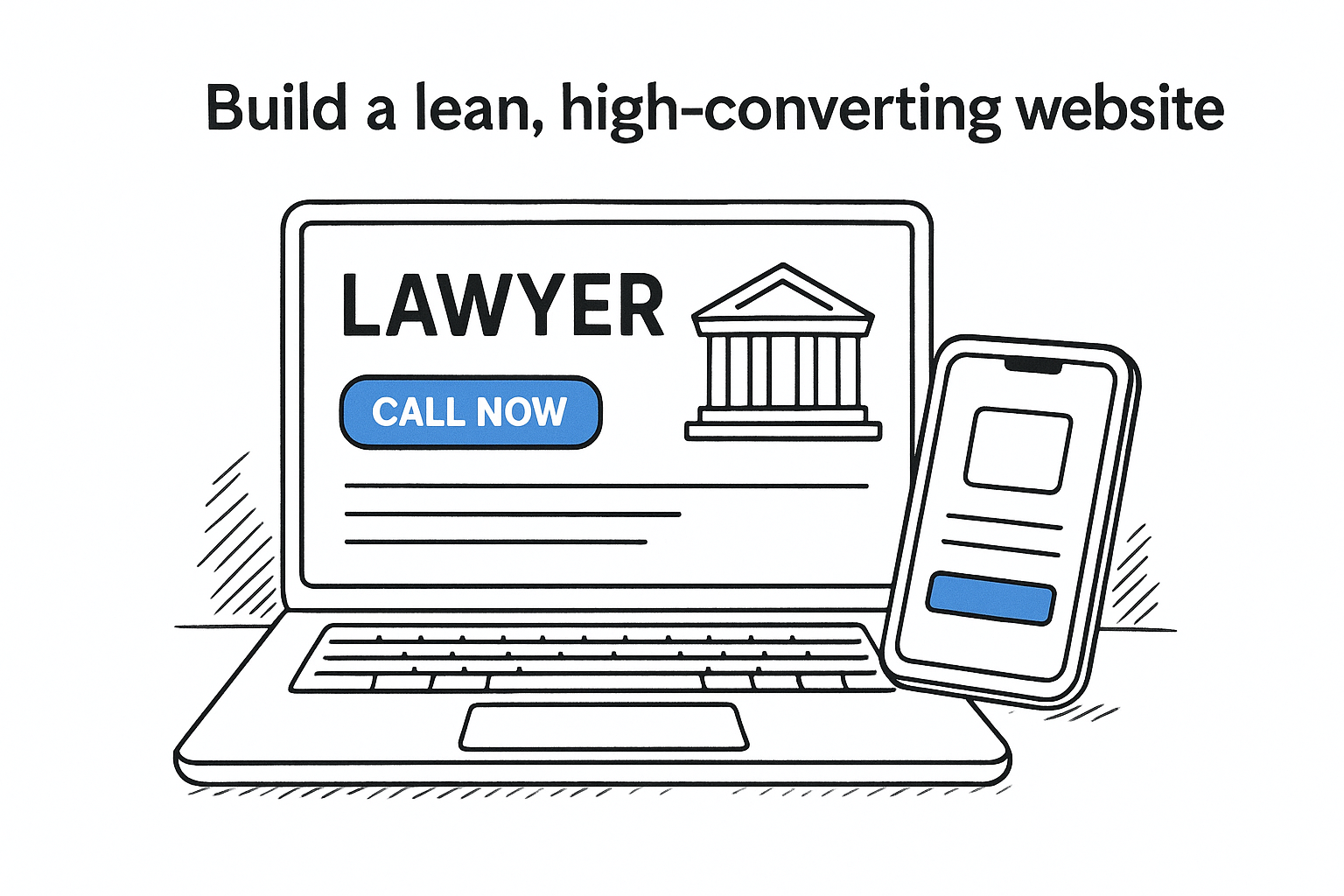
Most solo attorney websites fail for one reason: they try to be everything to everyone. A high-converting website for a solo practice does the opposite. It picks one or two practice areas, states them in the headline, and gets a visitor to a phone number or intake form in under three clicks. Nobody's hiring a lawyer because your homepage has a nice stock photo of a courthouse.
How it works
Speed and clarity beat design polish every time, and the law firm website design fixes that sign clients are mostly structural, not decorative. Your site needs a mobile-first layout (most legal searches happen on a phone in a moment of stress), a load time under three seconds, and a single clear call to action repeated on every page: call now, or fill out this form. Skip the rotating hero banners and the attorney bio that reads like a CV. Visitors want to know: do you handle my problem, and can you help me today.
A solo firm's website has one job: turn a stressed-out visitor into a phone call or a form submission, fast.
Who it's best for
This matters most for solo attorneys in competitive practice areas like personal injury, family law, or criminal defense, where a visitor is comparing three or four firm sites in the same ten-minute search session. If you're the only immigration attorney in a small county, your site can be simpler. If you're competing for DUI cases in a metro area, every second of load time and every extra click costs you leads.
What it costs
A solid solo-attorney site runs anywhere from a few hundred dollars on a template builder to $3,000-$8,000 for a custom build from a legal-focused web shop. Ongoing hosting and maintenance typically add $30-$100 a month. You don't need a five-figure site to compete; you need one that loads fast and converts.
How to get started
- Pick one primary practice area to lead with on the homepage
- Write a headline that names the problem, not your firm's history
- Add a hosted, mobile-first intake form above the fold, not buried in a contact page
- Test your own site on a phone with the wifi off to catch slow load times
- Add a click-to-call button that's visible without scrolling
If collecting leads through a form is still a manual, error-prone process, GavelGrow's intake form and conversion optimization work handles TCPA consent, bot protection, and instant auto-reply so nothing slips through.
2. Optimize your Google Business Profile and local SEO
When someone searches "divorce lawyer near me" or "DUI attorney [city]," Google shows a three-pack of local listings before any website ranks. For solo attorney marketing on a tight budget, your Google Business Profile is often the single highest-return asset you own, because it's free to claim and shows up right where clients are already looking.
How it works
Google ranks local listings on proximity, relevance, and prominence, which means a complete profile with accurate categories, real photos, and steady review activity beats a bare-bones listing every time, so it pays to know how to set up a Google Business Profile for your firm properly. Add your practice areas, service area, office hours, and a few photos of your office and team. Post updates monthly so the profile stays active, and answer every question that comes through the Q&A section.
Your Google Business Profile is free real estate in front of clients who are already searching for a lawyer today.
Who it's best for
This strategy pays off fastest for attorneys serving a defined local territory, solo family law, criminal defense, or estate planning practices where clients search by neighborhood or county rather than nationwide.
What it costs
Claiming and optimizing your profile costs nothing but time, roughly two to three hours upfront and 30 minutes a month to maintain.
How to get started
- Claim and verify your profile if you haven't already
- Fill in every category and service field Google offers
- Upload at least ten real photos, no stock images
- Post a short update or answer a client question monthly
See GavelGrow's local SEO service for solo firms for a full audit checklist.
3. Publish content that answers client questions
Most people searching for a lawyer aren't ready to call yet. They're typing questions like "how long does probate take" or "what happens after a DUI arrest" into Google at 11 p.m., trying to understand their situation before they pick up the phone. Answering those questions on your own site is one of the cheapest forms of solo attorney marketing you'll ever run, because it builds trust before the first conversation and gives Google more pages to rank.
How it works
Write short, plain-English pages that answer one question each, no legalese, no padding, which is the backbone of a law firm content marketing plan. A page titled "What to Do After a Car Accident in [Your City]" answers a real search and shows a real reader that you understand their situation. Link related questions together so a visitor who lands on one page finds three more, and end every page with a clear call to action.
Content that answers a real question builds trust before the phone even rings.
Who it's best for
This works especially well for practice areas with long research phases, estate planning, family law, and personal injury, where clients read for weeks before hiring anyone.
What it costs
Writing it yourself costs only time, roughly two to four hours per page. Hiring a legal content writer typically runs $150-$400 per page.
How to get started
- List the ten questions clients ask most in your first consultation
- Write one page per question in plain language
- Add an internal link between related pages
- Publish one page every two weeks to build momentum
GavelGrow's content marketing services can help you plan and produce this on a steady schedule.
4. Collect reviews that build trust with new clients
A prospective client comparing three solo attorneys will scroll straight to reviews before reading a single word of your bio. Online reviews are the fastest trust signal you have, and they cost nothing but a habit you build into your intake process.
How it works
Ask every client for a review, not just the ones who seemed happiest at the end of the case. Google's own policies prohibit gating reviews behind a private feedback form or incentivizing them, so build a simple habit instead: send a text or email with a direct review link the day a case closes. When a negative review shows up, respond professionally and take the conversation offline to resolve it directly with the client rather than arguing in public, which is the heart of handling negative reviews and building a five-star reputation.
Ask every client for a review, resolve complaints privately, and respond to every public review like a professional.
Who it's best for
This matters most for consumer-facing practice areas like family law, personal injury, and criminal defense, where clients research a firm's reputation before ever picking up the phone.
What it costs
Collecting reviews costs nothing beyond the few minutes it takes to send a request. Review management software, if you want automated request sequences, typically runs $30-$100 a month.
How to get started
- Add a review request to your case-closing checklist
- Send the request by text within 24 hours of closing
- Respond to every review, good or bad, within a few days
GavelGrow's intake automation tools can trigger review requests automatically once a case status changes to closed.
5. Build a referral network with other professionals
Some of your best cases will never come through a search engine. Other attorneys, accountants, financial planners, and even past clients send work to lawyers they trust, and that trust gets built face to face, not through an ad. A referral network costs almost nothing to build and produces some of the highest-quality leads in solo attorney marketing, because someone already vouched for you before the phone rang.
How it works
Find professionals who serve your ideal client but don't compete with you. A family law attorney refers clients to a financial planner handling divorce settlements. A criminal defense attorney builds a relationship with bail bondsmen and bankruptcy attorneys. Show up consistently: grab coffee quarterly, send cases the other way when you can, and follow up when someone sends you a lead so they know it landed somewhere good.
A referral is a lead that already trusts you before you say a word.
Who it's best for
This works best for practice areas that naturally overlap with other professions, estate planning, family law, business law, and bankruptcy, where clients often need a second professional at the same time.
What it costs
Building a referral network costs time more than money, a few hours a month for coffee meetings and check-ins. Some attorneys budget $50-$150 a month for lunches or small thank-you gestures, well within most state-bar gift limits, but check your own state bar's advertising and referral-fee rules before offering anything of value.
How to get started
- List ten professionals who already serve your ideal client
- Reach out to five this month for a short introduction
- Send a case their way before asking for one back
- Follow up on every referral you receive within a day
6. Test Local Services Ads and Google Ads for fast leads
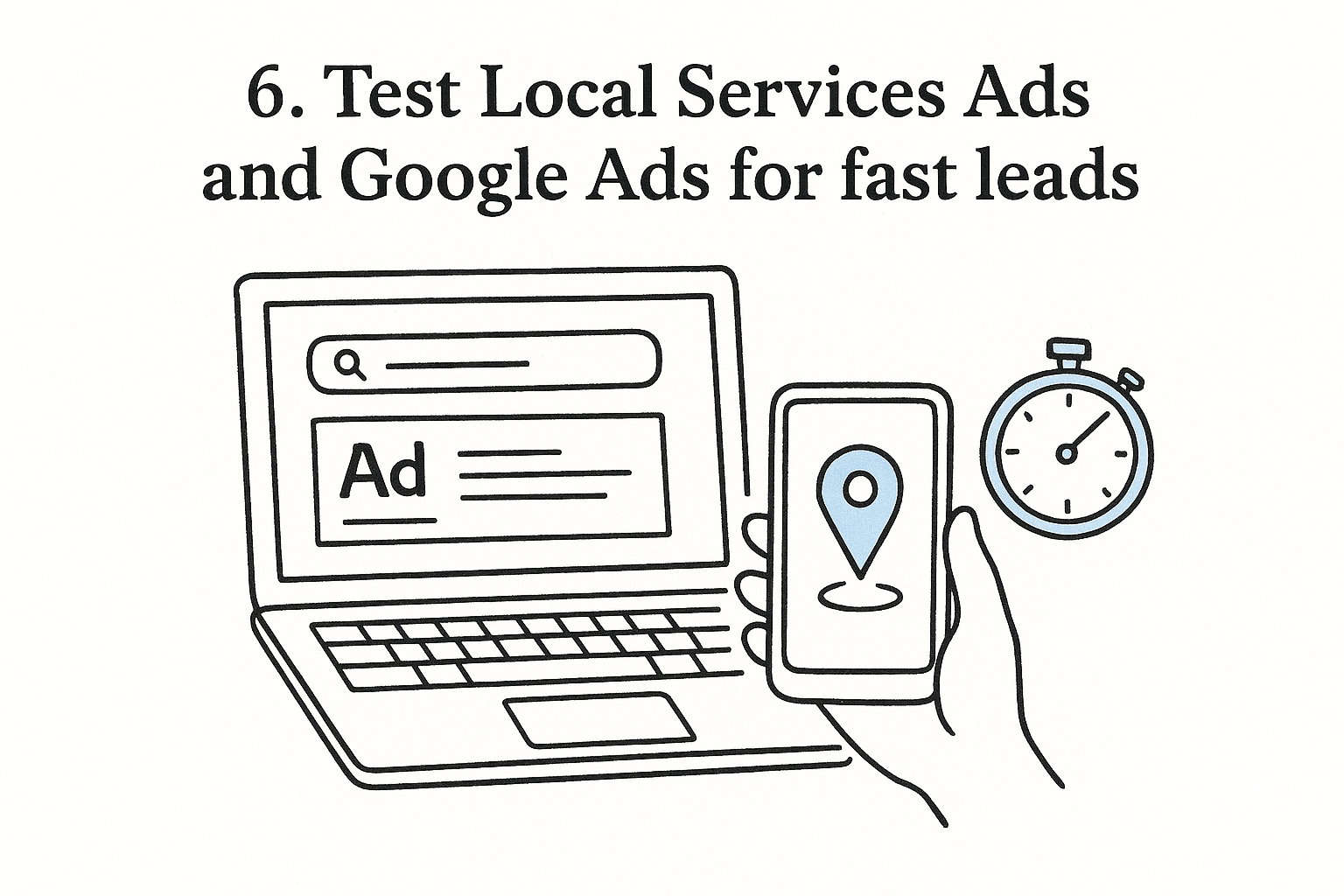
Organic strategies take months to build momentum. If you need cases signed this quarter, paid ads fill the gap. Local Services Ads put your firm at the very top of Google, above the regular ads and the map pack, and you only pay when someone calls or messages through the ad. Running Google Ads as a lawyer works differently: you bid on search terms like "personal injury lawyer [city]" and pay per click, whether or not that click ever calls you back.
How it works
Local Services Ads require a background check and bar-license verification, then Google screens your leads before billing you; here's Google Local Services Ads for law firms explained, including how they rank and bill. Google Ads sends traffic straight to your website, so your intake form and phone line carry the weight of turning a click into a client. Most solo attorneys run both: LSA for verified, pay-per-lead calls, and a small Google Ads budget testing which keywords actually produce signed cases.
Paid ads buy you speed, but only if your intake can catch every lead they send.
Who it's best for
This suits solo attorneys in high-value practice areas, personal injury, DUI, and family law, where one signed case covers weeks of ad spend.
What it costs
Budgets vary widely by market and practice area; most solo attorneys start testing with $500-$1,500 a month and adjust based on cost per signed case.
How to get started
- Verify your Local Services Ads profile first
- Start Google Ads with two or three tightly matched keywords
- Track cost per lead against cost per signed case, not clicks
GavelGrow's Google Ads and Local Services Ads management can set both up and connect them to your actual case outcomes.
7. Track every lead and respond within minutes
Every strategy above is wasted if a lead sits unanswered for an hour, and the numbers on how many leads never get called back are worse than most solos assume. The Lead Response Management Study found that leads contacted within five minutes are far more likely to qualify than those first reached after thirty, and a solo attorney juggling court, filings, and client calls is exactly the person most likely to miss that window without a system catching leads automatically.
How it works
Every call, form fill, and text needs to land in one place with a timestamp, not scattered across a voicemail box, an email inbox, and a sticky note. Intake automation that texts leads in seconds emails and messages a new lead within seconds of submission, so even if you can't pick up the phone from a courtroom hallway, the lead hears back before they call your competitor. Pair that with call tracking on every ad and referral source so you know which channel actually produced the lead, not just that a phone rang.
The firm that responds in five minutes wins the case the firm that responds in an hour never even gets a shot at.
Who it's best for
This matters for every solo attorney, but especially those running any paid ads or high lead-volume practice areas like personal injury and family law, where a slow callback means the prospect has already dialed the next name on their list.
What it costs
Dedicated intake and call tracking tools typically run $150-$300 a month, though pricing varies by feature set and volume.
How to get started
- Set up an auto-reply text and email for every new lead
- Assign a tracking number to each marketing channel
- Check response-time reports weekly, not just lead counts
GavelGrow's Track plan bundles call tracking, intake sequences, and a lead pipeline built for exactly this, starting at $199 a month.
Choosing where to start
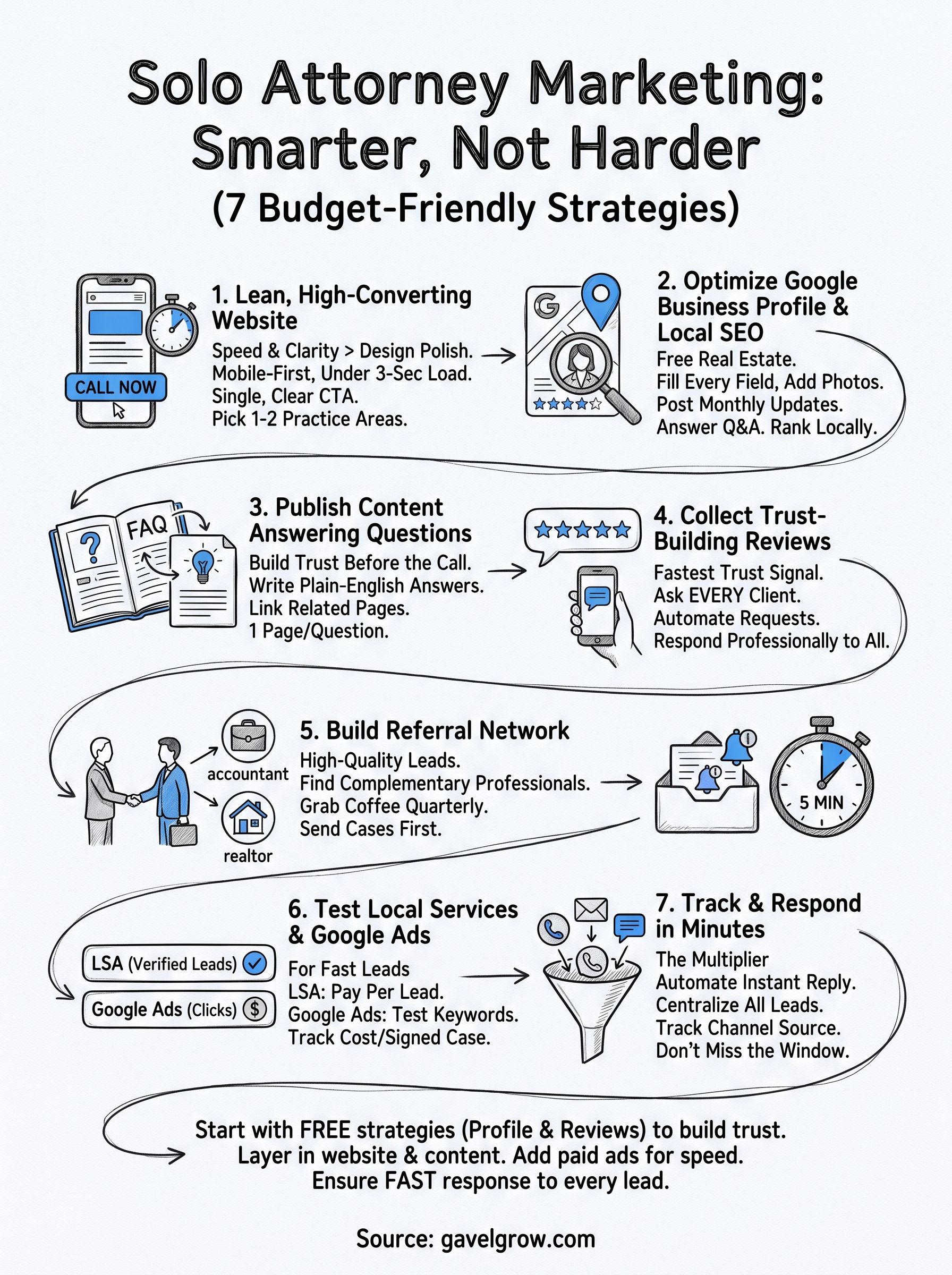
You don't need all seven strategies running at once. Start with the two that cost nothing but time: your Google Business Profile and a review-request habit, since both build trust before you spend a dollar on ads. Layer in a lean website and a few content pages once those are solid, then add paid ads when you're ready to buy speed instead of waiting on organic growth.
Whatever order you choose, none of it matters if a lead sits unanswered while you're in court. Fast lead response is the multiplier that makes every other strategy pay off, and it's the one thing most solo practices get wrong without realizing it. If you want a second set of eyes on which of these seven moves fits your practice and budget first, walk through your numbers on a free 45-minute call with someone who works only with law firms.