Content Strategy Consultant: What They Do for Law Firms
Categories: Legal Marketing Strategies
 Abram Ninoyan
Founder & Senior Performance Marketer
Credentials: Google Partner, Google Ads Search Certified, Google Ads Display Certified, Google Ads Measurement Certified, Google Analytics (IQ) Certified, HubSpot Inbound Certified, HubSpot Social Media Marketing Certified, Conversion Optimization Certified
Expertise: Google Ads, Meta Ads, Conversion Rate Optimization, GA4 & Google Tag Manager, Lead Generation, Marketing Funnel Optimization, PPC Management
LinkedIn Profile
You've got a blog nobody reads, a newsletter that stalled after month three, and a partner asking why the firm pays for content that never turns into signed cases. That's usually the moment firms star...
Key Takeaways
- Content Strategy Consultant: What They Do for Law Firms
- Why do law firms need a content strategy consultant?
- How to hire a content strategy consultant for your firm
- What does a content strategy engagement cost and include?
Content Strategy Consultant: What They Do for Law Firms
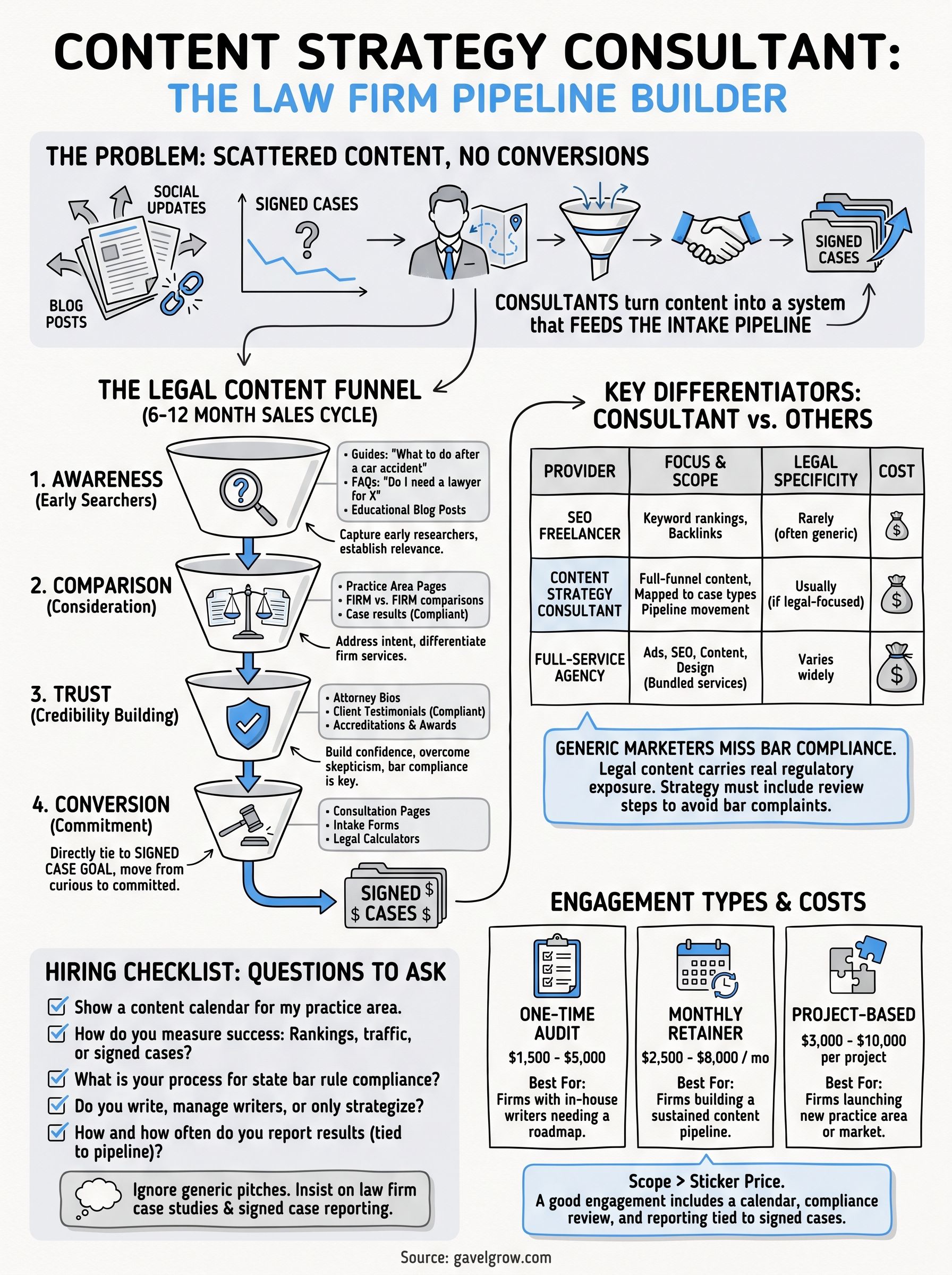
You've got a blog nobody reads, a newsletter that stalled after month three, and a partner asking why the firm pays for content that never turns into signed cases. That's usually the moment firms start searching for a content strategy consultant, someone to turn scattered blog posts and social updates into a system that actually feeds the intake pipeline.
A content strategy consultant for a law firm audits what you're publishing, maps it against what prospective clients actually search for at each stage of a 6 to 12 month legal sales cycle, and builds a plan tied to signed cases, not just page views or rankings. That's different from a general marketing consultant or an SEO freelancer, and it matters because content that doesn't convert is just an expensive hobby.
This article breaks down exactly what these consultants do day to day, how their work differs from a full-service agency or an in-house marketing hire, what to expect to pay, and how to vet one before you sign a contract. We'll also cover when DIY content tools make more sense than hiring outside help, and where a platform like GavelGrow's fits into the picture.
Why do law firms need a content strategy consultant?
Most law firms already produce content. What they lack is a plan that connects blog posts, service pages, and social updates to the phone ringing, which is what content strategy actually means. A content strategy consultant exists to close that gap: someone who treats content as a pipeline input, not a checkbox on a marketing to-do list. Without that connective tissue, firms end up with a stack of articles that rank for nothing and convert nobody.
The state-bar compliance problem generic marketers miss
Generic content marketers write for e-commerce brands and SaaS companies where the biggest risk is a typo. Legal content carries real regulatory exposure. State bar advertising rules restrict how firms can describe results, use client testimonials, and make claims about experience or specialization. A legal content strategist builds review steps into the publishing workflow so nothing goes live that could trigger a bar complaint, and they know the difference between what Texas allows and what California flags. A generalist freelancer usually doesn't, and that gap gets expensive fast.
A content plan that ignores bar advertising rules isn't a strategy, it's a liability waiting to publish.
A 6 to 12 month sales cycle needs content at every stage
A prospective client researching a mass tort claim or a custody dispute doesn't convert on the first visit. They read, compare firms, ask friends, and come back weeks later. A law firm content marketing consultant maps content to that timeline using a content strategy framework built for law firms instead of treating every page like a landing page. That typically means:
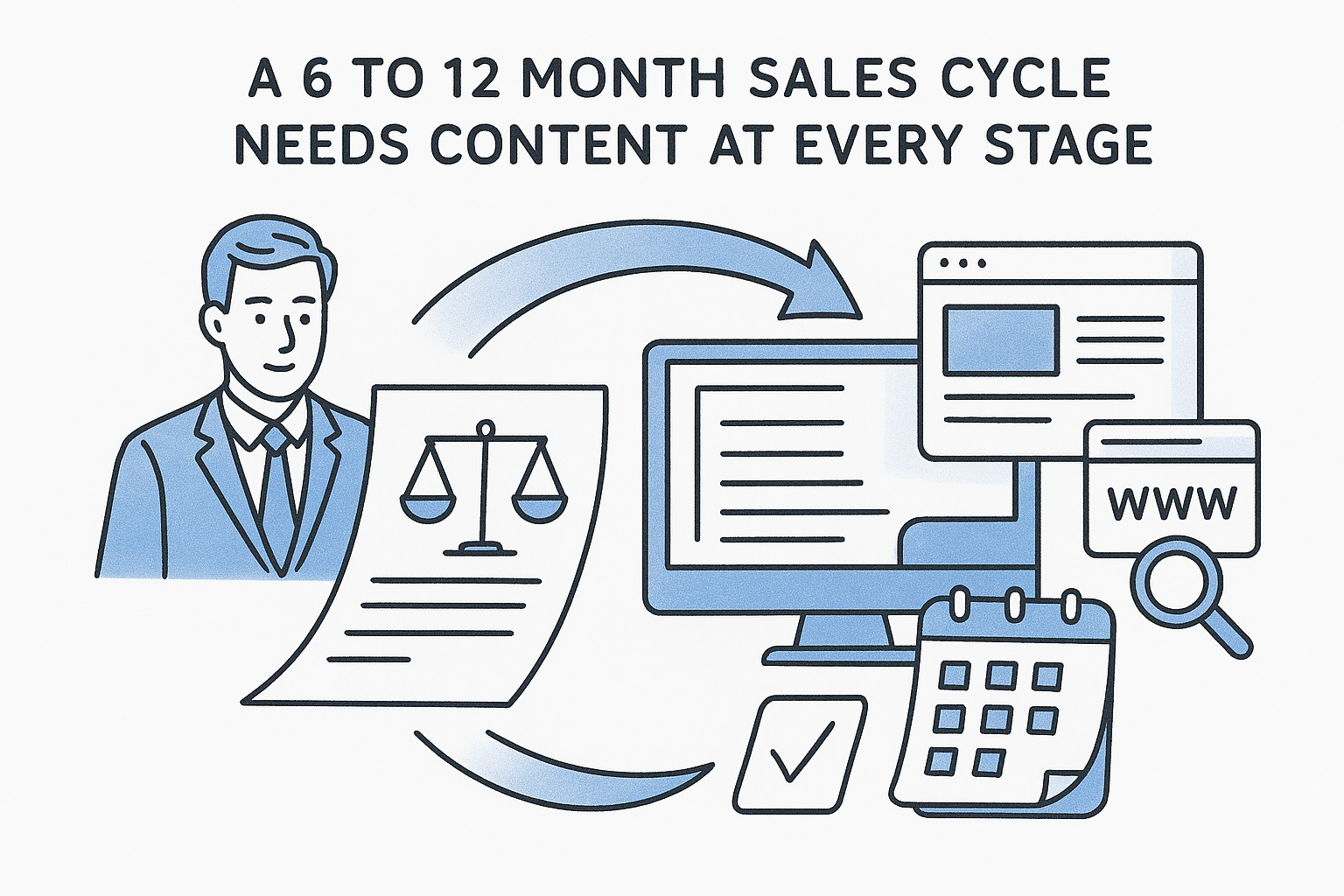
- Awareness content: "What to do after a car accident" style guides that capture early searchers
- Comparison content: practice-area pages and FAQs that address "do I need a lawyer for X"
- Trust content: attorney bios, case results (compliant with bar rules), and client testimonials
- Conversion content: consultation pages, intake forms, and calculators tied directly to a signed-case goal
Firms that skip the middle stages often see traffic climb while signed cases stay flat, because nothing on the site moves a reader from curious to committed.
Consultant vs. SEO freelancer vs. full-service agency
Firms frequently confuse a content strategy consultant with an SEO freelancer or one of the full-service law firm marketing agencies. The scope, cost, and depth of legal-specific knowledge differ enough that picking the wrong one wastes months.
Owners who compare GavelGrow's fully managed marketing services against a solo consultant usually find the agency route makes sense once they're running Google Ads spend above $15,000 a month, since paid acquisition and content need to work together. Below that threshold, a focused content strategy consultant paired with a self-serve platform for intake and attribution often gets firms further for less.
How to hire a content strategy consultant for your firm
Finding the right person starts with ignoring anyone who pitches generic marketing wins. Ask every candidate for law firm case studies, not e-commerce or SaaS examples, and ask them to walk through a real content calendar they built for a practice area similar to yours. A consultant who can't name specific bar advertising rules for your state, or who treats a personal injury firm the same as a plumbing company, isn't ready to touch your site, and the same expensive mistakes firms make when hiring a legal marketing firm apply here.
Questions to ask before signing anything
Run every candidate through the same short list so you can compare answers apples to apples:
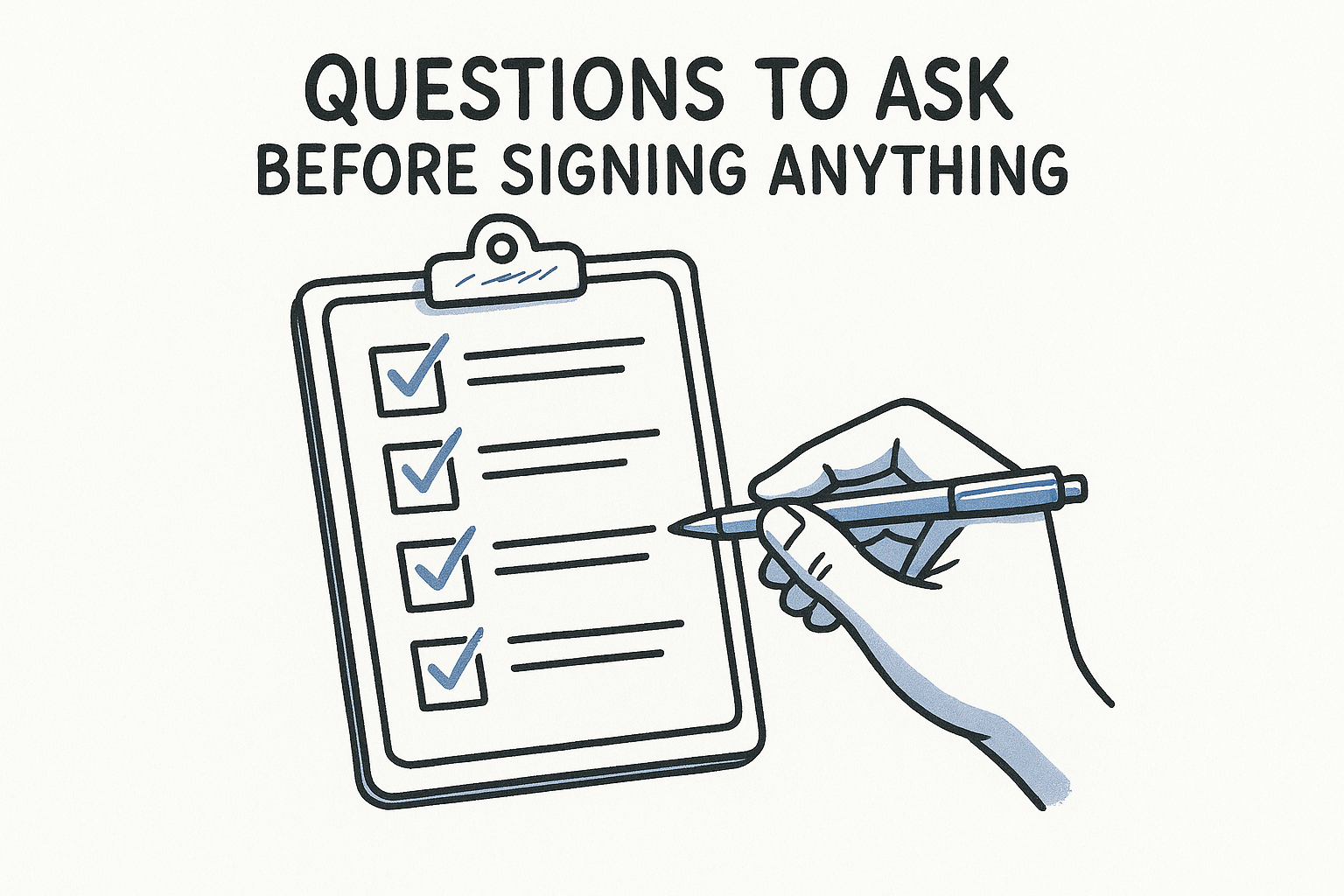
- Can you show me a content calendar you built for a firm in my practice area?
- How do you measure success: rankings, traffic, or signed cases?
- What's your process for keeping content compliant with state bar rules?
- Do you write the content yourself, manage writers, or only strategize?
- How do you report results, and how often?
If a candidate can't tell you how content ties to signed cases, they're selling articles, not a strategy.
Where to look, and what tools they should already use
Referrals from other managing partners in non-competing markets tend to beat cold outreach, since legal marketing is a small world and reputations travel fast. Legal marketing associations, state bar CLE events on advertising compliance, and LinkedIn groups built around legal marketing directors are reliable hunting grounds too. Beyond the pitch, check whether the consultant already knows how to work inside a law firm marketing dashboard like GavelGrow's platform, since a strategist who can read campaign-level cost-per-signed-case data and adjust content priorities around it will move faster than one who only looks at Google Analytics sessions. Firms already using GavelGrow can give a consultant access to their own dashboard, so the strategy gets built around the firm's real conversion numbers instead of guesses about what's working.
What does a content strategy engagement cost and include?
Pricing for a content strategy consultant typically breaks into three structures: a one-time audit, a monthly retainer, or a project-based scope tied to a specific launch, like a new practice area page cluster. Audits run $1,500 to $5,000 and hand you a roadmap you can execute in-house or pass to a writer. Retainers, the most common arrangement for firms serious about ongoing output, run $2,500 to $8,000 a month depending on how much writing, editing, and reporting the consultant handles directly versus managing on your behalf.
Scope matters more than the sticker price. A cheap consultant who only delivers a keyword list isn't a strategy, they're a spreadsheet. A solid engagement should include a content calendar mapped to case types, compliance review before publishing, and a reporting cadence that ties output to pipeline movement, not just rankings.
Pay for a consultant who reports signed cases, not one who only reports traffic.
What a solid engagement should deliver
Before signing a contract, confirm the engagement includes each of these:
- A content calendar mapped to practice areas and the awareness-to-conversion funnel
- A compliance checklist reviewed against your state bar's advertising rules
- Monthly or quarterly reporting tied to leads and signed cases, not just sessions
- A clear line on who writes, who edits, and who has final sign-off
Comparing engagement types
Solo and small firms often pair a lighter retainer with GavelGrow's platform plans, starting at $199 a month, so the consultant's strategy has real conversion data to work from instead of guesswork.
Turning content strategy into signed cases
A good content strategy consultant earns their fee by connecting blog posts, practice-area pages, and case studies to a pipeline you can measure, not by publishing more words. Whether you hire an audit-only freelancer, a retainer consultant, or a full-service agency, insist on reporting that ties output to signed cases, not just traffic or rankings. That's the whole point of the exercise.
Before you sign anything, make sure the data backing that reporting actually exists. Content strategy without attribution is guesswork dressed up in a calendar. GavelGrow's platform gives consultants and in-house teams the campaign-level cost-per-signed-case numbers a real strategy needs, from call tracking through intake to closed case.
If you want a second opinion on your current setup before hiring anyone, book a free 45-minute content strategy call and we'll walk through where your content is actually converting.
Frequently Asked Questions
What is the difference between a content strategy consultant and a content marketing agency?
A consultant advises and plans; an agency plans and executes. You hire a consultant for the thinking, an audit, a keyword and topic map, a publishing plan your team then carries out, usually as a fixed-scope engagement. An agency takes the work off your desk entirely, writing and publishing on an ongoing retainer. Firms with someone in-house who can write often get more from a consultant, while firms with no capacity usually need an agency.
What deliverables should a content strategy engagement produce?
At minimum: an audit of what you already have and what is underperforming, a topic and keyword map tied to your practice areas and market, a recommended site structure for practice-area and location pages, a publishing cadence your team can actually sustain, and a measurement plan that defines what success looks like. If the engagement ends with slide decks and no prioritized list of pages to build, you bought a diagnosis without a prescription.
Is a law firm ever too small to hire a content strategy consultant?
Not by headcount, but by readiness. If nobody at the firm has time to write or review content, a strategy will sit unused and the money is better spent on execution. Solo and small firms often get more from a short, focused audit that gives them a prioritized list than from a lengthy engagement. The real question is whether someone will act on the plan once it lands.
Should you hire a content strategy consultant or just hire a legal writer?
It depends on what is missing. A writer solves output, useful when you already know which pages to build. A consultant solves direction, useful when you are publishing steadily and it is producing nothing. Firms that hire a writer without a strategy often end up with a large library that ranks for very little, while firms that hire a strategist with no one to execute end up with a plan nobody runs.
How long does a content strategy engagement usually last?
Fixed-scope audits typically run a few weeks and end with a roadmap. Ongoing advisory relationships are usually monthly and last long enough to see whether the plan works, which for content means at least two to three quarters, since rankings and the cases that follow compound slowly. Be wary of an open-ended retainer with no defined deliverable or exit point.
How do you measure whether a content strategy consultant paid off?
Judge the engagement on outcomes the firm cares about, not deliverables produced. Track whether the recommended pages actually got built, whether they earned rankings and organic leads, and ultimately the cost per signed case attributable to that content. Traffic growth alone is not proof; a consultant whose plan lifted rankings but never produced consultations solved the wrong problem.
Frequently Asked Questions
What is the difference between a content strategy consultant and a content marketing agency?
A consultant advises and plans; an agency plans and executes. You hire a consultant for the thinking, an audit, a keyword and topic map, a publishing plan your team then carries out, usually as a fixed-scope engagement. An agency takes the work off your desk entirely, writing and publishing on an ongoing retainer. Firms with someone in-house who can write often get more from a consultant, while firms with no capacity usually need an agency.
What deliverables should a content strategy engagement produce?
At minimum: an audit of what you already have and what is underperforming, a topic and keyword map tied to your practice areas and market, a recommended site structure for practice-area and location pages, a publishing cadence your team can actually sustain, and a measurement plan that defines what success looks like. If the engagement ends with slide decks and no prioritized list of pages to build, you bought a diagnosis without a prescription.
Is a law firm ever too small to hire a content strategy consultant?
Not by headcount, but by readiness. If nobody at the firm has time to write or review content, a strategy will sit unused and the money is better spent on execution. Solo and small firms often get more from a short, focused audit that gives them a prioritized list than from a lengthy engagement. The real question is whether someone will act on the plan once it lands.
Should you hire a content strategy consultant or just hire a legal writer?
It depends on what is missing. A writer solves output, useful when you already know which pages to build. A consultant solves direction, useful when you are publishing steadily and it is producing nothing. Firms that hire a writer without a strategy often end up with a large library that ranks for very little, while firms that hire a strategist with no one to execute end up with a plan nobody runs.
How long does a content strategy engagement usually last?
Fixed-scope audits typically run a few weeks and end with a roadmap. Ongoing advisory relationships are usually monthly and last long enough to see whether the plan works, which for content means at least two to three quarters, since rankings and the cases that follow compound slowly. Be wary of an open-ended retainer with no defined deliverable or exit point.
How do you measure whether a content strategy consultant paid off?
Judge the engagement on outcomes the firm cares about, not deliverables produced. Track whether the recommended pages actually got built, whether they earned rankings and organic leads, and ultimately the cost per signed case attributable to that content. Traffic growth alone is not proof; a consultant whose plan lifted rankings but never produced consultations solved the wrong problem.