8 Estate Planning Attorney Marketing Strategies That Work
Categories: Legal Marketing Strategies
 Abram Ninoyan
Founder & Senior Performance Marketer
Credentials: Google Partner, Google Ads Search Certified, Google Ads Display Certified, Google Ads Measurement Certified, Google Analytics (IQ) Certified, HubSpot Inbound Certified, HubSpot Social Media Marketing Certified, Conversion Optimization Certified
Expertise: Google Ads, Meta Ads, Conversion Rate Optimization, GA4 & Google Tag Manager, Lead Generation, Marketing Funnel Optimization, PPC Management
LinkedIn Profile
Most estate planning attorney marketing plans fail for a boring reason: they treat wills, trusts, and probate leads like personal injury leads. They're not. Someone searching for an estate planning at...
Key Takeaways
- 1. Track cost per signed case, not just leads
- 2. Optimize your Google Business Profile and local SEO
- 3. Publish content tied to real-life planning triggers
- 4. Run Google Ads and Local Services Ads for high intent
Most estate planning attorney marketing plans fail for a boring reason: they treat wills, trusts, and probate leads like personal injury leads. They're not. Someone searching for an estate planning attorney at 11pm isn't in crisis, they're procrastinating on a decision they've been putting off for years, and your marketing has to meet that mindset instead of chasing urgency that isn't there.
This article gives you eight strategies built specifically for how estate planning clients actually search, decide, and hire. That means content that answers the questions people ask before they're ready to call, local search visibility that puts your firm in front of people planning ahead rather than reacting to an emergency, and referral systems built around financial advisors and CPAs who already have these conversations. You'll also see where intake and follow-up speed matters even for a practice area that feels unhurried, since a slow response still loses cases to the firm that answers first.
Each strategy below is something you can act on this quarter, not a vague list of best practices. We'll cover content and SEO, paid channels worth testing, referral partnerships, review generation done the right way, and how to track which tactics actually turn into signed engagement letters rather than just phone calls.
1. Track cost per signed case, not just leads
Most estate planning firms judge a campaign by how many leads it generates, but a lead that never signs is worth nothing to your bottom line. Cost per signed case is the number that actually tells you whether a channel is working, because it accounts for the fact that a probate lead who books a free consult and never returns is a different outcome than a trust package that closes at $3,500. Getting there requires connecting the dots from the first ad click or organic search, through the intake form, to the signed engagement letter, which is what full-funnel attribution actually means in practice.
If you can't trace a signed case back to the ad or the search result that started it, you're guessing with your marketing budget.
How it works
You tag every source (Google Ads, Google Business Profile, referral link, direct site traffic) with its own tracking number or UTM, then follow each lead through your pipeline until it either signs or drops off. A marketing dashboard that ties call recordings, intake forms, and case status together does this automatically instead of forcing you to reconcile spreadsheets from three separate tools every month.
Who it's for
This matters most for firms spending real money on Google Ads, Local Services Ads, or an outside agency, since without it you can't tell a $40 lead that signs from a $40 lead that ghosts. Solo practitioners running a modest local SEO push benefit too, just with less urgency.
Typical cost
A dedicated attribution and call tracking setup runs anywhere from free (spreadsheets and manual tagging) to a few hundred dollars a month for a platform built for this. GavelGrow's self-serve plans start at $199 a month and include call tracking, intake tracking, and cost-per-signed-case reporting out of the box, which is usually cheaper than paying separately for call tracking software plus a CRM.
Time to see results
Within 30 to 60 days you should have enough signed cases flowing through the system to see which sources actually convert, though estate planning's longer decision cycle means a full picture often takes a full quarter.
2. Optimize your Google Business Profile and local SEO
When someone searches "estate planning attorney near me," Google's map pack decides who gets the click before a website ever loads. A complete, active Google Business Profile paired with solid on-page local SEO puts your firm in that map pack for the searches that actually convert, since most people hiring an estate planning lawyer want someone local enough to meet in person.
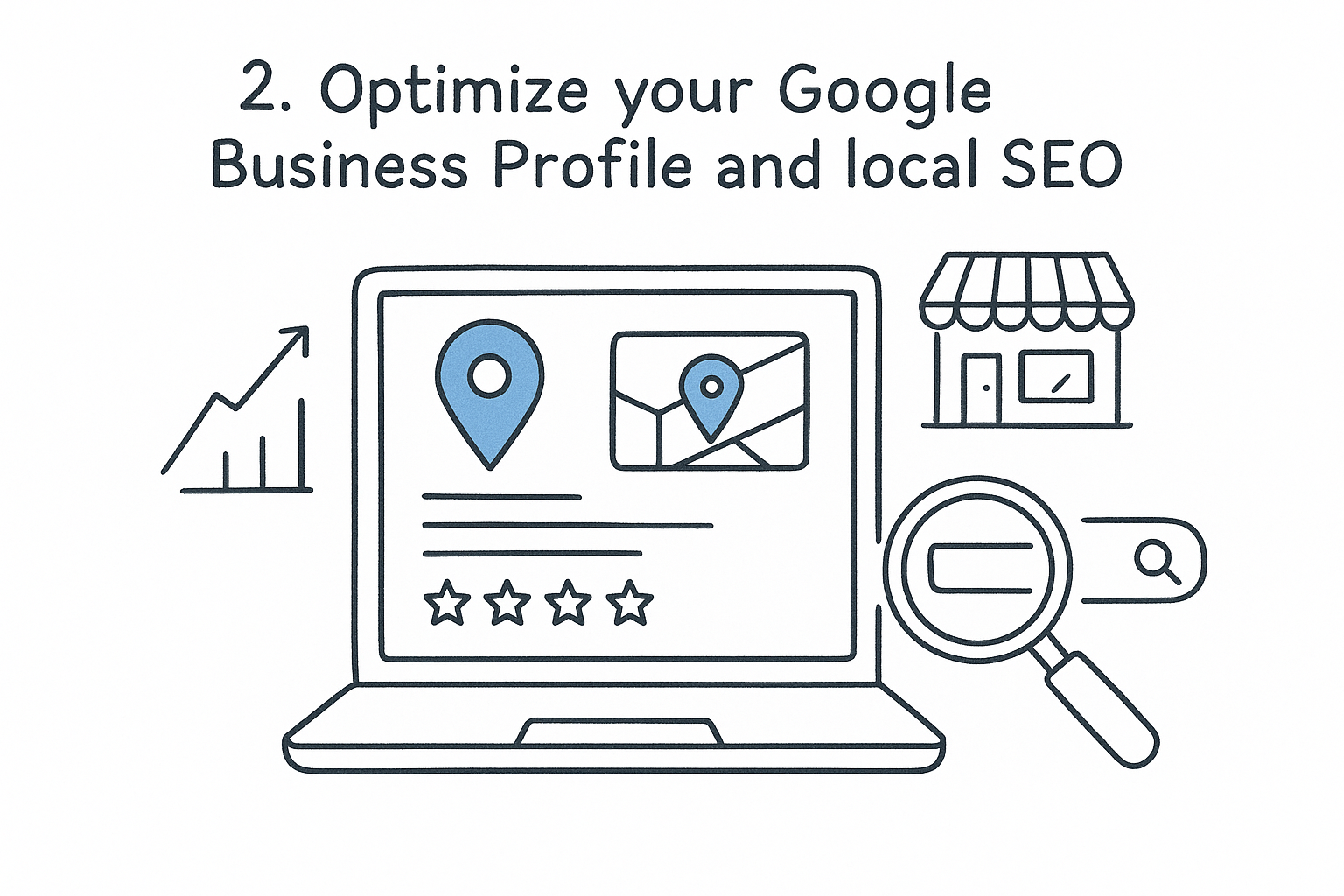
Your Google Business Profile often gets more first impressions than your homepage does.
How it works
Claim and fully complete your profile: correct practice areas, service area, hours, photos of your office and attorneys, and a business description that names the specific services you offer (wills, trusts, probate, elder law). Post updates monthly, keep your NAP (name, address, phone) consistent across directories, and build location pages on your site for each city or county you serve.
Who it's for
Any firm with a physical office serving a defined geographic area, which describes nearly every estate planning practice. Solo and small firms benefit disproportionately here since local search visibility costs nothing but time and competes directly with larger firms that neglect it.
Typical cost
Doing it yourself costs your time only. Hiring help for local SEO and Google Business Profile optimization typically runs a few hundred to a couple thousand dollars a month depending on how competitive your market is.
Time to see results
Expect early movement in 60 to 90 days, with meaningful map-pack ranking gains often taking four to six months of consistent effort.
3. Publish content tied to real-life planning triggers
Nobody wakes up and decides to research trusts for fun. They search after a parent's diagnosis, a new grandchild, a divorce, or a friend's messy probate. Trigger-based content meets people at that exact moment instead of publishing generic "what is a will" posts that compete with a thousand other law firm blogs saying the same thing.
The firm that answers the question someone is actually asking wins the click before a competitor even shows up.
How it works
Build a content calendar around life events: "What happens to my house if I remarry after 60," "Do I need a trust if I just had a baby," "What my parent's estate taught me about probate delays." Answer the real question in plain language, then point toward a consultation. This is the backbone of estate planning content marketing that actually ranks and converts, rather than content written to satisfy a keyword tool.
Who it's for
Firms willing to publish consistently, at least two to four pieces a month, and firms that want long-term organic traffic instead of relying entirely on paid clicks. It suits solo practitioners just as well as larger firms, since the barrier is time and consistency, not budget.
Typical cost
Writing it yourself costs time. Outsourcing through a content marketing service built for legal audiences typically runs a few hundred to a couple thousand dollars a month depending on volume.
Time to see results
Expect little movement for the first 90 days, then compounding organic traffic over six to twelve months as pieces accumulate and rank.
4. Run Google Ads and Local Services Ads for high intent
Organic content and profile work build visibility over months. Google Ads and Local Services Ads put your firm in front of someone searching "estate planning attorney" the moment they decide to act instead of months later. Local Services Ads carry a Google Screened badge and bill per lead rather than per click, which suits a practice where one signed trust package can be worth thousands.
A well-run Google Ads or Local Services Ads campaign reaches the small slice of searchers who are ready to hire today, not someday.
How it works
Google Ads lets you bid on specific searches like "revocable trust attorney [city]" and control the exact ad copy and landing page a searcher sees. Local Services Ads works differently: Google verifies your license and insurance, then charges you per qualified lead rather than per click. Most firms running estate planning attorney marketing through paid channels use both together, since they capture different points in someone's search behavior.
Who it's for
Firms with budget to test and the discipline to track cost per signed case, not just cost per lead. It suits firms in competitive metro markets more than rural solo practices, where organic and referral traffic often go further per dollar spent.
Typical cost
Budgets typically start around $1,500 to $3,000 a month in ad spend for a single-office firm, on top of any managed advertising services or platform fee.
Time to see results
Expect usable data within 30 days, with cost efficiency improving over 60 to 90 days as you refine targeting.
5. Build referral relationships with advisors and CPAs
Financial advisors, CPAs, and insurance agents talk to clients about estate planning constantly, they just can't draft the documents. Referral partnerships with these professionals put your firm in front of people who already trust the person recommending you, which shortens the decision cycle that usually slows estate planning clients down.
A warm introduction from a client's own CPA closes cases that a Google ad never could.
How it works
Start by identifying advisors and CPAs who serve clients with the assets and family situations that need trusts or estate plans, then offer something concrete in return: co-hosted webinars, a simple explainer they can hand clients, or a standing lunch to trade updates on mutual clients. Formalize it with a referral tracking system so you know which partner sends which cases, and follow up with a thank-you note or reciprocal referral when it makes sense.
Who it's for
Firms in mid-size and smaller markets where professional networks are tight-knit see the fastest traction, though any firm willing to invest relationship-building time benefits.
Typical cost
Mostly time and the occasional lunch or co-hosted event, often under $500 a month in hard costs.
Time to see results
Expect the first few referrals within 60 to 90 days, with volume building over six months to a year as trust develops, a pace that matches the referral programs many firms run alongside paid channels.
6. Host educational seminars and webinars
A free seminar on wills and trusts still pulls a room full of retirees and near-retirees who have been meaning to "get their affairs in order" for years. Educational seminars and webinars work because estate planning decisions are emotional and confusing, and a live session where you answer questions in plain English builds trust faster than any blog post or ad ever could.

People hire the attorney who made a confusing topic feel manageable in an hour, not the one with the flashiest website.
How it works
Partner with a senior center, library, country club, or financial advisor's office to host an in-person session, or run a webinar through Zoom for people who won't drive out on a weeknight. Keep the pitch light: teach real content on wills, trusts, and probate avoidance, collect names and emails at the door, and follow up within a day or two while the topic is still fresh. This is a proven form of estate planning lead generation precisely because it filters for people already thinking seriously about planning.
Who it's for
Firms targeting an older client base, since this demographic responds better to in-person events than to digital ads. Works for solo attorneys and larger firms alike.
Typical cost
Venue rental, refreshments, and printed handouts typically run $200 to $800 per event; webinars cost little beyond your time and a webinar platform subscription.
Time to see results
Signed engagements often follow within 30 to 60 days of a well-attended session, since attendees usually arrive close to a decision already.
7. Earn and showcase client reviews
A family choosing between three estate planning attorneys almost always checks Google reviews before they check credentials. Client reviews carry more weight in this practice area than most, because clients are trusting you with decisions about their family and their money, and a stranger's honest account of feeling heard and respected does more to ease that worry than any bio page.
A dozen honest reviews will do more for a signed retainer than a redesigned website.
How it works
Build review requests into your closing process: ask every client after the engagement wraps, not just the ones you think are happy, since Google's policies prohibit filtering who gets asked. Send a direct review link by text or email, respond professionally to every review you get, and handle any complaint with the client directly rather than routing it around public feedback.
Who it's for
Every estate planning firm, regardless of size or market, since review generation costs nothing but consistency and pays off in both trust and local search ranking.
Typical cost
Free if you handle it in-house with a simple request template. Firms using reputation management services to automate requests and monitor responses typically pay a few hundred dollars a month.
Time to see results
Expect your review count to climb noticeably within 60 days of adding requests to your intake and closing workflow, with search and conversion benefits building over three to six months as volume grows.
8. Speed up lead response with intake automation
Estate planning feels unhurried, but the person who just filled out your contact form is often comparing three firms at once. The Lead Response Management Study found that leads contacted within five minutes are far more likely to be qualified than those first reached thirty minutes later, and most firm leads never get a callback at all regardless of whether the practice area feels calmer than personal injury. Intake automation closes that gap without requiring someone to sit by the phone all day.
The firm that responds first often wins the client before the second firm even calls back.
How it works
An automated SMS and email sequence fires within seconds of a form submission or missed call, confirming you received their inquiry and offering a scheduling link before your team even sees the notification. Pairing this with a unified inbox for texts, emails, and voicemails means no lead sits unanswered in a separate tool overnight.
Who it's for
Any firm generating leads through ads, referrals, or organic search, especially solo and small firms without staff dedicated to answering every inquiry immediately.
Typical cost
Basic auto-replies cost little to nothing through most website form tools. A full intake automation system with SMS sequences and a shared inbox, like the one built into GavelGrow's platform, typically runs $199 to $599 a month depending on volume and features needed.
Time to see results
Faster response shows up in your qualification and consultation rates almost immediately, usually within the first two weeks of turning it on.
Building your firm's marketing plan
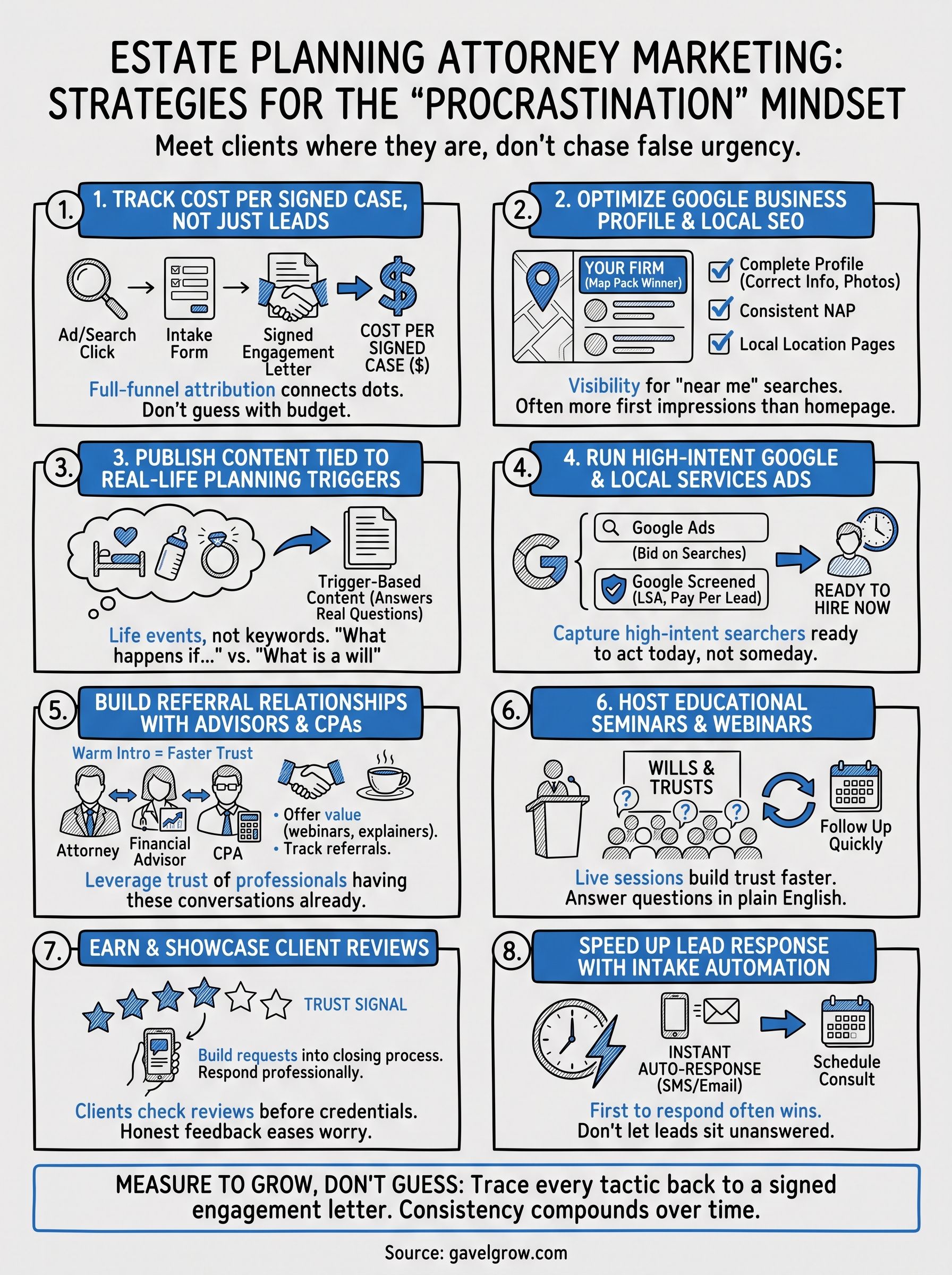
You don't need all eight strategies running on day one. Pick two or three that match where your firm already has strength, whether that's a referral network worth formalizing or a Google Business Profile that's been neglected for years, and get those working before adding more. Estate planning attorney marketing rewards consistency over intensity, since most of these tactics compound over months rather than delivering an overnight spike in signed cases.
The common thread across every strategy here is measurement. A seminar, a referral partnership, or a Google Ads campaign only tells you something useful once you can trace it to a signed engagement letter, not just a lead. Tracking that connection is the single habit that separates firms that grow steadily from firms that guess and hope.
If you want help building that plan around your firm's specific market and budget, book a free 45-minute estate planning marketing strategy call and we'll walk through what makes sense for you.
Frequently asked questions about estate planning attorney marketing
How long does SEO take to work for an estate planning attorney?
Expect little movement for roughly the first 90 days, then traffic that compounds over six to twelve months as pages accumulate and rank. Your Google Business Profile can move sooner, since Google says local results are mainly based on relevance, distance and popularity. Estate planning searches are lower volume than injury work but less contested, so patient content can compete well on cost per signed engagement over a year.
What should an estate planning firm measure instead of leads?
Cost per signed engagement letter. A free consultation that never returns and a trust package that closes both count as one lead, which makes lead volume useless for deciding where to spend. Tie each first click or call through intake to the matter that actually opened. Google Analytics can't do that alone, since it records website actions, which Google renamed from conversions to key events in March 2024, but never the signed engagement.
Do estate planning seminars still generate clients?
Yes, especially for firms whose clients skew older. A free wills and trusts session gives people who have been meaning to sort out their affairs a reason to act, and engagements often follow within a month or two because attendees arrive close to a decision. Collect contact details at sign-in and follow up in writing; ABA Model Rule 7.3(b) restricts live, person-to-person solicitation of people who haven't asked to hear from you, so let attendees choose a consultation.
Are Local Services Ads available to estate planning attorneys?
Yes, in many U.S. markets. Google's Local Services Ads categories for lawyers include estate lawyers, alongside family, personal injury and immigration law, though availability still varies by city. Where it runs, you pay per lead rather than per click, Google doesn't charge for leads it judges invalid, and firms that pass Google's checks show the Google Screened badge. Check what Google offers in your service area before budgeting for it.
How should an estate planning firm set its marketing budget?
Work backward from what a signed matter is worth rather than from a percentage of revenue. Decide the most you would pay for a signed will or trust package, divide by your close rate, and that's your ceiling on cost per lead. For context, LocaliQ's 2026 search advertising benchmarks put the average cost per lead for attorneys and legal services at $131.63, so a firm that signs one in four leads would pay about $527 per signed matter at that average.
Frequently Asked Questions
How long does SEO take to work for an estate planning attorney?
Expect little movement for roughly the first 90 days, then traffic that compounds over six to twelve months as pages accumulate and rank. Your Google Business Profile can move sooner, since Google says local results are mainly based on relevance, distance and popularity. Estate planning searches are lower volume than injury work but less contested, so patient content can compete well on cost per signed engagement over a year.
What should an estate planning firm measure instead of leads?
Cost per signed engagement letter. A free consultation that never returns and a trust package that closes both count as one lead, which makes lead volume useless for deciding where to spend. Tie each first click or call through intake to the matter that actually opened. Google Analytics can't do that alone, since it records website actions, which Google renamed from conversions to key events in March 2024, but never the signed engagement.
Do estate planning seminars still generate clients?
Yes, especially for firms whose clients skew older. A free wills and trusts session gives people who have been meaning to sort out their affairs a reason to act, and engagements often follow within a month or two because attendees arrive close to a decision. Collect contact details at sign-in and follow up in writing; ABA Model Rule 7.3(b) restricts live, person-to-person solicitation of people who haven't asked to hear from you, so let attendees choose a consultation.
Are Local Services Ads available to estate planning attorneys?
Yes, in many U.S. markets. Google's Local Services Ads categories for lawyers include estate lawyers, alongside family, personal injury and immigration law, though availability still varies by city. Where it runs, you pay per lead rather than per click, Google doesn't charge for leads it judges invalid, and firms that pass Google's checks show the Google Screened badge. Check what Google offers in your service area before budgeting for it.
How should an estate planning firm set its marketing budget?
Work backward from what a signed matter is worth rather than from a percentage of revenue. Decide the most you would pay for a signed will or trust package, divide by your close rate, and that's your ceiling on cost per lead. For context, LocaliQ's 2026 search advertising benchmarks put the average cost per lead for attorneys and legal services at $131.63, so a firm that signs one in four leads would pay about $527 per signed matter at that average.