SEO for Immigration Lawyers: How to Rank and Get Cases
Categories: Legal Marketing Strategies
 Abram Ninoyan
Founder & Senior Performance Marketer
Credentials: Google Partner, Google Ads Search Certified, Google Ads Display Certified, Google Ads Measurement Certified, Google Analytics (IQ) Certified, HubSpot Inbound Certified, HubSpot Social Media Marketing Certified, Conversion Optimization Certified
Expertise: Google Ads, Meta Ads, Conversion Rate Optimization, GA4 & Google Tag Manager, Lead Generation, Marketing Funnel Optimization, PPC Management
LinkedIn Profile
Search for "immigration lawyer near me" in any major metro and you'll find ten firms fighting over the same three spots on Google. SEO for immigration lawyers isn't about generic keyword stu...
Key Takeaways
- SEO for Immigration Lawyers: How to Rank and Get Cases
- Why does SEO matter for immigration law firms?
- Step 1. Find the keywords your immigration clients actually search
- Step 2. Optimize your website and local SEO presence
SEO for Immigration Lawyers: How to Rank and Get Cases
Search for "immigration lawyer near me" in any major metro and you'll find ten firms fighting over the same three spots on Google. SEO for immigration lawyers isn't about generic keyword stuffing, it's about ranking for the specific visa categories, languages, and case types your firm actually handles, then converting that traffic into signed retainers instead of just phone calls that go nowhere.
Getting this right means treating your website and Google Business Profile as case-generation tools, not brochures. That starts with practice-area-specific content around asylum, family-based petitions, deportation defense, or employment visas, paired with local citation building and review generation that state bar rules actually allow, the same foundation behind any marketing plan for an immigration law firm.
This guide walks through the technical and content moves that move the needle for immigration law firm seo, from on-page structure to link building to tracking which pages actually produce signed cases. You'll also see where attribution tools matter, because ranking well only pays off if your intake process catches every lead your SEO work sends you.
Why does SEO matter for immigration law firms?
Immigration cases rarely start with a phone call. They start with someone searching at 11pm after an ICE check-in, a denied I-130, or a visa that's about to expire, often typing in a second language and comparing five firms before picking up the phone. Organic search is where that research happens, and if your firm doesn't show up for the specific situation someone is googling, a competitor down the street will. That's the core reason seo for immigration lawyers isn't optional the way it might be for a general practice: your prospective client is already searching for you by name of visa type, not by your firm name.
A prospect who finds you at the exact moment they're panicking about a denied petition trusts you before you ever say a word.
Immigration search behavior looks different than other practice areas
Unlike a car accident case where the search is generic, immigration searches are packed with specific, technical terms: H-1B transfer, U-visa for crime victims, asylum interview preparation, DACA renewal, marriage-based green card timeline. Many searches also happen in Spanish, Mandarin, Haitian Creole, Tagalog, or Portuguese, depending on your market. If your site only targets
Step 1. Find the keywords your immigration clients actually search
Start by mapping every visa category and case type your firm actually handles, then build keyword lists around each one instead of chasing a single broad phrase like "immigration lawyer." A firm that does asylum, family petitions, and employment visas needs three separate keyword clusters, because someone searching "asylum interview lawyer near me" and someone searching "H-1B transfer attorney" are in completely different situations and need different landing pages. Pull real search terms from Google Search Console and Google Keyword Planner rather than guessing, compare them against keyword research tools built for SEO and PPC, and check what people actually type by looking at the "People also ask" boxes on your own local results.
Rank for the exact visa problem someone is googling, and you skip the fight for generic terms entirely.
Group keywords by visa type and intent
Once you have raw search terms, sort them by what stage of the case journey they represent. Someone searching "what happens after I-130 approval" is earlier in the funnel than someone searching "green card lawyer consultation fee." Both deserve a page, but the offer and calls to action should differ.
Don't skip the language layer. If a meaningful share of your caseload comes from Spanish, Haitian Creole, or Mandarin speakers, build separate keyword lists and separate pages in those languages rather than relying on a translate plugin. Native-language keyword research almost always surfaces phrasing a direct translation misses, and Google treats these as distinct pages worth ranking independently. This is also where seo for immigration lawyers differs sharply from general practice SEO: the keyword list itself needs to reflect visa terminology, government form numbers like I-589 or I-751, and colloquial phrases clients use before they know the legal term. Once you have the list, resist the urge to write one page trying to rank for all of it. One visa type, one language, one clear next step per page performs better than a single crowded page trying to cover everything at once.
Step 2. Optimize your website and local SEO presence
Once your keyword clusters are mapped, your site architecture needs to mirror them. A single "Immigration Services" page trying to rank for asylum, family petitions, and work visas at once confuses Google and confuses the prospect who lands there mid-crisis. Build a dedicated landing page for each visa category and each city or region you serve, with the page title, header, and opening paragraph naming the exact situation the searcher typed in.
One clear landing page per visa type beats one crowded page trying to rank for everything.
Structure pages so Google and clients both understand them
Each practice-area page should answer the question a searcher actually has: eligibility, timeline, documents needed, and what a consultation costs, before it asks for the phone call. Use structured data (LegalService and Attorney schema, plus FAQ schema on pages that answer common questions) so Google can surface your content directly in search results. Keep mobile page speed tight, since a slow-loading form loses people before they ever reach your intake page, and work through a technical SEO checklist to catch crawl and speed problems early. A meaningful share of immigration searches happen from a phone during a work break or a family emergency, so a sluggish site costs you more here than it would in a general practice.
Get your Google Business Profile and citations right
Local SEO for immigration lawyers runs largely through your Google Business Profile and how consistently your firm's name, address, and phone number appear across the web, the same signals behind map pack visibility for attorneys. A few things to get right:
- List every language your firm practices in directly on your profile.
- Keep your NAP (name, address, phone) identical across your website, GBP, and every directory listing.
- Add photos of your actual office and team, not stock images.
- Ask every client for a review, not only the ones you're confident are happy, and respond professionally to every review you get, positive or negative.
- Check your state bar's advertising rules before adding language like "best immigration lawyer" anywhere on your profile or site.
After your local listings and pages are consistent, connect call tracking numbers to specific pages so you know which visa-type landing page is actually generating calls versus just traffic. Call tracking built into the GavelGrow platform does this natively, tying a tracking number to each practice-area page so you see cost per lead by visa category instead of one blended traffic number.
Step 3. Publish content that answers real immigration questions
Once your core landing pages are live, your blog is where you capture the long tail of specific, anxious questions people search before they ever call a lawyer. "Can I travel internationally with a pending I-485" or "what happens if my asylum interview is rescheduled twice" won't get the search volume of "immigration lawyer," but the person typing that question is closer to hiring you than someone doing generic research. Content marketing for immigration firms works because it answers the exact worry someone has at 11pm, not because it stuffs in keywords, and the mechanics of turning a blog post into a retainer are the same across practice areas.
The blog post that answers one specific fear at 11pm often converts better than the page ranking for your biggest keyword.
Build content around real client questions, not guesses
Your best content ideas are already sitting in your intake calls and past client emails, not in the generic topic lists that explain why most law firm blogs fail. Pull the questions your paralegals answer every week and turn each one into its own page. A few formats that consistently perform for immigration firms:
- Process explainers: "Step-by-step timeline for a marriage-based green card in 2026"
- Document checklists: "What to bring to your U-visa certification request"
- Status-specific FAQs: "Can I work while my asylum case is pending"
- Policy update posts: what a new USCIS fee rule or processing backlog means for your specific caseload
- Comparison posts: "EB-2 vs EB-3, which employment visa fits your situation"
Keep each post focused on one question and one clear next step, usually a consultation request, so it doesn't compete with your own landing pages for the same search term.
Match content to language and case urgency
Immigration content ages fast because policy and processing times shift, so build a habit of revisiting your top posts every few months rather than publishing once and forgetting them. If you serve a multilingual client base, publish your highest-traffic explainers in each language your firm practices in, not as an afterthought translation but as a fully separate page written for how that community actually phrases the question. Flag urgent-case content, detention, deportation defense, expedited removal, so it's easy to find fast, since someone searching those terms often needs a phone number more than a paragraph of explanation. Every post should also link back to the relevant visa-type landing page, which reinforces the site structure you built in Step 2 and gives Google a clear signal about which page should rank for the money keyword.
Step 4. Build backlinks and track which pages turn into signed cases
Backlinks still carry real weight in Google's algorithm, but for immigration firms, quality beats volume by a wide margin. A single link from your state bar association or a respected immigrant advocacy nonprofit does more for your rankings than fifty links from generic legal directories nobody trusts. Link building for immigration lawyers works best when you target sources that already serve your exact client base, because those links also send referral traffic that's ready to hire; if you're starting from scratch, learn what link building in SEO actually involves first.
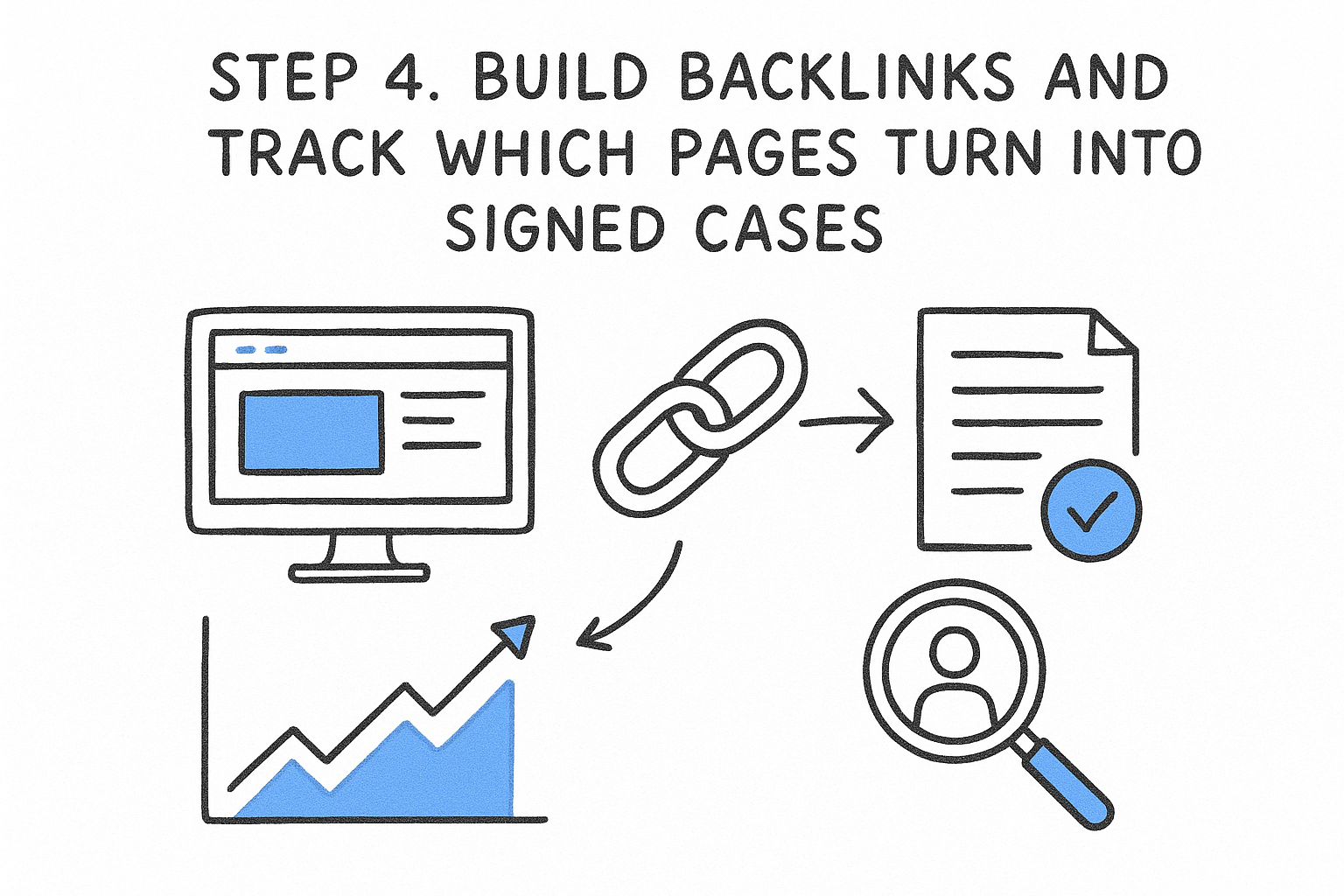
Earn links from sources that matter in immigration law
Start close to home. Local nonprofits that resettle refugees, community centers serving specific immigrant populations, and university international student offices all maintain resource pages, and most will link to a firm that offers a free know-your-rights presentation or a plain-language explainer they can hand to clients. Guest posts on ethnic community news sites or bilingual local publications work the same way, and they double as brand exposure in the language your prospects actually search in. Press mentions after a policy change, when a reporter needs a local attorney to explain what a new USCIS rule means for real people, are another reliable source worth pitching directly.
A link from an organization your future clients already trust does more for rankings than a dozen generic directory listings.
Track which pages actually produce signed cases, not just traffic
Traffic and rankings mean nothing if you can't tell which page turned a visitor into a signed retainer. Connect a dedicated tracking number to every visa-type landing page so calls get attributed to the page that generated them, then follow that lead through intake to see whether it became a case, which is the entire point of attribution from first click to signed retainer. This is where immigration law firm seo has to connect to your intake process, because a page ranking for "U-visa attorney near me" is only valuable if you can prove it produces signed U-visa cases, not just phone calls that never convert.
GavelGrow's marketing dashboard ties call tracking, intake, and case outcomes together, so you can see cost per signed case by practice-area page instead of guessing which content actually pays for itself.
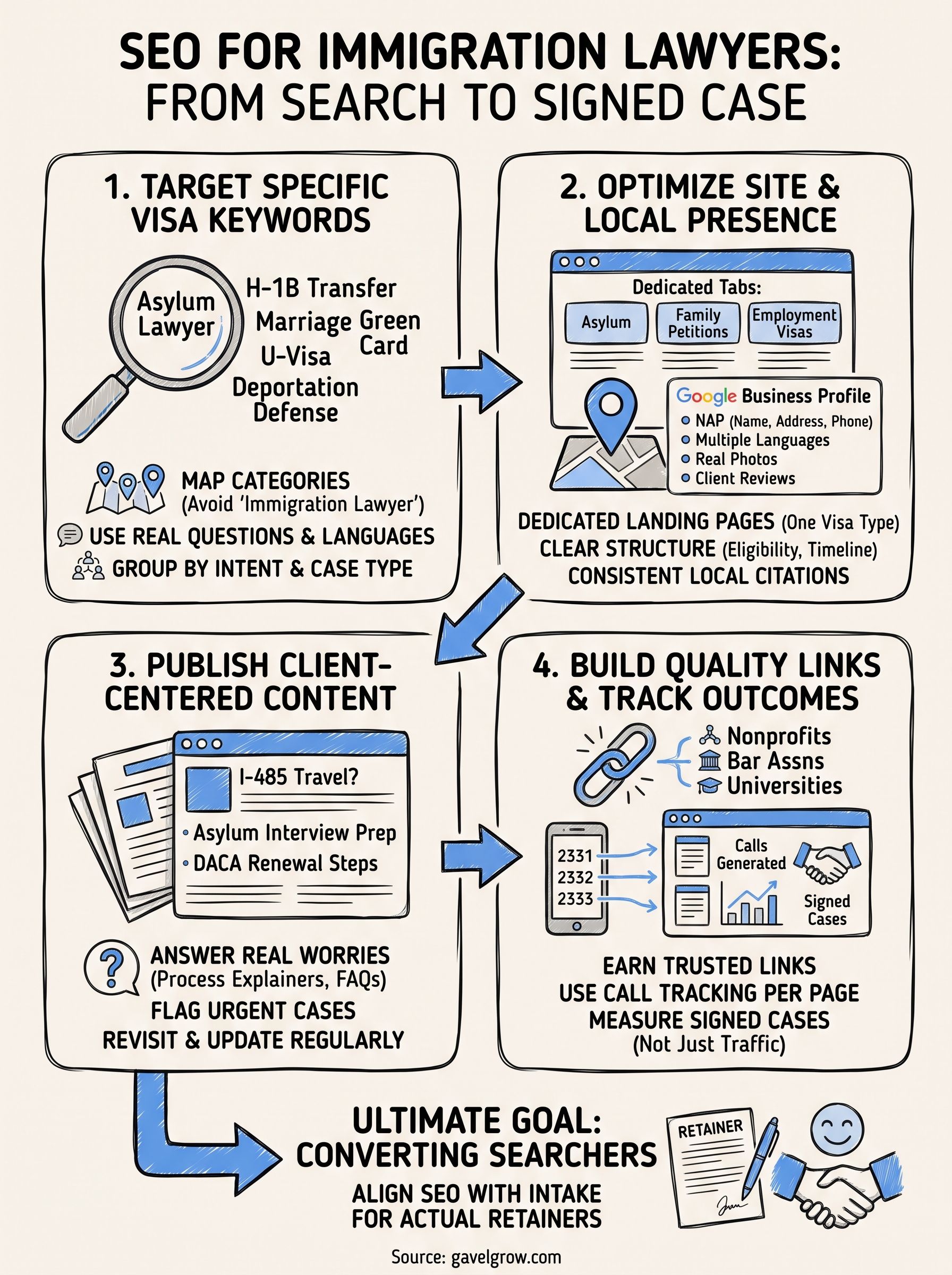
Turning search traffic into signed clients
Ranking for the right visa keywords only matters if those clicks turn into signed retainers, not just more calls your intake team drops. Immigration law firm seo works when your landing pages, your content, and your tracking all point back to the same goal: proving which page produced a real case, not just a visit. Get your keyword clusters right, keep your Google Business Profile and citations clean, publish content that answers the exact fear someone has at midnight, and earn links from organizations your future clients already trust.
Once the traffic starts flowing, the bottleneck usually shifts to intake speed and attribution, not rankings. If you're not sure which pages are actually paying for themselves, look at done-for-you SEO for immigration law firms and walk through your current numbers with someone who's done this for immigration firms specifically, not general practices guessing at your caseload.
Frequently asked questions about SEO for immigration lawyers
How long does SEO take to work for an immigration law firm?
Longer than paid search, and not on a fixed schedule. Pages targeting specific visa terms usually move before broad competitive terms do, because there is less competition for them. Treat it as a compounding channel and run paid search alongside it if you need cases in the meantime.
What keywords should an immigration lawyer target?
The visa categories and case types your firm actually handles, each as its own cluster, rather than one broad phrase like immigration lawyer. Asylum, family petitions, deportation defense and employment visas each need their own pages, because someone searching an H-1B transfer and someone searching asylum interview preparation are in entirely different situations. Pull real terms from Search Console instead of guessing.
Do immigration firms need pages in other languages?
If part of your market searches in another language, yes, and as separate pages with their own keyword research rather than a machine translation of the English page. Phrasing rarely maps across directly. The term someone actually types in Spanish is often not the literal translation of the English keyword.
How important is Google Business Profile for immigration SEO?
It carries real weight for near me and city-level searches, which is where a lot of local immigration search sits. Keep categories, hours and service areas accurate. One caution: the profile has to meet Google's eligibility rules for that location, and listing an address your firm does not actually staff puts the listing at risk of suspension.
How do you tell which pages actually produce signed cases?
Connect the page to the intake record. Capture landing page and source with the form submission, use call tracking so phone inquiries carry the same detail, then match signed retainers back to the page that started them. Rank reports and traffic totals tell you a page is visible, not that it produced a client.
Frequently Asked Questions
How long does SEO take to work for an immigration law firm?
Longer than paid search, and not on a fixed schedule. Pages targeting specific visa terms usually move before broad competitive terms do, because there is less competition for them. Treat it as a compounding channel and run paid search alongside it if you need cases in the meantime.
What keywords should an immigration lawyer target?
The visa categories and case types your firm actually handles, each as its own cluster, rather than one broad phrase like immigration lawyer. Asylum, family petitions, deportation defense and employment visas each need their own pages, because someone searching an H-1B transfer and someone searching asylum interview preparation are in entirely different situations. Pull real terms from Search Console instead of guessing.
Do immigration firms need pages in other languages?
If part of your market searches in another language, yes, and as separate pages with their own keyword research rather than a machine translation of the English page. Phrasing rarely maps across directly. The term someone actually types in Spanish is often not the literal translation of the English keyword.
How important is Google Business Profile for immigration SEO?
It carries real weight for near me and city-level searches, which is where a lot of local immigration search sits. Keep categories, hours and service areas accurate. One caution: the profile has to meet Google's eligibility rules for that location, and listing an address your firm does not actually staff puts the listing at risk of suspension.
How do you tell which pages actually produce signed cases?
Connect the page to the intake record. Capture landing page and source with the form submission, use call tracking so phone inquiries carry the same detail, then match signed retainers back to the page that started them. Rank reports and traffic totals tell you a page is visible, not that it produced a client.