6 Truck Accident Lawyer Marketing Strategies to Prioritize
Categories: Legal Marketing Strategies
 Abram Ninoyan
Founder & Senior Performance Marketer
Credentials: Google Partner, Google Ads Search Certified, Google Ads Display Certified, Google Ads Measurement Certified, Google Analytics (IQ) Certified, HubSpot Inbound Certified, HubSpot Social Media Marketing Certified, Conversion Optimization Certified
Expertise: Google Ads, Meta Ads, Conversion Rate Optimization, GA4 & Google Tag Manager, Lead Generation, Marketing Funnel Optimization, PPC Management
LinkedIn Profile
Good truck accident lawyer marketing pairs a narrow trucking message with channels that reach people early and a system that measures signed cases. If you run marketing in-house, start with measuremen...
Key Takeaways
- 6 Truck Accident Lawyer Marketing Strategies to Prioritize
- 1. Track cost per signed case, not cost per lead
- 2. How does local SEO win trucking searches?
- 3. Google Ads built around trucking keywords
6 Truck Accident Lawyer Marketing Strategies to Prioritize
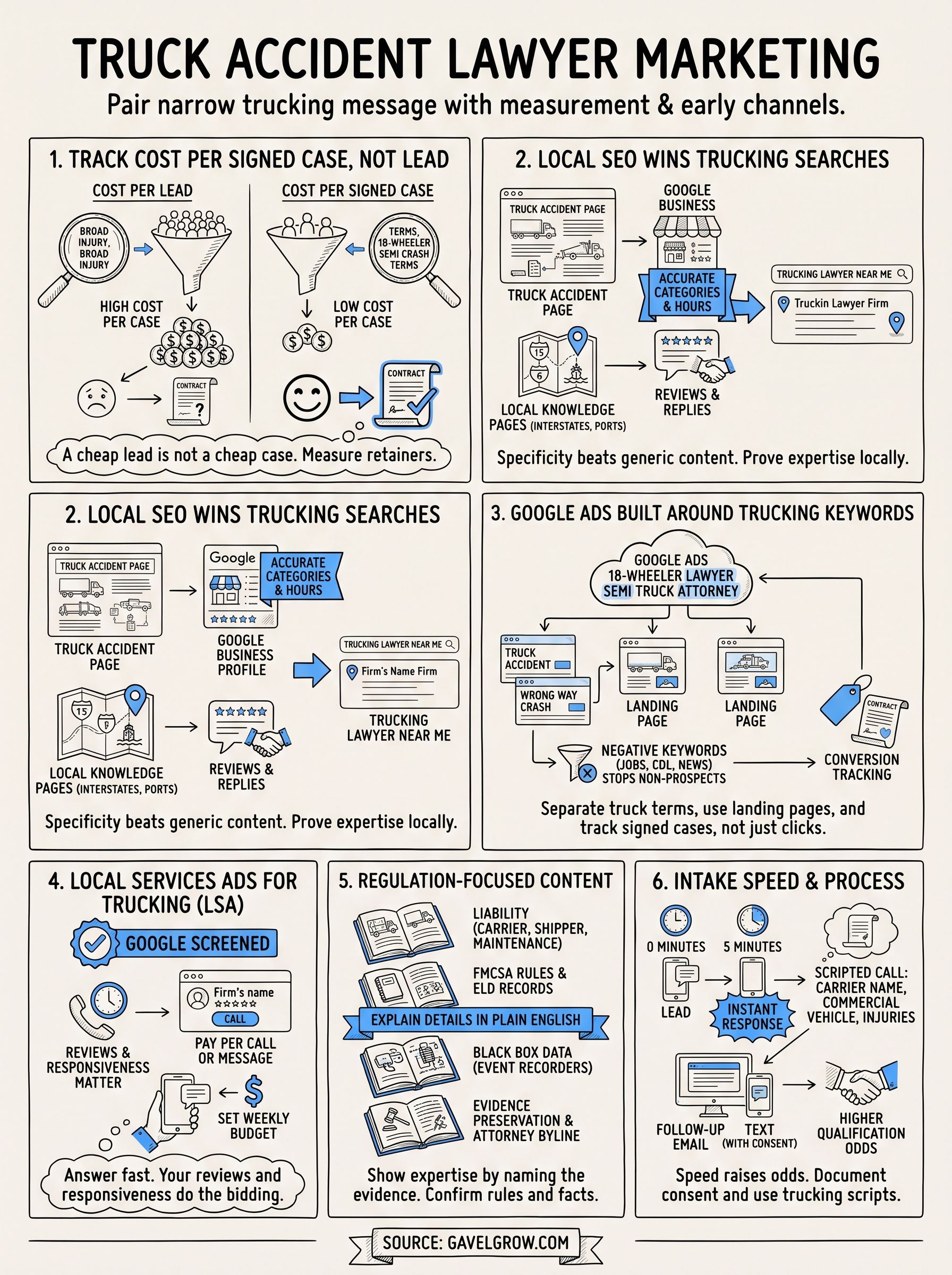
Good truck accident lawyer marketing pairs a narrow trucking message with channels that reach people early and a system that measures signed cases. If you run marketing in-house, start with measurement. If you need steady volume, add local SEO and Google Ads. If leads already come in but slip away, fix intake first.
Trucking cases are not ordinary injury claims. They involve carriers, insurers with deep resources, federal safety rules, and evidence that can disappear fast. National firms spend heavily on the same searches, and a generic "we handle all injury cases" message gets lost. The six strategies below cover what each one is, who it suits, and what to watch before you spend.
GavelGrow has served 500+ law firms since 2015 and works only with law firms, so the advice here comes from legal marketing, not general small-business marketing. Where a strategy touches advertising claims, check your own state bar's rules before you publish anything.
Key Takeaways
- Judge every channel by cost per signed case, not cost per lead.
- Local SEO, Google Ads, and Local Services Ads put you in front of searchers.
- Explain FMCSA rules and evidence preservation in plain English, not generic injury advice.
- Contact every new lead within minutes, because speed raises the odds of qualifying them.
- Check your state bar's advertising rules before publishing results or claims.
1. Track cost per signed case, not cost per lead
How it works
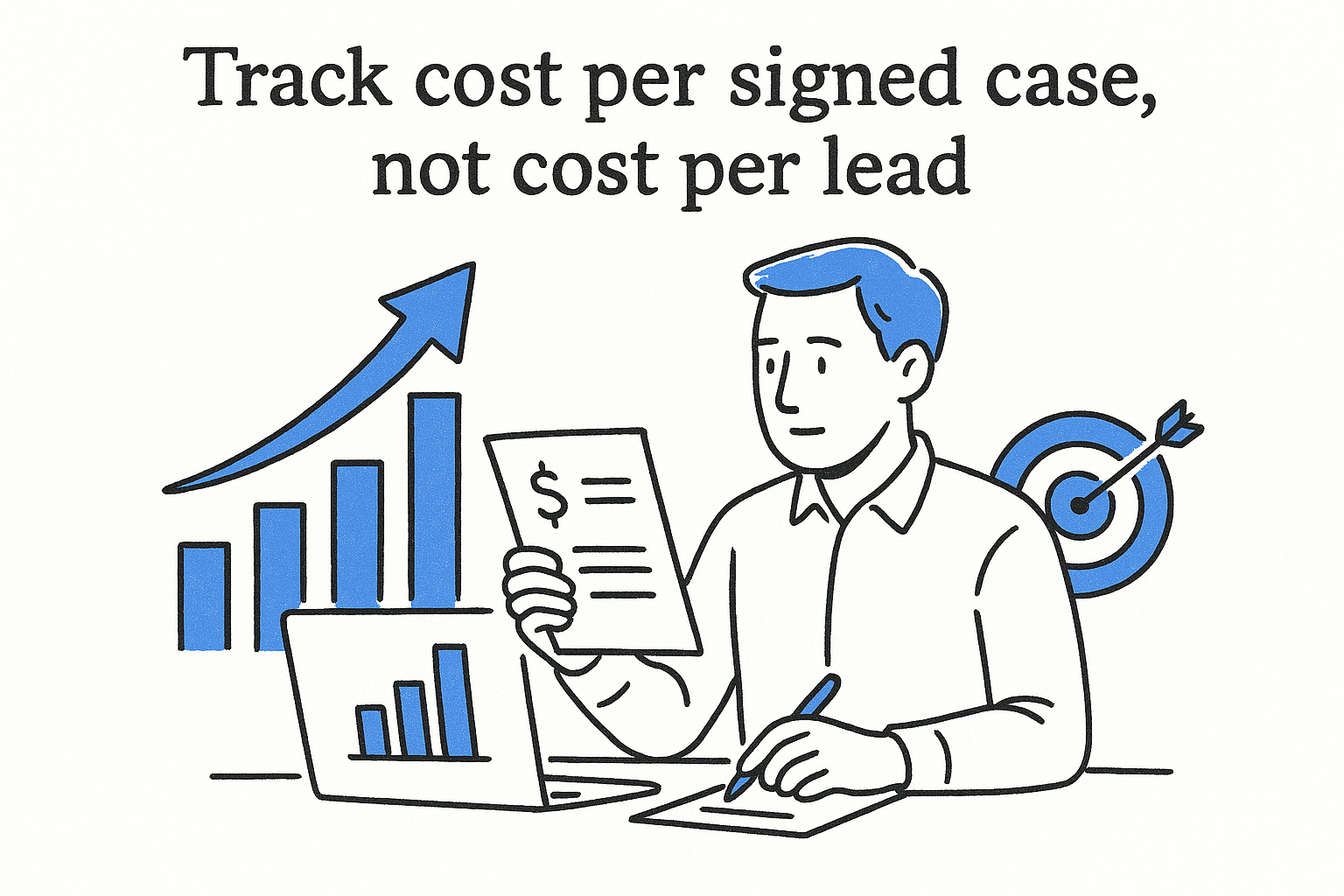
Tracking cost per signed case means tying each ad click and phone call to the retainer it produced. You see which campaign created a client, not just a lead. Trucking makes this matter more than most practice areas. Cases are expensive to win, many prospects phone instead of filling out a form, and the weeks between first contact and retainer hide which source worked. The hypothetical numbers below show how cost per lead can point you at the wrong campaign.
The broad campaign looks cheaper per lead but costs twice as much per client.
A cheap lead is not a cheap case, and only signed-case tracking shows the difference.
Who it suits
Any firm spending on ads benefits, but in-house teams that cannot say which source produced last quarter's retainers need it most. GavelGrow's platform covers this. Per-campaign call tracking numbers record each call and credit the right campaign. The marketing dashboard shows cost per signed case, and case management follows a lead through to the signed retainer.
If you would rather hand the work over, GavelGrow's legal-only team can build and run campaigns on the same platform. That Managed option is scoped on a strategy call, plus your ad spend.
Cost and what to watch
You can start on the self-serve platform at published prices:
- Track: $199/month, with one connected ad account and two call tracking numbers.
- Optimize: $599/month, with unlimited ad accounts, ten tracking numbers, and signed cases sent back to Google Ads as offline conversions.
- Both plans: a 7-day free trial with no credit card. Your ad spend is separate.
Measure the signed retainer, not the eventual settlement. Trucking settlements can take a long time, and you cannot steer a budget by an outcome that far away.
2. How does local SEO win trucking searches?
How it works
Local SEO wins trucking searches by proving to Google that your firm handles these cases in a specific place, and by giving the searcher a page that answers their situation. Build these pieces:
- One strong truck accident page, plus separate pages for 18-wheeler or tractor-trailer crashes only where you can write something real.
- City or highway pages built on local knowledge, such as the interstates, ports, and courts you actually work with, not a template with the city name swapped.
- A Google Business Profile with accurate categories, hours, and a trucking-focused description.
- Reviews from every client you ask, and a calm, professional public reply to each one, including critical ones.
Trucking searchers reward specificity, so one deep page beats ten thin ones.
Who it suits
Local SEO suits firms with a defined territory along freight corridors and a time horizon longer than one quarter. It also suits firms that want less dependence on paid clicks, since organic visibility keeps working after you stop paying for it.
It does not suit a firm that needs signed cases next month. Pair it with paid search in that case.
Cost and what to watch
SEO costs mostly time: attorney review, writing, and patience for results to build over months. GavelGrow's done-for-you local SEO service is one option if you do not want to build pages in-house, and it is scoped on a strategy call.
Watch for near-duplicate city pages, which add little. Also avoid superlatives like "best truck accident lawyer," which many state bars restrict.
3. Google Ads built around trucking keywords
How it works
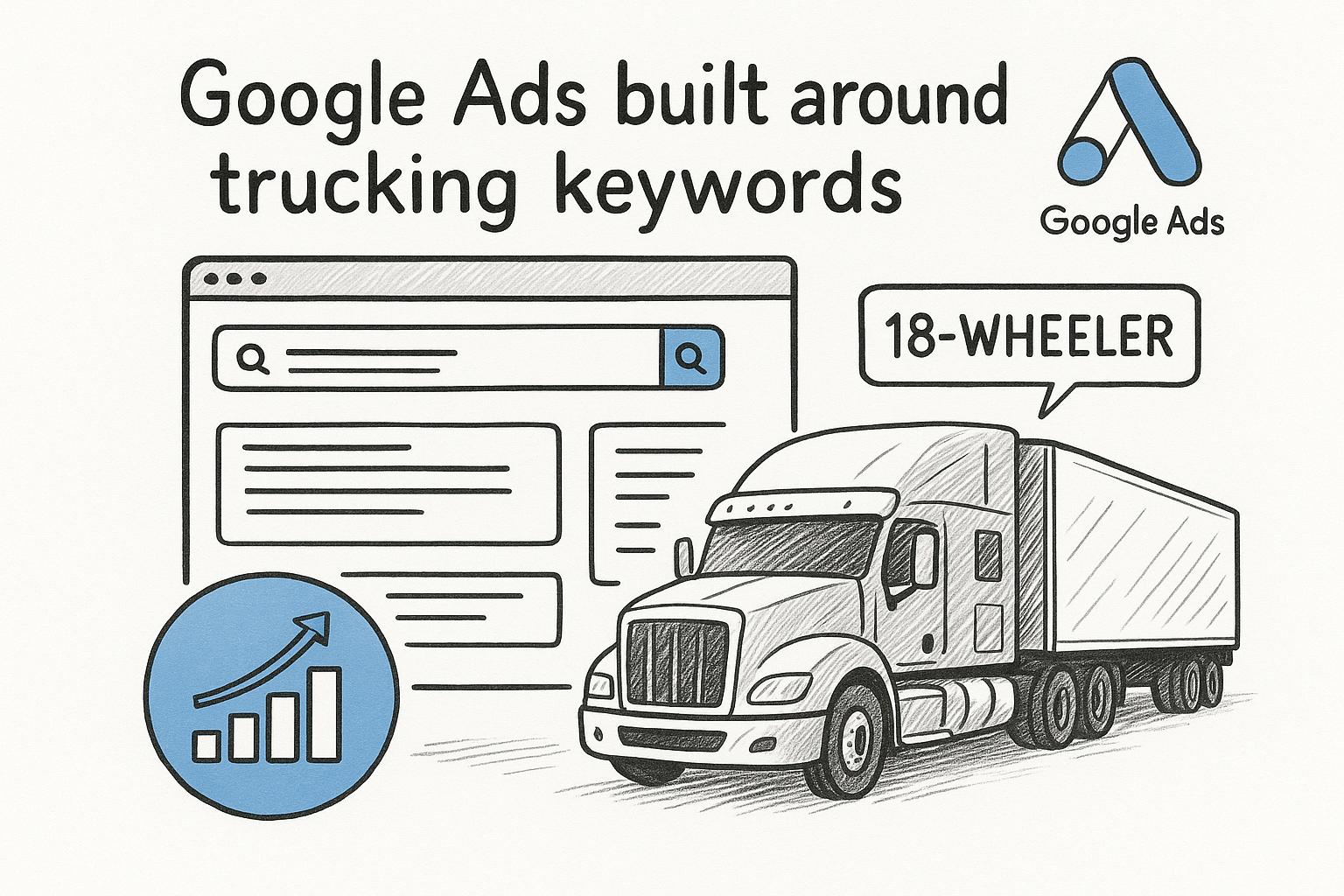
A trucking Google Ads account separates truck terms from general injury terms, so you set budgets, bids, and messages for each. Target searches such as "18-wheeler accident lawyer" and "semi truck accident attorney," and send each ad group to a matching landing page rather than your homepage.
Add negative keywords for people who are not prospects, such as drivers looking for jobs, CDL students, and news seekers. Retargeting is worth adding, because trucking prospects often compare several firms before they call.
Who it suits
Google Ads suits firms that want volume now while SEO matures, and that can answer calls quickly. Trucking terms rank among the more expensive keywords in legal advertising, so a firm that cannot staff its phones will pay for clicks it cannot convert.
Paid search only pays off when you can see which clicks became retainers.
Cost and what to watch
You pay per click, and costs vary widely by market, so set a monthly cap and review it against cost per signed case, not clicks. GavelGrow's managed Google Ads service is scoped on a strategy call, and GavelGrow charges no markup on client ad spend.
Watch your ad copy. State bars may restrict claims about results or expertise, and "free consultation" language should match what you actually offer. Make sure your conversion tracking counts signed cases, because form fills alone will mislead you.
4. Are Local Services Ads worth it for trucking?
How it works
Local Services Ads are worth testing for trucking when you can answer every call fast, because they sit above regular ads and charge per lead instead of per click. Google verifies your firm through its screening process and shows a Google Screened badge. You pay when a prospect calls or messages, and you can dispute leads that are clearly invalid.
Google controls which practice areas lawyers can select, so check what is offered in your market. Pick the category closest to trucking work.
Who it suits
LSAs suit firms with strong reviews, quick call answering, and a set weekly budget. Ranking depends partly on reviews and responsiveness, so a firm that misses calls will lose position. They also suit firms that dislike click-based bidding and prefer to pay only for an inquiry.
They suit less well a firm with no intake coverage after hours, since trucking crashes do not happen on a 9-to-5 schedule.
Cost and what to watch
Cost per lead varies by market and competition, so start with a modest weekly cap and compare against your signed-case results. GavelGrow runs a Local Services Ads service through a native Google Ads connector, if you want help.
One limit matters. Local Services Ads cannot accept offline conversion signals, so signed cases will not improve LSA bidding. Track outcomes in your own system, tag calls by quality, and dispute junk leads promptly.
With LSAs, your reviews and your phone answering do the bidding for you.
5. How should you build regulation-focused content?
How it works
Regulation-focused content explains the trucking details that general injury sites skip, in plain English. A reader who has just been hit by a tractor-trailer wants to know who is responsible and what evidence matters. Cover pieces like:
- Who can be liable: the driver, the carrier, a maintenance contractor, a loader or shipper, or a parts manufacturer.
- Federal hours-of-service limits and how electronic logging devices record them. Link to the FMCSA regulations so readers can verify.
- What "black box" or event data recorders capture and why a preservation request to the carrier is time-sensitive.
- A short referral page that tells other attorneys what you take and how to reach you.
Content that names the evidence shows expertise before the first phone call.
Who it suits
Content suits firms with an attorney willing to review every page for accuracy. A trucking page written by someone who has never handled a carrier reads thin to both readers and Google. It also suits firms that depend on referrals from other attorneys, who judge you by whether you know the subject.
Cost and what to watch
The cost is mainly attorney time and a writer who understands the law. Put a named attorney byline on each piece and link to an author page.
Keep legal advice general. Deadlines such as statutes of limitations vary by state, so tell readers to speak to a lawyer rather than stating one deadline. Do not publish case results or settlement figures without checking your state bar's advertising rules, which often require disclaimers.
6. How fast should intake respond to a trucking lead?
How it works
Intake should respond within minutes. The Lead Response Management Study found that leads contacted within five minutes are far more likely to be qualified than those first reached at thirty minutes. That measures the odds of qualifying a lead, not signed cases, but it explains why speed matters.
Build a process around it. Cover calls after hours, use a script that asks about the commercial vehicle, the carrier name, injuries, and whether an insurer has called, and send instant follow-up when a form arrives. Texting requires documented consent.
Who it suits
Intake work suits firms that already generate leads but lose them, and it is often the cheapest fix. If your ads and SEO are producing calls that go to voicemail, more spend will not help.
It suits managing partners who want to know what happens to a lead after hours. GavelGrow's hosted intake forms keep a TCPA consent audit log, validate phone numbers, and send an instant email auto-reply, and follow-up sequences start within minutes.
Cost and what to watch
Intake costs staff time or an answering service, plus software. Optimize includes 3,000 client texts a month once US carriers approve your number. Mobile visitors often convert worse than desktop visitors on long forms, so keep forms short. Conversion rate optimization can help if forms underperform.
Handle consent properly: texts need prior consent, and STOP requests must be honored automatically. Review recorded calls to see what your team says to prospects.
Speed to lead only helps when the person answering knows what a trucking case sounds like.
Frequently Asked Questions
How much should you spend on truck accident marketing?
No verified percentage fits every firm, so work backward from your own numbers. Decide how many signed cases you want, take your tracked cost per signed case, and multiply. If you want four signed cases a month and campaigns currently cost $3,000 per signed case, plan for about $12,000 a month in ad spend before software or agency fees. Start smaller, measure for a few months, and raise spend only on campaigns whose cost per signed case holds up.
Work backward from cost per signed case, and the budget answers itself.
What percentage do truck accident lawyers charge?
Many personal injury firms work on contingency, commonly around one-third of the recovery. The percentage often changes if a lawsuit is filed, and it varies by state and by your fee agreement. ABA Model Rule 1.5(c) requires a contingent fee agreement to be in writing and to state how the fee is determined. For marketing math, use your own average fee, not a market figure, when you estimate what a signed case is worth to your firm.
How is truck accident marketing different from general personal injury marketing?
It is narrower, with higher stakes and more defendants. Searchers ask about carriers, logs, and black box data, so your content has to match. Federal hours-of-service rules, for example, cap property-carrying drivers at 11 hours of driving after 10 consecutive hours off duty. A page that explains that kind of detail shows expertise that a generic injury page cannot. Your keywords, landing pages, and intake questions should all be built around commercial vehicles.
Can you advertise past truck accident settlement amounts?
It depends on your state bar. ABA Model Rule 7.1 prohibits false or misleading communications about a lawyer's services, and some states require disclaimers that past results do not guarantee future outcomes. Never imply that you can promise a result. Before you publish a dollar figure, confirm your state's rules, make sure the figure is accurate and verifiable, and keep client confidentiality in mind. When in doubt, describe the type of case and your process instead of the number.
How do you tell Google Ads which clicks became signed cases?
You send signed cases back to Google Ads as offline conversions, so the bidding system learns which clicks produced clients. On GavelGrow, Optimize and Managed send signed cases back to Google Ads when a case is signed, and Track includes a preview. Local Services Ads cannot accept that signal, so for LSAs you track outcomes in your own dashboard. Either way, you need a record that links each lead to a campaign.
Where to start
Truck accident lawyer marketing rewards focus. Measure cost per signed case first, so every later decision rests on real numbers. Then build local SEO and trucking content for the long term, add Google Ads and Local Services Ads for volume, and tighten intake so the leads you pay for turn into retainers. Keep every claim inside your state bar's advertising rules.
You do not need all six at once. Most firms get the best return by fixing measurement and intake before they raise spend. If you want a second opinion on where your firm stands, book a free 45-minute strategy call with GavelGrow and walk through your numbers with a team that works only with law firms.
Frequently Asked Questions
How much should you spend on truck accident marketing?
No verified percentage fits every firm, so work backward from your own numbers. Decide how many signed cases you want, take your tracked cost per signed case, and multiply. If you want four signed cases a month and campaigns currently cost $3,000 per signed case, plan for about $12,000 a month in ad spend before software or agency fees. Start smaller, measure for a few months, and raise spend only on campaigns whose cost per signed case holds up. Work backward from cost per signed case, and the budget answers itself.
What percentage do truck accident lawyers charge?
Many personal injury firms work on contingency, commonly around one-third of the recovery. The percentage often changes if a lawsuit is filed, and it varies by state and by your fee agreement. ABA Model Rule 1.5(c) requires a contingent fee agreement to be in writing and to state how the fee is determined. For marketing math, use your own average fee, not a market figure, when you estimate what a signed case is worth to your firm.
How is truck accident marketing different from general personal injury marketing?
It is narrower, with higher stakes and more defendants. Searchers ask about carriers, logs, and black box data, so your content has to match. Federal hours-of-service rules, for example, cap property-carrying drivers at 11 hours of driving after 10 consecutive hours off duty. A page that explains that kind of detail shows expertise that a generic injury page cannot. Your keywords, landing pages, and intake questions should all be built around commercial vehicles.
Can you advertise past truck accident settlement amounts?
It depends on your state bar. ABA Model Rule 7.1 prohibits false or misleading communications about a lawyer's services, and some states require disclaimers that past results do not guarantee future outcomes. Never imply that you can promise a result. Before you publish a dollar figure, confirm your state's rules, make sure the figure is accurate and verifiable, and keep client confidentiality in mind. When in doubt, describe the type of case and your process instead of the number.
How do you tell Google Ads which clicks became signed cases?
You send signed cases back to Google Ads as offline conversions, so the bidding system learns which clicks produced clients. On GavelGrow, Optimize and Managed send signed cases back to Google Ads when a case is signed, and Track includes a preview. Local Services Ads cannot accept that signal, so for LSAs you track outcomes in your own dashboard. Either way, you need a record that links each lead to a campaign.