7 Divorce Attorney Marketing Ideas to Grow Your Caseload
Categories: Legal Marketing Strategies
 Abram Ninoyan
Founder & Senior Performance Marketer
Credentials: Google Partner, Google Ads Search Certified, Google Ads Display Certified, Google Ads Measurement Certified, Google Analytics (IQ) Certified, HubSpot Inbound Certified, HubSpot Social Media Marketing Certified, Conversion Optimization Certified
Expertise: Google Ads, Meta Ads, Conversion Rate Optimization, GA4 & Google Tag Manager, Lead Generation, Marketing Funnel Optimization, PPC Management
LinkedIn Profile
Divorce attorney marketing works best when you combine fast, consent-compliant intake with campaigns built around what a divorce client actually searches for at 11 p.m. on a Tuesday. The seven ideas b...
Key Takeaways
- 7 Divorce Attorney Marketing Ideas to Grow Your Caseload
- 1. Track cost per signed case with a legal-only platform
- 2. Respond to new leads within minutes, not hours
- 3. Target the local SEO keywords divorce clients search
7 Divorce Attorney Marketing Ideas to Grow Your Caseload
Divorce attorney marketing works best when you combine fast, consent-compliant intake with campaigns built around what a divorce client actually searches for at 11 p.m. on a Tuesday. The seven ideas below cover paid search, local SEO, referral relationships, and the intake mechanics that turn a scared prospective client into a signed retainer instead of a missed call.
Family law is different from most legal marketing because the client is often in crisis, comparison-shopping fast, and judging your firm on response speed as much as reputation. A generic agency playbook built for personal injury or a form that takes three minutes to load on a phone will cost you cases you already paid to generate. This list focuses on practical, budget-aware tactics that a solo practitioner or a ten-attorney family law shop can actually execute this quarter.
You'll find ideas ranging from Local Services Ads and Google Business Profile tuning to content that answers custody and property-division questions, plus the intake and call-tracking fixes that stop leads from slipping through the cracks after the ad click. Each idea includes what it costs, what it fixes, and how to know if it's working.
1. Track cost per signed case with a legal-only platform
Most family law firms measure marketing by cost per lead, not cost per signed case. That number lies to you. A $40 lead that never answers the phone costs more than a $150 lead that retains. Divorce attorney marketing only pays off when you can trace a dollar spent on Google Ads or Local Services Ads all the way through to a signed retainer, not just a form submission.
How it works
A legal-only marketing platform connects your ad accounts, call tracking numbers, and intake forms so every lead carries its source all the way into your case pipeline. Instead of exporting spreadsheets from three separate tools, you see campaign-level cost per signed case in one dashboard. A legal-only marketing platform for law firms does this natively: it fires conversion events back into Google Ads and Meta so the ad platforms themselves learn which campaigns produce clients, not just clicks.
Why it matters for divorce clients
Divorce cases close on wildly different timelines depending on whether custody or property division is contested, so cost-per-lead numbers from a generic dashboard can mislead you for months before a pattern emerges. Tracking each lead from the ad click through to the retainer catches this early. If your uncontested-divorce campaign is producing leads at $60 each but signing at $900 per case, and your contested-custody campaign looks worse per lead but signs at $500 per case, you need that comparison to reallocate budget correctly.
If you can't see cost per signed case by campaign, you're guessing with your ad budget, not managing it.
How to get started
You don't need to overhaul your tech stack overnight. Start with what you're tracking today:
- Pull your last 90 days of ad spend by campaign
- Match it against signed retainers in your case management tool, not just leads
- Flag which campaigns produce leads that never converted to a case
- Compare that against GavelGrow's Track plan at $199/month if you're running a single ad channel, or Optimize at $599/month if you're running Google Ads, Local Services Ads, and Meta together and need Smart Conversions feeding signed cases back into bidding
Every tier includes a 7-day free trial with no credit card required, so you can pull a real cost-per-signed-case report before committing a dollar.
2. Respond to new leads within minutes, not hours
A divorce prospect who fills out your contact form at 9 p.m. is usually filling out two or three competitors' forms in the same sitting. Whoever calls back first often wins the consultation, not whoever has the best reviews. Speed to lead is one of the few marketing levers a firm controls completely, and most firms leave it sitting on the table overnight.
How it works
Set up automated SMS and email follow-up that fires the moment a lead submits a form, paired with a call-routing rule that rings the intake staff's cell phone, not just a front desk line that closes at 5 p.m. The Lead Response Management Study found that leads contacted within five minutes are far more likely to be qualified than those first reached at thirty minutes. That's a qualifying-odds finding, not a conversion guarantee, but it's reason enough to fix your response window.
Why it matters for divorce clients
Someone searching for a divorce attorney at midnight is often reacting to a fight, a served paper, or a decision they finally worked up the nerve to make. Wait until morning and they've either called someone else or lost their nerve entirely, which is only one of the places a law firm's intake process quietly breaks.
The firm that answers the phone first usually books the consult, regardless of who has better reviews.
How to get started
- Turn on an automatic text reply within 60 seconds of form submission
- Route after-hours calls to a staff cell phone or answering service
- Use built-in call tracking to tag missed calls and follow up same-day
3. Target the local SEO keywords divorce clients search
Most divorce prospects search by city or county before they search by attorney name: "divorce lawyer [city]" or "child custody attorney near me." If your website only ranks for your firm name, you're invisible to the exact person typing that query the night they decide to leave. Divorce lawyer SEO means building pages and content around how real clients search, not how attorneys talk to each other.
How it works
Start with practice-area landing pages for each service you actually handle: divorce, custody, child support, alimony, property division. Each page should target a specific phrase plus your city or county, not a generic "family law services" title. Google's own guidance on helpful content rewards pages written for a real reader's question, not stuffed with keywords for search engines.
Why it matters for divorce clients
Divorce is almost always a local search. Nobody hires an attorney three states away for a custody hearing. Local search tactics built for family law attorneys put you in front of people in your jurisdiction who are ready to hire, not researchers browsing national content.
Rank for "divorce lawyer" plus your city, and you're competing for clients who can actually retain you.
How to get started
- List every service you handle: divorce, custody, support, mediation, asset division
- Build one page per service per major city or county you serve
- Check your current rankings for "[service] + [city]" phrases monthly
- Pair local pages with the Google Business Profile work covered in idea 5
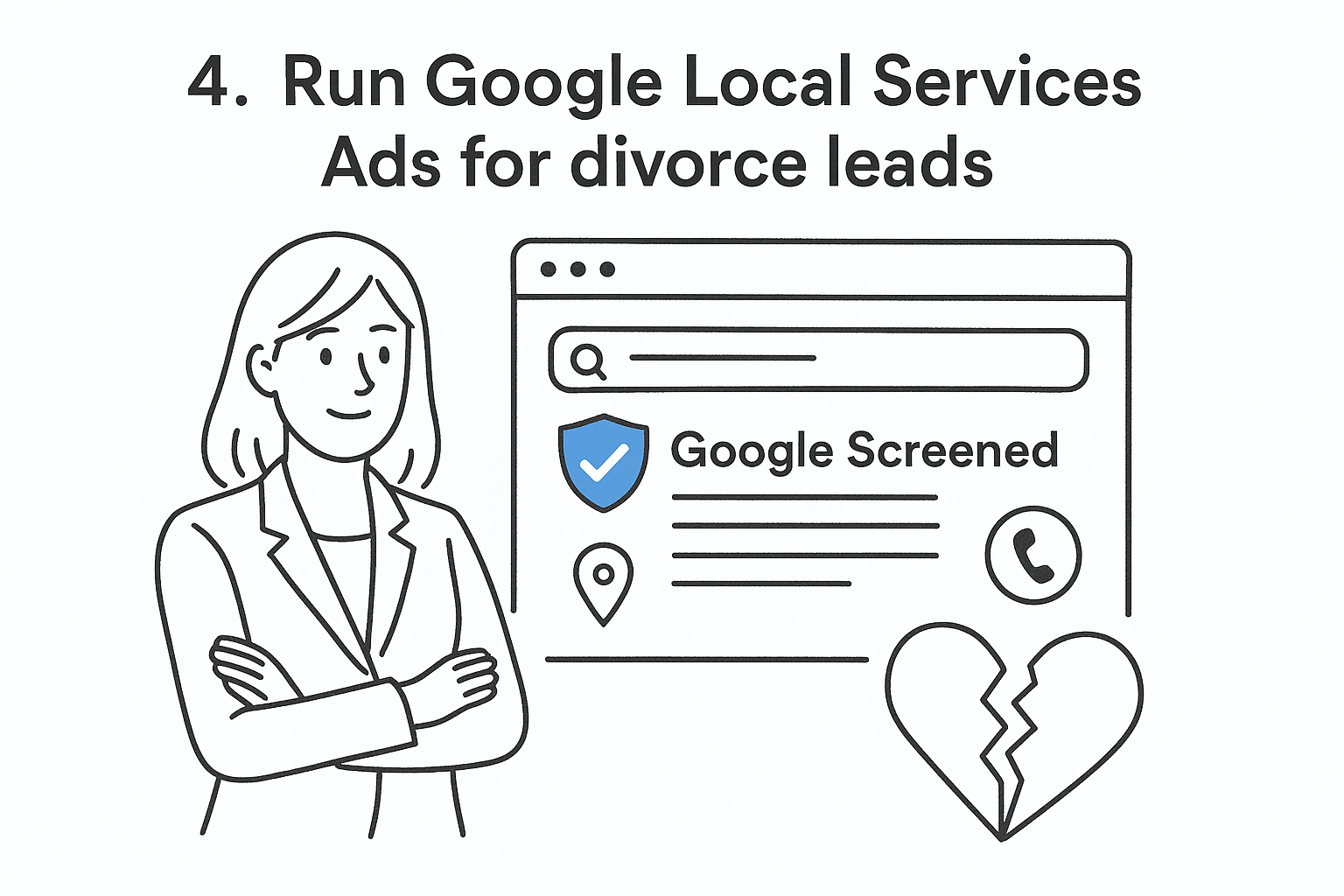
4. Run Google Local Services Ads for divorce leads
Local Services Ads put your firm at the very top of Google, above traditional paid search, with a "Google Screened" badge and a pay-per-lead model instead of pay-per-click. For divorce attorney marketing, that placement matters more than almost any other channel because it's the first thing a scared searcher sees before they scroll to anything else.
How it works
How Local Services Ads work for law firms is simple enough: you set a weekly budget, list the practice areas you handle, and Google matches you to searchers in your service area. You pay only when someone calls or messages through the ad, not for every click, which changes the math compared to standard Google Ads. GavelGrow connects Local Services Ads directly into its marketing platform so those leads get the same call tracking, tagging, and Smart Conversions feedback as every other channel.
Why it matters for divorce clients
Divorce searchers rarely click past the first few results, and Local Services Ads sit above them. A Google Screened badge signals licensing verification to someone who has never hired an attorney before and doesn't know how to judge credibility otherwise.
Local Services Ads put you above the fold before a scared searcher even sees a traditional ad.
How to get started
- Complete Google's screening and background check process for your firm
- Set a weekly budget you can track against signed cases, not just leads
- Tag every Local Services lead in your intake system so you can compare cost per case against other channels
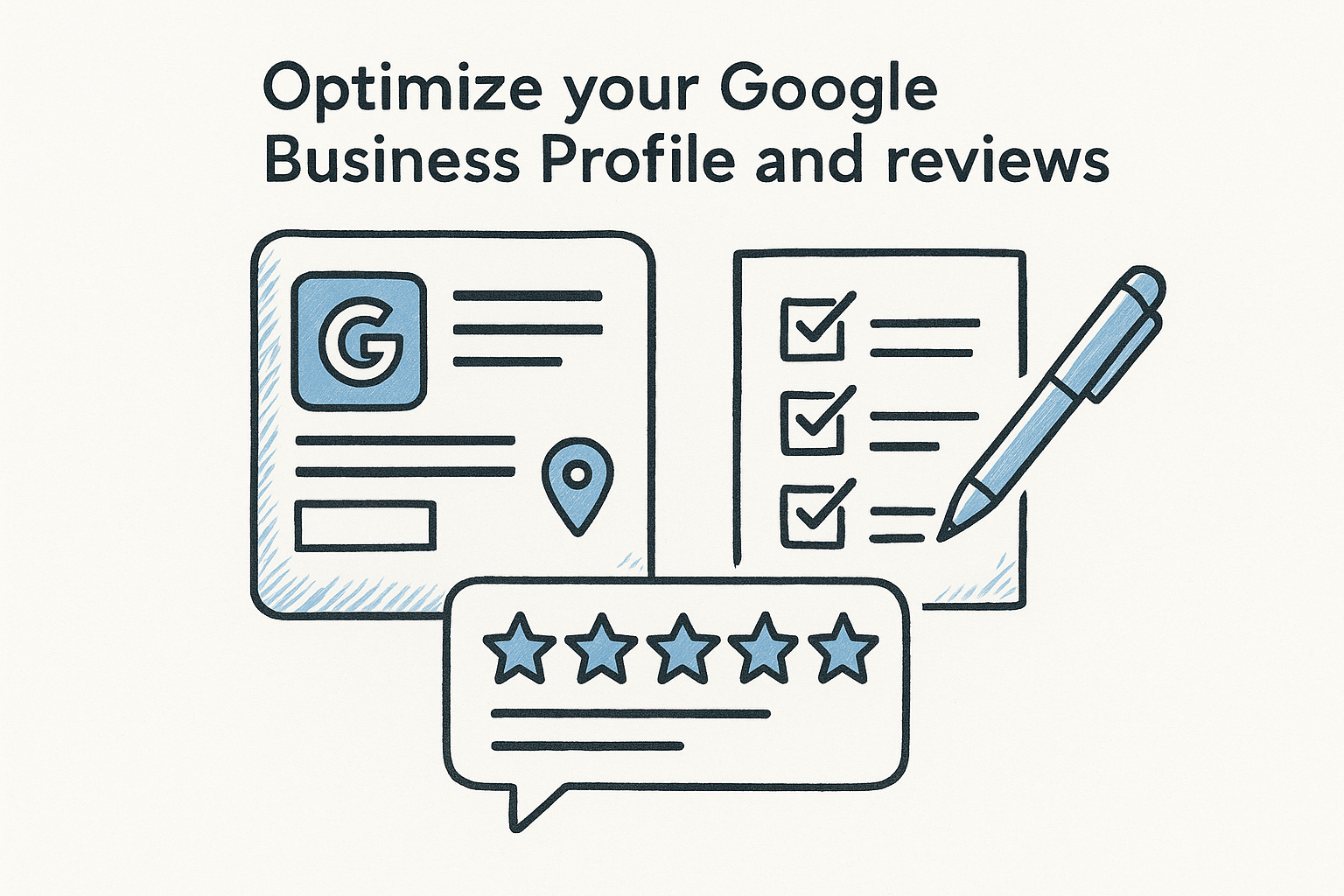
5. Optimize your Google Business Profile and reviews
Your Google Business Profile often shows up before your website does, especially on mobile searches for "divorce attorney near me." A thin or outdated profile makes a firm look inactive, even if you're taking new clients every week. Google Business Profile optimization is one of the cheapest, highest-leverage moves in divorce attorney marketing because it costs nothing but time.
How it works
Claim and verify your profile, then fill in every field Google offers: practice areas, service area, business hours, photos of your office and attorneys, and a description written for a searcher, not a search engine. Post updates when you handle a notable case type or add a practice area. Complete profiles rank better and convert better because Google rewards active, detailed listings over bare-bones ones.
A half-filled Google Business Profile tells a scared searcher you might not answer the phone either.
Why it matters for divorce clients
Someone comparing three firms at 10 p.m. will trust the one with recent reviews and real photos over one with a blank profile and a five-year-old review. Review volume and recency signal that you're an active, responsive practice, which matters more to a divorce client than almost any other credential you can display.
How to get started
- Ask every client for a review after the case closes, not just the happy ones
- Resolve complaints directly with the client, and follow the reputation management habits that win back trust after a bad review by responding professionally to every public review, positive or negative
- Add fresh photos and a post at least once a month
- Check your state bar's advertising rules before adding any language about results or outcomes
6. Publish content that answers real divorce questions
Most divorce searches start as questions, not attorney searches: "how long does divorce take in [state]," "can I keep the house in a divorce," "how is custody decided." A firm that answers those questions in plain language earns trust before the first phone call. Family law content marketing built around real questions outperforms generic blog posts about "5 signs you need a divorce lawyer" because it matches what people actually type.
How it works
Build a list of the questions your intake staff hears every week, then write one page per question, the backbone of any law firm content marketing strategy. Answer it directly in the first two sentences, then add the nuance and caveats that make you sound like an actual attorney instead of a content farm. Google's helpful content guidance explicitly rewards pages that demonstrate real expertise over content written to attract clicks.
Why it matters for divorce clients
Someone researching divorce at midnight is anxious and often ashamed to ask friends or family the basics. Answering real questions positions your firm as the calm, knowledgeable option before they've even filled out a form.
The firm that answers the question people are actually asking wins the click, and often the client.
How to get started
- Ask your intake team for the 10 questions they hear most often
- Write one page per question, answered plainly in the opening lines
- Link each page to the relevant local service page from idea 3
- Update pages when your state's laws or procedures change
7. Build a website and intake form that convert
All the traffic in the world doesn't matter if your intake form loses the person who clicked. Divorce prospects abandon slow, confusing forms faster than almost any other legal niche because they're already anxious and looking for a reason to close the tab. Website conversion is the last mile of divorce attorney marketing, and it's the one most firms never audit.
How it works
Built-in mobile-first intake forms should load fast, ask only what you need up front, and confirm submission instantly with a text and email reply. Long forms with a dozen fields before someone even reaches a phone number field kill conversions on mobile, where most divorce searches happen, and they top the list of conversion fixes for law firm intake forms. GavelGrow's hosted intake forms handle TCPA consent logging, bot protection, and duplicate detection automatically, so you're not building compliance from scratch.
A form that takes three minutes to load has already lost the client to whoever answers first.
Why it matters for divorce clients
Someone filling out your form is often doing it secretly, on a phone, between other tasks. Mobile-first design respects that reality instead of assuming a desktop user with time to spare.
How to get started
- Test your own form on a phone and time how long it takes to submit
- Cut every field that isn't essential to a first callback
- Confirm instant SMS and email auto-reply fire on submission
- Embed the form on every practice-area page, not just a contact page
Making these ideas work together
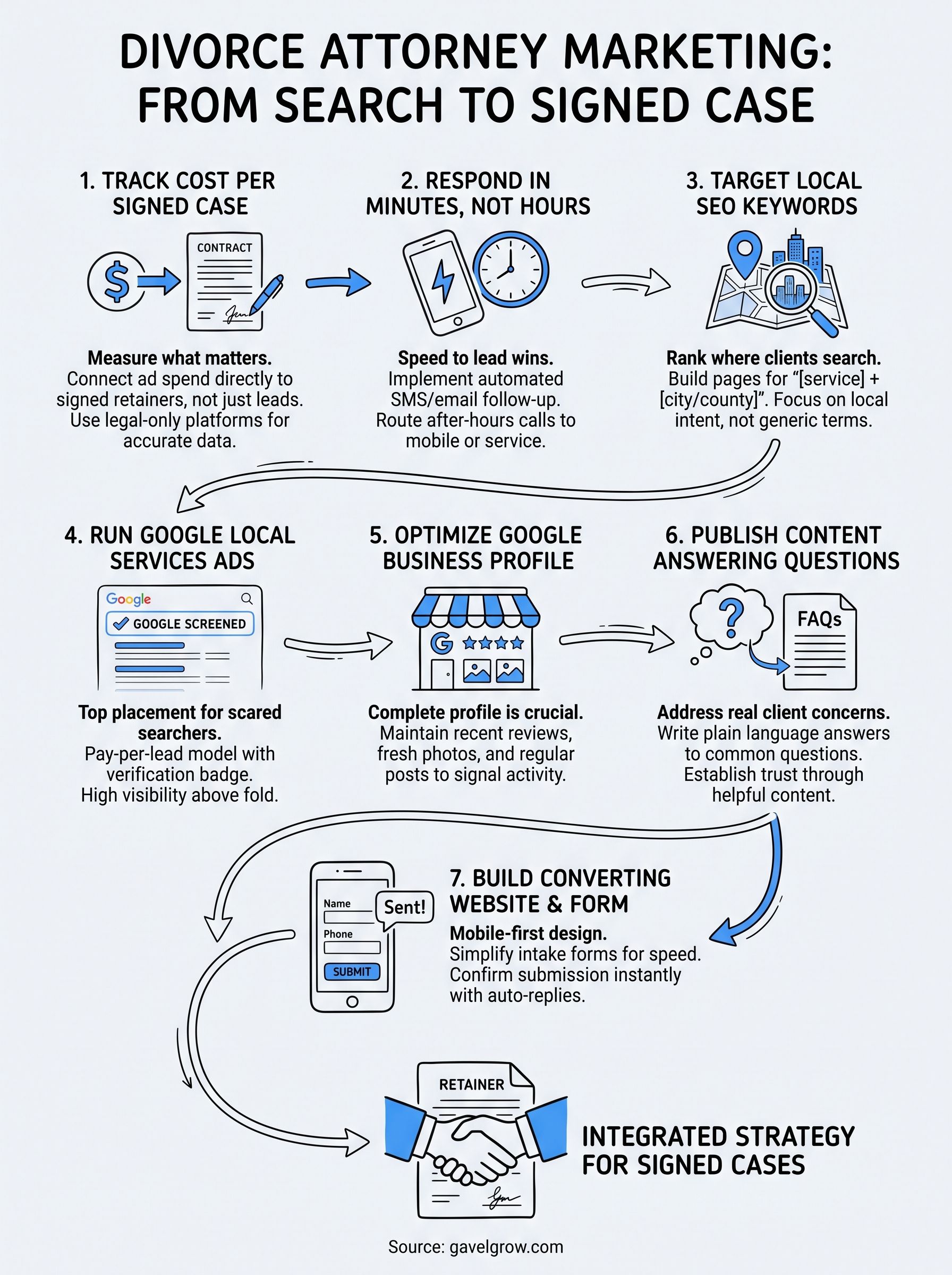
None of these seven ideas work in isolation. Local Services Ads and local SEO bring in the traffic, fast lead response and a mobile-friendly intake form keep it from leaking out, and cost-per-signed-case tracking tells you which channel actually deserves more budget next month. Skip the tracking piece and you're left guessing which of the other six ideas are actually working, which is exactly how firms end up doubling down on the wrong campaign for a year.
Start small. Pick the one idea above that fixes your biggest current leak, whether that's slow response times or a form nobody finishes on a phone, and fix it before adding another channel. Divorce attorney marketing rewards firms that measure before they scale.
If you want a second set of eyes on where your funnel is actually losing cases, book a free 45-minute strategy call with GavelGrow's family law marketing team and walk through your numbers with someone who works exclusively with law firms.