9 Divorce Attorney Advertising Strategies That Sign Cases
Categories: Legal Marketing Strategies
 Abram Ninoyan
Founder & Senior Performance Marketer
Credentials: Google Partner, Google Ads Search Certified, Google Ads Display Certified, Google Ads Measurement Certified, Google Analytics (IQ) Certified, HubSpot Inbound Certified, HubSpot Social Media Marketing Certified, Conversion Optimization Certified
Expertise: Google Ads, Meta Ads, Conversion Rate Optimization, GA4 & Google Tag Manager, Lead Generation, Marketing Funnel Optimization, PPC Management
LinkedIn Profile
Most divorce attorney advertising falls apart at the same point: it generates calls, but half those calls never turn into signed retainers. You spend money on Google Ads or Facebook, leads trickle in,...
Key Takeaways
- 9 Divorce Attorney Advertising Strategies That Sign Cases
- 1. Track cost per signed case, not just cost per lead
- 2. Run Google Local Services Ads for divorce searches
- 3. Bid on high-intent keywords with Google Search PPC
9 Divorce Attorney Advertising Strategies That Sign Cases
Most divorce attorney advertising falls apart at the same point: it generates calls, but half those calls never turn into signed retainers. You spend money on Google Ads or Facebook, leads trickle in, and your intake staff can't tell which ones are worth chasing until it's too late. That gap between click and signed case is where family law budgets quietly disappear.
The strategies that actually work treat advertising as a system, not a one-off campaign. That means pairing the right channels (Local Services Ads, paid search, content that answers what a scared spouse types at midnight) with fast, tracked intake so no qualified lead goes cold waiting for a callback. Divorce cases move slowly once signed, but the decision to hire happens fast, often within a day of that first search.
Below are nine strategies used by family law firms that consistently sign cases, not just collect leads. Each one includes what to budget, what to watch for, and how to measure whether it's working. You'll also see where call tracking and lead attribution matter as much as the ad itself, since a campaign you can't measure past the phone call is a campaign you can't improve.
1. Track cost per signed case, not just cost per lead
Most family law marketing reports stop at cost per lead, which tells you almost nothing about whether your divorce lawyer marketing budget is actually working. A $40 lead that never signs is worse than a $150 lead that does. Firms that grow past a handful of new cases a month track cost per signed case by campaign, so they know exactly which channel, keyword, or ad is producing paying clients versus tire-kickers who called three firms and hired none of them.
If you can't trace a dollar from ad click to signed retainer, you're guessing, not marketing.
How it works
Every lead gets a tracking number tied to the campaign that generated it, and every call, form fill, and text gets tagged from the first ad click through to case status. When a lead becomes a signed case, that outcome rolls back up to the campaign level, so you can see that your "contested custody" keyword group cost $310 per signed case last quarter while your general "divorce lawyer" broad match cost $890. GavelGrow's marketing dashboard builds this attribution automatically, pulling from call outcomes and case records instead of a spreadsheet someone updates once a month.
Who it's best for
This approach fits any firm spending real money on ads, meaning $1,500 a month or more across Google, Local Services Ads, or social. Solo practitioners testing a single channel can get by with basic call tracking, but firms running multiple campaigns need per-campaign attribution or they'll keep funding whatever channel talks the loudest, not whatever channel signs cases.
What it typically costs
Standalone call tracking tools run $30 to $150 a month depending on volume, but they stop at the phone call and don't connect to case outcomes. A platform built for this, like GavelGrow's Track plan at $199 a month, includes call tracking numbers, lead pipeline, and cost-per-lead reporting in one subscription. Firms running multiple channels usually move to Optimize at $599 a month for unlimited ad accounts and full cost-per-signed-case reporting across every source.
What to watch for
Attribution breaks down fast if intake staff don't log case outcomes consistently, so the data lags reality by weeks. It also breaks if you're juggling separate tools for calls, intake, and case status that never sync, which is the exact tool sprawl this kind of tracking is meant to eliminate.
2. Run Google Local Services Ads for divorce searches
Google's Local Services Ads put your firm at the very top of search results, above the regular paid ads, with a green checkmark badge and your review rating front and center. For divorce attorney marketing, this spot matters because someone searching "divorce lawyer near me" at 11pm is ready to call, not browse.
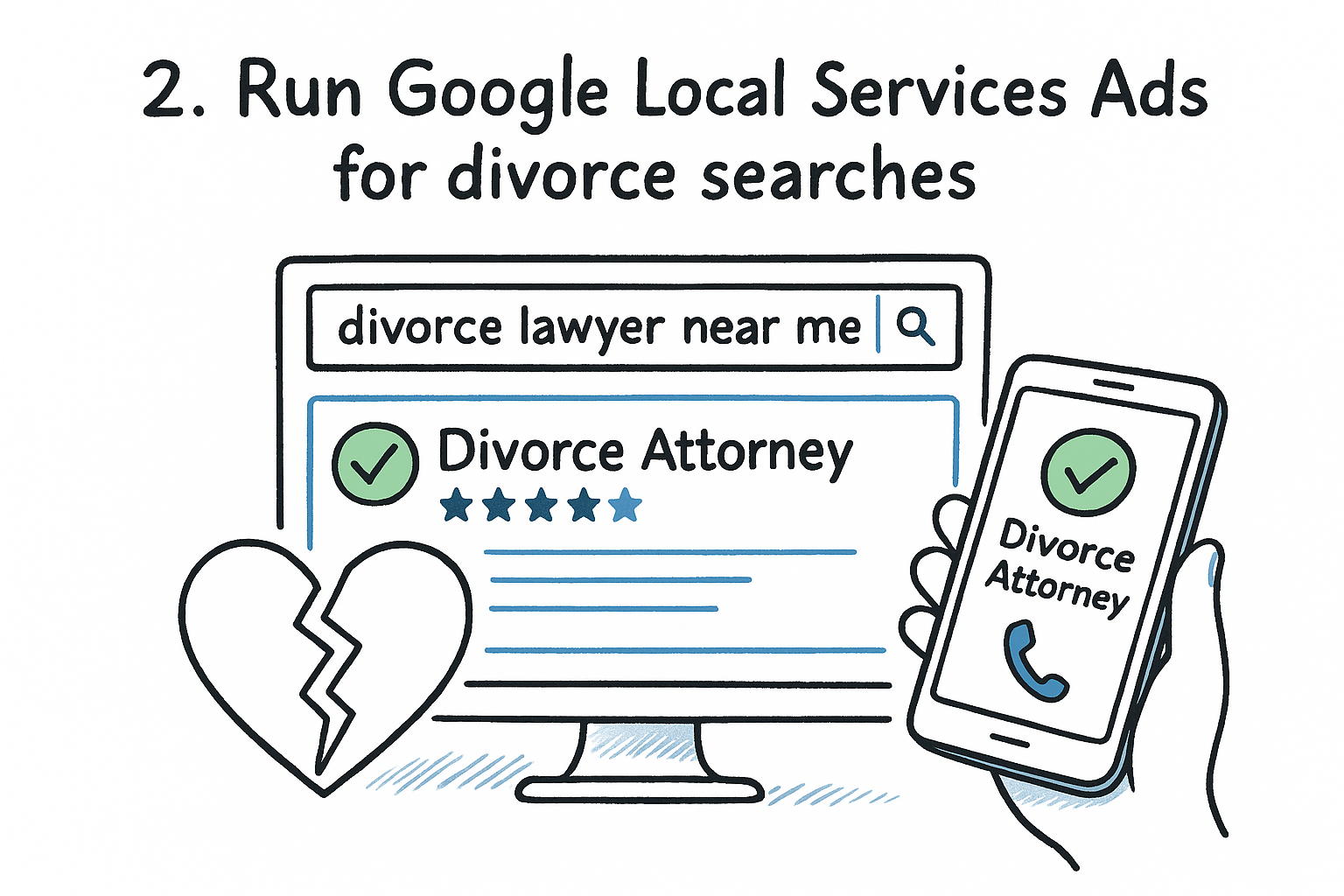
The top of a divorce search isn't won by the biggest budget, it's won by the firm that shows up verified and answers the phone.
How it works
You create a profile through Google Screened setup for lawyers, which checks your bar license and business background before your ads go live. Google then charges per lead, not per click, so you only pay when someone calls or messages through the ad. Leads land in your Local Services dashboard, but without call tracking layered on top, you're stuck guessing which of those leads actually became clients.
Who it's best for
This works best for single-location family law firms competing in a defined metro area, since Local Services Ads are built around local intent and geography. Firms handling contested divorce, custody, or high-asset splits see strong returns here because clients search urgently and locally.
What it typically costs
Divorce-related leads through Local Services Ads commonly run $60 to $200 per lead depending on your market, with major metros sitting at the higher end. There's no fixed monthly minimum, so you control spend by setting a weekly budget cap inside Google's platform.
What to watch for
Google counts anything answered as a lead, including wrong numbers and opposing counsel calling to check you out. Without a system tagging call outcomes, you'll overpay for leads that were never real prospects.
3. Bid on high-intent keywords with Google Search PPC
Google Search PPC lets you show up for the exact phrases someone types when they're deciding whether to hire, like "divorce lawyer consultation cost" or "file for divorce with kids." Unlike Local Services Ads, you control the keyword targeting and ad copy directly, which matters for family law advertising aimed at specific case types like high-asset divorce or contested custody.
Broad match keywords burn budget fast; tight, intent-matched keywords are what sign cases.
How it works
You build campaigns around keyword groups, not one giant "divorce lawyer" ad set. Separate groups for custody, high-asset divorce, and uncontested filings each get their own ad copy and landing page, so the message matches what the searcher actually typed. Google charges per click, and you set daily or monthly budget caps inside the platform.
Who it's best for
Search PPC suits firms that want precise targeting by case type and have someone managing bids weekly, whether in-house or through an agency. It works less well for firms that set a campaign live and never touch it again, since keyword performance shifts as competitors adjust their own bids.
What it typically costs
Divorce and family law keywords are competitive, often running $30 to $150 per click in major metros, with custody and high-asset terms at the top end, which is why legal keywords cost so much on Google. Most firms budget at least $2,000 to $3,000 a month to gather enough data to optimize.
What to watch for
Clicks without conversion tracking tied to signed cases are just expensive traffic. Pair PPC with Smart Conversions feeding signed cases back into Google's bidding, so the algorithm learns to chase clients, not just clicks.
4. Optimize local SEO and your Google Business Profile
Paid ads get you visibility fast, but local SEO builds the kind of search presence that keeps generating calls after you stop paying for clicks. For SEO for divorce lawyers, this means showing up in the map pack when someone searches "divorce attorney [your city]" and having a Google Business Profile that answers questions before the call even happens.
A strong Google Business Profile does the work of an ad campaign, without the daily budget.
How it works
You claim and fully complete your Google Business Profile: service categories, practice areas, office hours, photos of your office and attorneys, and a steady stream of client reviews. Alongside that, your website needs city-specific landing pages, consistent name-address-phone details across directories, and schema markup that tells Google exactly what you practice. None of this is a one-time setup; Google rewards profiles that stay active with fresh posts and review responses.
Who it's best for
This strategy fits every family law firm with a physical office, regardless of budget, since local SEO for family law attorneys costs time rather than ad spend. It matters most for solo and small firms competing against larger practices with bigger ad budgets, because organic map pack visibility levels that gap somewhat.
What it typically costs
DIY local SEO costs your time, mostly a few hours a month on profile updates and review responses. Hiring it out through managed local SEO and Google Business Profile work for law firms typically runs $500 to $1,500 a month depending on how competitive your market is.
What to watch for
Inconsistent business listings across directories confuse Google and hurt ranking. Never suggest reviews only to happy clients; ask everyone and respond professionally to every review, good or bad.
5. Publish content that answers real divorce questions
Someone facing divorce searches for answers long before they search for a lawyer. Questions like "how is child custody decided in [state]" or "do I need a lawyer for an uncontested divorce" get typed into Google at midnight by people who are scared, not ready to sign a retainer yet. Content marketing for divorce lawyers captures that early research phase and builds trust before the consultation call ever happens.
The firm that answers the 2am question in plain English usually gets the call when the person is finally ready to hire.
How it works
You build a library of pages and posts around the real questions clients ask: custody timelines, division of property, what a consultation actually costs, how long an uncontested divorce takes in your state, which is the heart of turning legal content into signed retainers. Each piece links to a clear next step, whether that's a contact form or a phone number, and pages built around a specific question tend to outperform generic "why choose us" pages in search results over time.
Who it's best for
This strategy suits firms planning past the next quarter, since content takes months to rank and compound. It pairs well with firms already investing in local SEO, since the same pages that answer client questions also strengthen your site's overall search presence.
What it typically costs
Writing in-house costs staff time, usually a few hours per article for research and drafting. Outsourced legal content, through a service like GavelGrow's content studio, typically runs $300 to $800 per article depending on length and research required.
What to watch for
Generic, unsourced advice hurts more than it helps, especially on legal topics where accuracy matters. Every piece needs a clear disclaimer that it's not legal advice, and claims about outcomes should stay general, since promising results can run afoul of state bar advertising rules.
6. Advertise on Facebook and Instagram
Facebook and Instagram ads work differently than search ads, since nobody types "divorce lawyer" into their news feed. Instead, you reach people based on life events, interests, and demographics, which makes social media advertising for divorce lawyers a tool for building awareness before someone starts actively searching, not for catching them mid-decision like Local Services Ads or PPC.

Social ads plant the seed; search ads catch the harvest weeks later.
How it works
When running Facebook ads for law firms, you build campaigns targeting age ranges, locations, and sometimes life-event signals Facebook offers, like recently married or newly single. Ad creative matters more here than on search, since you're interrupting a scroll, not answering a query, so video testimonials, short educational clips, and clear calls to action outperform static text ads. Most firms run these alongside retargeting so the same audience sees a follow-up ad after visiting the site.
Who it's best for
This channel suits firms with brand awareness goals or a broader practice mix, like family law firms also handling estate planning or business law, since Meta's targeting works better across a wider net than a single narrow case type. It's a weaker fit for firms needing calls this week, since social ads generally produce a longer research-to-call window than search-based channels.
What it typically costs
Meta ad spend for family law commonly runs $1,000 to $3,000 a month to gather enough data for meaningful optimization, with cost per lead varying widely by targeting and creative quality.
What to watch for
Without conversion tracking tied to your CRM and case outcomes, you'll see engagement metrics like clicks and views without knowing whether any of it produced a signed case. Meta Pixel and Conversions API setup, feeding into GavelGrow's marketing dashboard, closes that gap.
7. Retarget visitors who don't convert right away
Most people who land on your site after clicking a divorce attorney advertising campaign don't call on the first visit. They're comparing three or four firms, reading your bio page, then closing the tab to keep researching. How retargeting advertising works is simple: the ads follow those visitors around the web, keeping your firm visible until they're ready to pick up the phone.
The first visit rarely closes a divorce case; the fifth impression usually does.
How it works
A small tracking pixel on your website adds visitors to an audience list, then Google or Meta shows them your ads as they browse other sites or scroll social feeds. You can build separate audiences for people who viewed your custody page versus your high-asset divorce page, and serve each group ad copy that matches what they were already reading. Frequency caps keep the ads from feeling like they're stalking the same person all week.
Who it's best for
Retargeting fits any firm already running paid search or social ads, since it needs existing traffic to build from. It's a poor first move for a firm with no site traffic yet, since there's no audience to retarget.
What it typically costs
Retargeting is cheap by ad standards, often $300 to $800 a month, since audiences are small and clicks cost less than cold prospecting campaigns.
What to watch for
Ads that follow someone for weeks after they've already hired another firm waste budget and annoy prospects. Set list expiration windows around 30 to 60 days, and tie retargeting performance back into the same cost-per-signed-case reporting you use for every other channel, so you can tell if it's actually closing cases or just running up impressions.
8. Automate fast lead intake and follow-up
Someone who just filled out your contact form at 9pm is scared, comparing firms, and ready to hire whoever responds first. Automated intake follow-up closes that window before a competitor does. The Lead Response Management Study found that leads contacted within five minutes are far more likely to qualify than those first reached after thirty minutes, and in divorce cases, where the person calling three firms in one sitting is common, that gap decides who gets hired.
A signed retainer often goes to whoever answered first, not whoever argued best.
How it works
With legal intake automation tools and workflows, an SMS and email sequence fires within seconds of a form submission or missed call, confirming the firm received the inquiry and offering a scheduling link. Missed calls trigger an automatic text so the lead never sits in silence waiting for a callback. GavelGrow's intake automation handles the sequencing, plus STOP and HELP opt-out keywords, so your team isn't manually texting every lead.
Who it's best for
This fits firms fielding leads outside business hours, which is most divorce practices, since spouses often decide to search for a lawyer at night or on weekends. Solo attorneys without after-hours staff benefit the most, since automation covers the gap.
What it typically costs
Built-in automation is included on GavelGrow's Track and Optimize plans starting at $199 a month. Standalone SMS automation tools run $50 to $200 a month separately.
What to watch for
Generic, robotic-sounding sequences feel cold to someone in crisis. Keep messaging warm and specific, and always route consent and opt-outs correctly to stay compliant with TCPA rules.
9. Manage your reviews and online reputation
Someone deciding between three divorce attorneys almost always checks reviews before calling any of them. A firm with a handful of old reviews and no responses looks less trustworthy than one with a steady stream of recent feedback, even if the legal work is identical. Reputation management for lawyers isn't a one-time cleanup, it's an ongoing part of divorce attorney advertising that affects whether your other campaigns convert at all.

A great ad campaign still loses to a firm with better reviews sitting one search result away.
How it works
You ask every client for a review, not just the ones you're sure were happy, since Google's policies prohibit soliciting only satisfied clients or routing complaints away from public review before they can post. Complaints get resolved directly with the client, and every public review, positive or negative, gets a calm, professional response. Automated post-case follow-up messages, timed a week or two after resolution, make asking consistent instead of dependent on someone remembering.
Who it's best for
Every firm running paid ads or relying on local SEO needs this, since review volume and rating directly influence Local Services Ads eligibility and map pack ranking. It matters most for firms in competitive metros where several practices show up for the same search.
What it typically costs
Managing this in-house costs staff time for follow-up and responses. Reputation management services, including GavelGrow's, typically run $200 to $600 a month.
What to watch for
Never offer incentives for reviews or filter out unhappy clients before they post publicly. Both violate Google's review policies and can get reviews removed or your profile flagged.
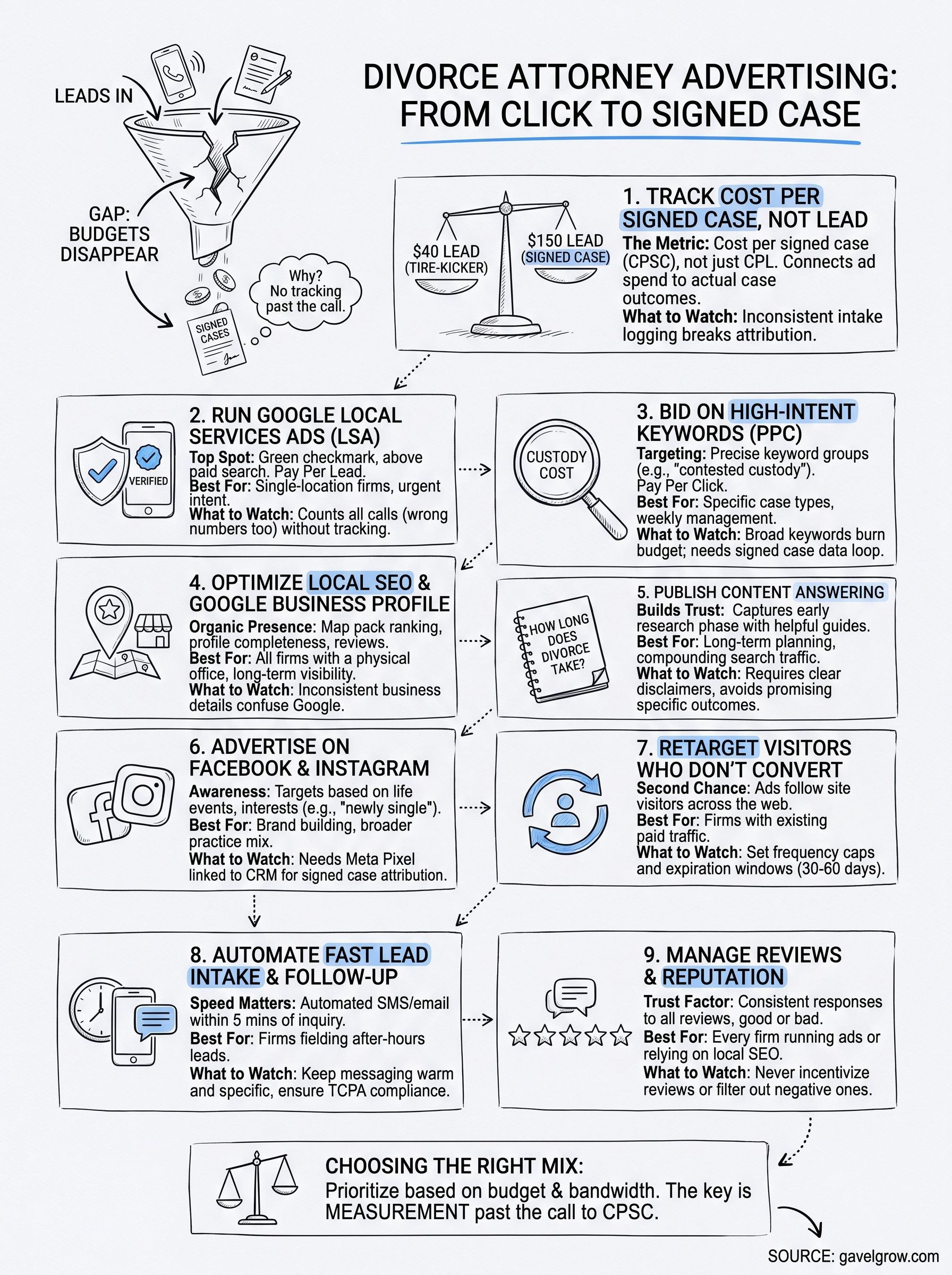
Choosing the right mix for your firm
No single tactic on this list replaces the other eight. A firm just starting out might run Local Services Ads and fast intake automation first, since both produce calls quickly and cost per lead is easy to measure from day one. A firm with an established caseload might lean harder into content and local SEO, letting organic visibility do the work that paid clicks used to. Budget and bandwidth, not trend-chasing, should decide the order you add channels.
What matters more than which strategy you pick first is whether you can measure it past the phone call. Cost per signed case is the number that tells you if a channel deserves more budget or less, and guessing at that number is how firms overspend on the wrong campaigns for years. If you want a clearer read on where your firm's numbers stand, book a free 45-minute divorce marketing strategy call and walk through it with someone who works exclusively in legal marketing.