Google Lawyer Reviews: What They Are and Why They Matter
Categories: Legal Marketing Strategies
 Abram Ninoyan
Founder & Senior Performance Marketer
Credentials: Google Partner, Google Ads Search Certified, Google Ads Display Certified, Google Ads Measurement Certified, Google Analytics (IQ) Certified, HubSpot Inbound Certified, HubSpot Social Media Marketing Certified, Conversion Optimization Certified
Expertise: Google Ads, Meta Ads, Conversion Rate Optimization, GA4 & Google Tag Manager, Lead Generation, Marketing Funnel Optimization, PPC Management
LinkedIn Profile
A potential client searching for a personal injury or family law attorney almost always checks Google lawyer reviews before picking up the phone. These star ratings and written comments sit right insi...
Key Takeaways
- Google Lawyer Reviews: What They Are and Why They Matter
- Why do Google reviews matter for hiring a lawyer?
- How to read and write helpful Google lawyer reviews
- How can law firms earn more Google reviews?
Google Lawyer Reviews: What They Are and Why They Matter
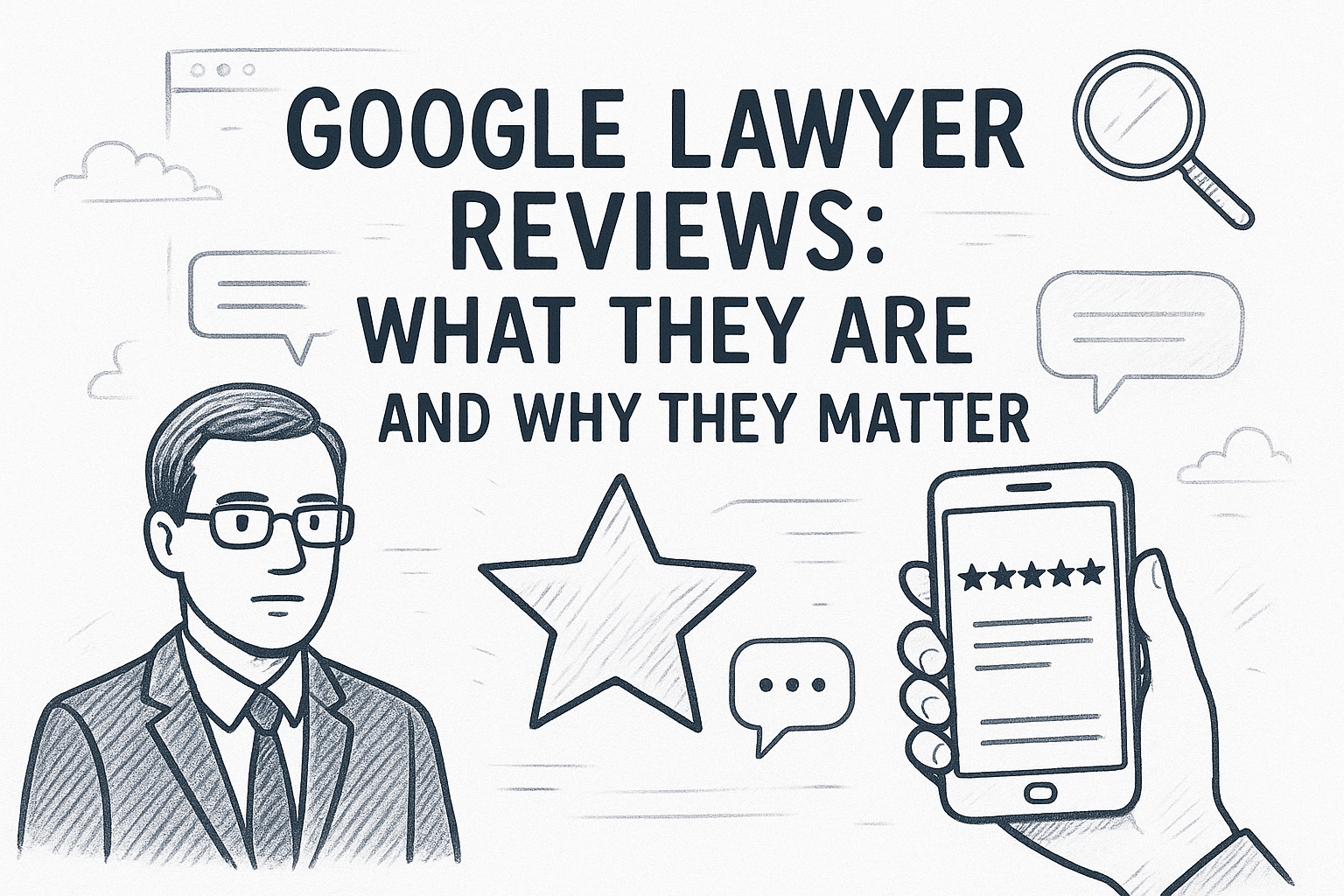
A potential client searching for a personal injury or family law attorney almost always checks Google lawyer reviews before picking up the phone. These star ratings and written comments sit right inside the search results and the Google Business Profile, and they carry more weight than a firm's own website copy. If you're a law firm owner trying to understand why a competitor with fewer years in practice keeps outranking you, the answer usually traces back to review volume and recency.
Google lawyer reviews are public ratings and comments left by former clients on your firm's Google Business Profile listing, and they directly influence both local search rankings and whether someone calls you instead of the next name on the list. This article explains where these reviews live, how Google verifies and displays them, and what separates a review that helps your firm from one that violates state bar advertising rules.
You'll also see how reputation management for attorneys connects to lead conversion, since a firm with a 4.9-star profile and consistent recent feedback converts differently than one sitting at 3.2 stars with reviews from 2019.
Why do Google reviews matter for hiring a lawyer?
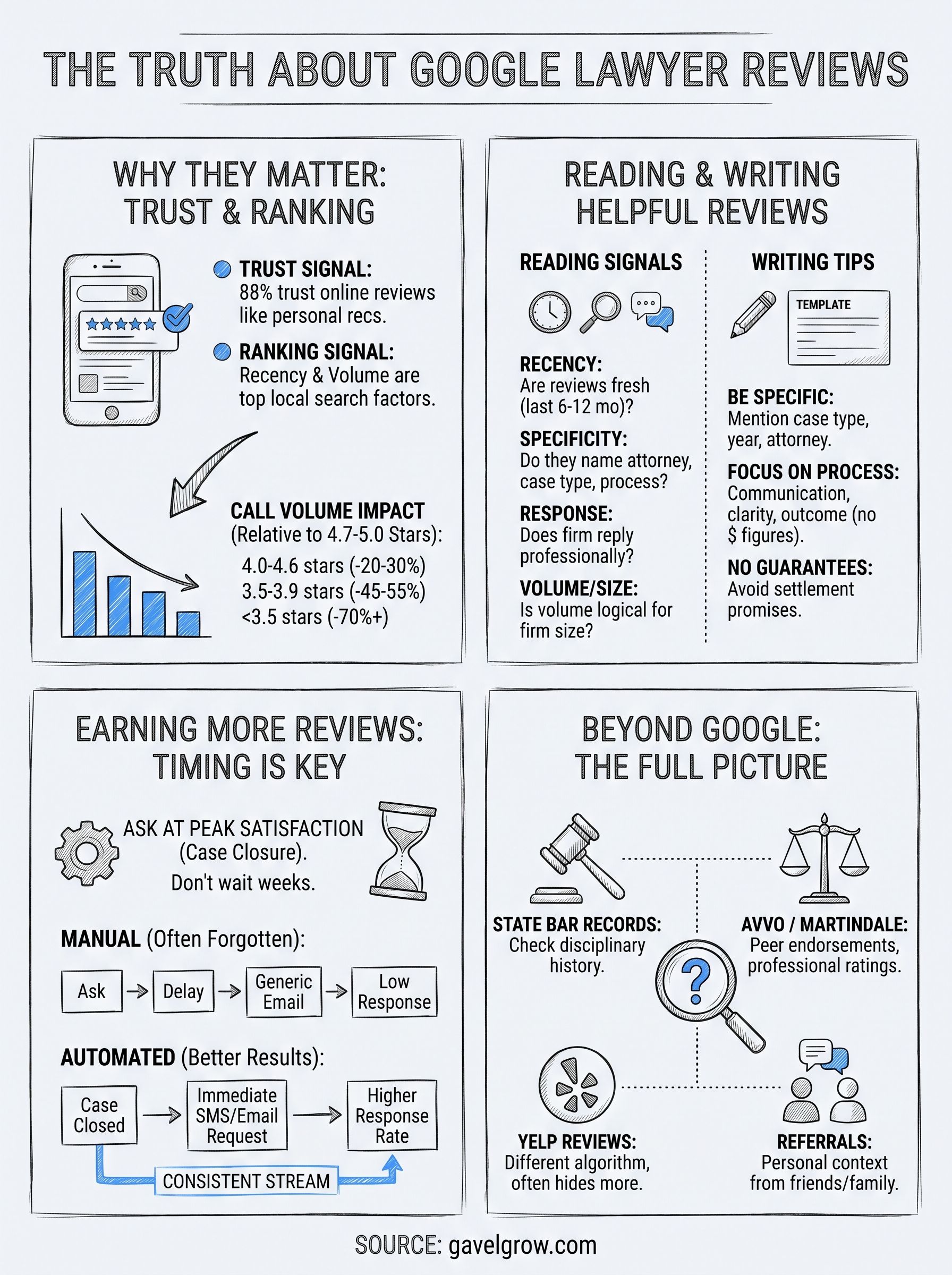
Someone facing a DUI charge or a serious injury claim doesn't have months to interview five different attorneys. They search, they scan the star ratings, and they call the first firm that looks credible. A 2024 BrightLocal consumer survey found that 88% of people trust online reviews as much as a personal recommendation, and that trust runs even higher for legal services because the stakes (jail time, a settlement, custody of a child) feel personal and irreversible.
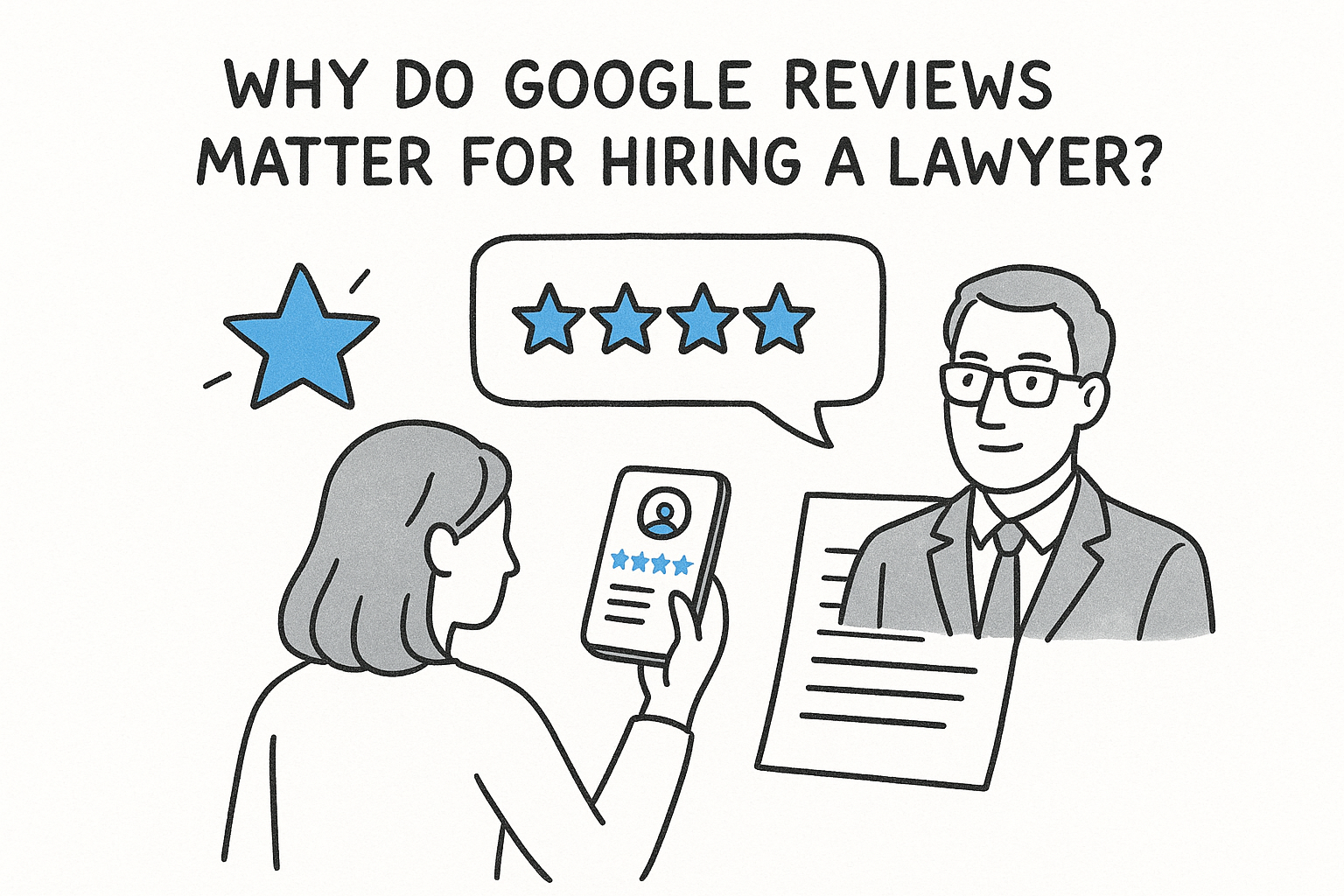
A firm's star rating is often the only "reference check" a prospective client ever runs before dialing the phone.
Google also treats reviews as a ranking signal, not just a trust signal. Google's own guidance says more reviews and positive ratings can help a business's local ranking, and that ranking decides local pack placement. That means a competitor with 140 recent reviews at 4.8 stars will typically outrank a firm sitting on 12 reviews from three years ago, even if the older firm has more experience. Recency matters as much as volume, since Google's algorithm weighs fresh activity as a sign the business is still operating and still serving clients well.
A weak rating costs a firm calls it never sees.
Firms rarely see this drop-off in their analytics because a low rating suppresses calls before they ever hit a landing page. Nobody clicks through to a website to "give the firm a chance" when three competitors above it in the results all show 4.8 stars and dozens of recent comments.
Legal advertising also operates under stricter scrutiny than most industries, since bar associations classify attorney marketing as consumer protection territory. State bar rules vary on testimonials and case results, so a glowing review that mentions a specific settlement figure can create compliance exposure even though the client wrote it voluntarily. That's one more reason firms need to actively monitor their profile rather than treat reviews as a set-it-and-forget-it asset. GavelGrow's platform ships with state-bar compliance defaults precisely because review management and intake compliance are two sides of the same reputation problem.
How to read and write helpful Google lawyer reviews
Reading a stack of five-star reviews tells you almost nothing if every comment says "great lawyer, highly recommend" with no context. Specific details are what separate a useful review from filler: did the attorney return calls within a day, explain the settlement process in plain language, or show up prepared to a hearing? Look for reviews that mention the practice area you need, since a family law client's experience says little about how that same firm handles a criminal defense case.
What to look for when reading reviews
Before trusting a profile, scan for these signals:
- Recency, are most reviews from the last 6-12 months, or clustered around a single old promotion?
- Specificity, do reviewers name the attorney, describe the case type, or mention communication style?
- Response pattern, does the firm reply to both positive and negative feedback professionally?
- Volume relative to size, a 20-attorney firm with 15 total reviews should raise questions.
A review with zero detail is worth less than one negative review with a thoughtful firm response.
How to write a review that actually helps others
Writing one yourself is just as important if a firm helped you, since detailed client feedback is what future readers rely on. Skip vague praise and include what actually happened:
I hired [Firm Name] for my [case type] in [year].
[Attorney name] explained my options clearly, responded to
calls within a few hours, and got a result of [outcome,
without specific dollar figures if unsure about bar rules].
I'd recommend them to anyone dealing with a similar situation.
Skip settlement dollar amounts or guarantees of outcome, since many state bars restrict how firms can use those figures even in third-party reviews.
How can law firms earn more Google reviews?
Most firms lose potential reviews not because clients are unhappy, but because nobody asks at the moment satisfaction peaks. A client who just received a favorable settlement or a resolved custody arrangement is far more likely to leave detailed feedback than one contacted six weeks later during a generic "how did we do" email blast. Timing the request to a specific milestone, like case closure or a signed retainer, produces noticeably higher response rates than a scattershot approach.
Firms that ask for reviews at the moment a case closes get more responses than firms that ask once a quarter.
When to ask for a review
Build the request into your existing workflow instead of treating it as a separate task:
- Case closure: send your Google review link within 24-48 hours while the outcome is still fresh
- Positive check-in call: if a client expresses satisfaction mid-case, ask then
- Referral moment: when a client refers a friend, that's a signal they're ready to advocate publicly too
Automating the ask without violating TCPA rules
Manually remembering to text or email every closed case doesn't scale past a handful of attorneys. GavelGrow's intake automation can trigger a review request through the same SMS and email sequences already used for client communication, with CTIA opt-out handling built in so a firm isn't manually tracking TCPA consent for every outreach. Combined with the unified inbox, staff can see which clients already responded and avoid sending duplicate requests that annoy people instead of converting them. Firms using this kind of triggered outreach typically see a steadier stream of new reviews month over month, rather than a burst tied to one staff member's memory.
Where else can you research an attorney's reputation?
Google isn't the only stop, and treating it as one leaves gaps a smart client fills elsewhere. State bar disciplinary records exist precisely for the complaints that never make it into a public review, since a client won't post "my lawyer got suspended" on Google but will find that fact through a five-minute search on the state bar's attorney lookup tool. Every state bar maintains a free public database, and checking it takes less effort than reading ten reviews.
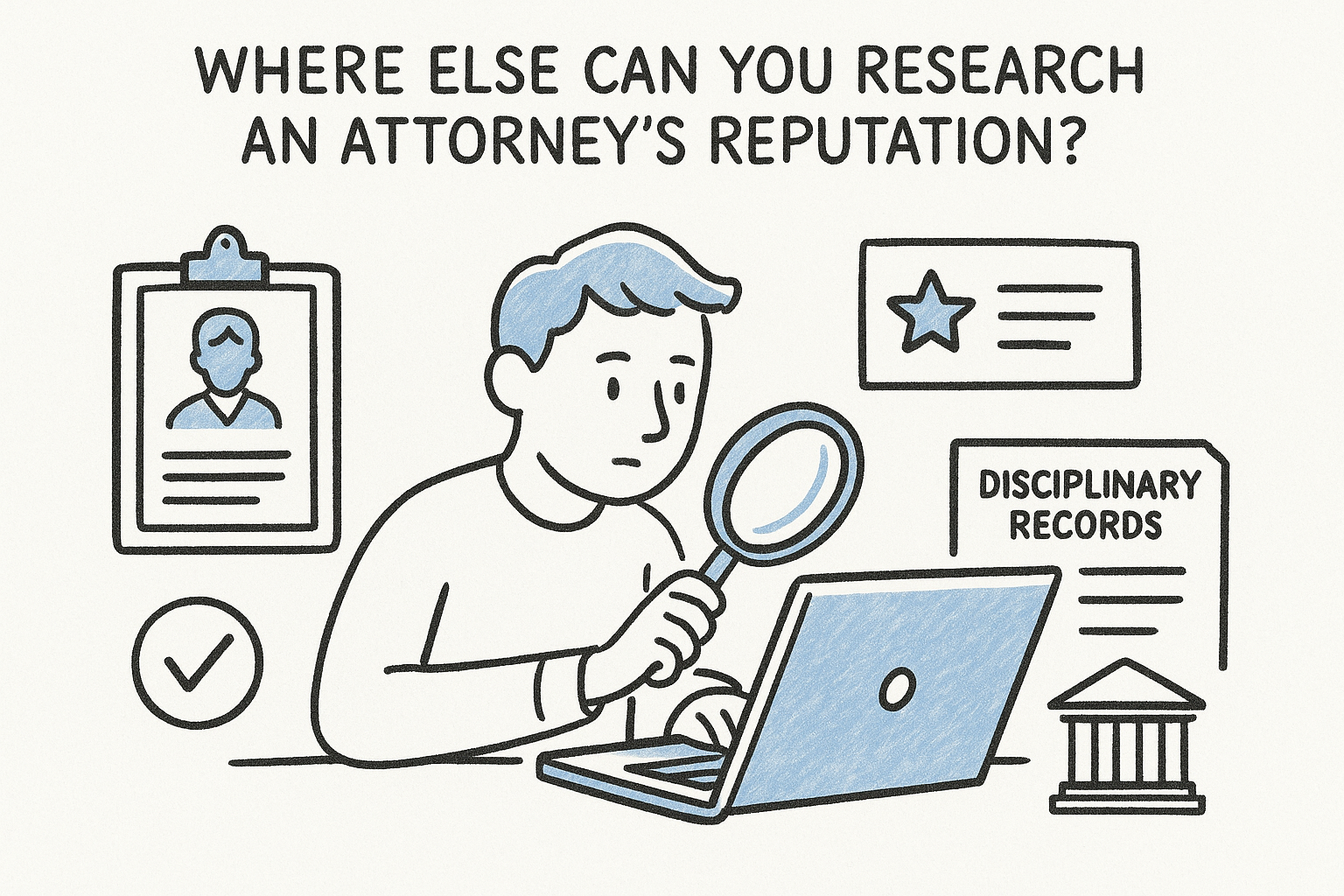
Avvo lawyer ratings and Martindale-Hubbell round out the picture with peer endorsements and disciplinary history in one place, often surfacing information a Google profile never shows. Yelp business reviews skew differently than Google's, partly because Yelp's filtering algorithm hides a larger share of submitted reviews, so a firm with glowing Google feedback might show a thinner or more mixed Yelp presence for reasons that have nothing to do with service quality.
No single platform tells the whole story, so cross-checking two or three sources catches what one alone would miss.
Better Business Bureau reviews and complaints and court record searches matter most for firms handling business litigation or consumer protection cases, where a pattern of unresolved complaints signals more than a single bad review ever could. Referrals from friends, family, or another attorney in a different practice area still carry weight that no star rating replicates, since a referral comes with context a stranger's review can't provide.
Secondary platforms also affect firms on the marketing side, not just the research side. GavelGrow's modelled practice-area benchmarks give managing partners a reference point for conversion rates, which helps show whether a reputation gap is a Google problem specifically or a broader visibility issue across every platform a prospective client checks.
Frequently asked questions about Google lawyer reviews
Can a law firm remove a negative Google review?
Only if the review violates Google's content policies, like fake reviews, spam, or content unrelated to the actual service. Google's official review policies explain the flagging process, and legitimate negative feedback about a real client experience almost never qualifies for removal. Requesting removal without cause wastes staff time, and disputing a fair critique publicly usually damages a firm's reputation more than the original review did. A better move is handling negative feedback ethically and addressing the concern directly under the review itself.
How many Google reviews does a law firm need to look credible?
There's no official threshold, but a few dozen recent reviews averaging 4.5 stars or higher tends to read as credible to prospective clients. Review volume matters less in isolation than volume relative to firm size, since a solo attorney with 30 reviews looks stronger than a ten-attorney firm with the same number spread thin.
Do fake Google reviews get penalized?
Yes. Google actively removes reviews it identifies as fake, incentivized, or posted by non-customers, and repeat violations can trigger profile suspension. Buying reviews or offering discounts for five-star feedback breaches Google's guidelines and most state bar advertising rules simultaneously, creating dual compliance risk for firms tempted by shortcuts.
Should attorneys respond to every Google review?
Generally yes, since a response shows prospective clients the firm is actively managed. Positive reviews deserve a brief thank-you, while negative ones need a measured, non-defensive reply that avoids confirming any confidential client details under bar confidentiality rules.
Making reviews work for you
Google lawyer reviews decide who gets the call before a prospective client ever visits your website. A profile stuck at 3.5 stars with old feedback loses cases to a competitor with fewer years in practice but a steadier stream of recent, detailed reviews. Treating review generation as a manual afterthought guarantees that outcome, since satisfied clients rarely leave feedback unless you ask at the right moment.
Building review requests into your existing intake and case-closure workflow, rather than bolting them on separately, is what separates firms with 150 recent reviews from firms stuck at 20. That same discipline around timing and automation applies to lead response, intake compliance, and reputation monitoring across your entire marketing funnel.
If you want to see how your firm's reviews and conversion rate compare, grab a free 45-minute strategy session and get a clear read on what's actually holding your rankings back.
Frequently Asked Questions
Can a law firm remove a negative Google review?
Only if the review violates Google's content policies, like fake reviews, spam, or content unrelated to the actual service. Google's official review policies explain the flagging process, and legitimate negative feedback about a real client experience almost never qualifies for removal. Requesting removal without cause wastes staff time, and disputing a fair critique publicly usually damages a firm's reputation more than the original review did. A better move is handling negative feedback ethically and addressing the concern directly under the review itself.
How many Google reviews does a law firm need to look credible?
There's no official threshold, but a few dozen recent reviews averaging 4.5 stars or higher tends to read as credible to prospective clients. Review volume matters less in isolation than volume relative to firm size, since a solo attorney with 30 reviews looks stronger than a ten-attorney firm with the same number spread thin.
Do fake Google reviews get penalized?
Yes. Google actively removes reviews it identifies as fake, incentivized, or posted by non-customers, and repeat violations can trigger profile suspension. Buying reviews or offering discounts for five-star feedback breaches Google's guidelines and most state bar advertising rules simultaneously, creating dual compliance risk for firms tempted by shortcuts.
Should attorneys respond to every Google review?
Generally yes, since a response shows prospective clients the firm is actively managed. Positive reviews deserve a brief thank-you, while negative ones need a measured, non-defensive reply that avoids confirming any confidential client details under bar confidentiality rules.