8 Social Media Engagement Strategies That Actually Work
Categories: Legal Marketing Strategies
 Abram Ninoyan
Founder & Senior Performance Marketer
Credentials: Google Partner, Google Ads Search Certified, Google Ads Display Certified, Google Ads Measurement Certified, Google Analytics (IQ) Certified, HubSpot Inbound Certified, HubSpot Social Media Marketing Certified, Conversion Optimization Certified
Expertise: Google Ads, Meta Ads, Conversion Rate Optimization, GA4 & Google Tag Manager, Lead Generation, Marketing Funnel Optimization, PPC Management
LinkedIn Profile
Most law firms post on social media and hear crickets. A few likes from staff, maybe a share from a spouse, and zero new consultations to show for the effort. The problem isn't the platforms, it's tha...
Key Takeaways
- 8 Social Media Engagement Strategies That Actually Work
- 1. Tie Engagement to Signed Cases with GavelGrow
- 2. Respond in Minutes with a Comment and DM SLA
- 3. Publish a Weekly FAQ Series for Your Practice Area
8 Social Media Engagement Strategies That Actually Work
Most law firms post on social media and hear crickets. A few likes from staff, maybe a share from a spouse, and zero new consultations to show for the effort. The problem isn't the platforms, it's that firms treat social media like a billboard instead of a conversation. Effective social media engagement strategies turn passive scrollers into people who actually pick up the phone and call your firm.
Sprout Social's 2025 Index found that 76% of consumers notice and appreciate when companies prioritize social engagement over volume of posts. For law firms, that distinction matters even more. A prospective client choosing a divorce attorney or personal injury lawyer is making a high-stakes, emotional decision, and your social presence is often their first impression of whether you're approachable and competent.
At GavelGrow, we help over 500 U.S. law firms turn marketing activity into signed retainers, and social engagement is a real part of that pipeline. Below are eight strategies that actually move the needle, pulled from what we've seen work across personal injury, family law, criminal defense, and beyond, not generic advice recycled from a B2B marketing blog. Each one is something your firm can implement this week.
1. Tie Engagement to Signed Cases with GavelGrow
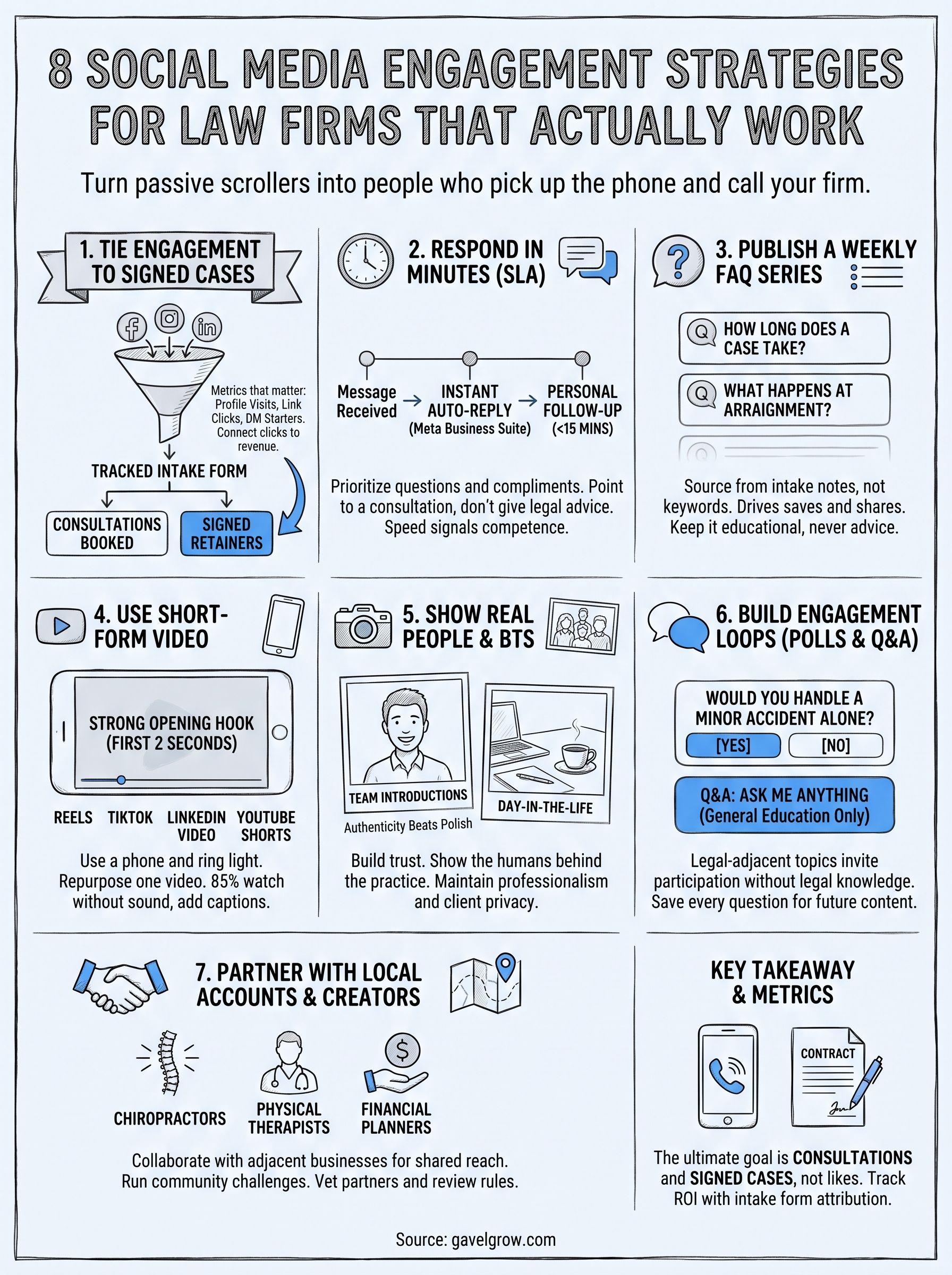
Most social media dashboards show you likes, reach, and follower counts, none of which pay for your paralegal's salary. The only metric that matters for a law firm is whether social activity converts into consultations and signed retainers. Every other number is context, not proof.
What to track beyond likes and comments
Start measuring profile visits, link clicks, and DM conversation starters as your primary social KPIs instead of passive reactions. These signals indicate someone moved from passive scrolling to active interest in your firm. Track them weekly alongside your intake numbers so you can spot patterns, such as a TikTok video that drove 40 profile visits and three inquiry DMs in 48 hours.
Vanity metrics feel good; signed-case attribution is the only number that tells you whether your social media engagement strategies are working.
A simple spreadsheet tracking post type, platform, date, clicks to intake form, consultations booked, and cases signed gives you more useful data in 30 days than a year of watching follower counts climb.
How to connect social clicks to intake and consults
Your intake form is the bridge between a social post and a signed client. Each platform post should link directly to a tracked intake form, not a generic contact page, so you know exactly which post or campaign generated the lead. GavelGrow's intake forms include per-campaign attribution that fires a GA4 generate_lead event and a Meta Pixel Lead event the moment someone submits, so you see which social post sourced which consultation request inside your ad accounts and marketing dashboard.
How to report engagement that actually produces retainers
Build a monthly one-page report with four columns: platform, content type, consultations sourced, and cases signed. Share it with your managing partner or marketing director so decisions about where to spend time are grounded in revenue, not reach. GavelGrow's marketing dashboard pulls campaign-level cost-per-signed-case data, meaning you can compare a Facebook video series directly against paid search spend on an equal footing. When your reporting ties social effort to actual retainer value, it becomes far easier to justify doubling down on what works and cutting what doesn't.
2. Respond in Minutes with a Comment and DM SLA
Speed is one of the most underrated social media engagement strategies available to law firms. Research from Meta shows that 53% of people who message a business expect a reply within the hour. For a prospective client deciding between two firms, [your response time](https://gavelgrow.com/blog/social-media-for-law-firms) sends a direct signal about how you'll treat them once they hire you.
What to reply to and what to ignore
Not every comment deserves a response. Prioritize questions, compliments, and any message that hints at a legal situation someone is navigating. Ignore obvious spam and bot activity. A useful rule: if a real person typed it with a specific question or emotion behind it, respond to it.
How to write helpful replies without giving legal advice
Your replies should point people toward a consultation rather than answer their legal question directly. A response like "That situation sounds complicated, and the details matter, so our team would be glad to review it with you during a free consultation" is both warm and safe. Never post anything that could be read as legal advice in a public comment thread.
One short, genuine reply pointing someone toward a consultation can convert a stranger into a signed client faster than most paid campaigns.
How to use templates and automation without sounding canned
Build 5 to 8 response templates for your most common comment types, then rewrite the opening sentence to match the specific message before you send it. Meta Business Suite lets you set instant auto-replies for DMs, acknowledging receipt within 60 seconds while your team prepares a personal follow-up.
Metrics to track for response speed and outcomes
Track average first-response time and the percentage of DM conversations that lead to a booked consultation. Most platforms surface these natively in their analytics dashboards. Set a firm-wide SLA of 15 minutes during business hours and review it against consultation volume every month.
3. Publish a Weekly FAQ Series for Your Practice Area
A weekly FAQ series is one of the most sustainable social media engagement strategies available to law firms because it answers questions your prospective clients are already asking. Instead of guessing what to post, you pull directly from the questions your intake team hears every week, turning real curiosity into visible authority on your practice area.
How to Choose Questions That Attract Comments and Saves
Start with your intake form submissions and consultation notes to find the five questions that surface most often in your practice area. Questions like "How long does a personal injury case take?" or "What happens at an arraignment?" attract saves because people want to reference them later, and saves signal algorithmic value across nearly every major platform.
The best FAQ topics come from your phone calls, not keyword research tools.
Post Formats That Work on LinkedIn, Instagram, and TikTok
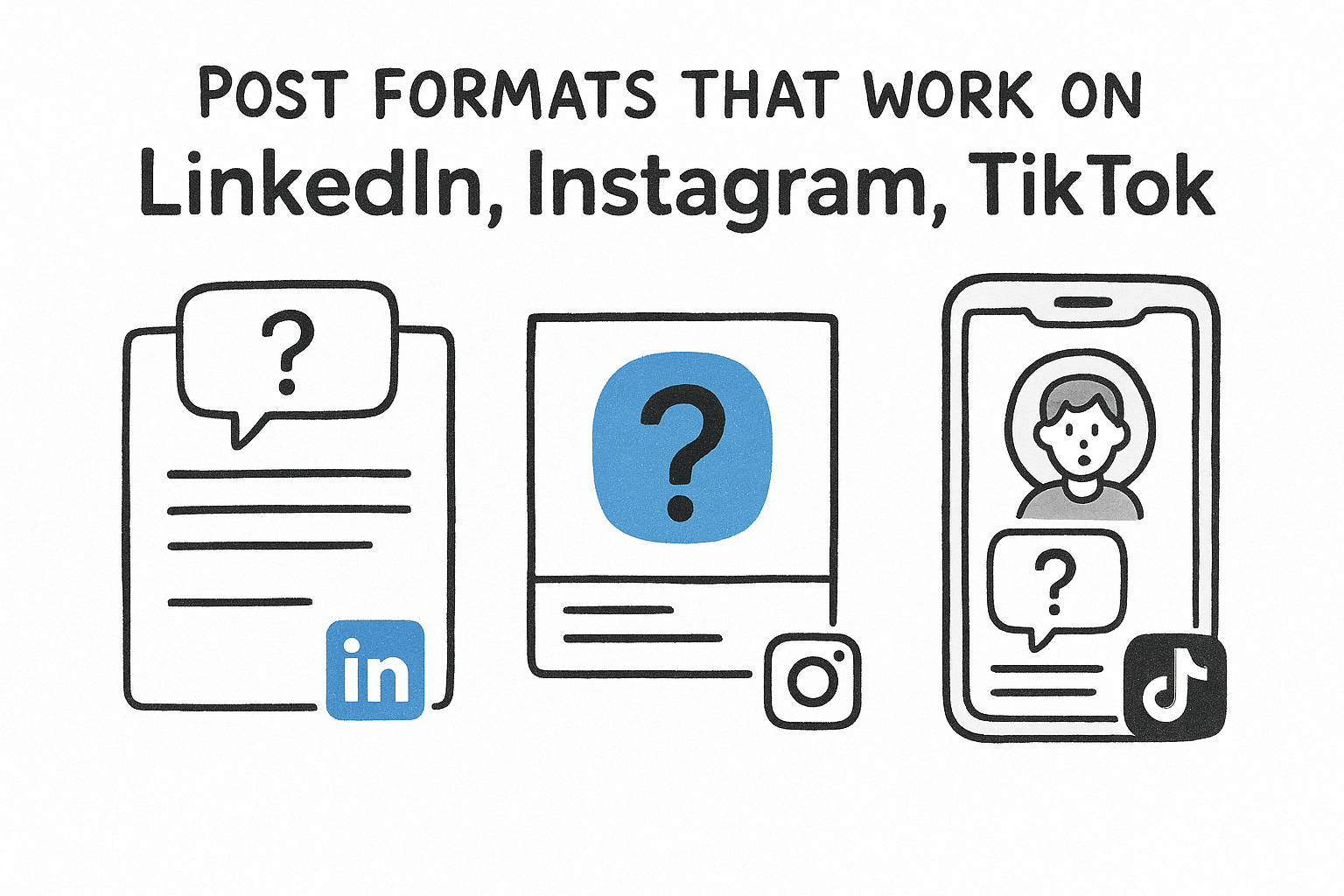
LinkedIn rewards text-based posts that open with the question as the first line, followed by a short three-to-five sentence answer. On Instagram, a bold question as a graphic cover paired with the answer in the caption drives both saves and shares. TikTok responds best to a talking-head video where you say the question aloud and answer it in under 60 seconds.
Compliance and Confidentiality Guardrails for Law Firms
Never base FAQ content on a specific client's situation, even anonymized. Keep every answer general and close each post with a clear disclaimer that your content is educational, not legal advice. Your state bar's advertising rules govern social posts, so review them before publishing.
How to Turn FAQs Into a Repeatable Content Calendar
Batch eight to ten questions per session once a month, then schedule one post per week. Assign a paralegal or marketing coordinator to source new questions from intake notes each quarter so your calendar stays full without pulling attorney time every week.
4. Use Short-Form Video with a Strong Opening Hook
Short-form video is one of the highest-leverage social media engagement strategies available to law firms right now. Meta's 2024 data shows that Reels generate 22% more interaction than any other post format on Instagram, and TikTok reports that videos under 60 seconds drive the highest completion rates across all industries.
Hook Formulas That Stop the Scroll in the First 2 Seconds
Your opening line determines whether someone watches or keeps scrolling. Lead with a surprising fact, a direct question, or a bold statement tied to a pain point your clients actually feel. For example, "Your insurance company is hoping you don't call a lawyer" works better than a formal introduction to your firm name.
The first two seconds of your video decide whether the algorithm promotes it or buries it.
A Simple Filming Workflow Attorneys Can Repeat Weekly
You do not need a production crew. A phone, a ring light, and a quiet conference room are enough to film a week's worth of content in 30 minutes. Film three to four short answers to common client questions back-to-back, then hand the raw footage to a paralegal or assistant for basic editing.
Captions, Subtitles, and On-Screen Text That Boost Retention
85% of social videos are watched without sound, according to Verizon Media research, which means subtitles are not optional. Add your key point as bold on-screen text in the first five seconds so silent scrollers immediately grasp your message.
How to Repurpose One Video Across Multiple Platforms
A single 60-second video can become a TikTok, an Instagram Reel, a LinkedIn video post, and a YouTube Short with minor formatting adjustments. Crop for each platform's aspect ratio and adjust your caption tone, professional on LinkedIn, conversational on TikTok.
5. Show Real People and Behind-the-Scenes Moments
One of the most underutilized social media engagement strategies for law firms is simply showing the humans behind the practice. Prospective clients choosing a lawyer are making a personal, high-stakes decision, and they want to see who they'll be trusting with their case before they ever call your office.
Team Introductions That Build Trust Fast
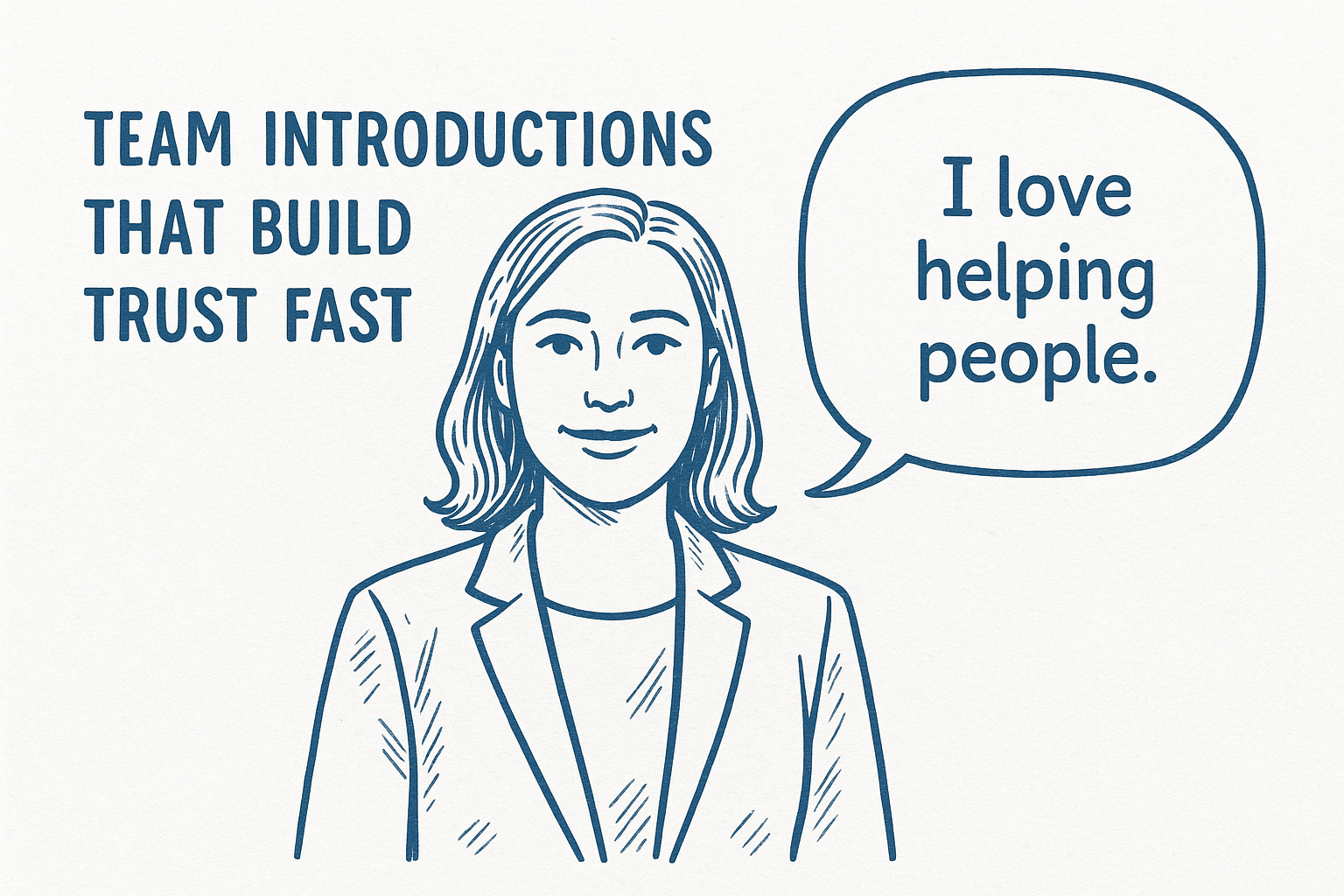
A short "meet our team" post featuring a real attorney or paralegal with a genuine quote about why they do this work consistently outperforms promotional content in saves and comments. Keep the format simple: a candid photo, two to three sentences about the person's background, and one line about what they love about their practice area. Authenticity beats polish every time on social media.
Day-in-the-Life Content Ideas That Stay Professional
Showing your firm's daily rhythm does not require filming depositions or client meetings. A morning coffee shot at your desk, a photo of a filled whiteboard before a strategy session, or a short clip of your team reviewing documents gives followers a genuine window into your firm's culture without crossing any professional or ethical lines. These posts humanize your practice in ways that awards graphics and case results never can.
Showing your team at work communicates competence and approachability more effectively than any promotional graphic will.
How to Handle Sensitive Practice Areas and Client Privacy
Never film or photograph anything that could identify a client, even accidentally. If your practice area involves criminal defense, immigration, or family law, keep all behind-the-scenes content focused on your team and your office, not on cases in progress.
Comment Prompts That Invite Stories and Questions
Close every behind-the-scenes post with a direct, open-ended question tied to what you just showed. "What is one thing you wish you had known before hiring an attorney?" gives your audience a low-barrier reason to reply, which signals strong engagement to the algorithm and starts real conversations with prospective clients.
6. Build Engagement Loops with Polls and Q&A
Polls and Q&A features are among the most underrated social media engagement strategies for law firms because they shift your audience from passive viewers into active participants. A single well-crafted poll can generate dozens of replies and signal to the algorithm that your content deserves broader distribution.
Poll Prompts That Fit Legal Audiences
Legal-adjacent polls perform far better than generic ones because they speak directly to the situations your prospective clients are already living through. Ask questions like "Would you handle a minor car accident without a lawyer?" or "What's the biggest concern when choosing an attorney: cost, experience, or communication?" These prompts invite opinions without requiring legal knowledge, which lowers the barrier to participation significantly.
How to Run Q&A Boxes, Stories, and AMAs Safely
Instagram Stories Q&A boxes and LinkedIn "Ask me anything" posts work well for attorneys as long as you frame every answer as general education, not advice tied to a specific situation. Open your session with a clear statement that your responses are informational only, and direct anyone with a specific legal situation toward a free consultation booking link in your bio.
One well-run AMA session can generate enough material for three weeks of follow-up FAQ posts.
How to Follow Up so One Interaction Becomes a Content Series
Save every question submitted during a poll or Q&A and route the most common ones directly into your FAQ content calendar from Strategy 3. A single AMA session typically yields eight to twelve distinct questions your audience genuinely wants answered.
How to Measure Lift in Profile Visits and Inquiries
Track profile visits and bio link clicks in the 48 hours following each poll or Q&A session. Compare those numbers against your baseline weekly average to identify which prompt formats drive the most intake-form traffic.
7. Partner with Local Accounts and Niche Creators
Collaborating with local businesses and creators is one of the fastest social media engagement strategies for reaching people who already live in your market. When you tap into an existing audience that trusts a local account, you borrow that trust and introduce your firm to prospective clients who would never have found you through search alone.
Strategy 7: Collaborate with Adjacent Local Businesses
Local chiropractors, physical therapists, and financial planners share overlapping audiences with personal injury and family law firms without competing with you directly. A co-created post, a joint Instagram Live, or a shared resource guide gives both audiences genuine value and expands your reach to hundreds of local followers at zero ad spend.
One well-matched local partnership can deliver more qualified profile visits than a week of solo posting.
Strategy 8: Run a Monthly Community Challenge or Prompt
Ask followers to share a relevant story or answer a community question, then tag a local partner account in your post to amplify the conversation. A prompt like "Share one thing you learned after a car accident" generates personal stories, keeps your comments active, and signals strong engagement signals to the algorithm across both accounts.
How to Vet Partners and Avoid Ethics and Advertising Issues
Your state bar's advertising rules apply to co-branded content, so review any joint post before it goes live. Avoid implying a formal referral relationship unless your bar permits it, and never share client information with a partner under any circumstances.
How to Track Partner-Driven Leads and Consultations
Create a unique intake form link for each partner campaign so you can see exactly how many consultations each collaboration produces. GavelGrow's intake forms fire per-campaign attribution events automatically, giving you a clean comparison between partner-driven inquiries and your standard organic traffic.
Frequently Asked Questions
These six questions reflect what law firm owners and marketing directors ask most often when building their first real social media engagement strategy.
What is a good engagement rate for a law firm on social media?
A 1% to 3% engagement rate is realistic for most law firms on LinkedIn and Instagram. Top-performing personal injury and family law firms using consistent FAQ and video content often exceed 4%, according to Rival IQ's 2024 Social Media Industry Benchmark Report.
How often should a law firm post to increase engagement?
Three to five times per week on your primary platform outperforms daily posting in most legal verticals. Consistency matters more than volume.
How do you increase engagement without using giveaways?
FAQ series, short-form video, and genuine team content consistently outperform giveaways for law firms because they attract prospective clients rather than prize hunters.
How do you handle negative comments without violating ethics rules?
Respond briefly, move the conversation to a private channel, and never discuss case details publicly.
How do you measure social media ROI beyond leads and followers?
Track consultations booked and retainers signed per platform using campaign-specific intake form links. GavelGrow's marketing platform connects social clicks directly to signed cases so you see real revenue attribution.
Frequently Asked Questions
How to Choose Questions That Attract Comments and Saves
Start with your intake form submissions and consultation notes to find the five questions that surface most often in your practice area. Questions like "How long does a personal injury case take?" or "What happens at an arraignment?" attract saves because people want to reference them later, and saves signal algorithmic value across nearly every major platform. The best FAQ topics come from your phone calls, not keyword research tools.
Post Formats That Work on LinkedIn, Instagram, and TikTok
LinkedIn rewards text-based posts that open with the question as the first line, followed by a short three-to-five sentence answer. On Instagram, a bold question as a graphic cover paired with the answer in the caption drives both saves and shares . TikTok responds best to a talking-head video where you say the question aloud and answer it in under 60 seconds.
Compliance and Confidentiality Guardrails for Law Firms
Never base FAQ content on a specific client's situation , even anonymized. Keep every answer general and close each post with a clear disclaimer that your content is educational, not legal advice. Your state bar's advertising rules govern social posts , so review them before publishing.
How to Turn FAQs Into a Repeatable Content Calendar
Batch eight to ten questions per session once a month, then schedule one post per week. Assign a paralegal or marketing coordinator to source new questions from intake notes each quarter so your calendar stays full without pulling attorney time every week.