Existing Client Marketing for Law Firms: A 6-Step System
Categories: Legal Marketing Strategies
 Abram Ninoyan
Founder & Senior Performance Marketer
Credentials: Google Partner, Google Ads Search Certified, Google Ads Display Certified, Google Ads Measurement Certified, Google Analytics (IQ) Certified, HubSpot Inbound Certified, HubSpot Social Media Marketing Certified, Conversion Optimization Certified
Expertise: Google Ads, Meta Ads, Conversion Rate Optimization, GA4 & Google Tag Manager, Lead Generation, Marketing Funnel Optimization, PPC Management
LinkedIn Profile
Most law firms spend heavily to win new clients, then never talk to them again once the case closes. That's a mistake. Law firm existing client marketing costs a fraction of what you spend on Google A...
Key Takeaways
- Why existing client marketing matters for law firms
- Step 1. Segment your client list by case type
- Step 2. Build a simple communication cadence
- Step 3. Automate case-milestone check-ins
Most law firms spend heavily to win new clients, then never talk to them again once the case closes. That's a mistake. Law firm existing client marketing costs a fraction of what you spend on Google Ads or Local Services Ads, yet it's the piece most firms skip entirely, leaving repeat business and referrals on the table year after year.
Marketing to past clients means staying visible after the retainer ends: automated check-ins, review requests, referral asks, and content that reminds former clients you handle more than the one matter you closed for them. The goal isn't a hard sell. It's staying top of mind so that when they need another attorney, or someone asks them for a recommendation, your firm is the name they remember. Done right, this becomes a steady referral pipeline that lowers your overall cost per signed case.
This guide walks through the specific tactics: segmenting past clients by practice area, building automated follow-up sequences, structuring referral programs that comply with state bar rules, and using intake data you already have sitting in your case management system to run these campaigns without adding headcount.
Why existing client marketing matters for law firms
Most firms close a file and move on. The case settles, the retainer ends, and the client disappears into a folder nobody opens again. That's backwards. The people who already hired you, paid you, and got a result are usually the cheapest source of new business you have, and law firm existing client marketing is how you actually capture it instead of leaving it to chance. Every dollar you don't spend re-acquiring someone you've already served comes straight off what each signed case costs your firm.
The real cost difference between new and existing clients
Winning a client through Google Ads or Local Services Ads means paying for the click, staffing the intake call, and running a follow-up sequence before you ever get a signature. A former client or a referral skips most of that. They already trust your judgment, they know how you work, and they usually sign faster once you reach out. That gap shows up clearly when you compare the two paths:
- Cold ad click: unknown trust level, full nurture sequence required, higher drop-off before signing
- Referred client: arrives pre-sold on your firm, shorter intake-to-signature window, lower acquisition costs (one of the most reliable ways to bring down what a new client costs you)
- Repeat client: already knows your process, skips the education phase entirely, usually signs faster than a cold lead
None of this requires new ad spend. It requires a system that reaches out to people you've already represented.
Why firms let this revenue slip
Here's the pattern across practice areas: once a case closes, ownership of that relationship disappears. Nobody on staff is assigned to check in six months later. At most firms, nothing in the case management system flags a former client for a review request or a referral ask. The file gets archived, and the only time anyone thinks about that client again is if they call back on their own.
Family law firms and estate planning firms feel this the hardest, because clients in those practice areas often need a second matter years later, a will update, a custody modification, a new trust. Personal injury firms lose a different kind of value: the client who never needs you again personally but knows three people who will. Without automated follow-up, both opportunities pass by unnoticed.
What consistent outreach actually delivers
Firms that build a real system around past clients tend to see three things happen: former clients come back when a new legal need arises, they refer friends and family without being asked twice, and your Google Business Profile builds a steadier stream of reviews because someone is actually asking at the right moment. That last piece matters more than it sounds. A thin, stale review profile can cost you visibility in local search, since Google says review count and rating factor into local ranking.
A closed case isn't a dead file. It's a future referral waiting for a reason to call you again.
This is also where repeat business compounds. A client who returns for a second matter costs little to sign, and so does every referral they send. GavelGrow's marketing dashboard shows signed cases by source next to your cost per signed case, so you can see how many of your cases come from referrals, which carry no ad spend and typically cost far less to sign than cases from paid channels. The six steps below show you how to build that system deliberately instead of hoping it happens on its own.
Step 1. Segment your client list by case type
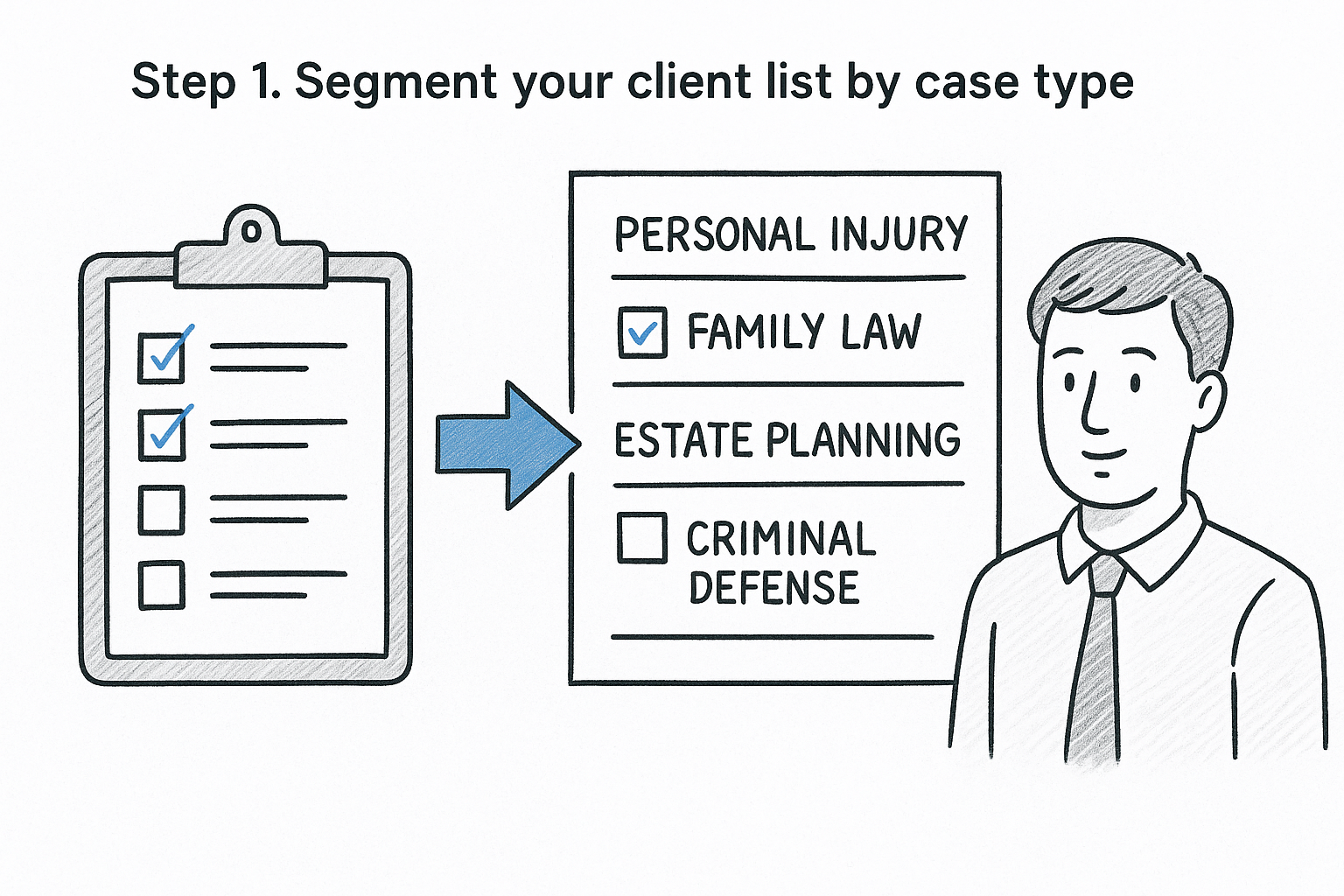
Segmenting starts with pulling every closed and active file out of your case management system and sorting it by practice area, not by date closed. A personal injury client who settled last year needs a different message than a family law client mid-custody-modification, and lumping them into one generic newsletter is why most past-client outreach gets ignored. If you're still running this off a spreadsheet, you're already behind; a client management system built for legal intake can tag this automatically as cases close.
Pull the data you already have
Most firms already store what they need: case type, outcome, close date, and referral source. Export it and build four or five buckets before you write a single message. Practice area alone isn't enough. A closed PI case with a lump-sum settlement behaves differently than one still in post-settlement liens, and treating them the same wastes the outreach.
Group by case type and likely next need
Use these categories as a starting point, then adjust for your practice mix:
- Personal injury, settled: referral-ready, unlikely to need you again personally
- Family law, closed: high chance of a future modification or a second matter
- Estate planning, completed: needs periodic plan reviews, not a hard sell
- Criminal defense, resolved: sensitive segment, keep messaging low-key and respectful
- Business or employment law, ongoing relationship: candidates for retainer or advisory work
A client list without segments is just a mailing list. Segmented by case type, it's a referral engine.
Match your message to the segment
Once you have buckets, write one message template per segment instead of one template for everyone. A family law client gets a check-in about custody timelines. An estate planning client gets a reminder that plans should be reviewed every few years. A PI client who's fully settled gets a referral ask, not a legal update they don't need. This single change, segmenting before you send anything, is the same principle behind nurturing contacts by practice area, and it separates firms that get replies from firms whose emails get deleted. If your current tools can't tag and filter by practice area automatically, that's the first gap to close before you build any cadence on top of it.
Step 2. Build a simple communication cadence
Once your segments exist, the next job is deciding when each one hears from you and how often. A cadence doesn't need to be complicated. Most firms overthink this step and end up building nothing, which is worse than a plain quarterly email. Pick a schedule you can actually sustain, because a communication cadence you abandon after two months does more damage than no cadence at all; clients notice when outreach starts and then stops.
Set a fixed touchpoint schedule
Start with a calendar, not a wish list. Assign a realistic frequency to each segment based on how often that client type actually needs to hear from you:
- Personal injury, settled: one check-in at 30 days, one at 6 months, then an annual holiday or milestone message
- Family law, closed: quarterly check-ins for the first year, then twice a year
- Estate planning, completed: an annual review reminder tied to a fixed month, not a random date
- Business and employment clients: monthly or bimonthly touchpoints if there's an ongoing advisory relationship
Fewer, well-timed messages beat a flood of firm newsletters nobody opens every single time.
Match channel to segment
Different segments respond to different channels, and guessing wrong wastes the whole effort. Family law and estate planning clients tend to open email because the message often needs a bit of context, which is where email marketing for law firms earns its keep. Personal injury and criminal defense clients often respond faster to a short text, especially for a quick review ask or a referral nudge. A client outreach strategy that sends everyone the same channel regardless of case type is leaving replies on the table. Before you text past clients, check what consent you hold: under the TCPA, promotional texts such as referral asks generally need the client's prior express written consent, so if your intake consent only covered case updates, get fresh written consent first.
Keep messages short and useful
Every message in the cadence should answer one question for the client: why am I hearing from this firm right now? A one-line update, a relevant reminder, or a direct ask works better than a long recap of their case. Skip anything that reads like a mass blast.
A cadence that respects the client's time gets opened. One that reads like spam gets deleted, unsubscribed, or reported.
Once the schedule and channel are locked in, the actual sending is the part worth automating, which is exactly what the next step covers.
Step 3. Automate case-milestone check-ins
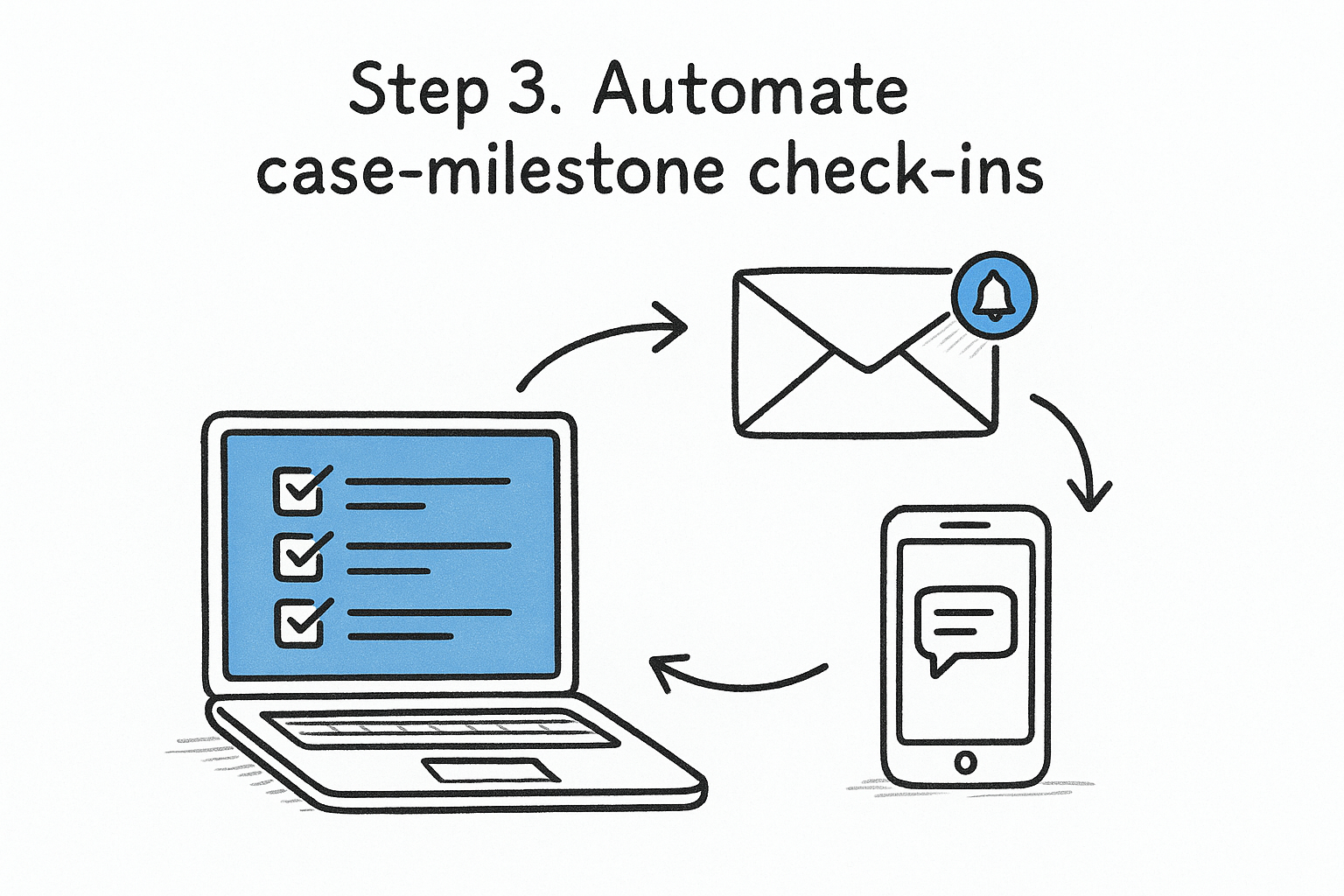
Manual check-ins fail because someone has to remember to send them, and once a firm gets busy, follow-up is the first thing that slips. Automated case-milestone check-ins solve this by tying each message to something that already happens in your case file, a status change, a settlement, a closed matter, so the outreach fires itself instead of relying on a paralegal's memory.
Trigger messages off case status, not the calendar
Date-based reminders drift out of sync with reality fast, because cases move at their own pace. Better to attach each message to a status change in your case management system so the sequence tracks the actual life of the file instead of a generic timeline. A settlement gets flagged the moment it's recorded, and the check-in fires within the hour instead of whenever someone remembers to check a spreadsheet. Two simple sequences show how it works:
Settled case: when the case status changes to "Settled," wait three days, then send a text: "Hi [Name], congrats on your settlement closing. We're glad we could help. If you ever need us again, or know someone who does, we're just a call away."
Completed estate plan: when the status changes to "Closed - Estate Plan Complete," send an email once a year: "Time for your annual estate plan review."
Sequence the milestones that matter
Not every status change needs a message. Pick the two or three that actually signal something worth acknowledging:
- Settlement recorded: thank-you message plus a soft referral mention
- Case closed: final wrap-up, thanks for trusting the firm
- Six-month mark: light check-in, no ask attached
- Annual anniversary: review reminder for estate plans, renewal reminder for business retainers
The best client outreach never feels manual, because it isn't. It's a drip sequence built once and triggered by the case itself.
Handling opt-outs correctly matters just as much as sending the message in the first place. Every automated text sequence needs STOP and HELP keywords built in, both for text message compliance and because nothing burns trust faster than a client who unsubscribed still getting texts. Once carriers approve your firm's texting registration, GavelGrow handles STOP and HELP replies automatically, so nobody on staff has to babysit the list.
Step 4. Ask for reviews the compliant way
A thin review profile can hold back your law firm's Google Business Profile in local results, but the fix isn't as simple as "ask more clients." Google's own review policies are specific about what firms can and can't do, and getting this wrong can get reviews removed or the profile flagged. The compliant approach is simple: ask every client, not just the ones you're confident will leave five stars, and never offer anything in exchange for a review.
Ask every client, not just the happy ones
Requesting reviews only from satisfied clients, or steering unhappy ones to a private feedback form before they can post publicly, both violate Google's review policies. The right move is to ask everyone at the same milestone, then handle complaints directly with the client instead of trying to keep them off the public record. If a client is unhappy, call them, fix what you can fix, and let the review process play out honestly. A firm with a mix of four- and five-star reviews that clearly responds to concerns reads as more trustworthy than one with a suspiciously perfect record.
Ask every client the same way, resolve complaints directly, and let the reviews speak for themselves.
Time the ask to the moment that fits
The best moment to ask depends on the segment you built in Step 1. A settled personal injury case gets the ask right after the settlement lands, when relief is highest. An estate planning client gets asked once the documents are signed and delivered, not months later. Keep the message short and use a direct Google review link so leaving a review is a one-click action:
Sample text: "Hi [Name], thank you for trusting us with your case. If you have a minute, a Google review helps other families find us: [review link]. No pressure either way, and thank you again for your business."
Respond to every review, good or bad
Every public review deserves a response, not just the glowing ones. A short, professional reply to a critical review shows future clients that your firm takes feedback seriously without arguing the case details publicly, and answering criticism ethically matters because confidentiality still applies: ABA Formal Opinion 496 says a negative review doesn't permit disclosing information about the representation, so keep replies general and invite the client to talk privately. Never promise a result or call your firm the "best" or "top" in a response, since ABA Model Rule 7.1 and the state rules based on it warn that unjustified expectations and unsubstantiated comparisons can be misleading. GavelGrow's review tools pre-draft replies for you to approve and post, so this doesn't fall on whoever happens to be free that week.
Step 5. Build a referral program clients will use
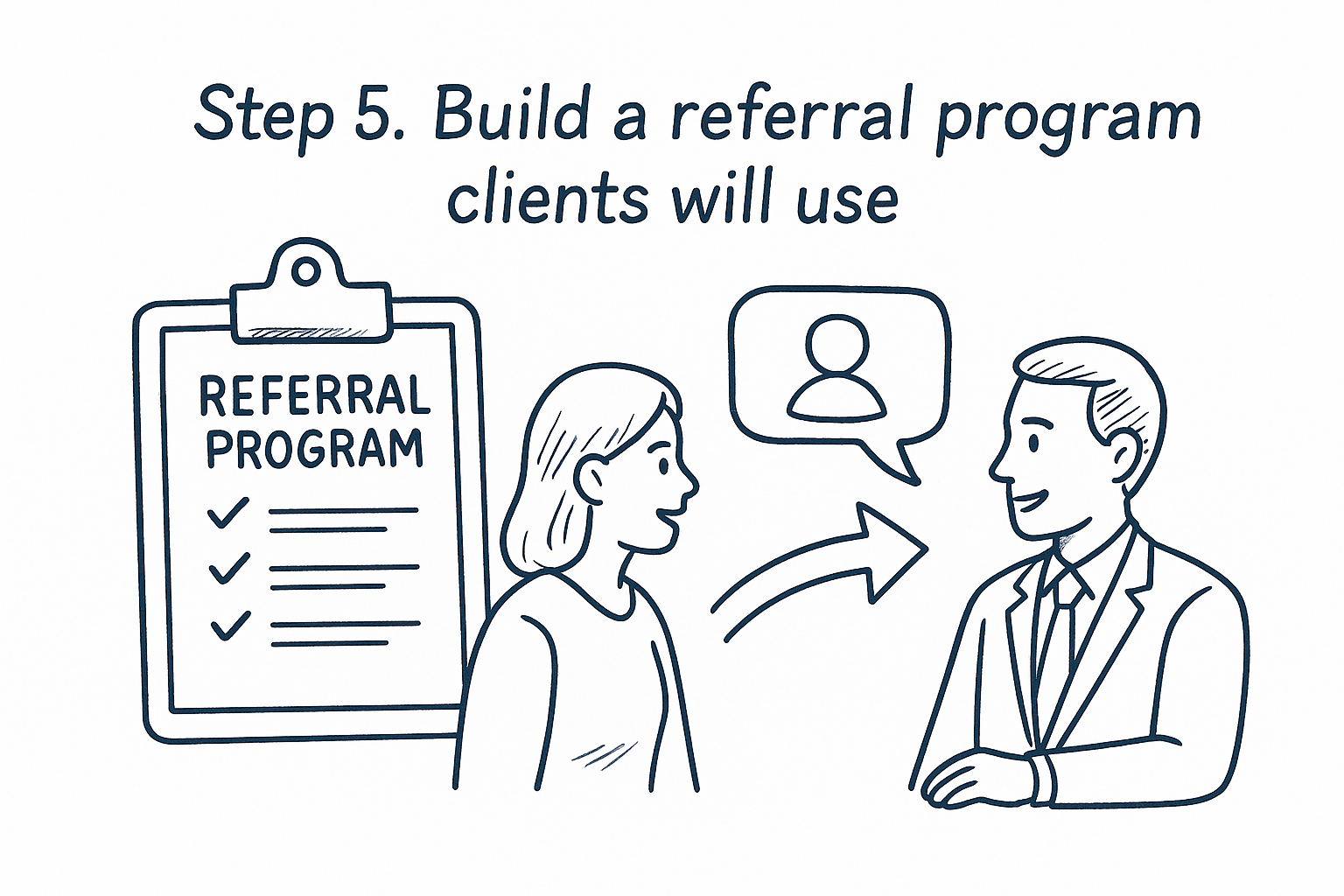
A referral only happens if the client knows you want one and knows exactly how to make it happen. Most firms never ask directly, assuming happy clients will refer on their own eventually. Some do, but a structured referral program turns an occasional word-of-mouth mention into a repeatable source of signed cases, and it costs almost nothing compared to a paid channel.
Keep the ask simple and low-pressure
Don't turn the referral ask into a sales pitch. A single line at the right moment works better than a formal request: "If you ever hear of someone who needs help with something like this, we'd be glad to talk to them." Timing this alongside the review request from Step 4 makes sense for segments like personal injury or estate planning, where relief or gratitude is highest right after the matter closes. Layering the referral ask onto a moment the client already feels good about beats sending it as a cold, separate message weeks later.
A referral program only works if clients know exactly what to do and exactly what happens next.
Keep referral thank-yous within bar rules
Most states follow some version of ABA Model Rule 7.2, which bars giving anything of value to a person for recommending a lawyer. The exception that matters here is Rule 7.2(b)(5): a nominal gift given as appreciation, neither intended nor reasonably expected to be compensation. In practice that means a token thank-you gesture, like a handwritten note or a small holiday-style gift, given after the fact. It can't be promised or advertised in advance, so never build a program around "refer a friend, get a reward." Rules vary by state, so confirm your state's version before you roll anything out.
Make referring easy with tools
A client who wants to refer someone shouldn't have to remember your phone number or dig through old emails to find it. Give them something to forward:
Sample message: "Know someone who could use legal help? Have them call us at [phone] or text us at [number], and ask them to mention your name so we know who sent them."
Embedding a simple, trackable link in that message, one that ties back to the referring client in your case management system, means you'll actually know which past clients are driving new business instead of guessing. That tracking piece feeds directly into the next step: measuring which segments and sources are actually paying off.
Step 6. Track repeat business and referral sources
None of the five steps above matter if you can't tell which ones actually produced a signed case. Tracking is the step most firms skip, because it means going back into the case file at intake and asking the one question that ties everything together: how did you hear about us? Without that answer logged consistently, referral tracking turns into guesswork, and guesswork is exactly what you're trying to replace with a real system.
Tag the source at intake, every time
Build a required field into your intake form, not an optional one, so every new lead gets tagged before the file moves forward and you can follow each case back to the source that produced it. Use a short, fixed list rather than a free-text box, since free text turns into a mess nobody can report on later:
- Referred by past client (name captured)
- Repeat client, new matter
- Google review or search
- Paid ad (Google Ads, Local Services, Meta)
- Walk-in or unknown
Compare what each source actually costs you
Once a few months of tagged data build up, put your lead sources side by side. The gap between paid and referred cases is usually the number that convinces a partner to keep investing in existing-client marketing.
If you can't name your cheapest source of signed cases, you're probably still paying full price for cases you could have gotten for free.
Review the numbers on a fixed schedule
Check these numbers quarterly, not once a year. A quarterly review catches a referral source drying up or a segment going quiet before it becomes a real revenue gap, and it gives you a reason to adjust the cadence from Step 2 if a channel stops responding. GavelGrow's marketing dashboard shows signed cases by source and cost per signed case by campaign automatically, so this review takes minutes instead of a manual pull from three disconnected spreadsheets.
Making existing-client marketing part of your routine
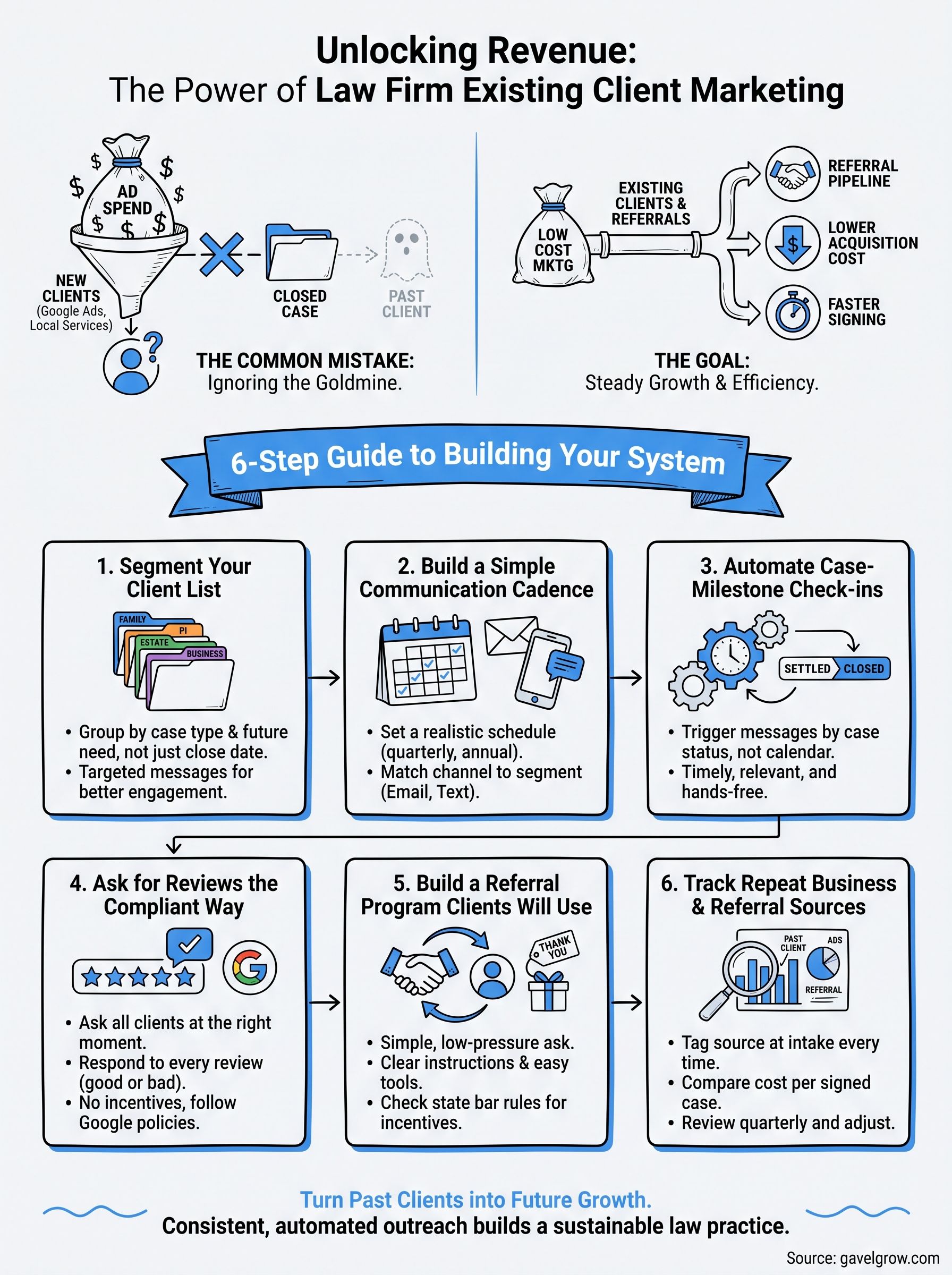
None of this works as a one-time project. Segmenting your list, setting a cadence, automating milestone check-ins, asking for reviews, running a referral program, and tracking the sources all need to run continuously, quarter after quarter, or the whole system quietly stalls the way it did before you built it. Existing-client marketing isn't a campaign you launch and forget; it's a habit you attach to how cases already move through your firm.
Start small if you have to. Pick one segment, build one cadence, and get the tracking field into intake before you touch anything else. Expand from there once the first piece runs on its own. Firms that treat past clients as a real channel, not an afterthought, tend to see lower cost per signed case and a referral pipeline that keeps producing long after the ad budget runs dry.
If you want help building this system without adding headcount, schedule a free 45-minute strategy call with our legal marketing team and we'll walk through what fits your firm.
Frequently asked questions about existing client marketing for law firms
Can a law firm give clients a gift for a referral?
Only a token one. ABA Model Rule 7.2(b) bars giving anything of value to a person for recommending a lawyer's services, but Rule 7.2(b)(5) allows a nominal gift given as an expression of appreciation, as long as it is neither intended nor reasonably expected to be compensation for the recommendation. The rule's comment limits this to a token item, like a holiday gift or ordinary social hospitality, and prohibits a gift offered under a promise or understanding that it will follow a referral. Your state's version may differ, so check it before you thank anyone with a gift.
Can a lawyer contact former clients about new legal needs?
Generally, yes. ABA Model Rule 7.3(b) limits live person-to-person solicitation, meaning in-person conversations, live phone calls and real-time video, but it exempts people who have a prior business or professional relationship with the lawyer or firm, which covers your former clients. Written outreach such as email isn't covered by that live-contact ban, but it must not be false or misleading under Rule 7.1, and Rule 7.3(c) bars soliciting anyone who has told you they don't want to be solicited. States adopt their own versions of these rules, so check yours before you launch a campaign.
Do you need consent to text past clients?
For promotional texts, usually yes. Under the FCC's TCPA rules, telemarketing texts sent with an autodialer require the recipient's prior express written consent, and several state laws go further, so treat written consent as the safe default for referral asks and other promotions. The consent a client gave to receive case updates may not cover marketing. Carriers add their own layer: business texting from a standard 10-digit number has to be registered through the A2P 10DLC program, and every texting program needs to honor STOP requests.
How should a law firm respond to a negative review from a former client?
Carefully, and without revealing anything about the representation. ABA Formal Opinion 496, issued in 2021, says a negative online review alone does not allow a lawyer to disclose confidential client information, even to defend their work. The opinion suggests not responding at all, inviting the reviewer to contact you privately, or posting a short reply saying that professional obligations prevent you from responding in detail. Then call the client, fix what you can, and keep asking every client for reviews on the same schedule so one complaint doesn't define your profile.
How often should a law firm contact past clients?
Often enough to stay familiar, not so often that clients tune out. A workable default is a check-in about 30 days after the matter closes, another at six months, then one or two messages a year, adjusted by practice area: family law clients may warrant quarterly check-ins in the first year, and estate planning clients an annual review reminder. Every marketing email must tell recipients how to opt out, and the CAN-SPAM Act requires you to honor an opt-out request within 10 business days, so make sure the tool that sends your messages suppresses unsubscribed clients automatically.
Frequently Asked Questions
Can a law firm give clients a gift for a referral?
Only a token one. ABA Model Rule 7.2(b) bars giving anything of value to a person for recommending a lawyer's services, but Rule 7.2(b)(5) allows a nominal gift given as an expression of appreciation, as long as it is neither intended nor reasonably expected to be compensation for the recommendation. The rule's comment limits this to a token item, like a holiday gift or ordinary social hospitality, and prohibits a gift offered under a promise or understanding that it will follow a referral. Your state's version may differ, so check it before you thank anyone with a gift.
Can a lawyer contact former clients about new legal needs?
Generally, yes. ABA Model Rule 7.3(b) limits live person-to-person solicitation, meaning in-person conversations, live phone calls and real-time video, but it exempts people who have a prior business or professional relationship with the lawyer or firm, which covers your former clients. Written outreach such as email isn't covered by that live-contact ban, but it must not be false or misleading under Rule 7.1, and Rule 7.3(c) bars soliciting anyone who has told you they don't want to be solicited. States adopt their own versions of these rules, so check yours before you launch a campaign.
Do you need consent to text past clients?
For promotional texts, usually yes. Under the FCC's TCPA rules, telemarketing texts sent with an autodialer require the recipient's prior express written consent, and several state laws go further, so treat written consent as the safe default for referral asks and other promotions. The consent a client gave to receive case updates may not cover marketing. Carriers add their own layer: business texting from a standard 10-digit number has to be registered through the A2P 10DLC program, and every texting program needs to honor STOP requests.
How should a law firm respond to a negative review from a former client?
Carefully, and without revealing anything about the representation. ABA Formal Opinion 496, issued in 2021, says a negative online review alone does not allow a lawyer to disclose confidential client information, even to defend their work. The opinion suggests not responding at all, inviting the reviewer to contact you privately, or posting a short reply saying that professional obligations prevent you from responding in detail. Then call the client, fix what you can, and keep asking every client for reviews on the same schedule so one complaint doesn't define your profile.
How often should a law firm contact past clients?
Often enough to stay familiar, not so often that clients tune out. A workable default is a check-in about 30 days after the matter closes, another at six months, then one or two messages a year, adjusted by practice area: family law clients may warrant quarterly check-ins in the first year, and estate planning clients an annual review reminder. Every marketing email must tell recipients how to opt out, and the CAN-SPAM Act requires you to honor an opt-out request within 10 business days, so make sure the tool that sends your messages suppresses unsubscribed clients automatically.