Leadpages vs ClickFunnels: Which Fits Your Law Firm Better?
Categories: Legal Marketing Strategies
 Abram Ninoyan
Founder & Senior Performance Marketer
Credentials: Google Partner, Google Ads Search Certified, Google Ads Display Certified, Google Ads Measurement Certified, Google Analytics (IQ) Certified, HubSpot Inbound Certified, HubSpot Social Media Marketing Certified, Conversion Optimization Certified
Expertise: Google Ads, Meta Ads, Conversion Rate Optimization, GA4 & Google Tag Manager, Lead Generation, Marketing Funnel Optimization, PPC Management
LinkedIn Profile
You searched leadpages vs clickfunnels because you need a page builder that turns ad clicks into signed clients, not just email subscribers. Both tools were built for general marketers selling courses...
Key Takeaways
- Leadpages vs ClickFunnels: Which Fits Your Law Firm Better?
- Why does this choice matter for law firm marketing?
- How to choose between Leadpages and ClickFunnels
- Comparing pricing and features for law firms
Leadpages vs ClickFunnels: Which Fits Your Law Firm Better?
You searched leadpages vs clickfunnels because you need a page builder that turns ad clicks into signed clients, not just email subscribers. Both tools were built for general marketers selling courses, coaching, and ecommerce products, which means neither one was designed around state-bar advertising rules or the intake workflow a law firm actually runs on.
Here's the direct answer: Leadpages wins on simplicity and price if you just need fast, mobile-friendly landing pages, while ClickFunnels wins if you're building a multi-step sales funnel with upsells and a checkout flow. Neither includes TCPA-compliant consent logging, call tracking, or case-level attribution, so you'll still need to bolt on extra tools to see which leads actually became retainers.
Below, we break down features, pricing tiers, and real use cases for personal injury, family law, and immigration firms so you can see where each platform fits and where it falls short. We'll also show what a legal-specific alternative looks like if you'd rather track cost-per-signed-case from the start instead of retrofitting a generic funnel builder later.
Why does this choice matter for law firm marketing?
A landing page builder isn't just a design tool for a law firm, it's the first handshake with someone who just got into a car wreck, is filing for divorce, or is scared about an immigration hearing. Leadpages and ClickFunnels were both built for marketers selling info products and physical goods, so the default templates, checkout flows, and analytics assume a buyer, not a prospective client deciding whether to trust you with a life event. Picking the wrong tool doesn't just cost you a subscription fee, it costs you cases you never even know you lost.
The real cost of a landing page that doesn't convert
Every law firm marketing dollar eventually has to answer one question: did this ad turn into a signed retainer? Generic funnel builders report opt-ins, email captures, and page views, none of which tell you whether the personal injury lead who filled out your form ever became a client. Firms that only track top-of-funnel metrics routinely overspend on channels that generate cheap leads and underspend on the ones producing real cases, because the reporting stops at the form submission.
If your page builder can't tell you cost-per-signed-case, you're optimizing for the wrong number.
Speed-to-lead determines whether your page builder even matters
How fast you respond to a submitted form often matters more than the form itself. A widely cited 2011 lead response study out of MIT by James Oldroyd found leads contacted within five minutes are 21 times more likely to qualify than those contacted after 30 minutes. Neither Leadpages nor ClickFunnels fires an automatic SMS or email the moment someone submits a family law intake form, they just route the lead to your inbox or CRM and hope someone checks it fast enough. For a solo immigration attorney juggling court dates, that gap is where prospects find a competitor instead.
Mobile conversion cliffs kill generic builders
Most of your traffic is arriving on a phone, especially for practice areas like DUI defense and criminal law where people search in the moment. Firms running standard contact forms on generic builders see conversion drop off a cliff between desktop and mobile:
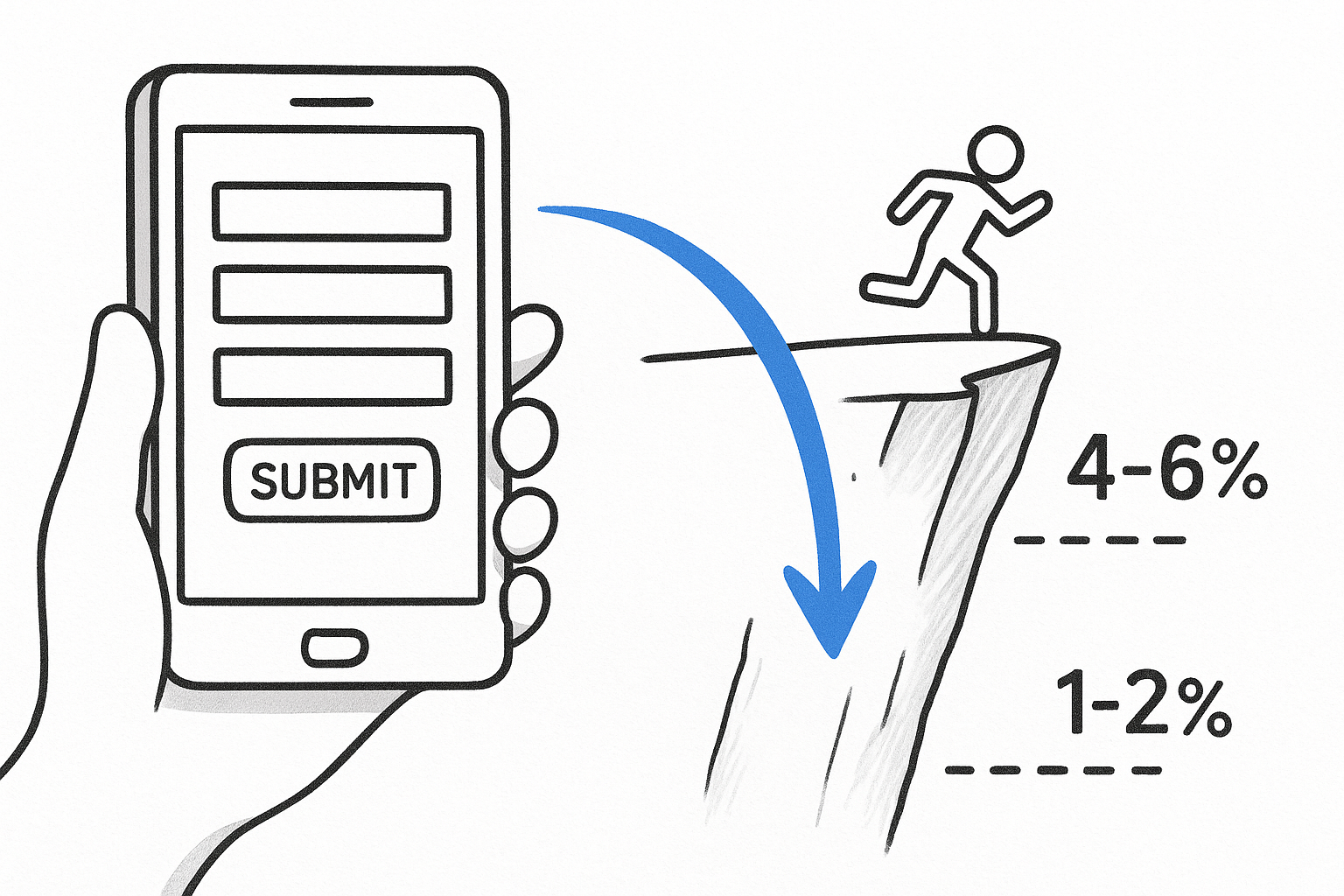
Those figures reflect modelled benchmark ranges for legal intake forms, not audited results from any single firm. Leadpages templates are reasonably mobile-responsive out of the box, but ClickFunnels' multi-step funnel pages, built for cart upsells, often ask for more fields than a nervous, injured person will finish typing on a phone screen.
Compliance isn't optional in legal advertising
Neither platform was built with TCPA compliance or state-bar advertising rules in mind, and that gap creates real exposure. Consent language for texting a lead, disclaimers required in certain practice areas, and audit trails proving you got permission before sending SMS reminders all have to be bolted on manually or handled by a separate tool. Our guide on TCPA-compliant lead intake for law firms walks through exactly what a compliant consent log needs to capture, and it's worth reading before you build your next intake page on a generic funnel tool.
How to choose between Leadpages and ClickFunnels
Choosing between these two platforms comes down to how complex your intake process needs to be, not which tool has more features overall. Solo practitioners and small firms usually need one clean, fast page that captures a lead and gets out of the way, while firms running mass-tort campaigns or multi-practice-area funnels sometimes want a longer, multi-step journey with automated follow-up baked in.
Pick Leadpages if you need speed and simplicity
Leadpages fits firms that just want a landing page live in an afternoon, connected to their existing CRM or email tool, without a learning curve. Its drag-and-drop editor and library of conversion-tested templates work well for a single practice-area campaign, like a Google Ads landing page for a DUI defense firm running local ads in one metro area. If you're not building upsells or a multi-step checkout flow, paying for ClickFunnels' extra complexity doesn't buy you anything.
Pick ClickFunnels if you're mapping a multi-step client journey
ClickFunnels makes more sense for firms running a longer nurture sequence before someone books a consultation, such as a mass-tort intake funnel that walks a visitor through eligibility questions, testimonials, and a scheduling page. Its built-in funnel logic and order-bump features were designed for ecommerce upsells, but some firms repurpose that structure for case-qualification steps instead. That flexibility comes with a steeper setup time and a higher price at every tier.
Pick based on your intake workflow, not on which tool has the longer feature list.
Questions to answer before you commit
- Does your practice area need one page or a multi-step qualification funnel?
- Will non-technical staff need to edit pages without developer help?
- Do you already pay for a CRM, call tracking, or intake tool these need to connect to?
- How much do you need mobile-optimized intake forms versus a single contact field?
Answer these honestly and the decision usually makes itself before you even look at pricing, which is where the real cost difference between Leadpages and ClickFunnels starts to show up for law firms specifically.
Comparing pricing and features for law firms
Price comparisons between these two tools get confusing fast because both vendors bundle features differently at each tier, and neither publishes a legal-specific plan. Leadpages starts cheaper and stays cheaper at every level, while ClickFunnels pricing climbs quickly once you need multiple funnels or higher contact limits. For a solo practitioner running one campaign, that gap matters less than it does for a firm juggling personal injury, family law, and criminal defense funnels at once.
Pricing tiers side by side
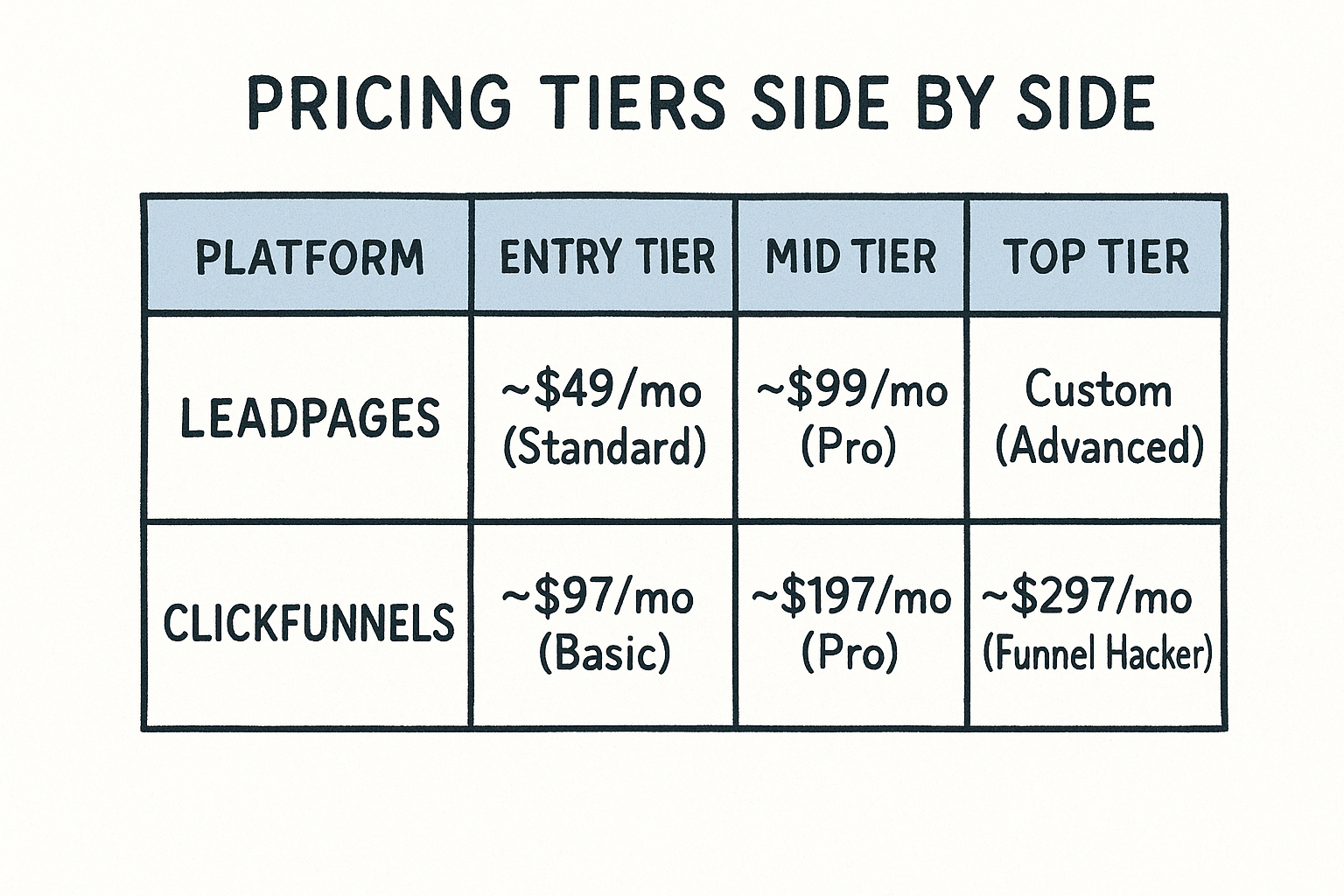
These figures reflect published rates as of 2026 and shift with promotions, so verify current numbers directly with each vendor before budgeting.
Where the feature gap shows up for legal intake
Neither platform's pricing page mentions call tracking, TCPA consent logging, or case-status attribution, because those aren't features general marketers ask for. Leadpages includes basic A/B testing and analytics at every paid tier, but stops at page-level conversion, not signed-case tracking. ClickFunnels bundles more automation and email sequencing into its higher tiers, which sounds useful until you realize none of it was built around 60-second SMS response times or CTIA opt-out handling.
The sticker price is the smallest cost. The real expense is every third-party tool you add to make either platform legally usable.
Once you factor in a CRM, a call-tracking subscription, and a compliance layer for consent logging, most firms end up spending more on the surrounding stack than on Leadpages or ClickFunnels themselves. GavelGrow's pricing page shows what a single platform costs when call tracking, intake automation, and case-level attribution are already built in rather than stitched together from three separate vendors.
Both Leadpages and ClickFunnels are good at building a page. Neither is built for what happens after the click. Both treat a form submission as the finish line, when the real work is still ahead: an attorney, marketing manager, or intake coordinator has to hunt down where that lead came from and whether it ever became a client. Neither tracks the full journey from ad spend to signed retainer, so you end up exporting spreadsheets from three different tools just to answer a simple ROI question.
No native call tracking or attribution
A large share of legal leads still pick up the phone instead of filling out a form, and neither platform records calls, tags them by campaign, or tells you which Google Ads keyword produced a paying client. You would layer in a separate service like CallRail, match call data to form data by hand, then reconcile both against your case management system, which is three logins and three exports just to answer one question: which campaign actually produced signed cases?
No compliance-first consent capture
Legal advertising carries obligations a general-purpose funnel builder was never designed to handle. Neither platform logs TCPA consent in an audit-ready format, tracks CTIA opt-out keywords like STOP and HELP, or flags state-specific disclaimer requirements by practice area. You are left building that layer yourself or hoping your CRM covers it.
A form that captures a lead without capturing consent is a liability, not a marketing win.
No case-management handoff
Getting a lead into your pipeline is only half the job. Neither Leadpages nor ClickFunnels connects to case status, attorney capacity, or upcoming court dates, so someone on your team still has to move that lead into Clio, MyCase, or a spreadsheet before real intake work starts. GavelGrow's platform was built to close that exact gap, pairing intake forms with call tracking, consent logging, and case-level attribution in one dashboard instead of three disconnected tools.
Frequently asked questions
Is Leadpages or ClickFunnels better for a solo law firm?
Most solo practitioners do better with Leadpages because you're publishing one focused page per campaign, not building a multi-step sales funnel with upsells. A DUI attorney running local Google Ads in one metro area needs a fast, mobile-friendly page connected to an existing CRM, and Leadpages gets that live in an afternoon without a design team. ClickFunnels' extra automation only pays off once you're managing several concurrent funnels across practice areas.
Can Leadpages or ClickFunnels handle TCPA-compliant intake on their own?
Neither tool logs TCPA consent in an audit-ready format out of the box. You'd need a separate compliance layer to capture consent language, track CTIA opt-out keywords like STOP and HELP, and produce a record you could hand to a regulator or opposing counsel. Our guide on TCPA-compliant lead intake for law firms breaks down exactly what that audit trail needs to include before you launch another campaign.
A landing page that skips consent logging isn't compliant, it's just untested liability.
How much more does ClickFunnels cost than Leadpages for a firm running multiple campaigns?
Budget roughly double for ClickFunnels once you outgrow a single funnel. Leadpages' Pro tier runs around $99/month with unlimited pages, while ClickFunnels' Pro tier sits near $197/month with capped funnels and contact limits. A firm juggling personal injury, family law, and criminal defense campaigns simultaneously will hit those caps faster than a single-practice-area shop.
Do either platform connect to call tracking software?
No, and that's a real gap since phone calls still drive most legal leads. You'd need to layer in a third-party service, match call records to form submissions manually, then reconcile both against your case management system. GavelGrow's platform folds call tracking, intake forms, and case-level attribution into one dashboard instead of three disconnected logins.
Which platform fits mass-tort intake campaigns better?
ClickFunnels generally suits mass-tort work better because its built-in funnel logic supports the longer eligibility-question sequence these campaigns require before a scheduling page. Leadpages can technically link multiple pages together, but it wasn't designed for that branching logic the way ClickFunnels was.
Finding the right fit for your firm's growth
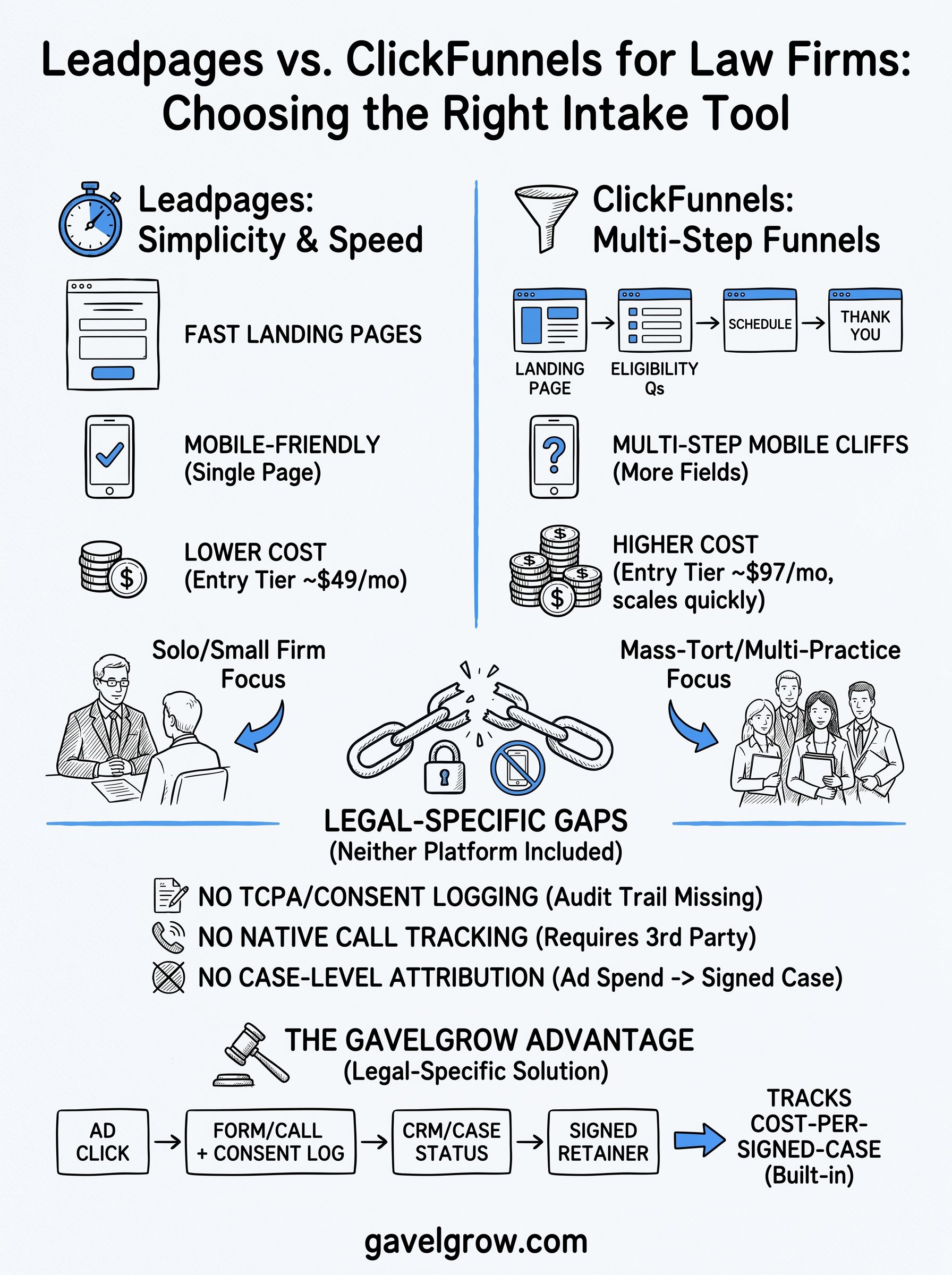
Leadpages and ClickFunnels both do what they were built to do: publish pages fast and move visitors through a marketing funnel. Neither was built to answer the one question that actually matters to your bottom line, which lead turned into a signed retainer. Choose Leadpages for a single-page campaign you need live this week, choose ClickFunnels if you're mapping a longer eligibility sequence for something like mass-tort intake, and plan on adding call tracking and consent logging either way.
Generic builders leave that attribution gap open, and closing it manually costs your team hours every month it's stitched together from spreadsheets. If you'd rather see cost-per-signed-case from your first campaign instead of retrofitting a funnel builder six months from now, book a free 45-minute strategy call and we'll walk through what your intake stack should actually look like.
Leadpages, ClickFunnels, CallRail, Clio, MyCase, and all other product names and trademarks are the property of their respective owners, referenced here for identification and comparison only and not affiliated with or endorsing GavelGrow. Pricing reflects each vendor's published rates as of 2026 and changes with promotions; verify current pricing directly with each vendor.
Frequently Asked Questions
Is Leadpages or ClickFunnels better for a solo law firm?
Most solo practitioners do better with Leadpages because you're publishing one focused page per campaign, not building a multi-step sales funnel with upsells. A DUI attorney running local Google Ads in one metro area needs a fast, mobile-friendly page connected to an existing CRM, and Leadpages gets that live in an afternoon without a design team. ClickFunnels' extra automation only pays off once you're managing several concurrent funnels across practice areas.
Can Leadpages or ClickFunnels handle TCPA-compliant intake on their own?
Neither tool logs TCPA consent in an audit-ready format out of the box. You'd need a separate compliance layer to capture consent language, track CTIA opt-out keywords like STOP and HELP, and produce a record you could hand to a regulator or opposing counsel. Our guide on TCPA-compliant lead intake for law firms breaks down exactly what that audit trail needs to include before you launch another campaign. A landing page that skips consent logging isn't compliant, it's just untested liability.
How much more does ClickFunnels cost than Leadpages for a firm running multiple campaigns?
Budget roughly double for ClickFunnels once you outgrow a single funnel. Leadpages' Pro tier runs around $99/month with unlimited pages, while ClickFunnels' Pro tier sits near $197/month with capped funnels and contact limits. A firm juggling personal injury, family law, and criminal defense campaigns simultaneously will hit those caps faster than a single-practice-area shop.
Do either platform connect to call tracking software?
No, and that's a real gap since phone calls still drive most legal leads. You'd need to layer in a third-party service, match call records to form submissions manually, then reconcile both against your case management system. GavelGrow's platform folds call tracking , intake forms, and case-level attribution into one dashboard instead of three disconnected logins.
Which platform fits mass-tort intake campaigns better?
ClickFunnels generally suits mass-tort work better because its built-in funnel logic supports the longer eligibility-question sequence these campaigns require before a scheduling page. Leadpages can technically link multiple pages together , but it wasn't designed for that branching logic the way ClickFunnels was.